At ages 10–12, pattern puzzles come close to middle school math: finding when several cycles line up, applying one change after another, working out a two-step rule and then going backwards from the result. Guessing won't do; kids have to try, write things down and check. The five puzzles below come from the Dologi app, at the hardest levels of its pattern puzzles.
How to use this post: let your child work through each puzzle with scrap paper, and hold back on hints. The answer is behind the "Show answer" button under each picture. Once your child has an answer, ask "how can you be sure it's right?": checking their own work is the most valuable habit at this age.
Puzzle 1: Blinking lighthouses
Ages 10–11
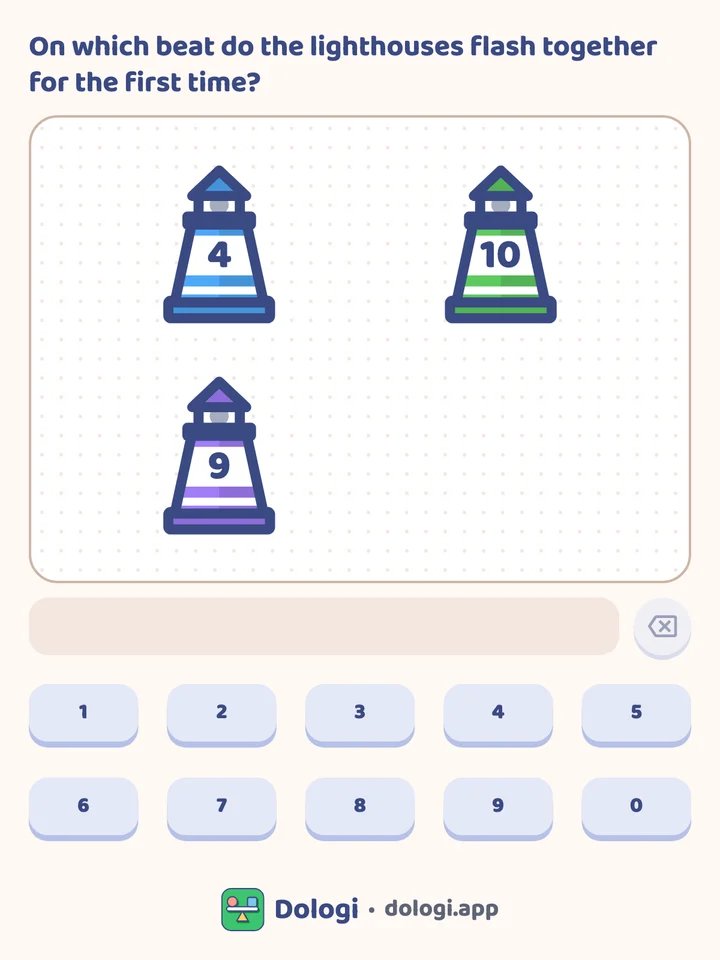
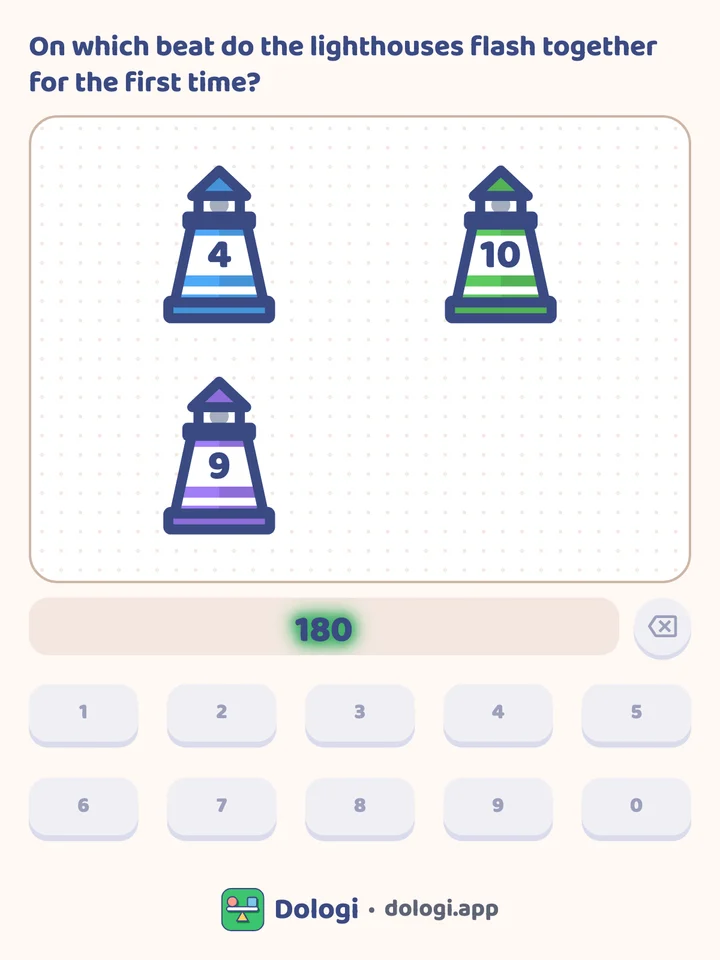
What it builds: The number on each lighthouse tells how many beats it waits between flashes; your child needs the smallest number that all three divide into. Instead of listing every beat, they can count by the largest number and test each of its multiples, or break each number into prime factors: the same shortcut makes finding a common denominator quick. Keep playing: let your child pick three numbers and challenge you back; whoever works it out first wins.
Puzzle 2: A song changed twice
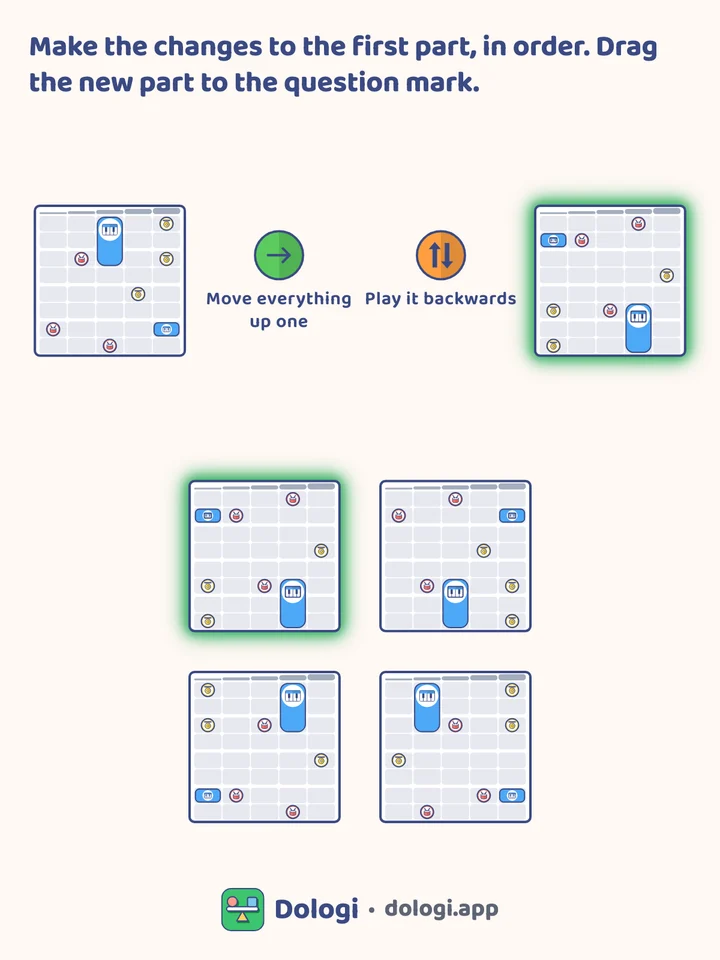
Ages 10–11
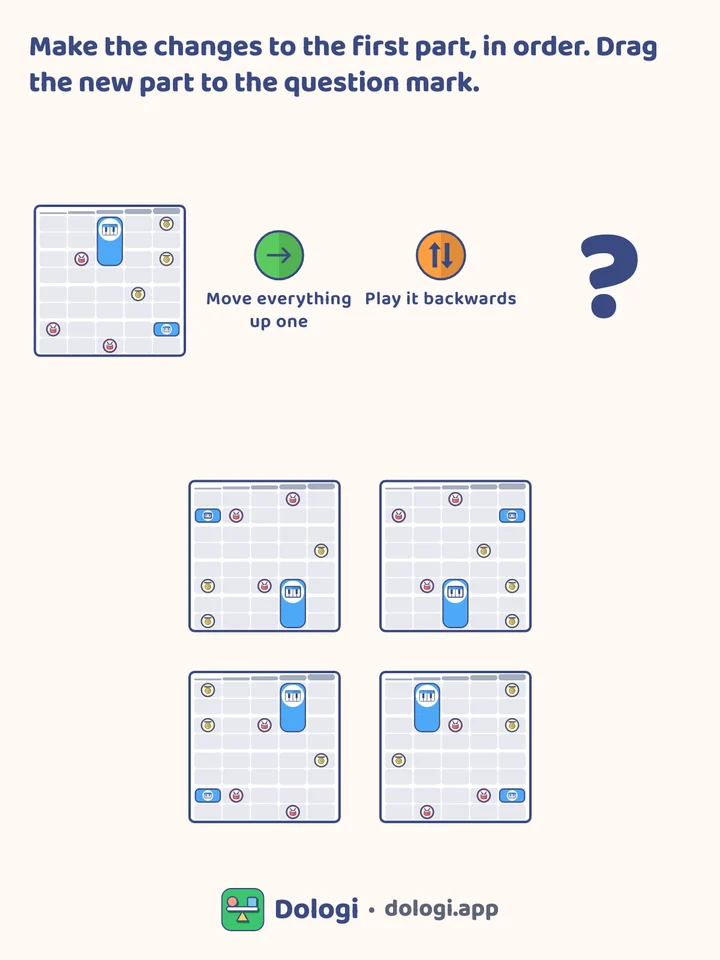
What it builds: Each song part is a grid: the further right the column, the higher the note, and the top row plays first. "Move everything up one" shifts every note one column right, and notes in the rightmost column wrap around to the leftmost; "Play it backwards" swaps the top and bottom rows. Your child picks one or two easy-to-spot notes, moves them through each sign in order, and only then compares the grids; these are the translations and reflections they will meet in geometry. Keep playing: draw a few dots on squared paper, call out two moves and let your child draw the result.
Puzzle 3: Flipping switches
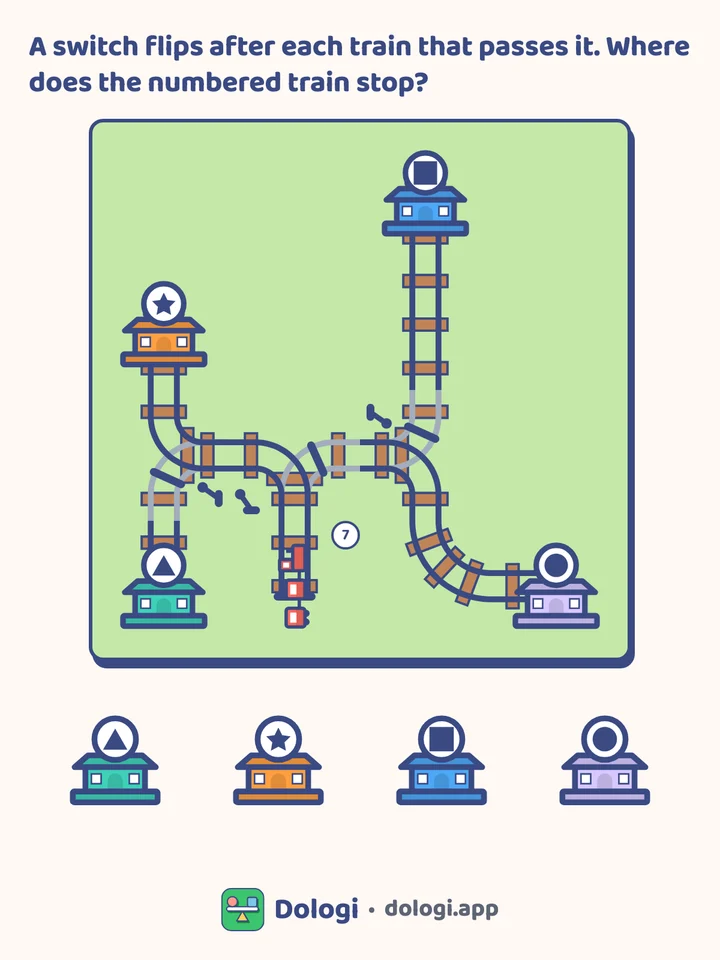
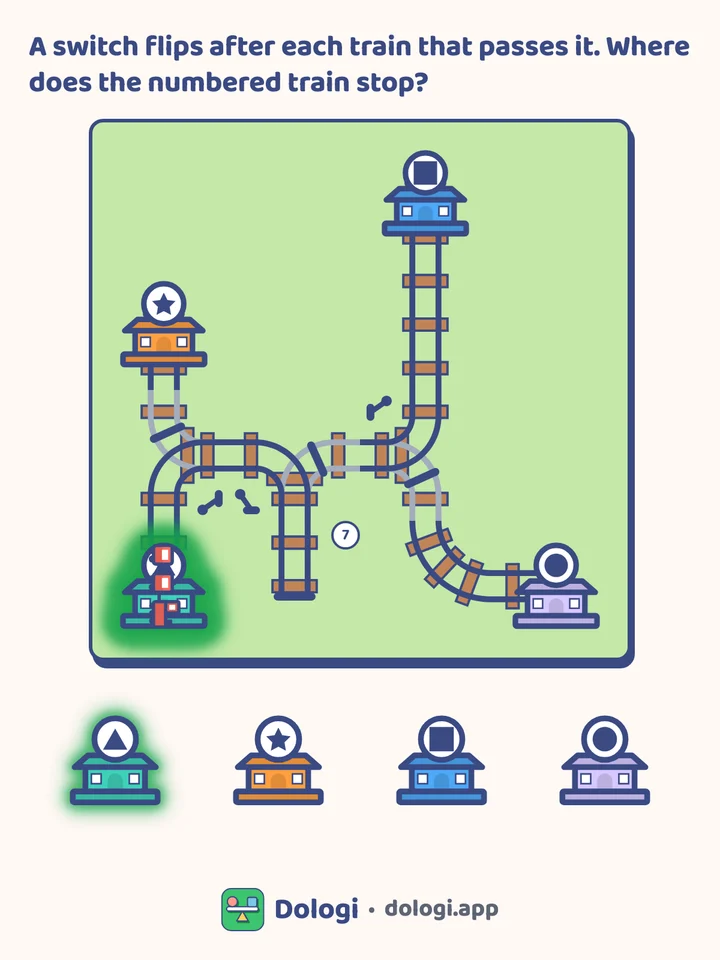
Ages 10–11
What it builds: The train in question is the seventh, but your child doesn't need to run all seven: they run the first few, note which station each reaches until the stations repeat, then use the length of the cycle to jump straight to the train asked about. Finding a cycle and using division with remainders is the trick behind many problems like "what day of the week is day 100?" Keep playing: ask your child what day it will be 30 days after a Tuesday, then have them explain how they worked it out.
Puzzle 4: Changing machine
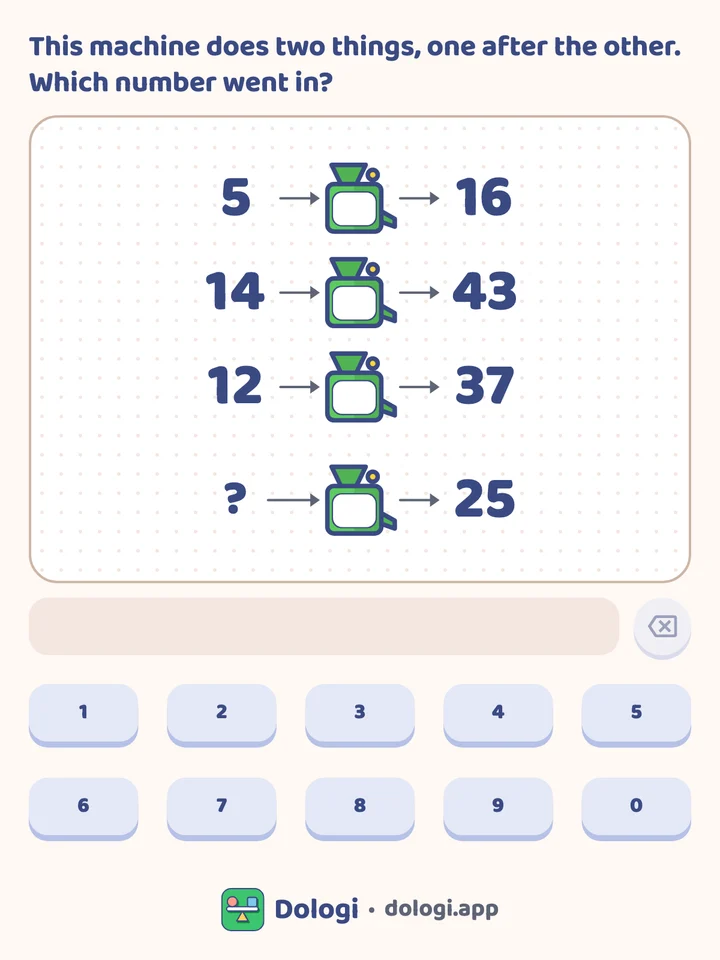
Ages 11–12
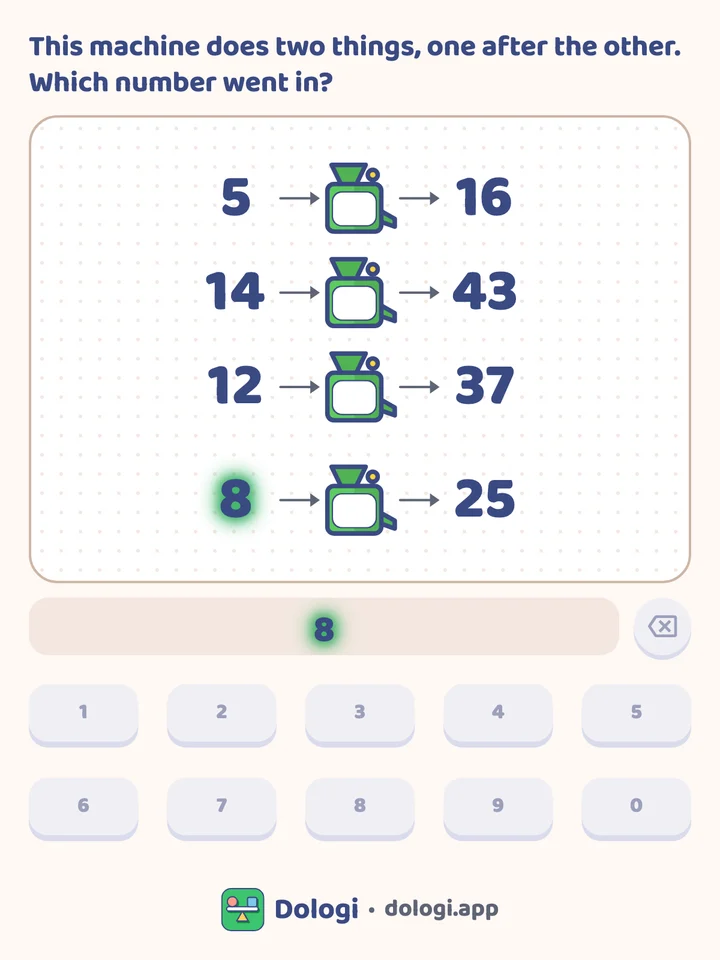
What it builds: The machine does two jobs in a row; your child uses the in-and-out pairs to work out both jobs, checks them on every pair, then goes backwards from the output to find the number that went in: undo each job, in reverse order. Working backwards from a result is how equations get solved, and how you find the slip in a long calculation. Keep playing: try "think of a number": your child picks a number, multiplies and adds as you tell them, says only the result, and you find the starting number, then swap roles.
Puzzle 5: Flipping switches (harder)
Ages 11–12
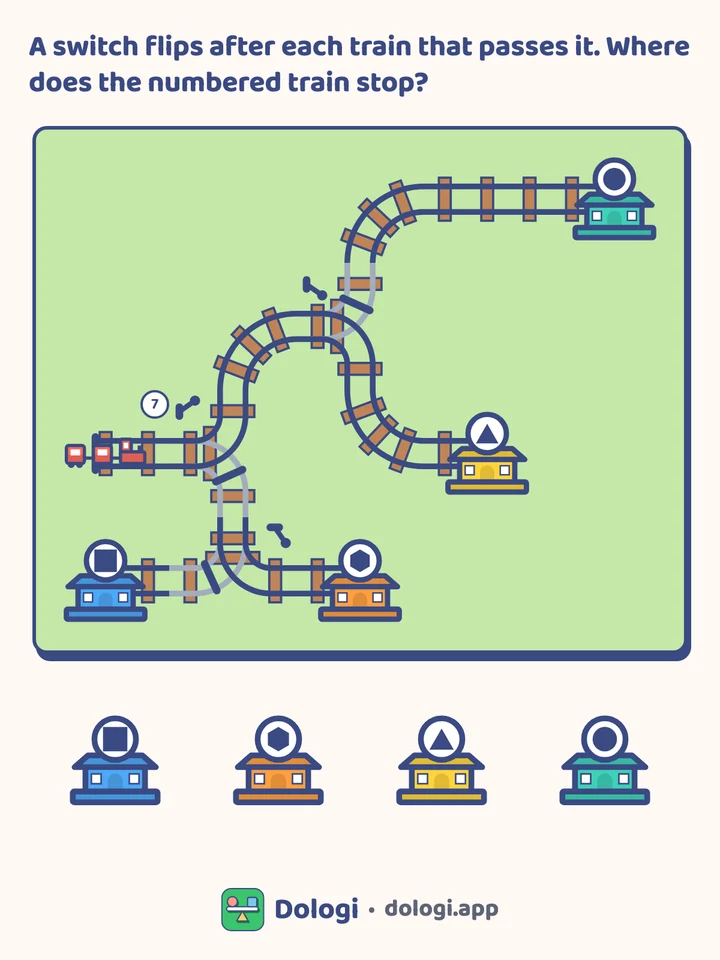
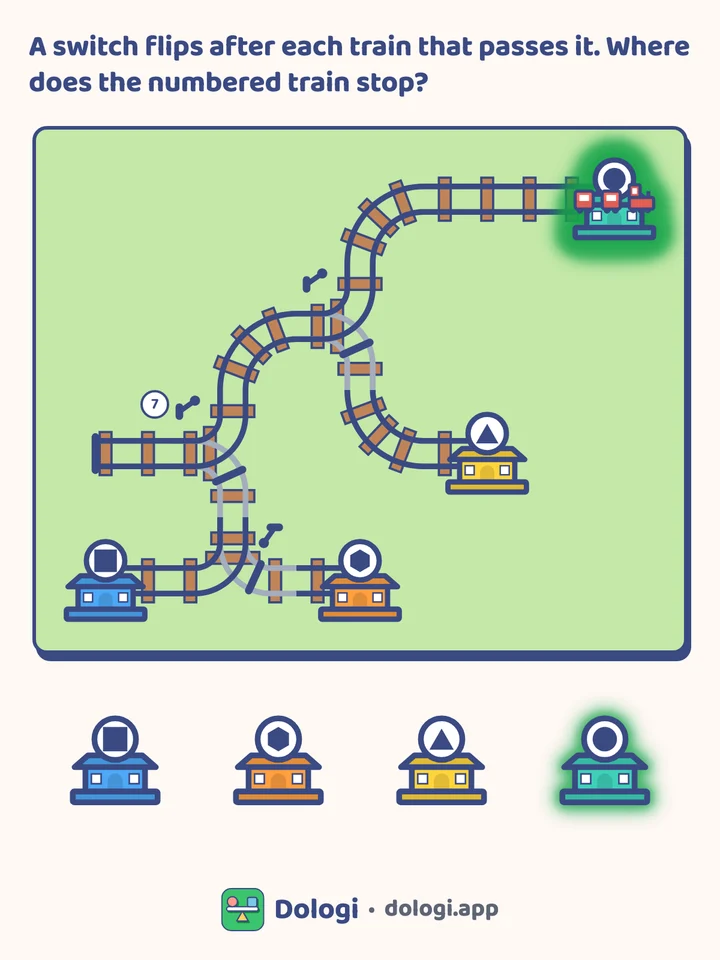
What it builds: Here only the switches a train has just passed flip, so the switches further along change less often than the first one. Your child keeps a small table, one row per train and one column per switch, so nothing gets mixed up while tracking several things at once. Organizing data in a table is a skill they will use in science class and when learning to code. Keep playing: lay two coins heads up; each turn flip the first coin, and flip the second only when the first goes from tails to heads; ask how the coins look after the sixth turn.
These puzzles sit at the hardest levels of the pattern puzzles in the Dologi app. The app has many more of the same kinds, getting harder with age and with how your child plays, so they always get puzzles that fit their level and still make them think.