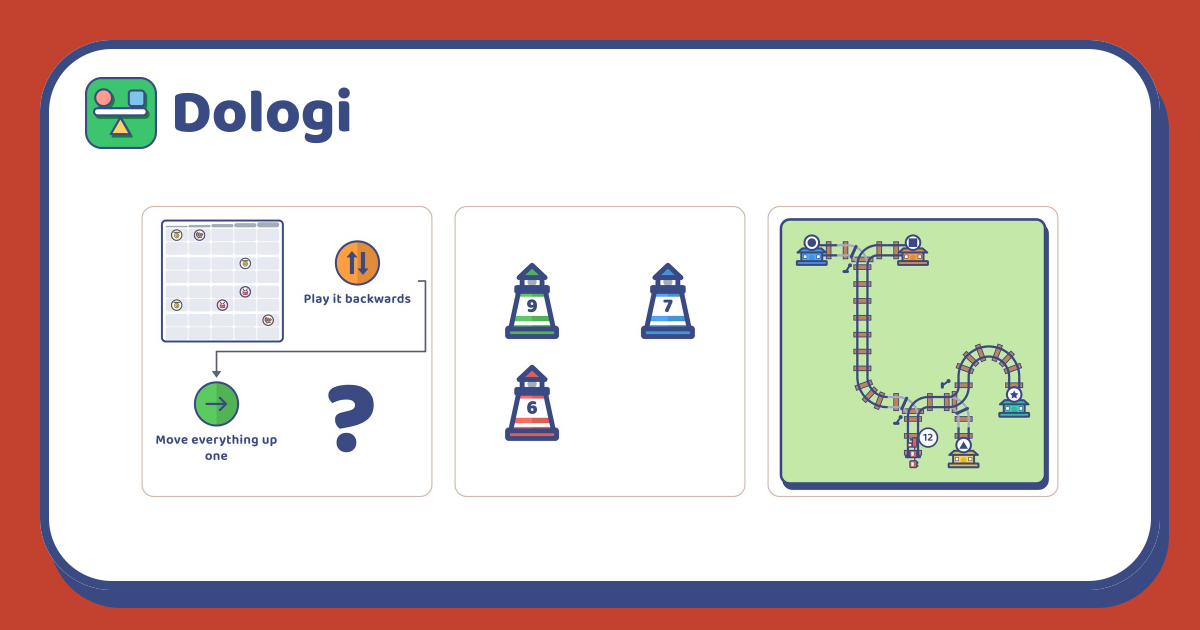
This is the second set of the hardest pattern puzzles in the Dologi app for ages 10–12. This time there are two machines that do two jobs in a row, one going forwards and one going backwards, plus a song, lighthouses and a railway with bigger numbers. At this level, a good shortcut matters as much as accurate working: finding one saves trying every case.
How to use this post: let your child work through each puzzle with scrap paper and only offer a hint after they have tried for a while. The answer is behind the "Show answer" button under each picture. After each puzzle, ask "is there a quicker way?": looking for a neater solution is a habit of strong math thinkers.
Puzzle 1: Two-step machine
Ages 10–11
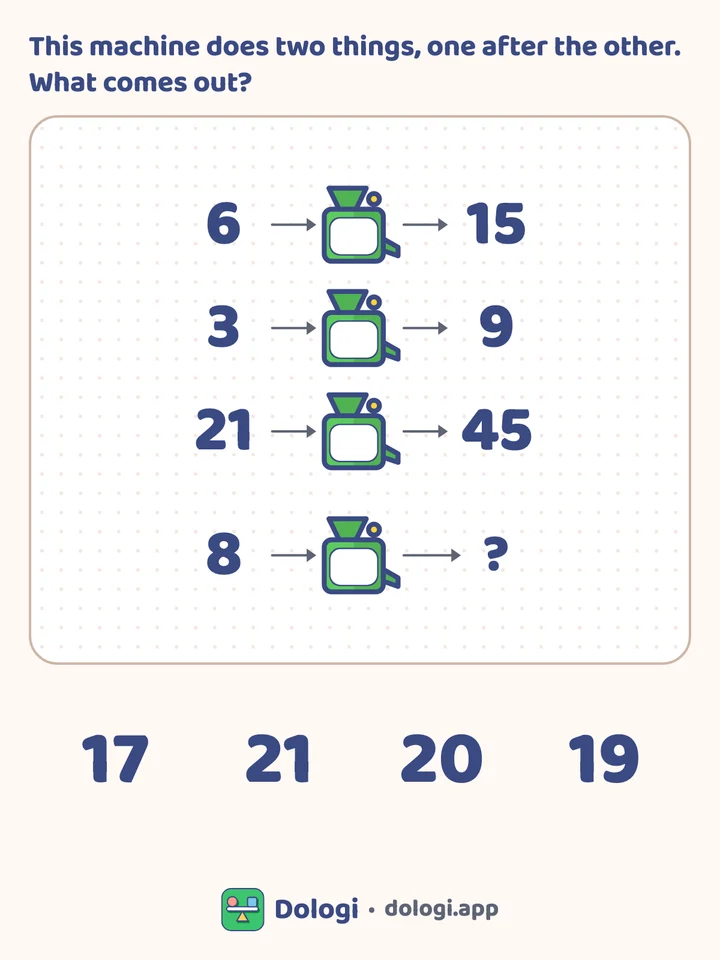
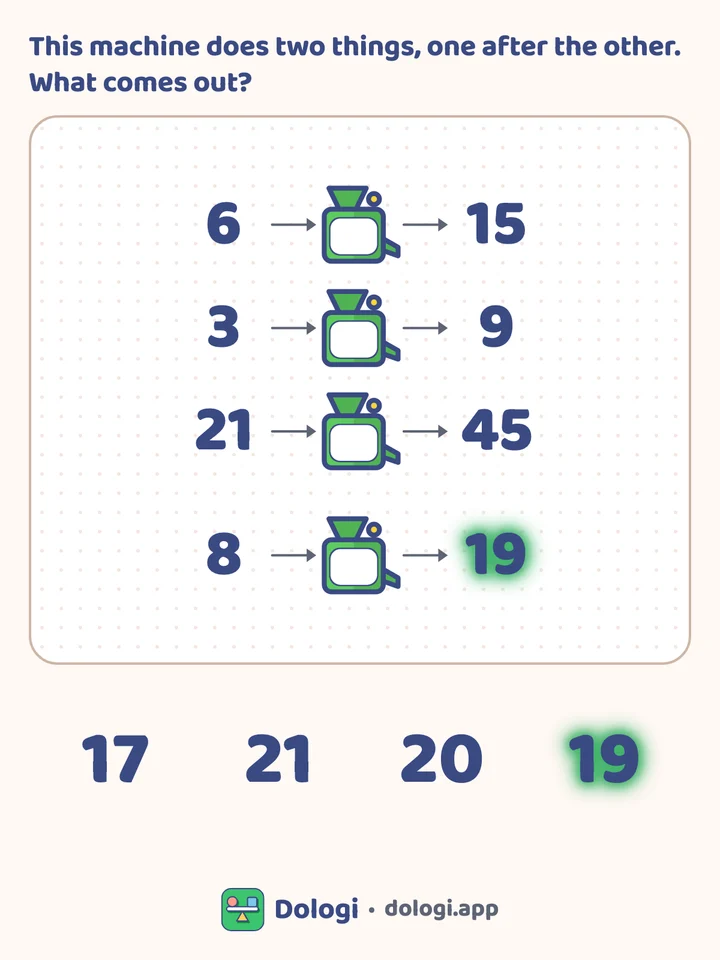
What it builds: The machine multiplies and adds in some order; here is a handy trick: see how much the output grows when the input goes up by 1, which tells you the multiplier, then find the added part from one example and check it on the others. A "fixed amount plus an amount per unit" rule is everywhere, from taxi fares to utility bills. Keep playing: set a secret price rule for an "imaginary taxi ride", give the price for a few distances, and let your child find the rule and price a new trip.
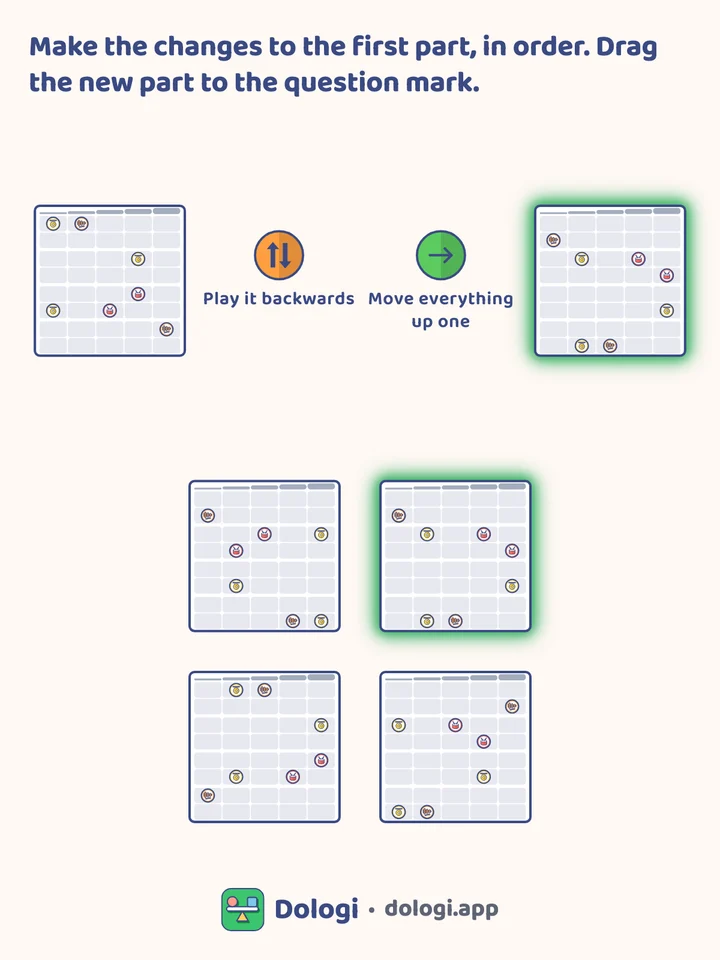
Puzzle 2: A song changed by two signs
Ages 10–11
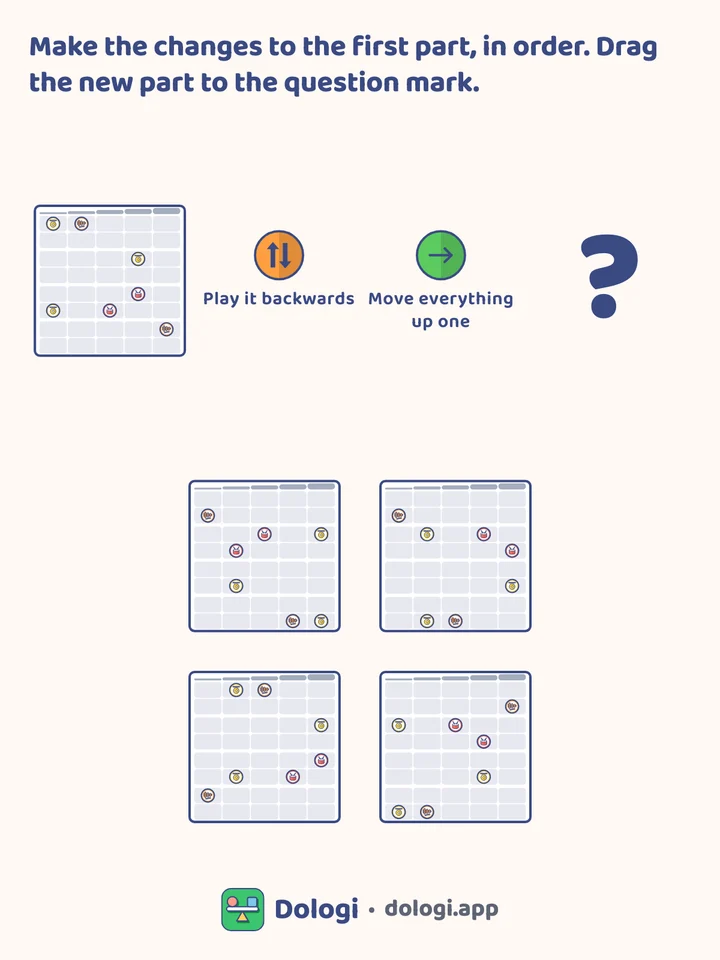
What it builds: The song part is changed twice, in the order of the two signs: "Play it backwards" swaps the top and bottom rows, and "Move everything up one" shifts every note one column right, with notes in the rightmost column wrapping to the leftmost. Your child picks one note, moves it through each sign, and then asks whether swapping the two signs would change the result. Knowing when the order of steps matters helps with multi-step calculations, and explains why socks go on before shoes. Keep playing: mark a few dots on squared paper, have your child apply two moves in two different orders, and compare the results.
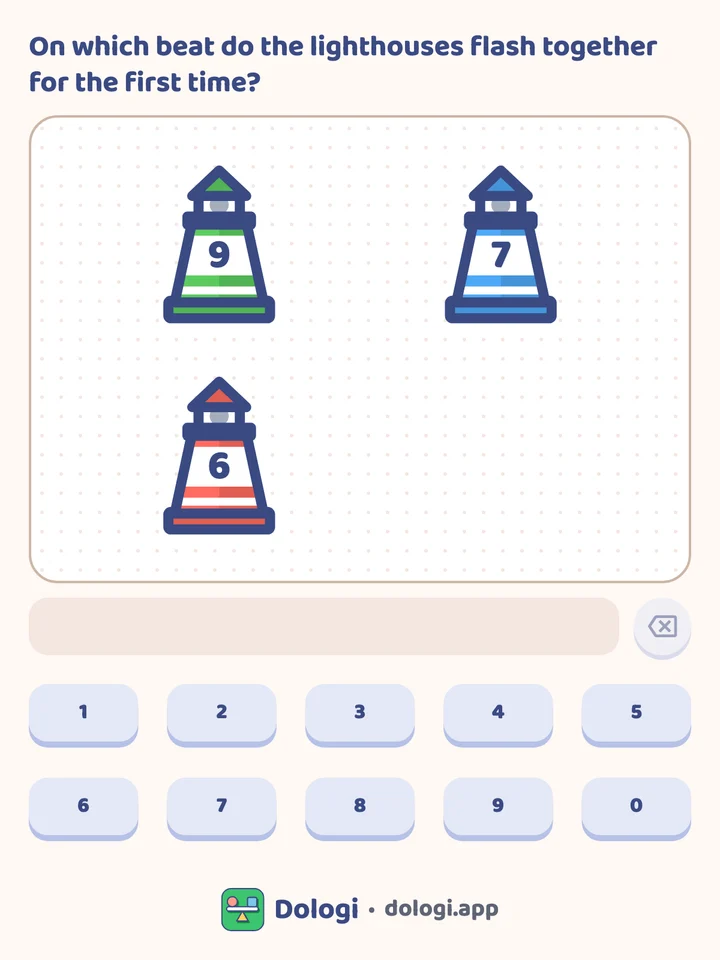
Puzzle 3: Blinking lighthouses
Ages 10–11
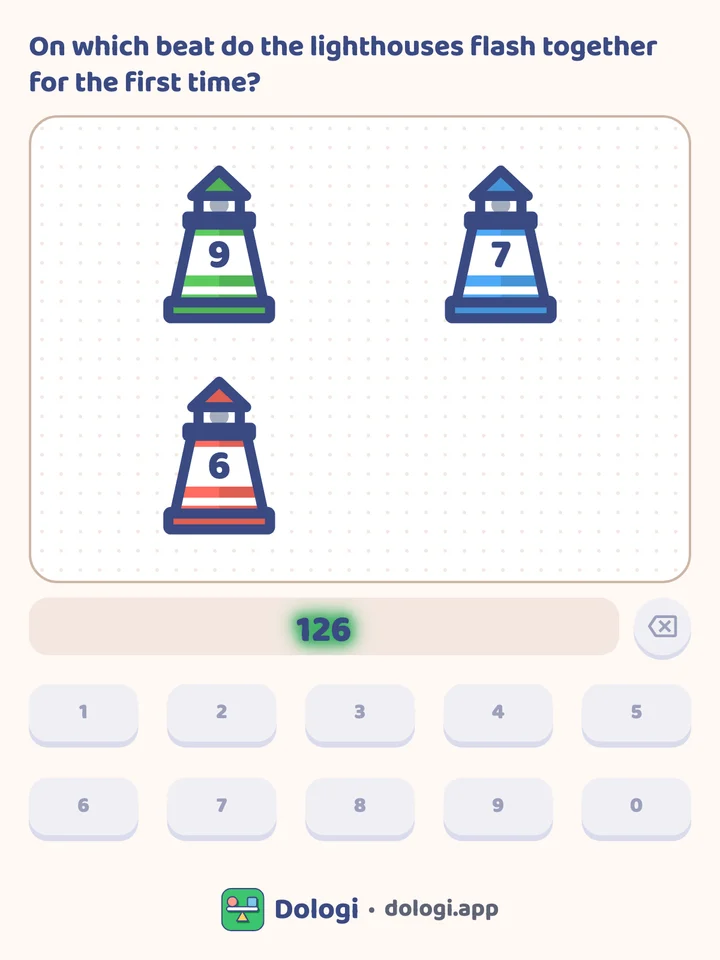
What it builds: Your child needs the first beat when all three lighthouses flash together; multiplying all three numbers gives a shared beat, but not necessarily the first one, because two of the numbers share a factor. Spotting that shared part and leaving it out is exactly the difference between a common multiple and the least common multiple. Keep playing: one plant is watered every 3 days, another every 4 days, a third every 6 days; if all three are watered today, how long until they are all watered on the same day again?
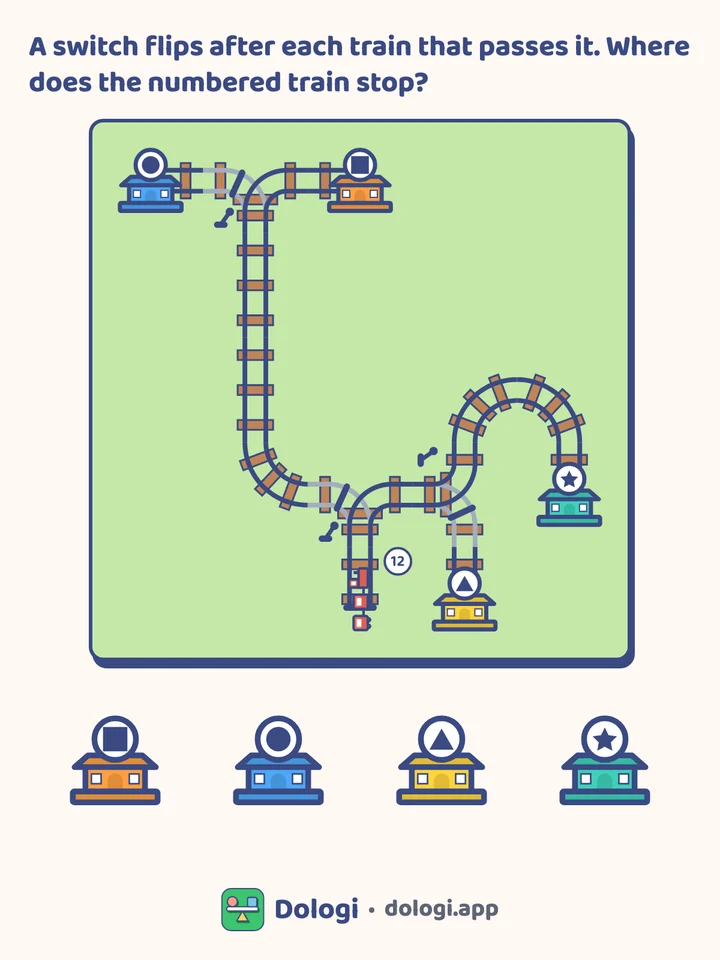
Puzzle 4: Flipping switches
Ages 11–12
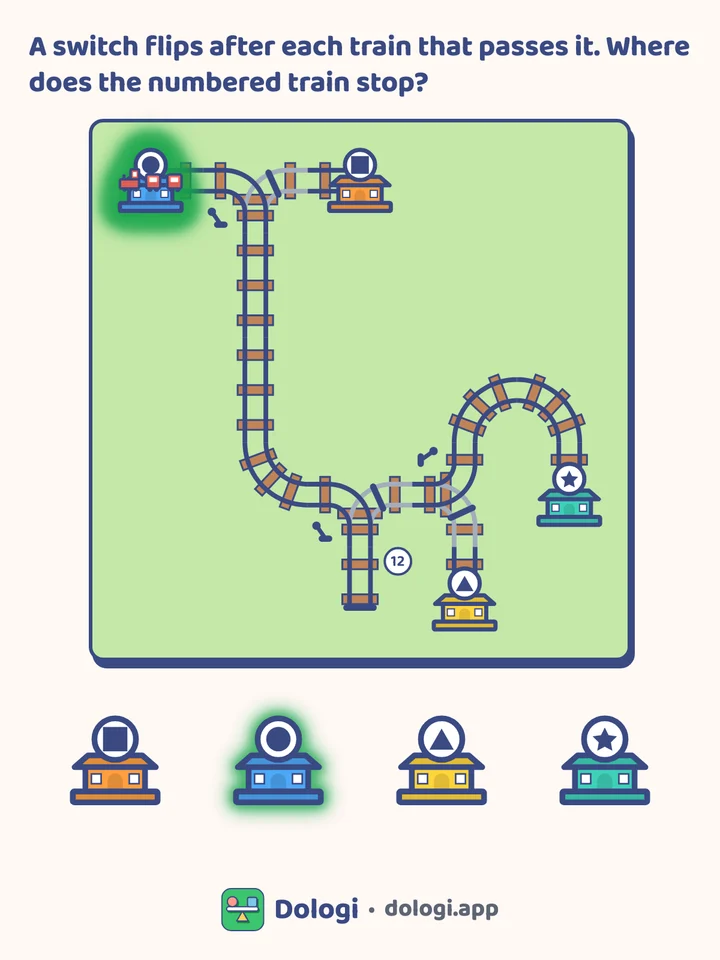
What it builds: The train in question is the twelfth, too many to run one by one; your child works out how many trains pass each switch, since a switch only flips when a train goes over it, and from that the position of every switch before train twelve. This thinking is like a counter: the ones digit changes every time, the tens digit only when the ones digit wraps around. Keep playing: look at a digital clock together and ask after how many minutes the minutes go back to 00 and the hour changes once.
Puzzle 5: Two-step machine, backwards
Ages 11–12
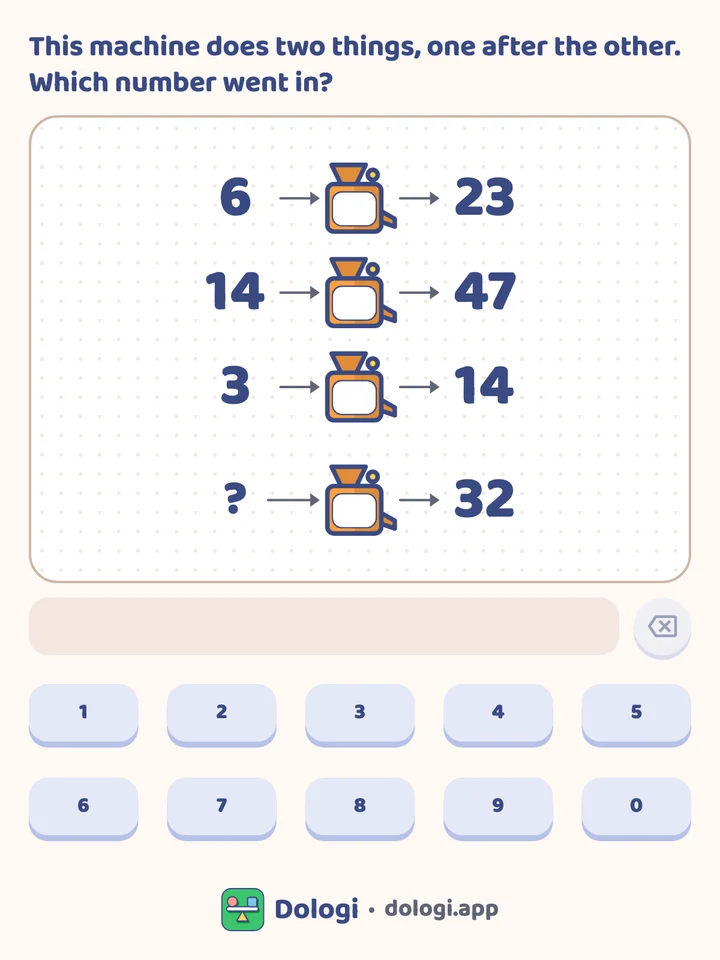
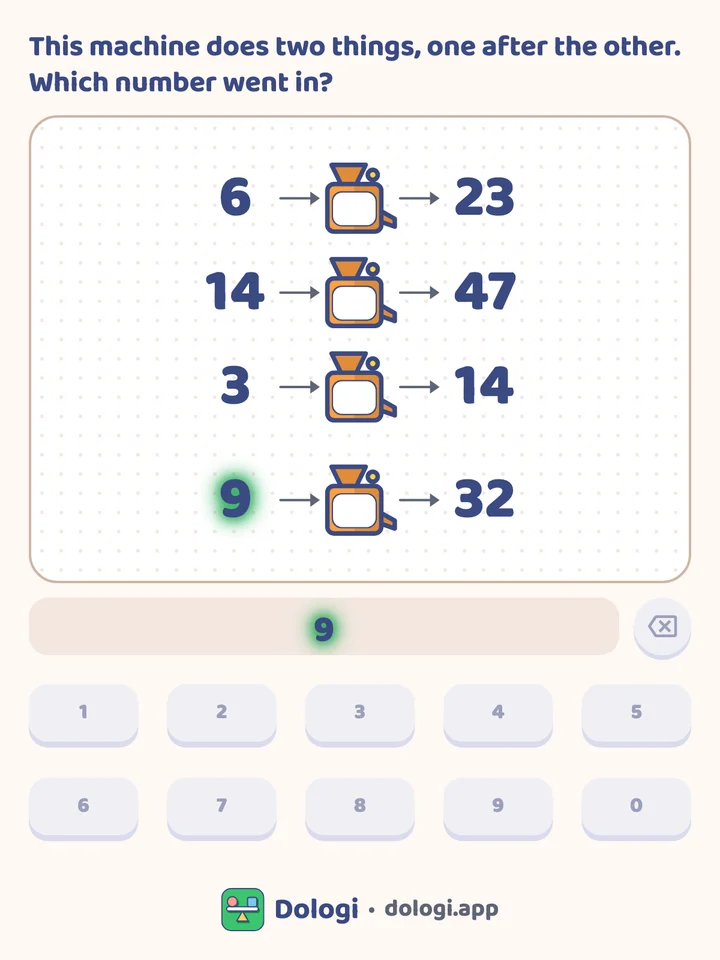
What it builds: This time your child knows the output and has to find the number that went in: work out the machine's two jobs from the examples, undo each job in reverse order, then run the found number forwards through the machine to check. Reasoning backwards from a result helps with solving equations and with planning, such as working out what time to get up to reach school on time. Keep playing: tell your child when school starts, how long the trip takes and how long breakfast takes, and let them work back to the time to wake up.
If your child has solved both sets, they are working at the hardest level of the pattern puzzles in the Dologi app. In the app, new puzzles are generated all the time and still adjust to how your child plays, so there is always a fresh challenge waiting.