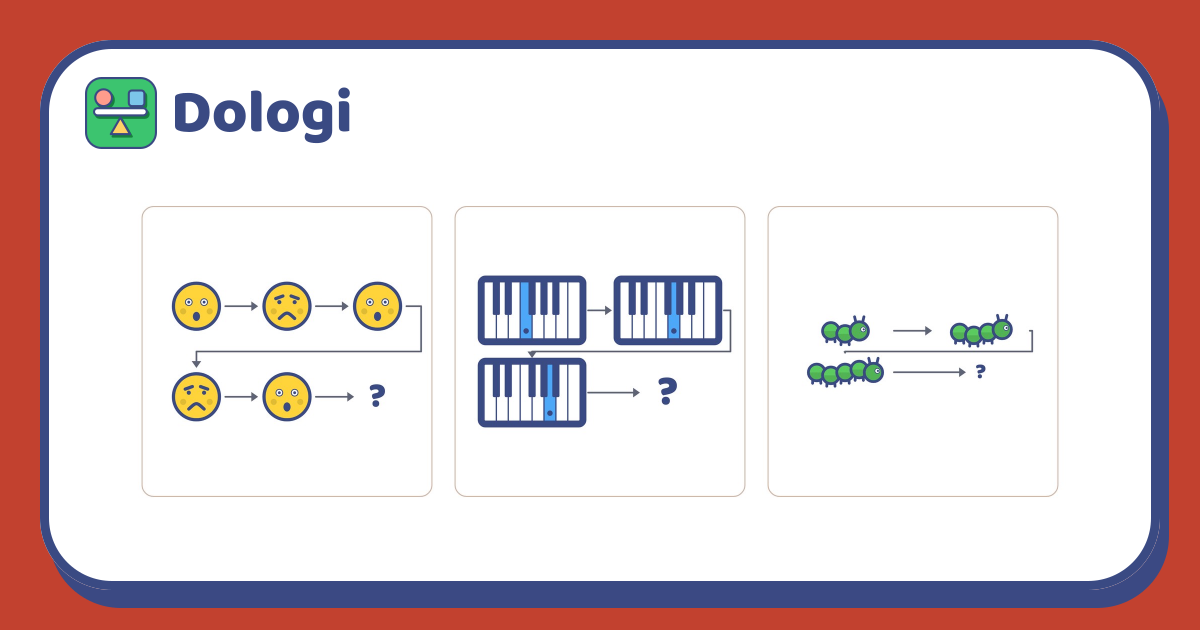
Spotting patterns is one of the first thinking skills children build: noticing what repeats, what changes in a steady way, and then predicting what happens next. The five puzzles below come straight from the Dologi app, suit kids ages 4–5, and go from easy to harder.
How to use this post: show your child one picture at a time and let them point and say out loud what they see before choosing. The answer is behind the "Show answer" button under each picture. If your child picks the wrong one, hold off on the answer: ask "what keeps coming back?" and let them look again.
Puzzle 1: Repeating patterns
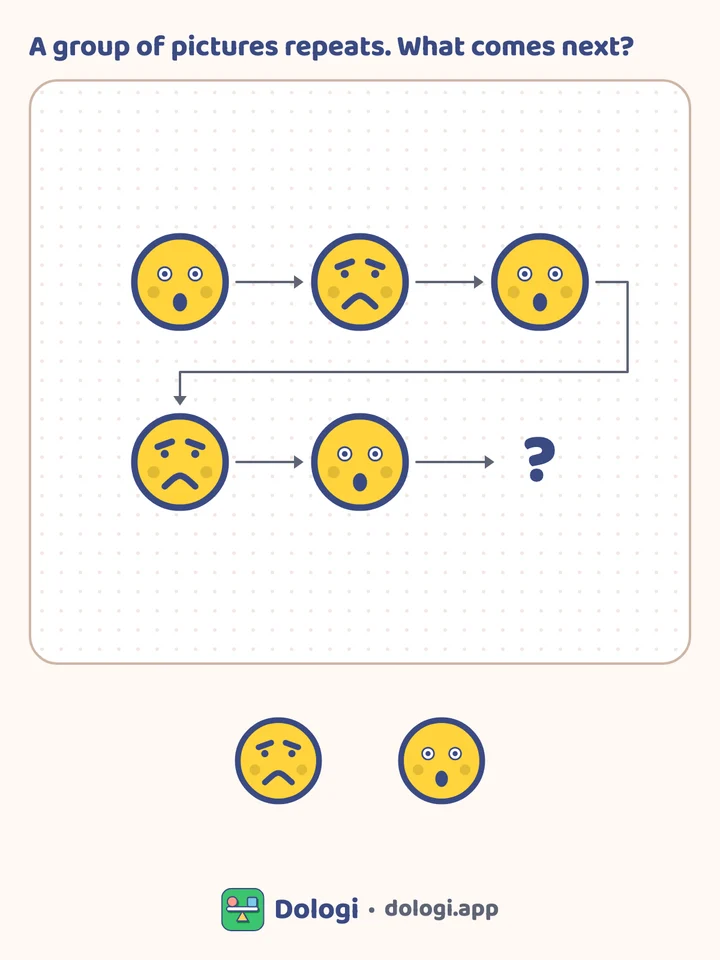
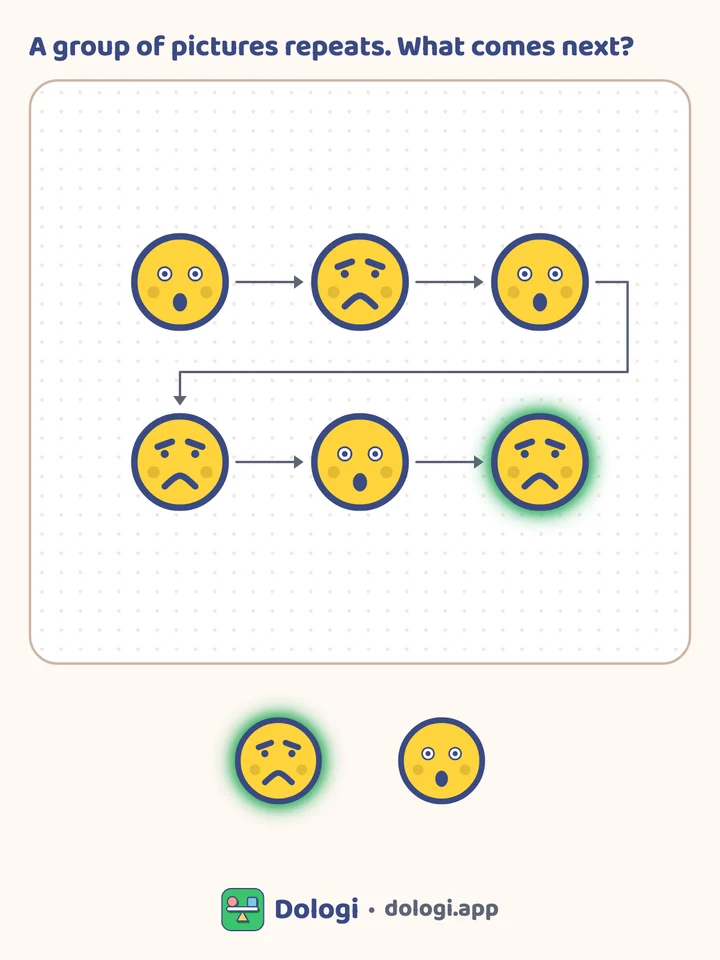
Ages 4–5
What it builds: Your child names each picture out loud in order and finds the spot where the group starts over. Seeing a repeating group helps them make sense of daily routines (morning, noon, night) and lays the groundwork for number sequences at school. Keep playing: clap, stomp, clap, stomp, then stop and let your child do the next move.
Hint: Say the pictures out loud in order. Where does the group start again?
Puzzle 2: Next key
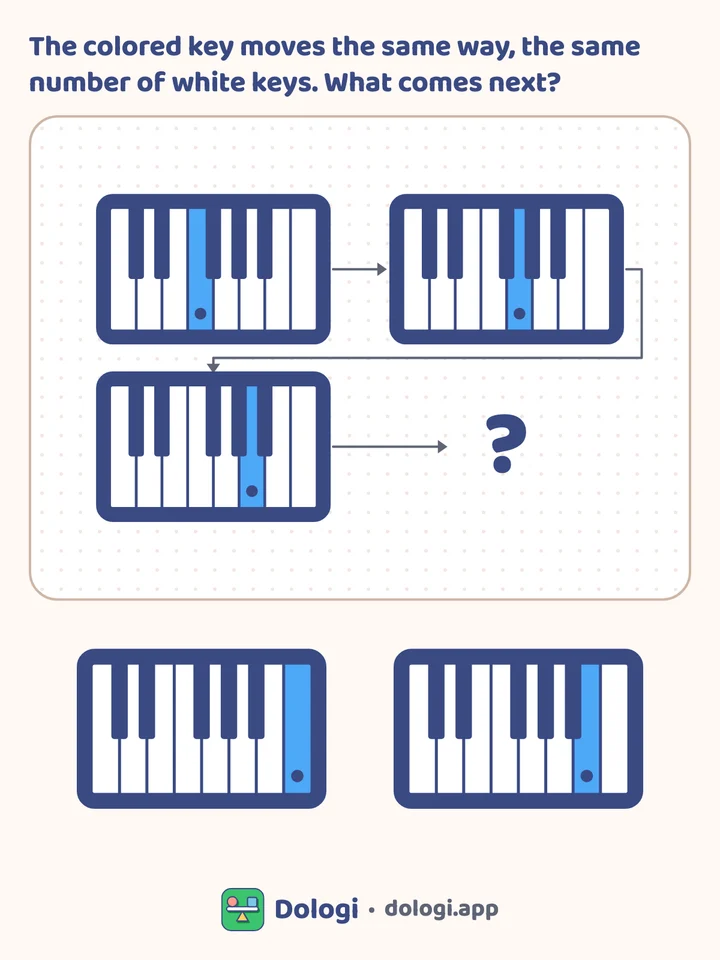
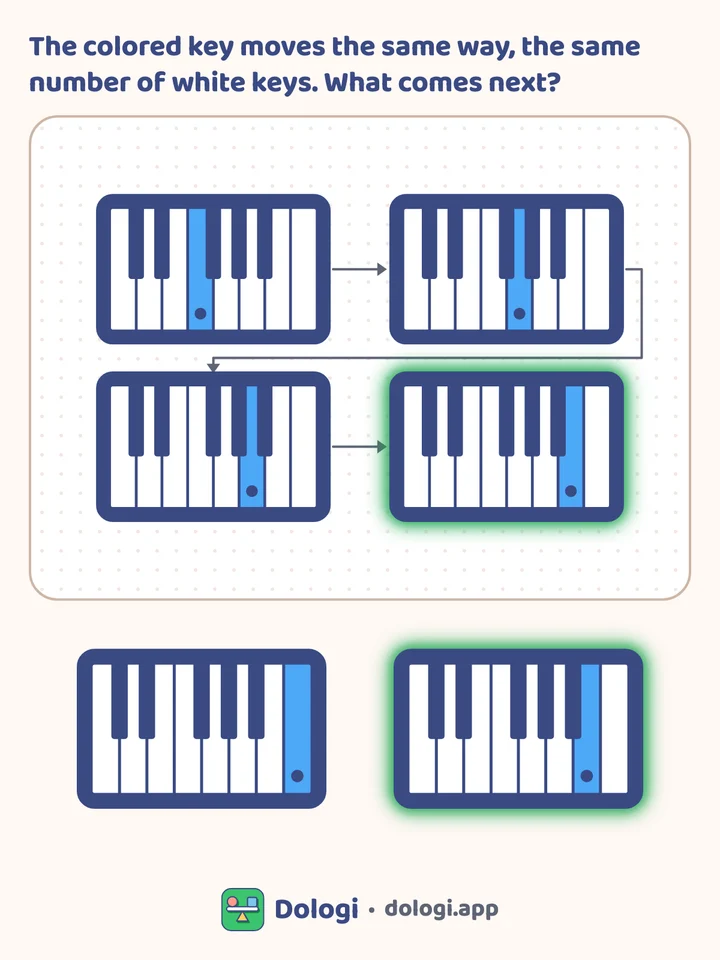
Ages 4–5
What it builds: Your child compares two keyboards side by side to see which way the colored key moves and by how many keys, then repeats that same step. This is steady counting on, a first step toward the number line and addition. Keep playing: line up five upside-down cups, hide a marble and move it one cup each turn, then ask where it will be next.
Puzzle 3: Next song part
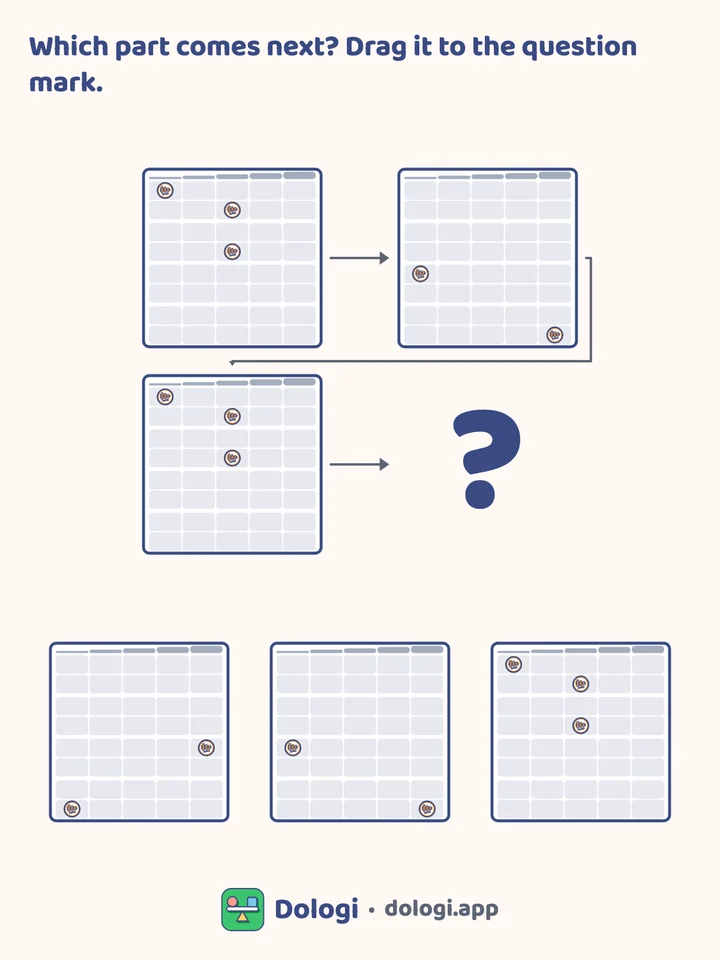
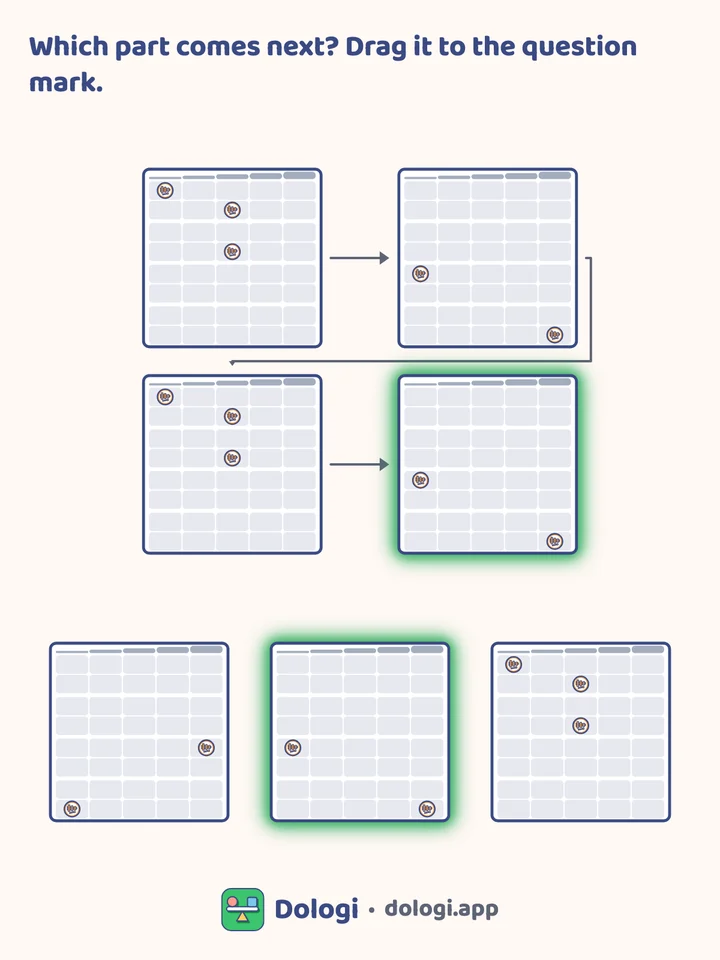
Ages 4–5
What it builds: Each song part is a box full of notes; instead of reading every note, your child looks at the whole box to see which part comes back. Looking at the big picture rather than every detail helps them notice how songs, stories and rhymes are built. Keep playing: sing a favorite song together and ask which part gets sung again.
Hint: Find the part that comes back. Tap a part to hear it.
Puzzle 4: Blinking lighthouses
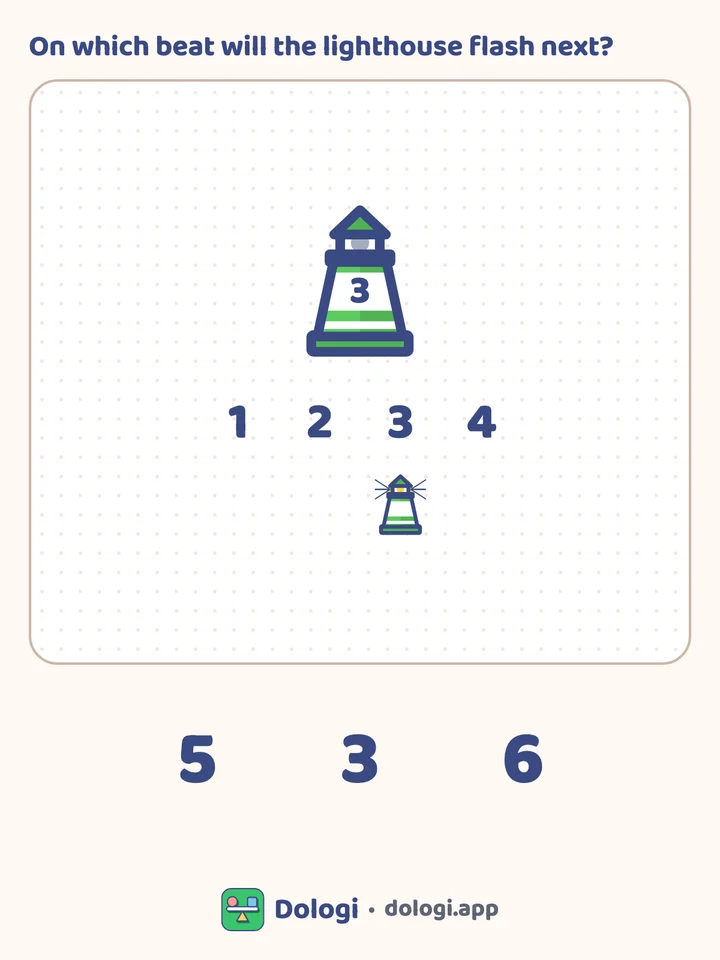
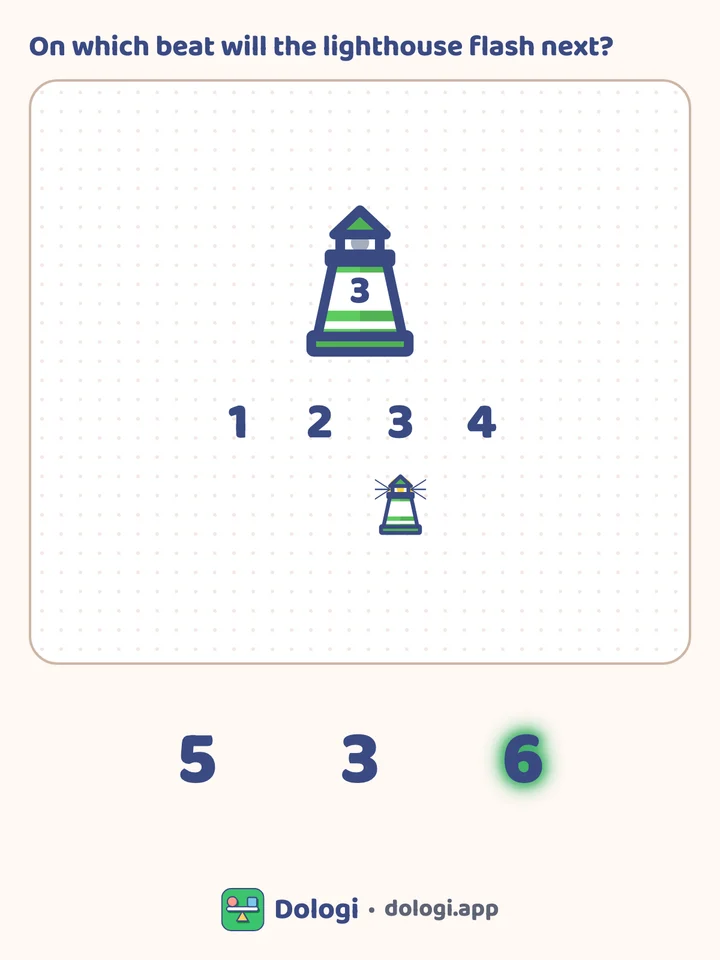
Ages 4–5
What it builds: The number on the lighthouse tells how many beats pass between flashes; your child looks at the flash already shown and counts on along the row of numbers. This is skip counting (by 2s, by 3s), an early step toward multiplication. Keep playing: count out loud from 1 to 10 together and both jump on 3, 6 and 9.
Puzzle 5: More and fewer
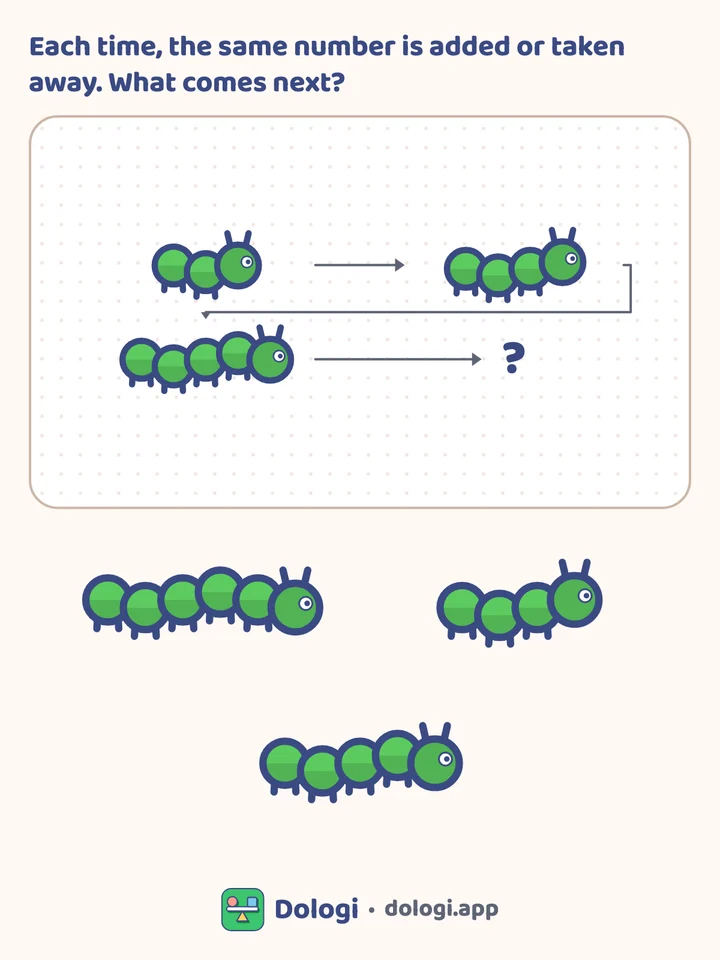
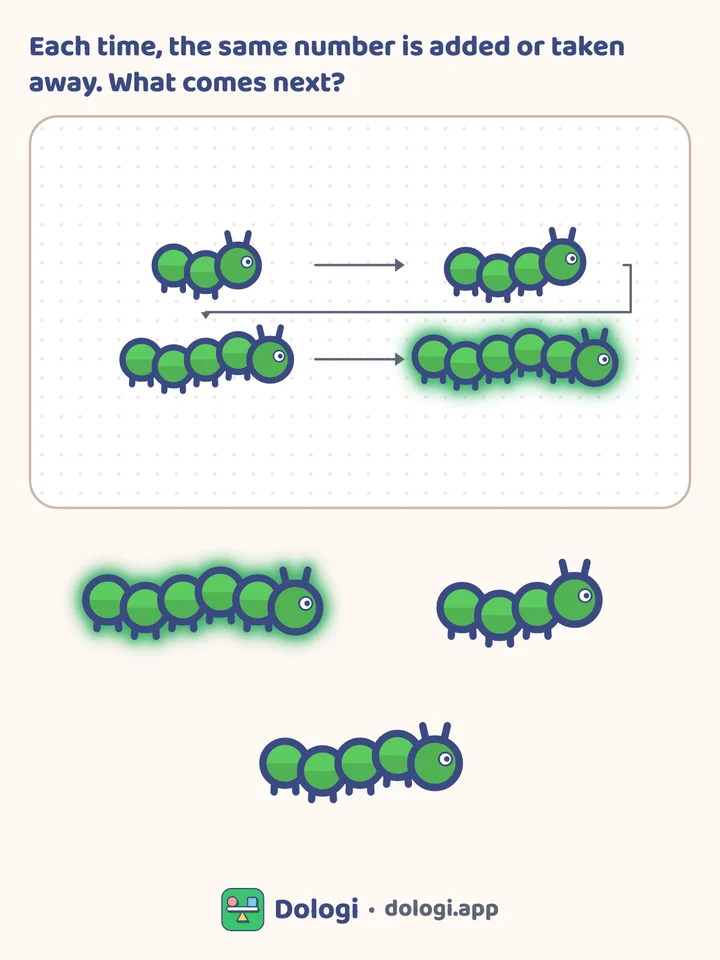
Ages 4–5
What it builds: Your child counts the segments on each caterpillar and compares neighbors to find how many are added or taken away each time. It practices counting and shows a number changing by the same amount, something they will meet again in addition and subtraction. Keep playing: lay out rows of 1, 2 and 3 craft sticks and ask how many the next row needs.
Did your child enjoy these pattern puzzles? The Dologi app has many more of the same kinds, with longer rows and rules of more steps, getting harder with age and with how your child plays, so a little practice each day never gets boring.