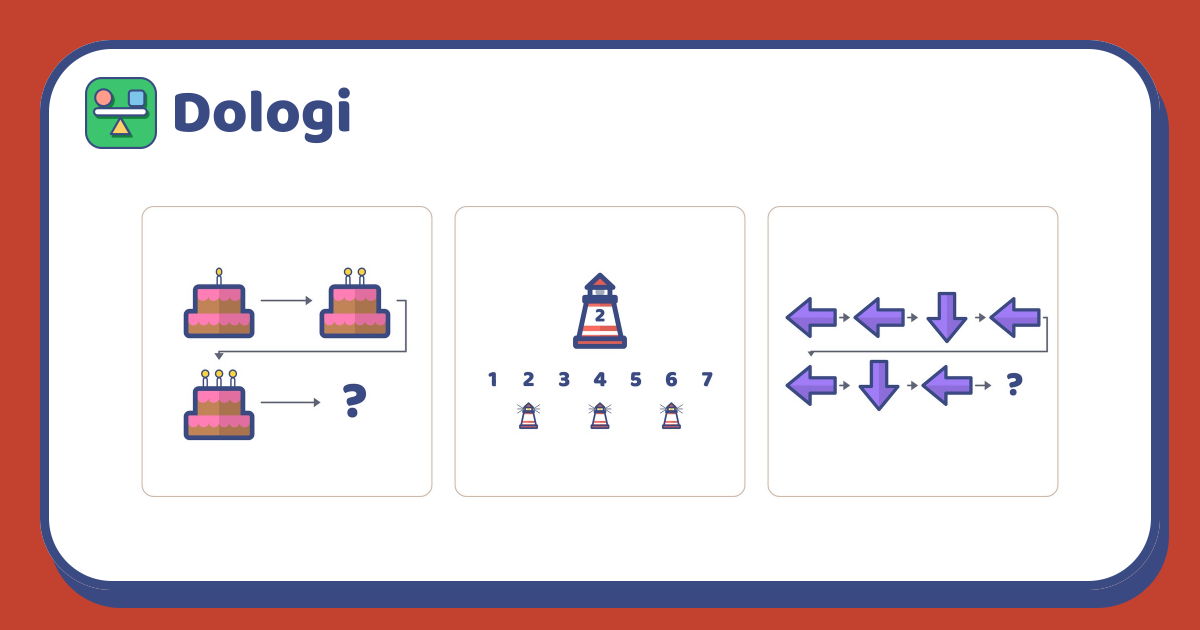
For kids ages 4–5, patterns are a "guess what comes next" game: two things taking turns, one more candle each time, a light that shines every other beat. Puzzles like these help children look closely, say what they see and predict ahead, the groundwork for math thinking later on. The five puzzles below come from the Dologi app and go from easy to harder.
How to use this post: show your child one picture at a time and let them point to each picture and say its name or number out loud. The answer is behind the "Show answer" button under each picture. If your child gets stuck, read the whole row aloud together in a steady rhythm; often they will "hear" what comes next.
Puzzle 1: Two keyboards taking turns
Ages 4–5
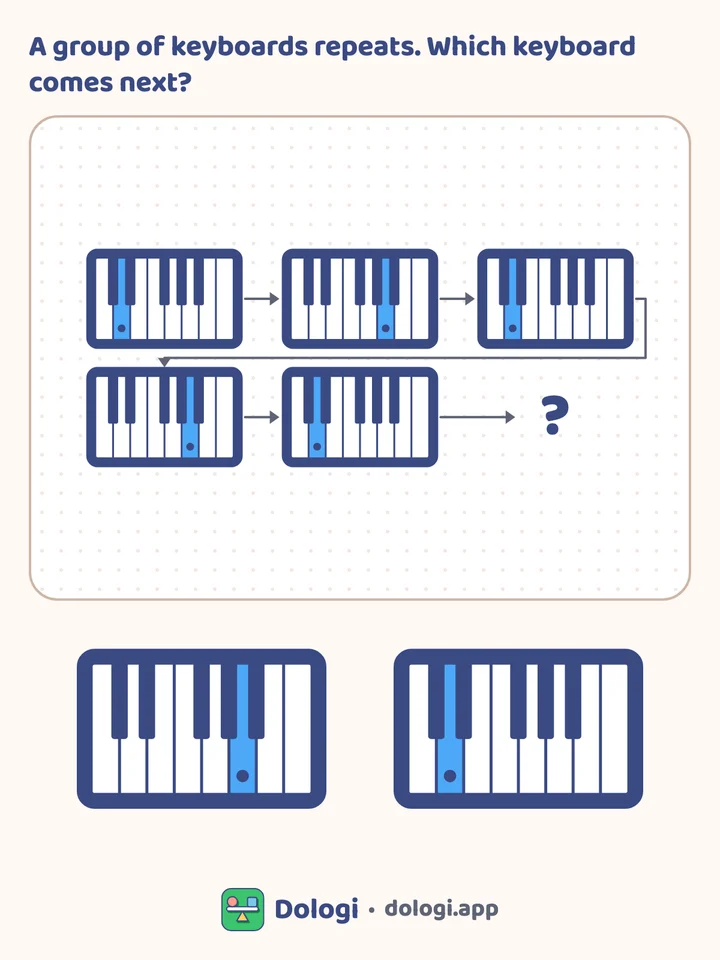
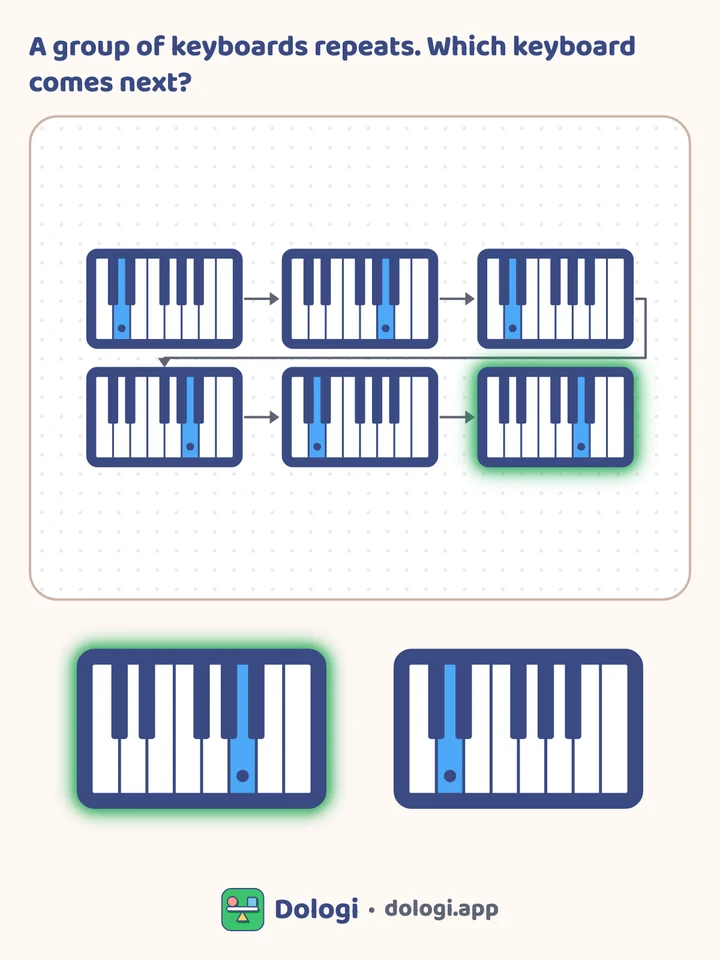
What it builds: Your child looks at the colored key on each keyboard and sees it hop back and forth between two places; saying "this side, that side" in rhythm helps them guess the next keyboard. Two things taking turns is the first kind of pattern children learn, like day and night or going out and coming home. Keep playing: lay spoons and chopsticks in a row, taking turns, then stop and let your child place the next one.
Puzzle 2: More and fewer
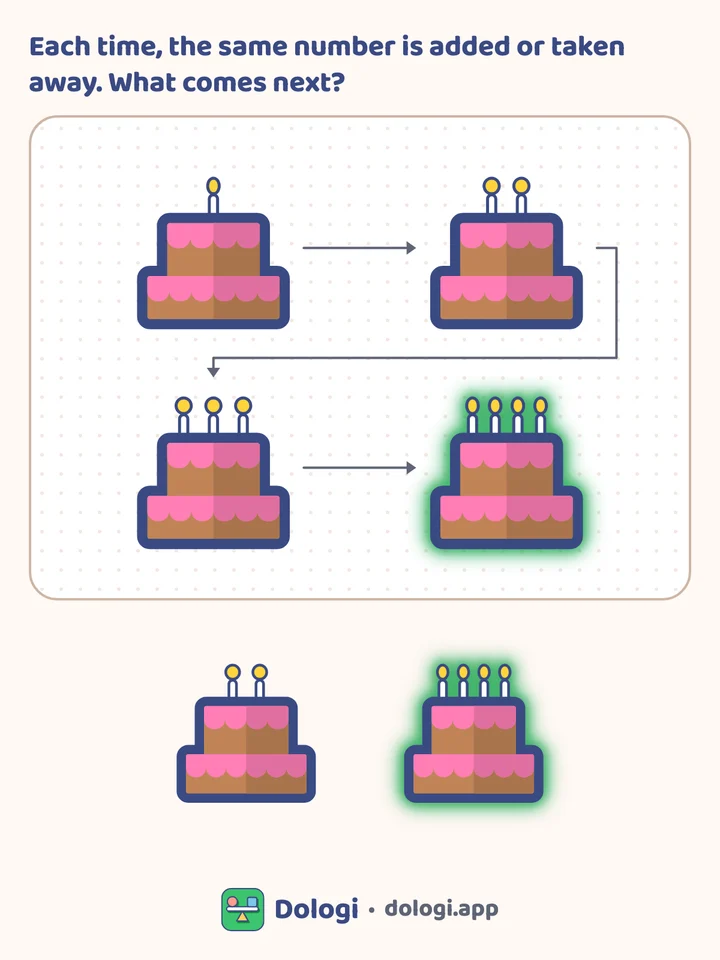
Ages 4–5
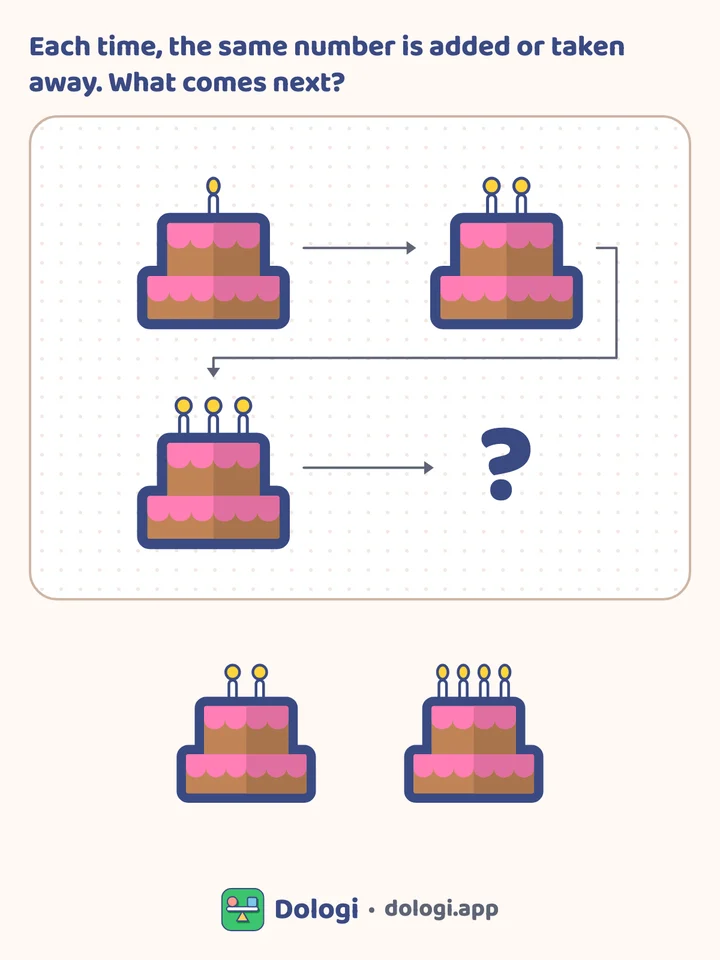
What it builds: Your child counts the candles on each cake and sees that every cake has one more candle. Counting on by one is the first step toward addition, and it is also how they understand getting one year older each birthday. Keep playing: make play-dough cakes, add 1, 2, 3 toothpick candles together, and ask how many the next cake needs.
Puzzle 3: What comes next?
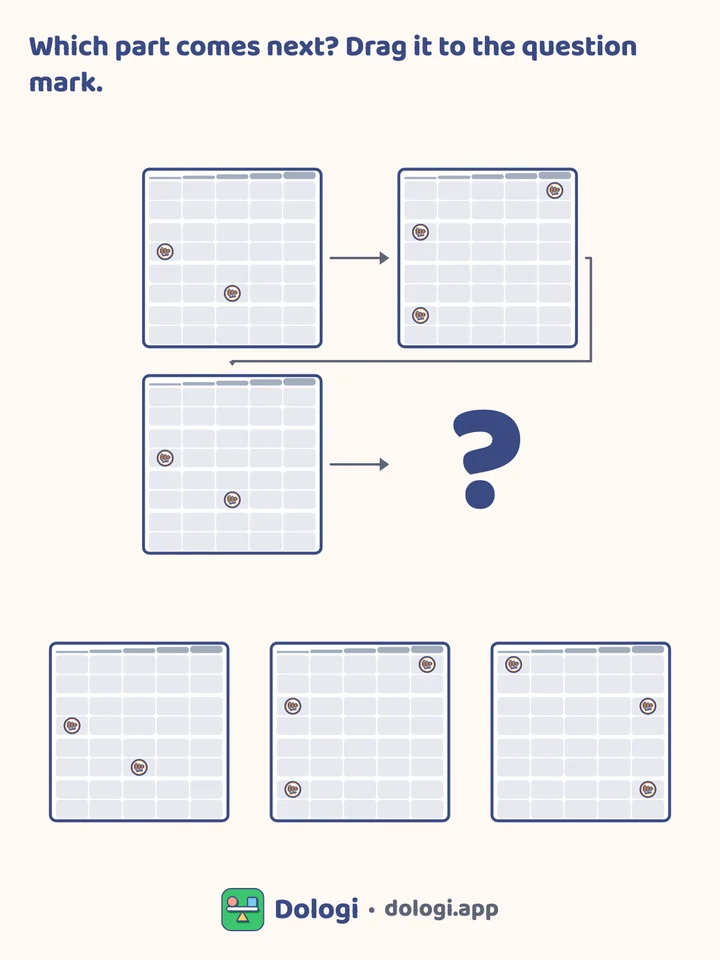
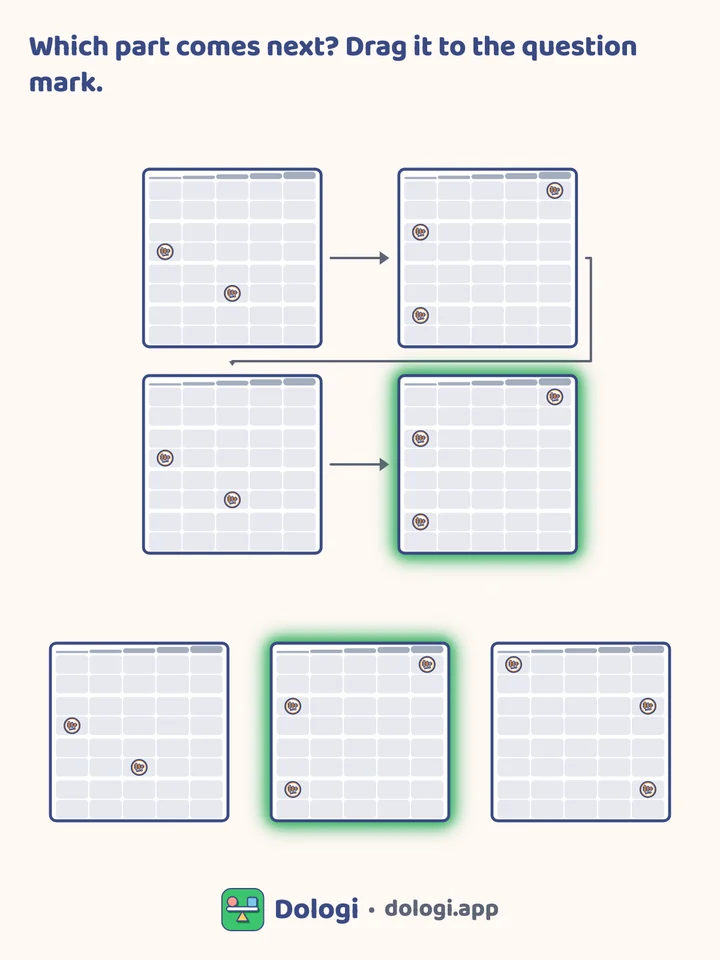
Ages 4–5
What it builds: Each song part is a box with a few notes; your child looks at where the notes sit to see which parts match, then notices that two parts keep coming back in turn. Comparing two pictures to see if they are the same is an everyday observation skill, from finding matching socks to sorting toys. Keep playing: sing a two-line song together, clapping on the first line and stomping on the second, then let your child carry on alone.
Hint: Find the part that comes back. Tap a part to hear it.
Puzzle 4: Blinking lighthouses
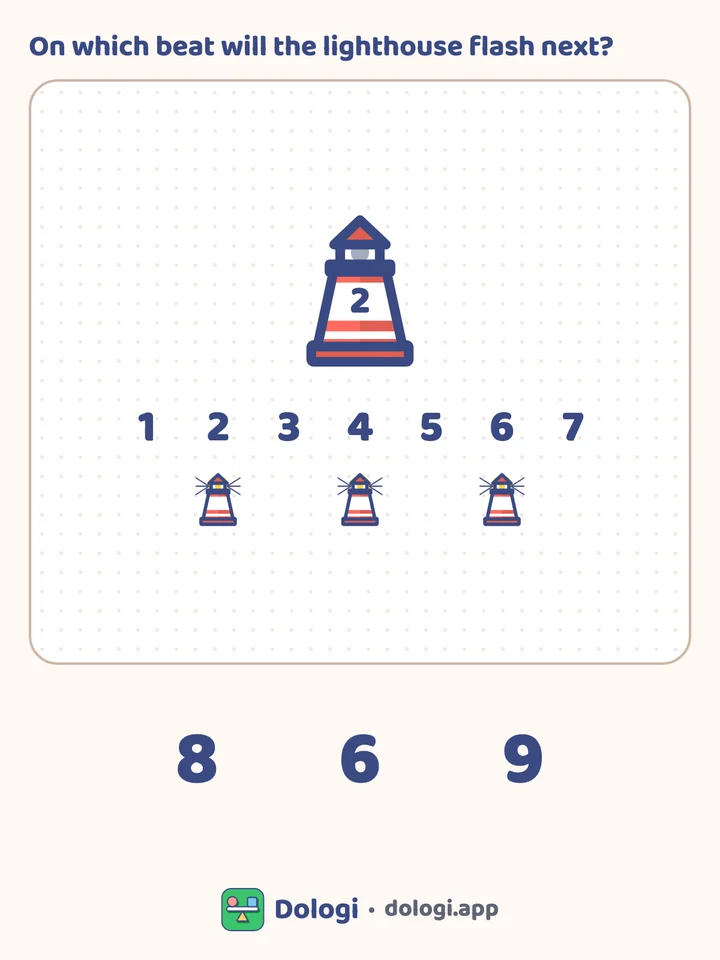
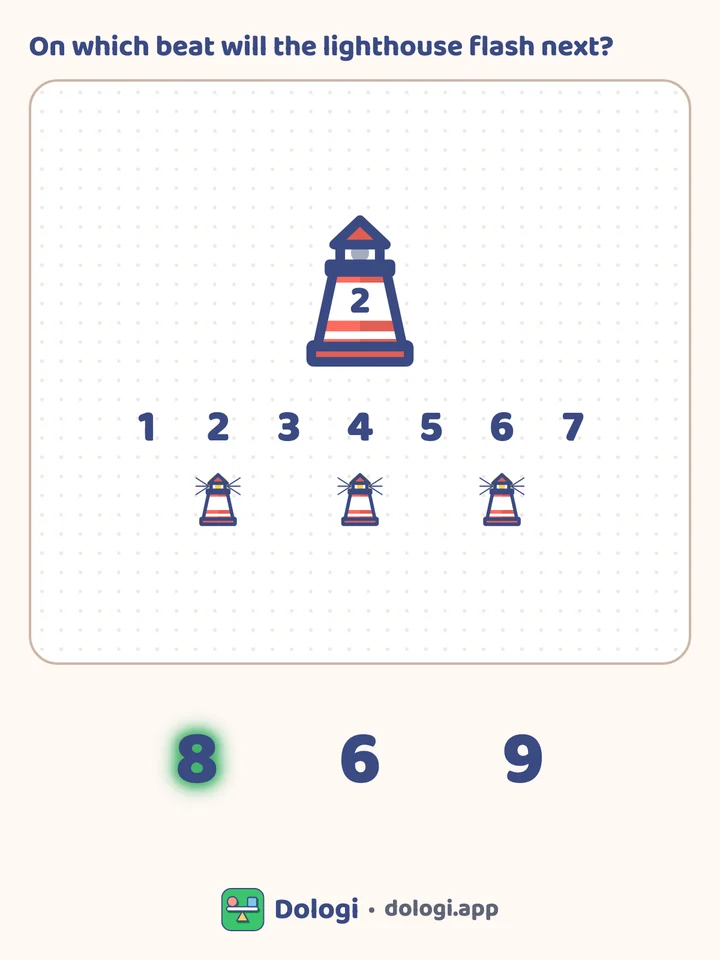
Ages 4–5
What it builds: The number on the lighthouse tells how many beats pass between flashes; your child looks along the number row, sees the light come on every other number, then keeps counting past the end of the row. Counting every other number (2, 4, 6) helps them count things that come in pairs, like shoes, chopsticks and hands. Keep playing: walk along a tiled path and hop on every other tile, counting out loud.
Puzzle 5: Repeating arrows
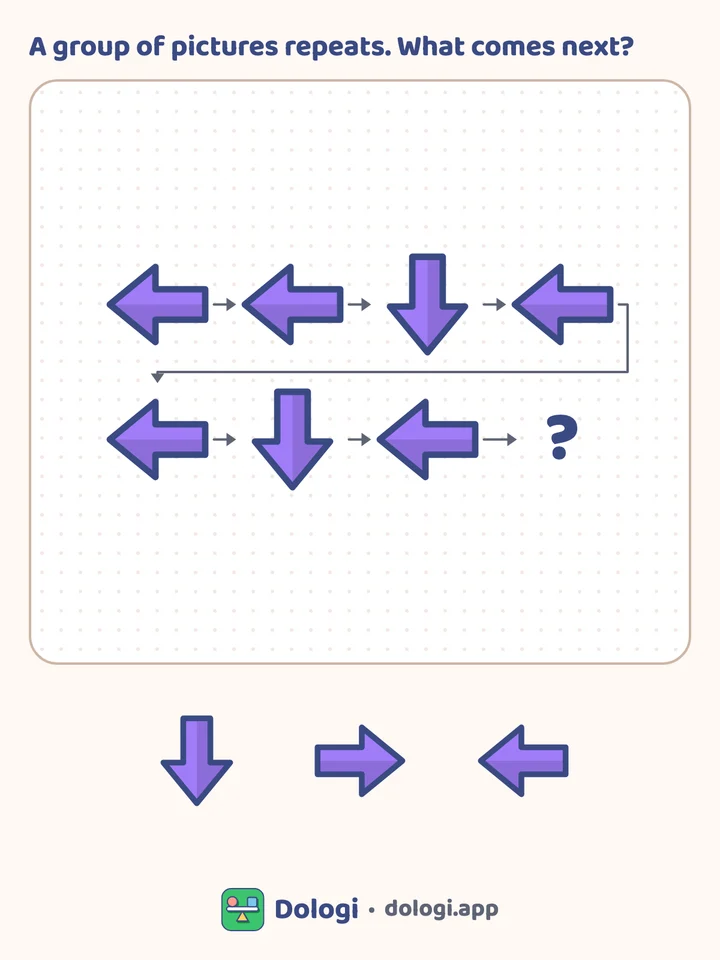
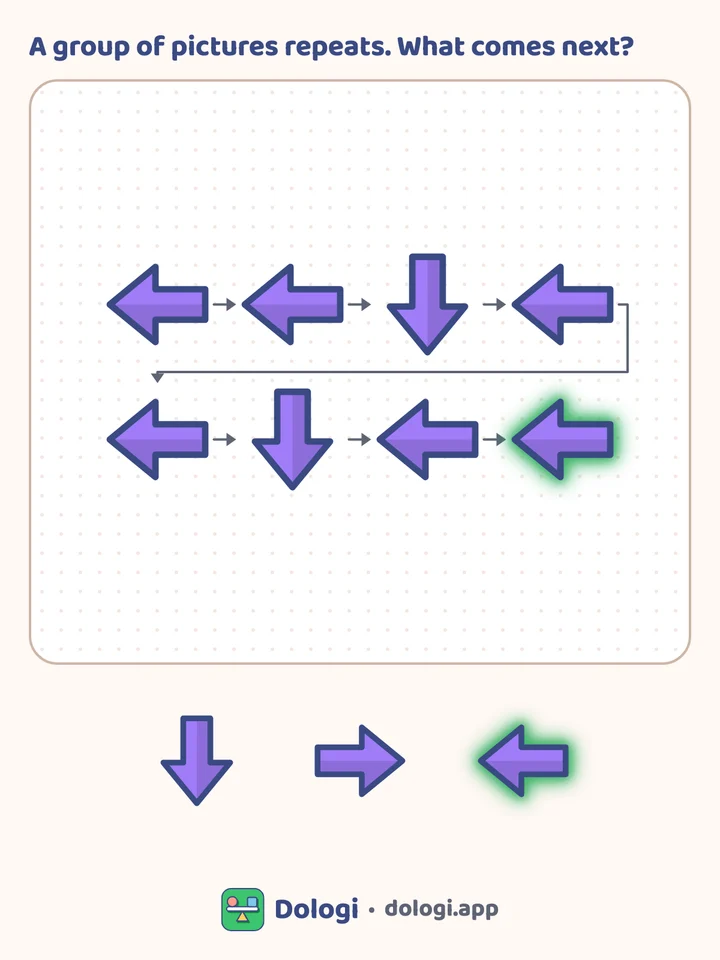
Ages 4–5
What it builds: Your child says the direction of each arrow out loud to find the repeating group, then guesses the next arrow. Naming directions helps them get used to left, right, up and down, words they need for games, crossing the road and starting school. Keep playing: play "follow the arrows": you point up, up, right, your child steps along, then continues the next group on their own.
Hint: Say the pictures out loud in order. Where does the group start again?
If your child enjoyed these puzzles, the Dologi app has many more of the same kinds: longer rows, bigger repeating groups and lights that skip more beats. The puzzles get harder with age and with how your child plays, so they can play a little each day without getting bored.