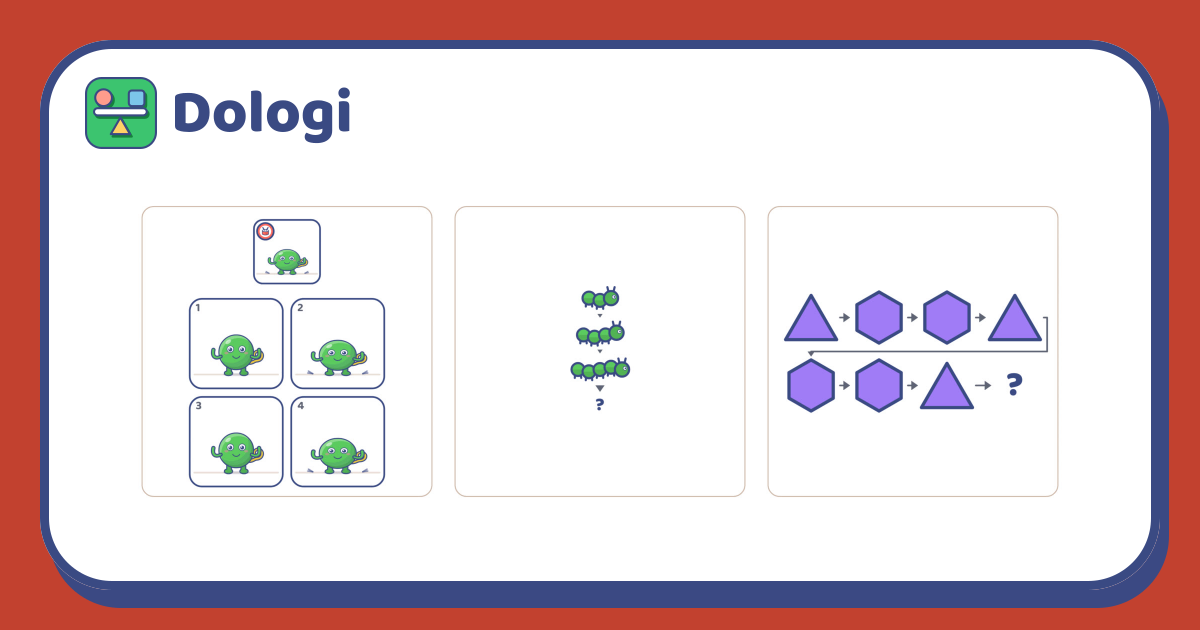
Finding a pattern means finding what keeps coming back: a lamp goes on and off, a caterpillar grows longer, a group of shapes starts over. At ages 4–5, children begin to use what they see to predict what comes next, and that skill sits underneath both math and reading later on. The seven puzzles below come from the Dologi app, ordered from easy to harder, and several of them bring in music and light so your child sees patterns everywhere.
How to use this post: show your child one picture at a time and let them point and describe what they see before choosing. The answer is hidden behind the "Show answer" button under each picture. If your child picks the wrong one, don't correct right away: ask "what keeps repeating?" and look at the row again together from the start.
Puzzle 1: Blinking lamp
Ages 4–5
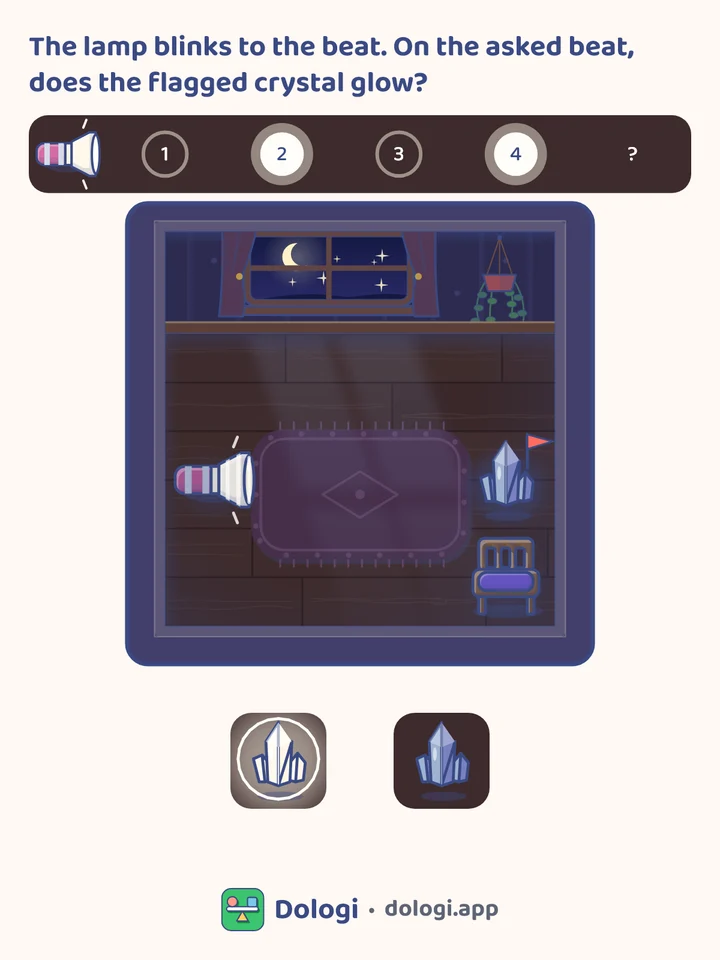
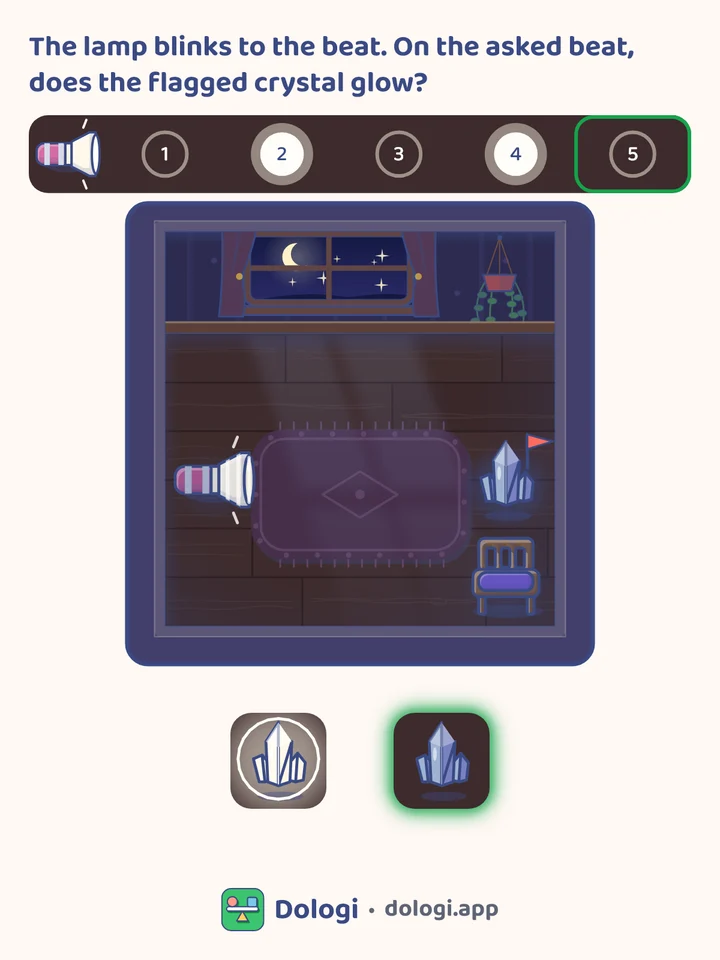
What it builds: Your child reads the row of numbers to see on which beats the lamp is on and on which it is off, then predicts the beat with the question mark; after that comes one more step: what happens to the flagged crystal when the lamp is on or off. Linking two events like this is how children learn cause and effect, like flipping a switch to light a room. Try at home: in the evening, switch a flashlight on and off in time with your claps and ask whether the teddy bear will be lit on the next clap.
Puzzle 2: Dance to the music
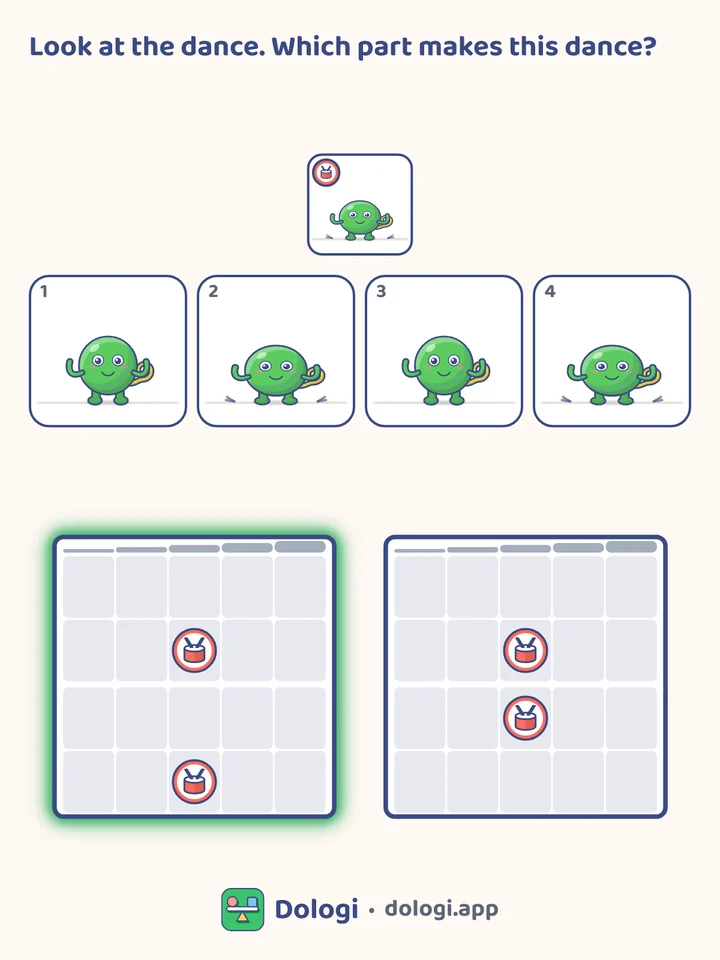
Ages 4–5
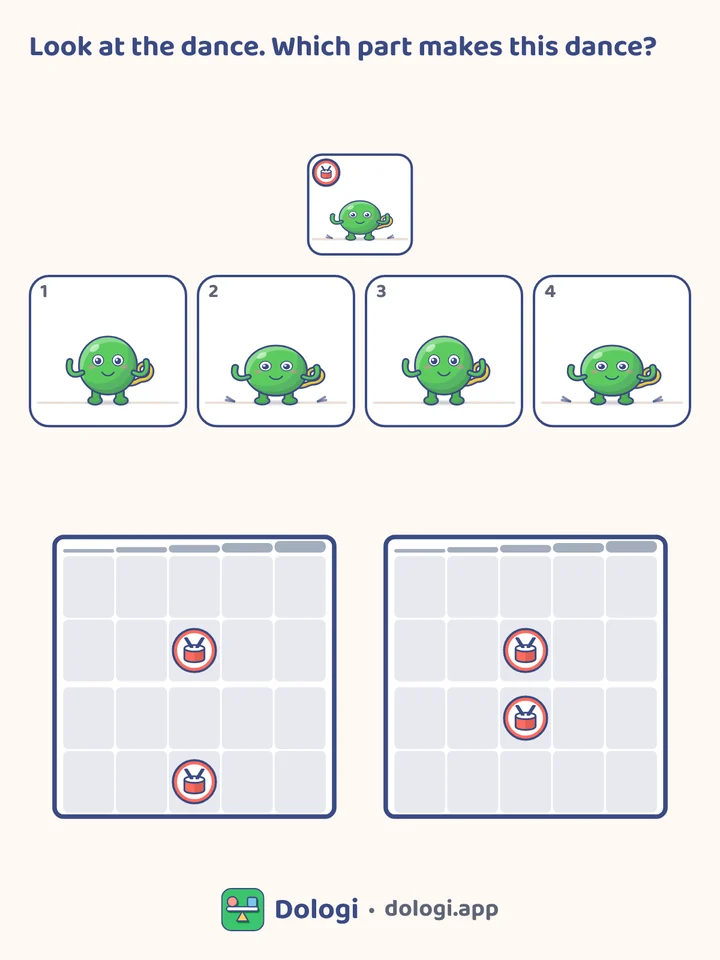
What it builds: The small box at the top shows that whenever the drum plays, the little dancer stomps; your child watches the four beats of the dance, finds the stomping beats, then looks for the song part with a drum on exactly those beats. Turning movements into a grid of symbols is a first step toward reading tables, calendars and even sheet music. Try at home: tap a pot on some of four counted beats while your child stomps at the right moments, then swap roles.
Puzzle 3: More and fewer
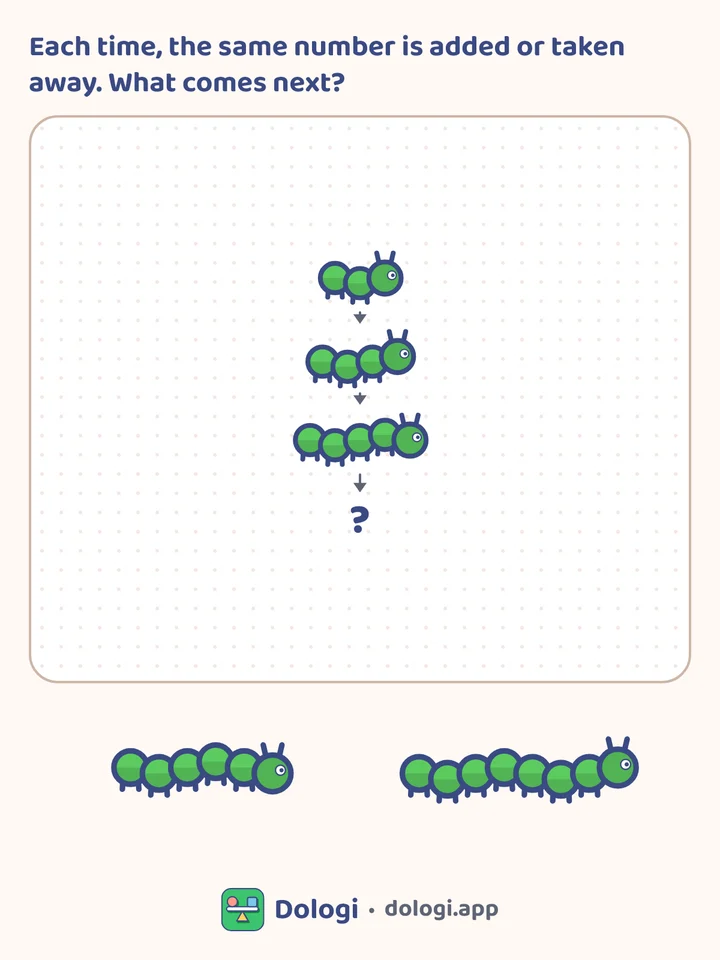
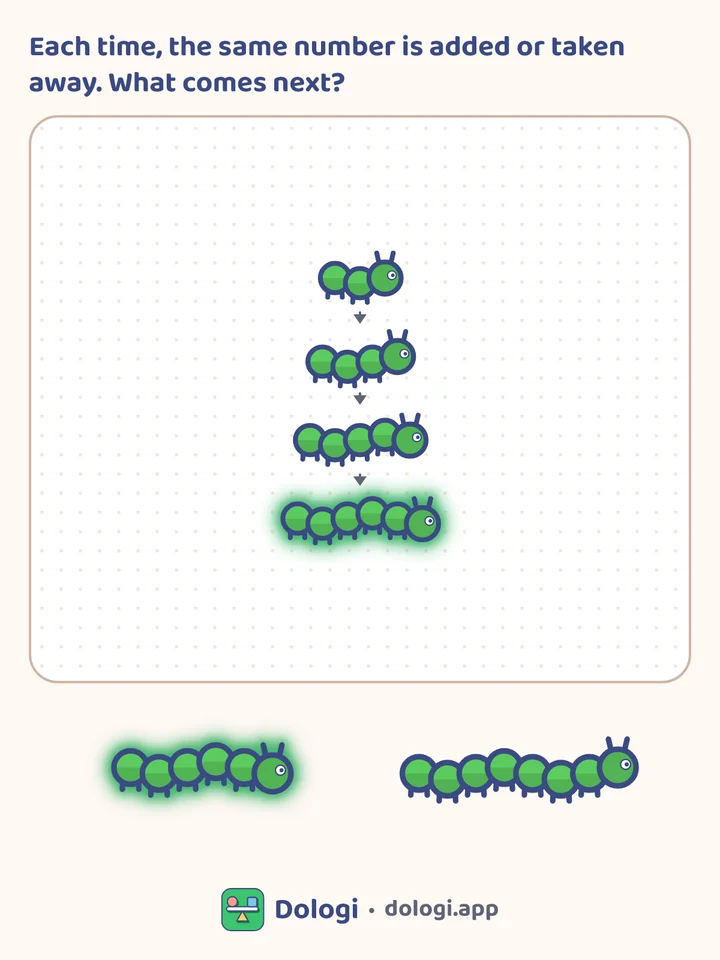
Ages 4–5
What it builds: Your child counts the segments of the caterpillar in each picture, compares neighbors to see how much changes each time, then uses that same number to predict the next caterpillar. Counting and comparing two numbers is the groundwork for the adding and subtracting they will meet in first grade. Try at home: line up bottle caps into trains, each one longer than the last by the same number of caps, and let your child build the next train.
Puzzle 4: Blinking lighthouses
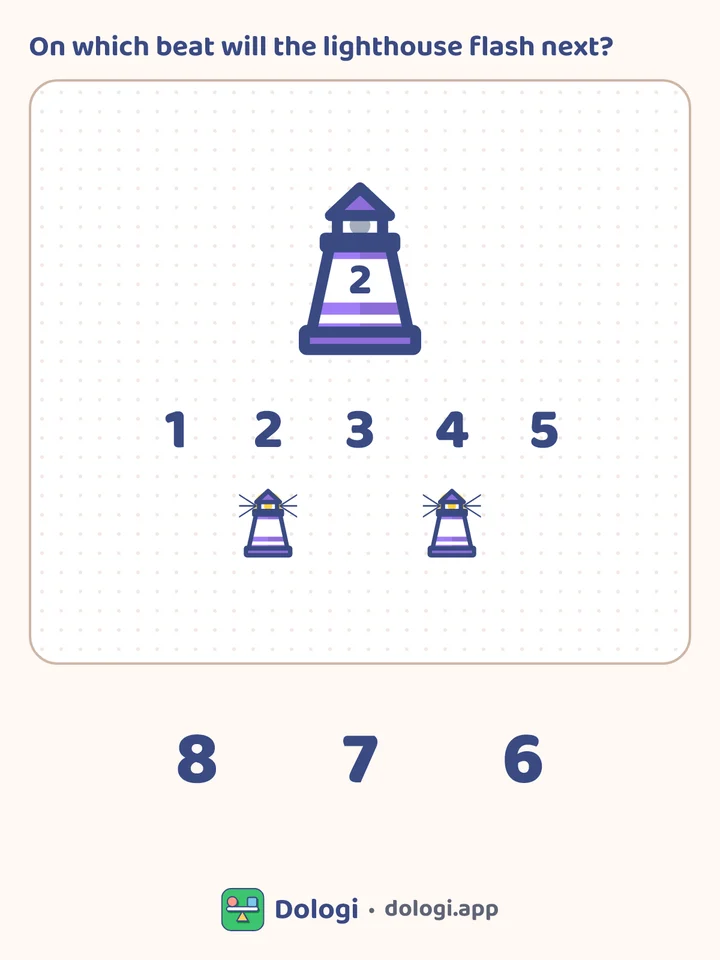
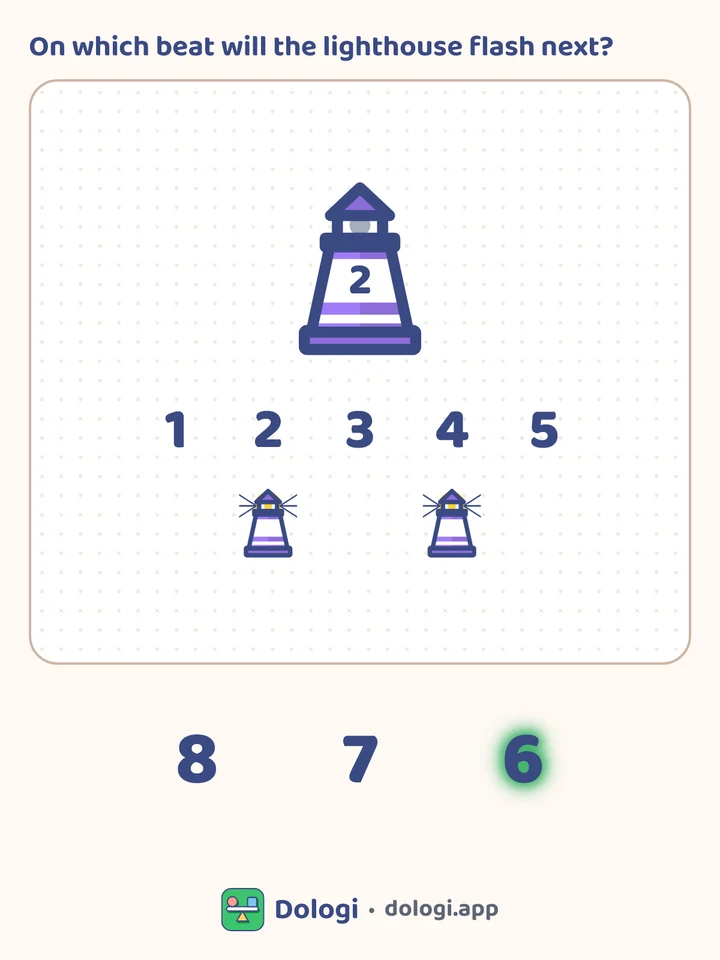
Ages 4–5
What it builds: The number on the big lighthouse tells how many beats pass between flashes; your child checks this on the number row, where small lighthouses are flashing. The question goes beyond the end of the row, so your child has to keep counting in their head past the last number. Try at home: lay a row of cushions on the floor, place soft toys on some of them in a steady rhythm, and ask which cushion would get the next toy if the row went on.
Puzzle 5: Next key
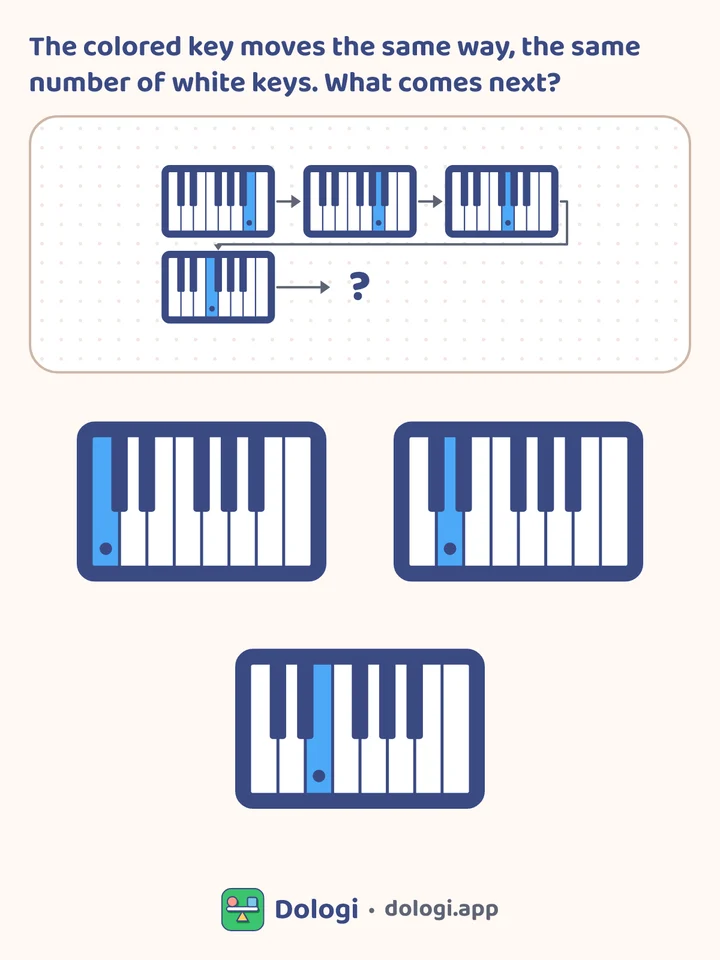
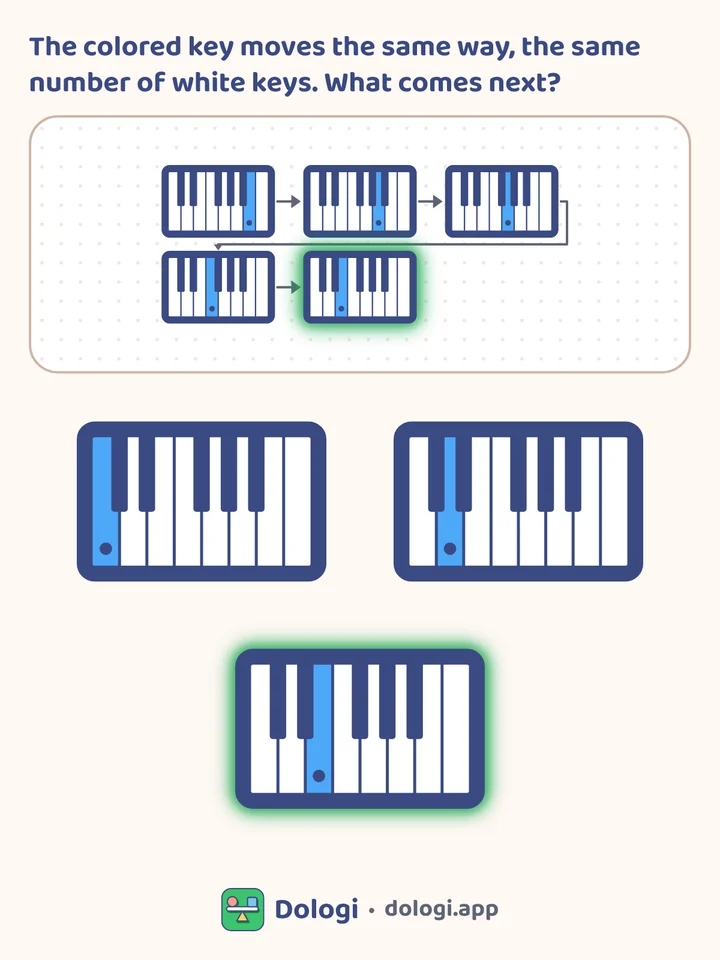
Ages 4–5
What it builds: Your child finds the colored key on each keyboard and notices it moving toward one side, the same number of white keys each time. Following something that moves in equal steps helps with counting along a ruler, along a row of squares, and reading words in one direction. Try at home: turn a row of plastic cups upside down, hide a treat under one and move it the same number of cups each time, then let your child guess where it will be next.
Puzzle 6: What comes next?
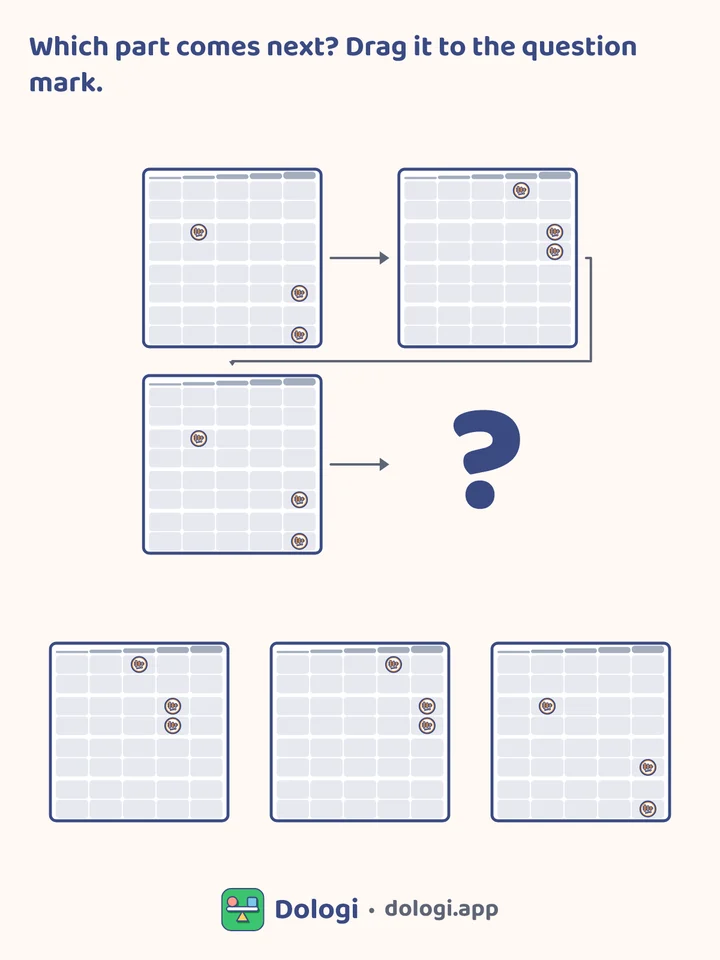
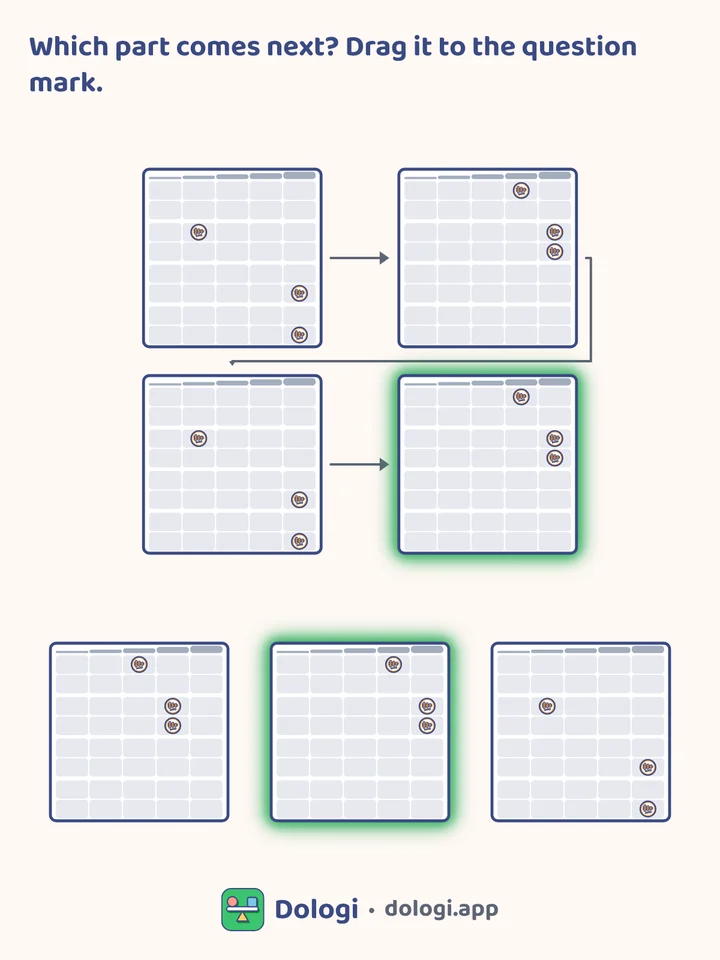
Ages 4–5
What it builds: Each song part is a grid with a few notes; your child compares where the notes sit to tell which parts match, then finds the pair of parts that keeps taking turns. Some choices look almost the same and differ by only a note or two, so your child has to check square by square before picking. Patiently checking details like this helps when copying from the board or spotting the difference between two pictures. Try at home: lay out two nearly identical rows of buttons, swap just one, and let your child find the change.
Hint: Find the part that comes back. Tap a part to hear it.
Puzzle 7: Repeating patterns
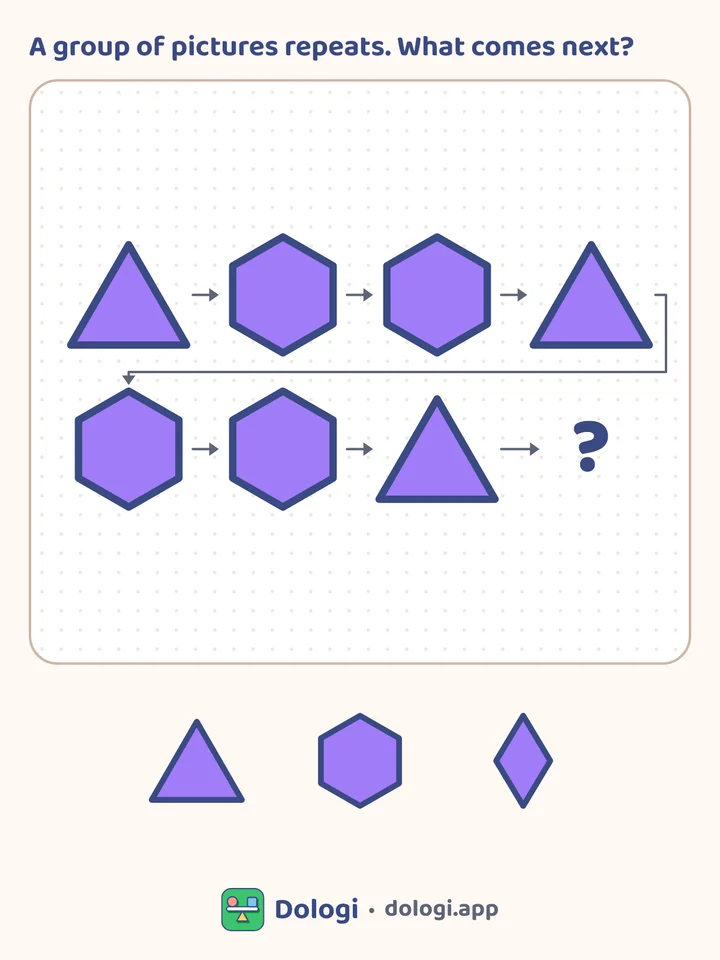
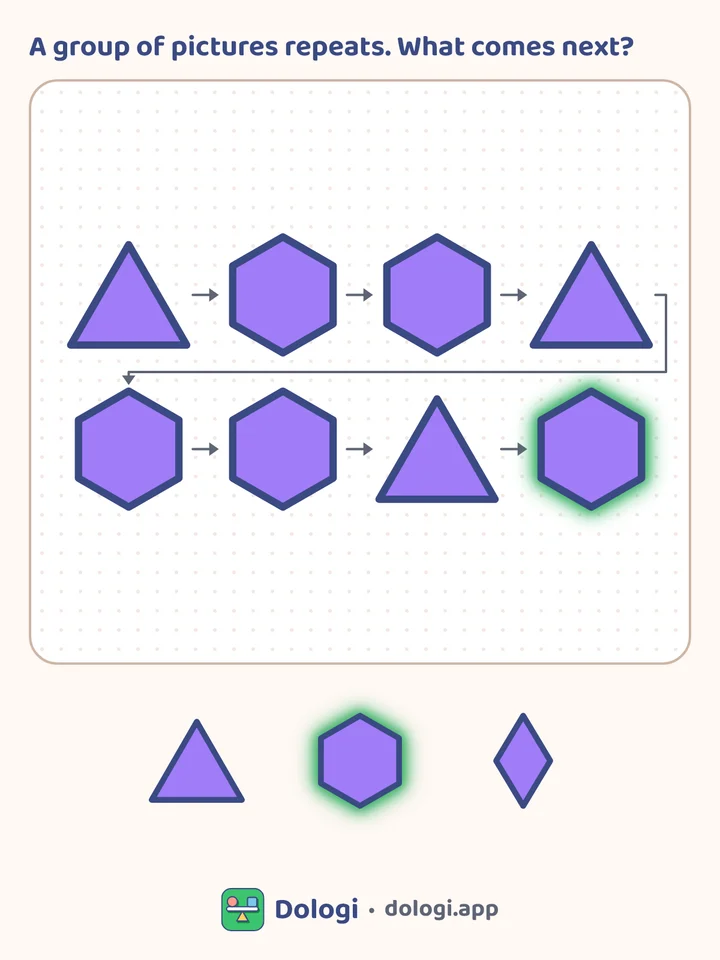
Ages 4–5
What it builds: Your child names each shape out loud in order to find the group that repeats, points to where the group starts again, then predicts the shape after the question mark. Recognizing a repeating group helps children learn songs and rhymes and feel at home in daily routines. Try at home: line up toys in a spoon, bowl, cup group, stop halfway for your child to place the next one, then let your child invent a new group for you to guess.
Hint: Say the pictures out loud in order. Where does the group start again?
If your child enjoyed these puzzles, the Dologi app has many more of the same kinds: lamps that blink to longer rhythms, song parts with more notes, repeating groups with more shapes. Puzzles get harder with age and with how your child plays, so a little play each day still feels just right.