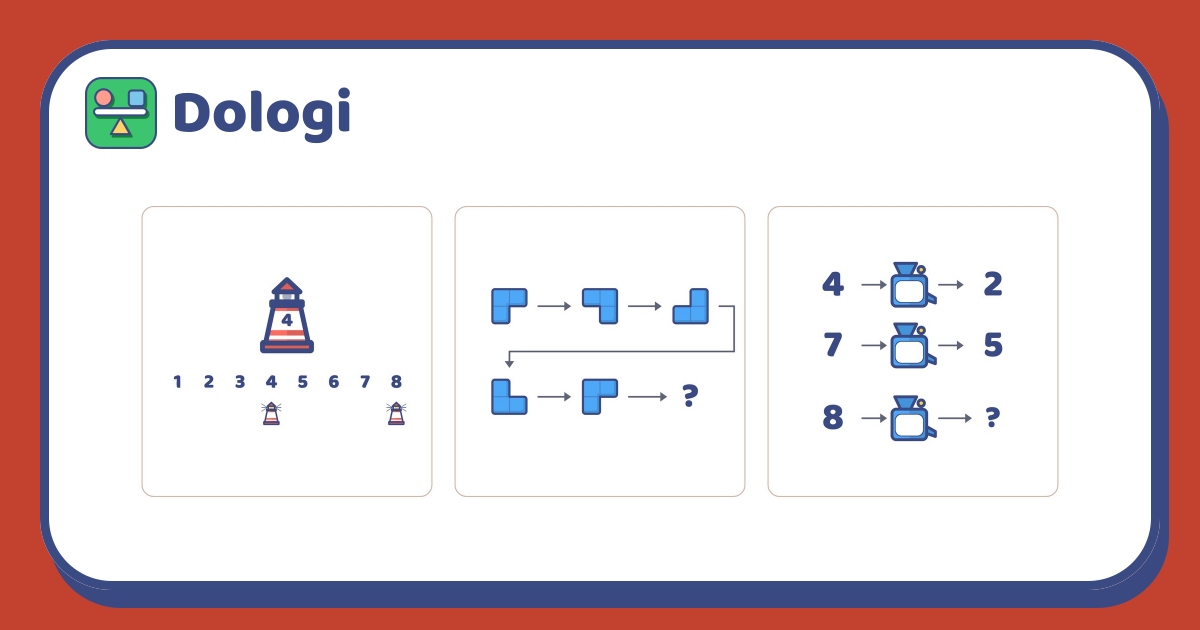
At ages 5–6, children don't just see pictures repeating; they start to notice steady changes: a light that flashes every few beats, a block that turns a bit more each time, a piano key that moves along by a few keys, a machine that always does the same thing. This prepares them for skip counting, addition, subtraction and a sense of direction. The five puzzles below come from the Dologi app, suit kids ages 5–6, and go from easy to harder.
How to use this post: show your child one picture at a time and let them trace each step with a finger before choosing. The answer is behind the "Show answer" button under each picture. If your child picks the wrong one, ask "how does it change each time?" and redo the last step together.
Puzzle 1: Blinking lighthouses
Ages 5–6
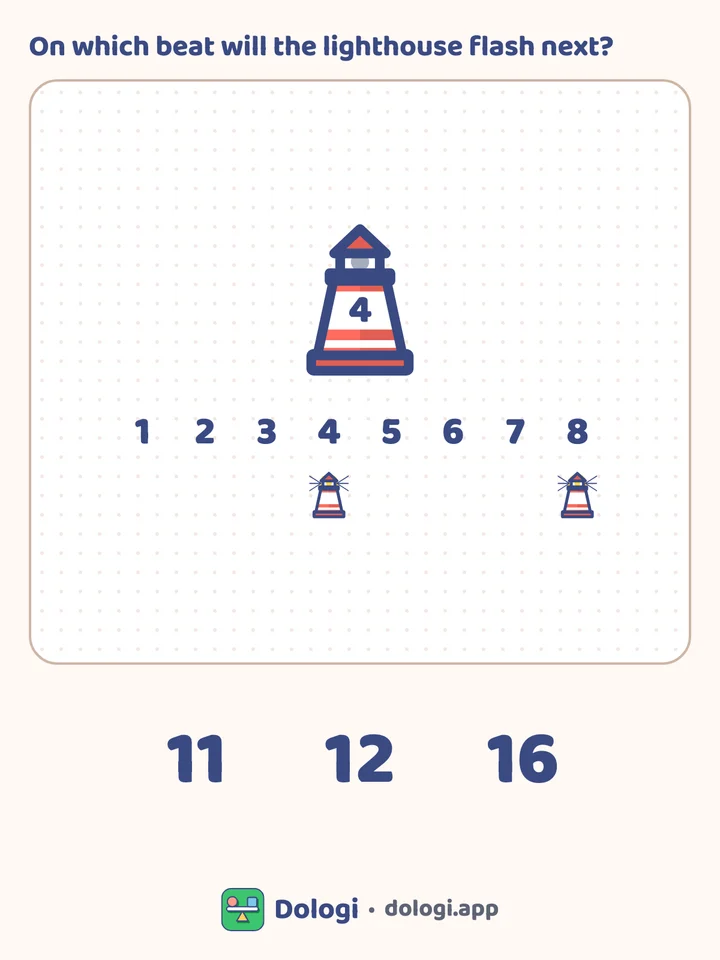
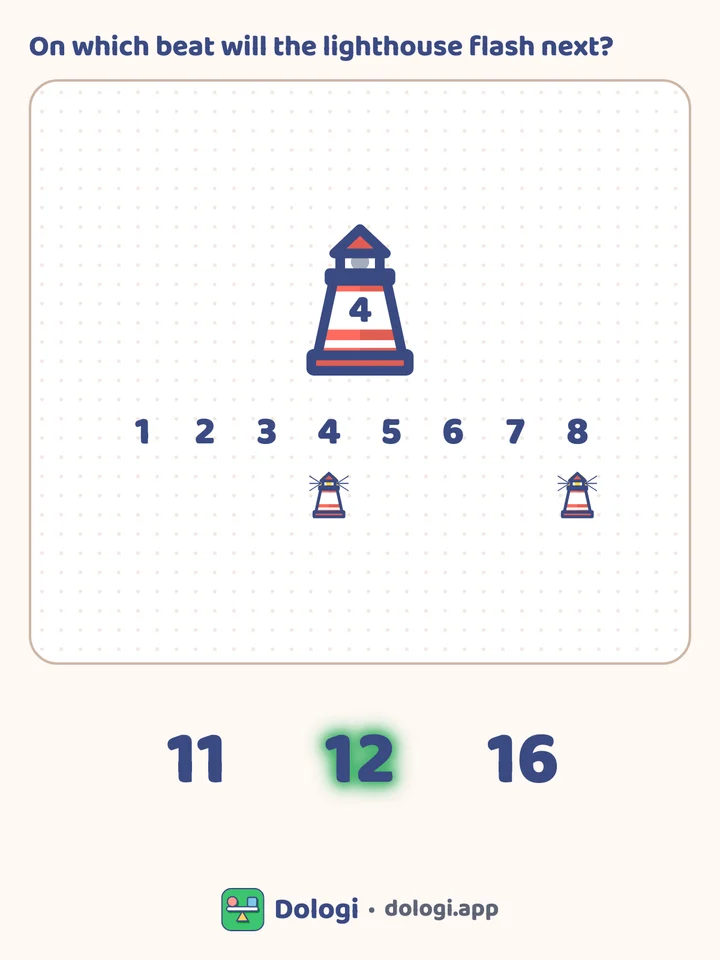
What it builds: The number on the lighthouse tells how many beats pass between flashes, and the number line below already marks the first flashes; your child keeps counting on in equal steps, even past the end of the line. Skip counting like this (by 2s, by 4s, by 5s) is an early step toward multiplication and helps them count things that come in groups, like pairs of shoes or hands. Keep playing: climb the stairs together, two steps at a time, counting out loud on every stop.
Puzzle 2: Turning blocks
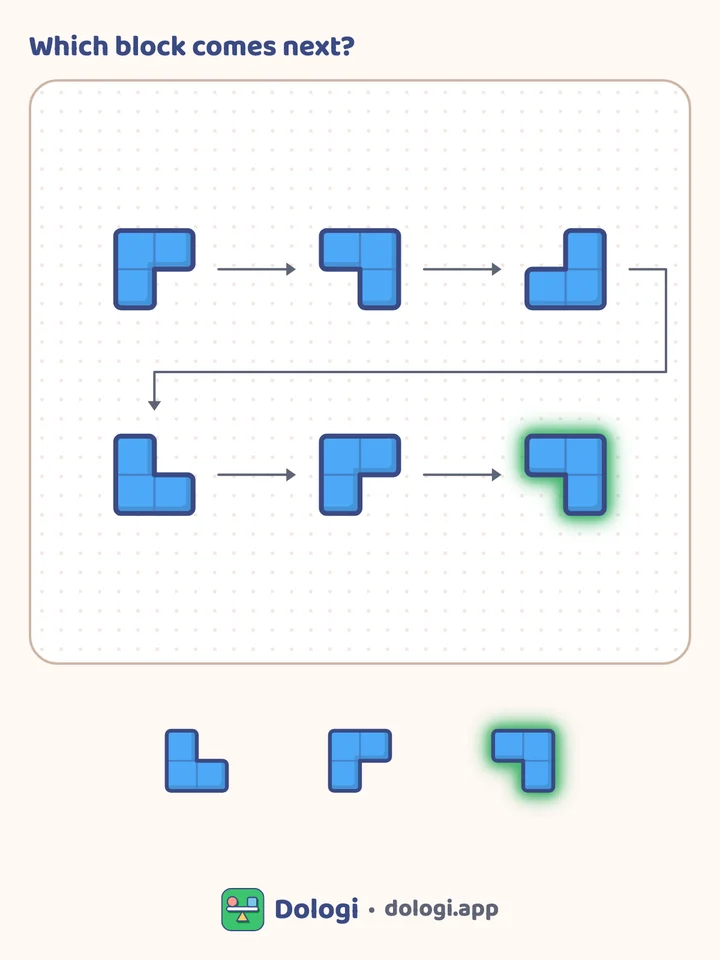
Ages 5–6
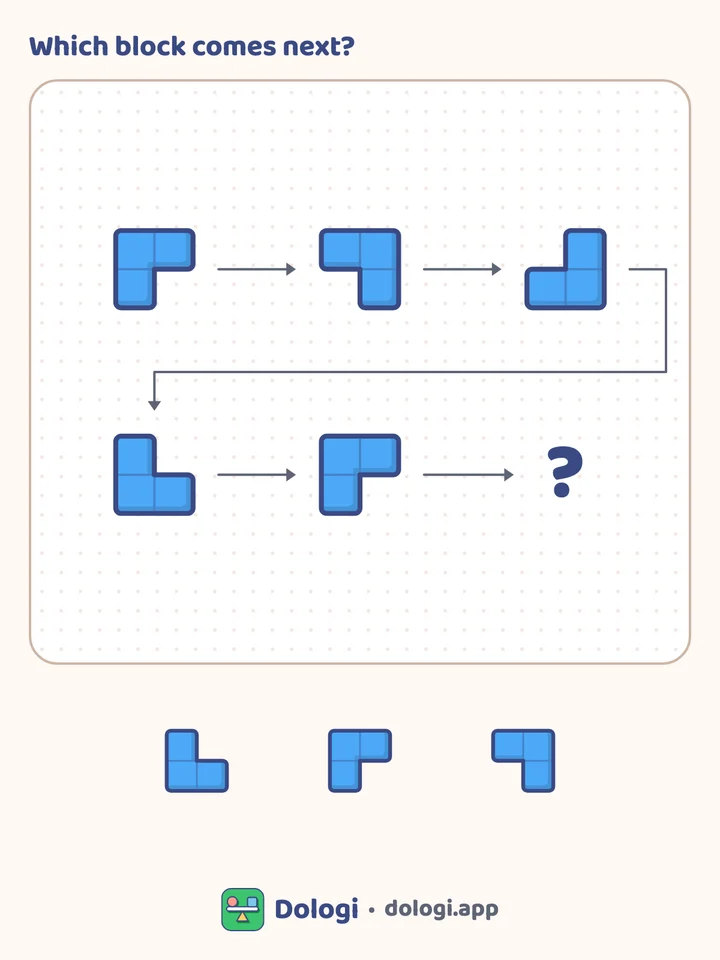
What it builds: The L-shaped block turns the same way each time, a quarter turn at a step; your child watches one part of the block, such as the notch, to see where it goes after each turn. Turning shapes in their head helps with jigsaws, building blocks and, later, reading maps. Keep playing: put a mug with a handle on the table, turn it a quarter turn each time, and ask which way the handle will point next.
Puzzle 3: The missing keyboard
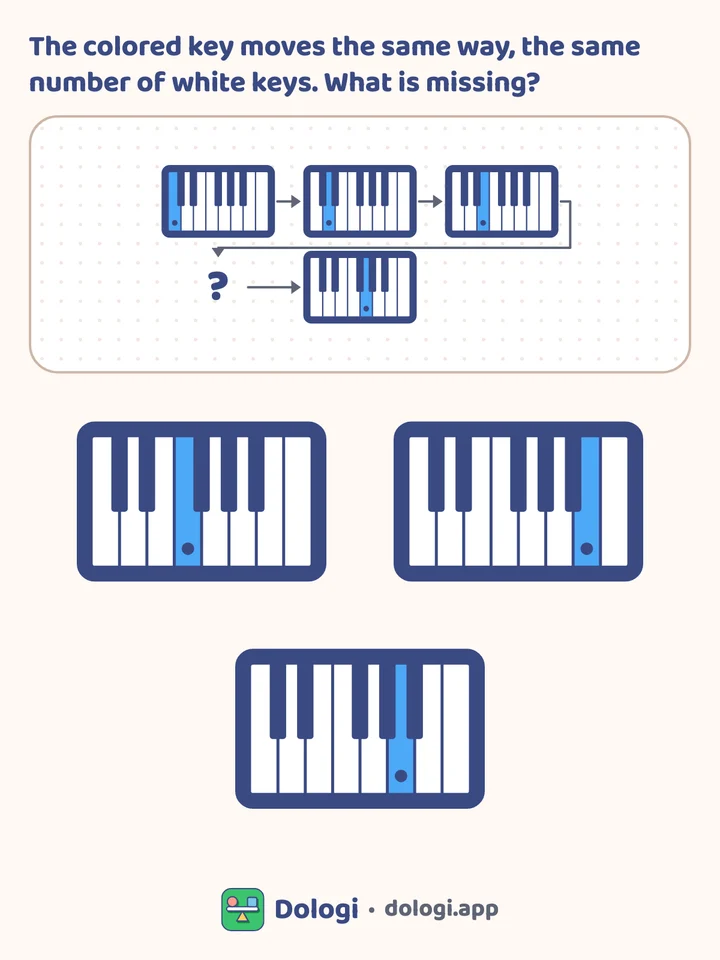
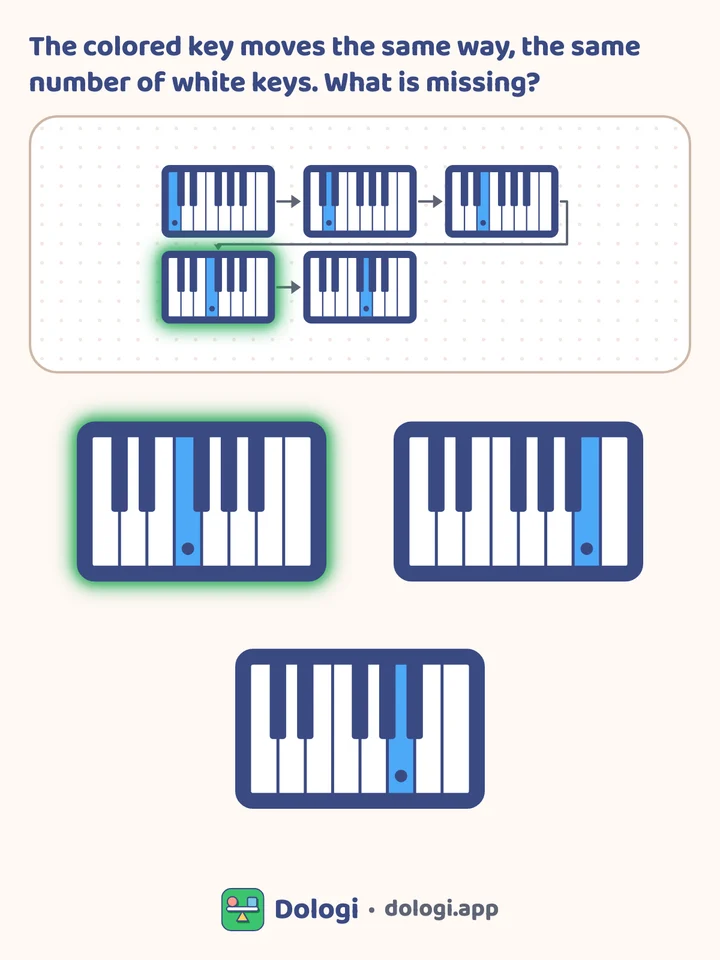
Ages 5–6
What it builds: The colored key always moves the same way and by the same number of white keys; your child counts the keys between two keyboards side by side to find the step, then uses it to fill the gap in the middle of the row. Counting equal steps along a row of keys is practice for moving along a number line, a step toward addition and subtraction. Keep playing: line up ten bottle caps, put a toy on one, and move it two caps each turn; ask where it will land next.
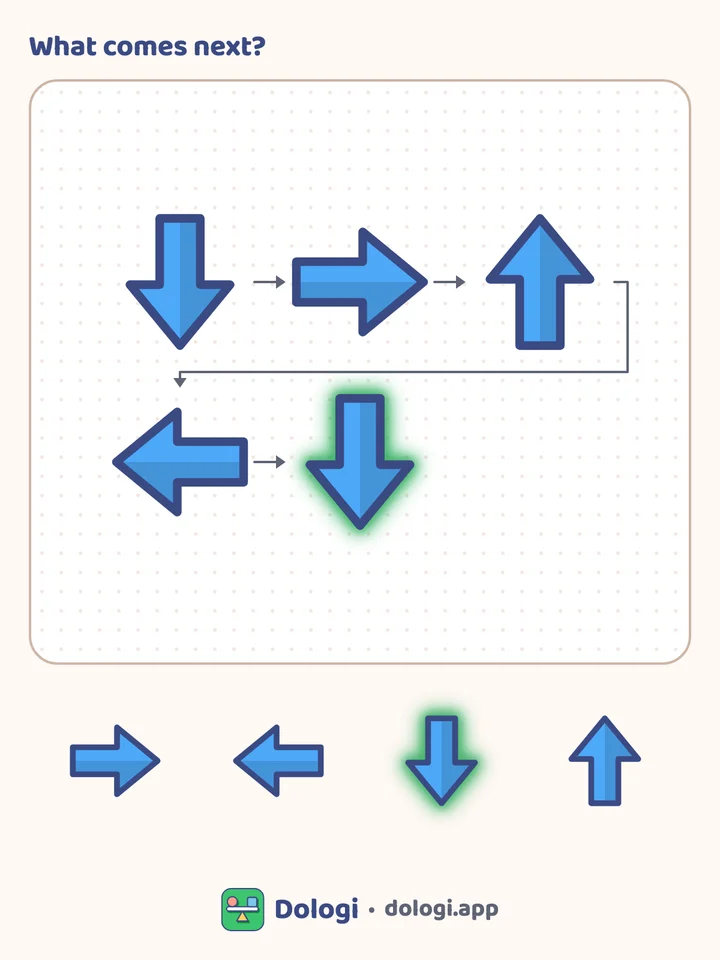
Puzzle 4: Arrows going around
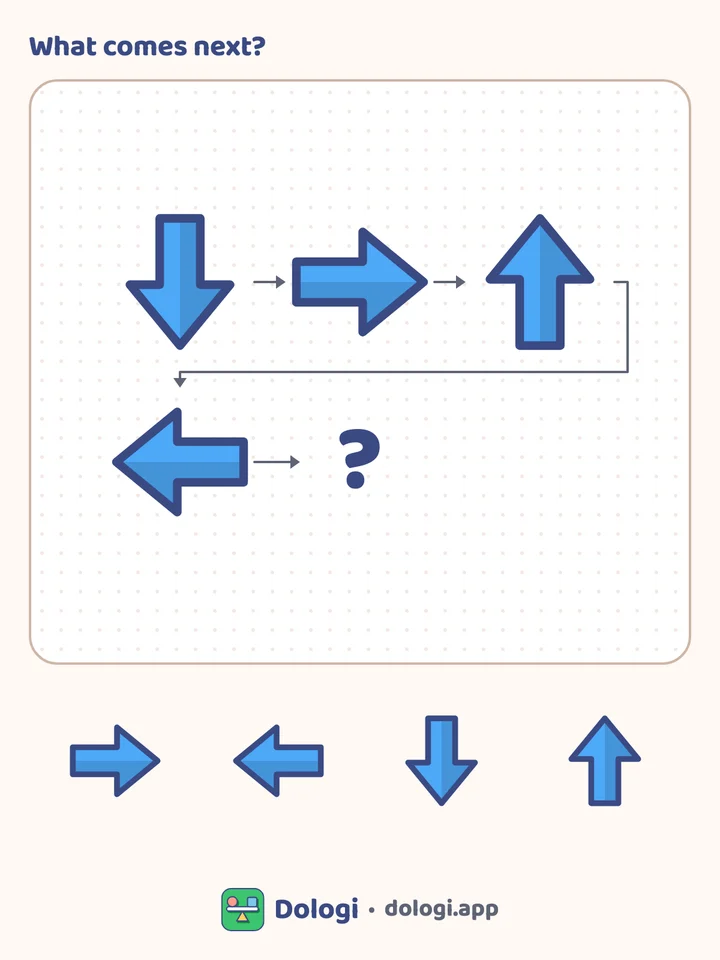
Ages 5–6
What it builds: The arrow turns the same way after every step; your child says each direction out loud (up, down, left, right) and works out which one comes next. Naming directions and seeing them change steadily helps them follow directions, play movement games and, later, learn to code. Keep playing: try a "robot" game: your child stands in the middle of the room and turns a quarter turn every time you clap; guess ahead where they will face after three claps.
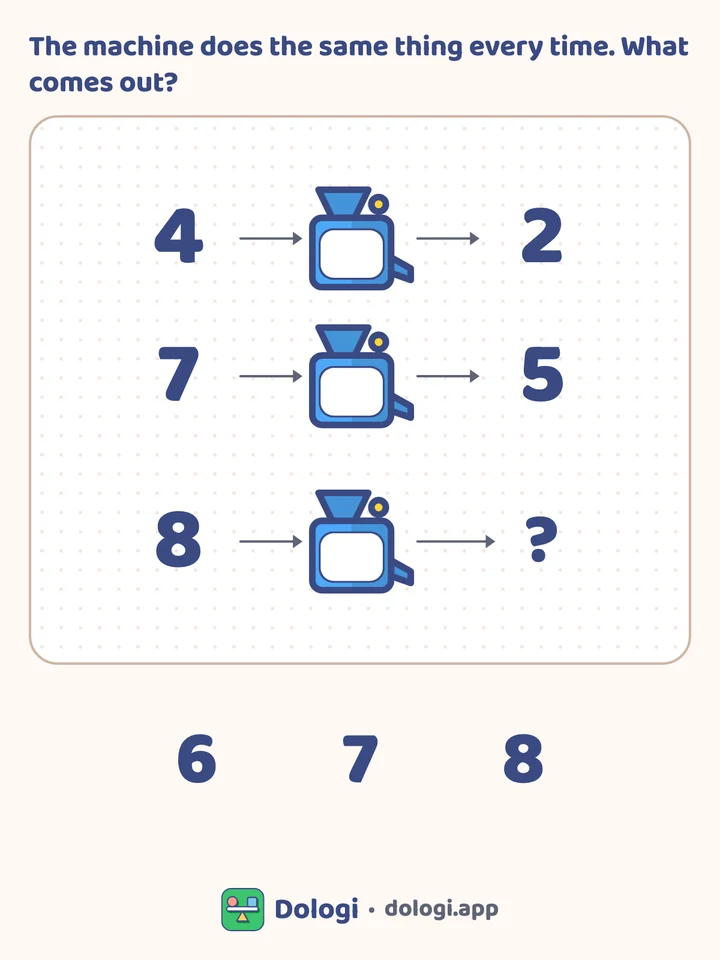
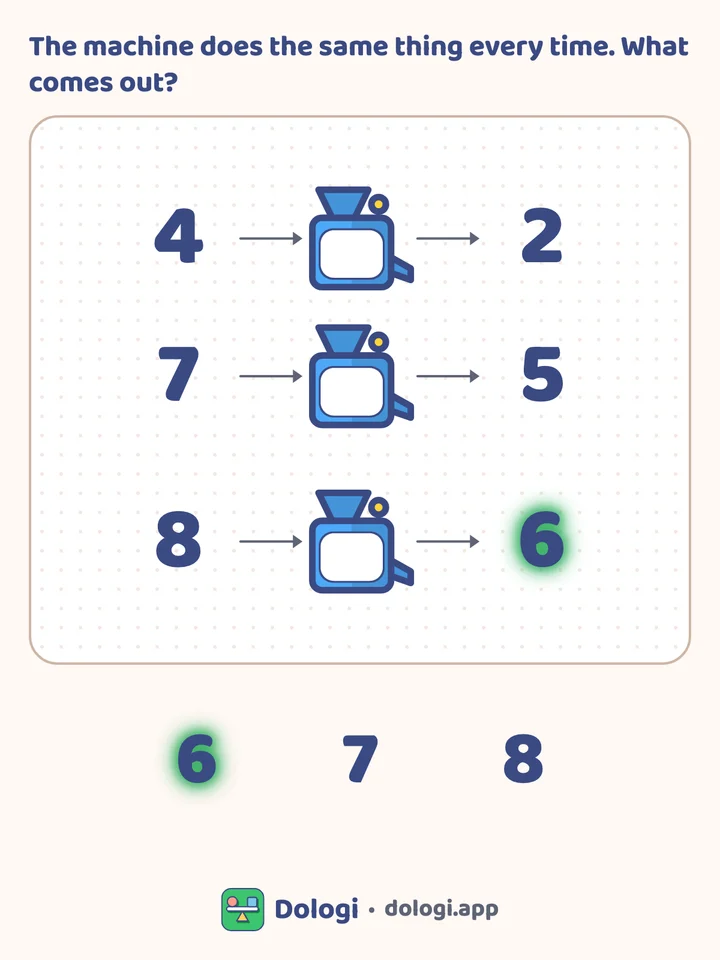
Puzzle 5: Changing machine
Ages 5–6
What it builds: The machine always does the same thing to the number that goes in; your child compares the numbers going in and coming out in the examples to find what it does, then does exactly that to the last number. Working out a rule from a few examples is a skill they use when learning to add and subtract, and when figuring out the rules of a new game. Keep playing: play "magic box": your child puts in some toys, you hand back toys by a secret rule (always one more, always two fewer), and they guess the rule.
If your child enjoyed these puzzles, the Dologi app has many more of the same kinds: lighthouses with different beats, blocks that turn more, and machines with new rules. The puzzles get harder with age and with how your child plays, so they can practice a little each day without getting bored.