This second set of pattern puzzles for ages 5–6 continues with patterns you can see at a glance: song parts that repeat, a flip that moves the notes around, a carpet with rows and columns, a counting row and a group of shapes that comes round again. Your child practices comparing two pictures to find what is different and saying the pattern in their own words before choosing. The five puzzles below come from the Dologi app and suit kids ages 5–6.
How to use this post: show your child one picture at a time and let them point along each step and say what they see. The answer is behind the "Show answer" button under each picture. When they get it right, ask "how did you know?" so they practice explaining.
Puzzle 1: Repeating song parts
Ages 5–6
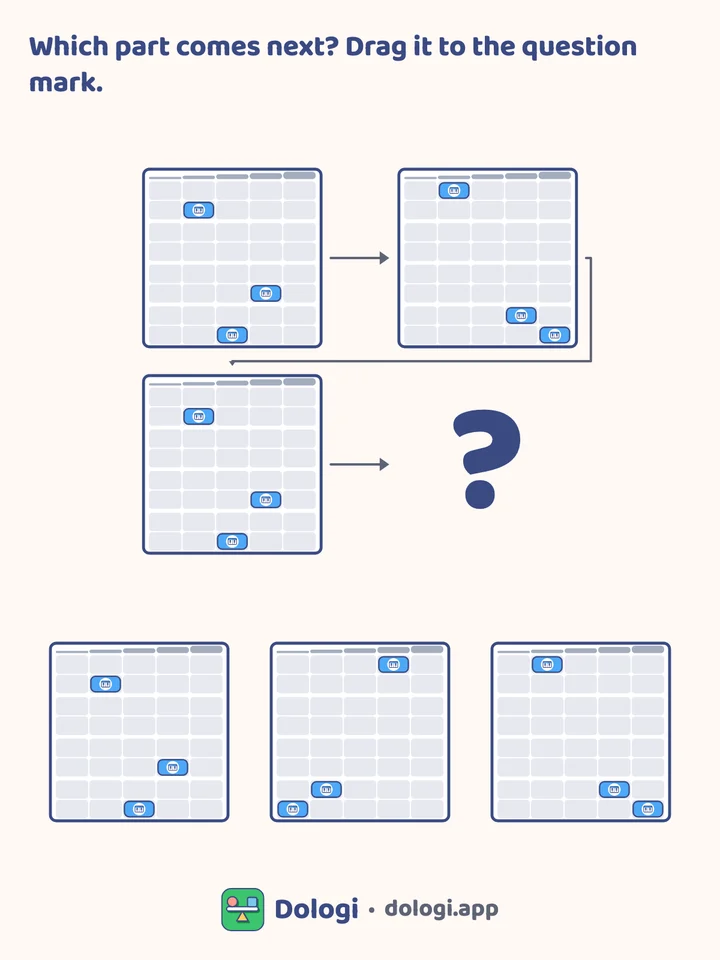
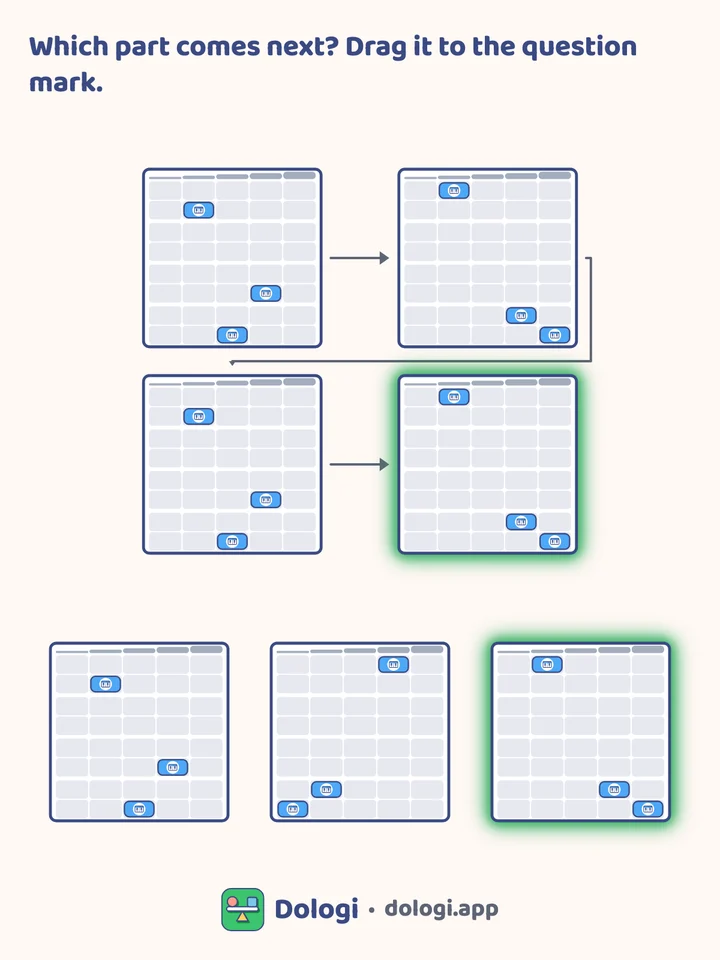
What it builds: Each song part is a grid with a few notes; your child compares the parts to see which ones match, and notices that two parts take turns. Looking at the whole part rather than each note helps them hear the repeating parts of a song, like a chorus sung again and again. Keep playing: sing a familiar song together, clapping on one line and patting your knees on the next, taking turns to the end.
Hint: Find the part that comes back. Tap a part to hear it.
Puzzle 2: Which sign changed the song?
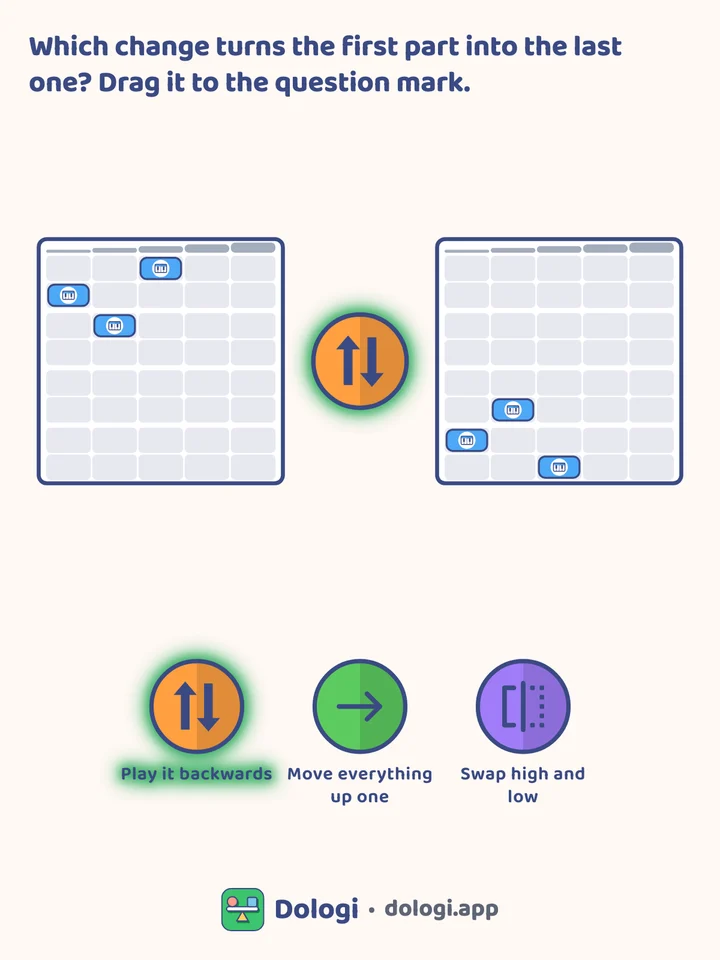
Ages 5–6
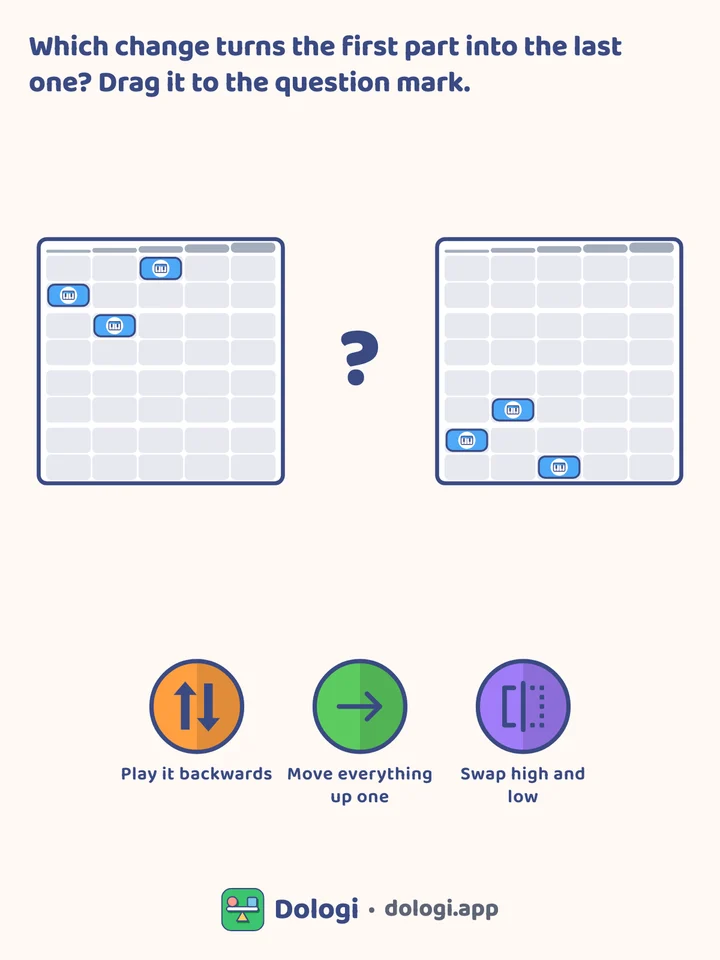
What it builds: Your child compares the first part with the last to see where the notes went, then chooses the sign that does exactly that: the orange "Play it backwards" sign swaps top and bottom, the purple "Swap high and low" sign swaps left and right, and the green "Move everything up one" sign moves notes one column right. Looking before and after and naming what changed is a first step toward symmetry and scientific thinking. Keep playing: put a picture card on the table, flip it sideways or upside down while your child's eyes are closed, and let them guess which way you flipped it.
Puzzle 3: Patch the carpet
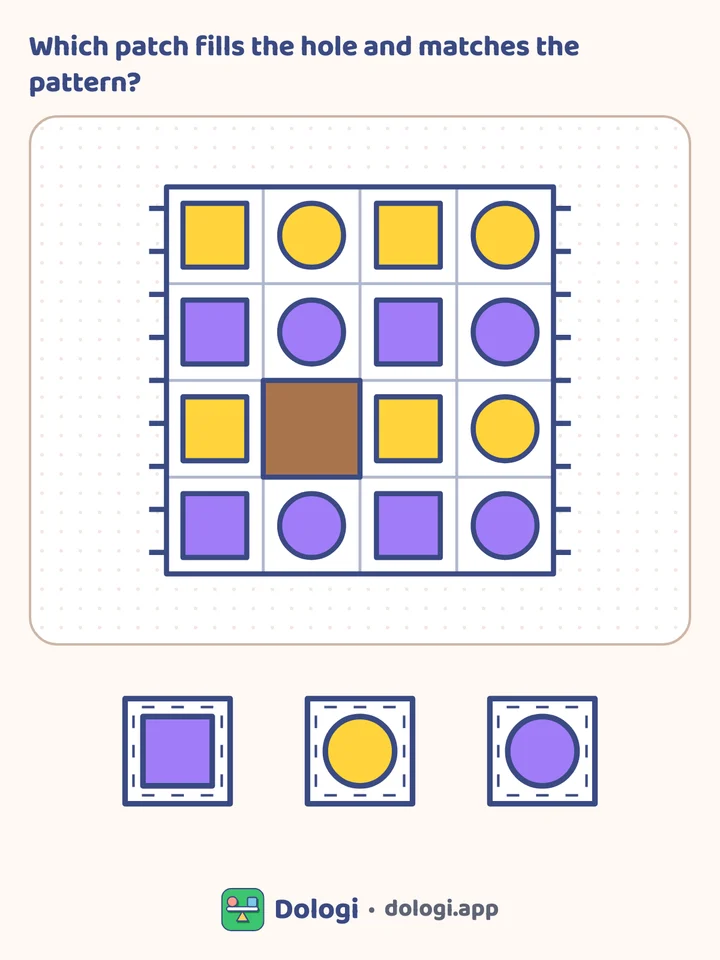
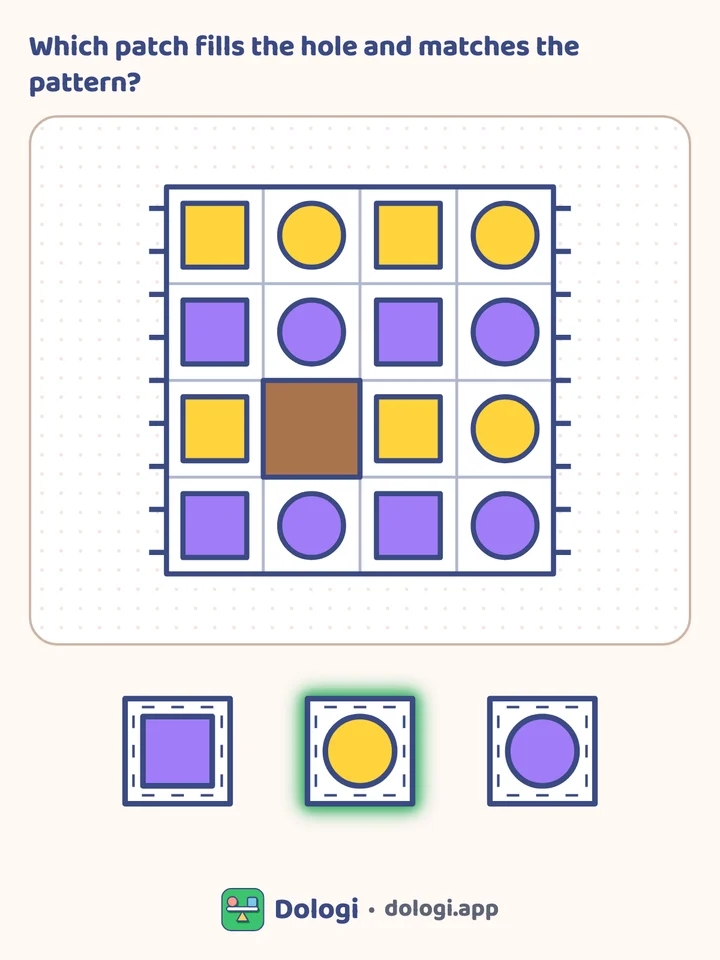
Ages 5–6
What it builds: The carpet has rows and columns: each row is one color, each column one shape, and they take turns; your child looks along the row for the color and down the column for the shape of the missing square. Looking in two directions at once is a skill they will use with tables, calendars and even putting things away in drawers. Keep playing: with bottle caps in two colors and two kinds of small toys, build a little carpet in rows and columns together, then take one piece away for your child to put back.
Hint: Look at the rows and columns next to the hole. The pattern repeats.
Puzzle 4: Next number
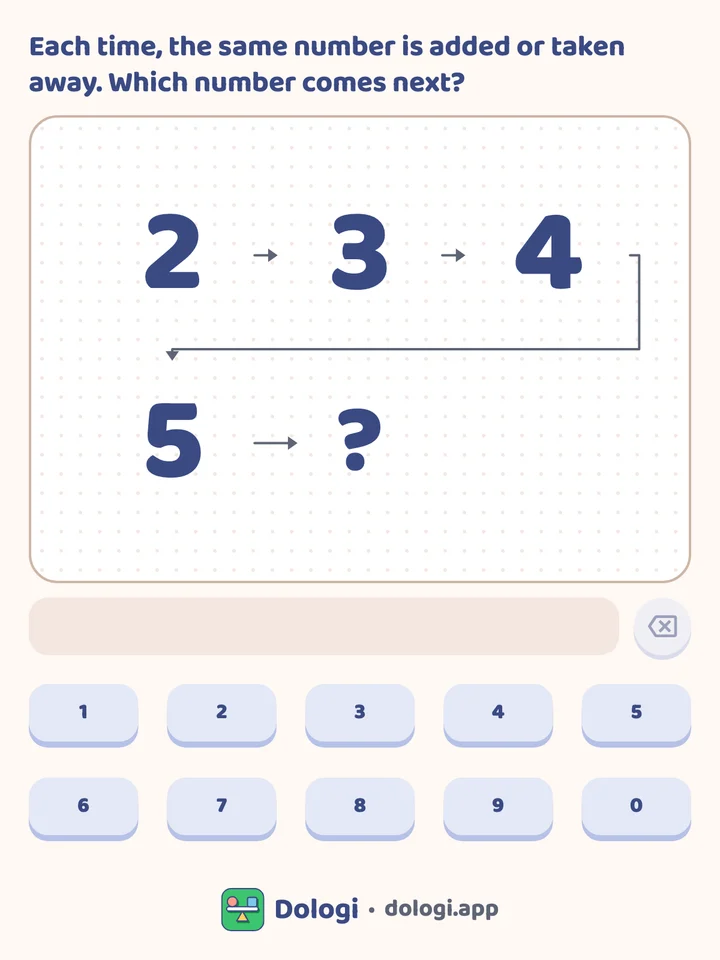
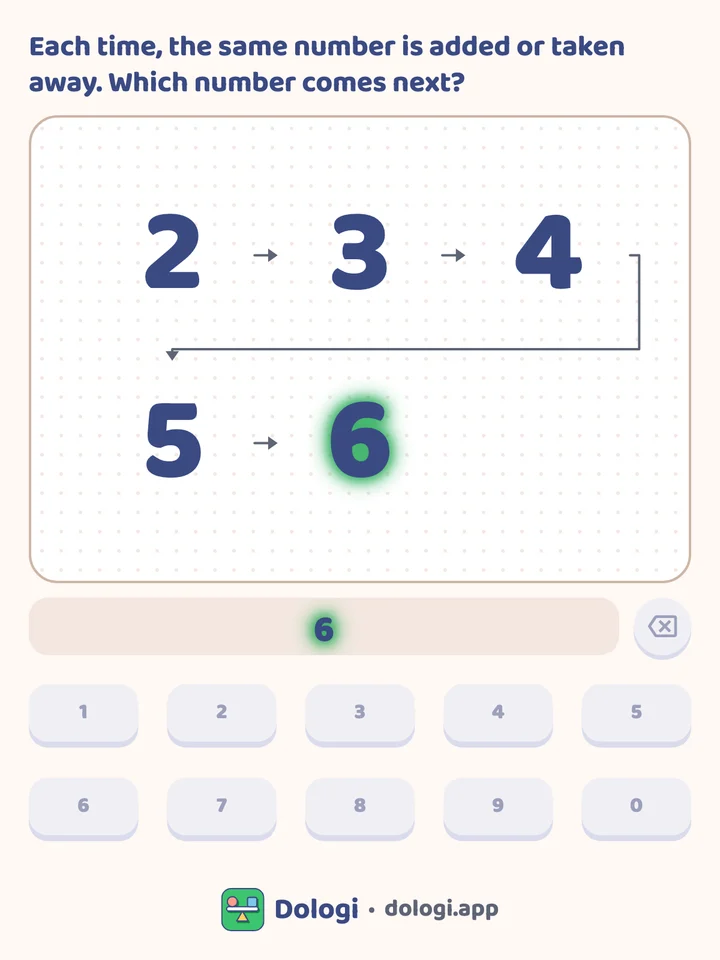
Ages 5–6
What it builds: Your child looks at two numbers side by side to see how much is added each time, then counts on one more step. Counting on steadily is the groundwork for addition, and helps with reading house numbers, page numbers and seat numbers. Keep playing: open a book, cover the page number on the right, and ask your child what it is.
Puzzle 5: Repeating patterns
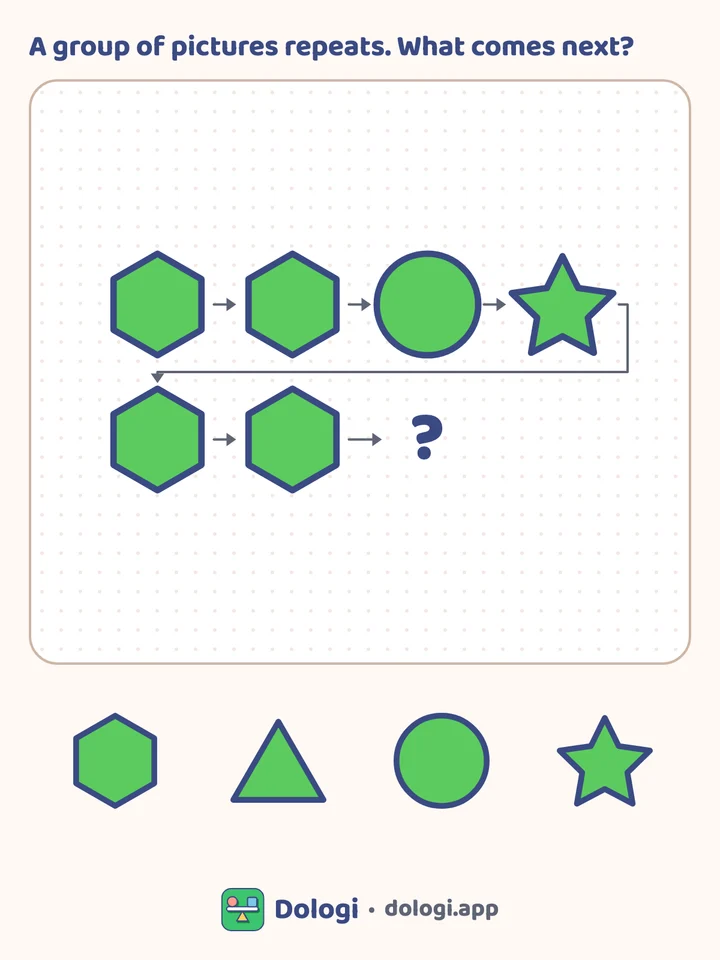
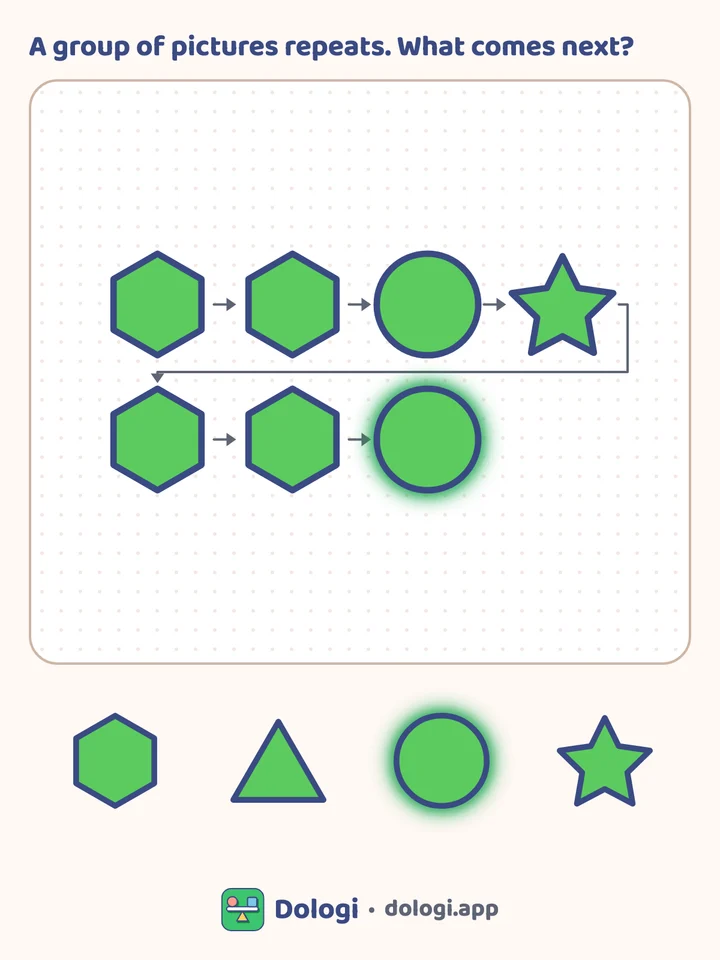
Ages 5–6
What it builds: Your child names each shape out loud, finds where the group starts over, and counts how many shapes are in it to work out the next one. Finding the length of a repeating group helps them notice the beat in songs, dance moves and the weekly routine. Keep playing: make up a four-step dance together (clap, clap, stomp, jump) and stop partway so your child does the next step.
Hint: Say the pictures out loud in order. Where does the group start again?
If your child enjoyed these puzzles, the Dologi app has many more of the same kinds: songs with more notes, bigger carpets and longer groups of shapes. The puzzles get harder with age and with how your child plays, so they can practice a little each day without getting bored.