At ages 6–7, as children start school, patterns are everywhere: counting on by the same amount, tables with rows and columns, shapes that change form and color at the same time. Pattern puzzles at this age ask kids to watch two things at once, or check both a row and a column, not just spot one repeating group. The five puzzles below come from the Dologi app and go from easy to harder.
How to use this post: show your child one picture at a time, let them think and point to the answer they choose. The answer is behind the "Show answer" button under each picture. If your child gets stuck, don't give the answer away; ask "what changes and what stays the same?" and let them look again.
Puzzle 1: A song played backwards
Ages 6–7
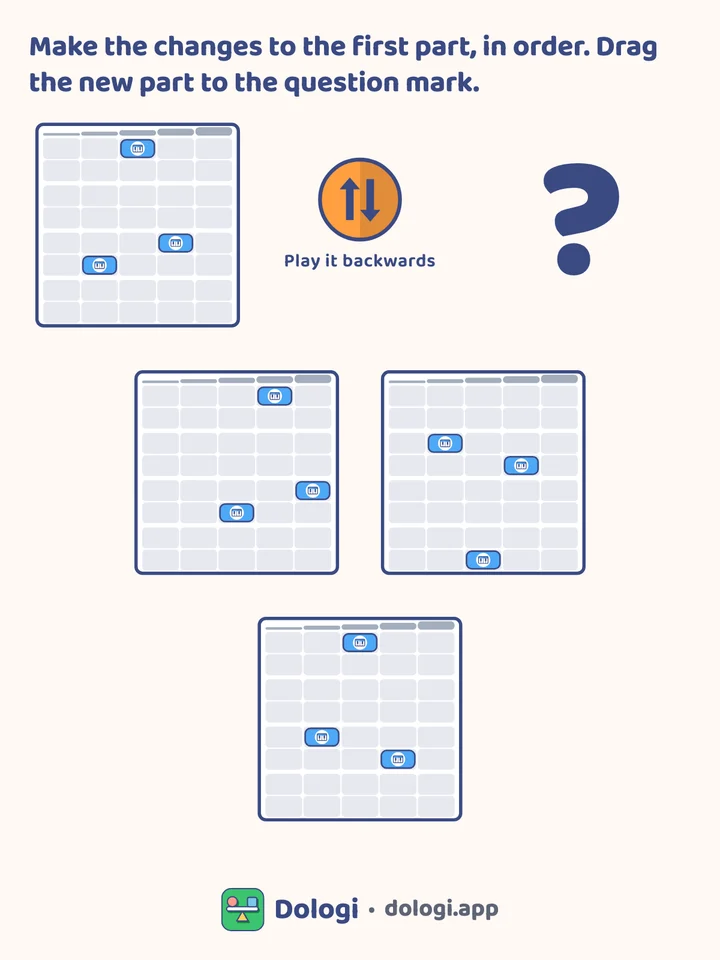
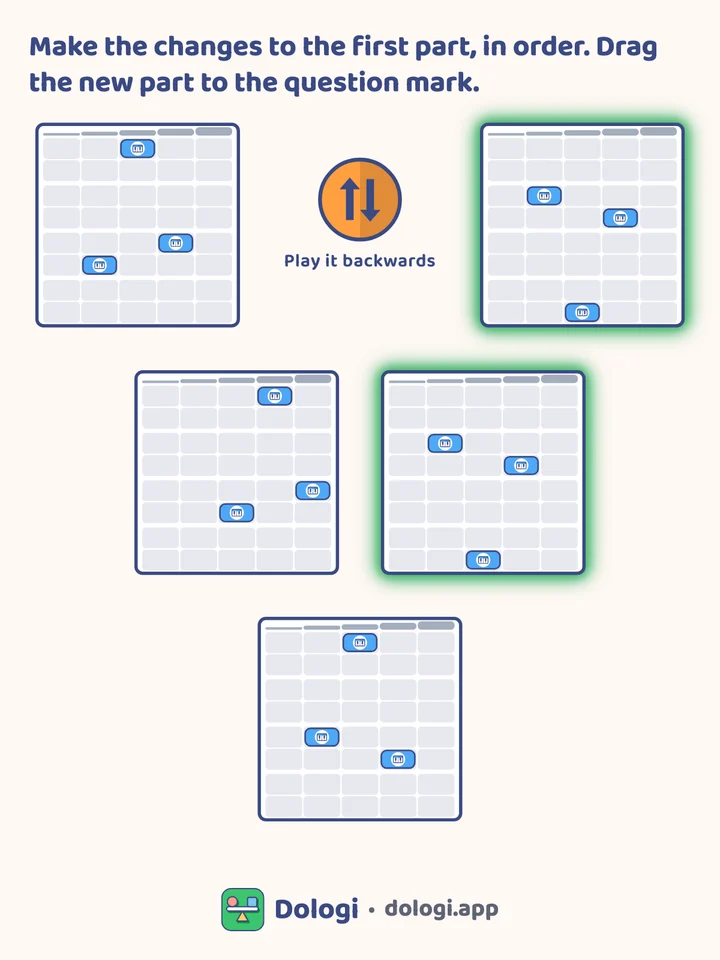
What it builds: Each song part is a grid, and the top row plays first; the orange "Play it backwards" sign swaps the top row with the bottom row, like flipping the song upside down. Your child follows each note, sees how many rows it is from the top, then looks for the grid where it sits the same number of rows from the bottom. This is a first taste of symmetry, which shows up in drawing, paper folding and geometry. Keep playing: line up four toys and ask your child to put them back in reverse order.
Puzzle 2: Pattern grid
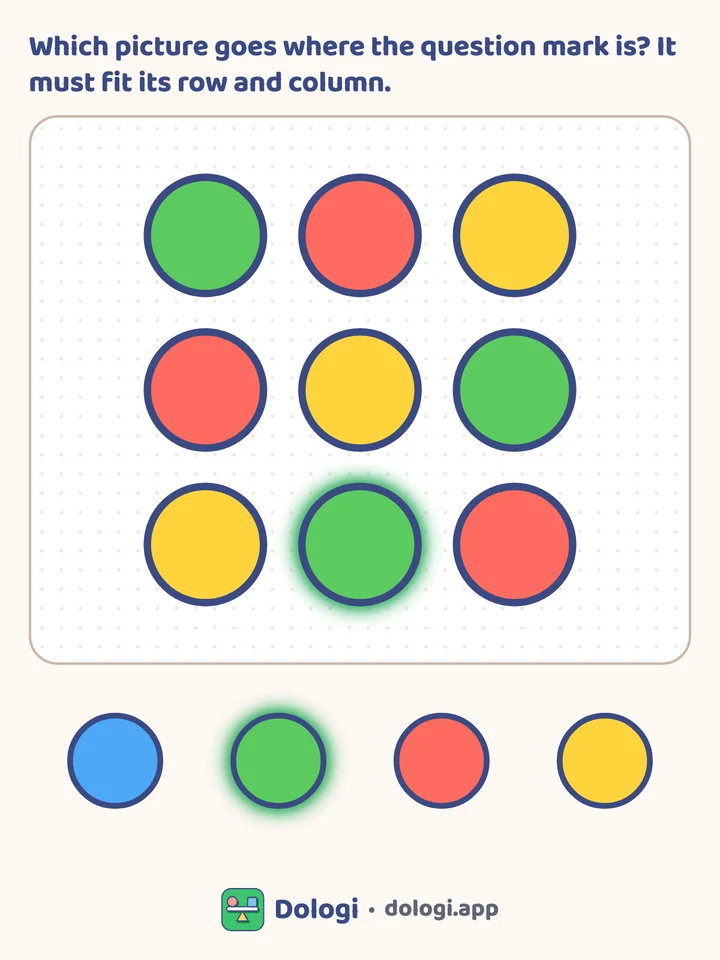
Ages 6–7
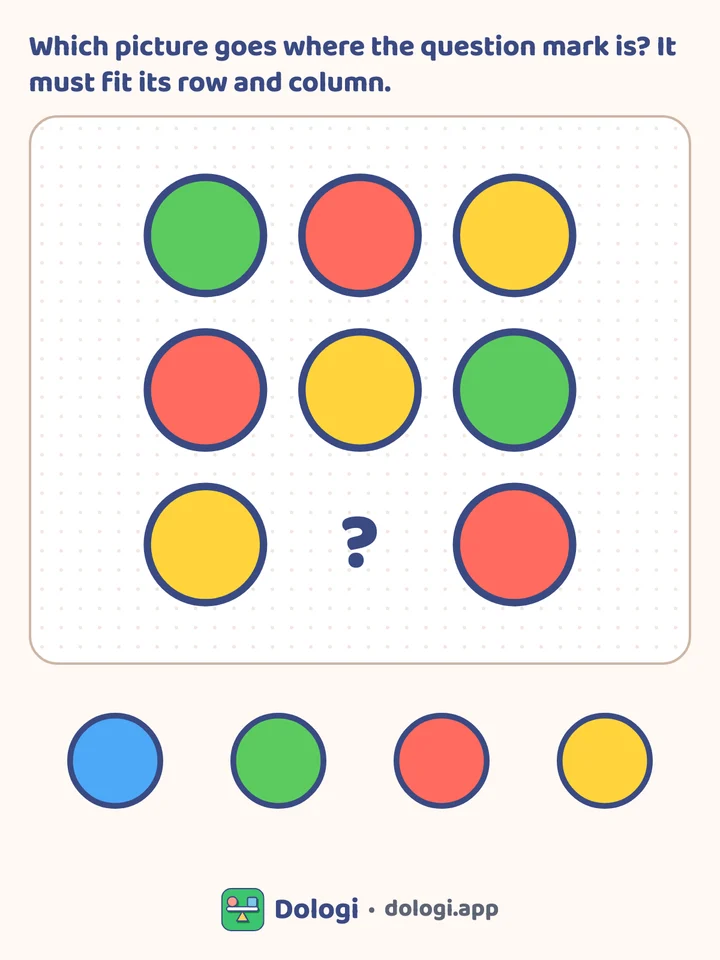
What it builds: Your child looks along each row and then down each column to see that every row and every column has all the colors with none repeated, then rules out the colors that don't fit the gap. Checking two directions at once and ruling things out is the same thinking they will use for addition tables, timetables and later number grid puzzles. Keep playing: draw a 3 × 3 grid on paper and together place three kinds of snacks or buttons so that every row and column has all three.
Puzzle 3: Dot-dash pattern
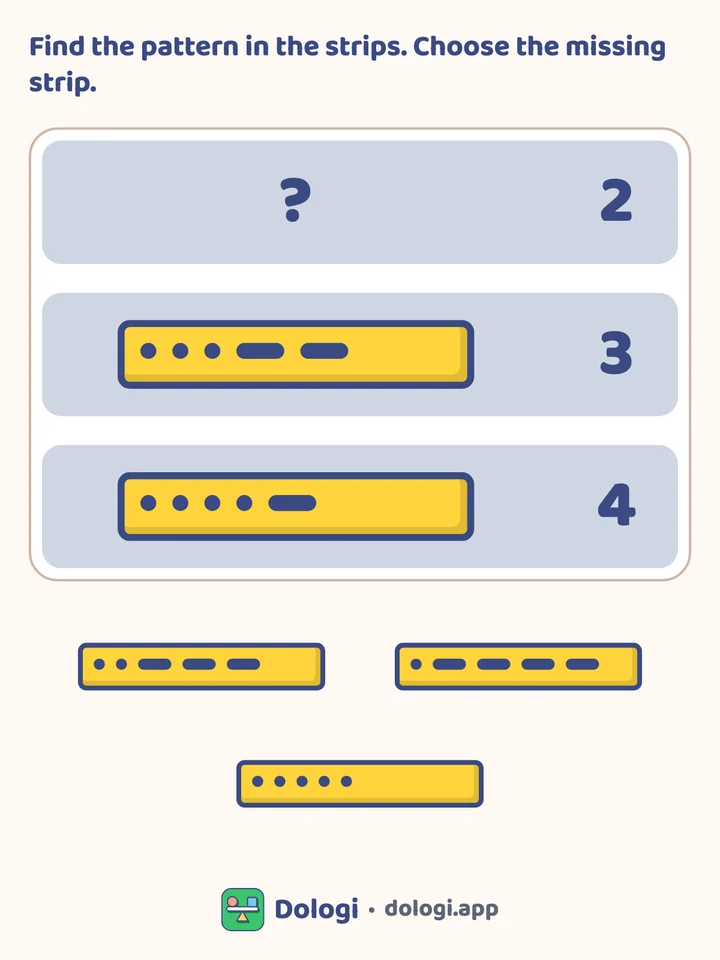
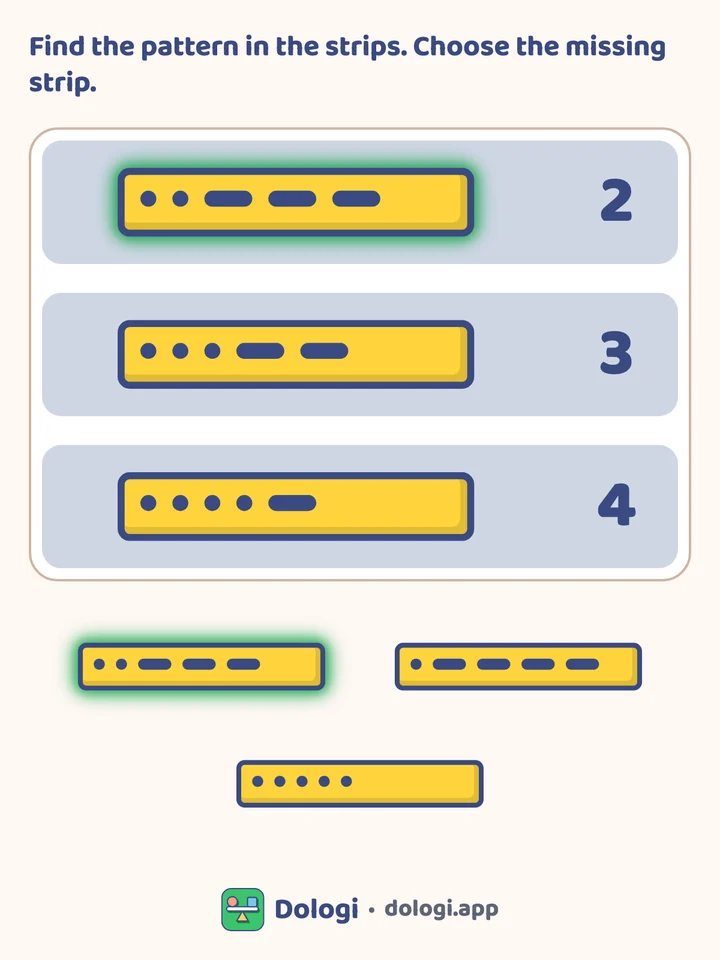
Ages 6–7
What it builds: Each strip has dots and dashes with a number next to it; your child counts the dots and dashes in every strip, then works out what the number is telling them. Linking a number to a specific way of counting helps them see that numbers are not just for reading, but for comparing and checking. Keep playing: draw a few dot-dash strips that follow your own rule, then let your child guess the rule and draw the next strip.
Puzzle 4: Repeating patterns
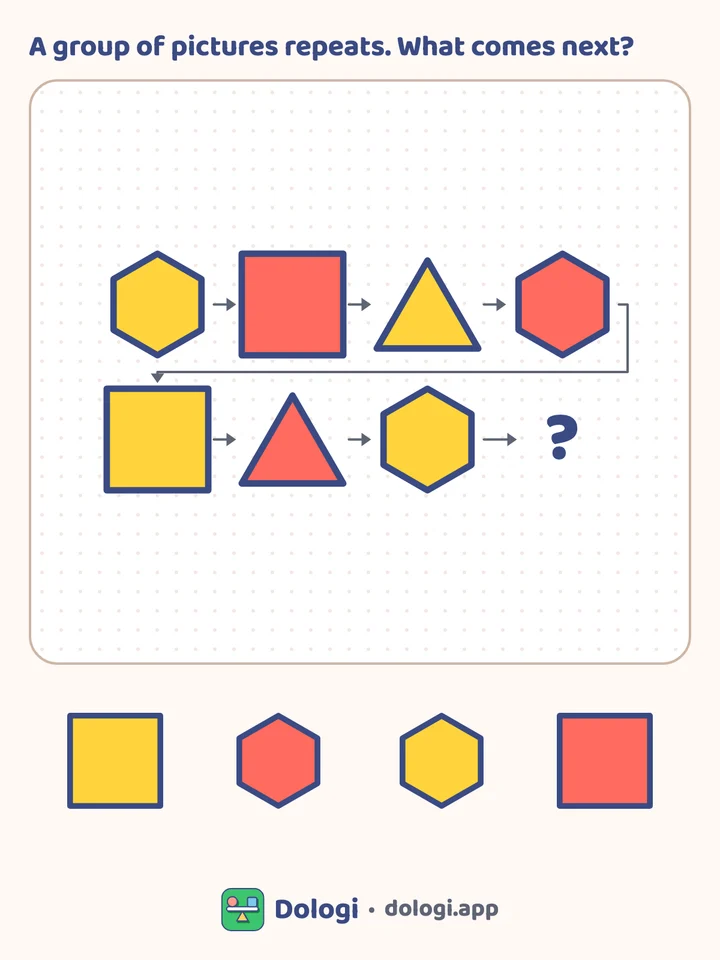
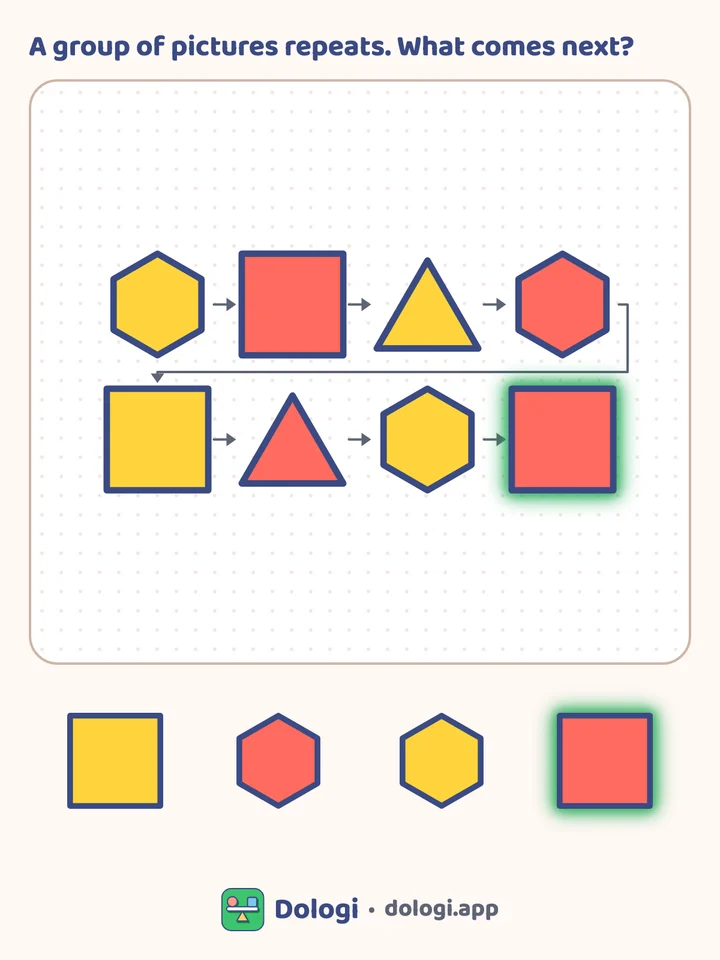
Ages 6–7
What it builds: In this puzzle shape and color repeat in two groups of different lengths; your child covers the colors to look only at shapes, then covers the shapes to look only at colors, finding one group each time. Splitting something complicated into two features to look at separately helps with sorting objects, putting things away by size and color, and schoolwork. Keep playing: thread beads with two rules at once, for example shape changing in groups of three and color in groups of two, and let your child carry on.
Hint: Look only at the shapes and find their group. Then do the same with the colors.
Puzzle 5: The missing keyboard
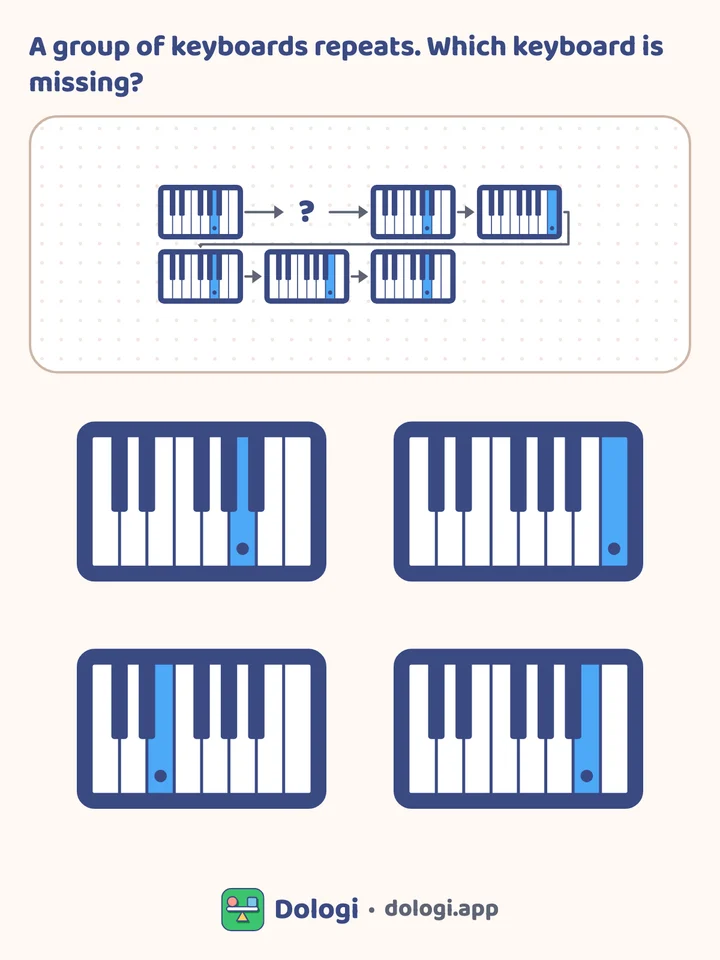
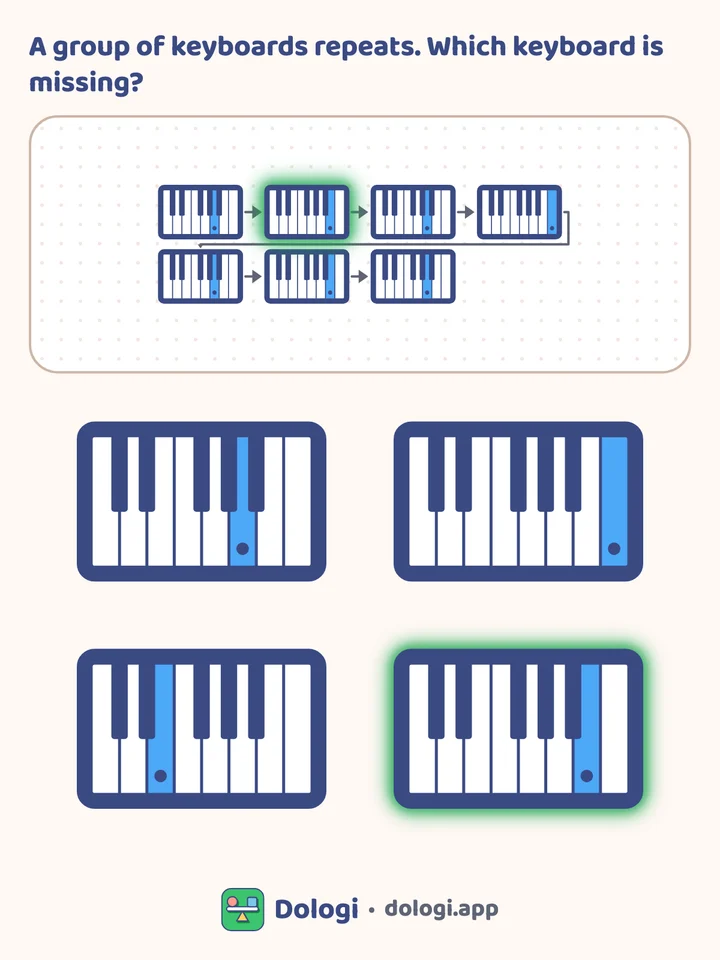
Ages 6–7
What it builds: The gap is in the middle of the row, not at the end, so your child finds the repeating group of keyboards in the part they can see and works out the missing one, looking both before and after the gap. Filling a gap in a pattern is a lot like filling in a missing word in a sentence or a missing day in the week. Keep playing: sing a familiar line together, leave out one word in the middle, and let your child sing it in.
If your child enjoyed these puzzles, the Dologi app has many more of the same kinds: bigger grids, longer rows and patterns with more steps. The puzzles get harder with age and with how your child plays, so they can practice a little each day at just the right level.