This second set of pattern puzzles for ages 6–7 takes your child through steady changes all around them: a clock hand moving hour by hour, a block turning corner by corner, a railway switch flipping back and forth, a design repeating across a carpet, and notes moving step by step. Kids practice looking at one step at a time, saying what changed, and predicting the next step. The five puzzles below come from the Dologi app and go from easy to harder.
How to use this post: show your child one picture at a time and let them point along each step with a finger before choosing. The answer is behind the "Show answer" button under each picture. If your child picks the wrong one, don't correct it right away; ask them to talk you through each step, and often they will spot the slip themselves.
Puzzle 1: O'clock times
Ages 6–7
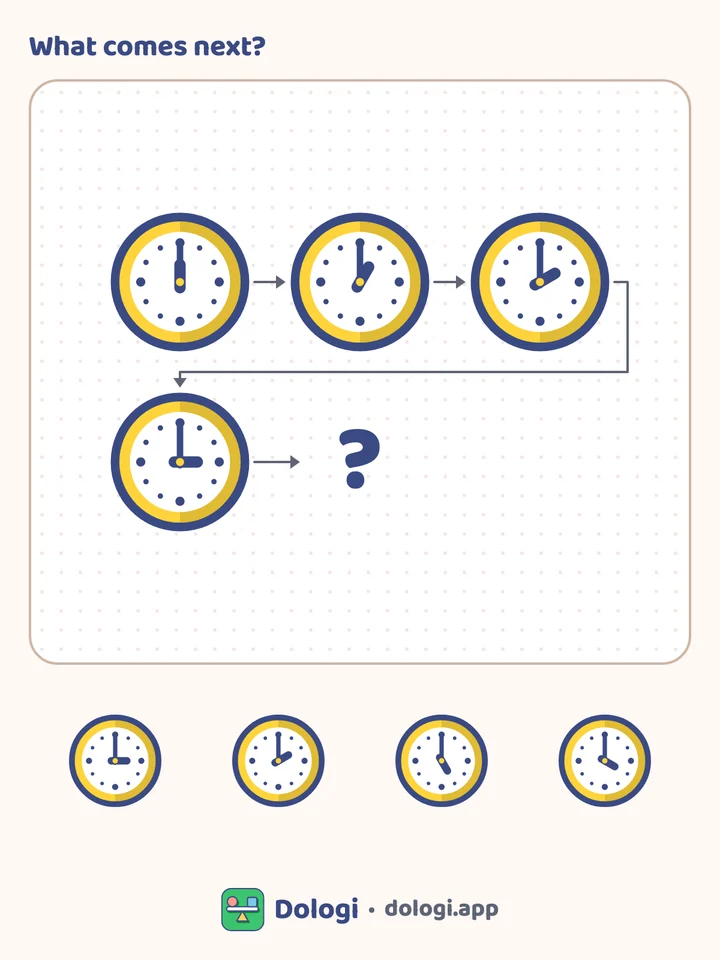
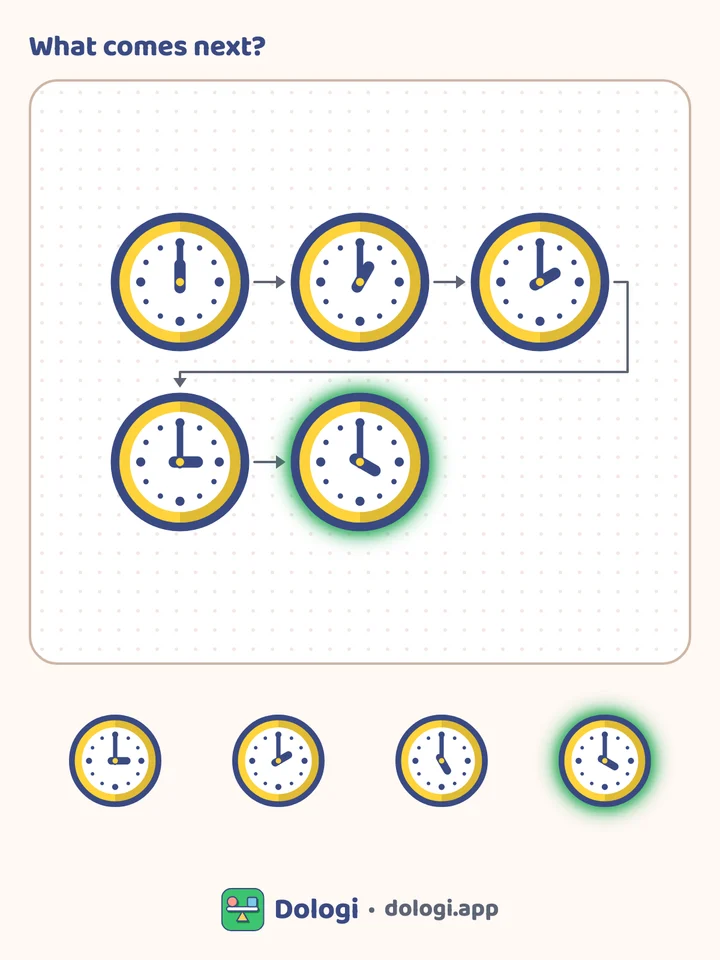
What it builds: All the clocks show o'clock times: the long hand stays on 12 and the short hand moves on to the next number; your child says each time out loud to hear the steady step. It is a gentle way into telling the time, a skill taught in the first years of school. Keep playing: make a paper-plate clock together, call out an o'clock time for your child to set, then ask what time it will be an hour later.
Puzzle 2: Turning blocks
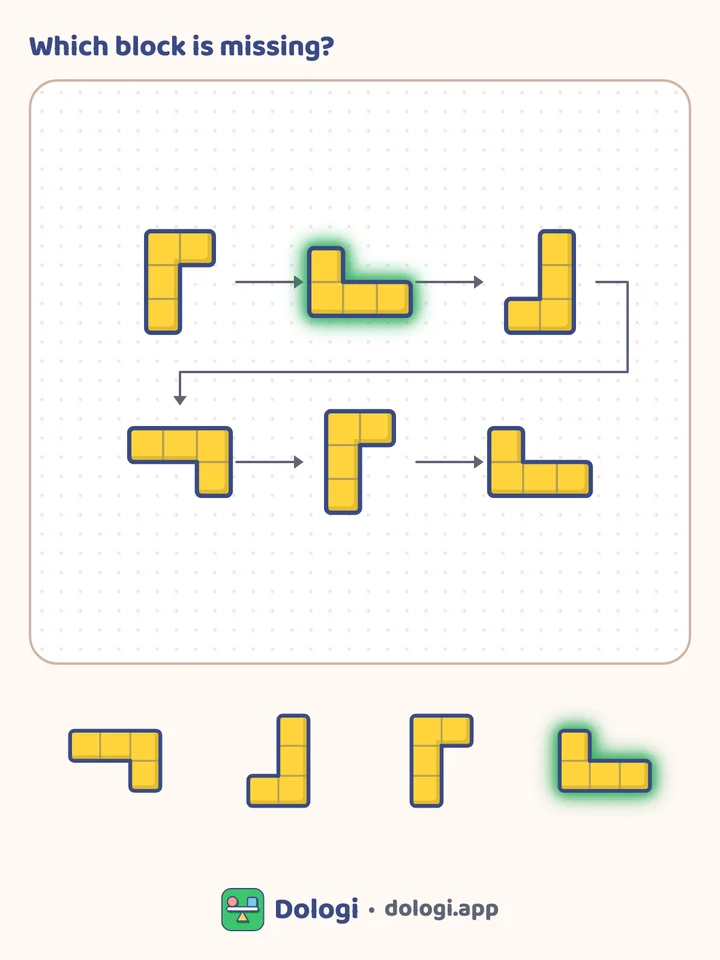
Ages 6–7
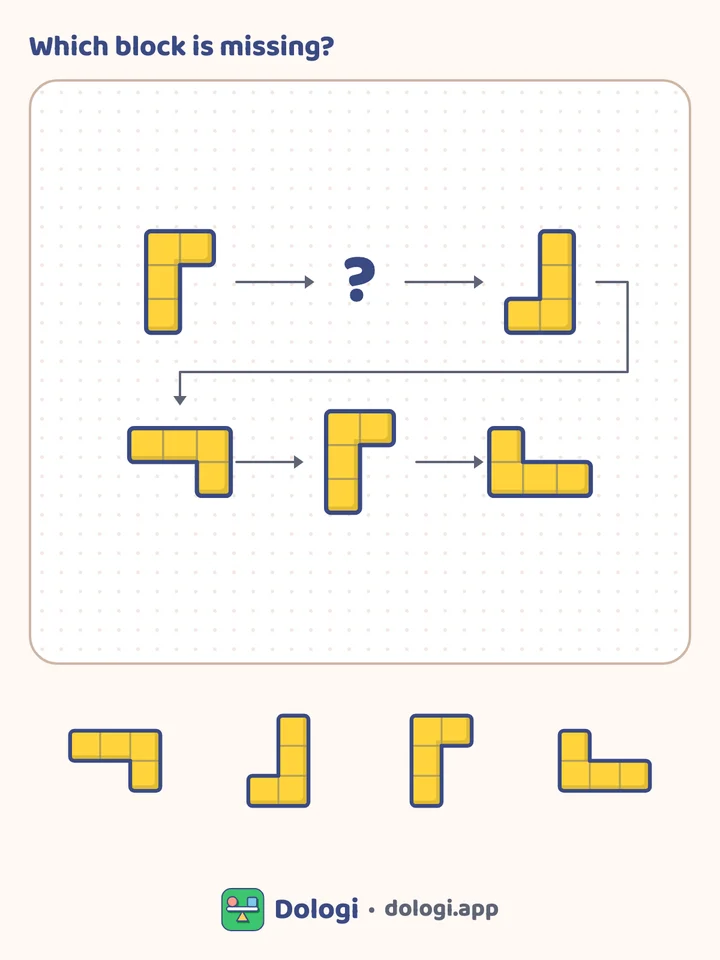
What it builds: The L-shaped block turns a quarter turn at every step, and the gap is in the middle of the row; your child looks at the block just before and just after the gap to work out how the missing one must sit. Looking at both sides to find the middle piece helps with jigsaws, building and even finding a missing number in a sequence. Keep playing: set a shoe in four directions around a circle, take one away, and ask your child which way the missing shoe was facing.
Puzzle 3: Flipping switches
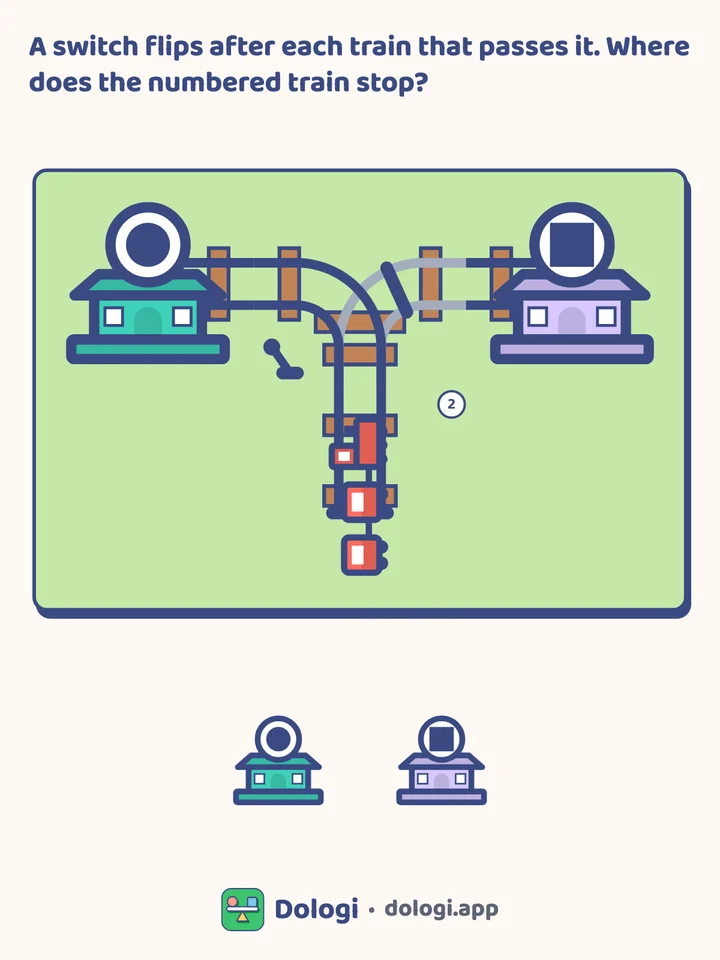
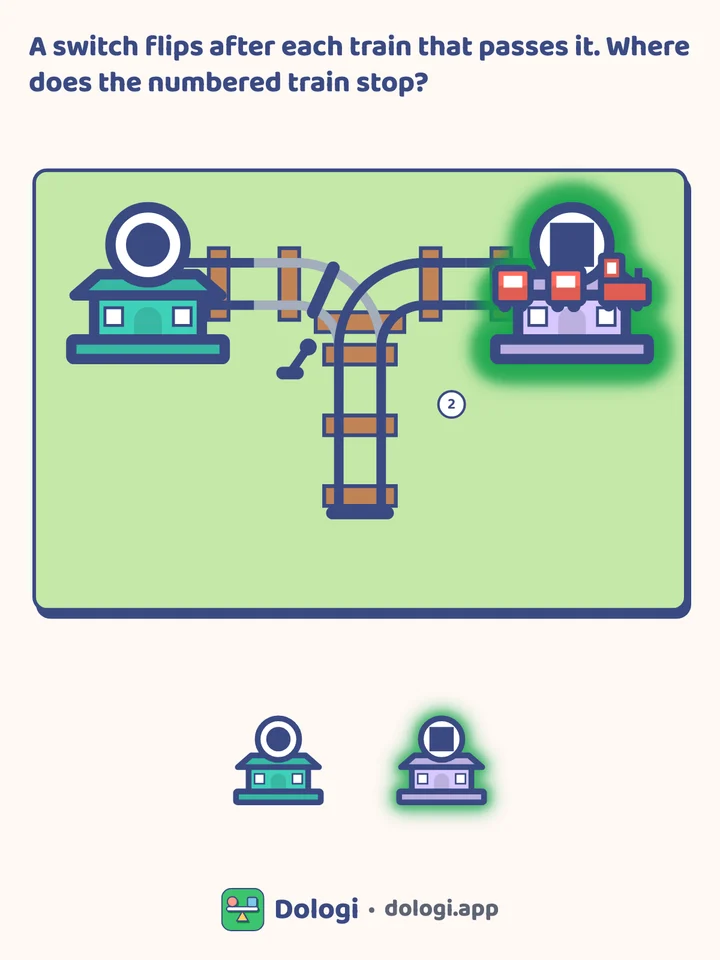
Ages 6–7
What it builds: The switch flips every time a train goes over it, and the number on the track says which train is being asked about; your child sends train 1 along the open branch, flips the switch to the other branch, and only then moves on to the train in question. Following steps in the right order and remembering what changed is the groundwork for following instructions and, later, coding. Keep playing: put a cup upside down on the table, flip it each time someone walks by, and ask how it will be after the second and third person.
Puzzle 4: Patch the carpet
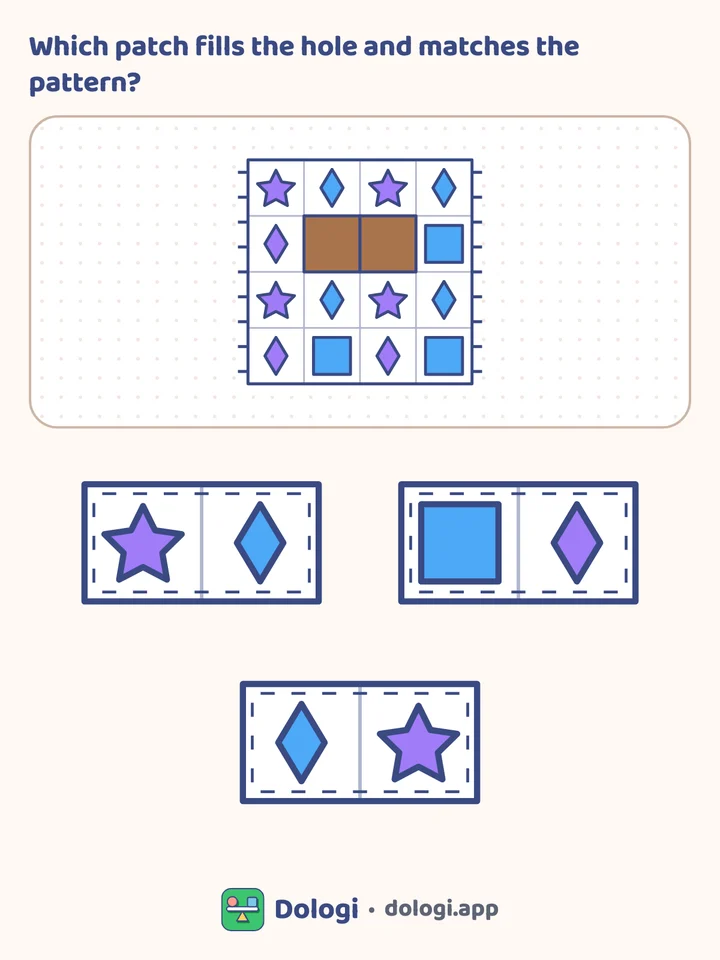
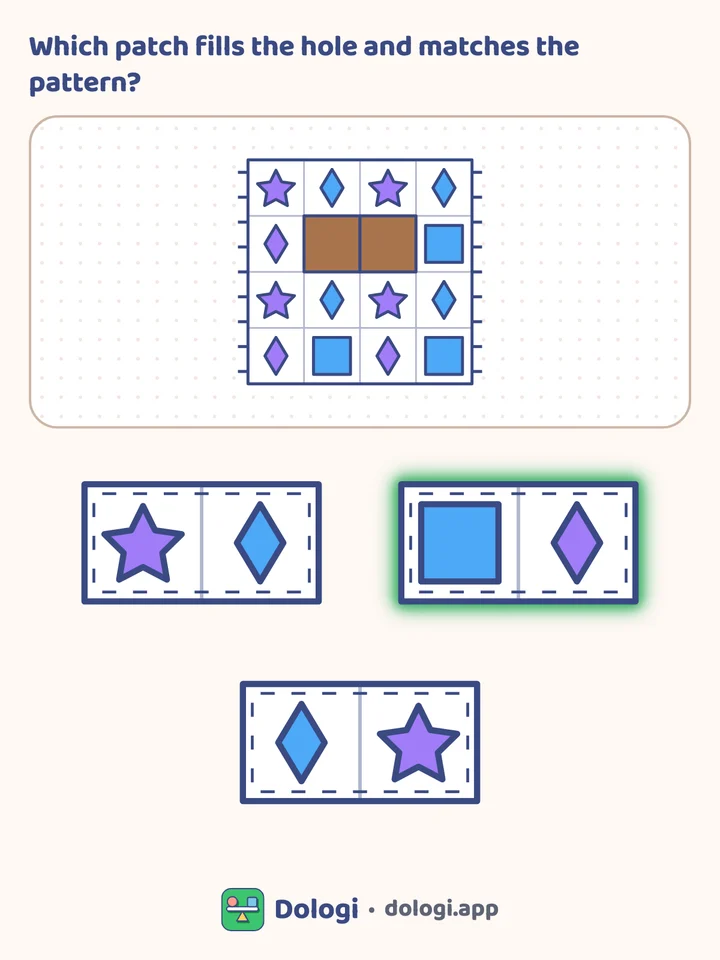
Ages 6–7
What it builds: The carpet's design repeats by rows, with every other row the same; your child finds a row that matches the one with the hole to work out the two missing squares, then compares that with each patch. Finding what matches to fill a gap is a skill they use for jigsaws, coloring from a model and spotting patterns in number rows. Keep playing: with colored stickers, make a carpet with two kinds of rows taking turns, peel off two squares, and let your child stick them back.
Puzzle 5: The next song part
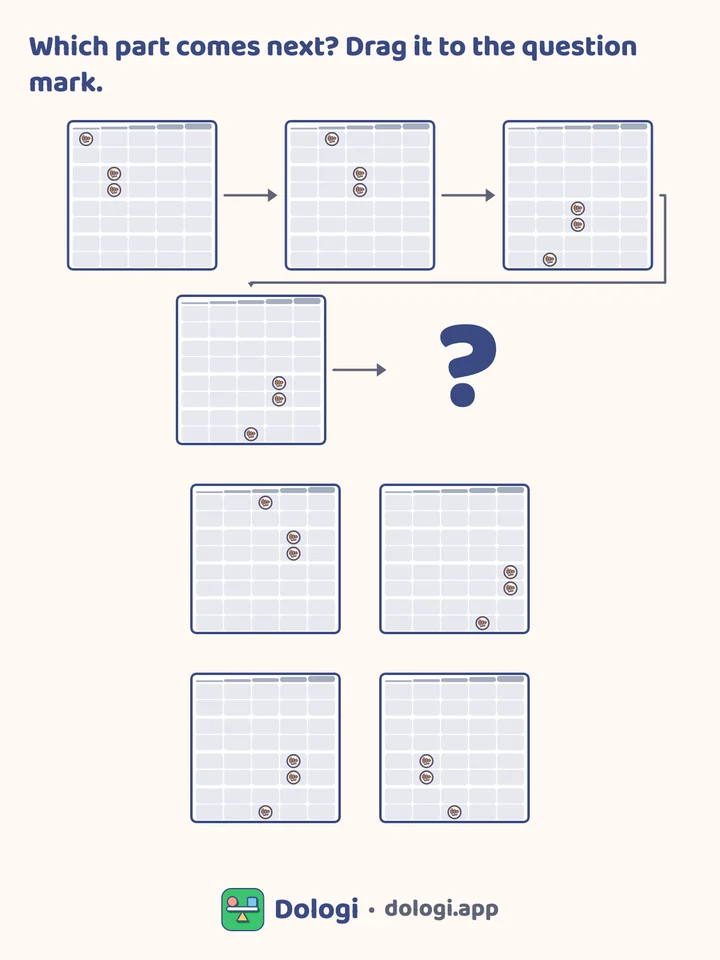
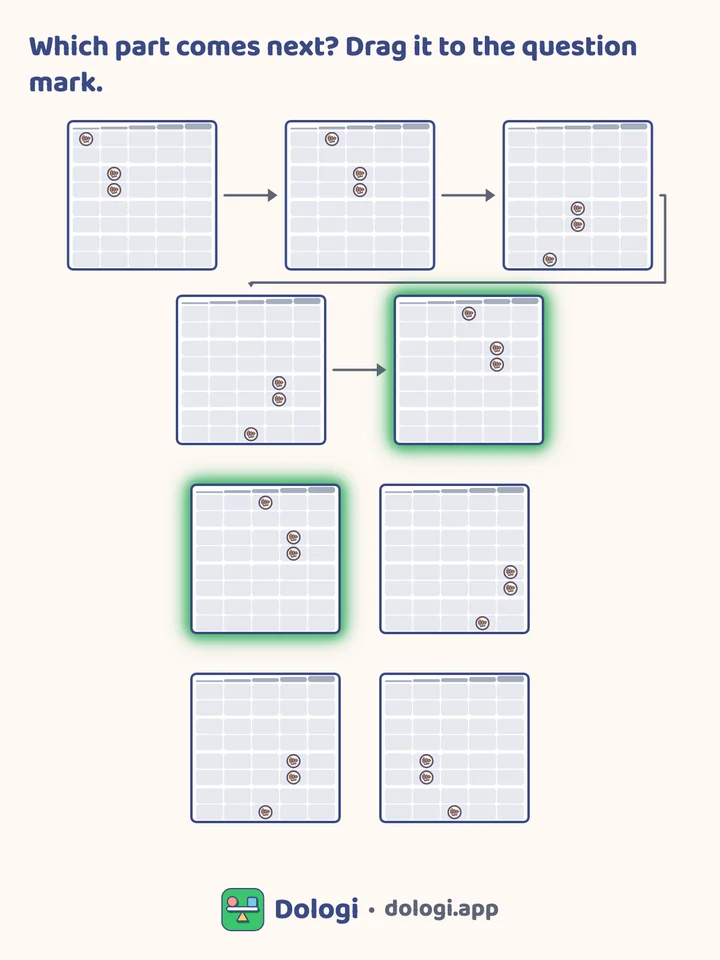
Ages 6–7
What it builds: Each song part is a grid with a few notes; your child follows one note across the parts to see how many squares it moves and in which direction, then does the same for the other notes to find the next part. Watching something move steadily across a grid prepares them for reading tables, grid maps and coding games for kids. Keep playing: draw a grid on paper, put a few beans on it, move them all one square to the right each turn, and let your child predict where they will be next.
Hint: Two changes take turns: Move everything up one, and Play it backwards.
If your child enjoyed these puzzles, the Dologi app has many more of the same kinds: clocks showing half past, railways with more switches, and bigger carpets and songs. The puzzles get harder with age and with how your child plays, so they can practice a little each day at just the right level.