By ages 7–8, children are comfortable counting, adding and subtracting, and are starting to tell the time. Pattern puzzles at this age use exactly those things: clock hands moving in steady steps, dice dots growing along a row, numbers getting smaller, a design repeating across a carpet. Kids have to find the step of change, sometimes in two directions at once, and use it to fill a gap. The five puzzles below come from the Dologi app and go from easy to harder.
How to use this post: show your child one picture at a time and let them find and say the rule before choosing. The answer is behind the "Show answer" button under each picture. Once they have chosen, ask them to check by putting the answer in the gap and reading the whole row again to see if it flows.
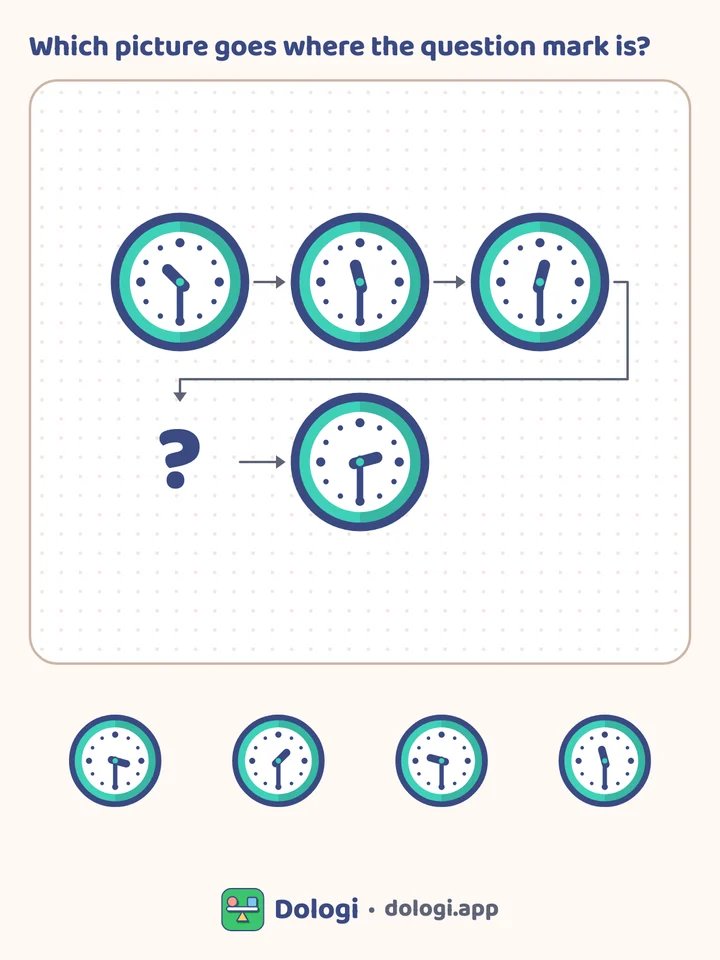
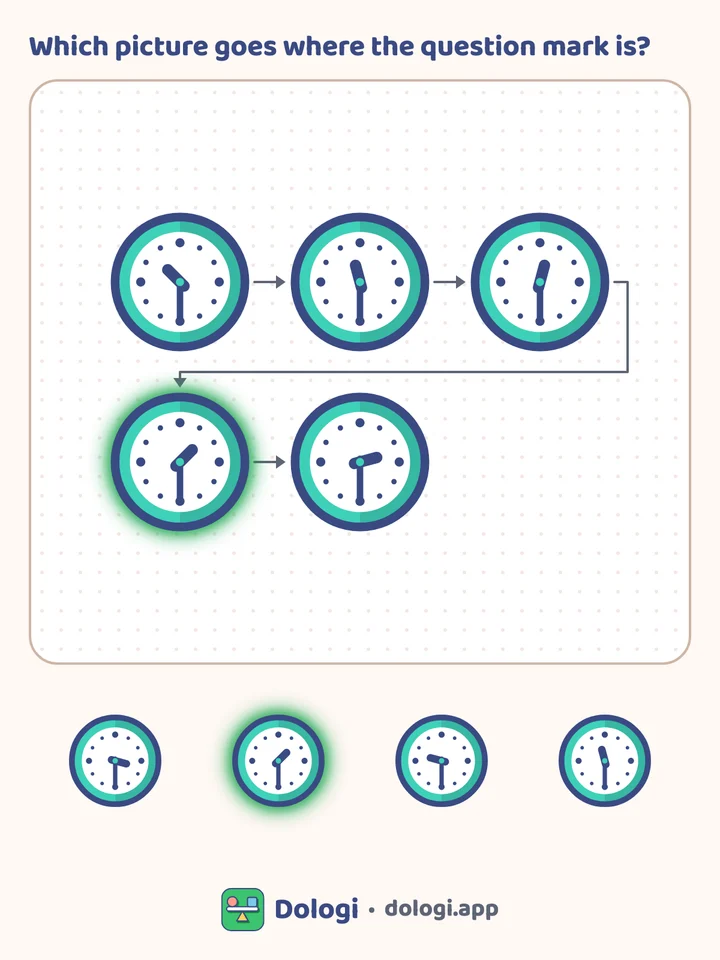
Puzzle 1: Clock hands going around
Ages 7–8
What it builds: Each clock has two hands; your child follows one hand at a time across the clocks to see which hand stays still, which one moves, and how far it moves each time. This puzzle practices patterns and telling the time together, and shows how far the hour hand travels in one hour. Keep playing: set a clock at home to an o'clock time and ask where the hands will point one hour and two hours later.
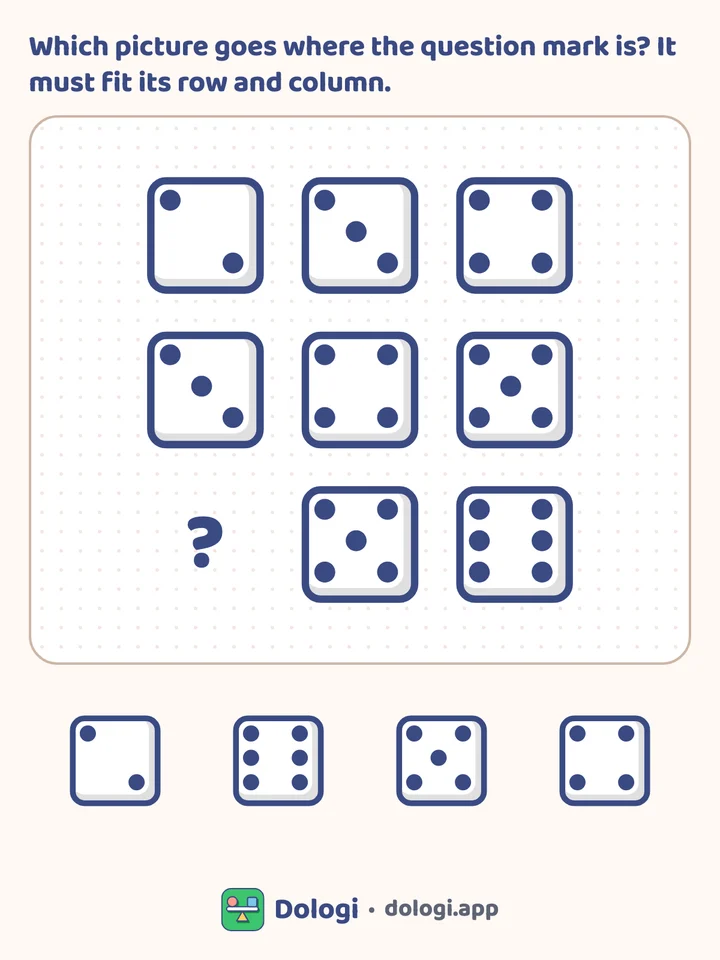
Puzzle 2: Pattern grid
Ages 7–8
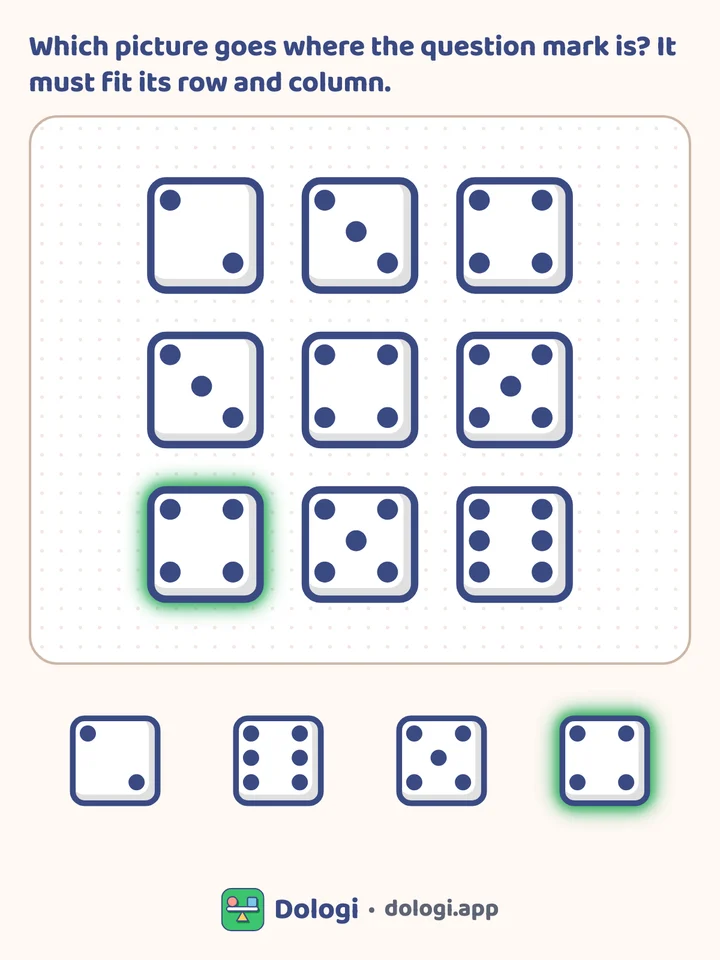
What it builds: Your child counts the dots on each die, then compares the dice in the same row and the same column to see how the number of dots changes. Spotting a number that grows steadily along both rows and columns is the groundwork for the addition and multiplication tables coming up at school. Keep playing: with a few playing cards or dice, build a 3 × 3 grid together where each row goes up by one, then take one out and let your child find it again.
Puzzle 3: Repeating patterns
Ages 7–8
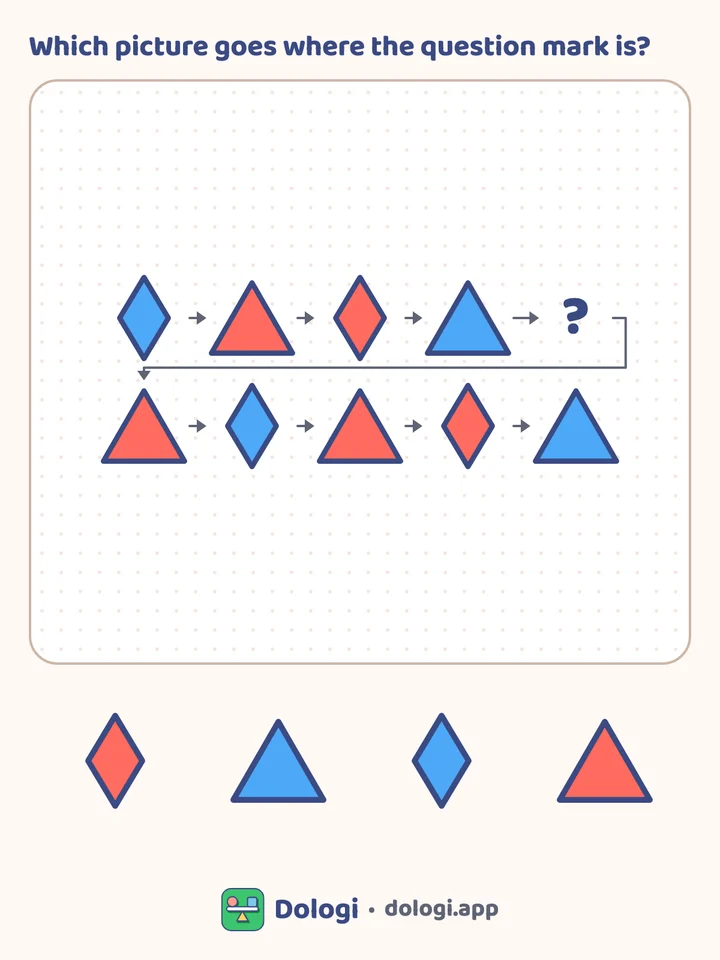
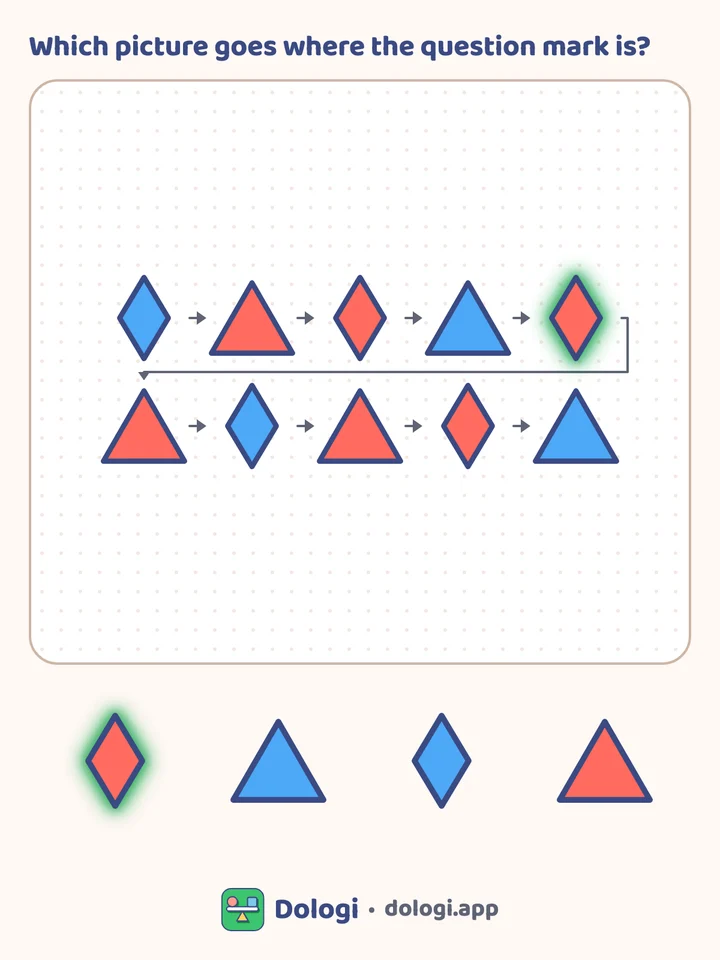
What it builds: The gap is in the middle of the row, so your child has to use the shapes both before and after it; shape and color repeat in two groups of different lengths, so they find one group at a time and then check it at the gap. Looking at both sides to work out what is missing helps with reading, filling in missing words and guessing the missing part of a story. Keep playing: clap a two-part beat while stomping a three-part beat, and see how long it takes for both to get back to the start together.
Hint: Look only at the shapes and find their group. Then do the same with the colors.
Puzzle 4: Next number
Ages 7–8
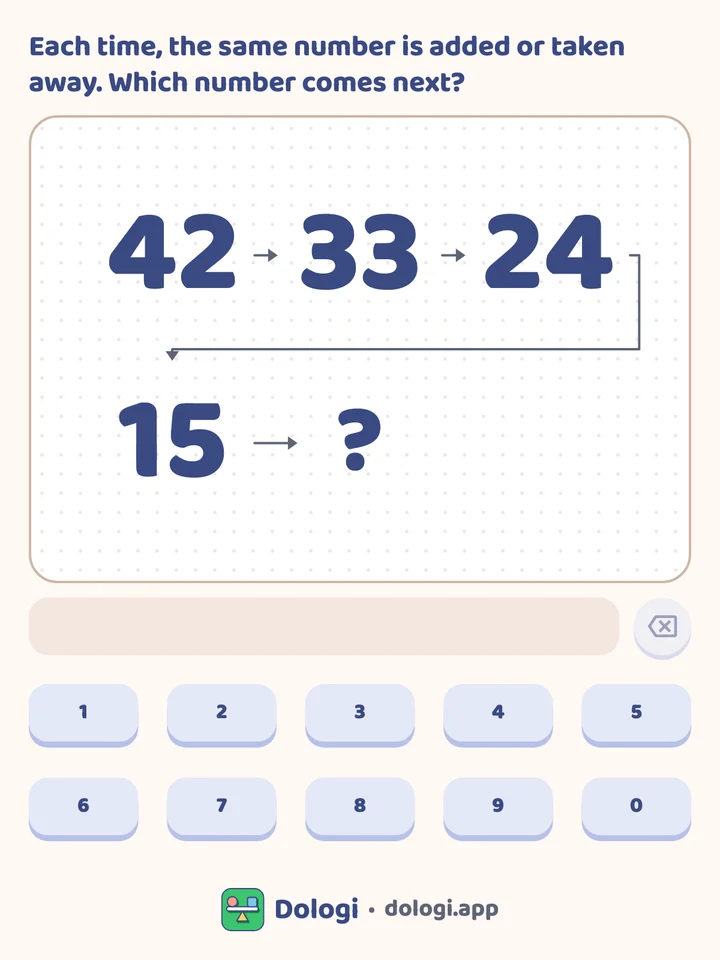
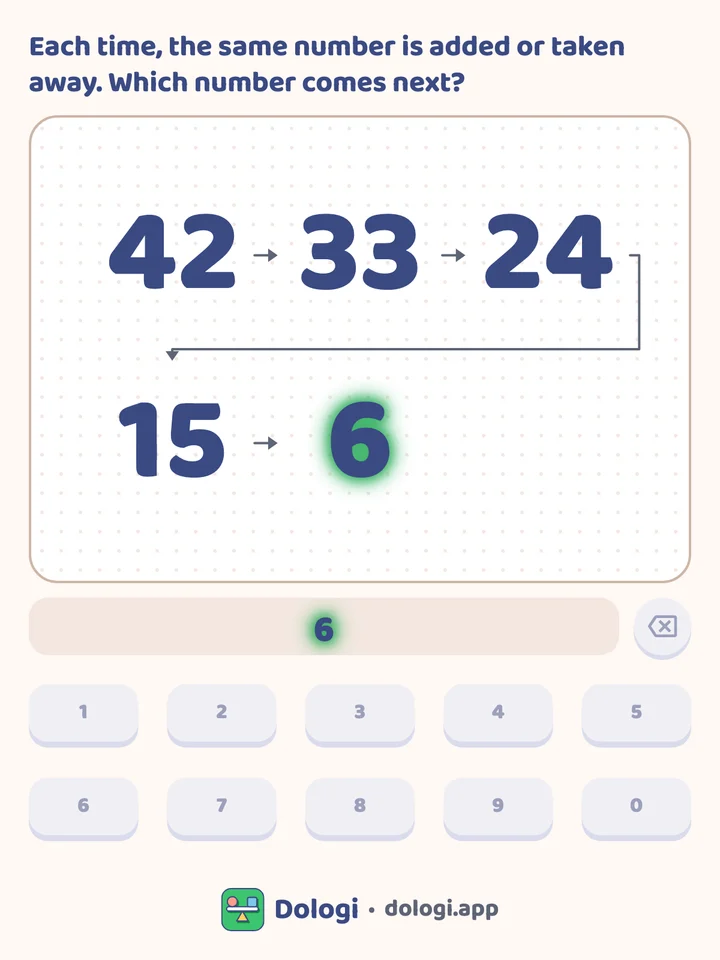
What it builds: The numbers get smaller, so your child subtracts each number from the one before to see how much is taken away each time, checks it on the other pairs, then counts back one more step. Counting back by a fixed step builds quick mental subtraction and helps with everyday things like money left after each purchase or days left until a birthday. Keep playing: count back from 50 together in fives, then switch to fours or nines to make it harder.
Puzzle 5: Patch the carpet
Ages 7–8
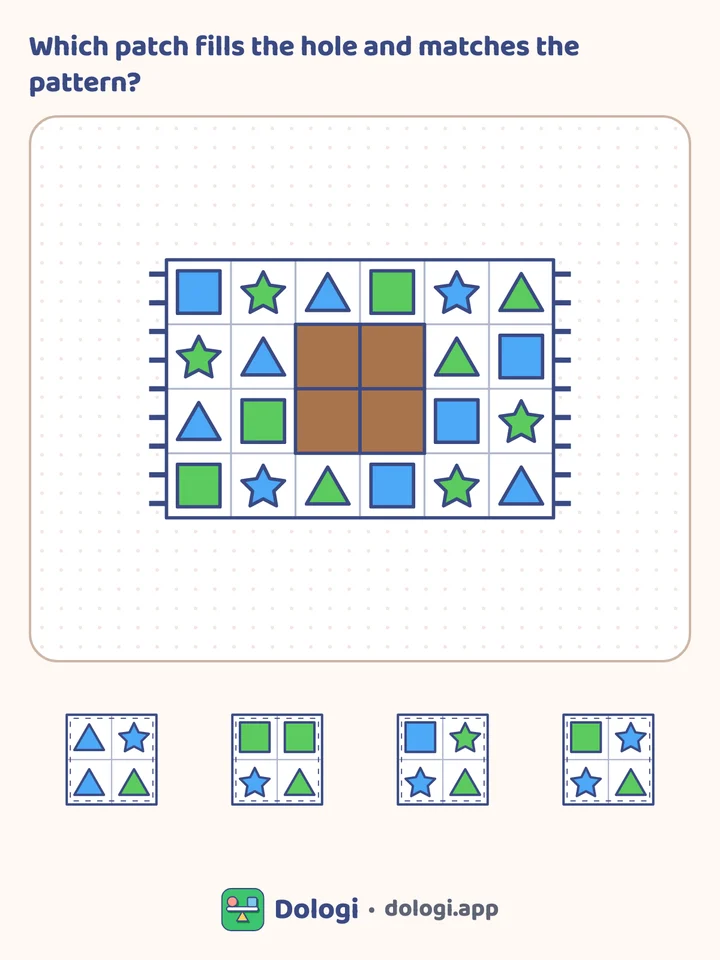
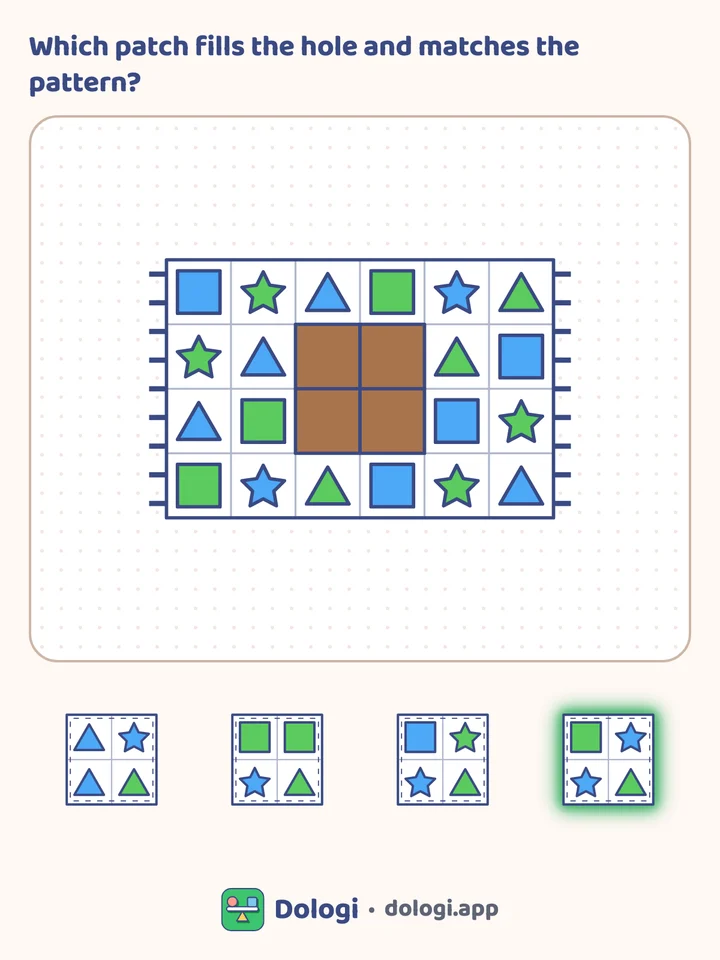
What it builds: The carpet's design runs along the rows and down the columns; your child looks at the squares right next to the hole in the same row and the same column to work out the shape and color each patch square needs, then compares that with every patch. Using the squares around a gap to work out the missing one is what they will do with number grids and crosswords, and even when laying tiles or doing jigsaws. Keep playing: cut colored paper into squares, build a repeating carpet together, then take away four squares and let your child put them back correctly.
Hint: Look at the rows and columns next to the hole. The pattern repeats.
If your child enjoyed these puzzles, the Dologi app has many more of the same kinds: clocks moving in different steps, bigger grids, longer number rows and carpets with harder designs. The puzzles get harder with age and with how your child plays, so they can practice a little each day at just the right level.