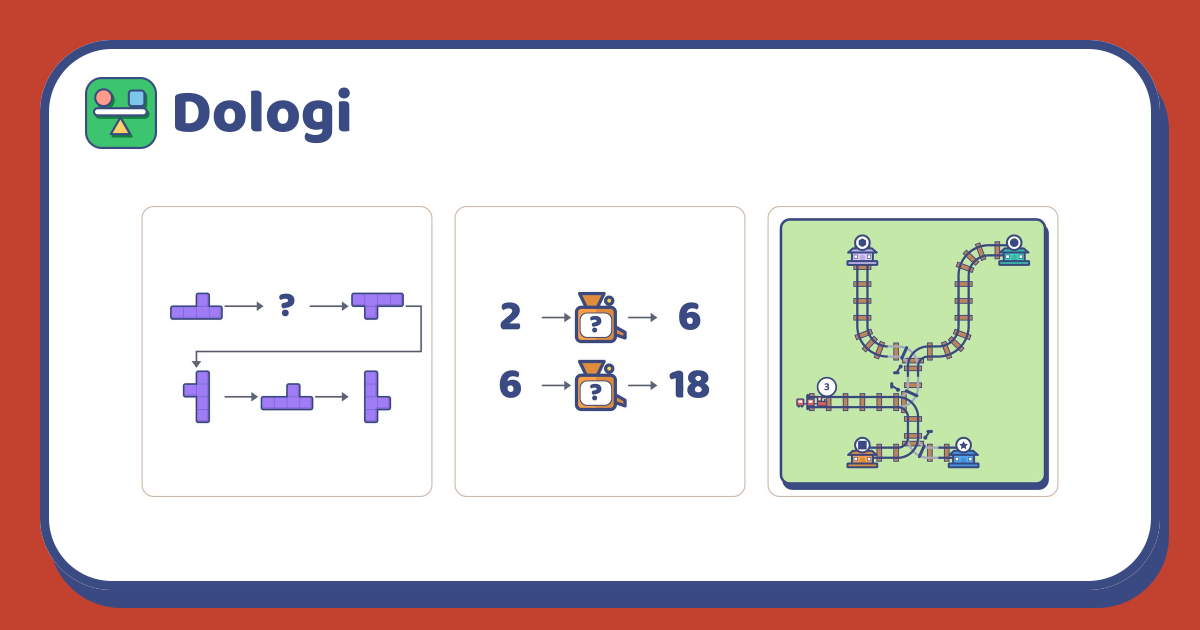
This second set of pattern puzzles for ages 7–8 revolves around one question: what changes and what stays the same. Your child will meet two things changing within one strip, a block turning steadily, a machine that needs the right sign, a song that gets flipped, and switches that change after every train. The five puzzles below come from the Dologi app and go from easy to harder.
How to use this post: show your child one picture at a time and let them find the rule and test it on every part of the picture before choosing. The answer is behind the "Show answer" button under each picture. If they guess right but can't yet explain why, work out the reason together; understanding why matters more than a lucky guess.
Puzzle 1: Dot-dash pattern
Ages 7–8
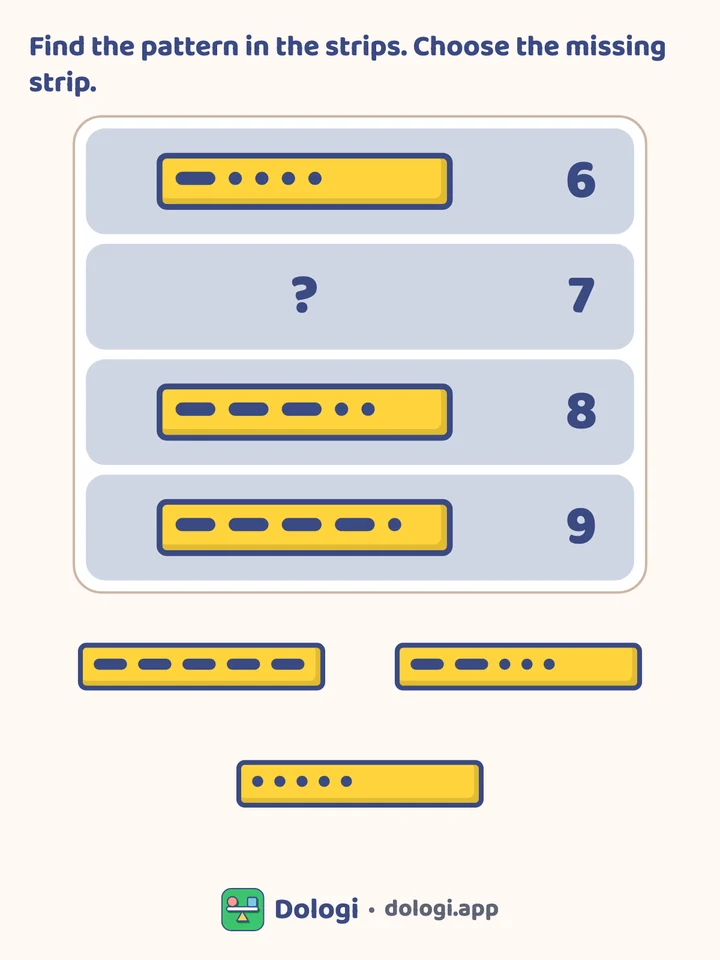
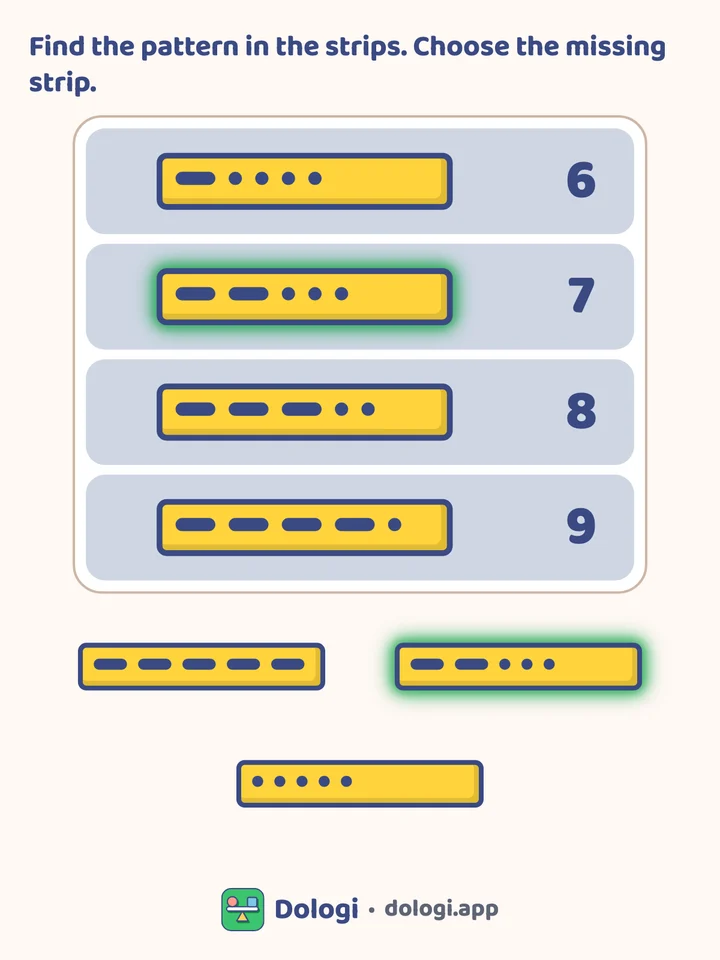
What it builds: Each strip has dots and dashes with a number beside it; your child counts the dots and dashes in every strip and notices, as the number grows, what increases, what decreases and what stays the same. Seeing two amounts move in opposite directions while the total stays put is the idea behind the number bonds they are learning. Keep playing: take ten beans and split them between your two hands, move one bean from one hand to the other each turn, and count both sides together after every move.
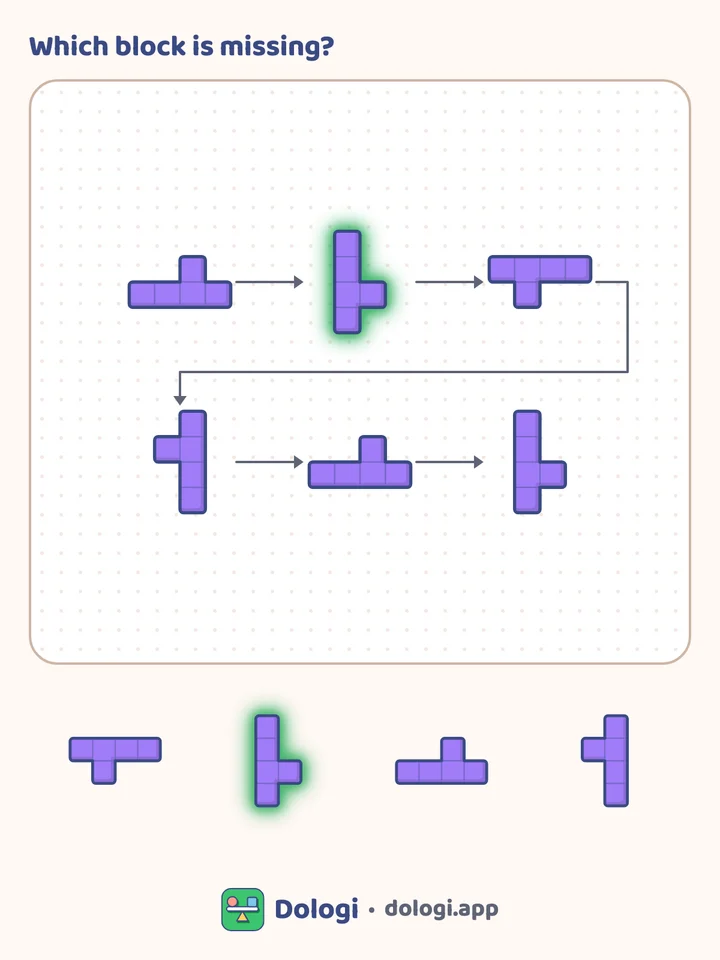
Puzzle 2: Turning blocks
Ages 7–8
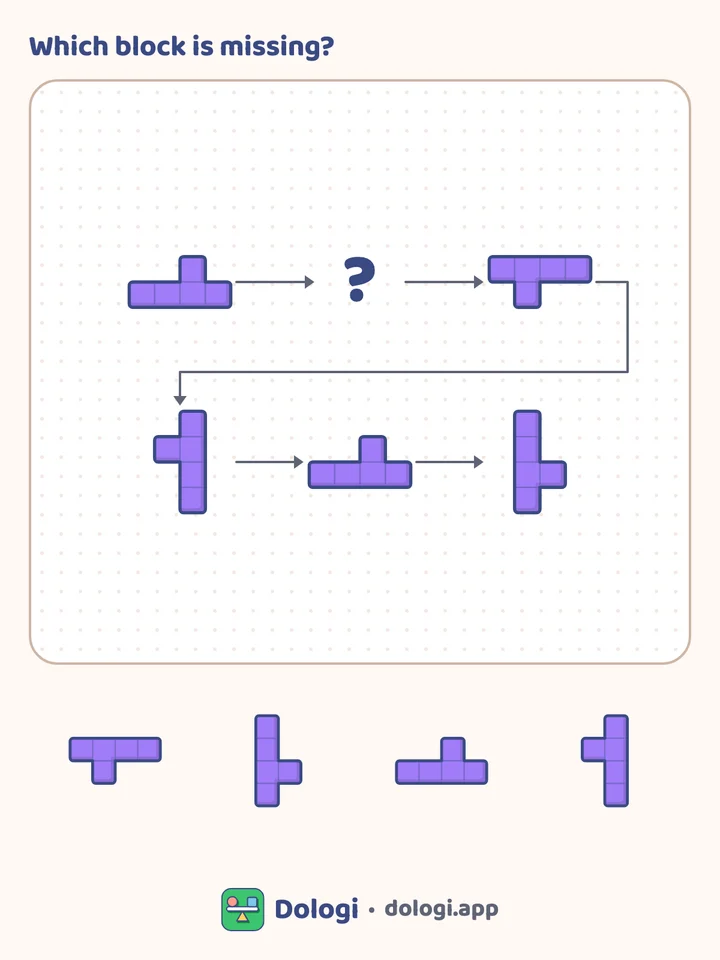
What it builds: The T-shaped block turns the same way at every step, and the gap is in the middle of the row; your child looks at the blocks before and after the gap and pictures the block turning one more notch before choosing. Turning shapes in their head is a spatial skill used for building toys, following assembly diagrams and geometry. Keep playing: cut a T shape out of paper, turn it a quarter turn at a time on the table together, and draw it after each turn.
Puzzle 3: The machine's sign
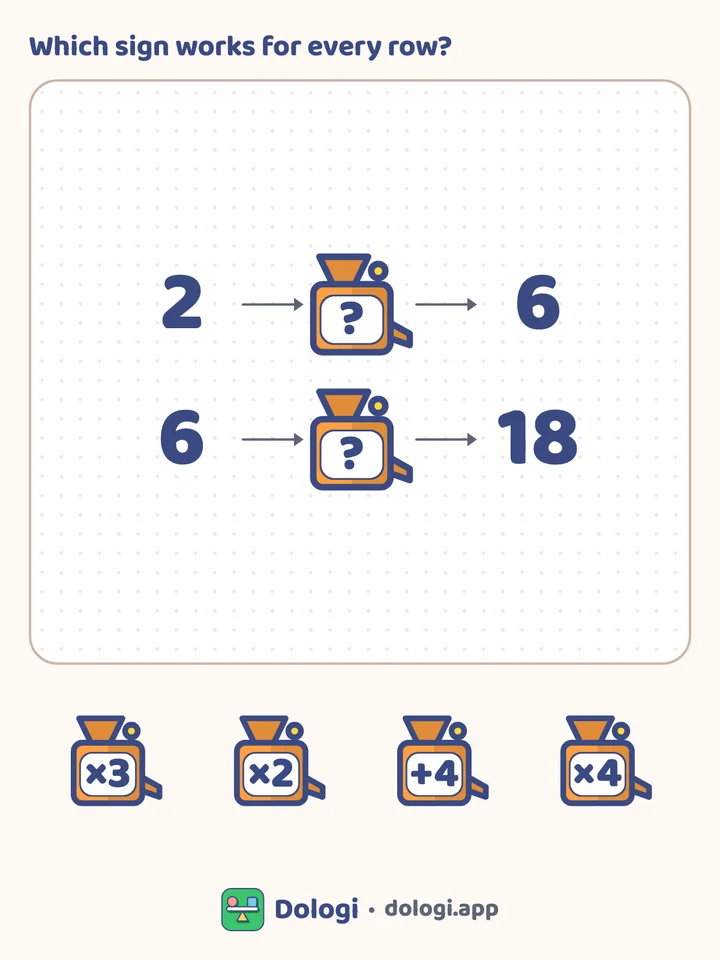
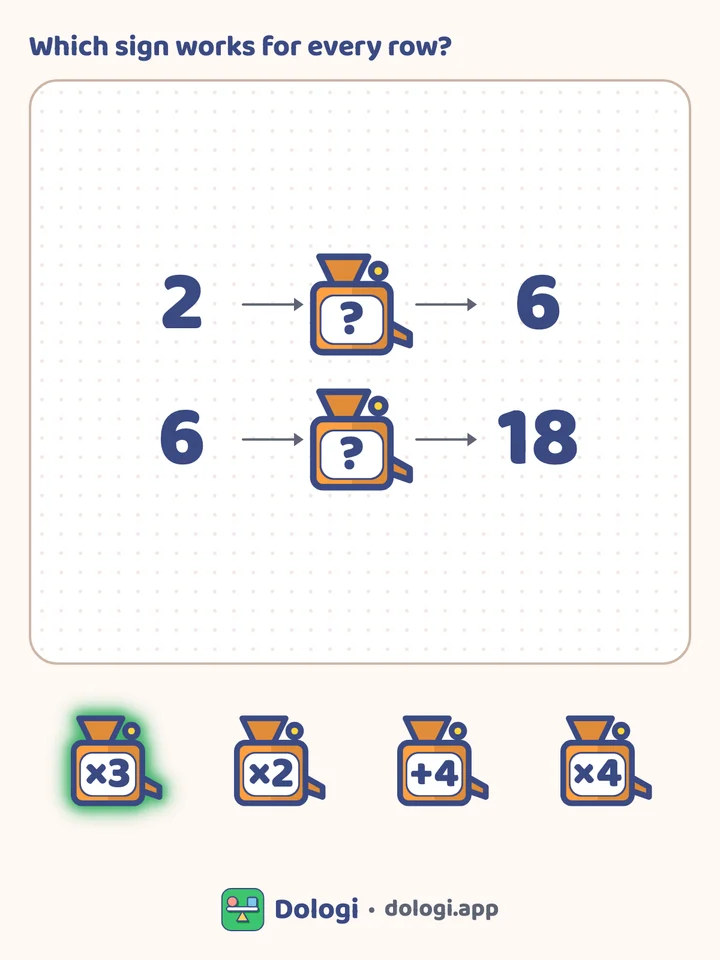
Ages 7–8
What it builds: Two rows of numbers go through the same machine; your child tests each sign on both rows, because a sign can work for the first row and fail on the second. Checking a guess against all the evidence, not just the first piece, is the habit of careful math and science thinkers. Keep playing: think of a rule (times 2, add 5...), give your child two in-and-out examples, let them say their guess and test it on a new number.
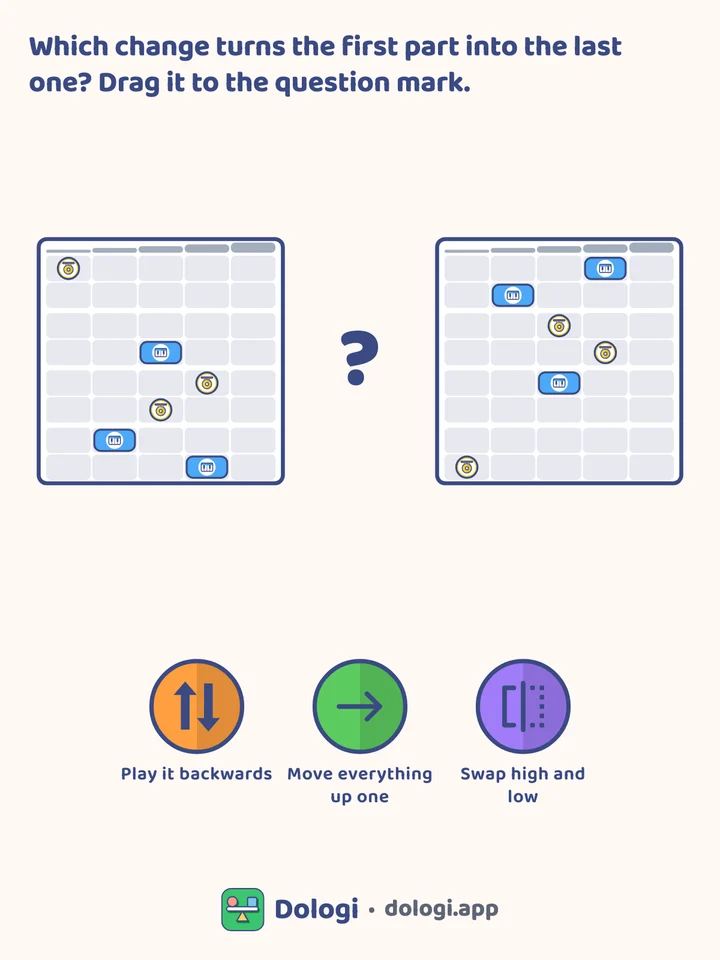
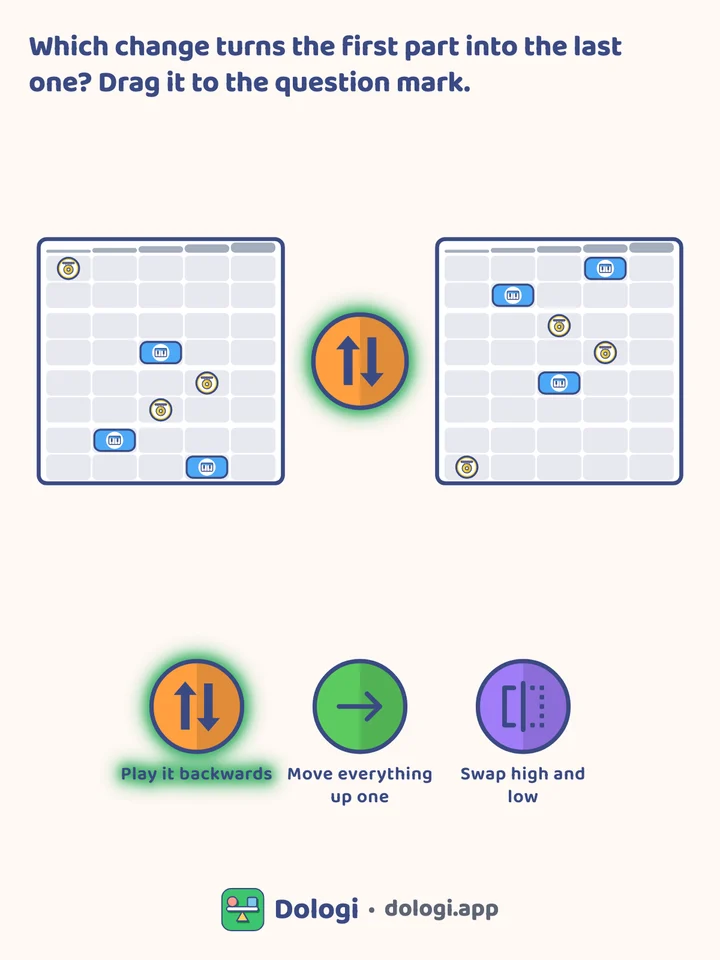
Puzzle 4: Which sign changed the song?
Ages 7–8
What it builds: Your child picks an easy-to-spot note, such as one in a corner, and sees whether it has moved left or right, or up or down, in the last part; the orange "Play it backwards" sign swaps top and bottom, the purple "Swap high and low" sign swaps left and right, and the green "Move everything up one" sign moves notes one column right. Following one landmark to understand how the whole picture changed is how they will learn reflections and translations. Keep playing: stick a colored square in one corner of a sheet of paper, flip the sheet in different ways and ask which corner the square is in now.
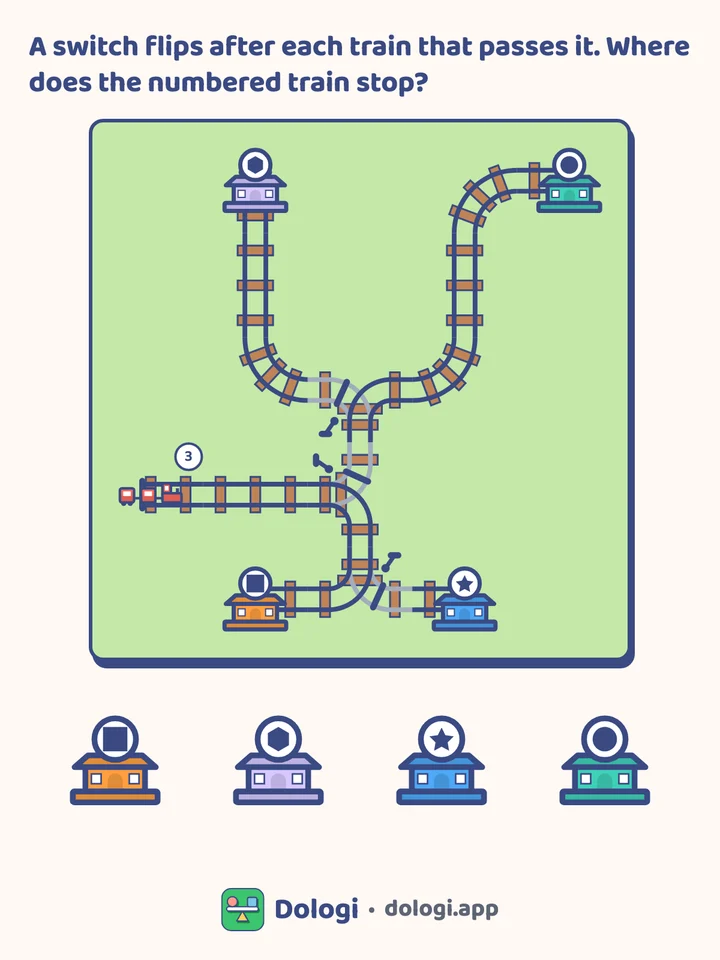
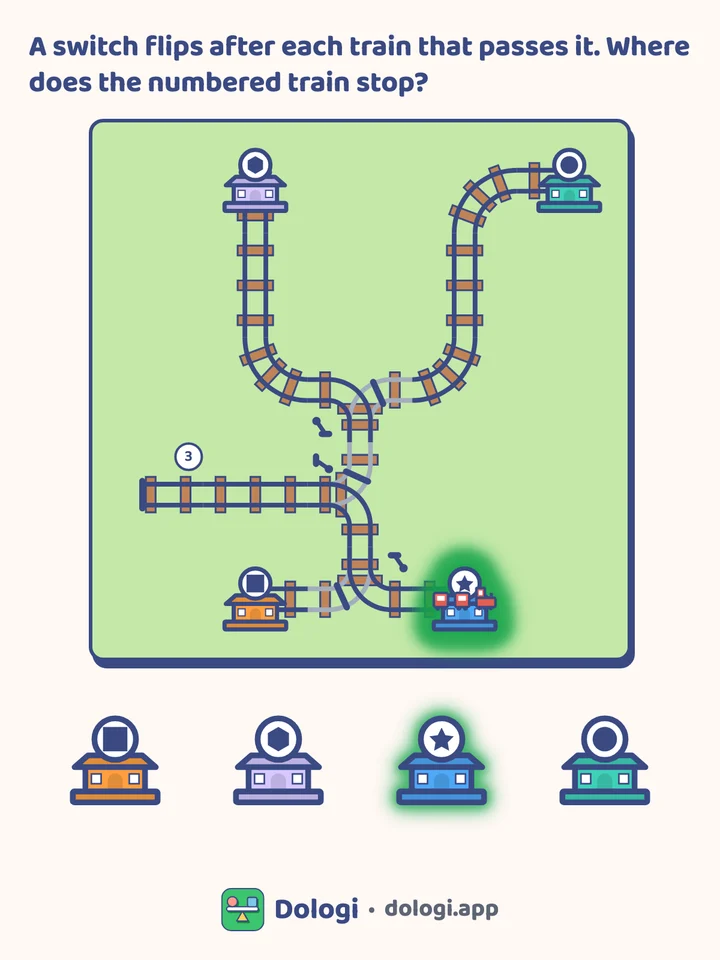
Puzzle 5: Flipping switches
Ages 7–8
What it builds: The train in question is the third, so trains one and two run first and flip the switches they pass; your child runs each train with a finger, remembers which switches changed, and only then moves on to train three. Going step by step and keeping track of changes helps them solve multi-step problems without getting muddled. Keep playing: draw a road with two forks on paper, mark an arrow at each fork, drive toy cars through one at a time, and flip the arrow at each fork the car just passed.
If your child enjoyed these puzzles, the Dologi app has many more of the same kinds: longer strips, machines with two-step rules and railways with more switches. The puzzles get harder with age and with how your child plays, so they can practice a little each day at just the right level.