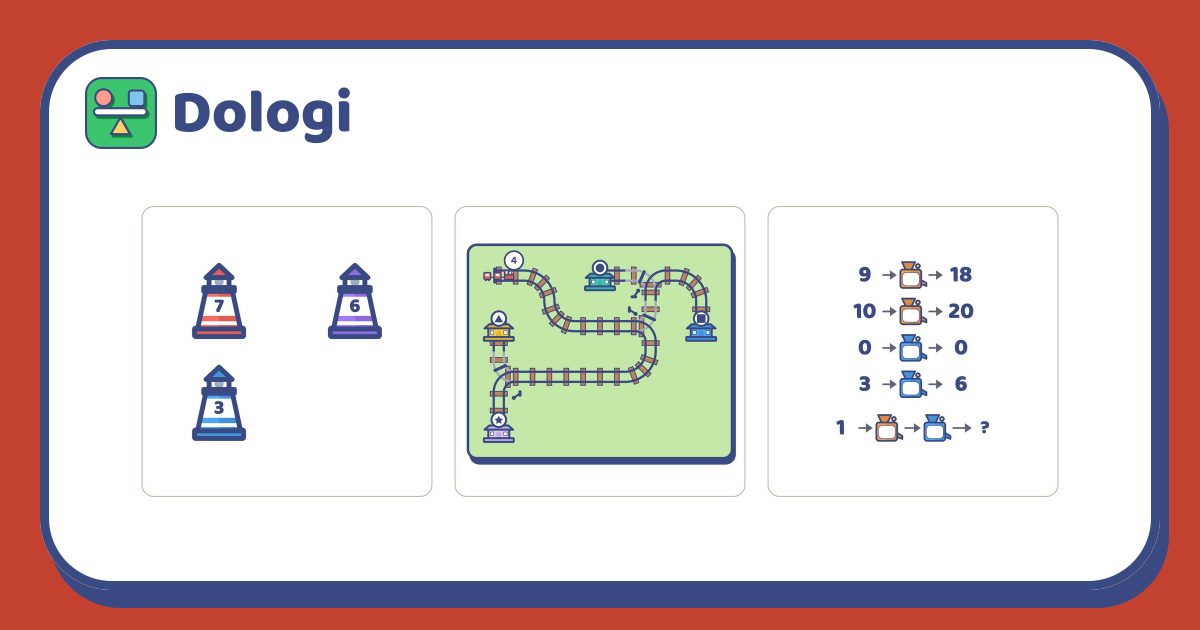
By ages 8–10, a pattern is no longer just a group of pictures that repeats. Kids have to find the jump between numbers, keep track of two things changing at once, or work out a machine's secret rule from a few examples. This is the same thinking they will use for multiplication, fractions, and later expressions and functions. The five puzzles below come from the Dologi app and go from easy to harder.
How to use this post: show your child one picture at a time and let them think it through, ideally with paper and pencil nearby. The answer is behind the "Show answer" button under each picture. Before opening it, ask "how did you find the rule?": being able to explain the thinking matters as much as the right answer.
Puzzle 1: Blinking lighthouses
Ages 8–10
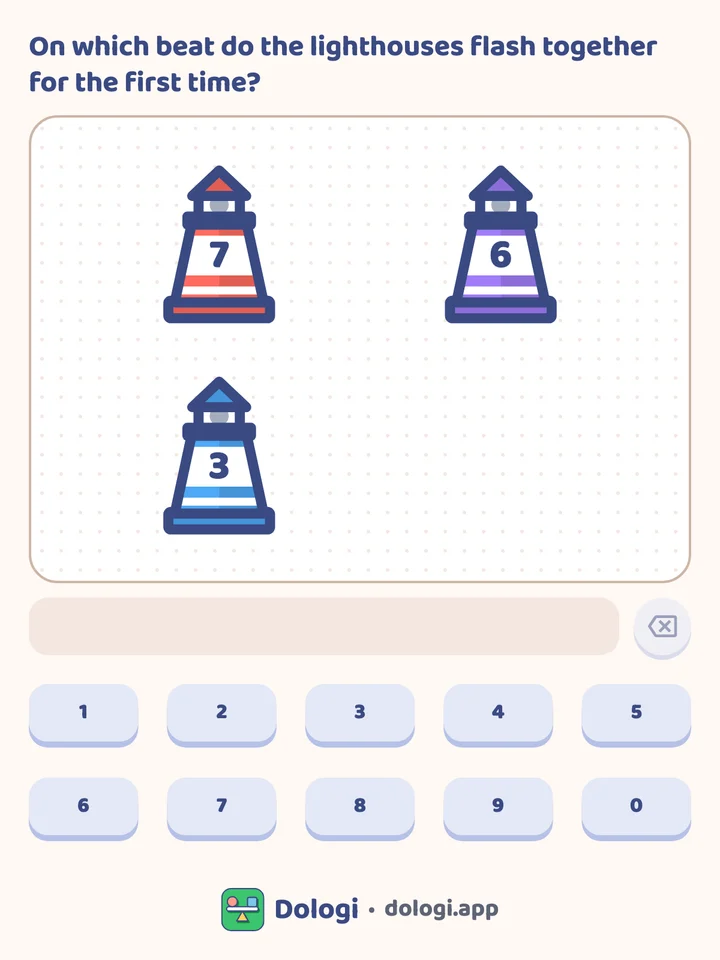
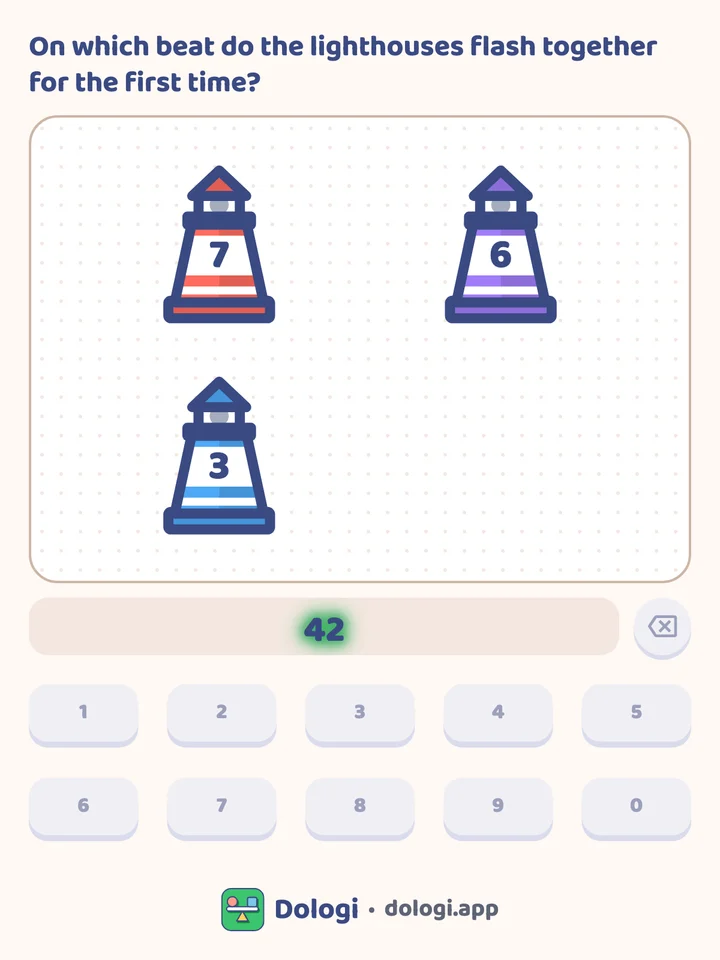
What it builds: Each lighthouse flashes on its own beat, written on its tower; your child lists the beats for each one and looks for the first number that shows up on every list. This is the least common multiple, which they will need for adding fractions, and it is also how you work out when two repeating events line up (two bus routes, two practice schedules). Keep playing: you clap every 2 beats and your child stomps every 3 beats; guess ahead which beat you both do together.
Puzzle 2: Next number
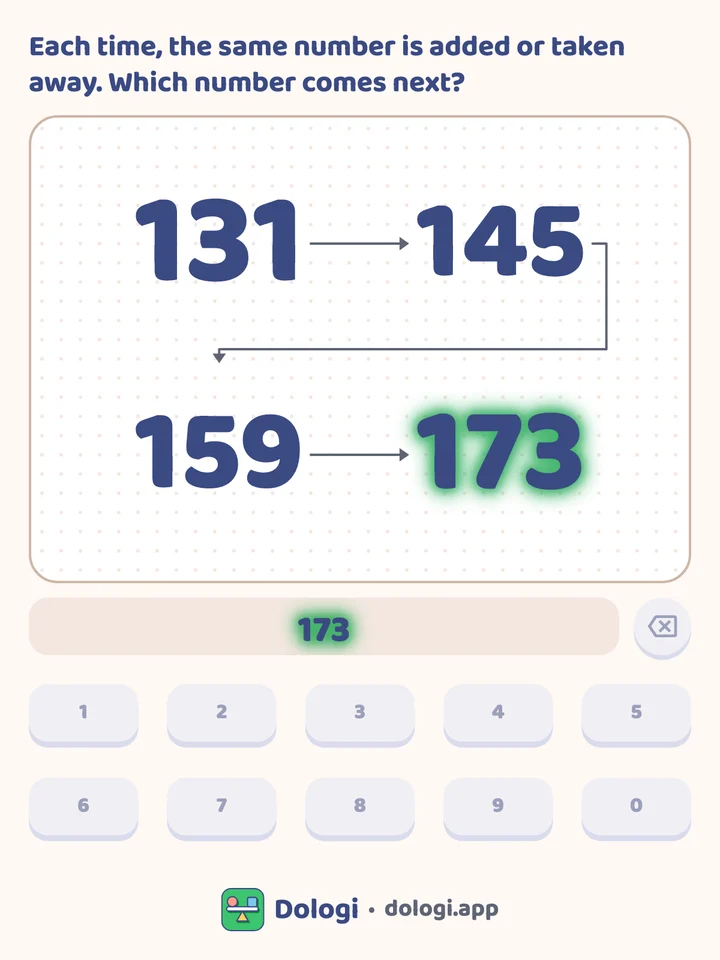
Ages 8–10
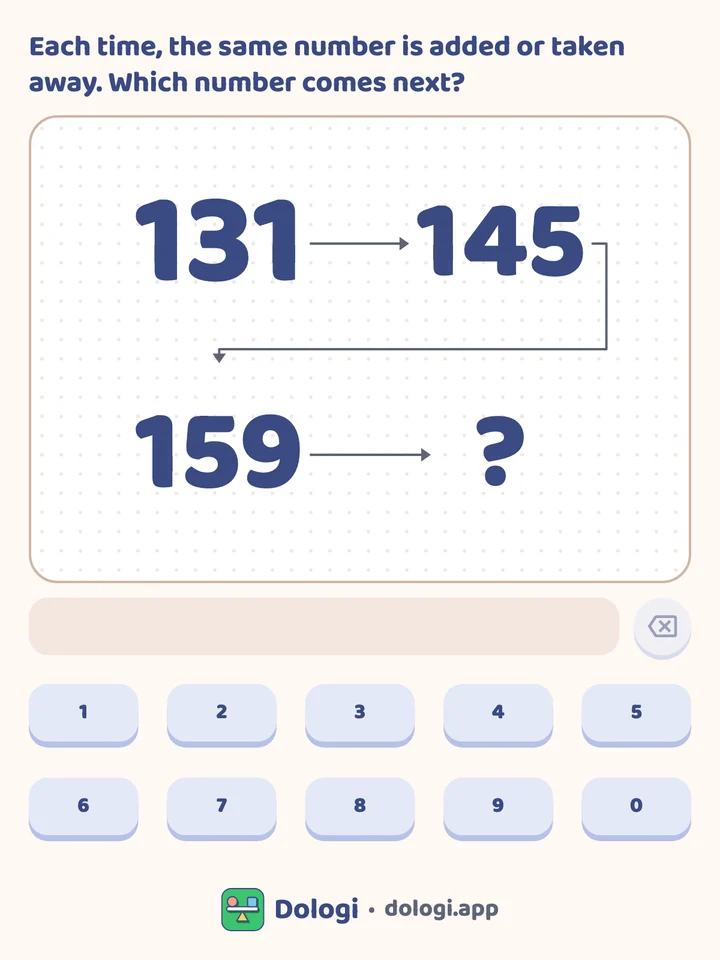
What it builds: Your child subtracts each number from the next to find the jump, then checks it on the next pair before working out the missing number. Testing a rule on several pairs instead of guessing from one makes for more careful math, and this kind of steady sequence comes back in later grades. Keep playing: pick a starting number and a secret jump, read out the first three numbers, and let your child guess the jump and say the next two.
Puzzle 3: Flipping switches
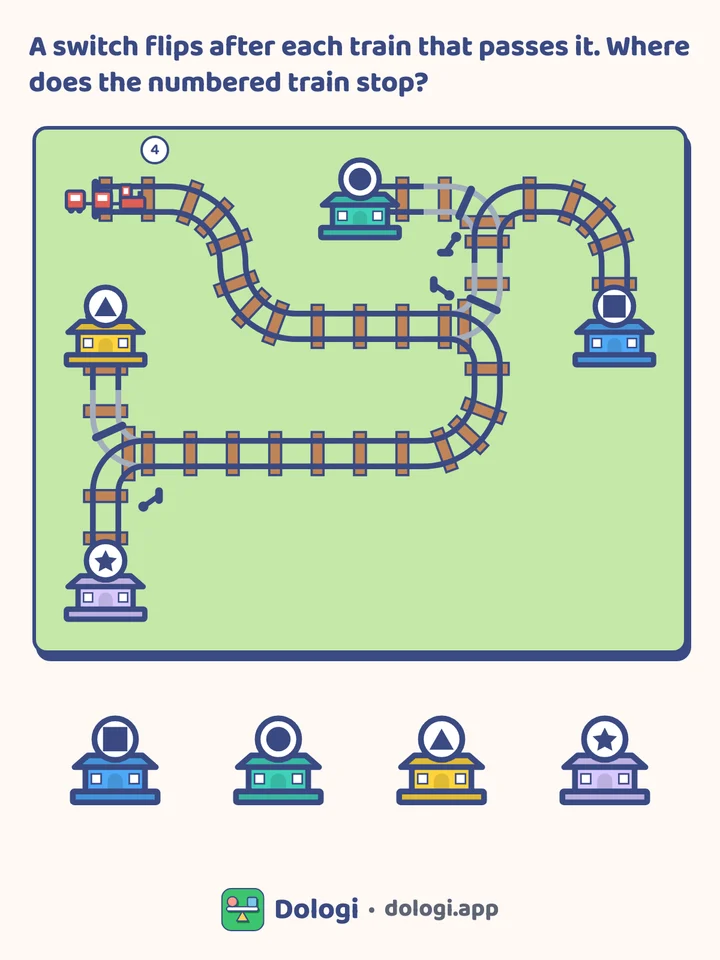
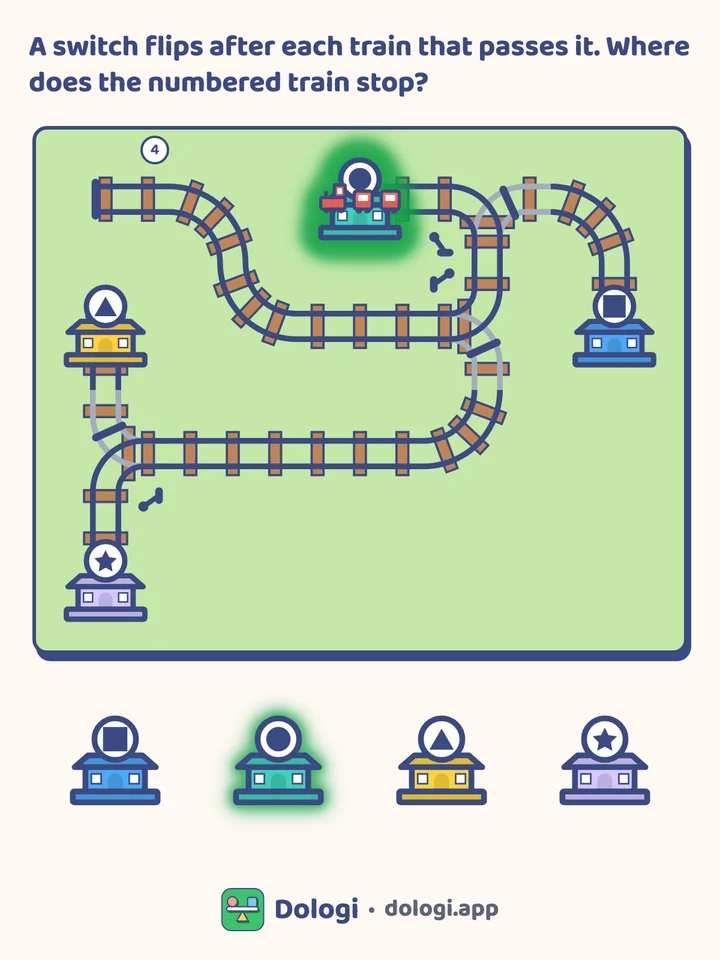
Ages 8–10
What it builds: A switch flips after every train, so your child runs the trains one by one and notes which station each one reaches; after a while the stations repeat in the same order. Tracking something that changes state after every step is how programmers think, and it lets your child solve cycle problems without trying every case to the end. Keep playing: turn a cup upside down, flip it once each time someone walks past, and ask whether it will be up or down after the seventh person.
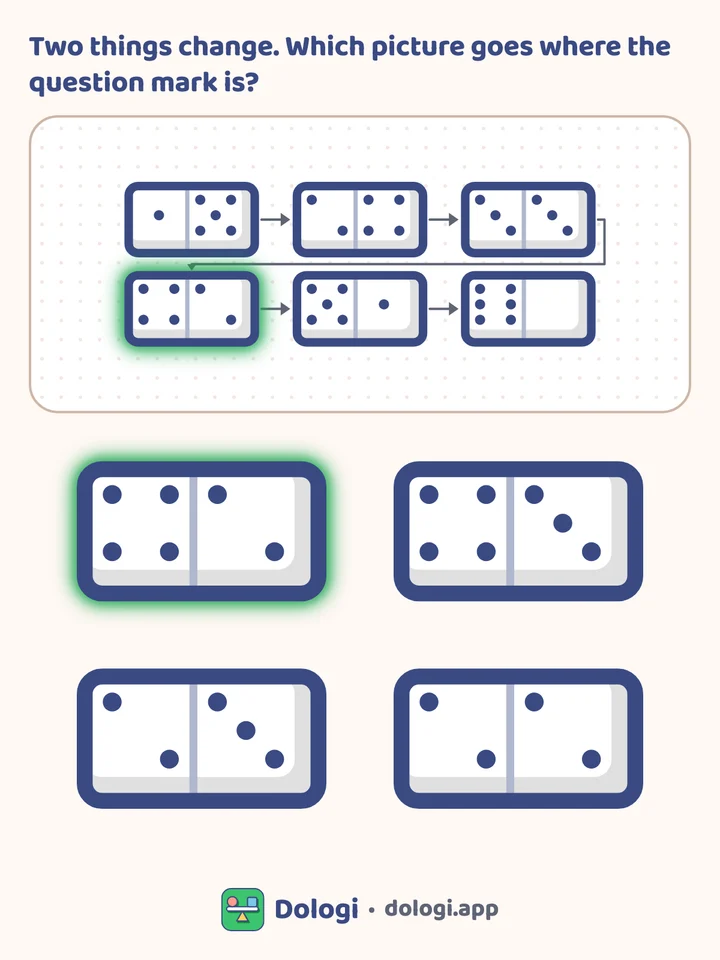
Puzzle 4: Two-rule dominoes
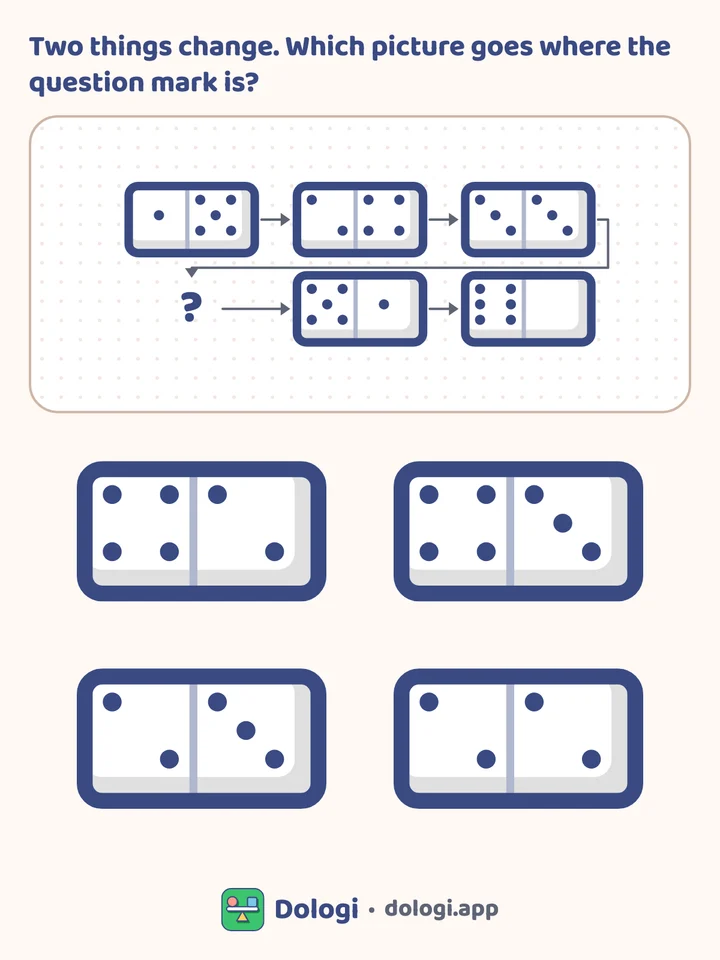
Ages 9–10
What it builds: The two halves of each domino change by two separate rules; your child covers one half to look at the other on its own, finds each rule, and then puts them together. Breaking a messy problem into small parts is a skill they will use for years, from reading a two-column table to solving word problems with several conditions. Keep playing: draw a row of shapes that change color by one rule and number of sides by another, then let your child draw the next one.
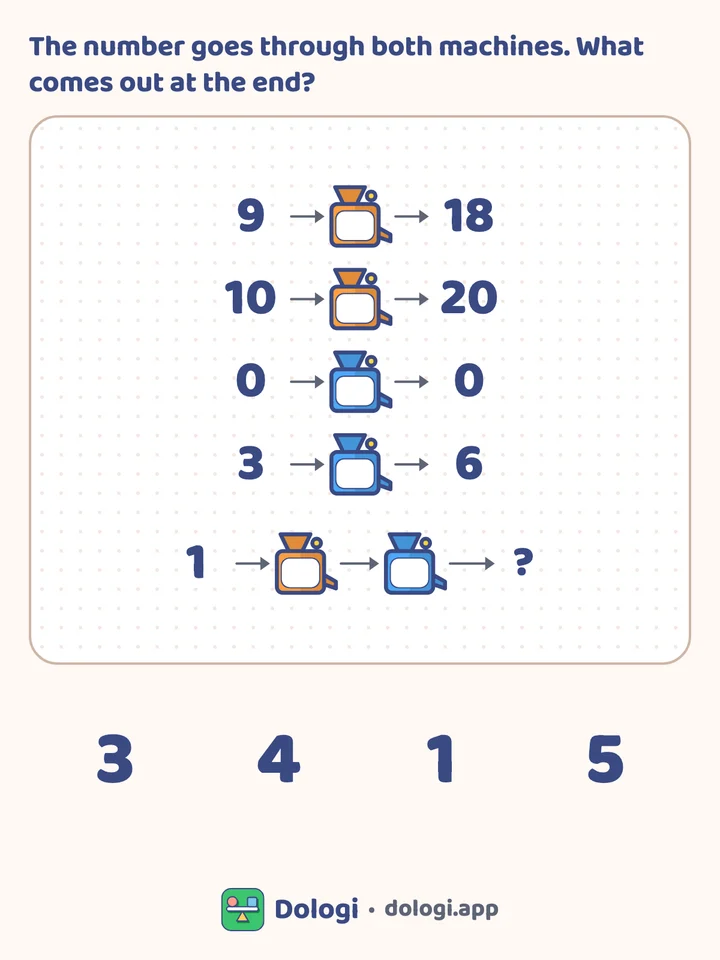
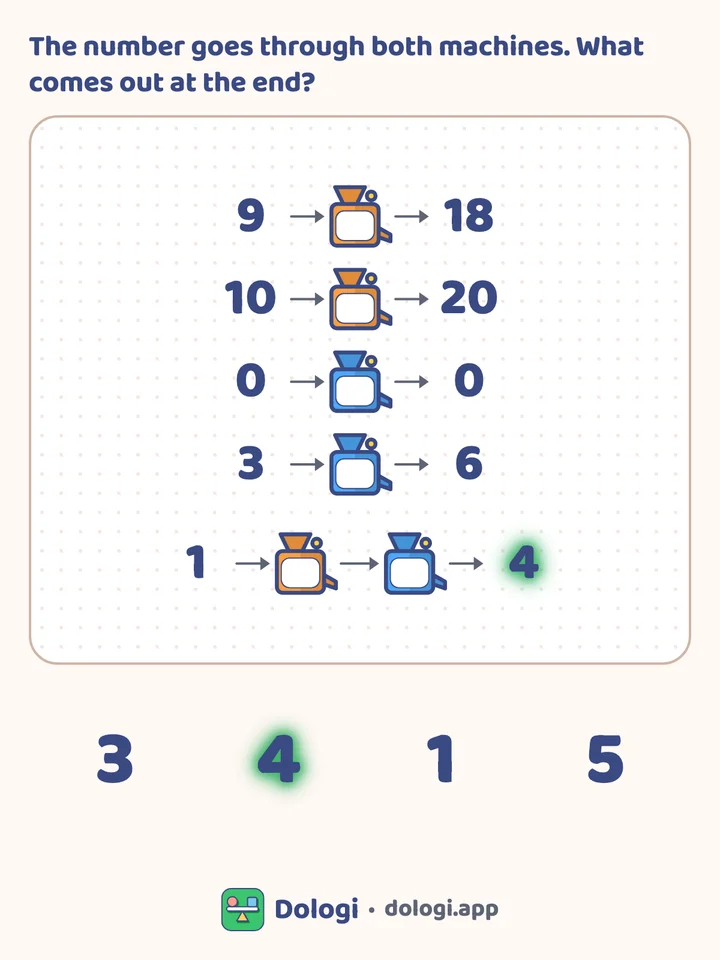
Puzzle 5: Changing machine
Ages 9–10
What it builds: Your child looks at the examples of numbers going in and out to work out each machine's rule, checks it against every example, and then sends a number through both machines in a row. Finding a rule from input and output pairs and chaining two changes is the idea behind functions in math, much like doubling a recipe and then doubling it again. Keep playing: try a "secret machine" game where your child says a number, you answer with a hidden rule, and they guess the rule after a few rounds.
If your child enjoyed these puzzles, the Dologi app has many more of the same kinds: longer number sequences, machines with two-step rules and railways with extra switches. The puzzles get harder with age and with how your child plays, so they can practice a little each day at just the right level.