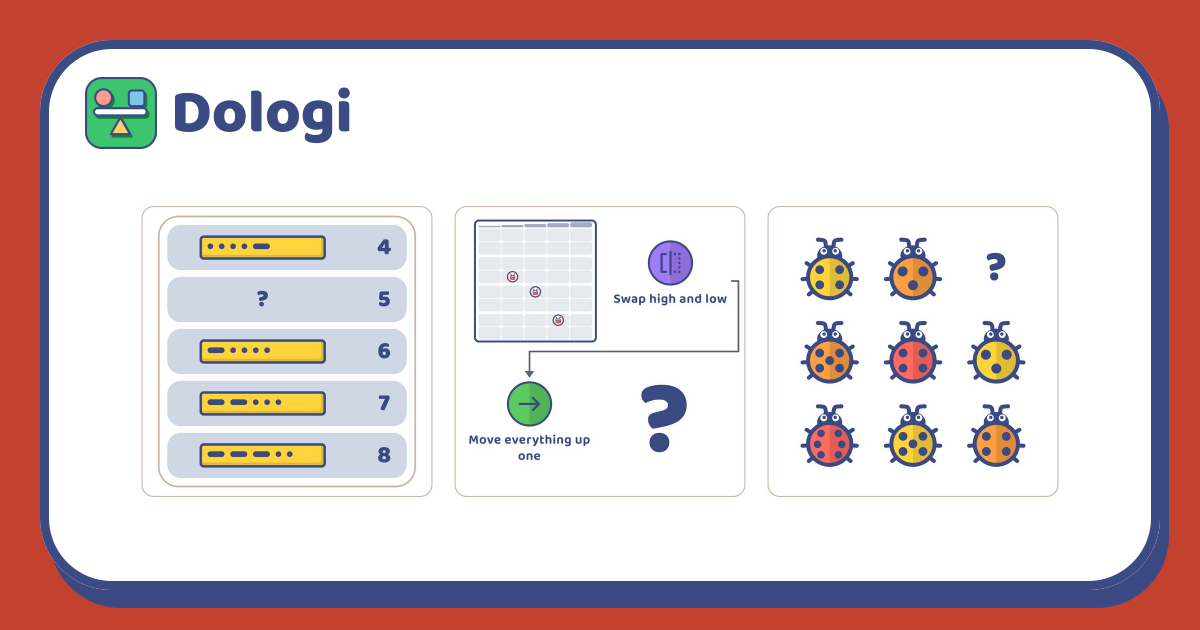
This second set of pattern puzzles for ages 8–10 focuses on patterns inside grids and songs: designs that run along both rows and columns, a rule that changes partway, notes that move according to signs, and several instruments changing at once. Kids need to look closely, split things into parts and then check the whole again. The five puzzles below come from the Dologi app and go from easy to harder.
How to use this post: show your child one picture at a time and let them find the rule and point out why the other choices are wrong. The answer is behind the "Show answer" button under each picture. Ruling out a wrong choice is as valuable as picking the right one, so praise both.
Puzzle 1: Patch the carpet
Ages 8–10
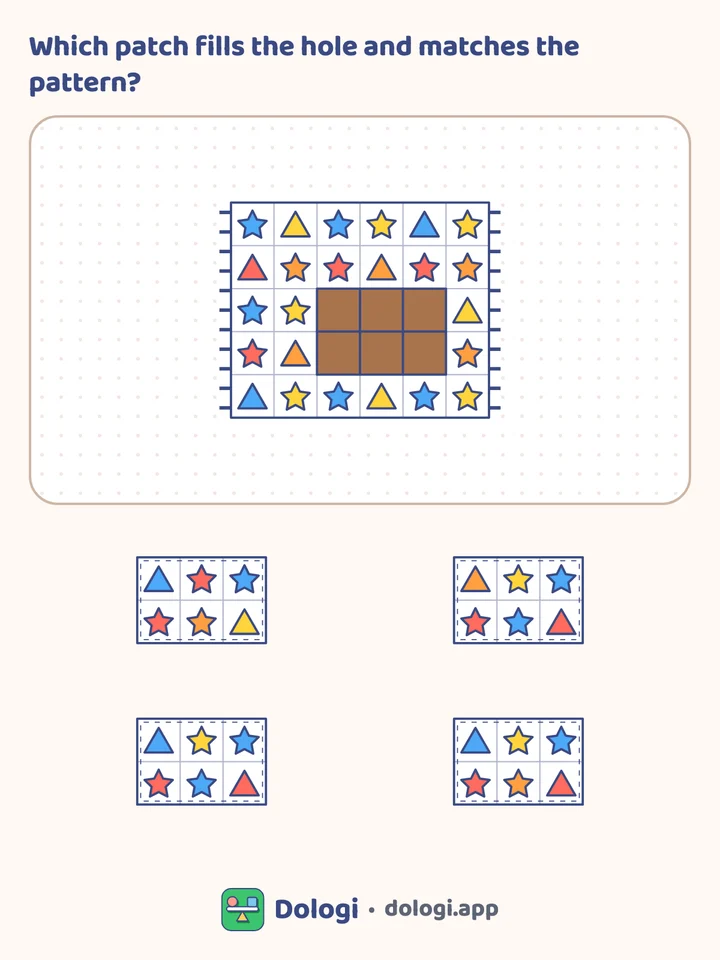
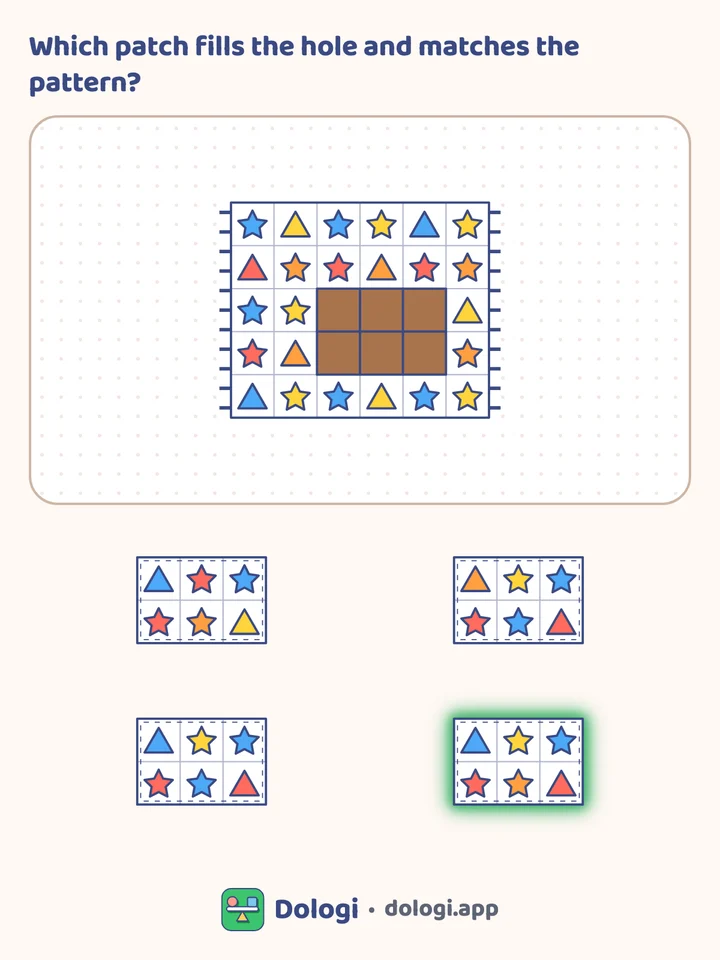
What it builds: The patch has six squares, and each one must fit both its row and its column; your child checks the squares one at a time, following shape in one direction and color in the other, and crosses out any patch with even one wrong square. Checking small parts one by one instead of glancing at the whole is a habit that helps with reviewing work and catching spelling mistakes. Keep playing: with building blocks in two colors and two shapes, lay a patterned "floor" together, then secretly swap one block and let your child find it.
Hint: Look at the rows and columns next to the hole. The pattern repeats.
Puzzle 2: Dot-dash pattern
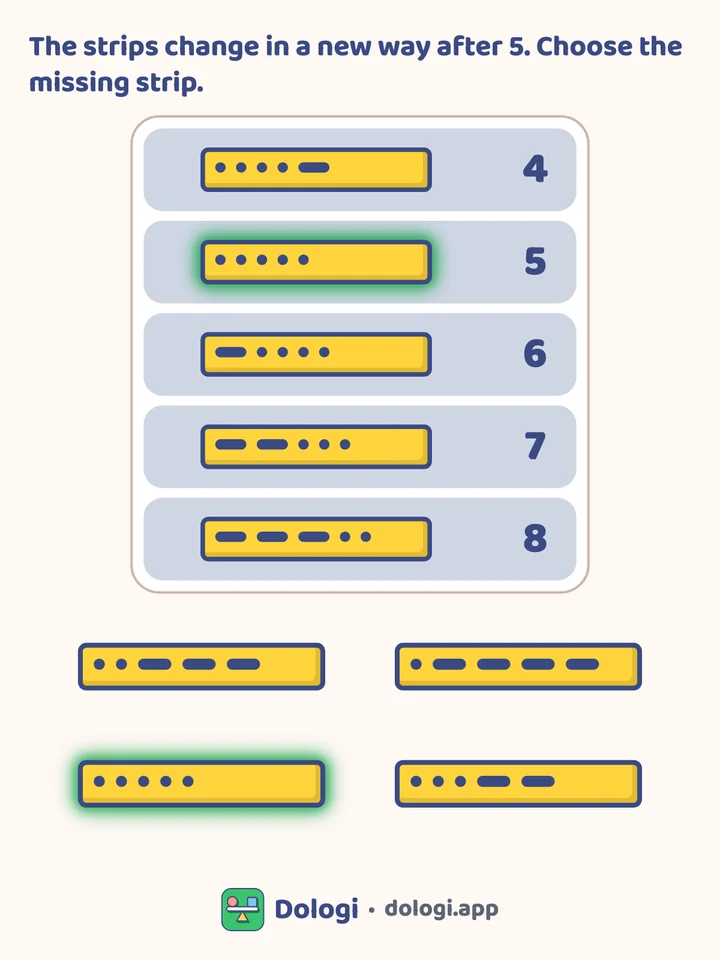
Ages 8–10
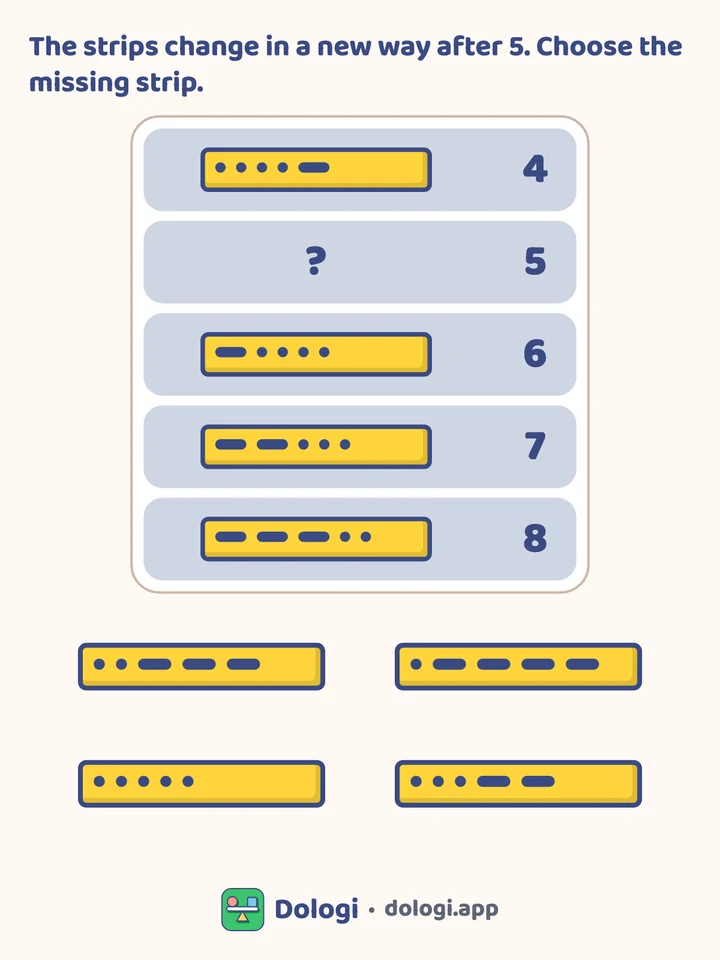
What it builds: The prompt warns that after 5 the strips change in a different way, so your child finds the rule for the first part, the rule for the second part, and then sees which part the gap is in. Noticing that a pattern can change partway helps with reading charts, understanding tiered prices, and games whose rules change as you level up. Keep playing: build block towers growing from 1 to 5 blocks, then have each new tower swap old blocks for a different color, and let your child describe the next tower.
Puzzle 3: Flip, then shift the song
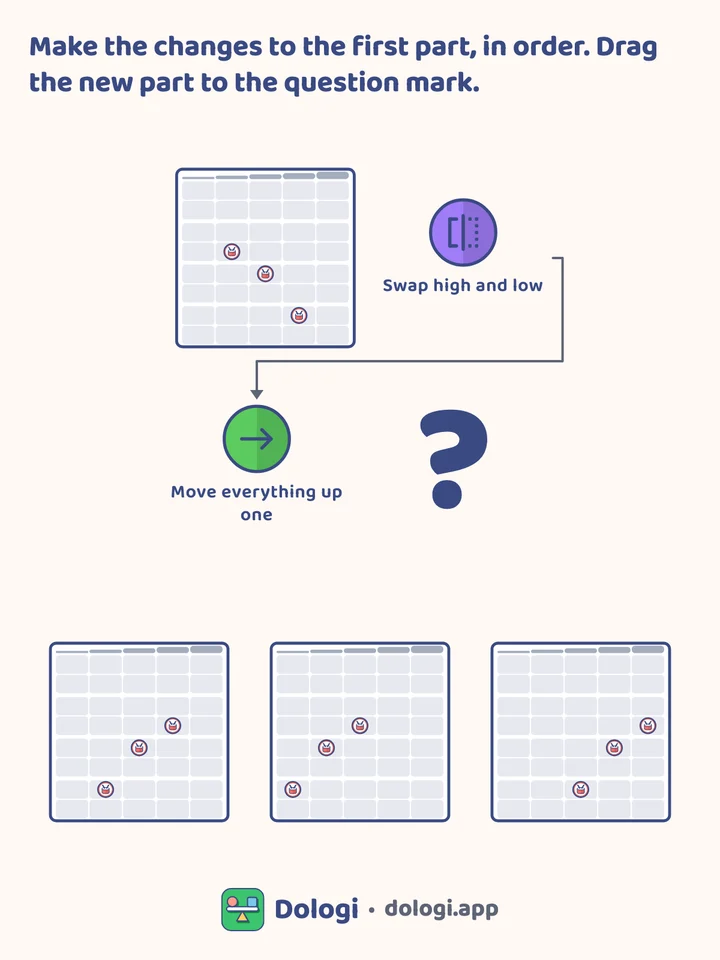
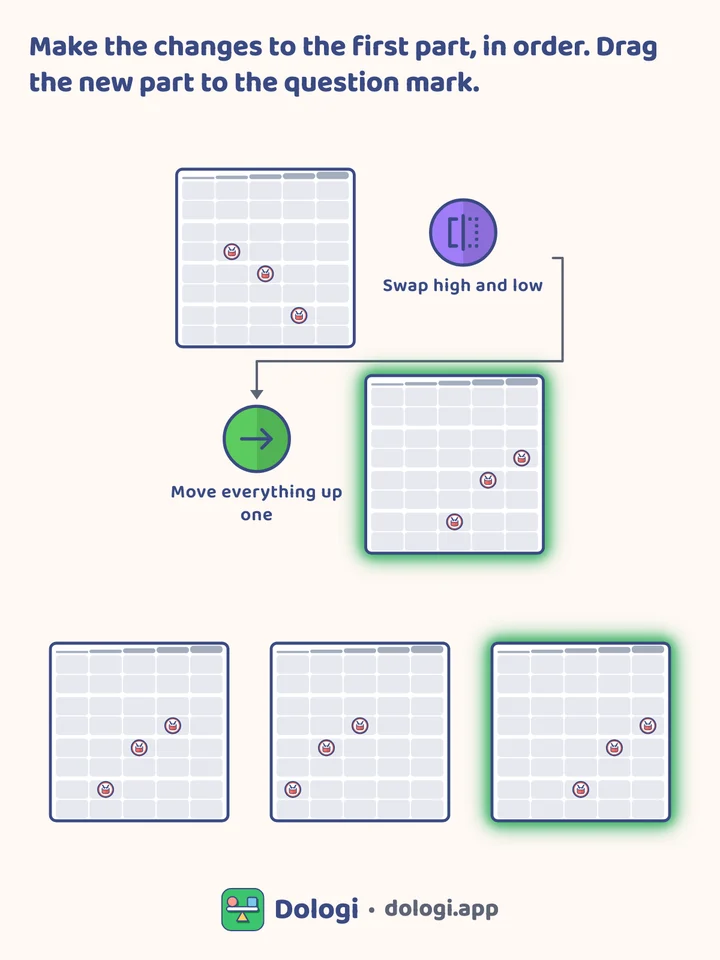
Ages 8–10
What it builds: In the song grid, the further right the column, the higher the note; the purple "Swap high and low" sign swaps notes on the left with notes on the right like a mirror, then the green "Move everything up one" sign shifts every note one column right, with notes in the rightmost column wrapping to the leftmost. Your child applies each sign in order, and following just a few notes is enough to rule out the wrong grids. This mirror-then-slide move comes back in geometry lessons on symmetry and transformations. Keep playing: place a few objects on a checked tablecloth, ask your child to arrange them as seen in a mirror, then slide them all one square to the right.
Puzzle 4: The next song part
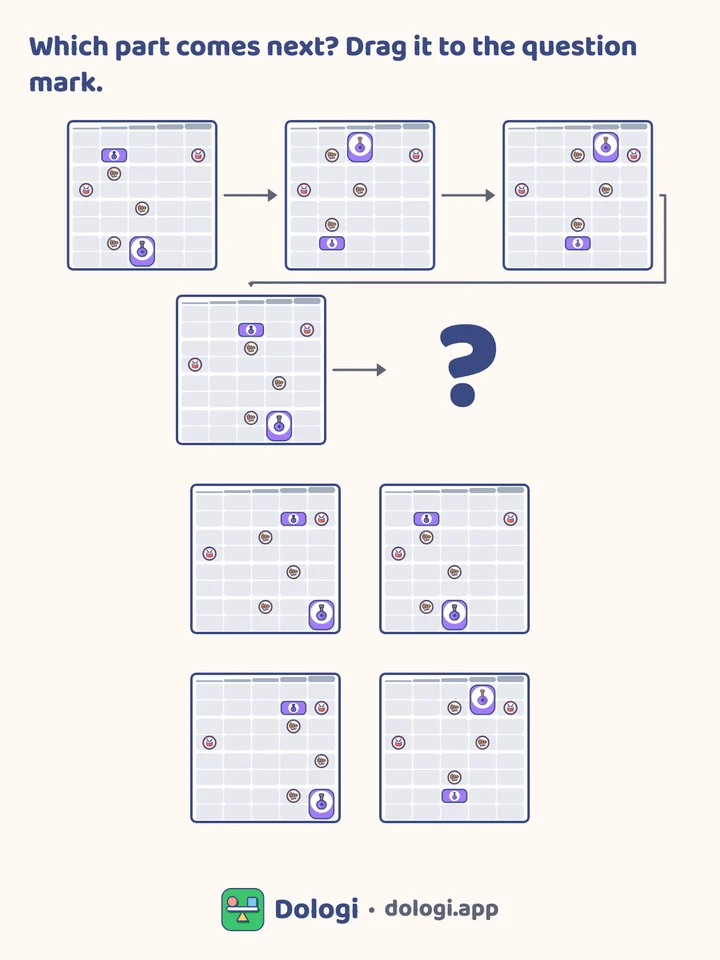
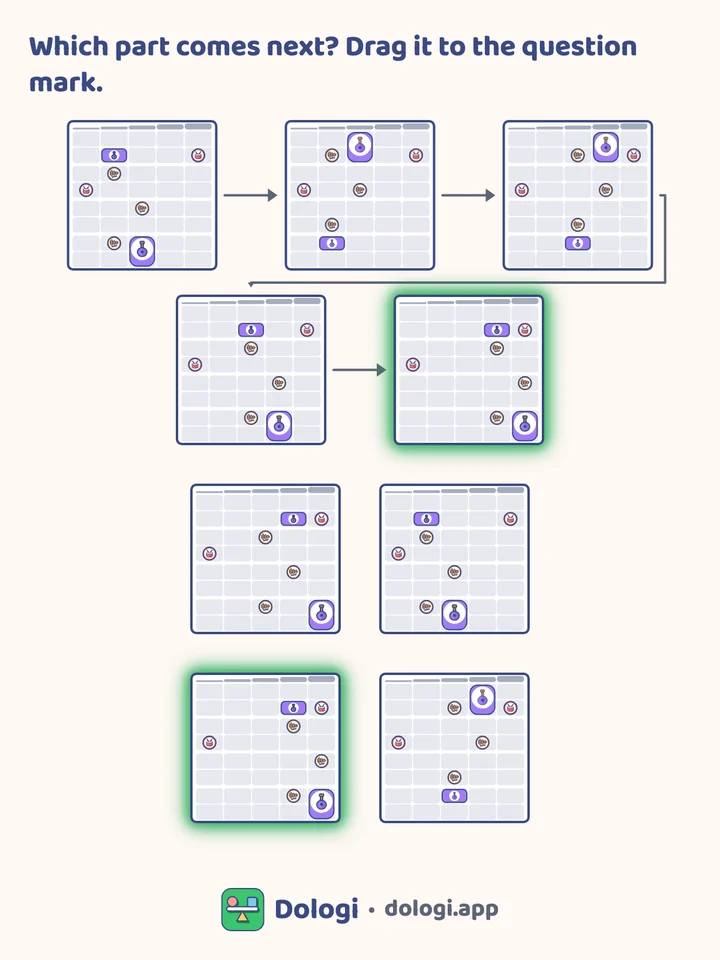
Ages 9–10
What it builds: Each instrument in the song part moves by its own rule; your child picks one instrument, follows where it goes across the parts, does the same for another instrument, and finally puts it all together to find the next part. Tracking several changes by looking at one thing at a time is how they will read a data table with many columns or follow several characters in a story. Keep playing: put three toys on a game board, each moving by its own rule (one sideways, one up and down, one staying still), and let your child predict where they will be after a few turns.
Puzzle 5: Pattern grid
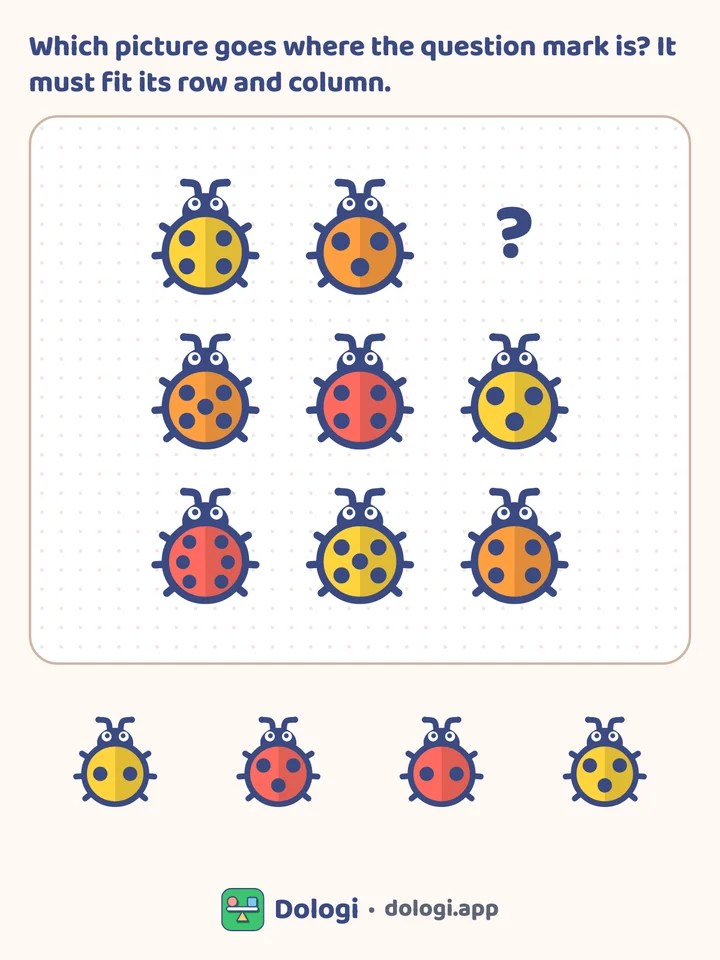
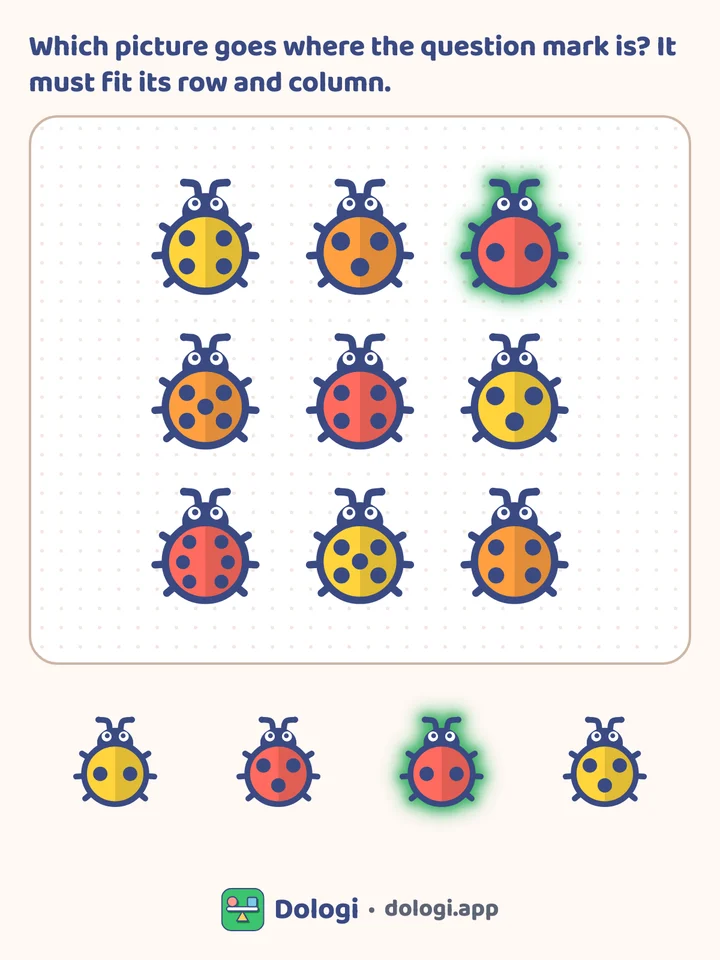
Ages 9–10
What it builds: In the ladybug grid, both the color and the number of spots follow rules along rows and columns; your child finds the color rule first, then counts spots to find the spot rule, and only picks a ladybug that fits both. Handling two features in one grid helps with two-way tables like the times table or a school timetable. Keep playing: with a deck of cards, build a 3 × 3 grid together where each row has all three suits and the numbers go up, then turn one card over for your child to guess.
If your child enjoyed these puzzles, the Dologi app has many more of the same kinds: bigger carpets, songs with more instruments and grids with several rules at once. The puzzles get harder with age and with how your child plays, so they can practice a little each day at just the right level.