Your child can already read and add before their classmates, and you start to wonder: why not just teach them next year's material? Learning ahead sounds like an advantage, especially when other families around you seem to be doing it. But for children aged roughly 5 to 11, racing ahead of the curriculum often comes with costs that are easy to miss.
This article suggests a different direction: keep the same topics your child is learning now, but help them go deeper. You'll find simple ways to do it at home and the signs that show your child is genuinely ready to move on.
What's the problem with learning ahead?
Learning ahead isn't always wrong. But it often runs into a few problems:
- Boredom in class. The teacher explains something your child "already knows", so they tune out and miss the very parts the teacher adds on top.
- Knowing how without knowing why. Learning fast is usually learning procedures: remember the steps, fill in the right answer. When the question changes slightly, children get stuck.
- Gaps in hard-to-see places. A child can multiply but not really understand why "3 groups of 4" equals "4 groups of 3". Small gaps like this show up later, when the work gets harder.
- Pressure to always be ahead. When children are praised for being "ahead of the others", they can start to fear the day they no longer are.
What does going deeper mean?
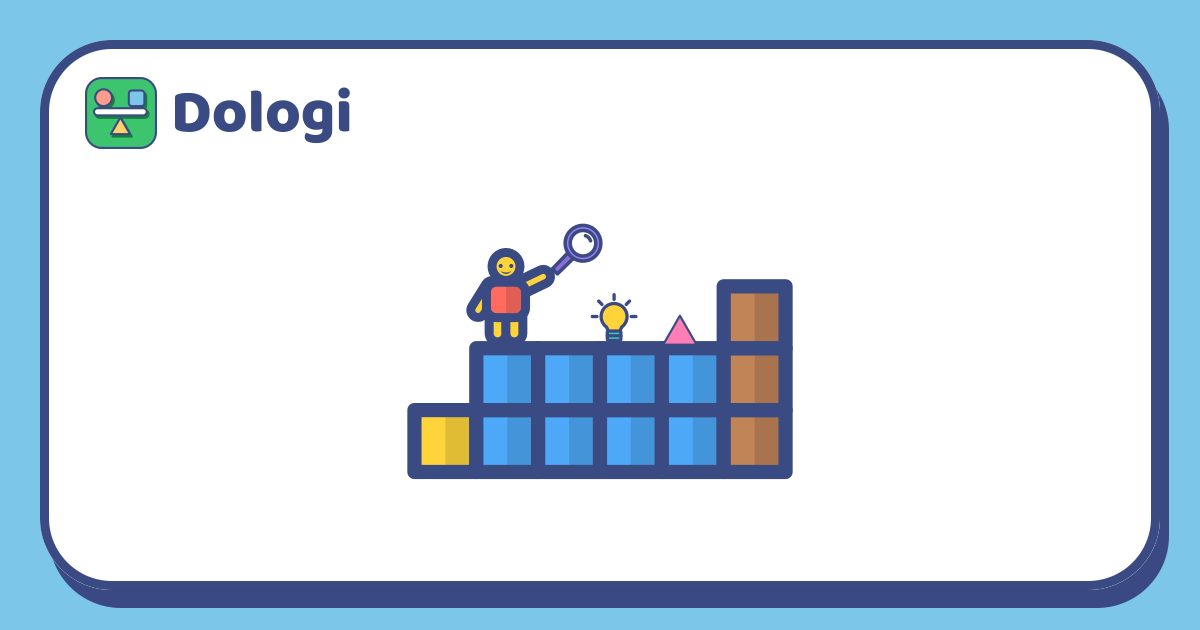
Picture learning as a staircase. Learning ahead means climbing to a higher step. Going deeper means staying on the current step but making it wider and sturdier. With the same knowledge, your child learns to do more:
| Instead of | Try |
|---|---|
| Learning the 6 times table right after the 2 times table | Finding every way to arrange 12 beans in equal rows |
| Doing 20 more identical additions | Finding three different ways to work out one addition |
| Reading next year's books | Rereading a familiar story and imagining what happens if a character makes a different choice |
| Solving lots of easy puzzles | Solving one puzzle, then changing one detail to make it harder |
Your child doesn't move faster, but each idea gets looked at from several sides. That is what helps them solve unfamiliar problems later.
Three ways to go deeper at home
One problem, many methods
After your child solves something, ask: "Is there another way?" For 9 + 6, they might count on, move 1 from the 6 to make 10 + 5, or think 10 + 6 and take away 1. Every method works. Let your child compare which is quicker and which is easier to explain.
Stretch the puzzle
Take a problem your child has just solved and ask "what if…":
- "What if there were 5 friends instead of 4? How would we share the cake?"
- "What if we put one more apple on the left side of the scale?"
- "How many ways can you get from the door to the table without stepping on the rug?"
"What if" questions keep the same knowledge but make your child think it through again from the start.
Let your child set the problem
Ask your child to make up a problem for you, in the same style as the one they just learned. To write a good question, they have to understand how it works: what information to give, what to ask, whether the answer makes sense. You can get one deliberately wrong so your child marks it and explains why.
Signs your child is ready to move on
Going deeper doesn't mean holding your child back forever. When you see these signs, it may be time for the next step:
- Your child can explain why a method works, in their own words or with drawings and objects.
- They handle a changed question: same idea, asked a different way, and they don't get confused.
- They can set a correct problem and know the answer to it.
- They ask what comes next: "What if the numbers were bigger?", "Is there a sum that goes backwards?"
Every child has their own pace, and a child may be ready in one subject but not another. If your child seems well beyond the classwork, talk to their teacher before thinking about skipping ahead: teachers often have ways to give extension work in class.
When is learning ahead fine?
Sometimes it makes sense: your child is curious and wants to find out more, the family is moving to a school with a different curriculum, or a little preview would ease their nerves. Even then, keep the pace gentle, don't turn it into a race, and check that your child understands rather than just gets the answers right.
Puzzles are an easy way to go deeper without racing ahead. In Dologi, each puzzle type has several difficulty levels, and the level adjusts separately for each of your child's skills. Your child spends longer with a type of puzzle and meets it in several forms before moving up.
In short
- Learning ahead can leave children bored in class, able to follow steps without understanding them, and with hidden gaps in the basics.
- Going deeper means keeping today's knowledge but doing more with it: several methods, "what if" questions, and setting their own problems.
- Your child is ready to move on when they can explain, handle a changed question, set a correct problem and ask what comes next.
- Talk to the teacher before thinking about skipping ahead.
Read more: Creative thinking: helping children find more than one way · Let your child set the puzzles