At ages 10–12, children can hold several transformations in a row in their head: folding paper three times and opening it again, rolling a die through six steps, turning a pattern tile around a point. This is the kind of thinking used a lot in geometry, science, coding and reasoning contests. The five puzzles below come straight from the Dologi app, suit kids ages 10–12, and go from easy to harder.
How to use this post: show your child one picture at a time and let them work it out, writing down each step if they need to, before answering. The answer is behind the "Show answer" button under each picture. If they are not sure, try it together with real things (a sheet of paper, a piece of string, a die) to check before opening the answer.
Puzzle 1: Fold and punch
Ages 10–11
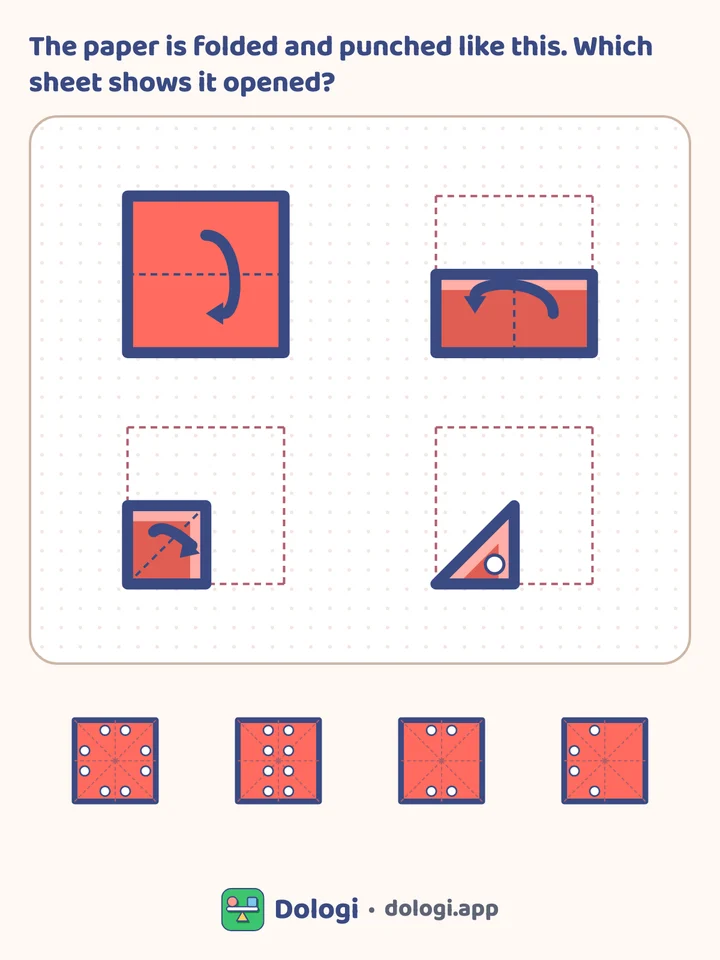
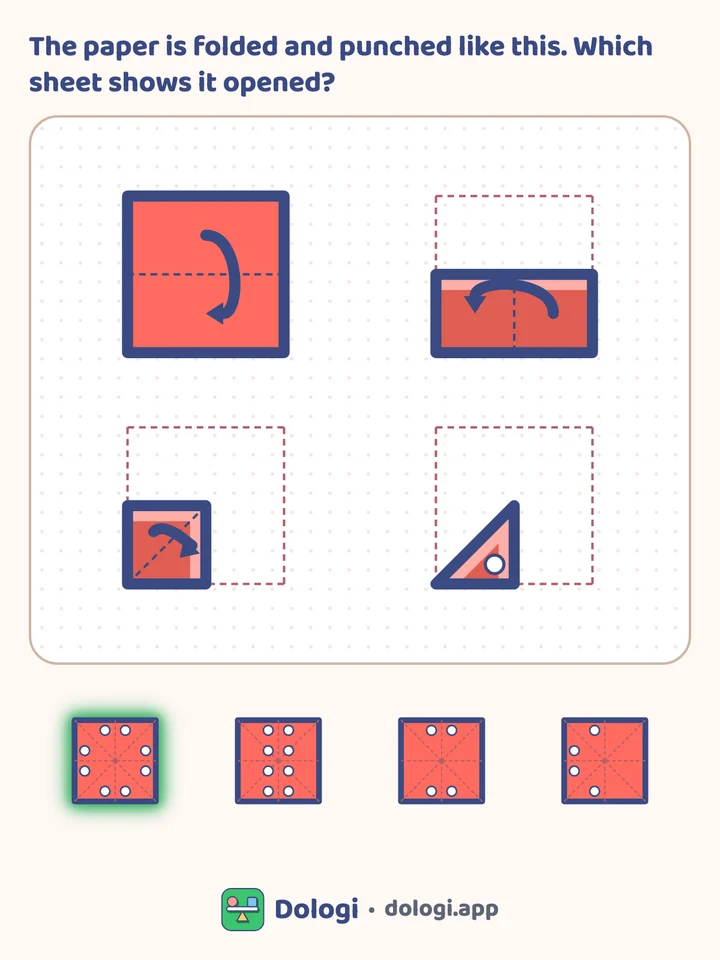
What it builds: Your child unfolds the layers in reverse order: each time, the hole gains a mirror copy across the fold just opened, so they need to know where each fold line is and how the number of holes grows. Working backwards from a result to each step is a skill used a lot in geometry and problem solving. Keep playing: fold a sheet of paper in the same three steps, poke one hole with a pencil, let your child draw where the holes will be, then unfold and compare.
Puzzle 2: Tie a knot
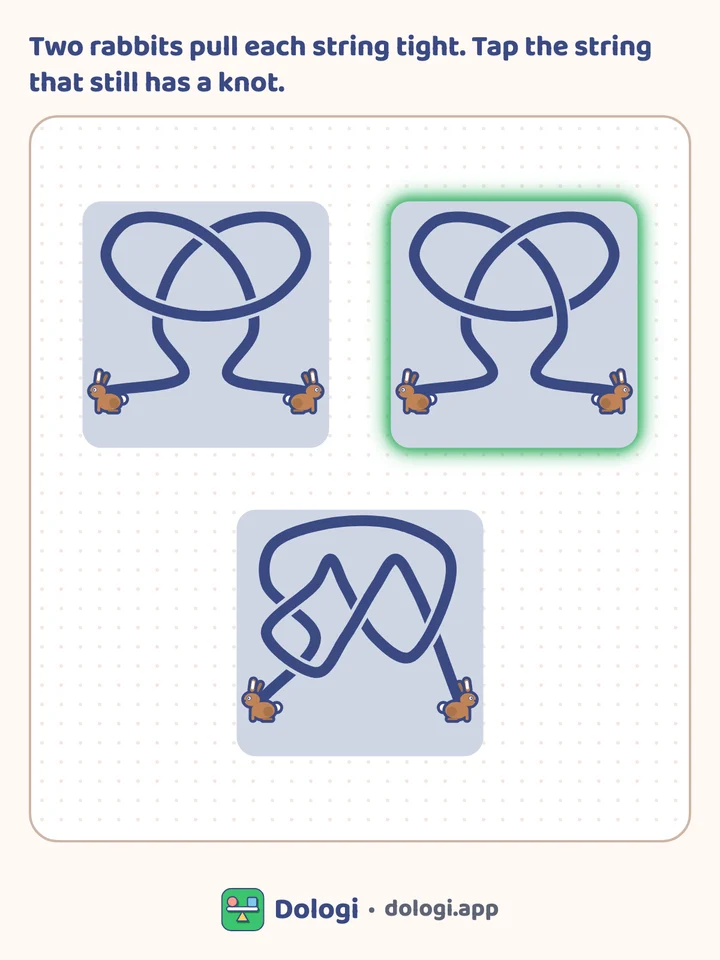
Ages 10–11
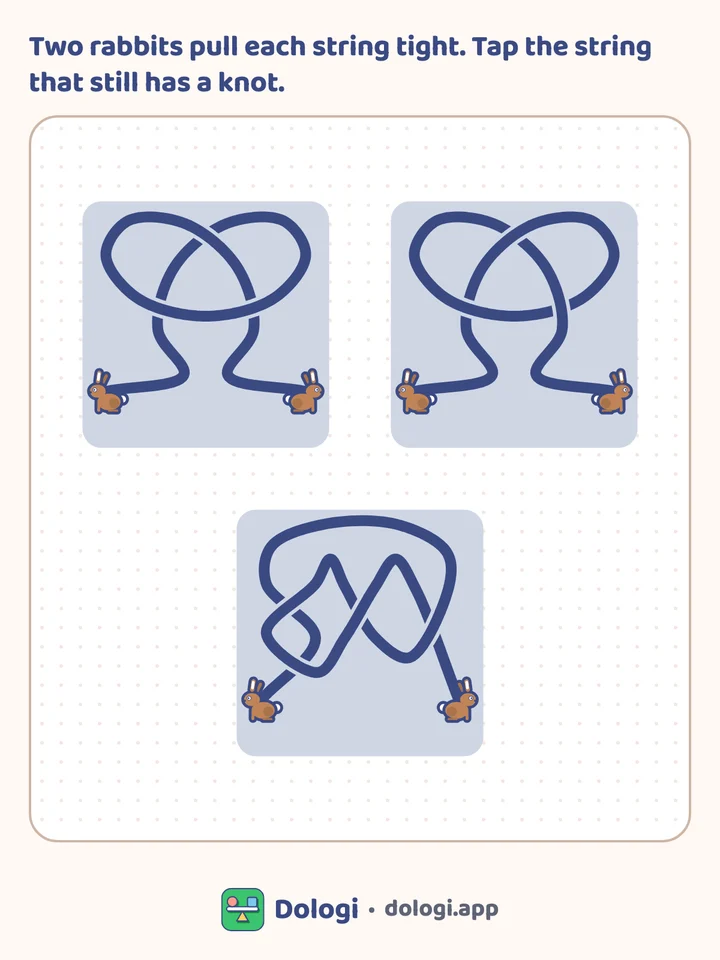
What it builds: Your child follows every spot where the rope crosses itself, noting which part lies over and which lies under, then pictures which loops slip free and which lock tight when both ends are pulled. Seeing the real structure behind a tangle builds three-dimensional thinking and is the root of topology later on. Keep playing: make a few loose loops with a shoelace on the table, let your child guess whether it will form a knot, then pull both ends to check.
Puzzle 3: Turning around a center
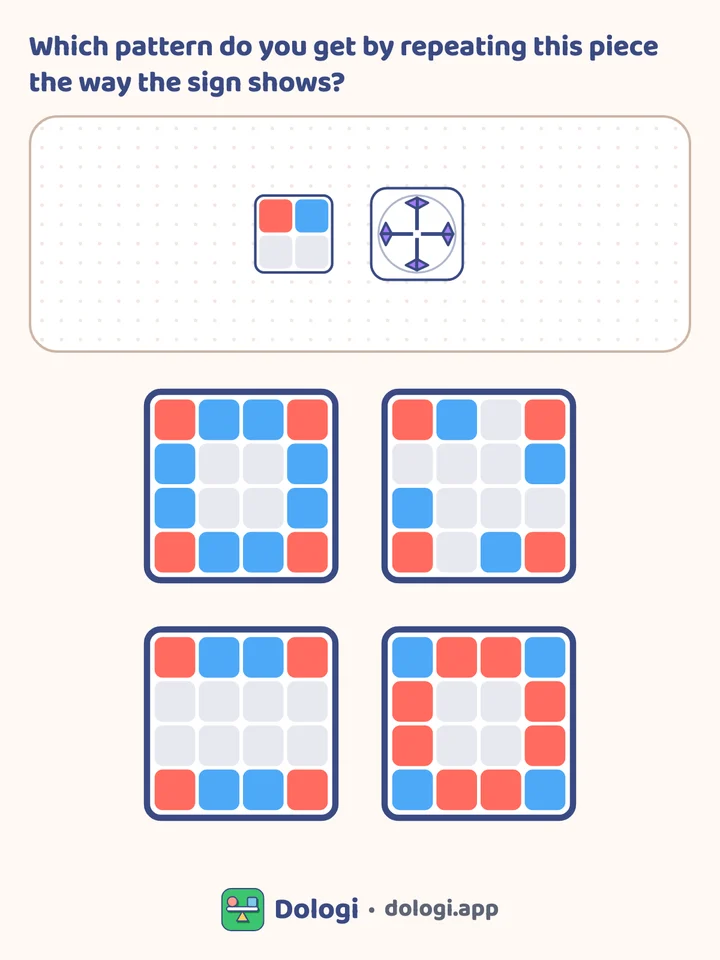
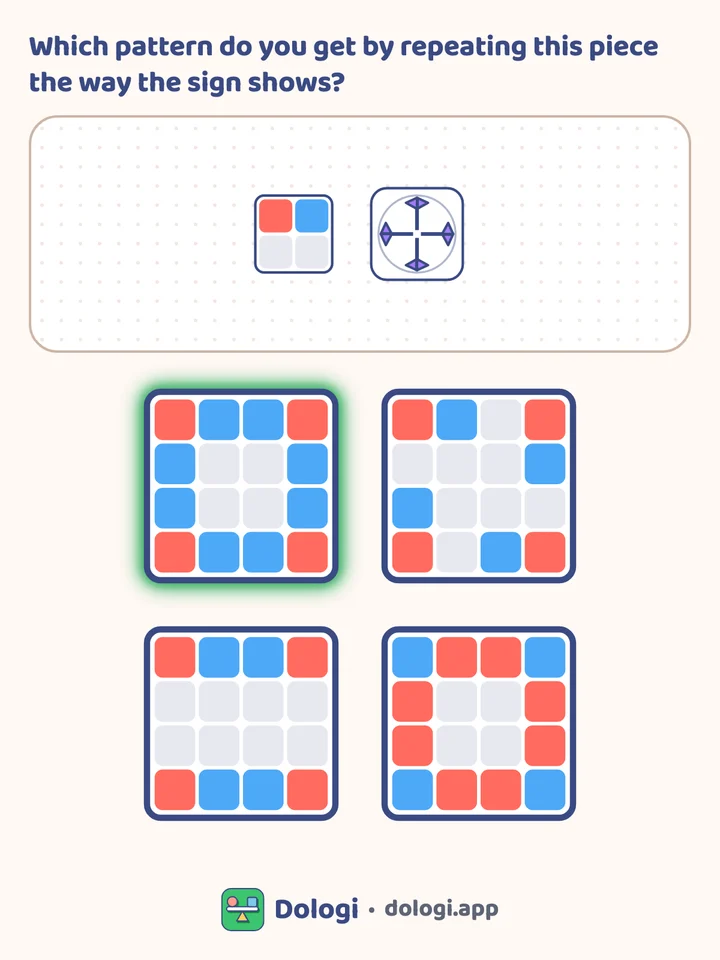
Ages 10–11
What it builds: The sign next to the tile says it is repeated by turning around a central point, a quarter turn each time, so your child turns the tile in their head four times and puts the copies together. Understanding rotation helps with transformations at school and with seeing how floor tiles, logos and patterns are designed. Keep playing: color two squares of a paper square divided into four, place it at one corner of a big sheet, turn it around the sheet's center and trace it four times to see the pattern appear.
Puzzle 4: Mirror robots
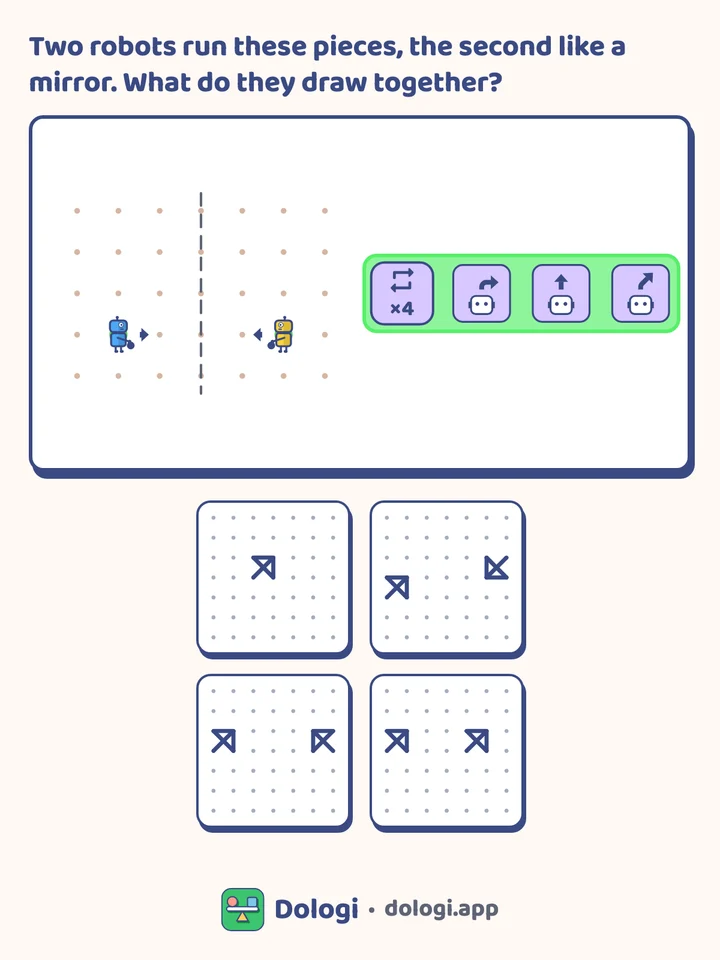
Ages 11–12
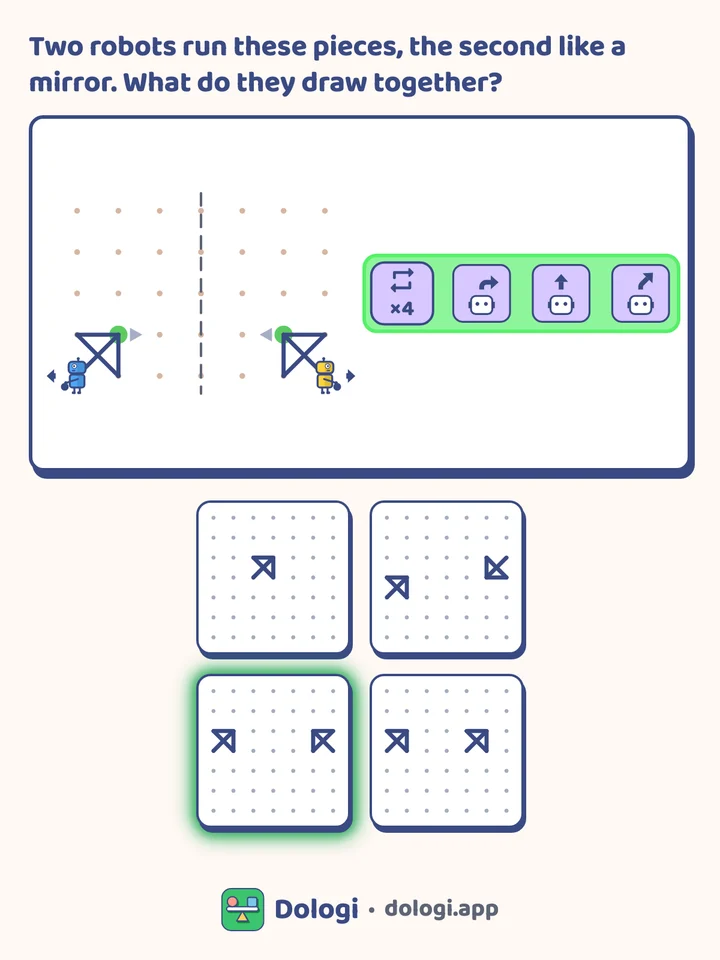
What it builds: Your child runs the program for the first robot, then works out how the second one does the opposite: a right turn becomes a left turn, a diagonal step to the right becomes one to the left, so its drawing is a mirror image. Combining loops with symmetry is how designers and game programmers make balanced shapes. Keep playing: stand facing your child like a mirror; one of you walks a few steps and turns, and the other has to move exactly like the reflection.
Puzzle 5: Roll the die
Ages 11–12
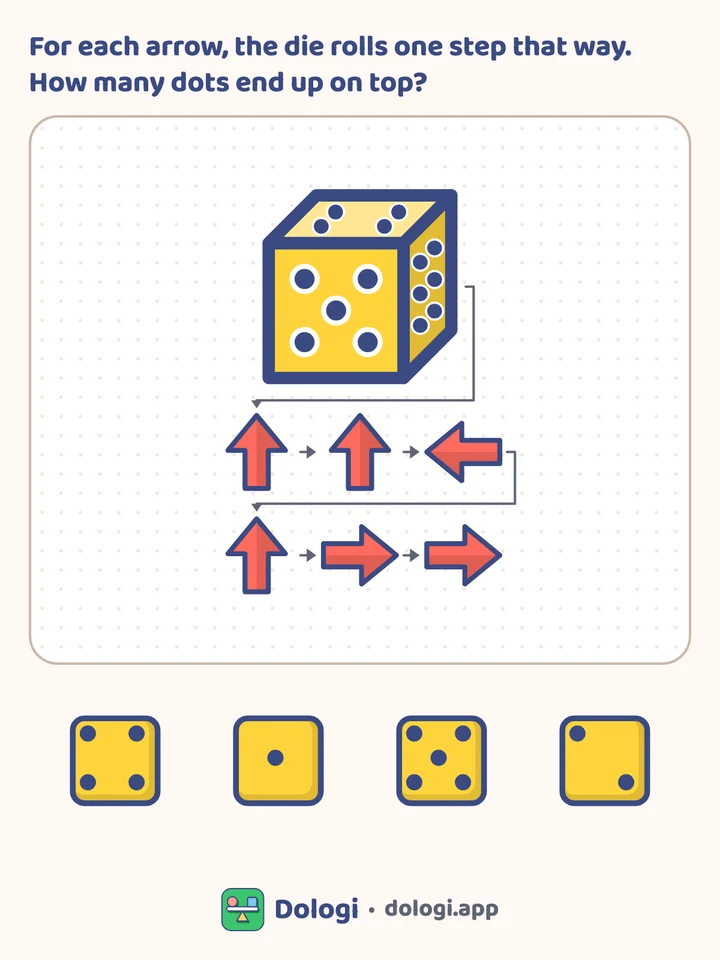
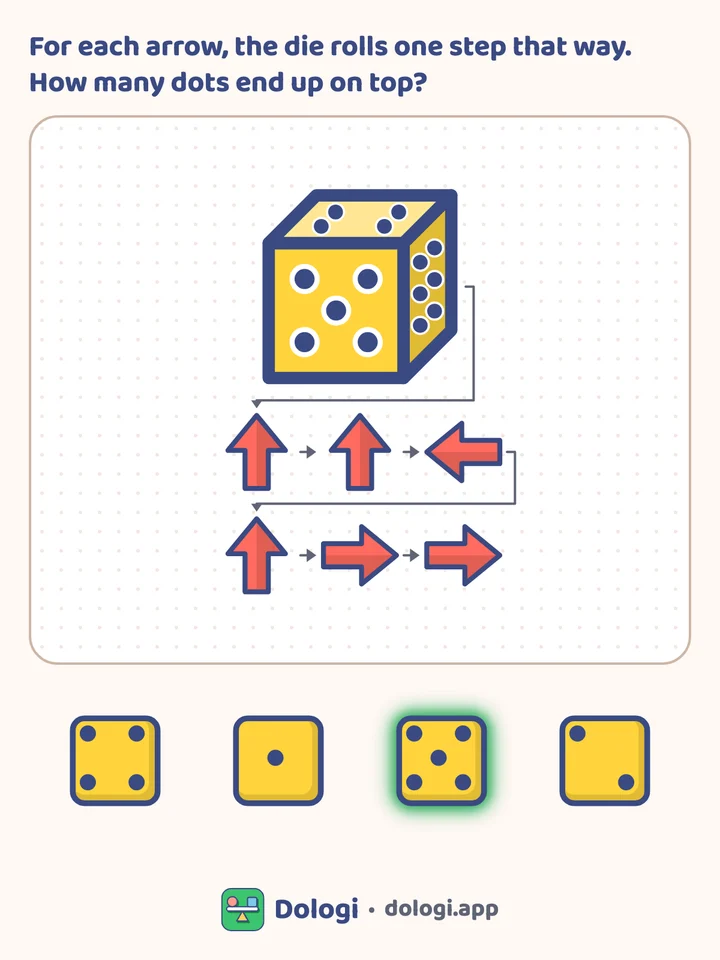
What it builds: Every time the die rolls, the top face swaps with a side face, so your child tracks the top, front and side faces at once, remembering that opposite faces always add up to 7. Holding a 3D object in mind through many steps is a hard skill that pays off in solid geometry and technical subjects. Keep playing: draw two rows of arrows on paper, put a real die at the start, let your child predict the top face at the end, then roll it to check.
Did your child enjoy these spatial puzzles? The Dologi app has many more of the same kinds, getting harder with age and with how your child plays, so a little practice each day never gets boring.