At ages 10–12, spatial thinking is no longer just turning a shape in your head. It means planning many steps ahead: pushing boxes without getting them stuck, placing mirrors to bend a beam of light, folding a flat shape into a cube, moving a whole stack of discs by the rules. This is the kind of thinking used a lot in geometry, physics, coding and reasoning contests. The ten puzzles below come straight from the Dologi app, suit kids ages 10–12, and go from easy to harder.
How to use this post: show your child one picture at a time, let them think and sketch on paper if they need to, before answering. The answer is behind the "Show answer" button under each picture. When a puzzle feels hard, don't rush to the answer: ask what their first move would be and why. Often just saying it out loud shows them the way.
Puzzle 1: Push the boxes
Ages 10–11
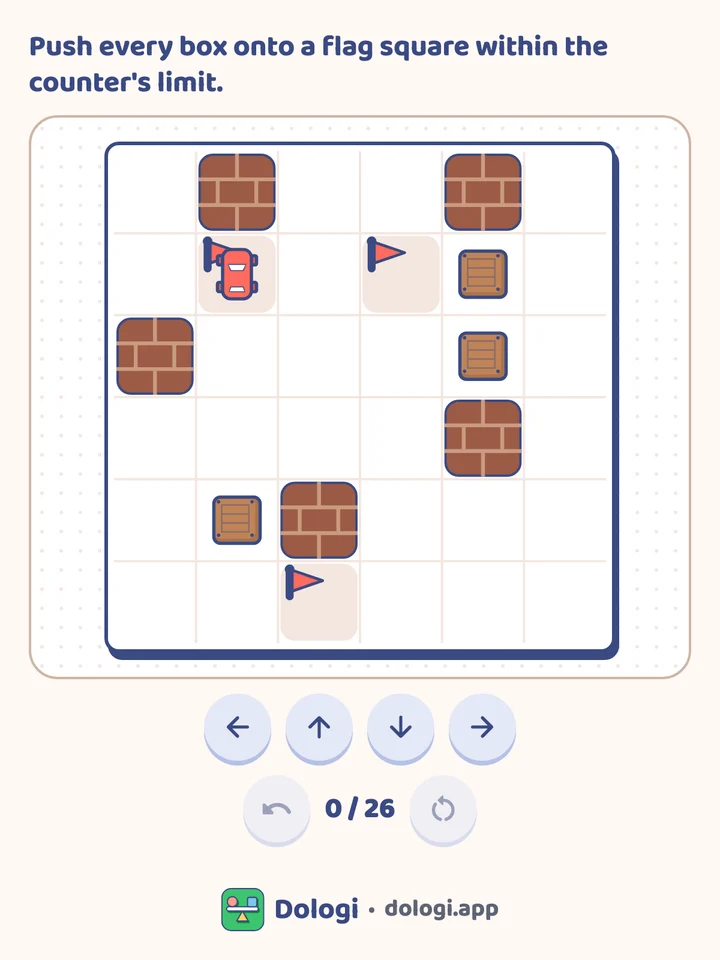
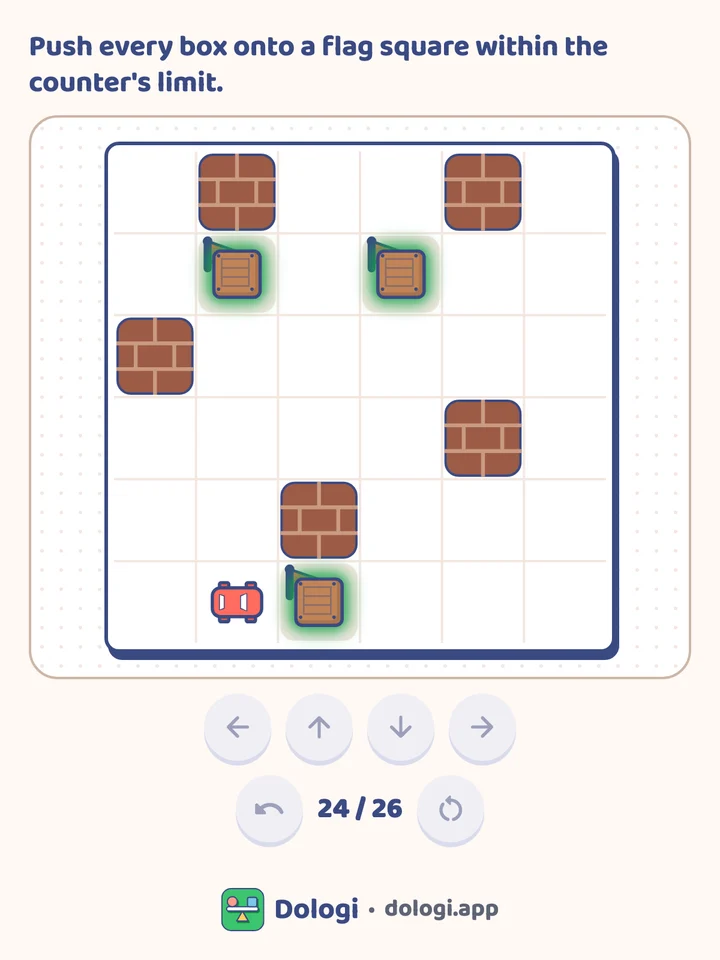
What it builds: Boxes can only be pushed, never pulled back, so your child has to think a few moves ahead: which box goes to which flag, and in what order, so that no box ends up stuck against a wall, all within the move limit. Seeing the consequences of each step is a skill that helps in chess, in coding and even when rearranging a room. Keep playing: draw a grid on paper, use bottle caps as boxes, and swap roles so your child sets a puzzle for you to solve.
Puzzle 2: Block builder
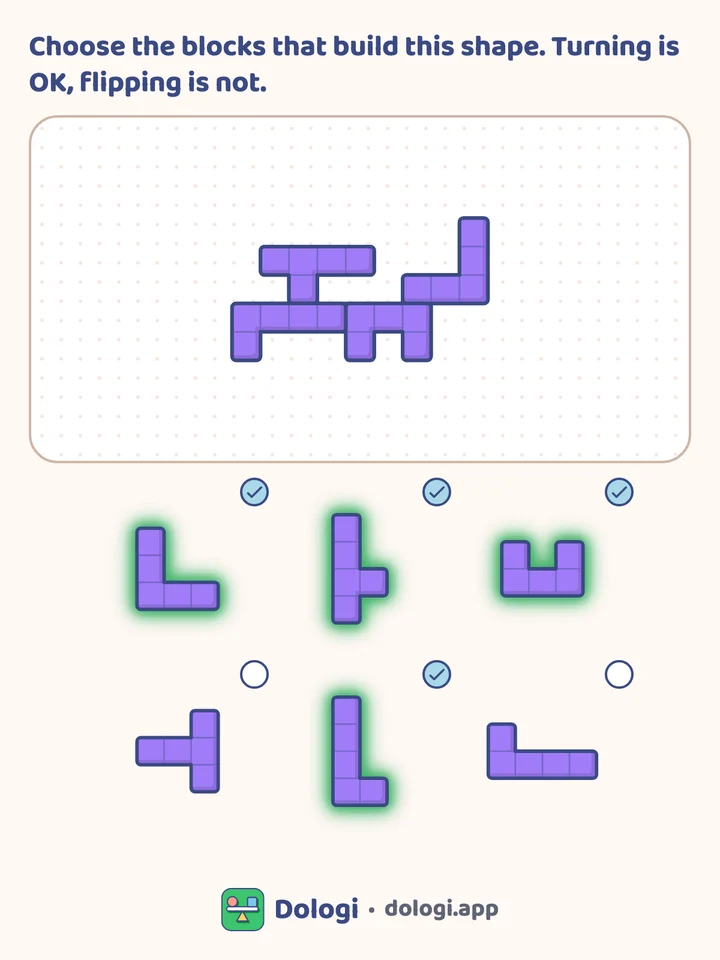
Ages 10–11
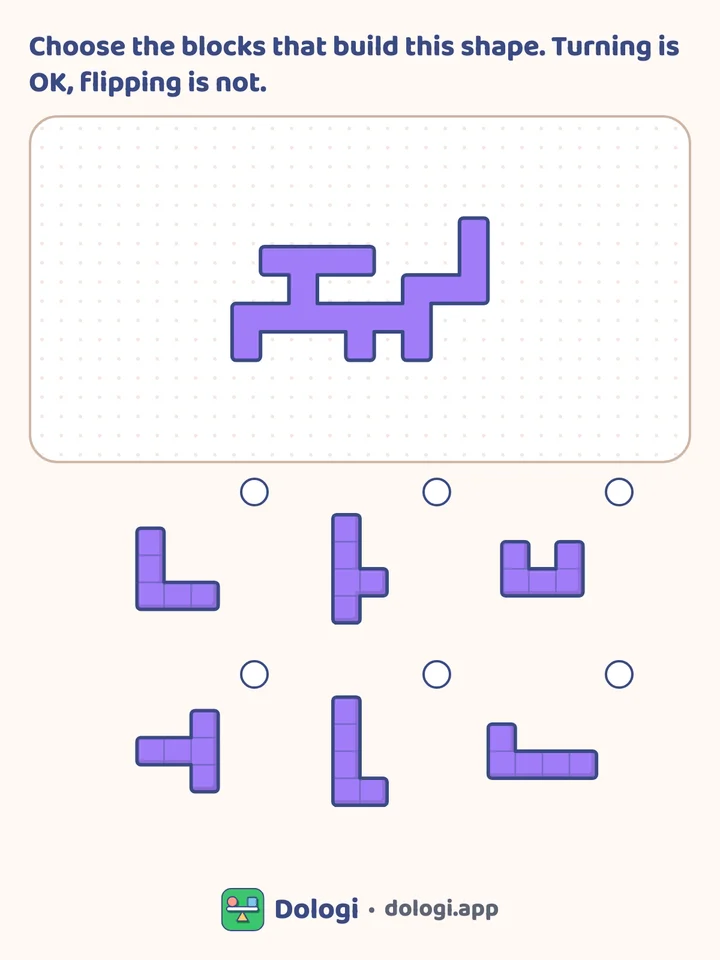
What it builds: Your child looks at the big shape, estimates how many squares each piece covers, then turns each piece in their head to see where it fits; the rule allows turning but not flipping, so they also need to watch which way each piece faces. Putting shapes together and taking them apart is the basis of area problems, reading plans and packing things neatly. Keep playing: cut a few L and T shapes from grid paper, put them together into one shape, and challenge your child to find how it was built.
Puzzle 3: Colored glass
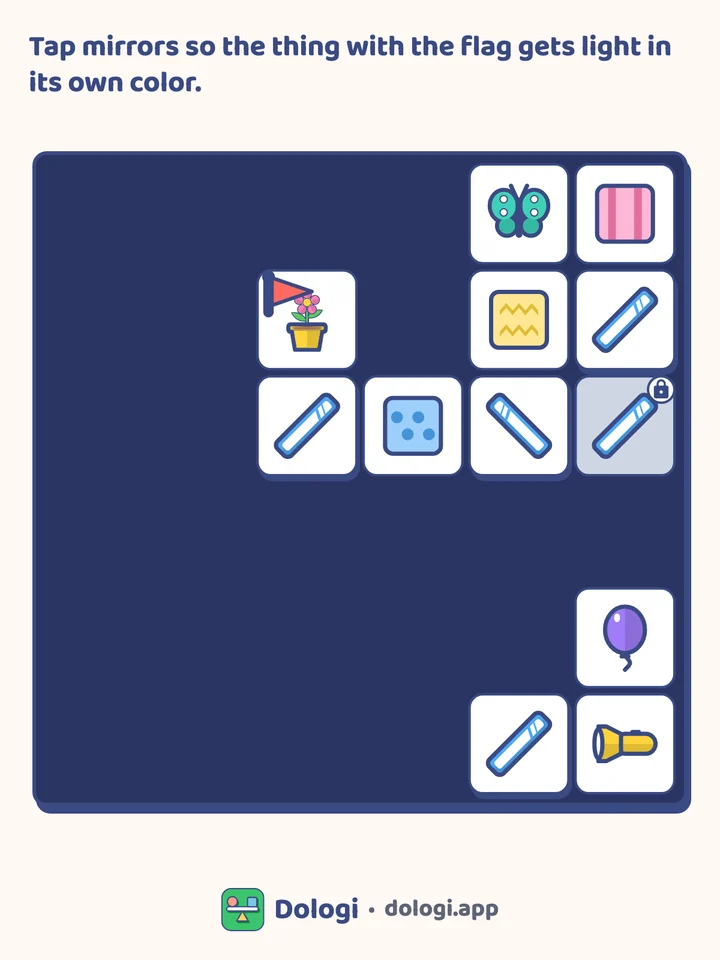
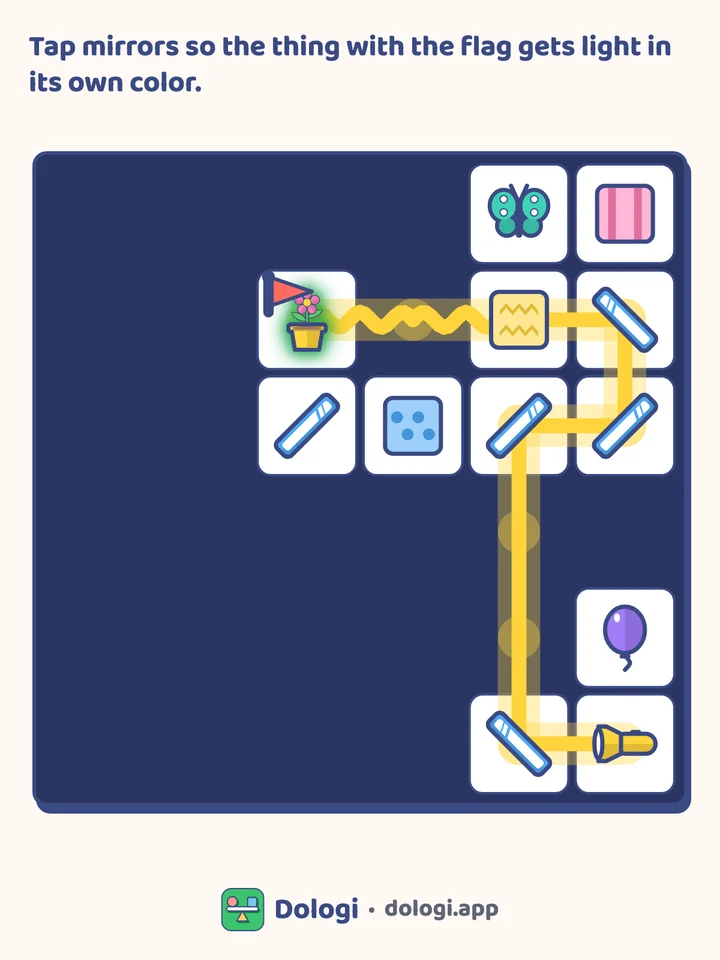
Ages 10–11
What it builds: Your child traces the light beam from mirror to mirror, remembering that the beam takes the color of any colored glass it passes through, and it must reach the flagged object in that object's own color. Tracking both the direction and the state of something on the move is how physics students and game programmers think. Keep playing: in a dark room, use a flashlight and a small mirror, and let your child turn the mirror to light up an object you choose.
Puzzle 4: Fix the drawing program
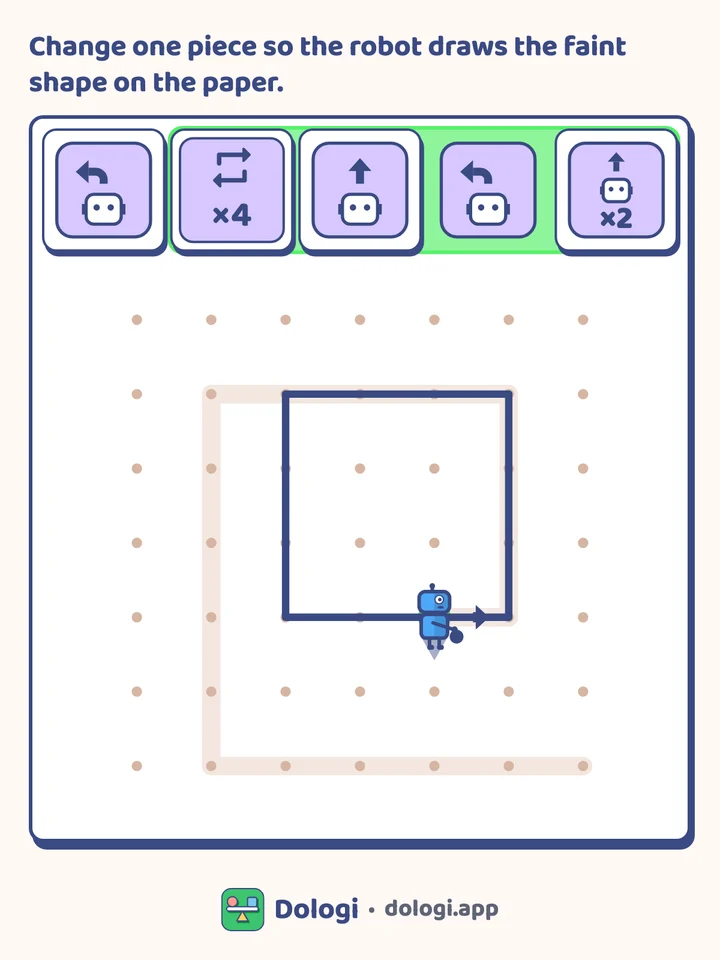
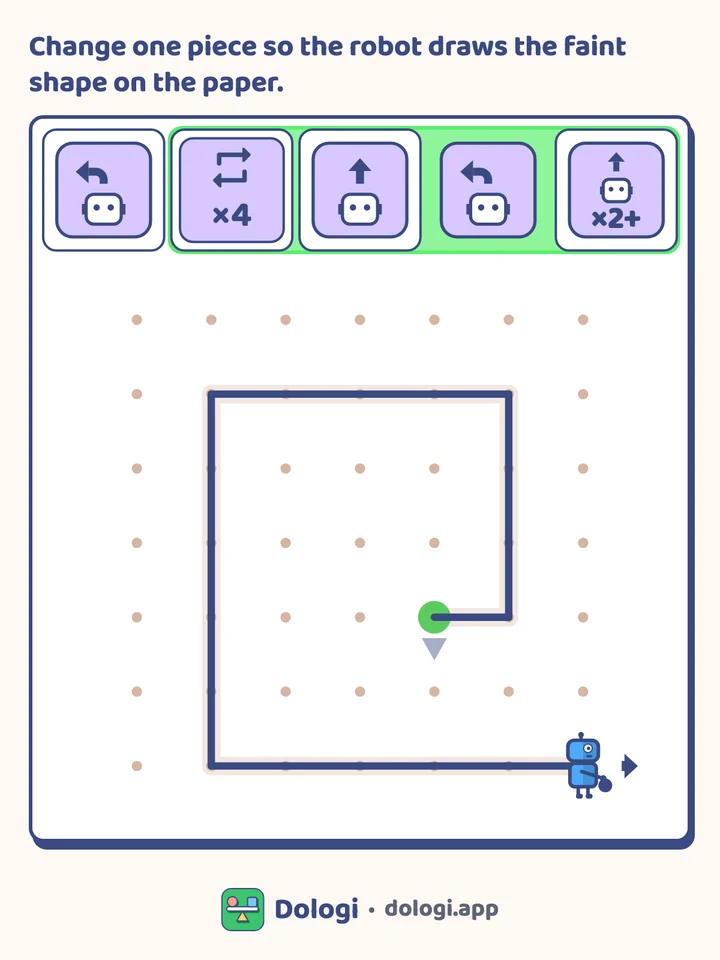
Ages 10–11
What it builds: Your child runs the robot's program in their head, compares the line it draws with the faint picture to spot where it first goes wrong, then picks the command piece to change. Finding and fixing mistakes step by step (programmers call it debugging) teaches patience when an answer comes out wrong, instead of starting over from scratch. Keep playing: write a list of moves around the house, like "3 steps forward, turn left, repeat twice", put one wrong move in on purpose, and find it together.
Puzzle 5: Paint around the center
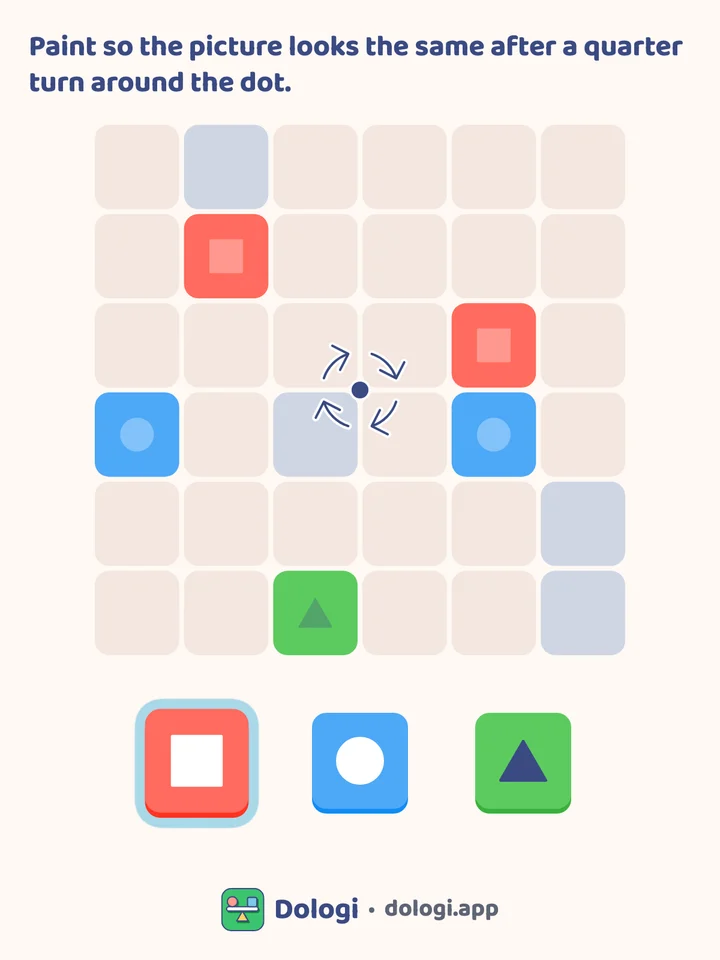
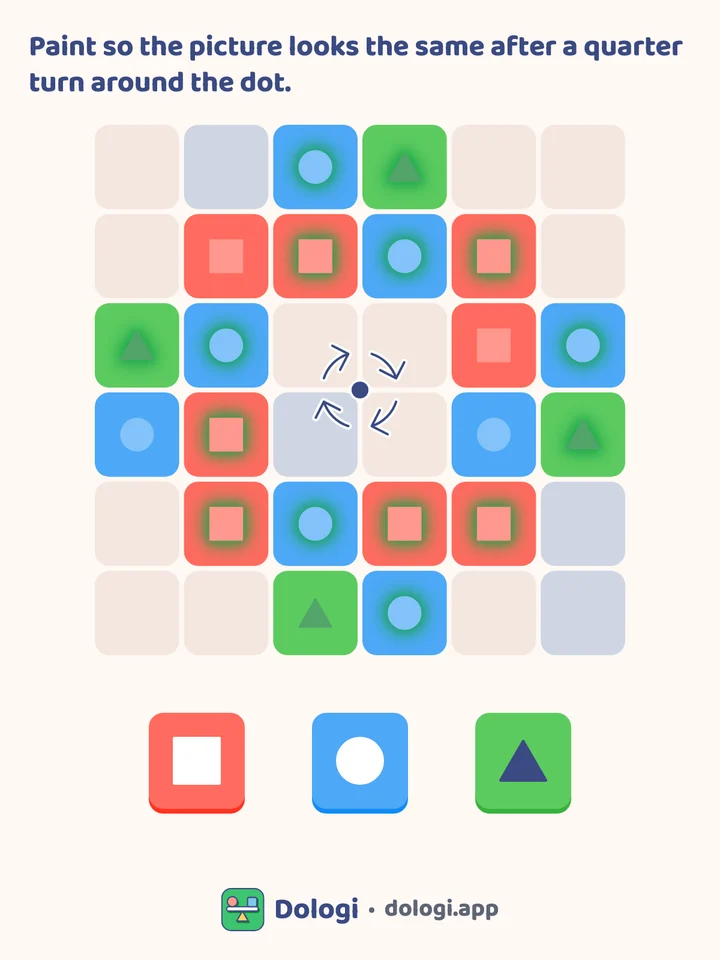
Ages 10–11
What it builds: Every painted square has to show up again where it lands when the picture turns a quarter turn around the center dot, and again after the next turn, so your child turns each square in their head several times and fills in the rest. This is rotational symmetry, which they will meet in rotation lessons in math and see every day in pinwheels, wheels and floor tiles. Keep playing: on grid paper, color a few squares around a center, then turn the sheet a quarter turn to check whether the picture stays the same.
Puzzle 6: Slide the picture
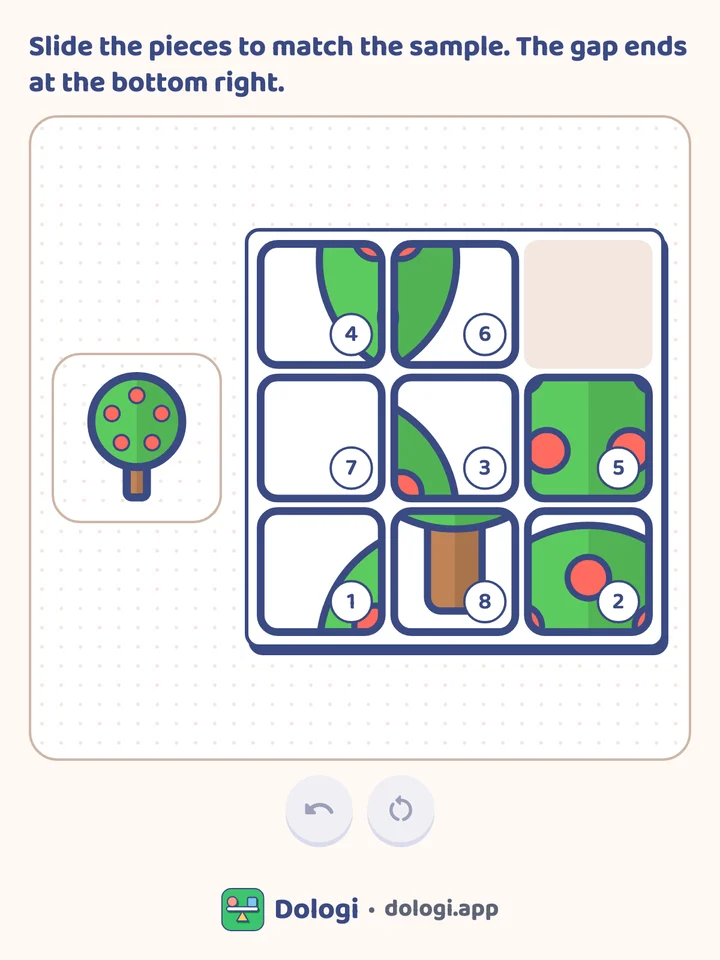
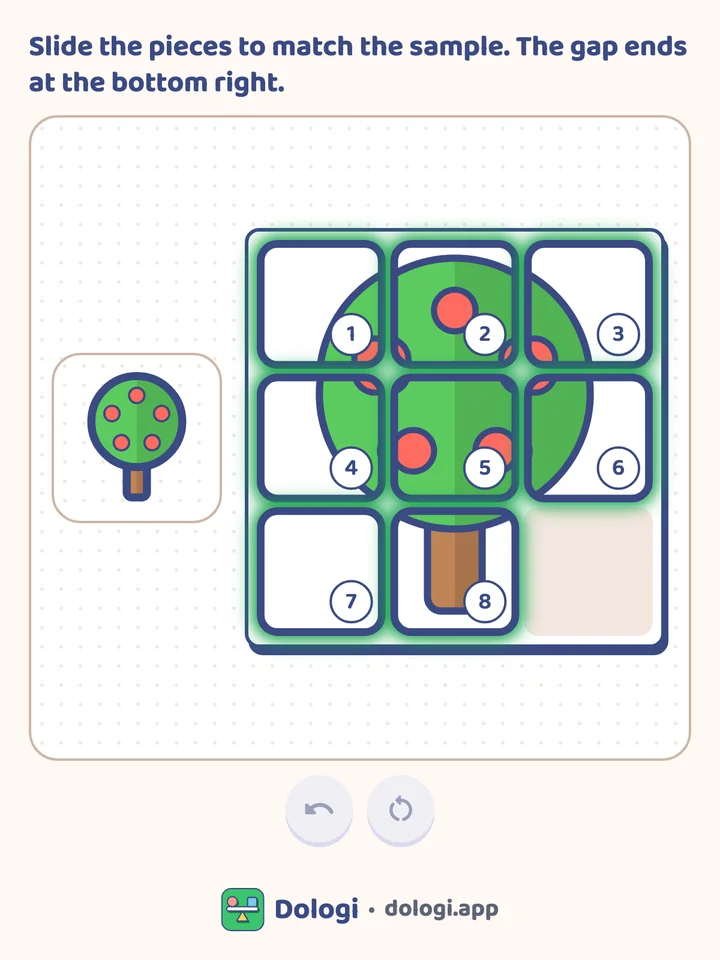
Ages 11–12
What it builds: A sliding puzzle has only one empty space, so your child has to bring pieces home in order, usually finishing the top row first, and accept moving a finished piece out of place for a moment to let another one in. Breaking a big task into parts and finishing one before starting the next is a good way to learn any subject. Keep playing: cut an old photo into nine squares, take one away, mix them on the table, and let your child only slide pieces into the gap.
Puzzle 7: Fold it into a cube
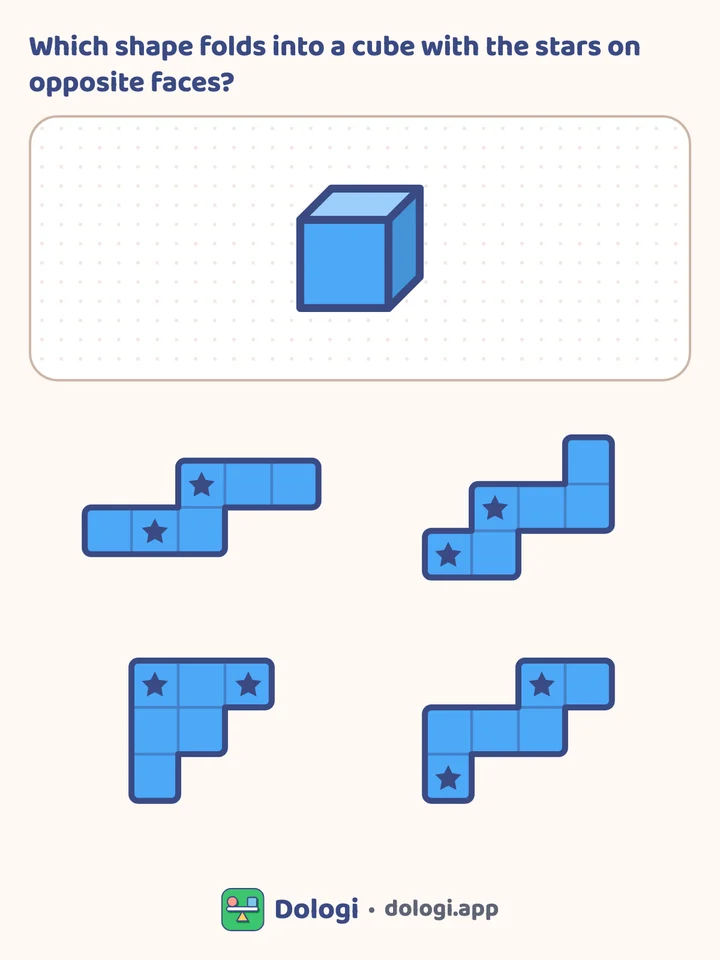
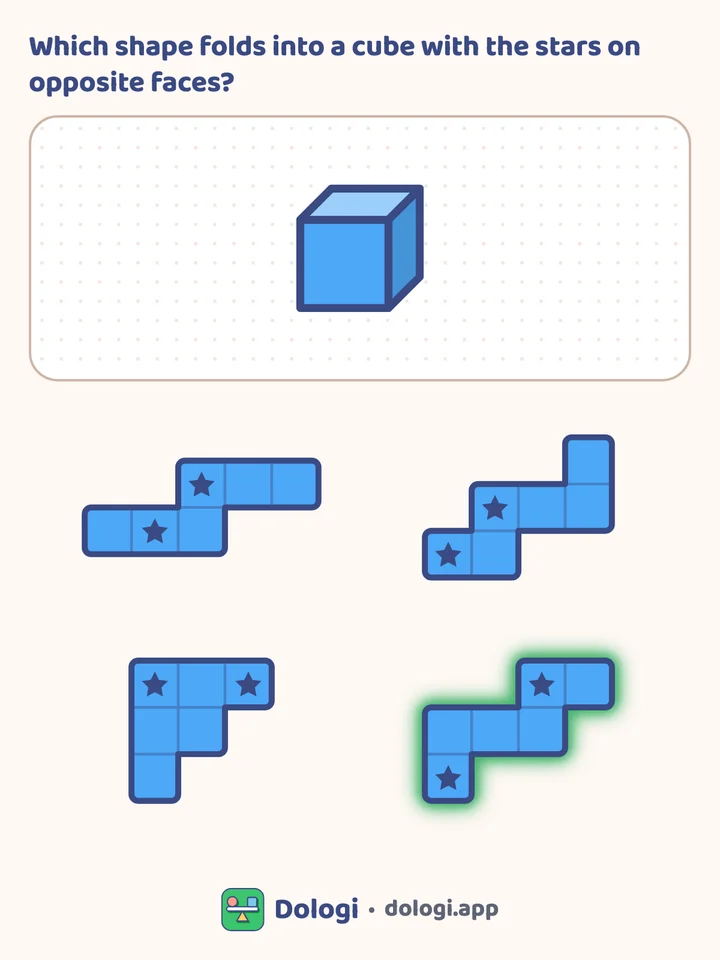
Ages 11–12
What it builds: Your child folds each flat shape in their head: pick one face as the bottom, lift the others up, check whether any faces overlap, then work out whether the two stars end up opposite or side by side. Imagining a 3D solid from its flat net is a skill for solid geometry, and for box makers and architects too. Keep playing: copy the shape from the puzzle onto card, draw the two stars, cut it out and fold it for real to check.
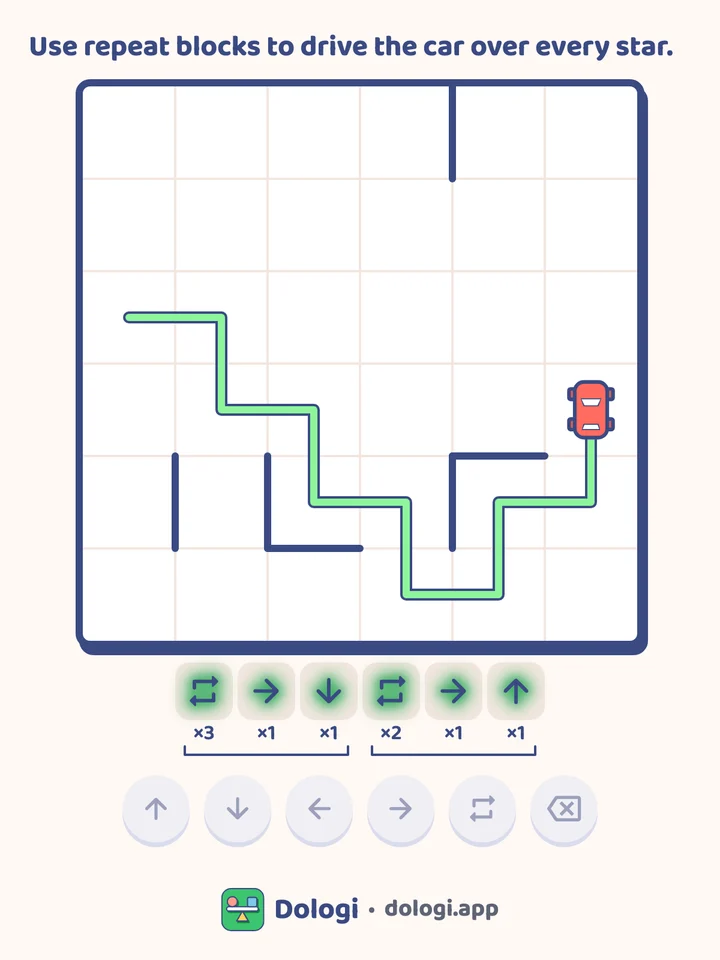
Puzzle 8: Drive past every star
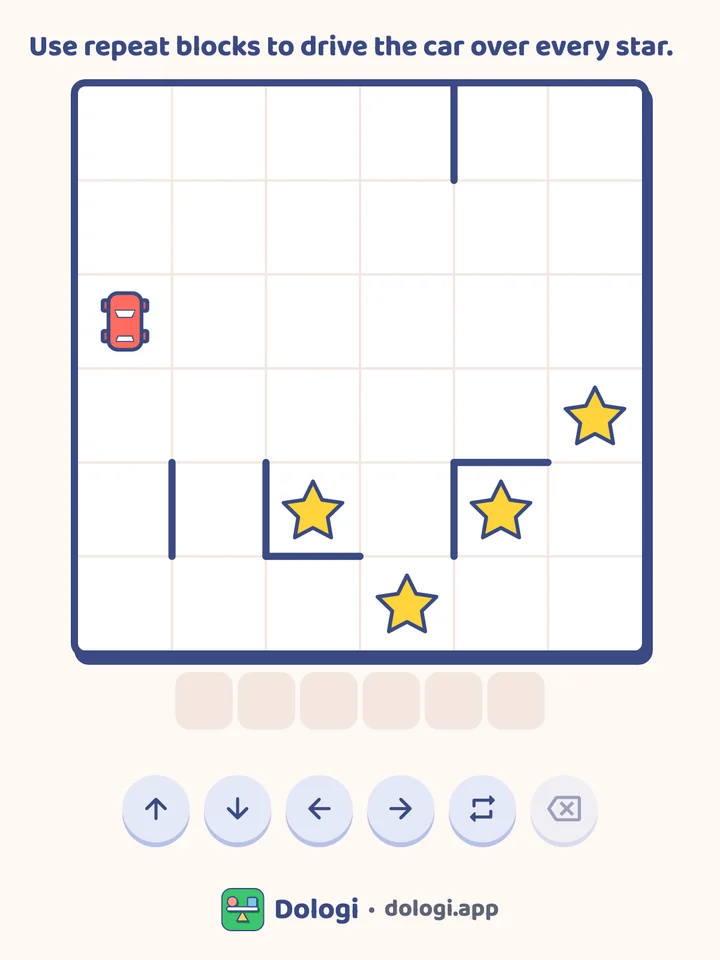
Ages 11–12
What it builds: Your child finds a route through every star while avoiding the walls, then notices the stretches that repeat so they can wrap them in a loop block and keep the program short enough for the slots. Spotting repetition to write things compactly is a key idea in coding, and it also helps with pattern problems in math. Keep playing: on a walk, ask your child to describe the way home in as few commands as possible, using "repeat" for the parts that are the same.
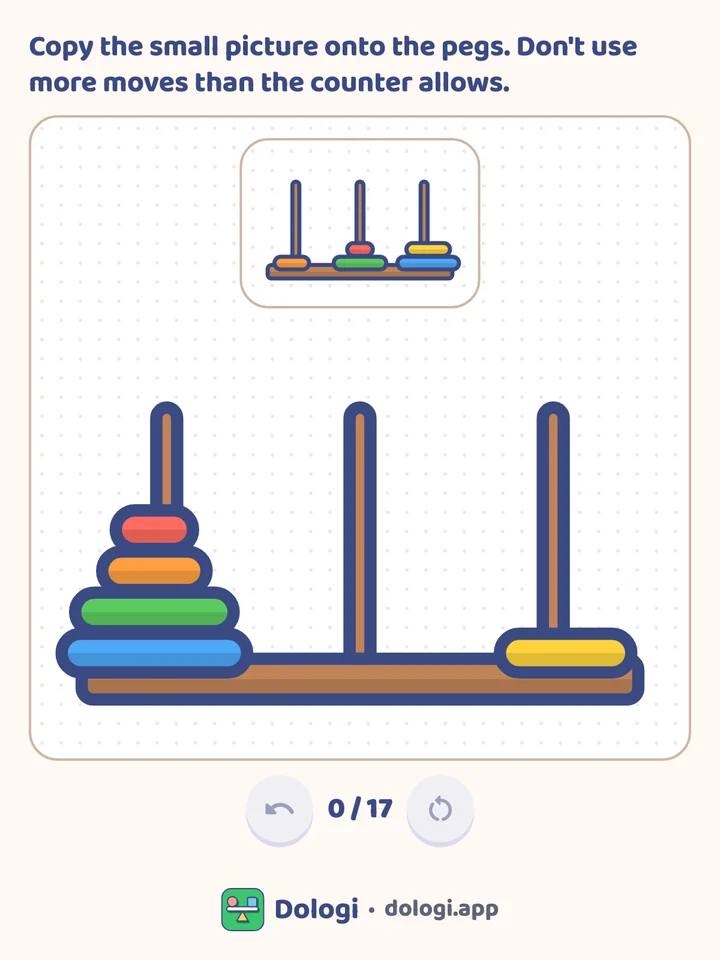
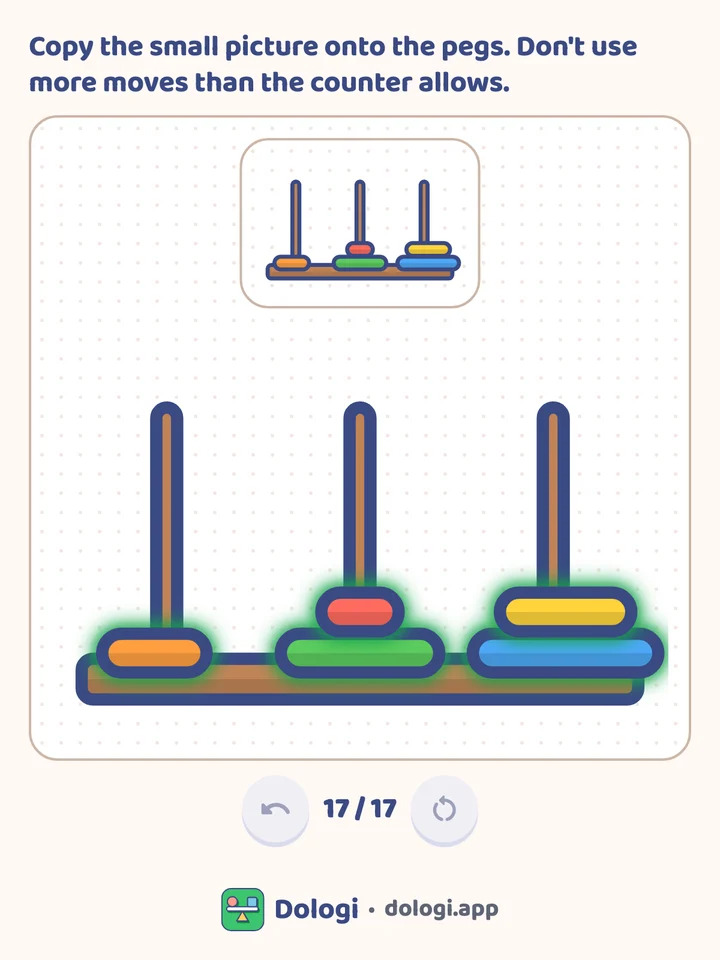
Puzzle 9: Move the tower
Ages 11–12
What it builds: Your child has to stack the discs like the small sample within the move limit, and a big disc may never sit on a smaller one, so they must decide which disc goes first and which peg to use as a parking spot. This trains breaking a problem into smaller ones (to move the bottom disc, everything above it has to be cleared first), a way of thinking used a lot in math and computer science. Keep playing: stack four plates, coins or books of different sizes, mark three spots as pegs, and race to see who finishes in fewer moves.
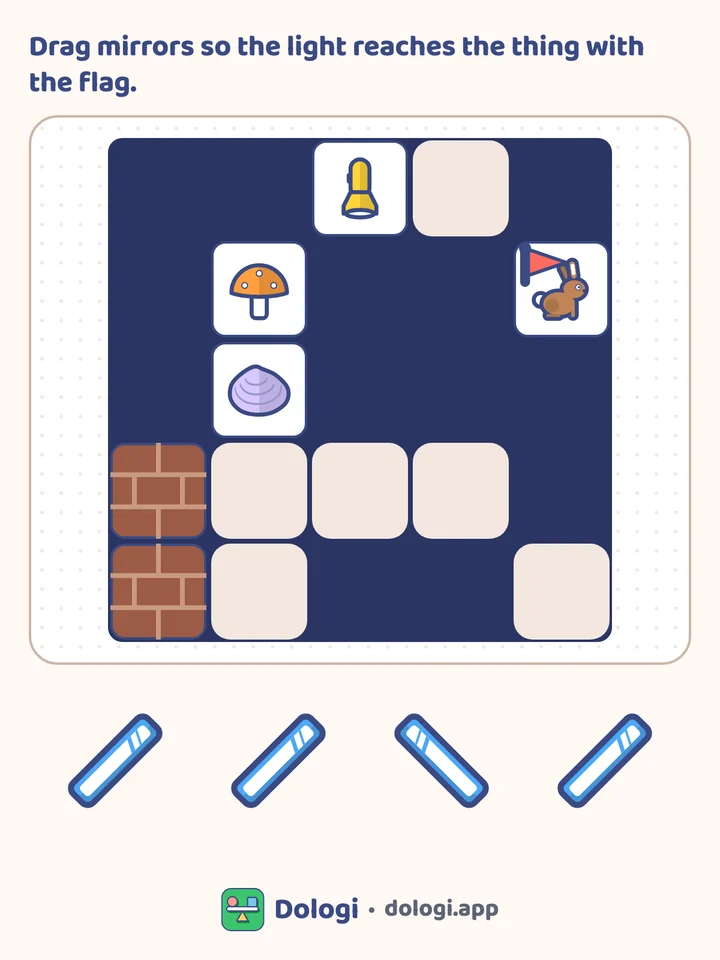
Puzzle 10: Place the mirrors
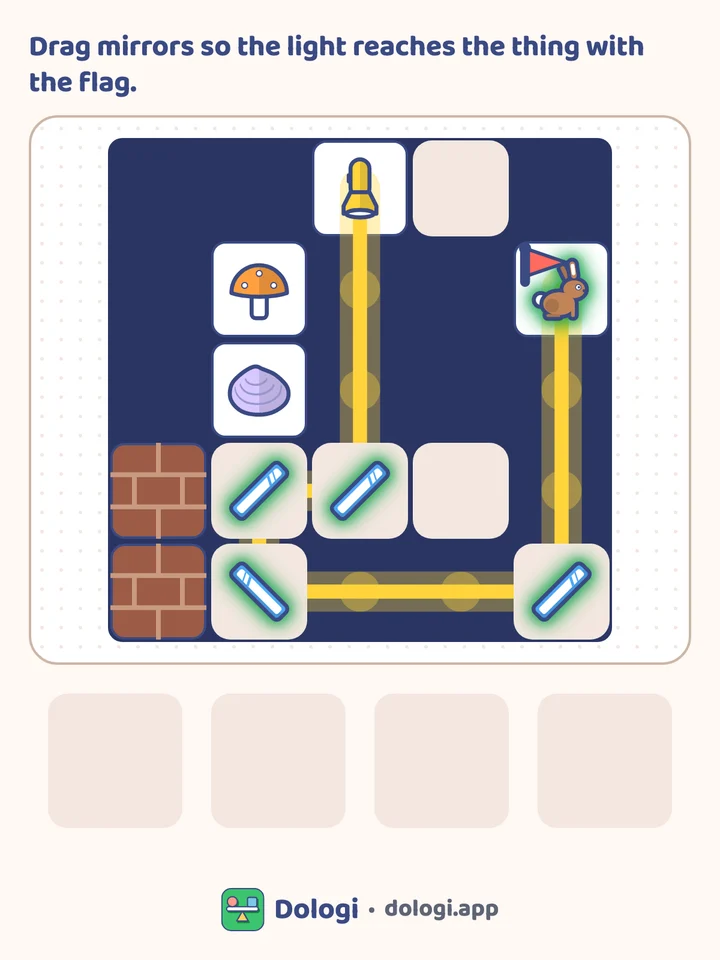
Ages 11–12
What it builds: This time your child doesn't turn mirrors already in place but chooses the squares to put them on and the right tilt for each one, so the beam bends around the obstacles and reaches the flagged object. Planning backwards from the goal to the light source is a great way to crack many hard problems, from mazes to motion problems. Keep playing: draw a grid with a lamp, a few obstacles and a target, let your child draw diagonal mirrors in empty squares, then trace the beam with a ruler.
Did your child enjoy these spatial puzzles? The Dologi app has many more of the same kinds, getting harder with age and with how your child plays, so a little practice each day stays fun.