At ages 10–12, kids start having to hold a whole 3D object in their head: seeing a stack of blocks from another side, folding a flat shape into a cube, following a light beam through mirrors or a turning direction along a whole chain of gears. This is the groundwork for solid geometry, physics and coding in middle school. The ten puzzles below come straight from the Dologi app, suit kids ages 10–12, and go from easy to harder.
How to use this post: show your child one picture at a time, let them think and sketch on paper if they need to, then choose. The answer is behind the "Show answer" button under each picture. Once they've picked, ask "How do you know?": explaining the thinking matters as much as getting it right.
Puzzle 1: Seen from each side
Ages 10–11
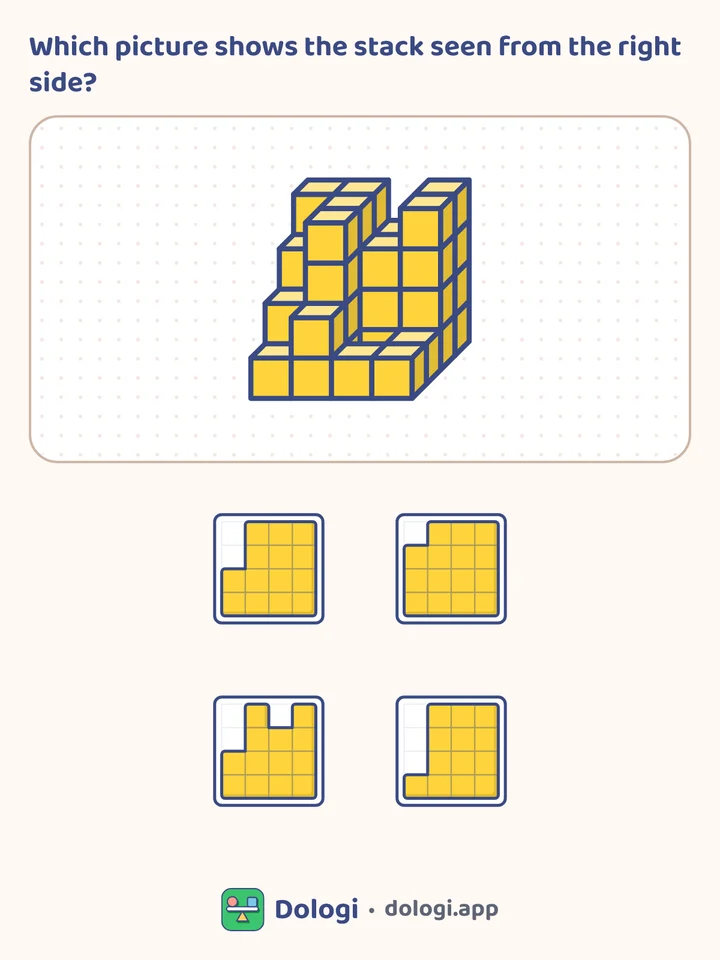
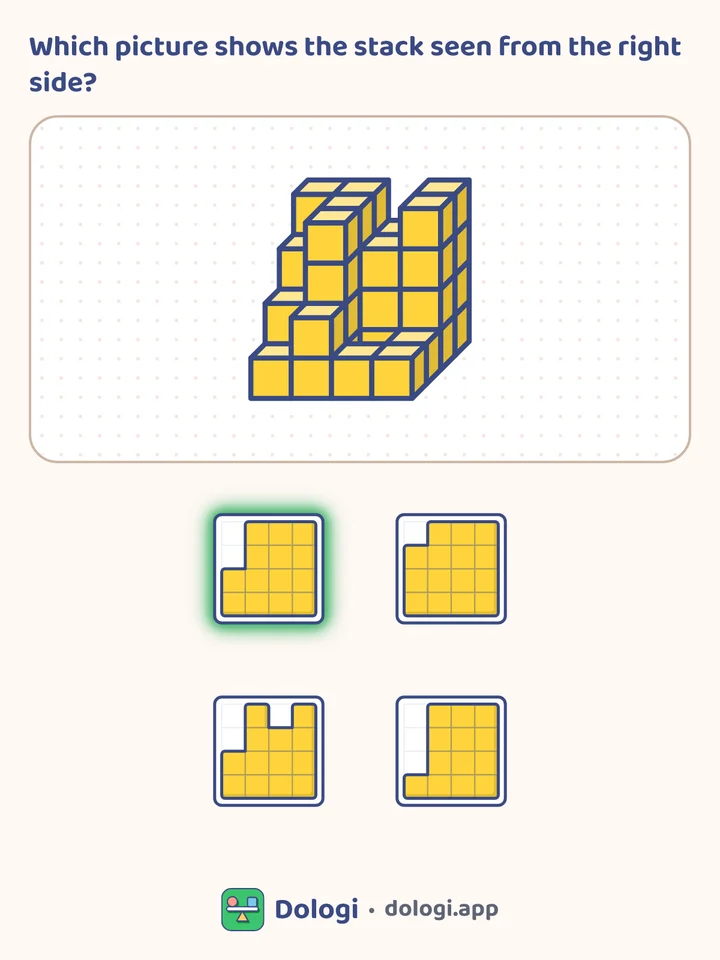
What it builds: Your child has to picture standing on another side of the stack, count how many levels tall each row is, and notice whether blocks in front hide the ones behind. Switching viewpoints like this is the skill behind reading front, side and top views in design and technology class, and it also shows why the same object looks different to different people. Keep playing: stack a few toy blocks on the table, have your child draw the view from above and from the side, then walk around the table to check.
Puzzle 2: Fill it up
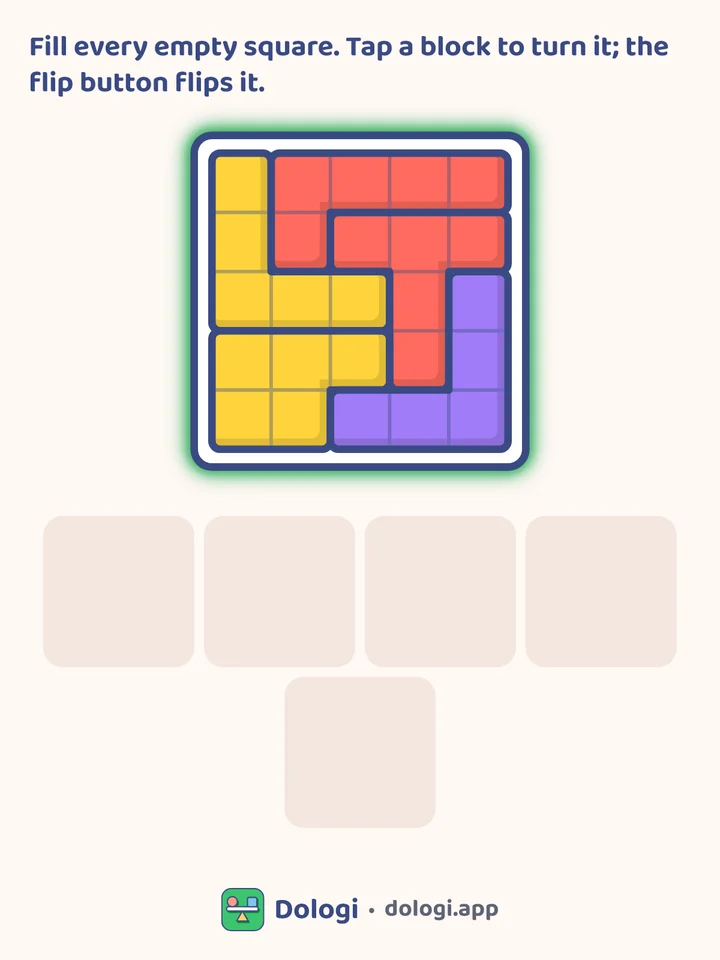
Ages 10–11
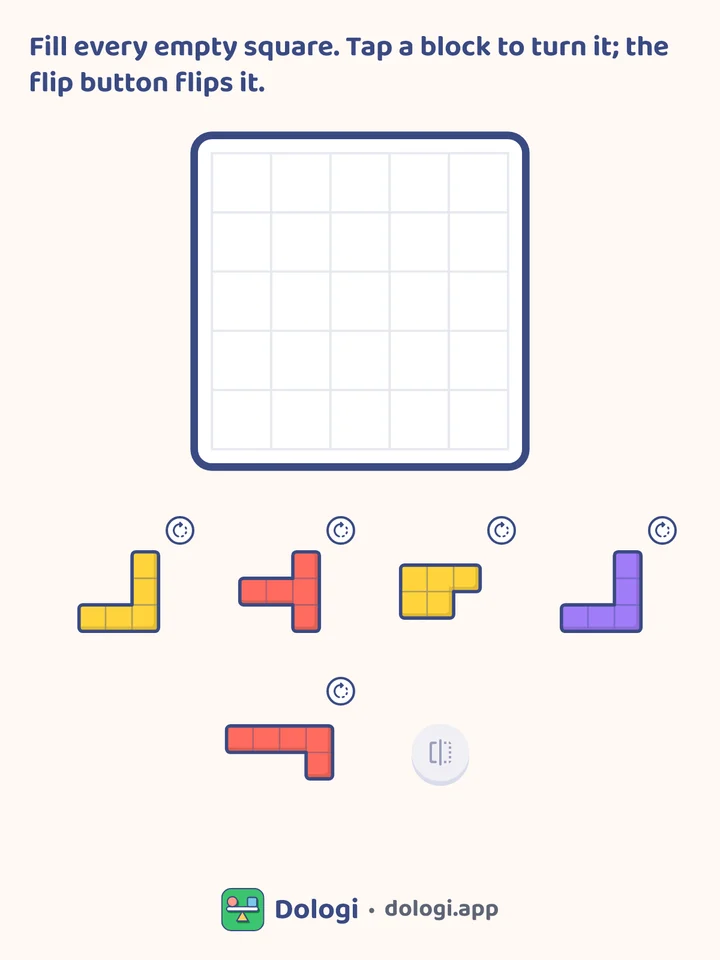
What it builds: Your child counts the empty squares and the squares in each piece, then looks for the hardest spot to fill (a corner, a narrow gap) and places a piece there first; pieces can be turned and flipped, so each one has many possible positions. Starting where there are the fewest choices is a great trick for many arranging problems, from packing a suitcase to planning a timetable. Keep playing: cut L and T shapes from grid paper, have your child fill a rectangle with them, then swap roles so they set the puzzle for you.
Puzzle 3: Which crystal first?
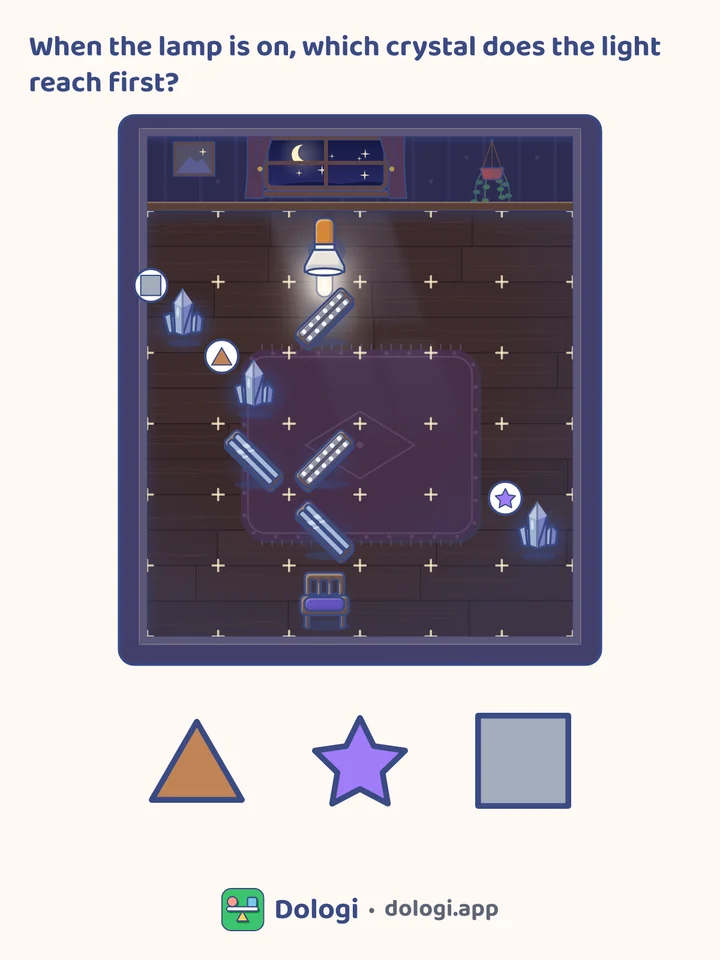
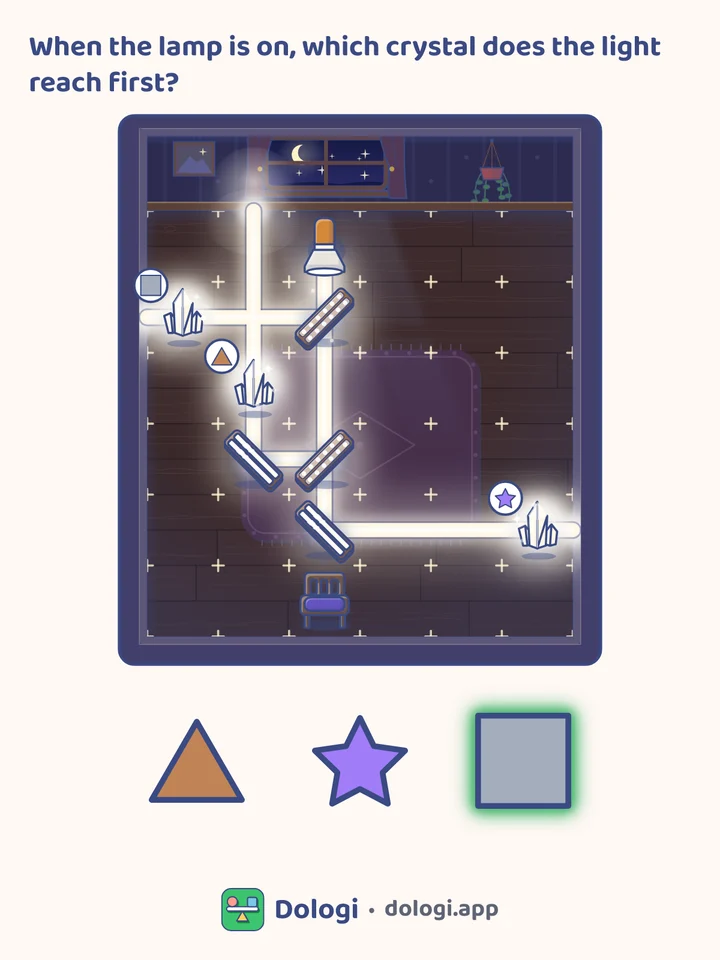
Ages 10–11
What it builds: A plain mirror bends the beam and a splitter mirror sends light two ways at once, so your child follows every path from the lamp and counts the squares it takes to reach each crystal: the shortest path along the beam wins, not the crystal that looks closest to the lamp. Telling route distance apart from straight-line distance comes up again when reading maps. Keep playing: draw a grid with a lamp and a few diagonal mirrors, and let your child trace the beam in pencil while counting squares.
Puzzle 4: Light board
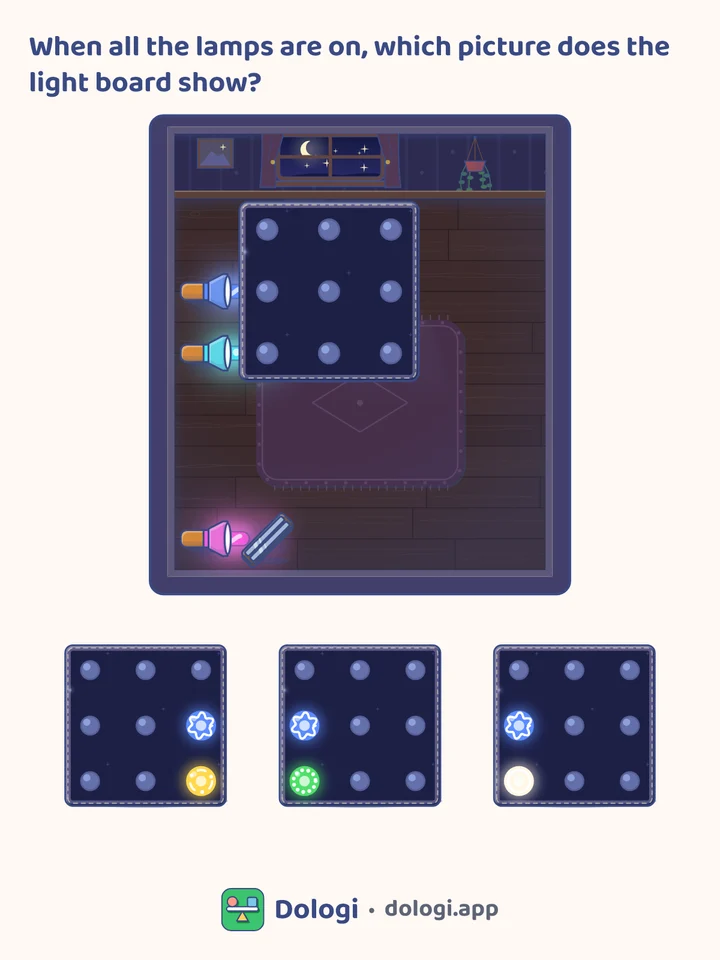
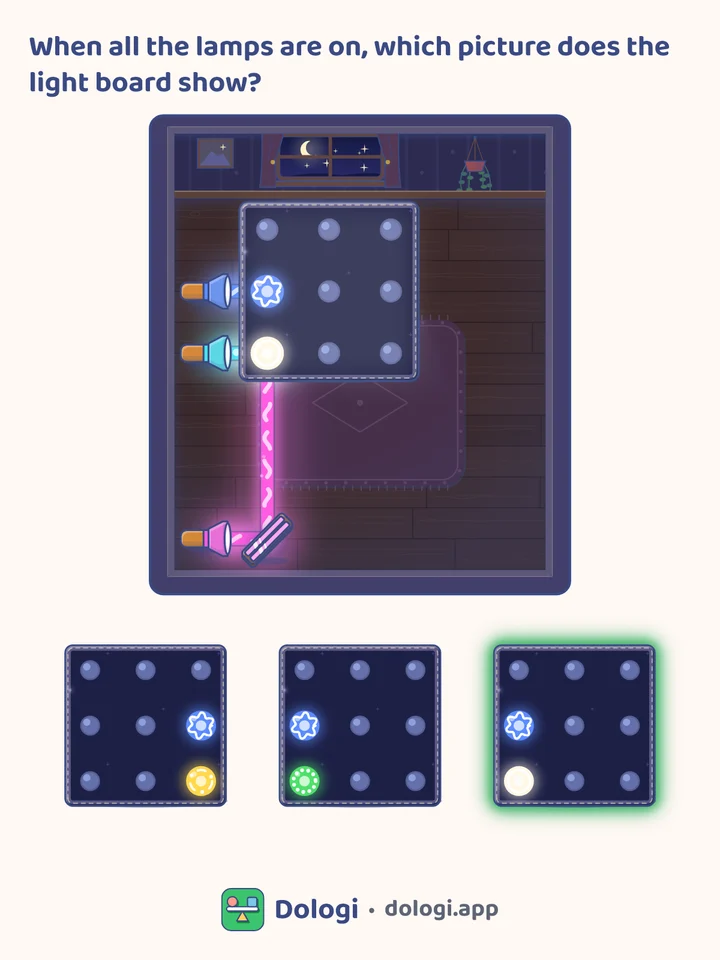
Ages 10–11
What it builds: Each lamp sends a colored beam that mirrors can bend; whatever dot on the board a beam touches lights up in that color, and where two colored beams meet, the colors mix. Your child has to trace every beam before comparing with the answer boards, much like an electrician checking each wire one by one. Keep playing: cover two flashlights with different colored cellophane, shine them on a white wall and see what color appears where they overlap.
Puzzle 5: Same direction
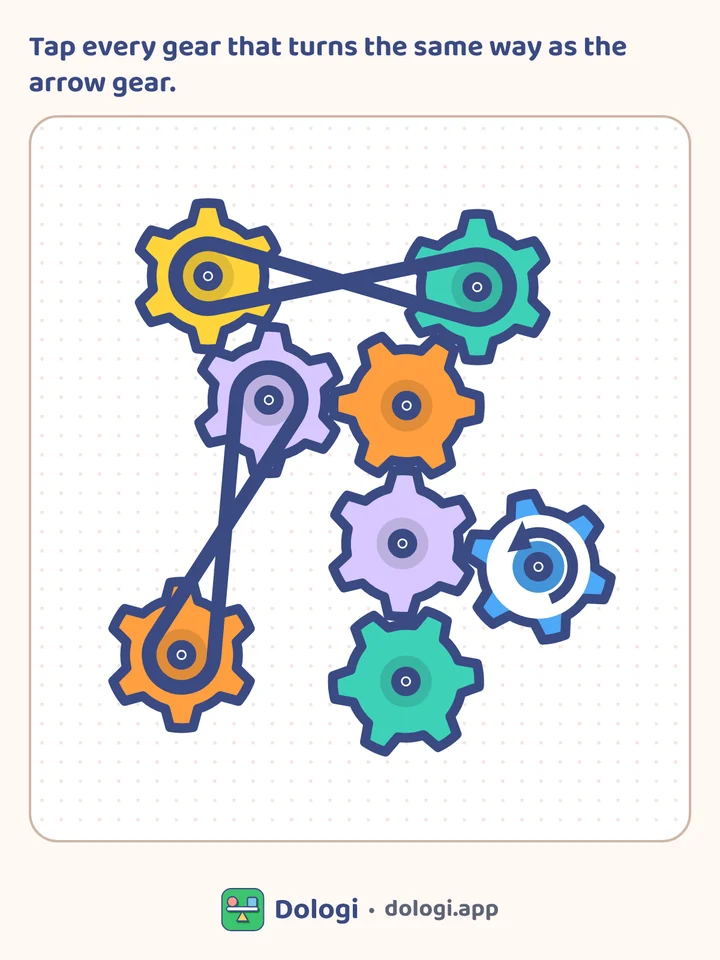
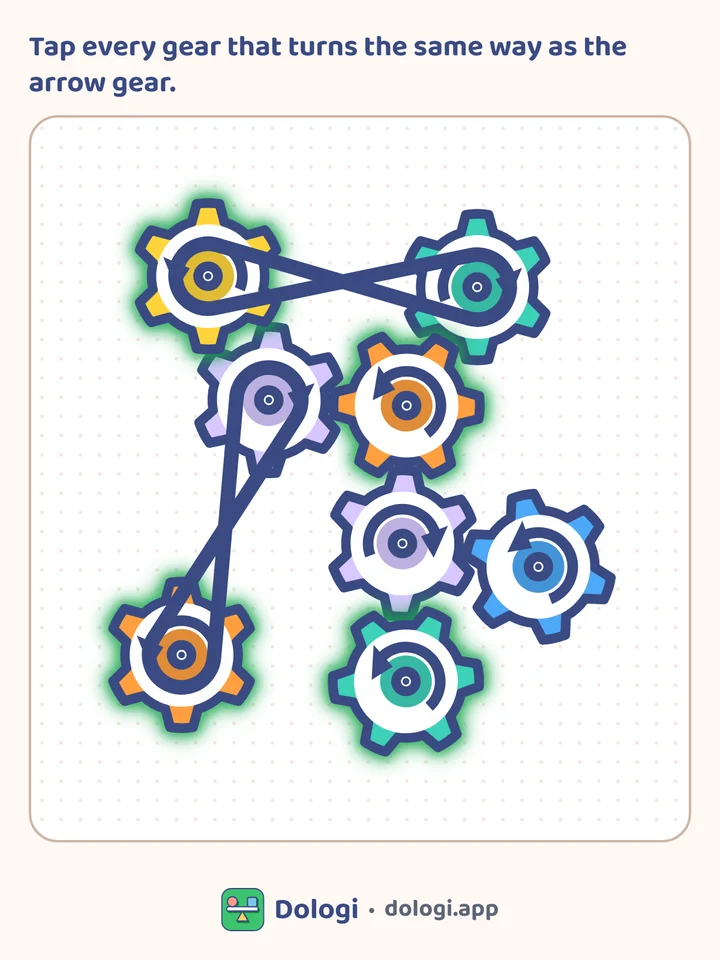
Ages 10–11
What it builds: Two meshed gears turn opposite ways; gears joined by a straight belt turn the same way, and a crossed belt flips the direction. Your child works outward from the arrow gear one gear at a time, keeping track of each direction, which makes this a chain of reasoning with many links. Keep playing: cut a few circles from cardboard, lay them in a row, have your child draw a turning arrow on each one, then count which direction repeats.
Puzzle 6: Drop the block
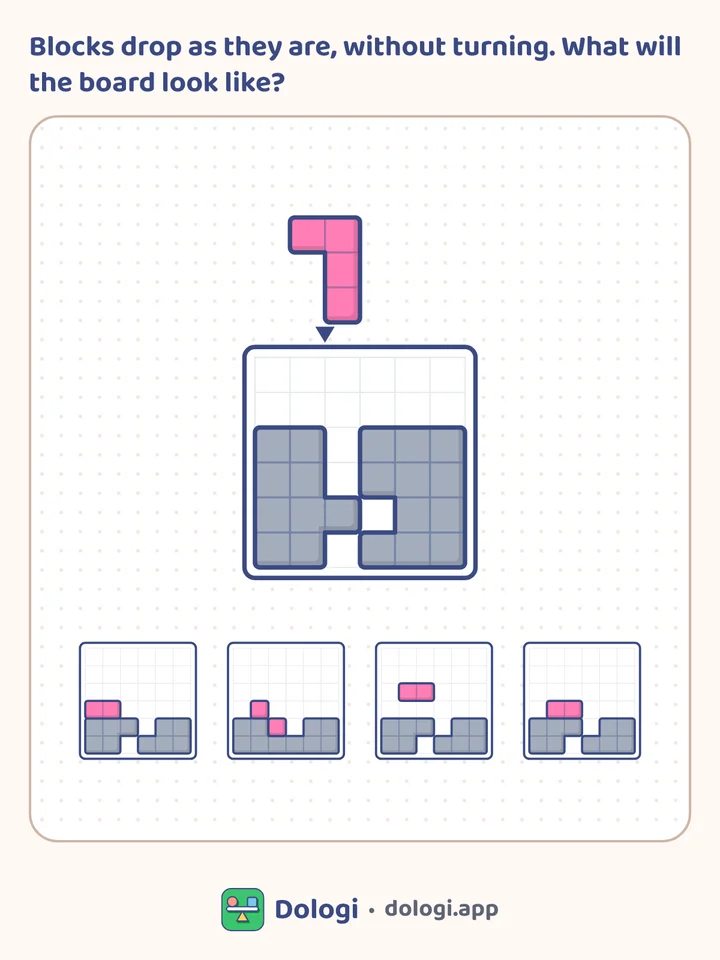
Ages 11–12
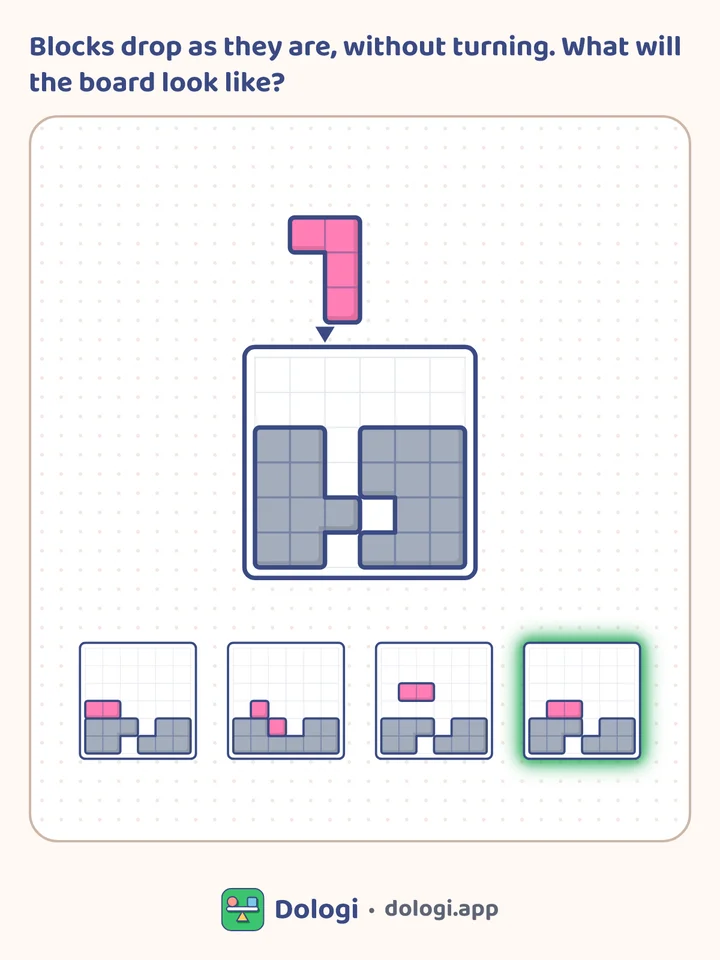
What it builds: The block falls straight down without turning and stops as soon as one of its squares lands on a brick below; any row that becomes completely full disappears and the rows above shift down. Your child has to find which column stops the block first, then picture the board changing over two steps in a row, like thinking one move ahead in a game. Keep playing: draw a grid on paper, shade some squares, draw a block above it and take turns guessing where it lands.
Puzzle 7: Turned block
Ages 9–10
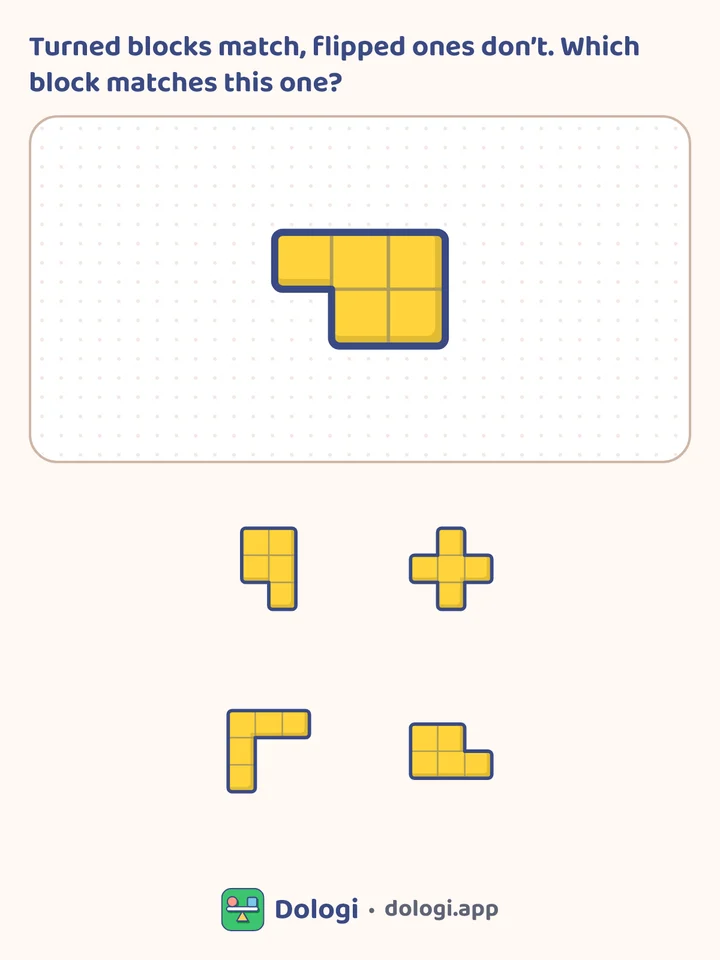
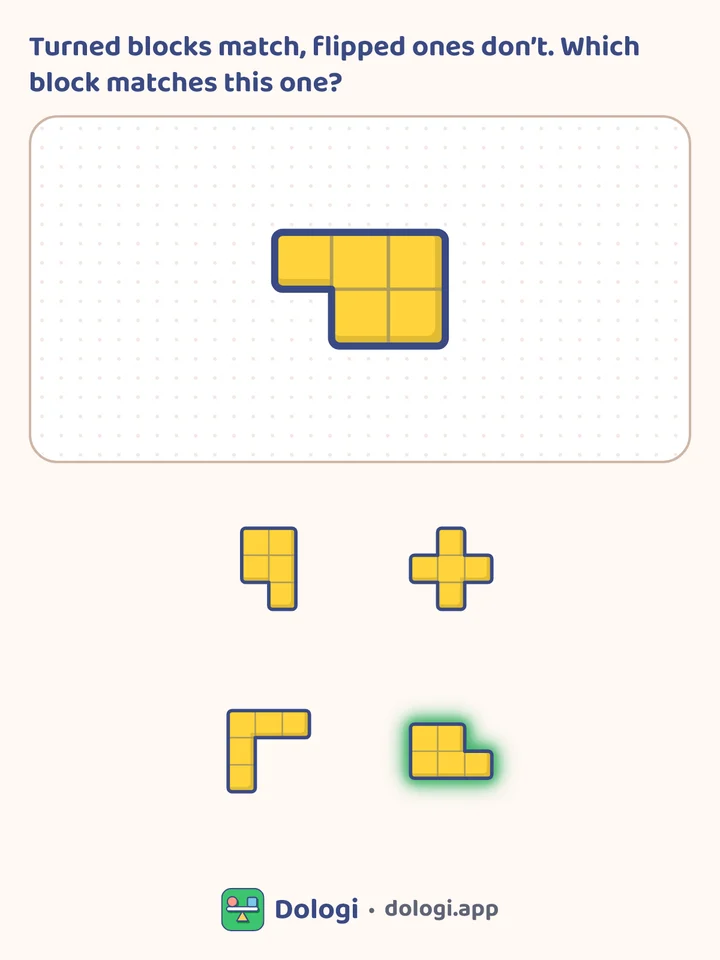
What it builds: Your child turns the sample piece in their head a quarter turn at a time, watching where the sticking-out square goes, and remembers that a flipped piece never matches however it is turned, so they must tell turning apart from flipping. Rotating shapes mentally is what we do when reading a map upside down, following assembly pictures or packing a car trunk. Keep playing: cut a five-square piece from cardstock, color one side, set it down in different positions and ask your child each time whether it was turned or flipped.
Puzzle 8: Fix the drawing
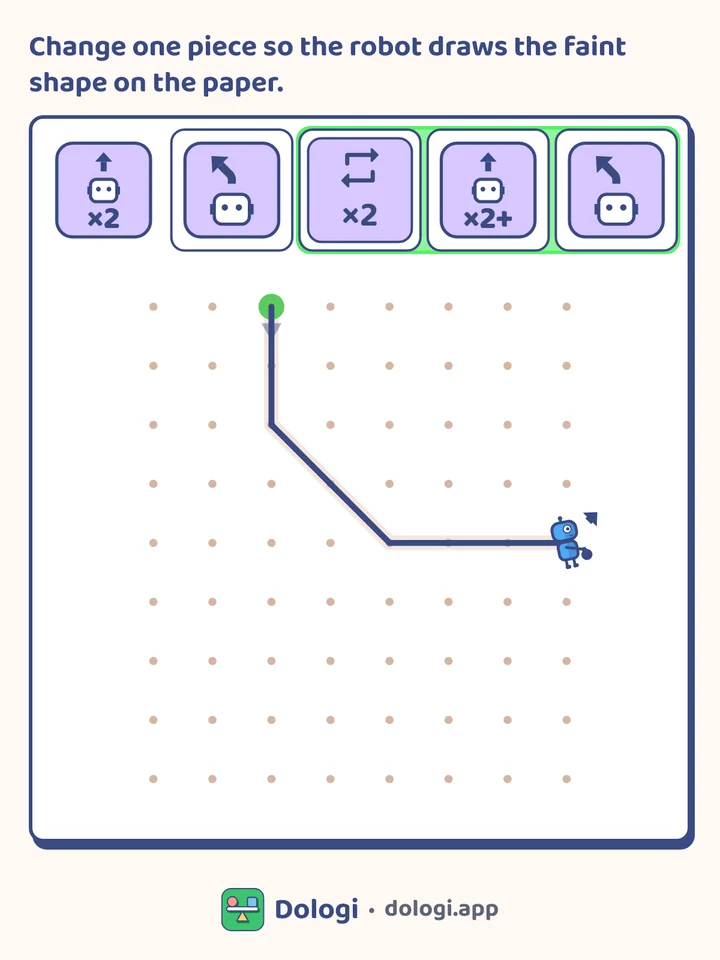
Ages 11–12
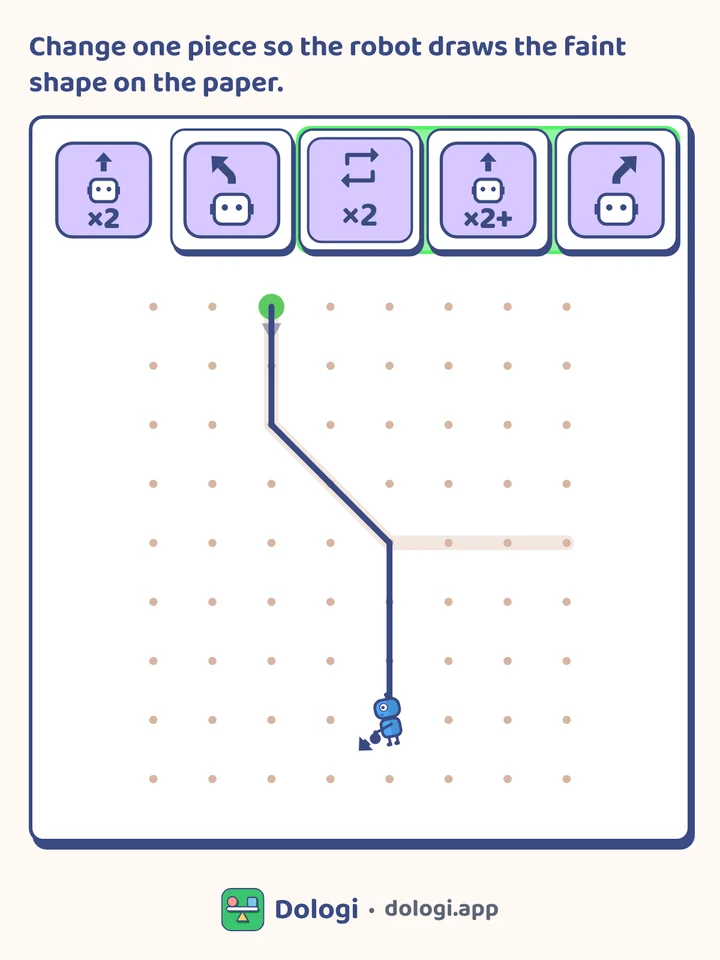
What it builds: This time the program has a repeat block, so one wrong piece spoils several parts of the drawing; your child runs each loop in their head and compares the line with the faint picture to find where it first drifts off. Predicting what a few lines of code will do before running them is exactly what they'll practice in computing class. Keep playing: write instructions together for drawing a letter with "forward" and "turn" moves, swap two of them and see how the drawing changes.
Puzzle 9: Slide the picture
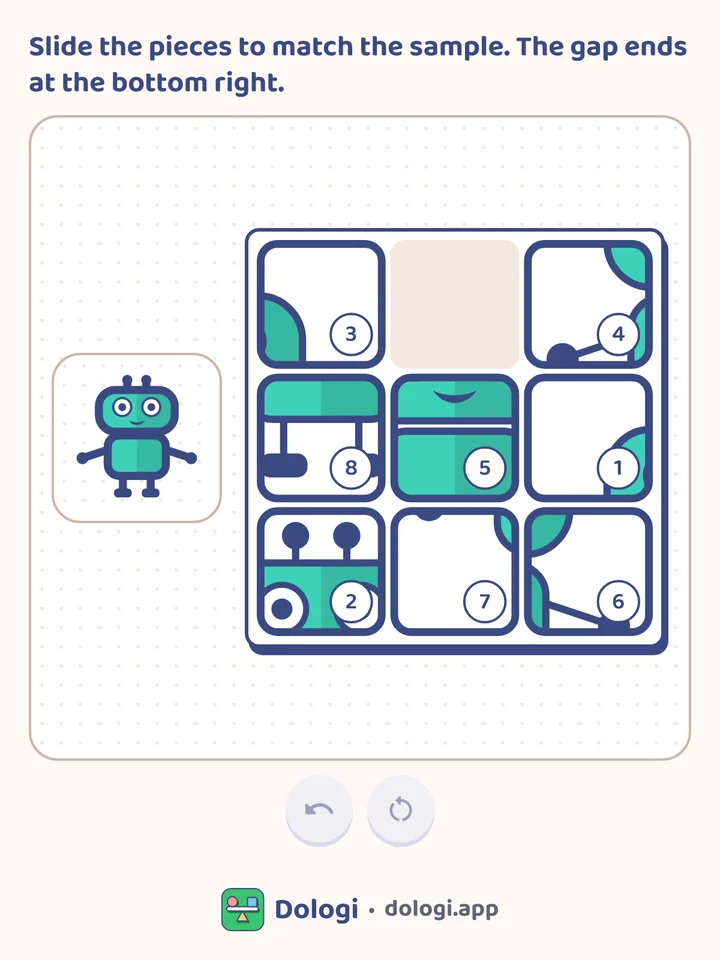
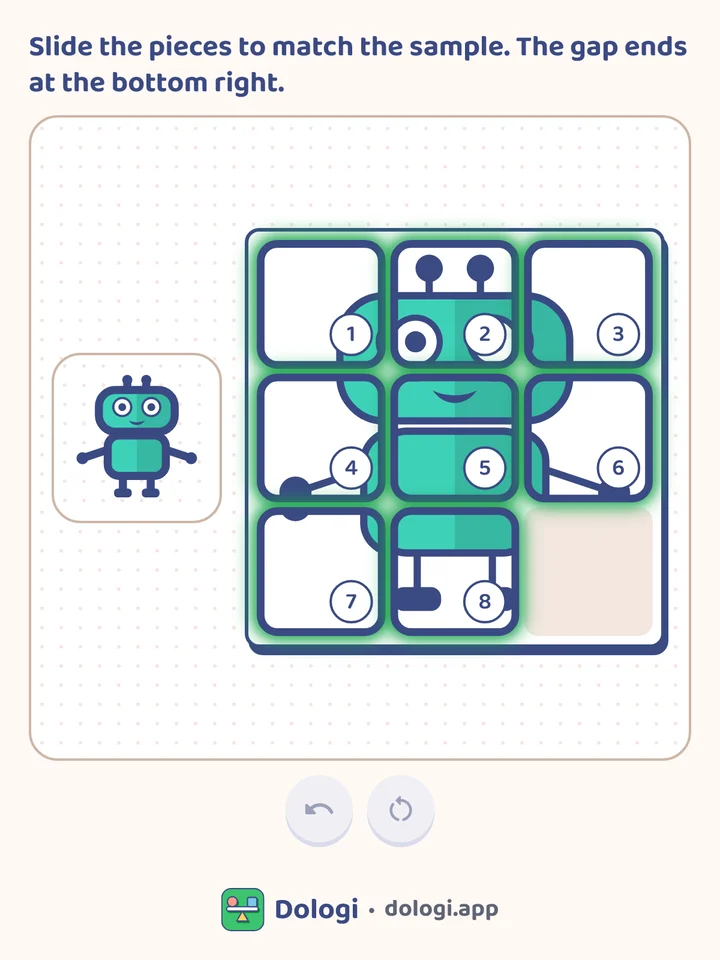
Ages 11–12
What it builds: Your child uses the sample picture and the numbers on the tiles to know where each one belongs, then steers the empty square around to slide tiles home without scrambling the ones already in place. Long chains of moves like this train working memory and persistence, both needed for multi-step problems in middle school. Keep playing: race your child to solve it in the fewest moves and write down the count each time to see the progress.
Puzzle 10: Fold a cube
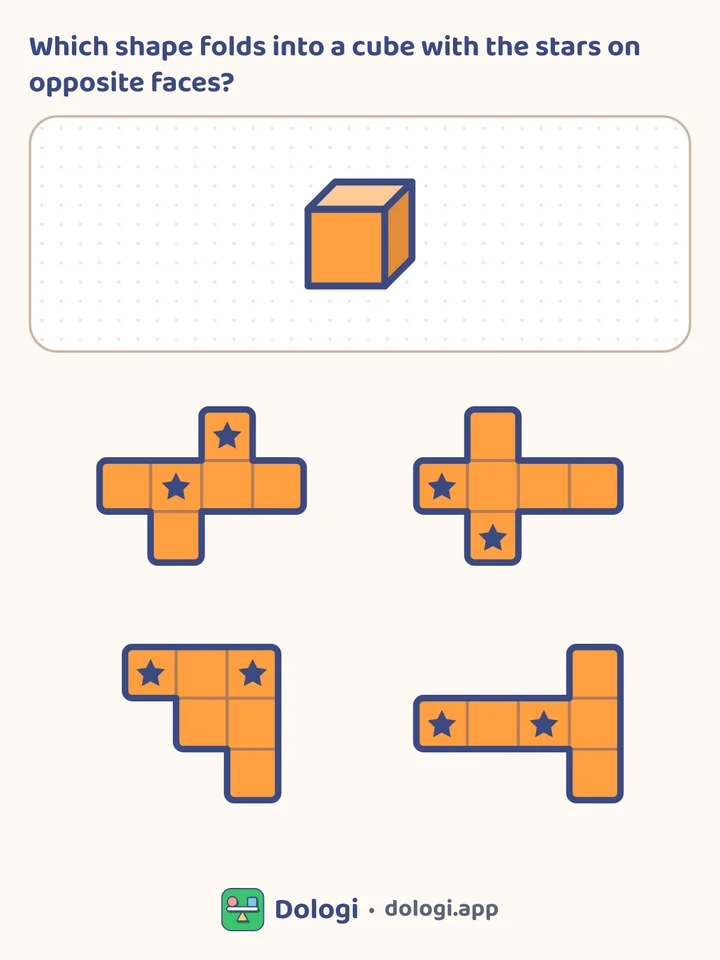
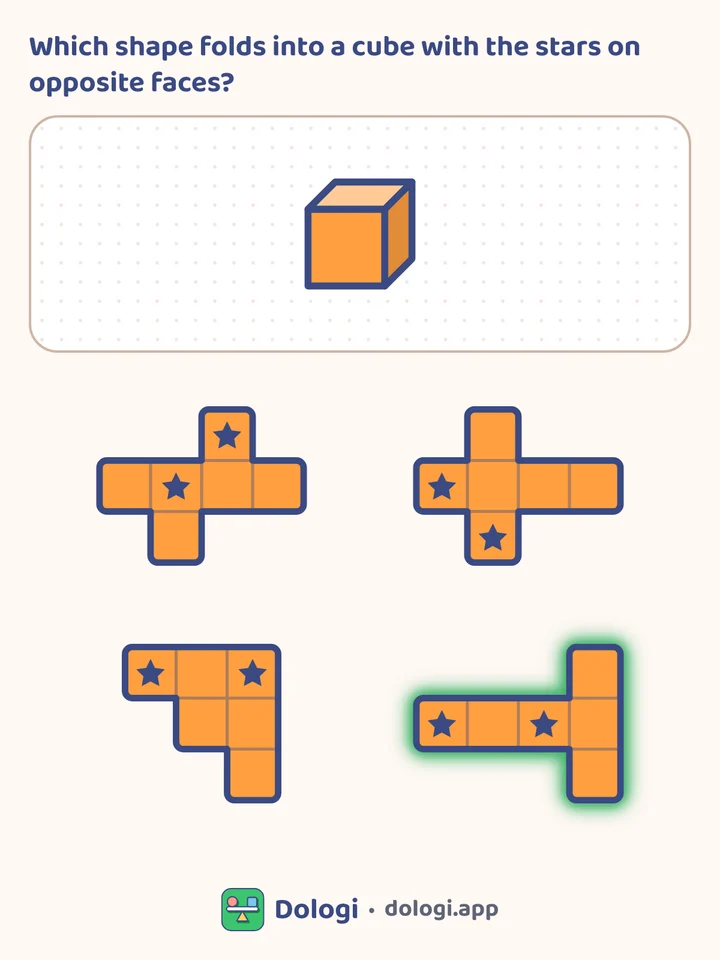
Ages 11–12
What it builds: Your child first rules out the shapes that can't fold into a cube (two faces would end up on top of each other), then folds the rest in their head to see whether the two stars land on opposite faces or neighboring ones. Linking flat nets and solids is the basis of surface area and volume lessons and of solid geometry later on. Keep playing: flatten an old cardboard box, mark two opposite faces, and let your child predict before folding it back up.
Did your child enjoy these spatial puzzles? The Dologi app has many more of the same kinds, getting harder with age and with how your child plays, so they can stretch their spatial imagination a little every day and still have fun.