For children ages 4–5, spatial thinking starts with very close-to-home things: seeing which piece fits a gap, finding a way that doesn't run into a wall, knowing up and down, left and right. Picture puzzles like the ones below help them look closely and picture things in their head first, the groundwork for tidying, drawing and reading maps later on. The five puzzles come straight from the Dologi app, suit kids ages 4–5, and go from easy to harder.
How to use this post: show your child one picture at a time and let them point or draw with a finger on the screen before answering. The answer is behind the "Show answer" button under each picture. Little ones need extra time, so let them try, and if needed give a hint with a question such as "what does the gap look like?" instead of telling the answer.
Puzzle 1: Block builder
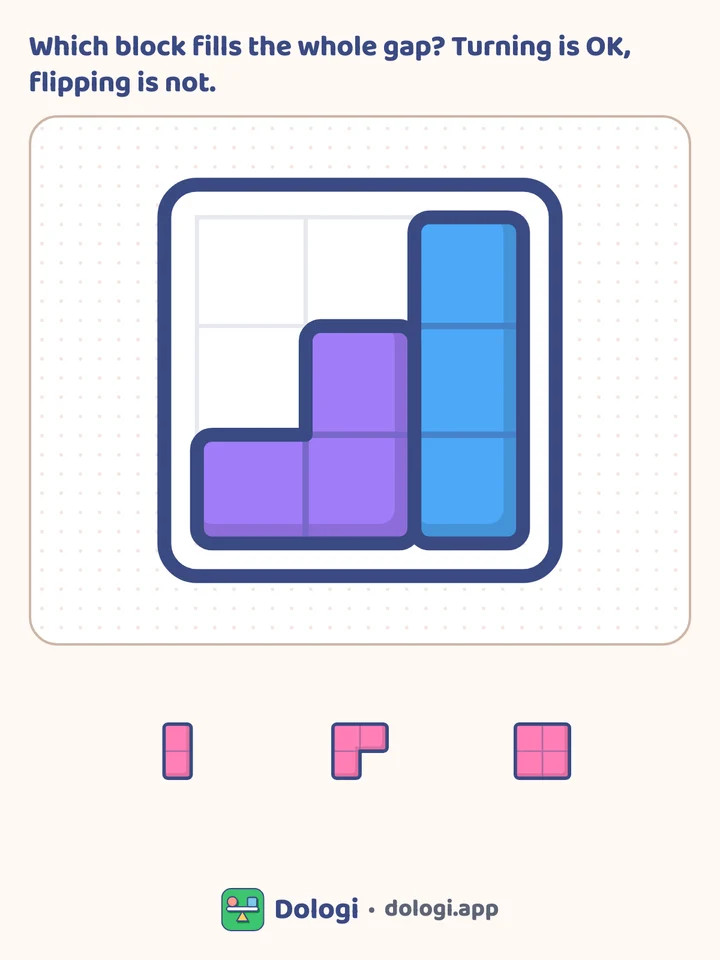
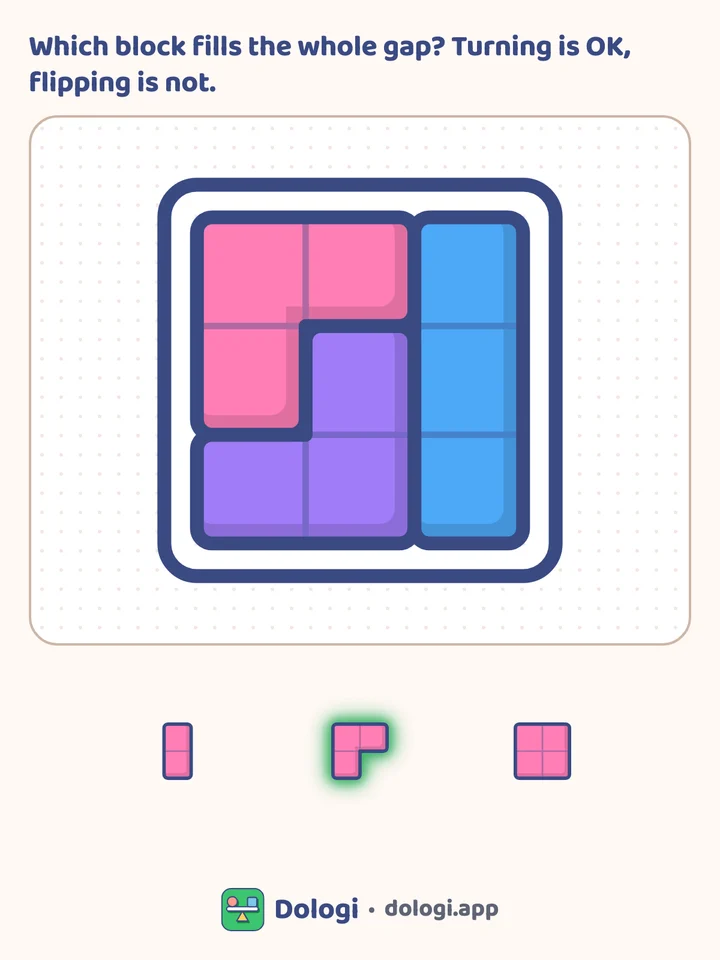
Ages 4–5
What it builds: Your child looks at the shape of the gap and compares it with each piece below, remembering that pieces can be turned but not flipped. Seeing which shape fits which space is what they use for jigsaws, putting toys back in their box or stacking plates. Keep playing: cut a piece of cardboard into three or four big parts and let your child put it back together.
Puzzle 2: Maze
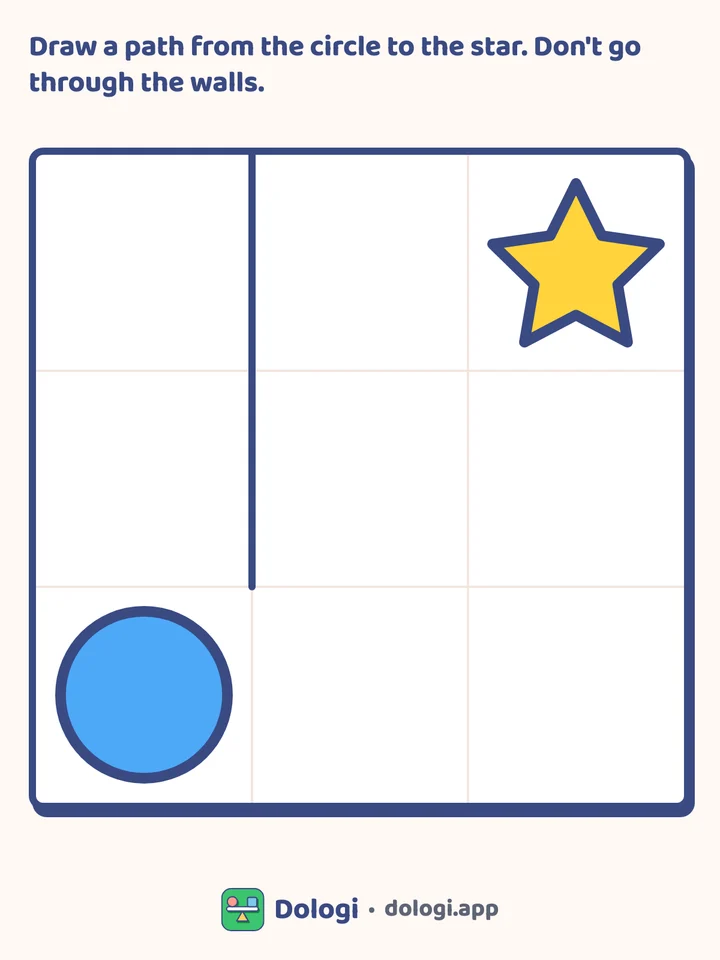
Ages 4–5
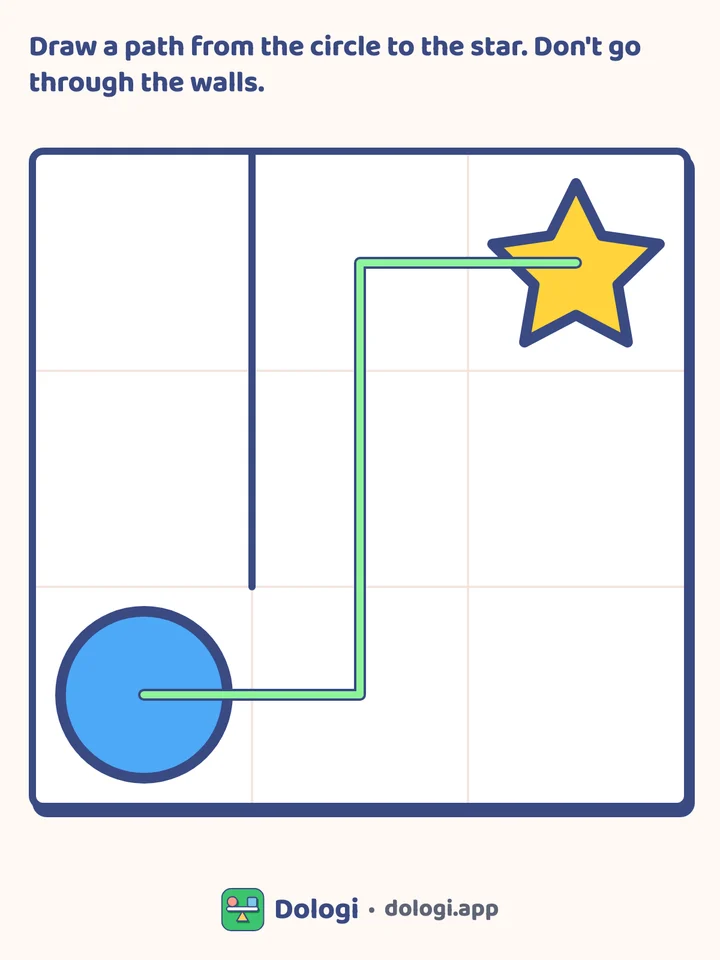
What it builds: Your child has to see where the wall stands before drawing, so the path goes around it rather than through it. Looking before acting builds planning, and drawing a path with a finger also trains the hand before holding a pencil. Keep playing: stick a few strips of tape on the floor as walls and let your child find a way from the door to a teddy bear without stepping on the tape.
Puzzle 3: Light beam
Ages 4–5
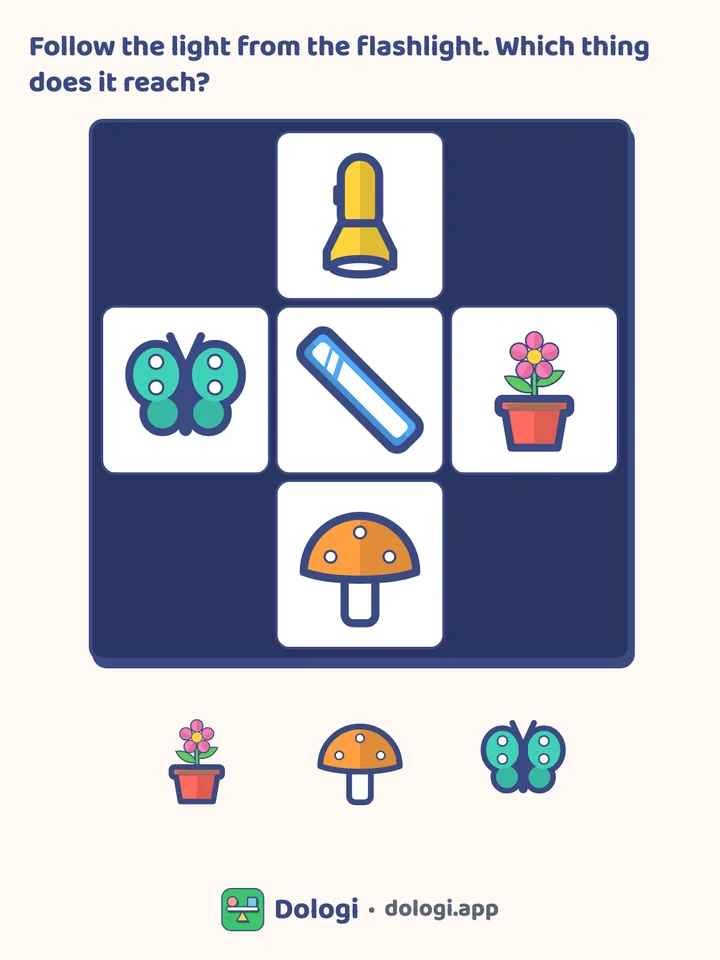
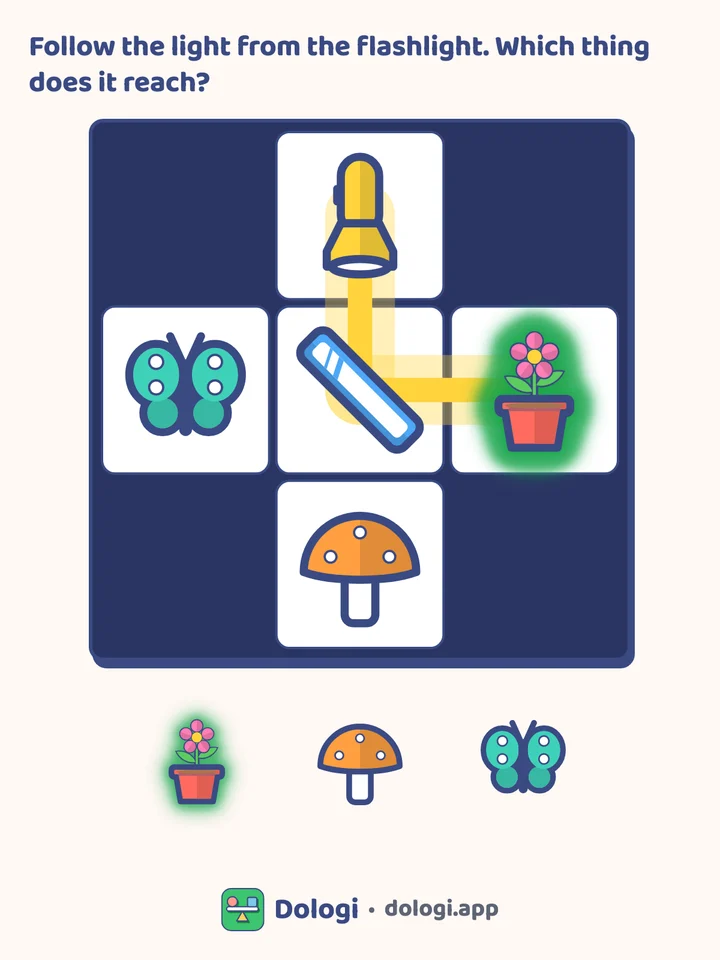
What it builds: Light travels straight and turns when it meets a mirror, so your child follows it with their eyes from the flashlight to where the beam stops. They get used to the idea of "go straight, then change direction", the base for giving directions, reading arrows and later coding. Keep playing: your child is the light beam walking straight across the floor; wherever you put a cushion as a mirror, they must turn, and see which object they reach.
Puzzle 4: What will it draw?
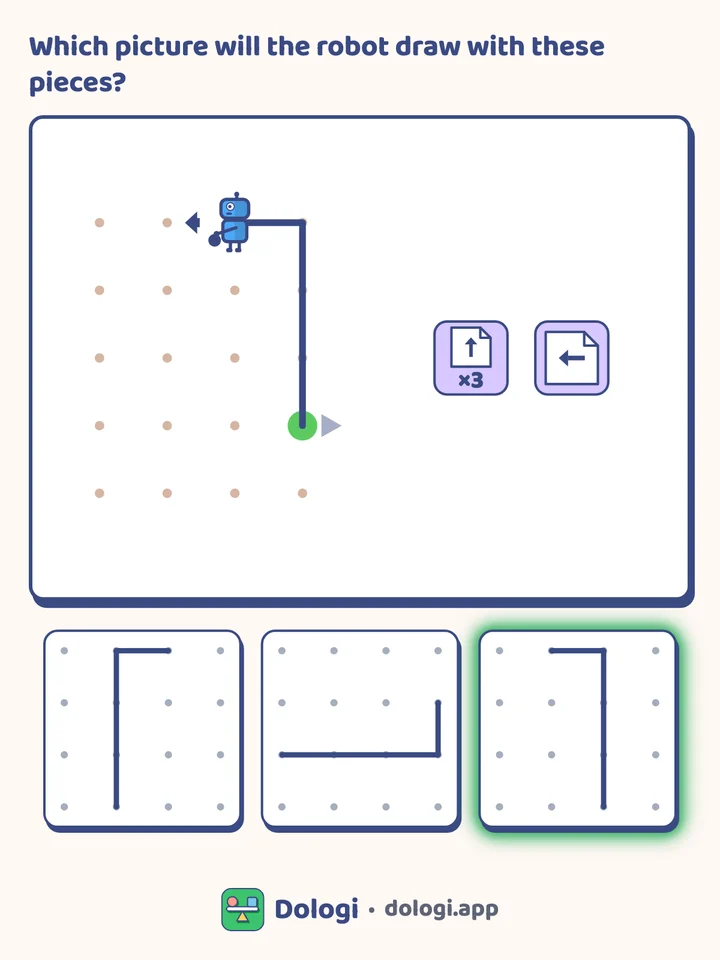
Ages 4–5
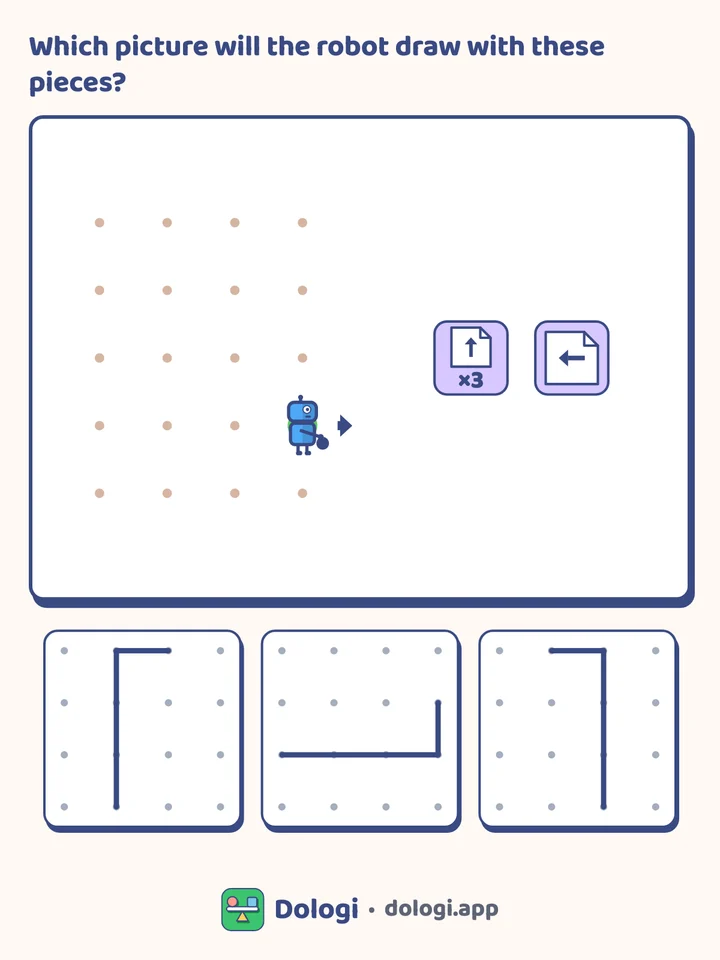
What it builds: Your child reads each command tile, how many steps and which way, then imagines the line the robot draws to pick the matching picture. Following two or three directions in a row and keeping their order is a skill they need at preschool and at home. Keep playing: give your child squared paper, say "up 3 squares, left 1 square" and let them draw along, then swap roles so they give the orders.
Puzzle 5: Rabbit hop
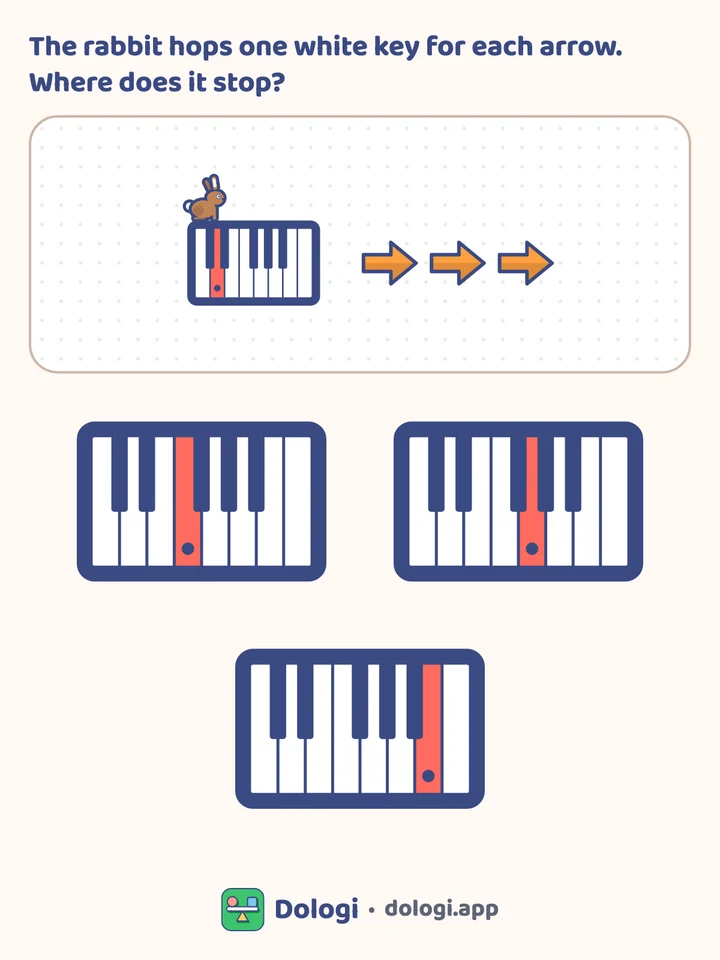
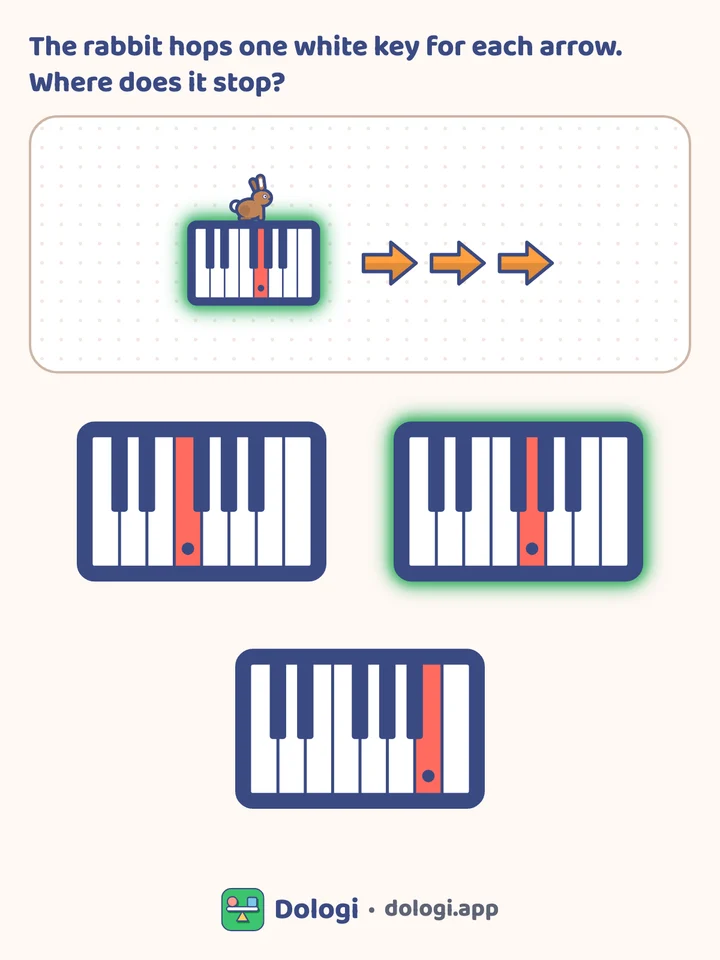
Ages 4–5
What it builds: Each arrow is one hop to the next white key, so your child counts each hop and skips the black keys. Counting forward step by step like this is a first step toward adding on a number line. Keep playing: on stairs or floor tiles, hold up some fingers and let your child hop that many steps, guessing first where they will land.
Did your child enjoy these spatial puzzles? The Dologi app has many more of the same kinds, getting harder with age and with how your child plays, so a little practice each day never gets boring.