Children ages 4–5 learn about space through things they touch and see every day: which way something turns, where a path leads, left and right, above and below. The ten picture puzzles below help your child picture a movement in their head before it happens: gears turning, a train rolling, a block falling, a robot stepping. That is the groundwork for drawing, tidying, reading maps and, later, coding. The puzzles come straight from the Dologi app, suit kids ages 4–5, and go from easy to harder.
How to use this post: show your child one picture at a time, read the question aloud, and let them point or explain how they are thinking before they answer. The answer is behind the "Show answer" button under each picture. If your child gets stuck, ask a nudging question such as "if it keeps going, where does it end up?" instead of giving the answer.
Puzzle 1: Spinning gears
Ages 4–5
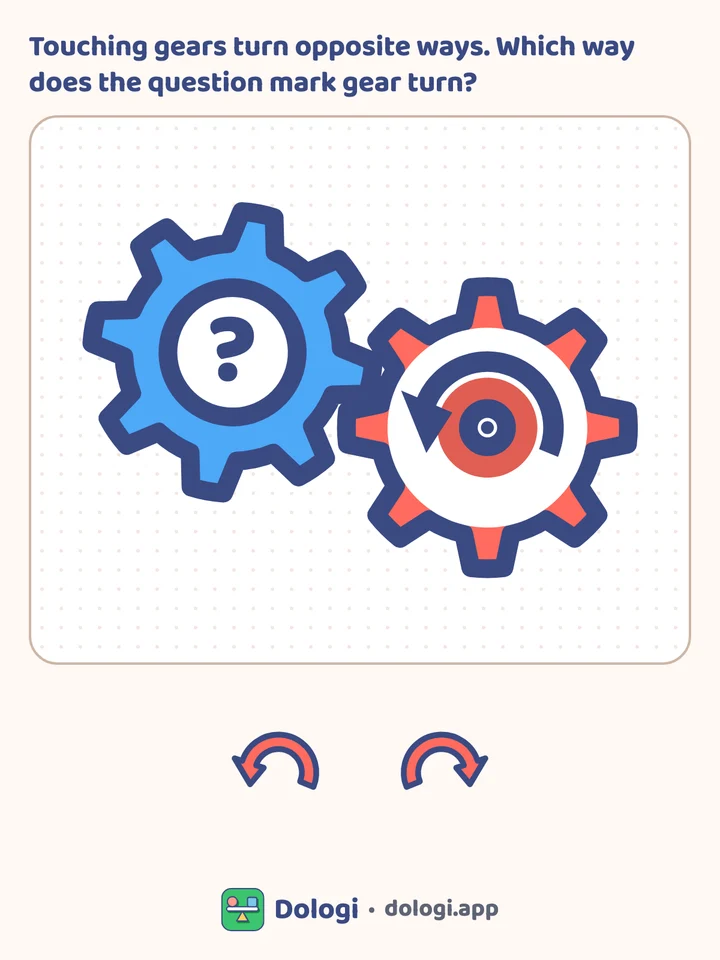
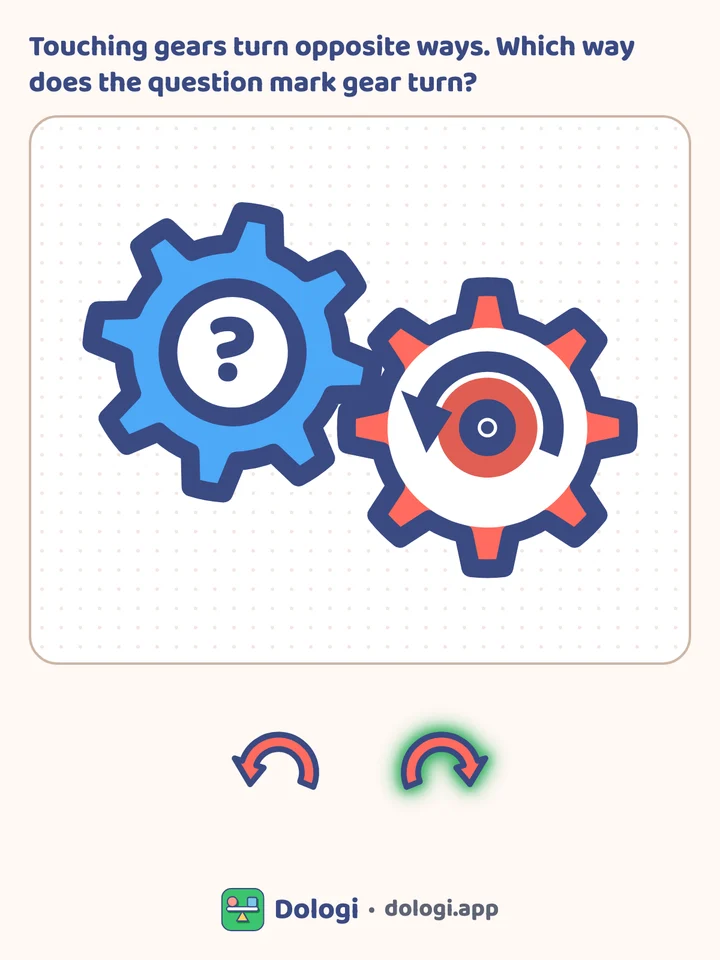
What it builds: Your child looks at the arrow on the red gear, then works out which way its teeth push the gear next to it. Understanding that one moving thing makes another move is the start of being curious about machines at home, from a bicycle to a clock. Keep playing: press your palms against your child's palms, turn your hands, let theirs turn along, and ask which way their hands are going.
Puzzle 2: Which station?
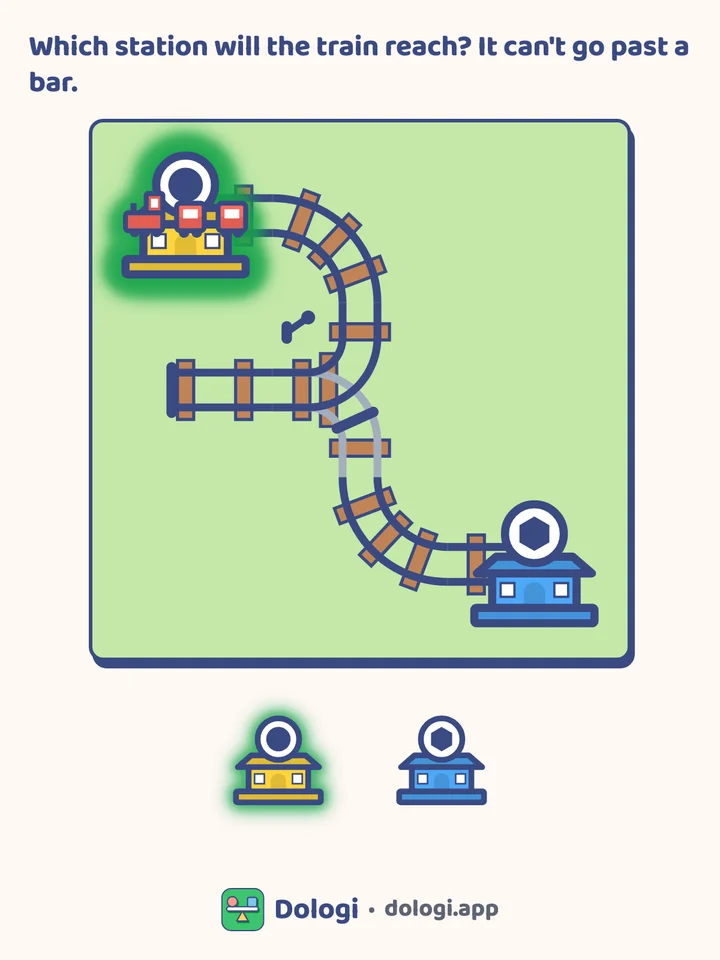
Ages 4–5
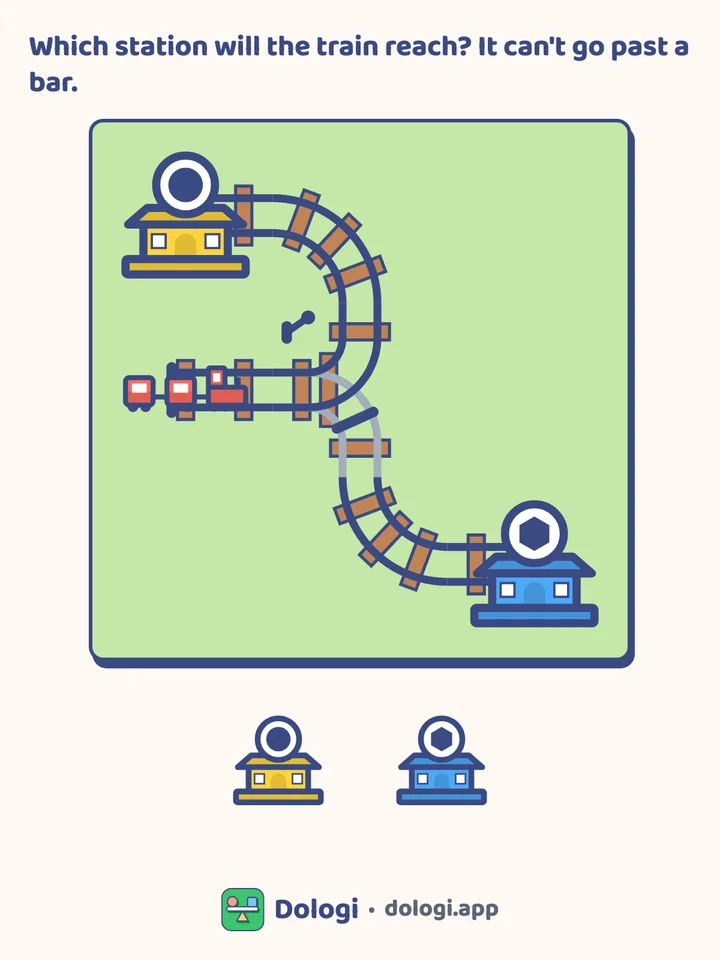
What it builds: Your child traces the track with a finger from the engine and, at the fork, checks which branch the bar is blocking. Following a route and noticing where it is blocked builds the habits behind reading a map or finding the way out of a playground or a store. Keep playing: lay out a track with yarn or craft sticks on the floor with one fork, block one branch with a slipper, and let your child push a toy car along.
Puzzle 3: Which way now?
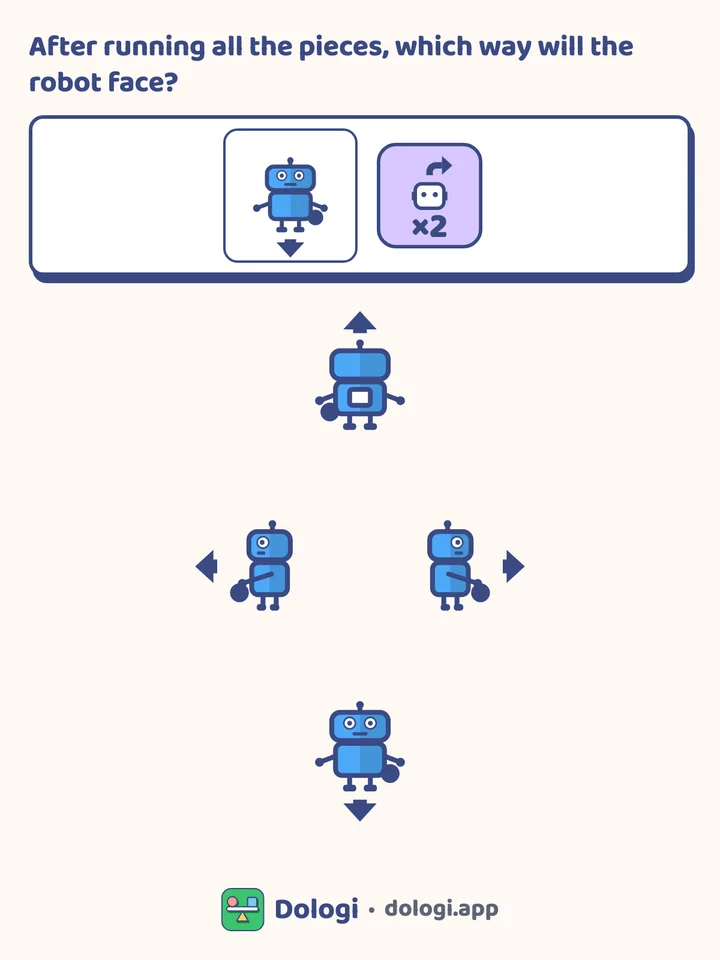
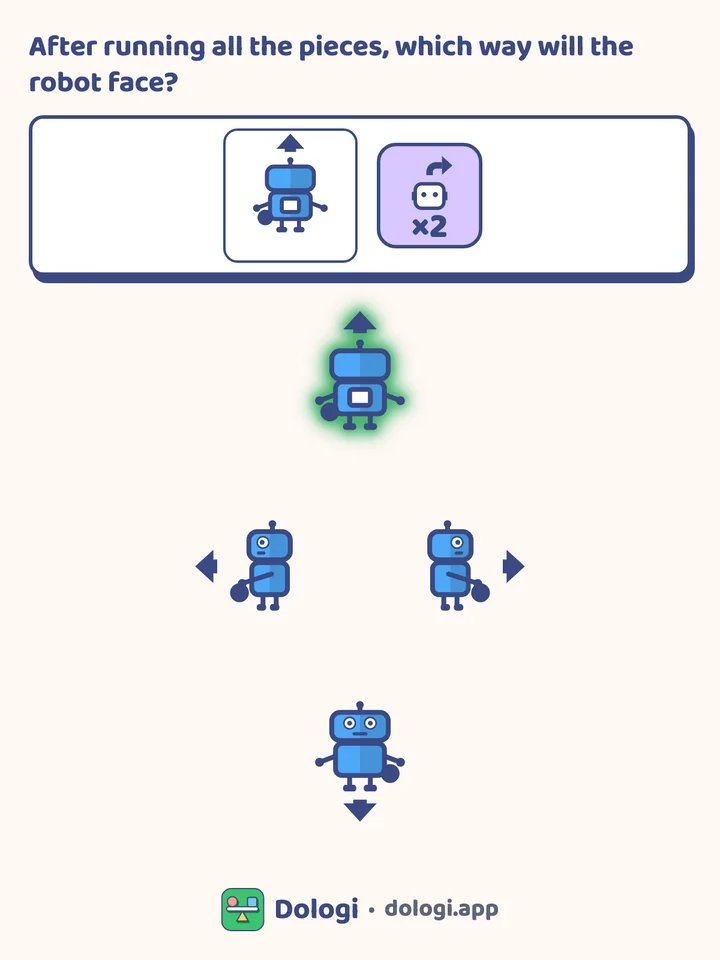
Ages 4–5
What it builds: Your child notes which way the robot is facing, then follows the turn tile the given number of times, one quarter turn each. Telling directions apart and turning the body to face a new way is what they do in exercise class, lining up or playing blindfold games. Keep playing: say "turn right once, then turn right again" so your child turns along, then ask what they can see in the room now.
Puzzle 4: Count the cubes
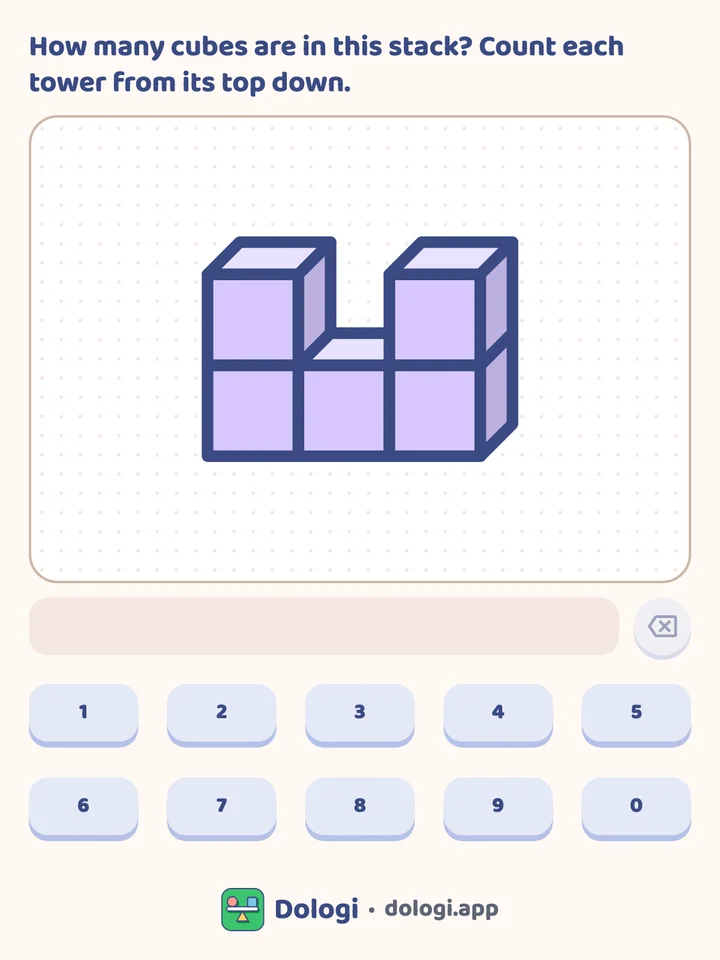
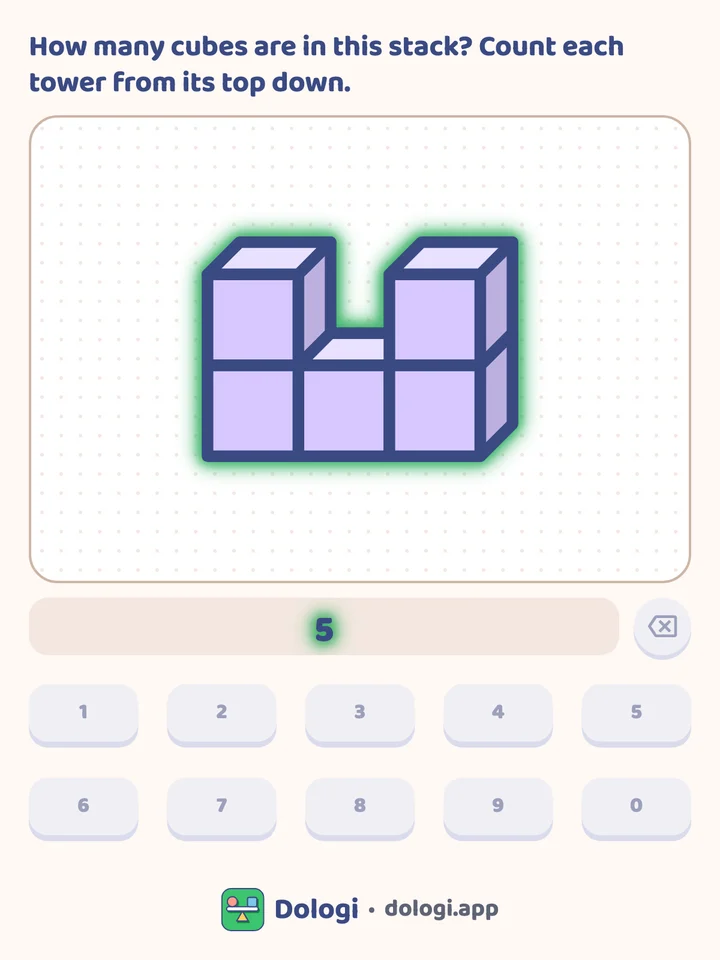
Ages 4–5
What it builds: Your child counts every cube, including the ones partly hidden underneath, by going tower by tower from the top down. Counting in order without skipping or counting twice is a math skill they need in preschool and first grade. Keep playing: build two or three short towers from blocks or milk cartons, let your child guess the total, then take them apart and count.
Hint: Count the cubes in one tower, then the next, and add them all together.
Puzzle 5: Water the flower
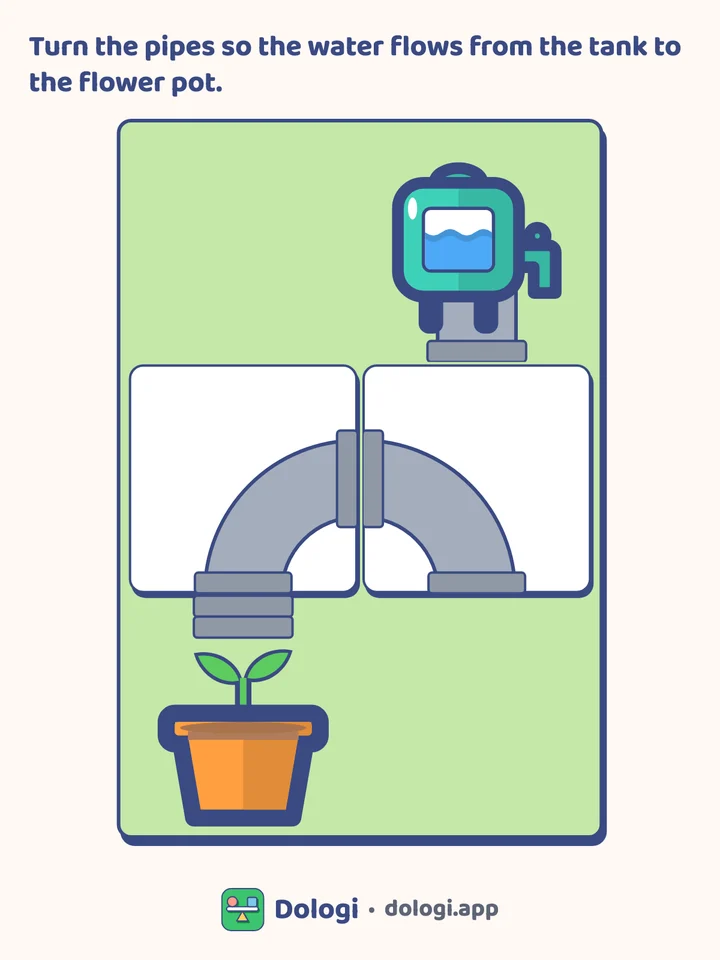
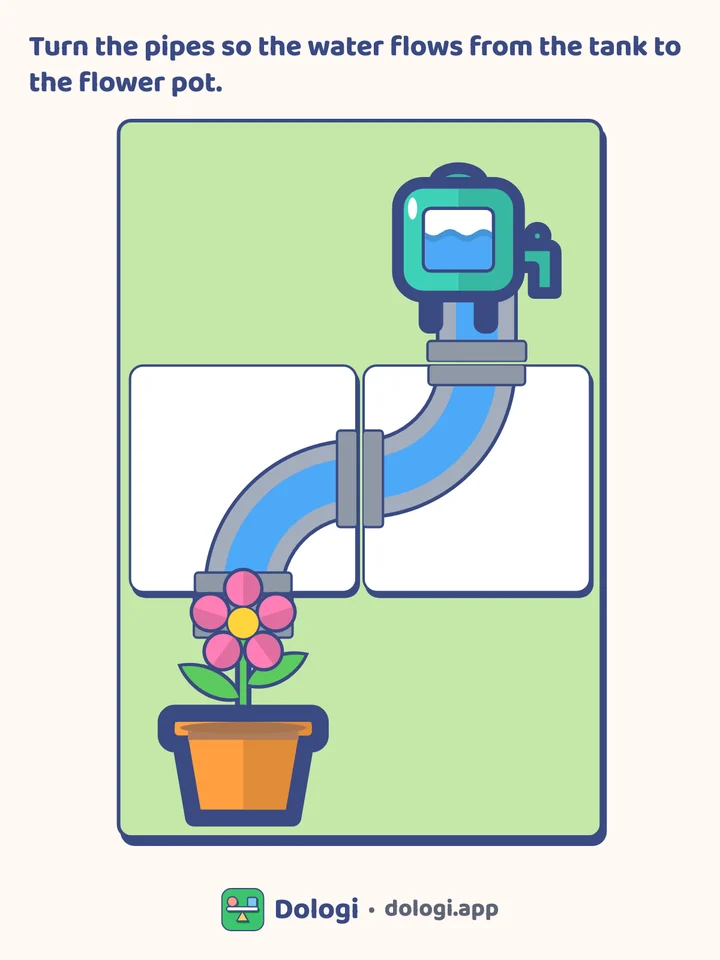
Ages 4–5
What it builds: Your child imagines where each pipe end will point once the piece is turned, so the water flows in one unbroken line from the tank to the pot. Picturing an object turning in their head before touching it underpins jigsaws, block building and drawing. Keep playing: cut a few pieces of straw or cardboard tube and let your child join them into a chute that rolls a marble from the table edge into a cup.
Puzzle 6: Drop the block
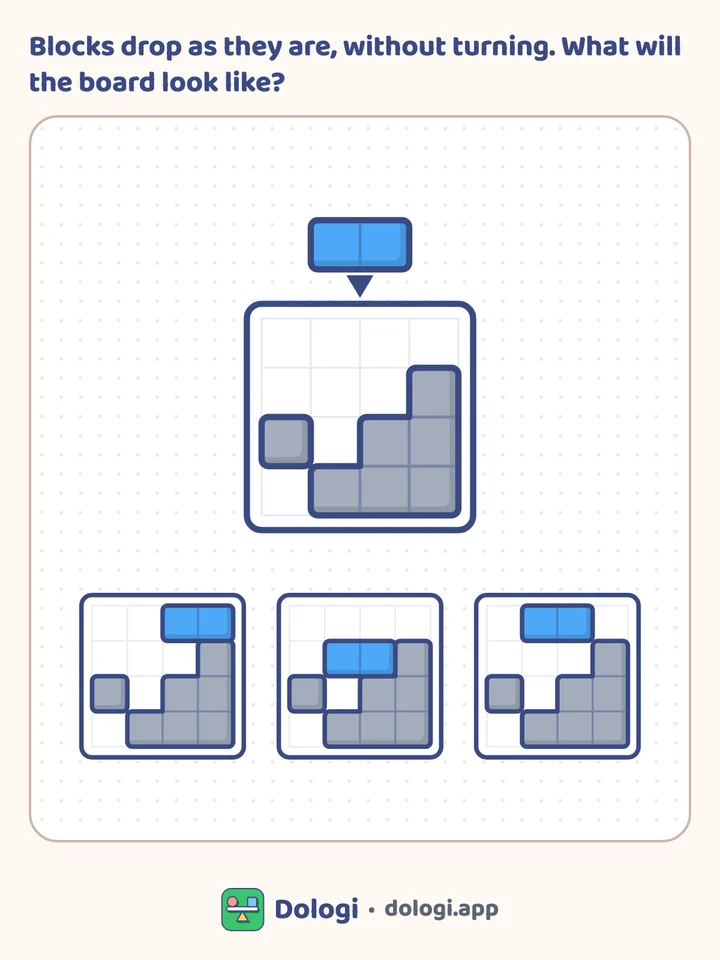
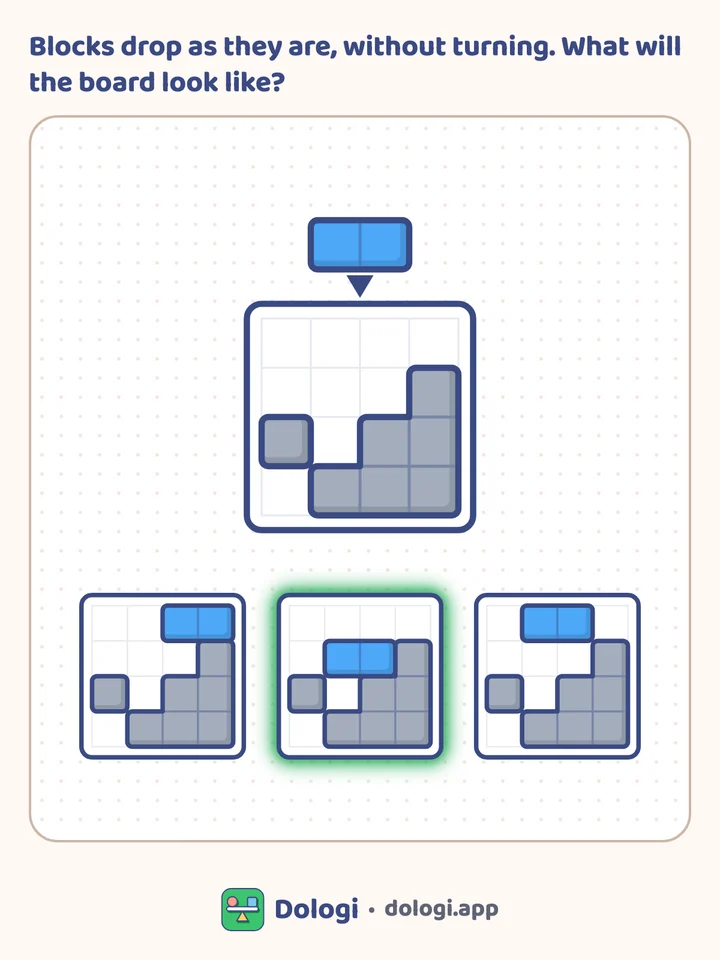
Ages 4–5
What it builds: The block falls straight down without turning, so your child looks at the columns right under it to see where it first touches and stops. Predicting where something will land helps when stacking toys, pouring water or tossing a ball into a basket. Keep playing: line up a few wooden blocks of different heights, hold one above them and ask where it will end up if you let go, then drop it to check.
Puzzle 7: Mirror painting
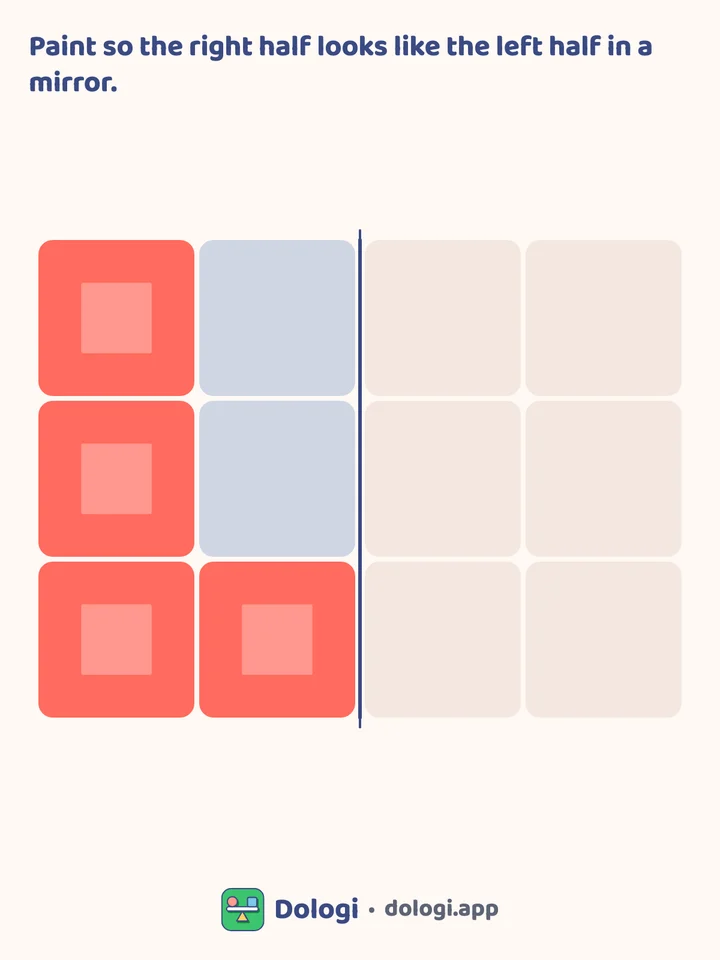
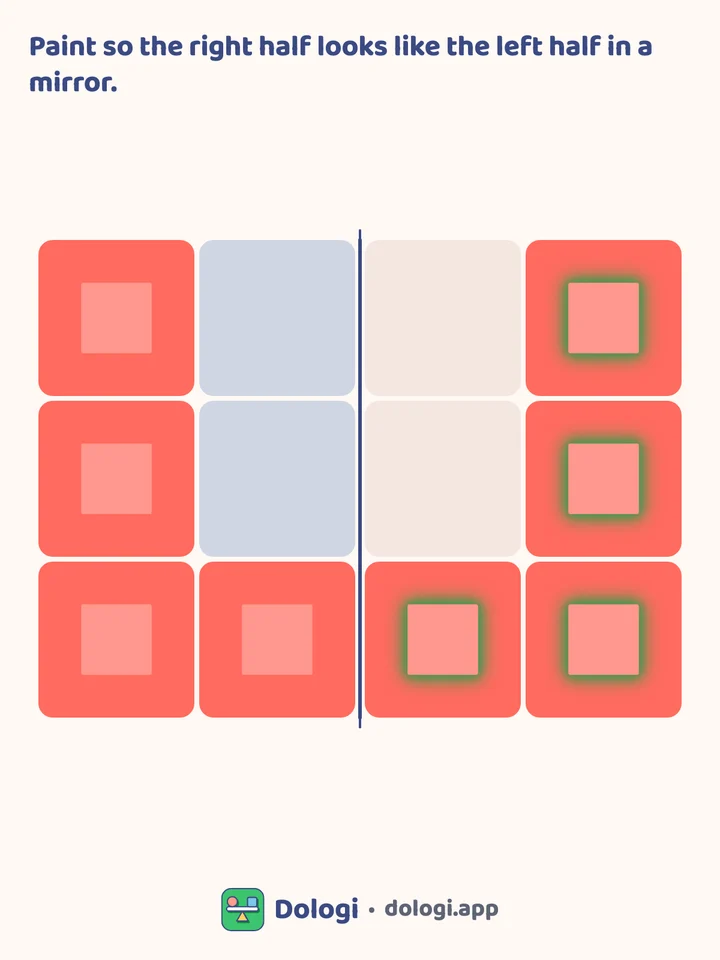
Ages 4–5
What it builds: Your child looks at each painted square on the left and finds the matching square across the mirror line: close to the line stays close, far stays far. Spotting two halves that match like a reflection is a first step into symmetry, which they meet in butterfly wings, leaves and letters. Keep playing: fold a sheet of paper in half, dab some paint on one half, fold and press, then open it to see both halves match.
Puzzle 8: Drive the car
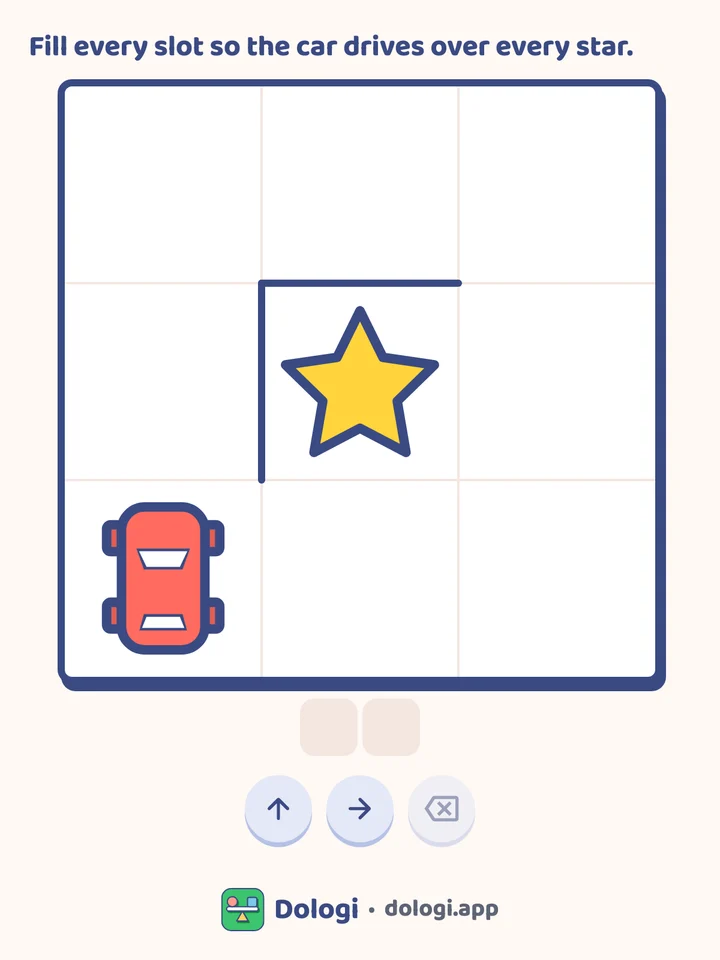
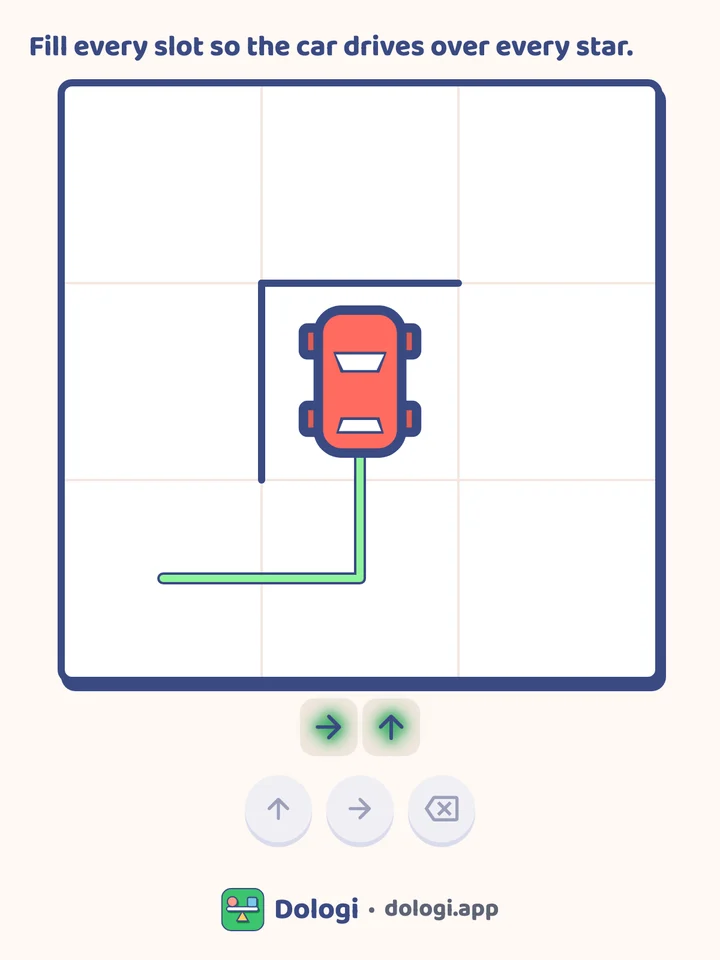
Ages 4–5
What it builds: Your child checks where the car is, where the star is and where the walls stand, then picks commands in the right order to reach the star. Thinking the steps through before acting is how planning grows, and it is also the very first idea of coding. Keep playing: tape a grid on the floor, your child is the car, put a toy down as the star, and have them say the moves like "up" and "right" before walking.
Puzzle 9: Rabbit hop
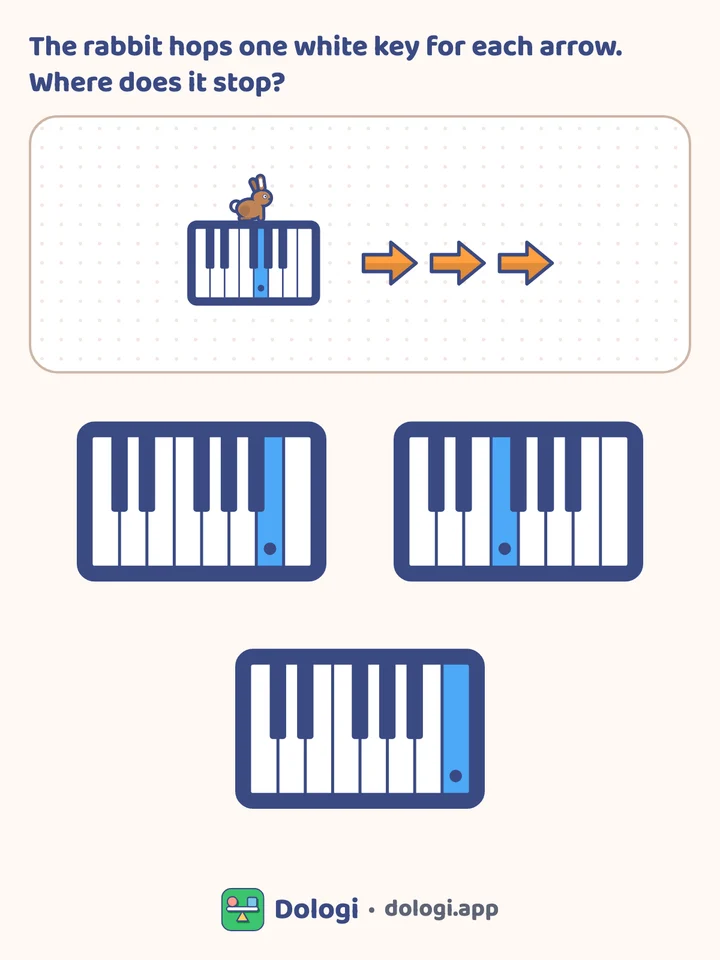
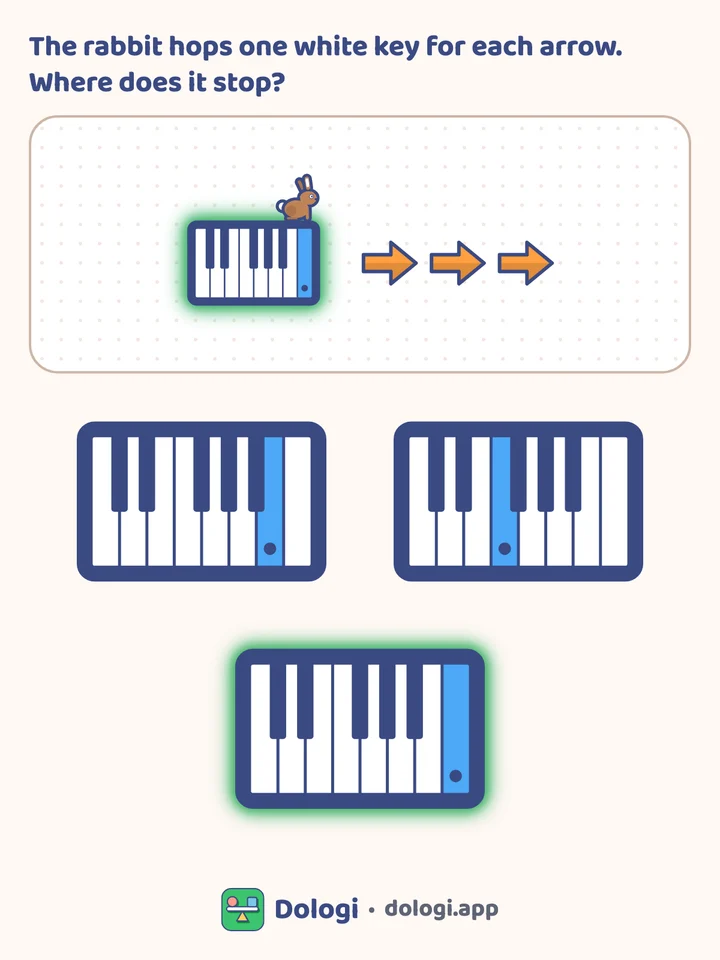
Ages 4–5
What it builds: Each arrow is one hop to the next white key, so your child counts each hop and skips the black keys. Counting forward along a row like this is an early step toward adding on a number line. Keep playing: put a row of colored paper sheets on the floor, clap a few times, and let your child hop that many sheets after guessing which color they will land on.
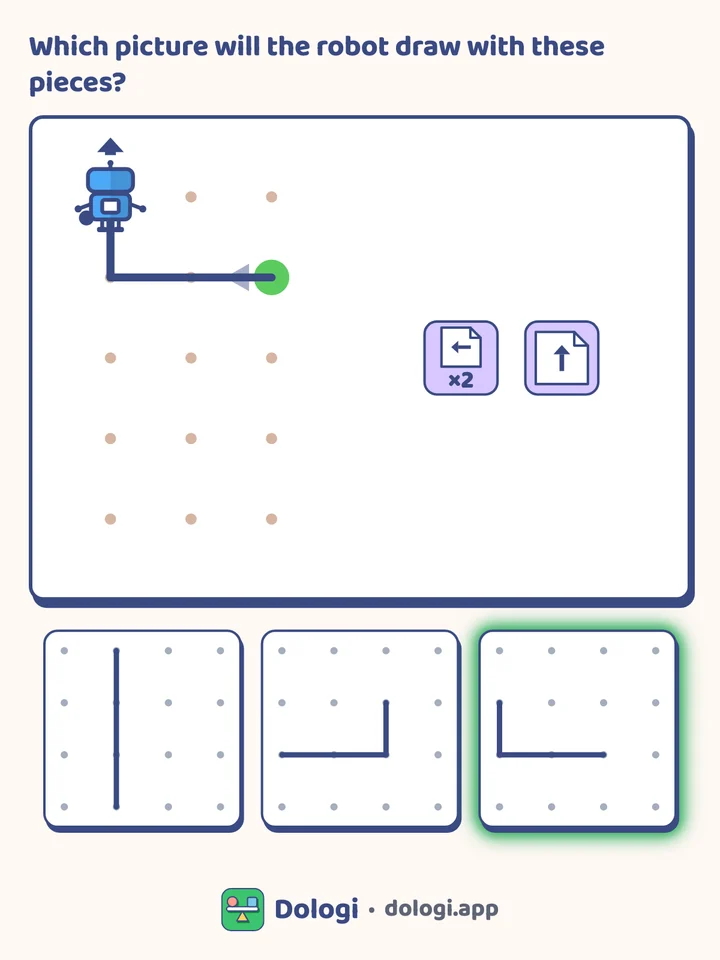
Puzzle 10: What will it draw?
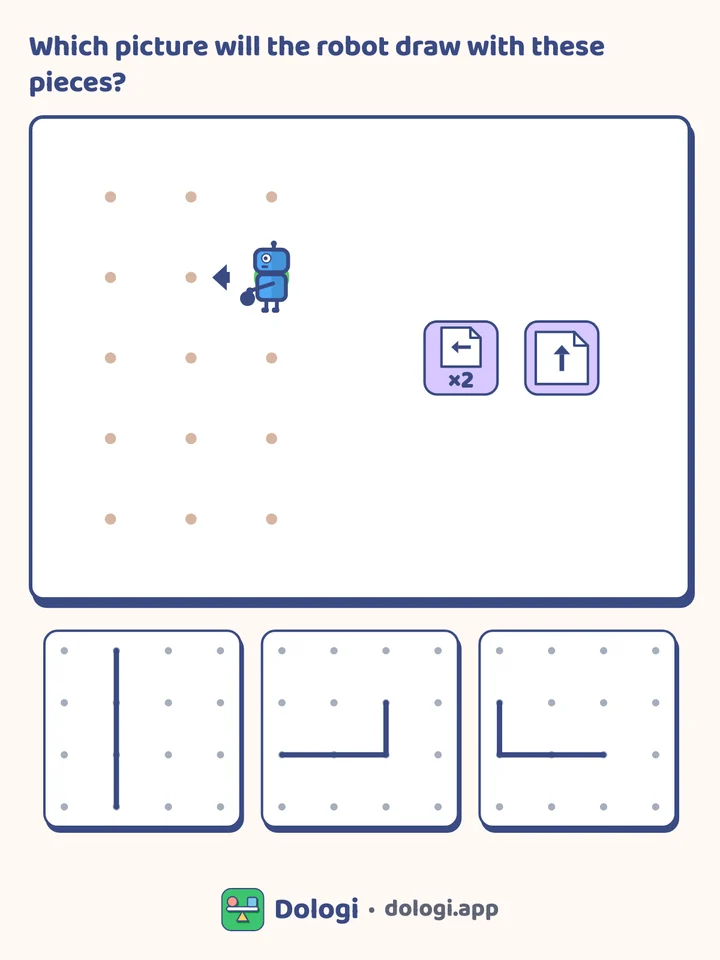
Ages 4–5
What it builds: Your child reads each command tile, which way and how many steps, then traces in their head the line the robot leaves on the dots to pick the matching picture. Following a chain of instructions in order helps with a teacher's directions, paper folding and building toy kits. Keep playing: give your child dotted paper, say "left 2 dots, up 1 dot" so they draw along, then swap roles and let them give the orders.
Did your child enjoy these puzzles? The Dologi app has many more spatial puzzles of the same kinds, getting harder with age and with how your child plays, so a little practice each day stays fun.