Spatial thinking is the ability to picture things in your head: where an object is, how it looks when turned, which way leads to the goal. It helps children read maps, build with toys, and later learn geometry and drawing. The ten puzzles below come straight from the Dologi app, suit kids ages 5–6, and go from easy to harder.
How to use this post: show your child one picture at a time and let them point or trace a path with a finger before answering. The answer is behind the "Show answer" button under each picture. If a puzzle feels hard, try it with real objects (wooden blocks, a sheet of paper, a small mirror) before opening the answer.
Puzzle 1: Maze
Ages 5–6
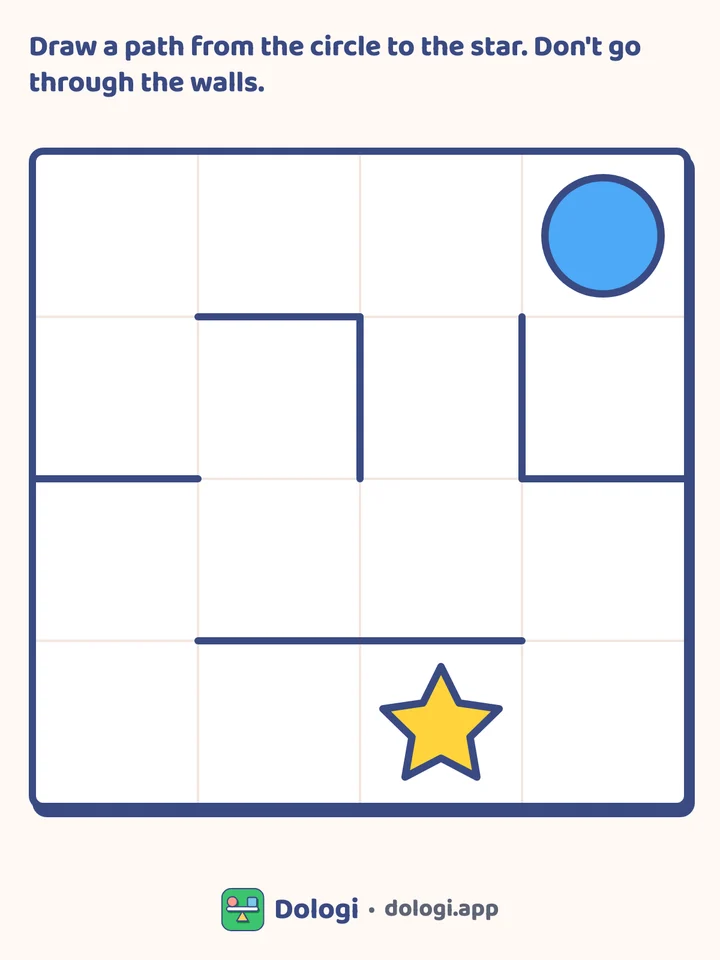
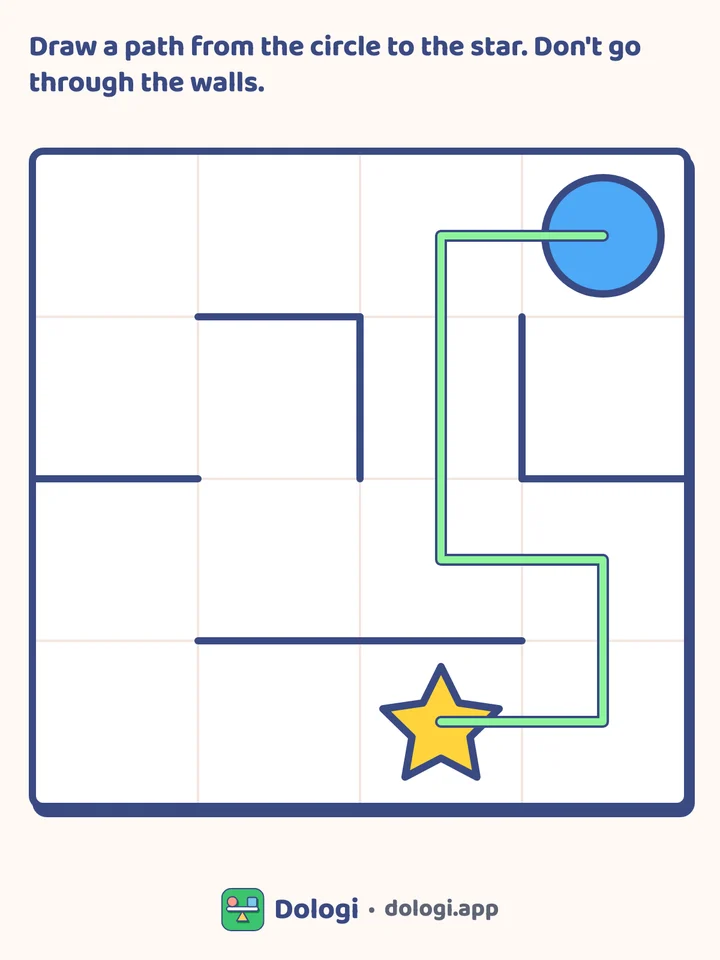
What it builds: Your child looks ahead at the walls to find a way through, and goes back to try another path at a dead end. This is planning: thinking a few steps ahead before acting, a skill they need for finding their way and organizing their own tasks. Keep playing: build a maze of cushions and chairs in the living room and hide a toy at the end.
Puzzle 2: What will it draw?
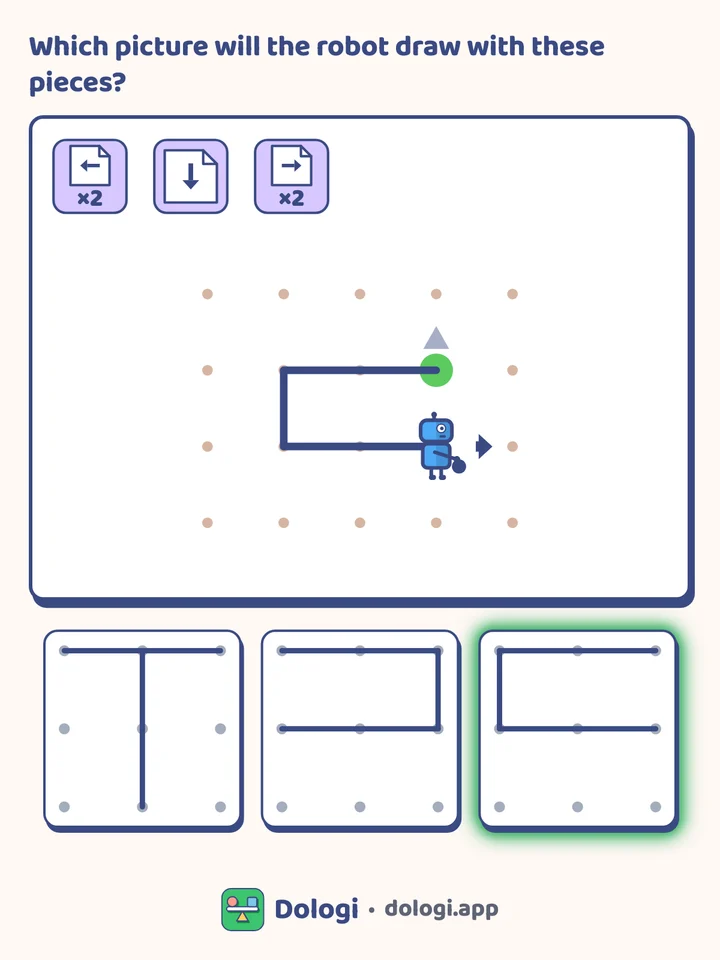
Ages 5–6
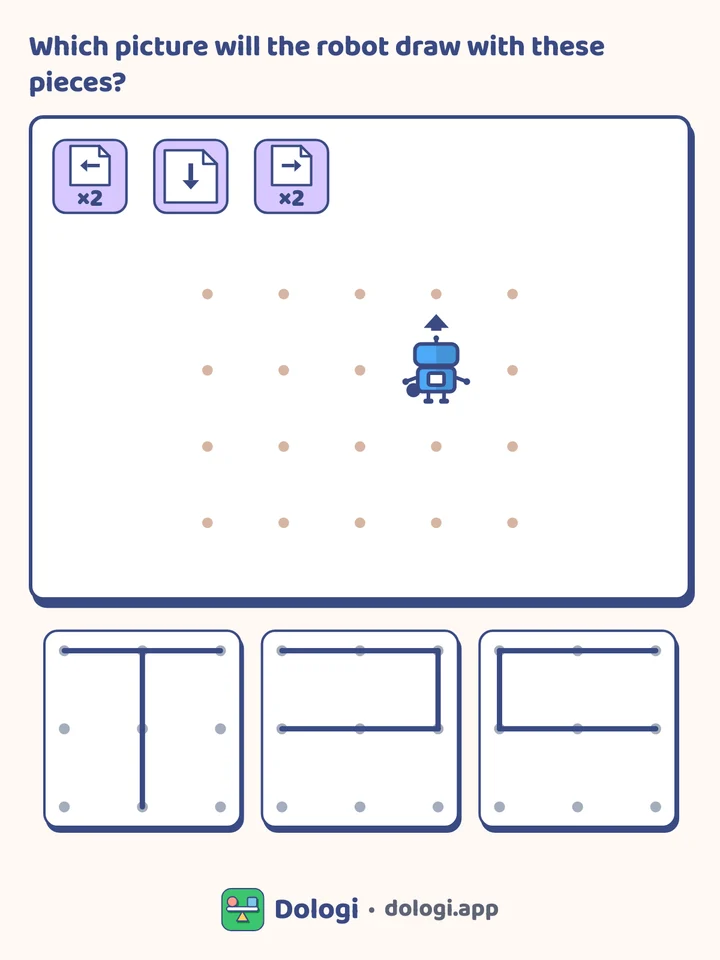
What it builds: Your child reads each command tile in turn and pictures where the robot goes and turns, to work out what shape the line makes. This is an early step into coding: following a chain of instructions without skipping one. Keep playing: say "right 2 squares, down 1 square" and let your child draw along on squared paper.
Puzzle 3: Spinning gears
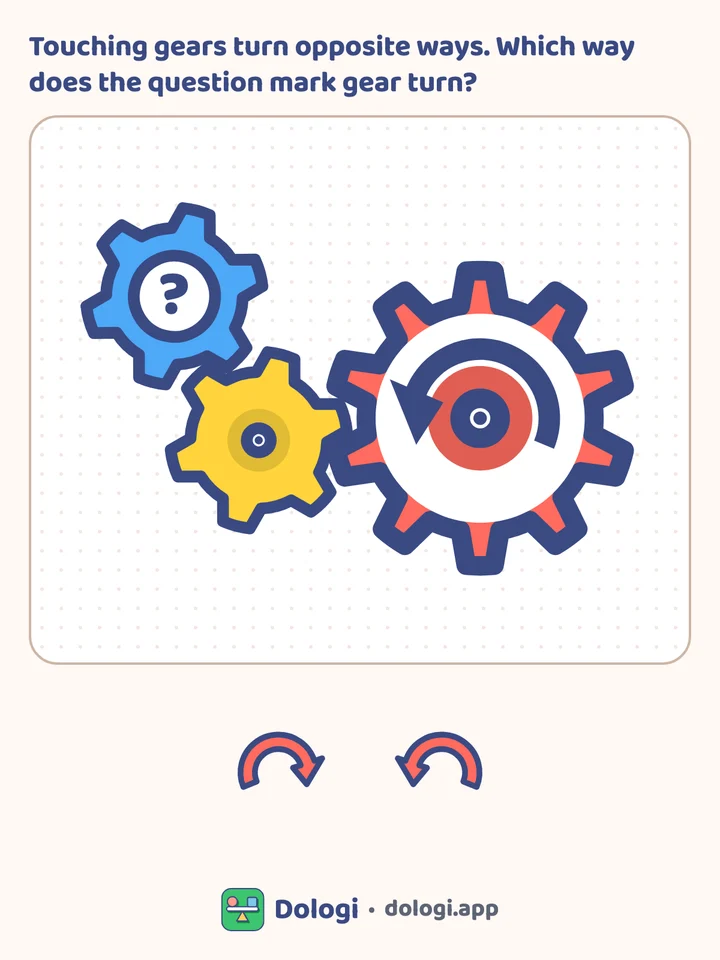
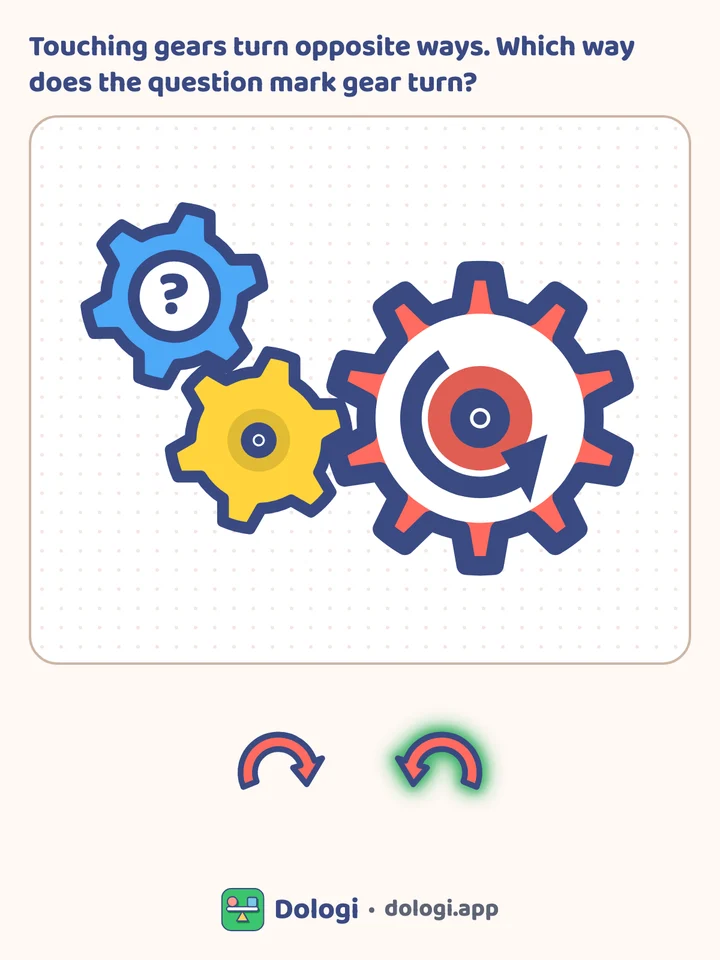
Ages 5–6
What it builds: Your child follows the gears one by one: when one turns, the gear touching it turns the other way, all the way to the gear with the question mark. It trains reasoning along a chain of cause and effect, each step leading to the next. Keep playing: lace your fingers with your child's and turn your hands to see which way the other hand goes.
Puzzle 4: Count the cubes
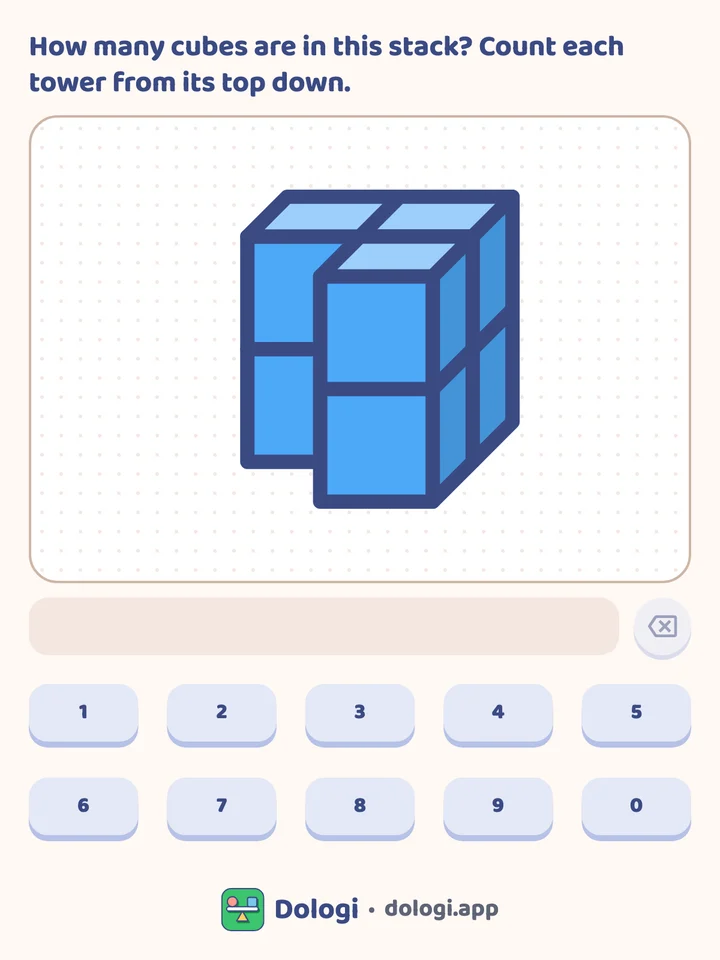
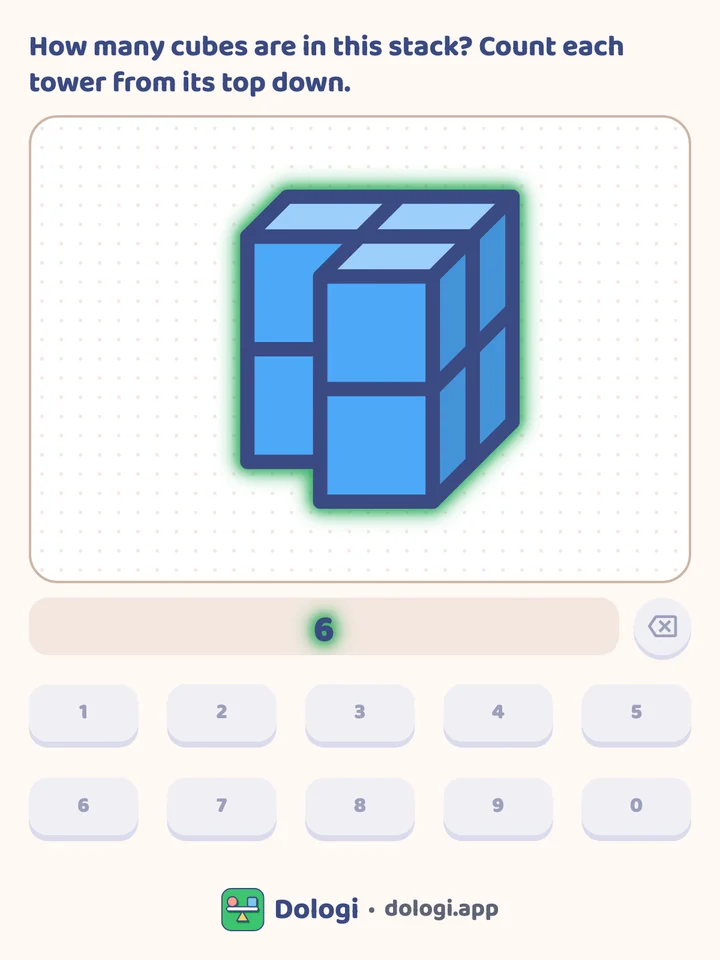
Ages 5–6
What it builds: Your child has to count the cubes hidden behind or underneath too, which means picturing a real stack from a flat drawing. This helps with solid shapes at school and with judging the size of things around them. Keep playing: build a stack of wooden blocks, let your child count by eye first, then take it apart block by block to check.
Puzzle 5: Turn the mirrors
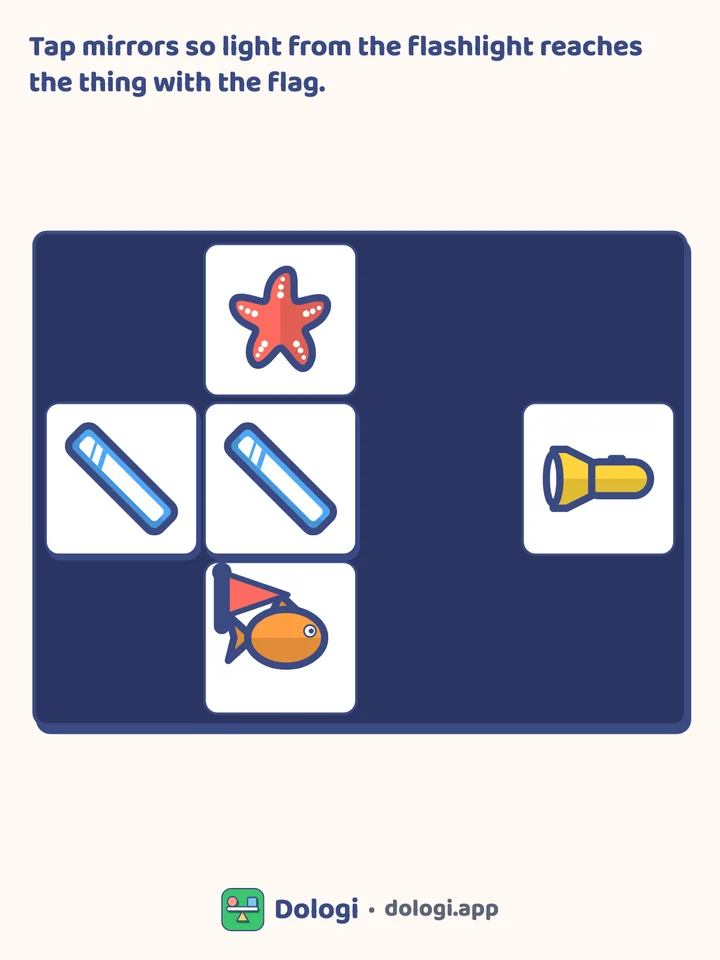
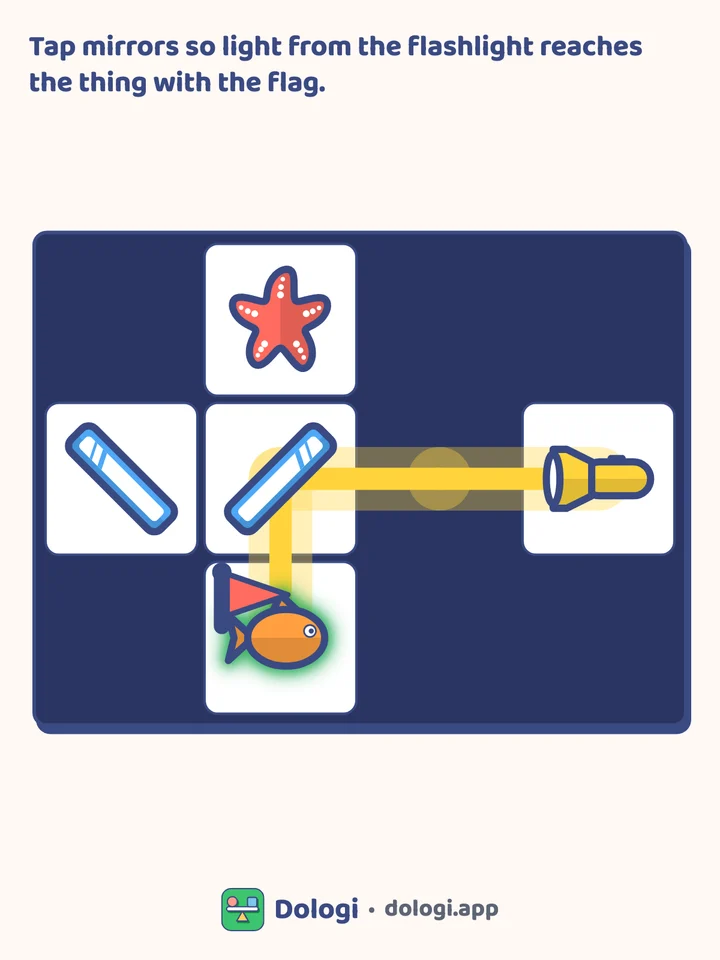
Ages 5–6
What it builds: Light changes direction when it hits a mirror, so your child pictures the path of the beam and finds the mirror to turn so it reaches the right object. It practices testing an idea in the head before acting, instead of guessing. Keep playing: turn off the lights, shine a flashlight at a small mirror together and try to land the spot of light on a toy.
Puzzle 6: Secret map message
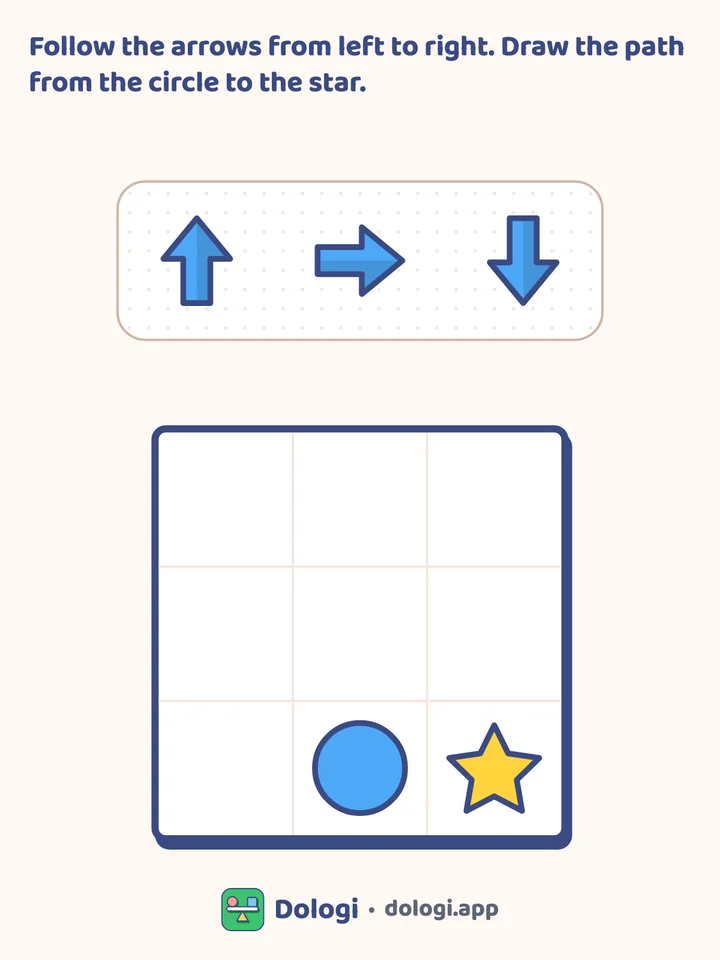
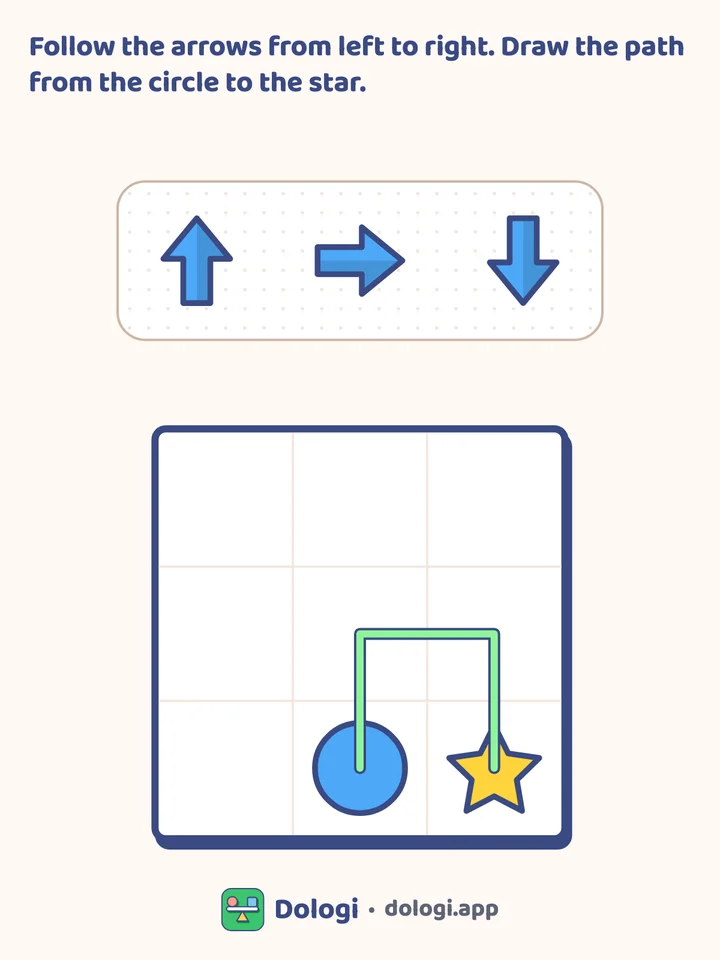
Ages 5–6
What it builds: Each arrow is one step to the next square, and your child has to follow them in order from left to right. It practices following directions and keeping the order, just like following steps in a lesson or a recipe. Keep playing: hide a small treat and draw a secret message of arrows for your child to follow across the floor tiles.
Puzzle 7: Seen from each side
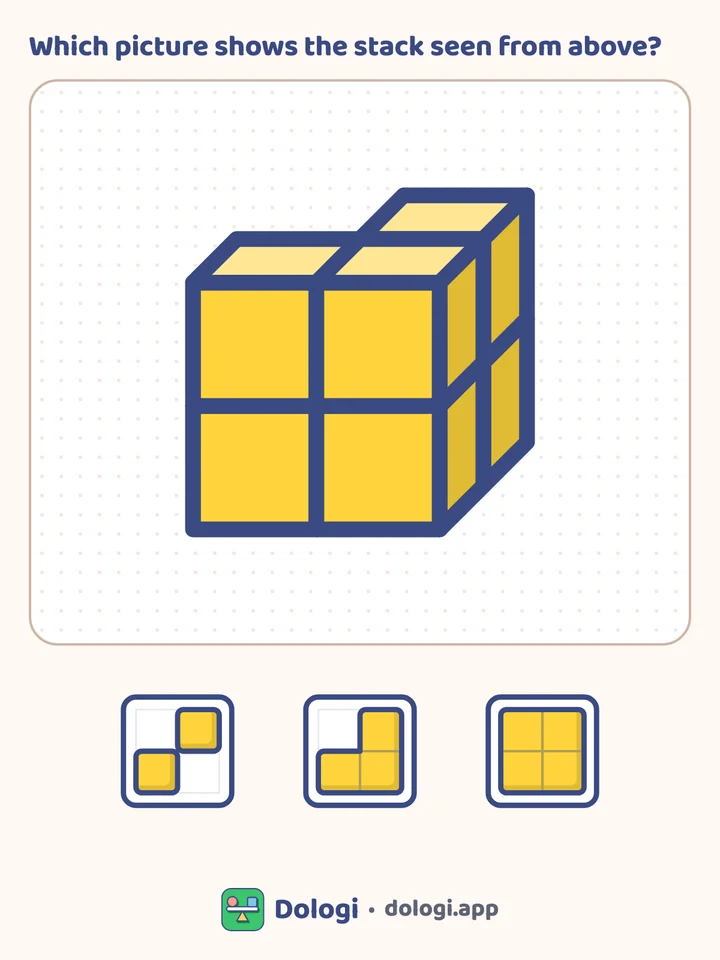
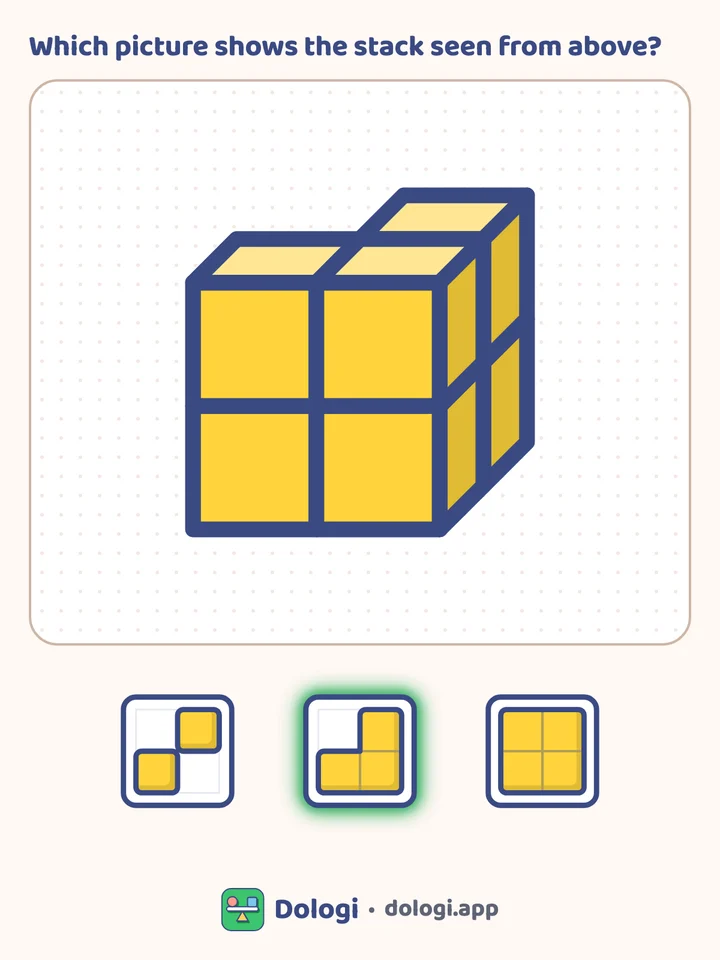
Ages 5–6
What it builds: Your child imagines looking down on the stack from above: only the tops show, and a square is colored wherever there is a cube. Switching viewpoints in the head is the groundwork for reading plans and maps, and for understanding what others see from where they stand. Keep playing: set a few cups on the table, let your child stand on a chair, look down and draw what they see.
Puzzle 8: Blocks and holes
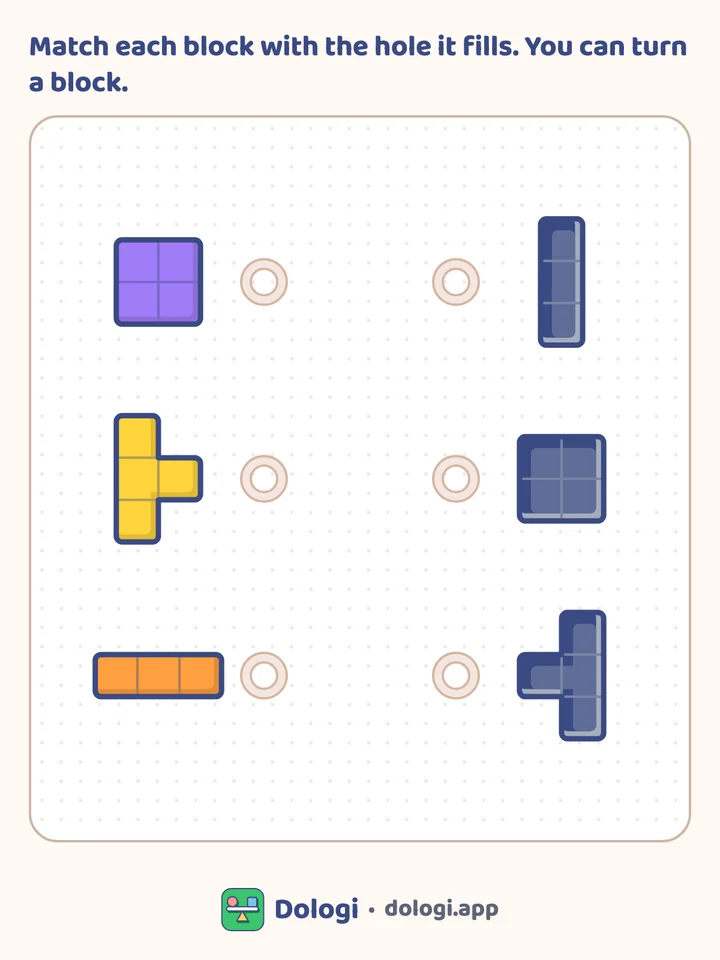
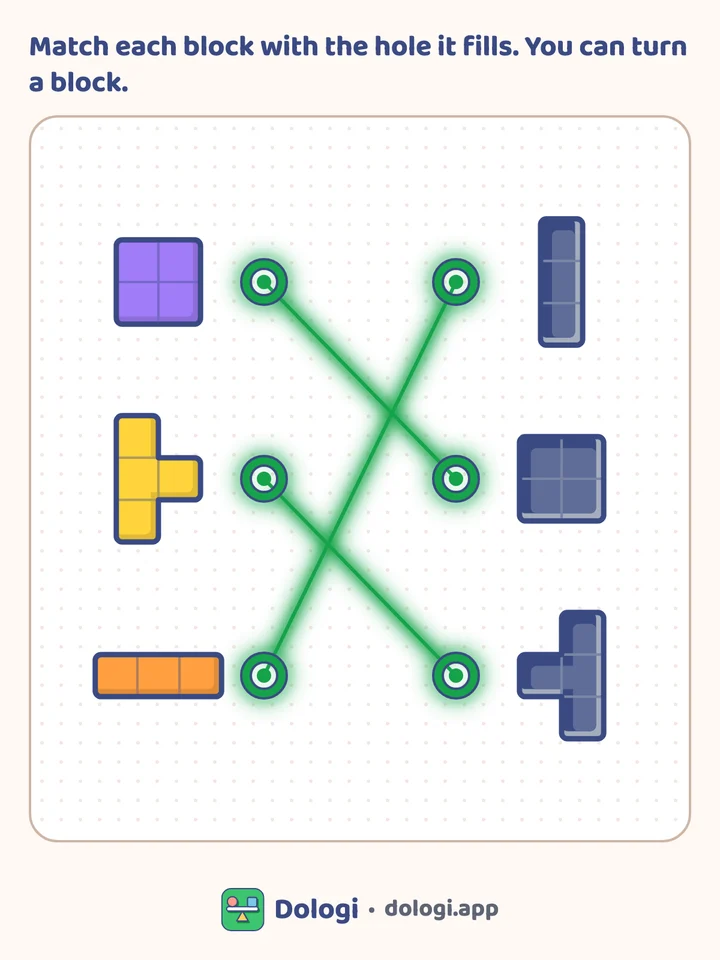
Ages 5–6
What it builds: Your child compares each block's shape with each hole, remembering that blocks can be turned, so they rotate the blocks in their head to test the fit. Mental rotation helps with building toys, packing things into boxes and later with geometry. Keep playing: cut a few shapes from cardboard and matching holes in another sheet for your child to fit.
Puzzle 9: Drop the block
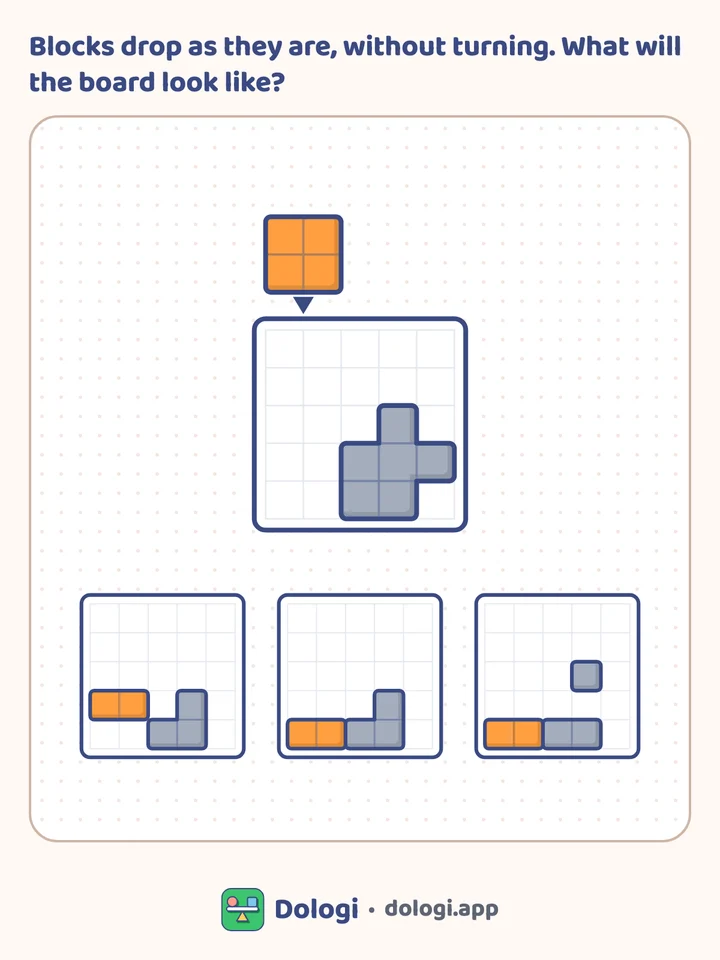
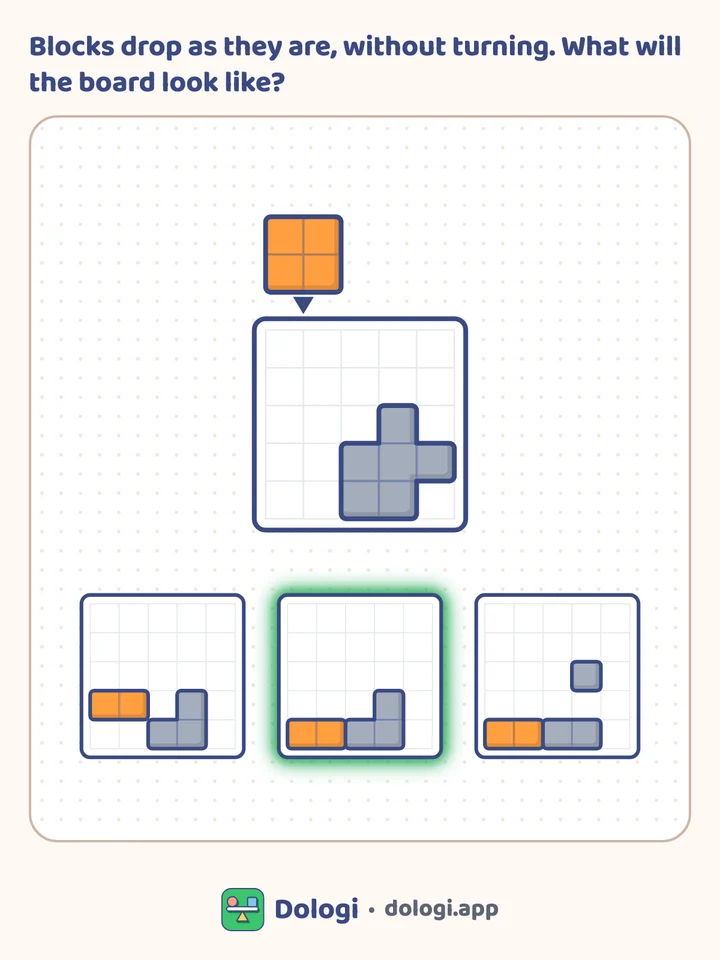
Ages 5–6
What it builds: The block falls straight down and stops when it hits the bottom or another block, so your child pictures its fall and where it comes to rest. It trains predicting the result of a movement, useful in sports as much as in tidying up. Keep playing: stack wooden blocks into steps, ask where a new block will land if dropped at a spot, then drop it to check.
Puzzle 10: Shapes inside a figure
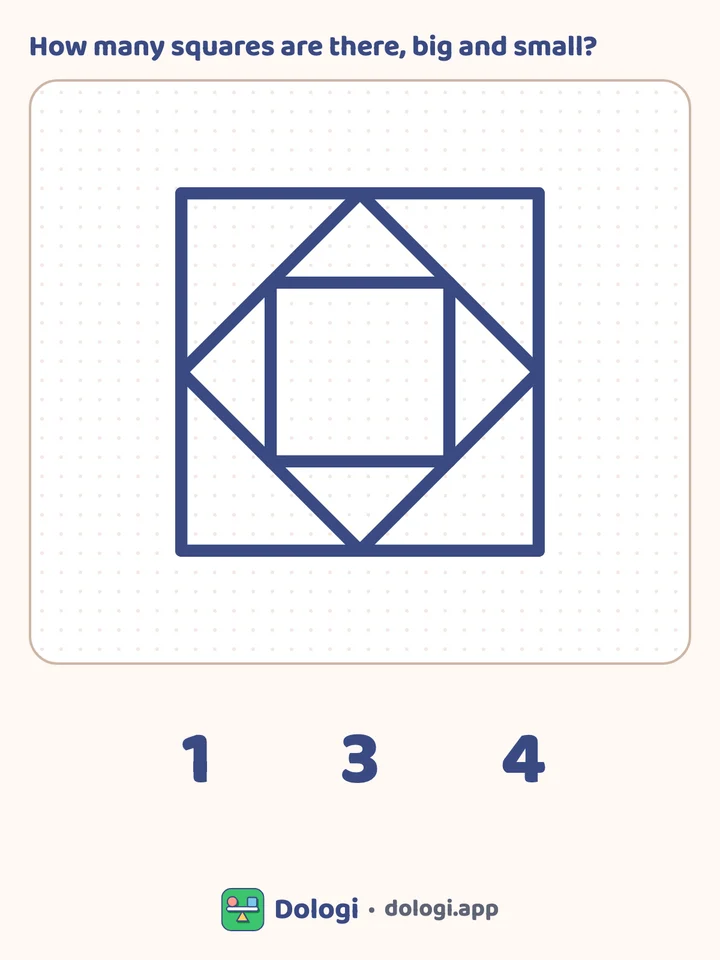
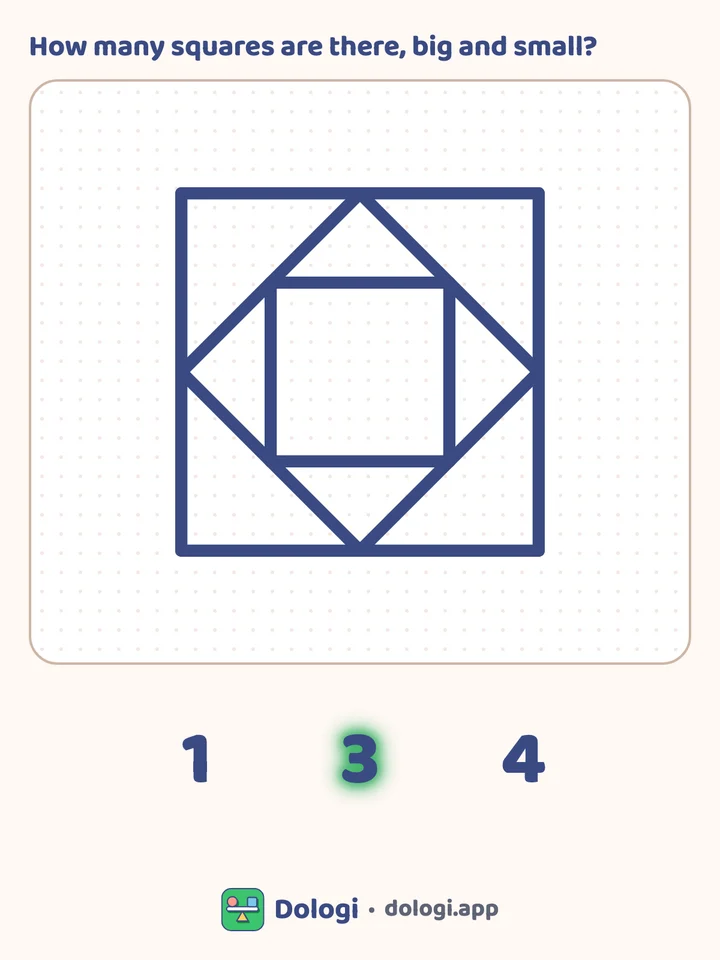
Ages 5–6
What it builds: Big shapes can contain small ones and shapes can overlap, so your child has to count in an orderly way to miss none and count none twice. Counting systematically is a good habit for every math problem ahead. Keep playing: draw a square split into four, then count together how many squares there are in all.
Did your child enjoy these spatial puzzles? The Dologi app has many more of the same kinds, getting harder with age and with how your child plays, so a little practice each day never gets boring.