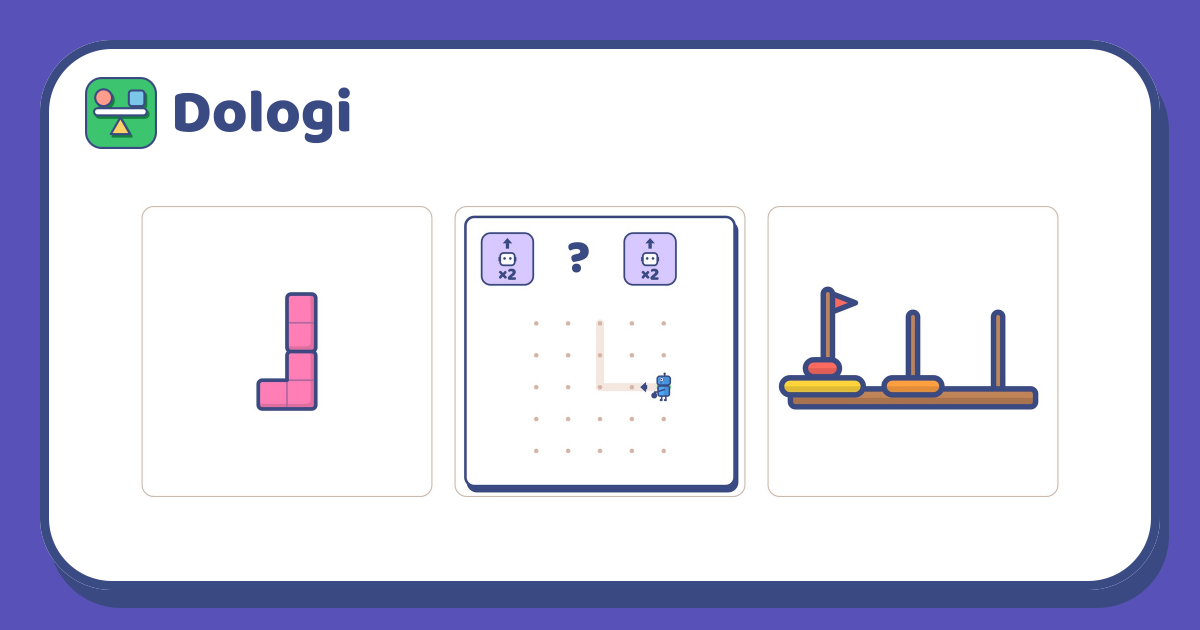
At ages 5–6, children start to tell left from right, understand that someone facing them has their left on the other side, and enjoy games where they think a few steps ahead. The five puzzles below follow on from our earlier post for this age, with new kinds: a robot that turns, blocks that fit a shape, a missing command, a rabbit hopping both ways and a tower to move. All come straight from the Dologi app and go from easy to harder.
How to use this post: show your child one picture at a time and let them point, turn their body like the robot or think out loud before answering. The answer is behind the "Show answer" button under each picture. If a puzzle feels hard, try it with real things (wooden blocks, small plates, your child's own body) before opening the answer.
Puzzle 1: Which way now?
Ages 5–6
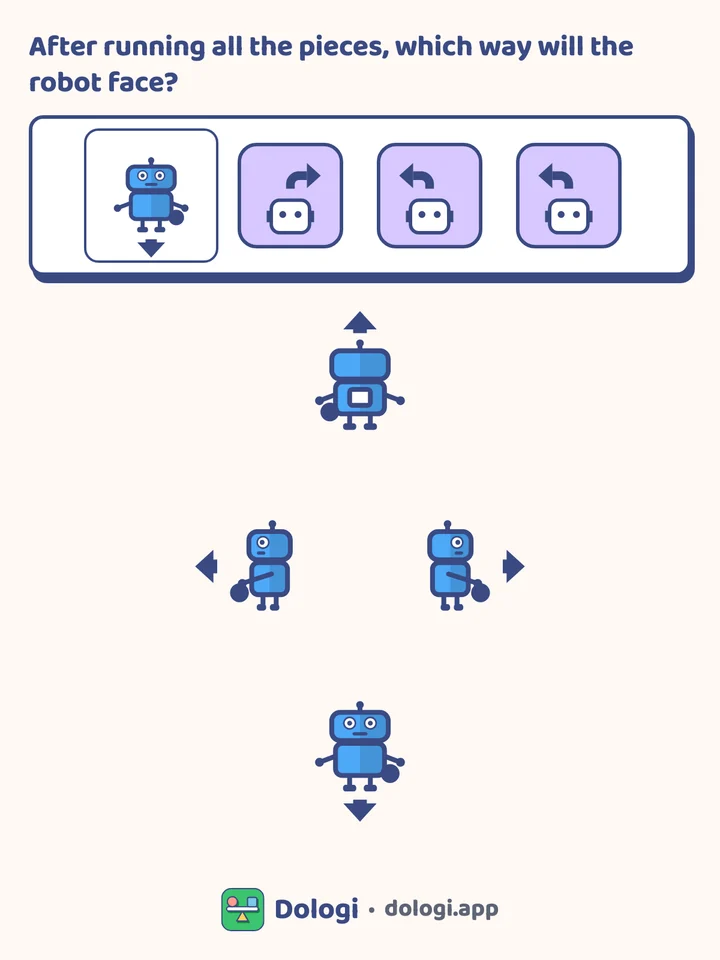
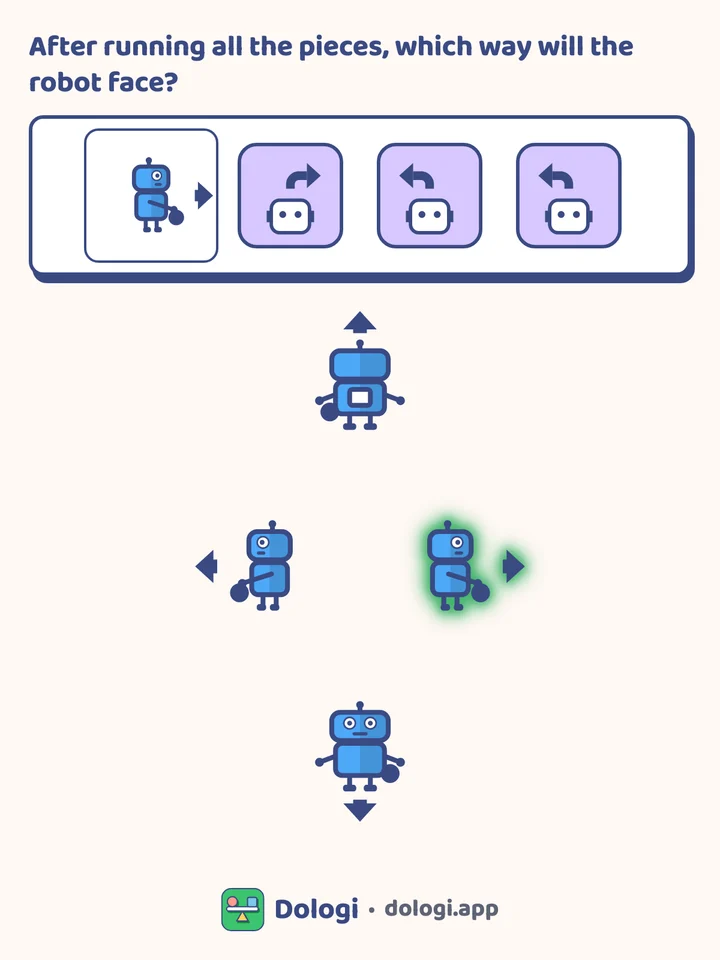
What it builds: The robot turns right and left from its own point of view, so when it faces your child, its right is on your child's left. Putting themselves in the robot's place helps children understand what others see from where they stand and give better directions. Keep playing: your child stands up, you say "turn right, turn left, turn left", they turn along and then say which object in the room they are facing.
Puzzle 2: Block builder
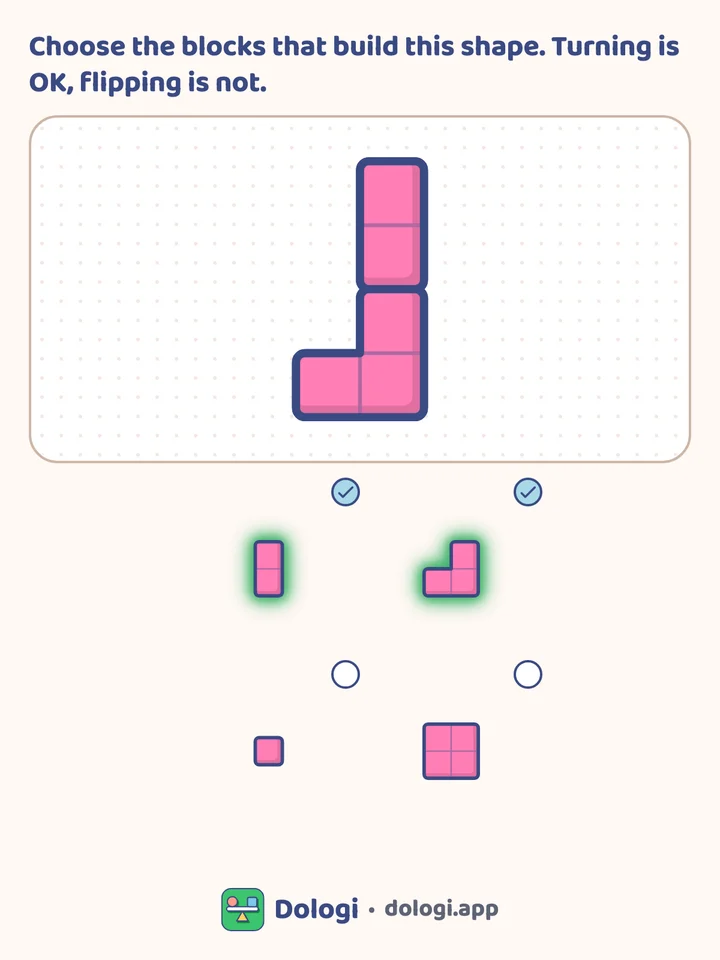
Ages 5–6
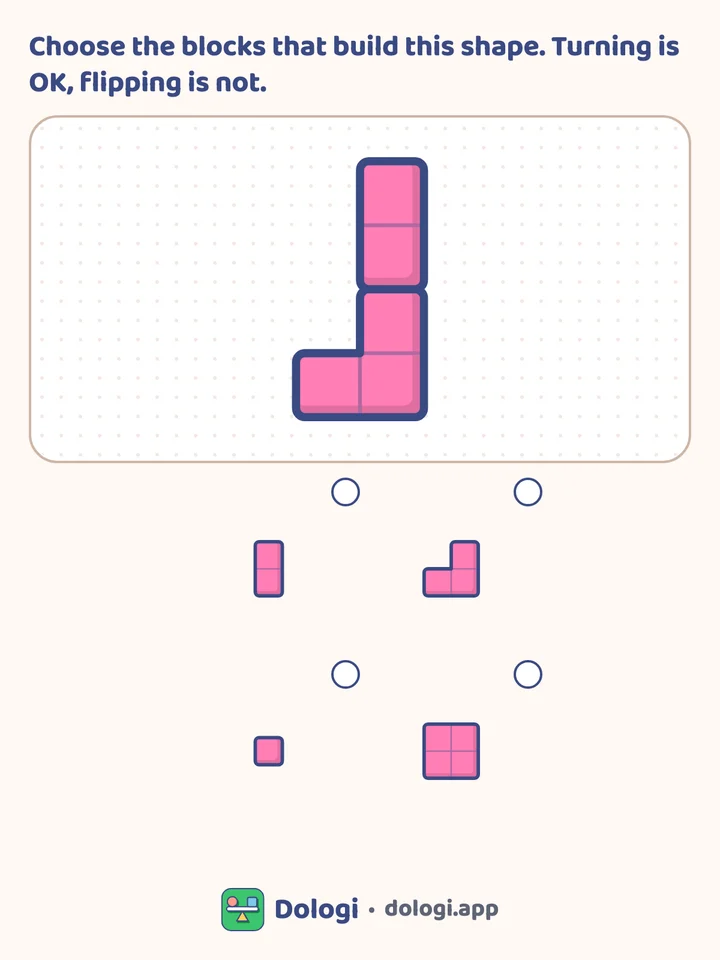
What it builds: Your child looks at the big shape, imagines how it could be cut into pieces, and picks the blocks that fit together exactly with no square left over. Splitting a shape into smaller parts is what they use for jigsaws, for counting squares and later for working out area. Keep playing: draw a shape with squares on squared paper, cut out a few paper pieces, and let your child choose the ones that cover the shape.
Puzzle 3: Which piece is missing?
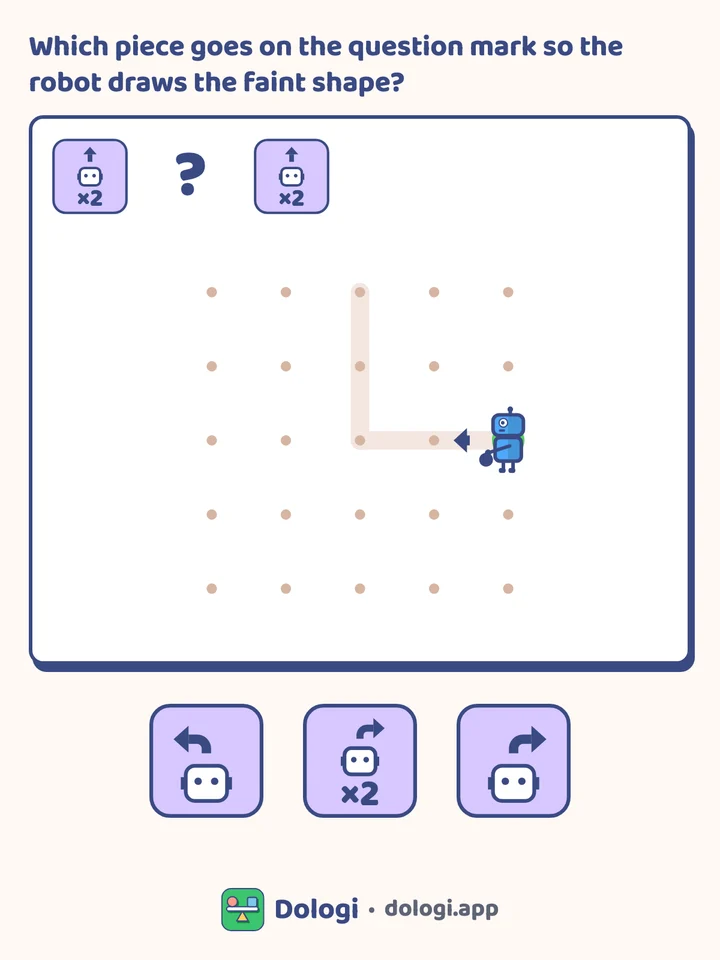
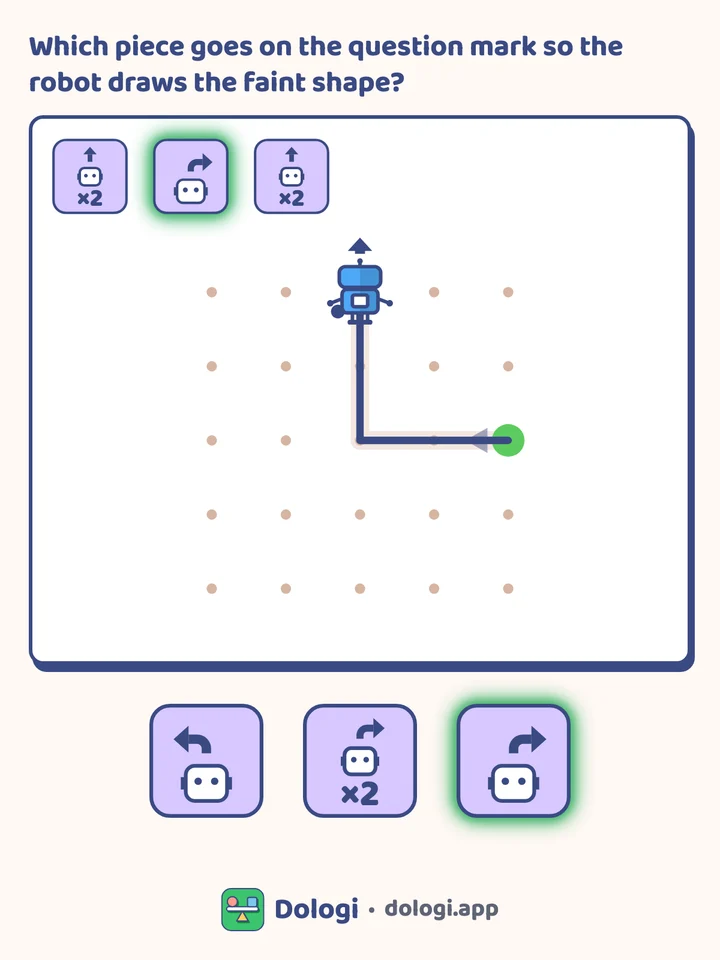
Ages 5–6
What it builds: Your child compares the robot's path with the faint shape on the paper to see that a change of direction is needed between the two straight parts, then works out which way the robot is facing to pick the right tile. Finding the missing step in a sequence trains orderly thinking. Keep playing: walk an L-shaped route on the floor, let your child write down the steps, then hide one step and let them guess which one it was.
Puzzle 4: Rabbit hop
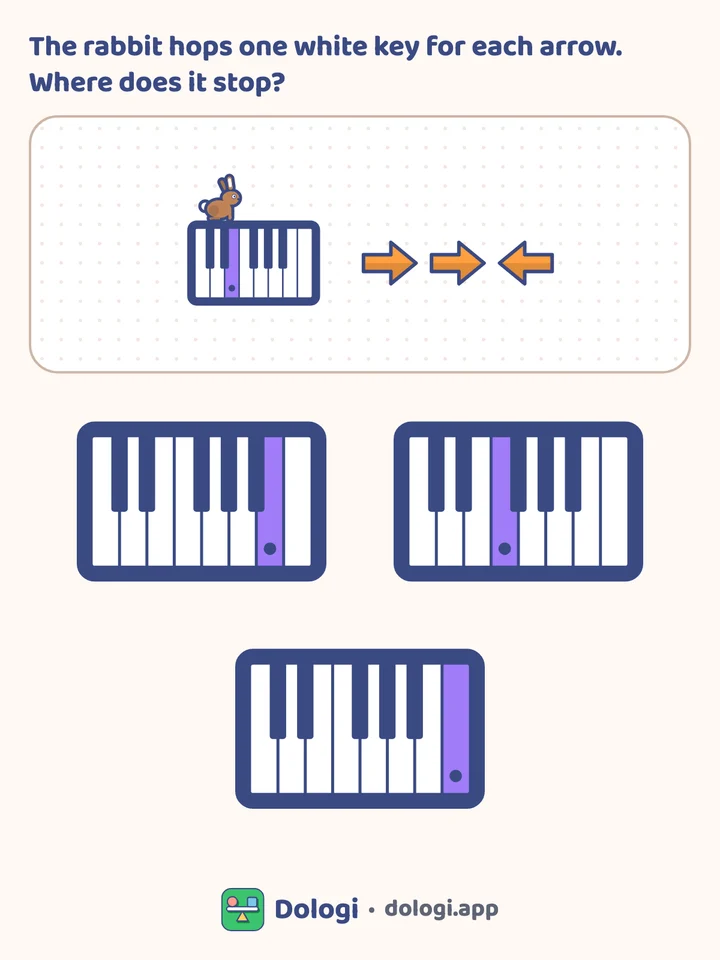
Ages 5–6
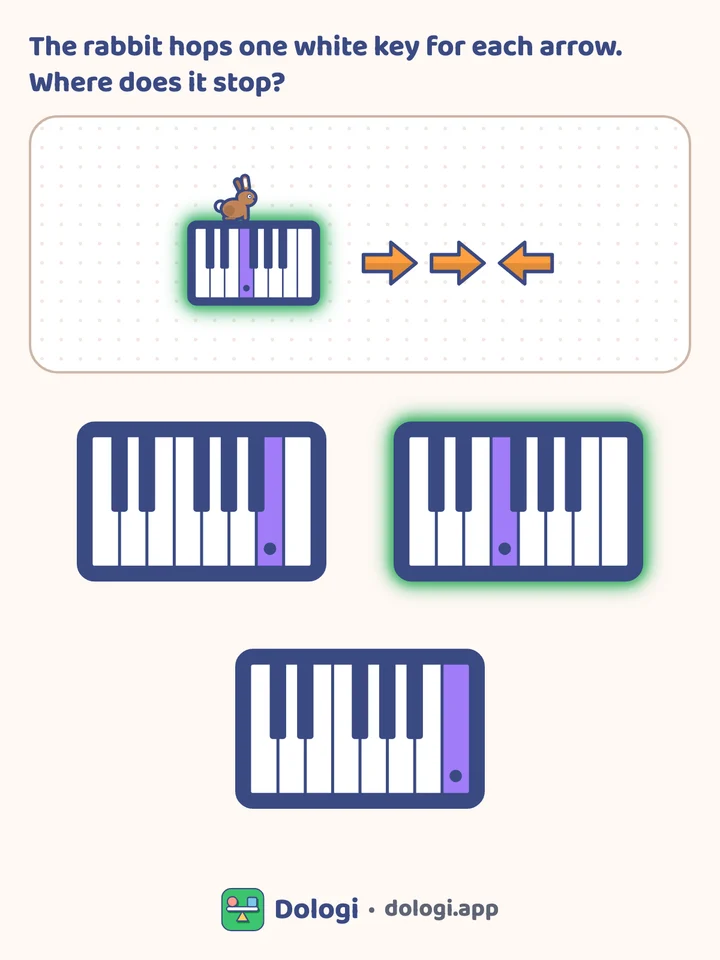
What it builds: This time there are arrows forward and back, so your child counts each hop to the right and to the left over the white keys and skips the black ones. Counting on and counting back is how children get used to adding and subtracting on a number line. Keep playing: draw a row of squares outside or use floor tiles, hold up a forward or back arrow card, let your child hop and say which square they are on.
Puzzle 5: Move the tower
Ages 5–6
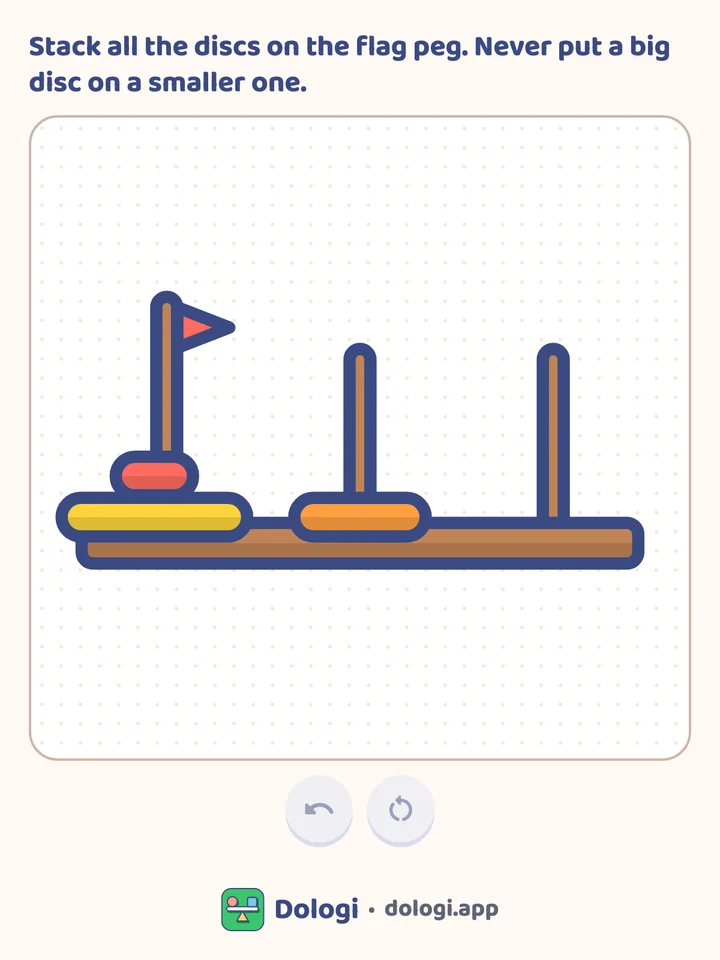
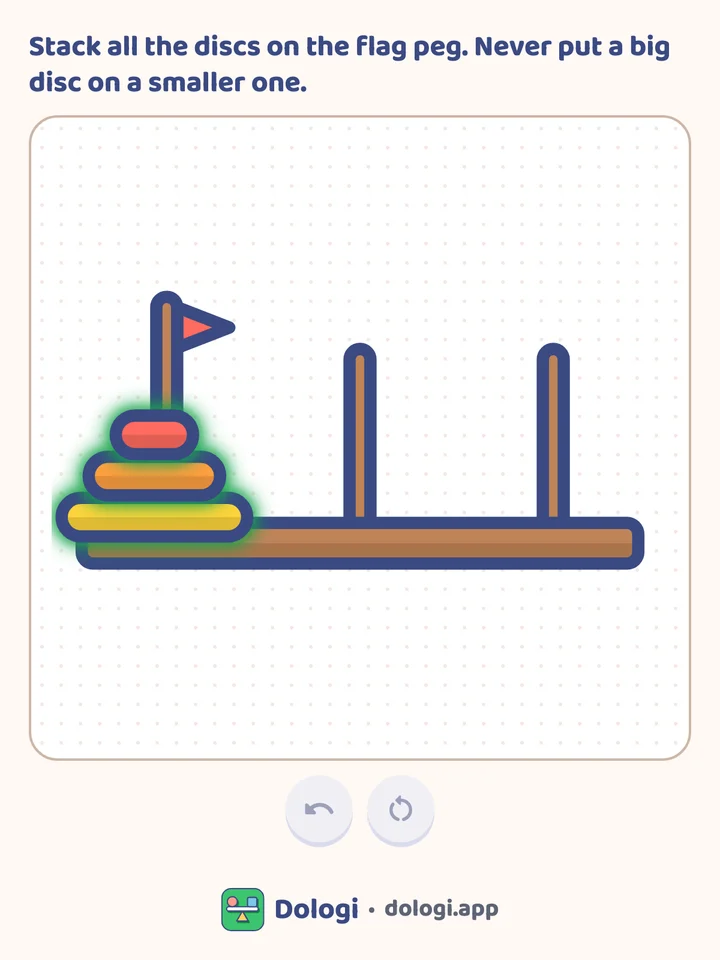
What it builds: Your child may move only one disc at a time and never put a big disc on a smaller one, so they need the spare peg as a waiting spot and must think a few moves ahead. Planning before acting and using a temporary spot is a very useful problem-solving skill. Keep playing: stack three plastic plates or three books of different sizes in one spot, mark two other spots, and let your child move the whole stack following the same rule.
Did your child enjoy these spatial puzzles? The Dologi app has many more of the same kinds, getting harder with age and with how your child plays, so a little practice each day never gets boring.