Spatial thinking is how children picture what a thing will look like when it is turned, flipped, folded or moved, without touching it. At ages 5–6, children can hold a shape in their head and try turning it, predict the path of a light beam or a train, and plan a few moves ahead. The ten puzzles below follow on from our two earlier posts for this age, with new kinds: a beam bouncing off mirrors, turned and flipped blocks, sliding picture pieces, driving a car, folding and punching paper, a train heading for a station, gears, painting a turning picture and pushing a box. All come straight from the Dologi app and go from easy to harder.
How to use this post: show your child one picture at a time and let them trace the path with a finger, turn their hand or think out loud before choosing. The answer is behind the "Show answer" button under each picture. If a puzzle feels hard, try it with real things (a sheet of paper, wooden blocks, a small mirror) before opening the answer.
Puzzle 1: Light beam
Ages 5–6
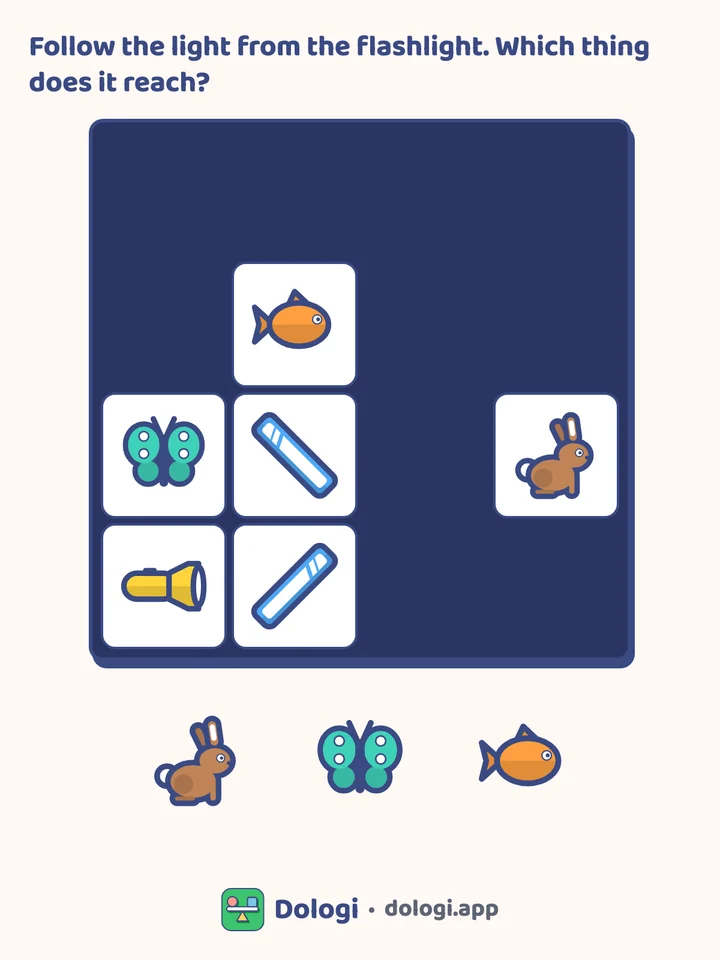
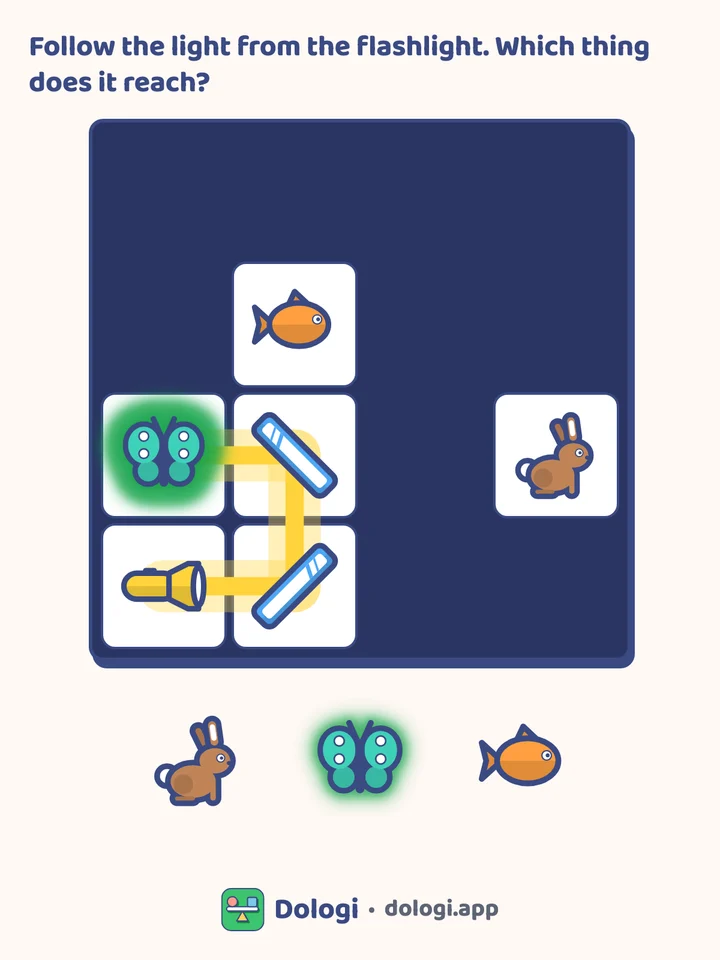
What it builds: Your child follows the light from the flashlight, and each time it meets a slanted mirror, the beam changes direction the way the mirror leans. Following a path through several turns builds longer focus and shows that light travels straight and only changes course when something is in the way. Keep playing: tonight, use a flashlight and a small mirror and let your child tilt the mirror until the spot of light lands on a toy you pick.
Puzzle 2: Odd block out
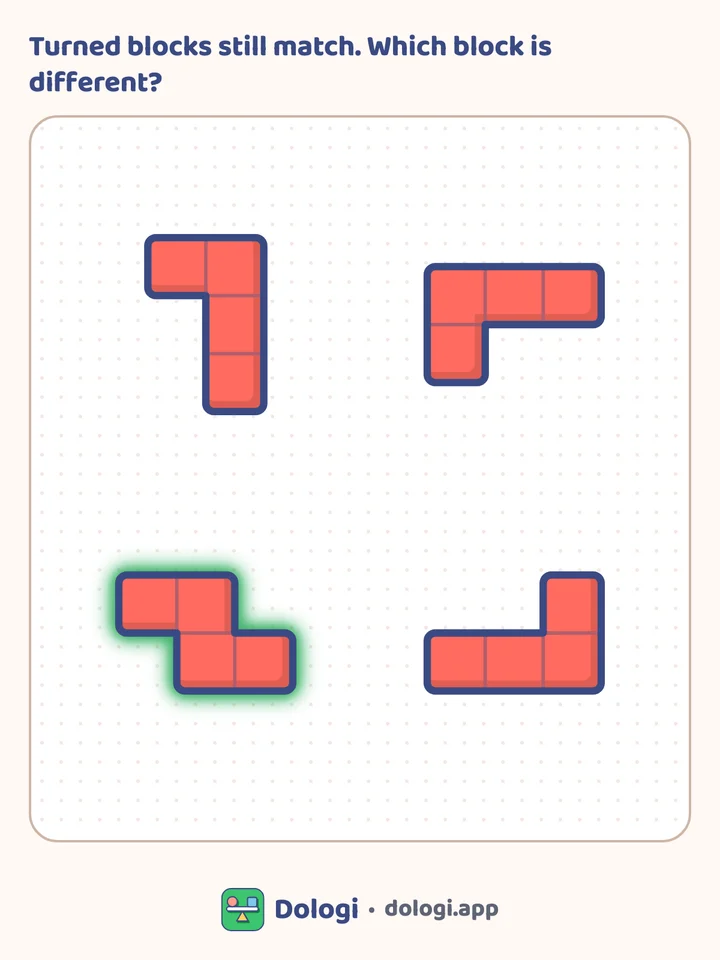
Ages 5–6
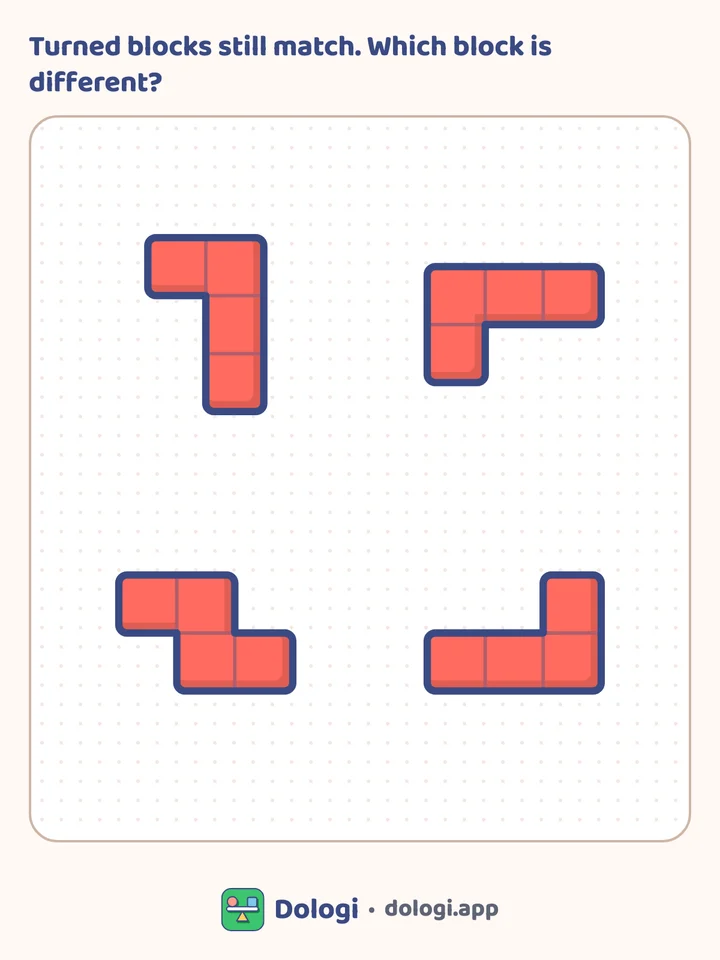
What it builds: The four blocks look almost alike, but three are the same block turned around, while one is flipped like a mirror image. Your child has to turn each block in their head to compare, the same skill they use to tell b from d or 6 from 9. Keep playing: cut an L shape out of paper, turn it on the table, then flip it over, and ask your child each time whether it is still the same shape.
Puzzle 3: Turned block
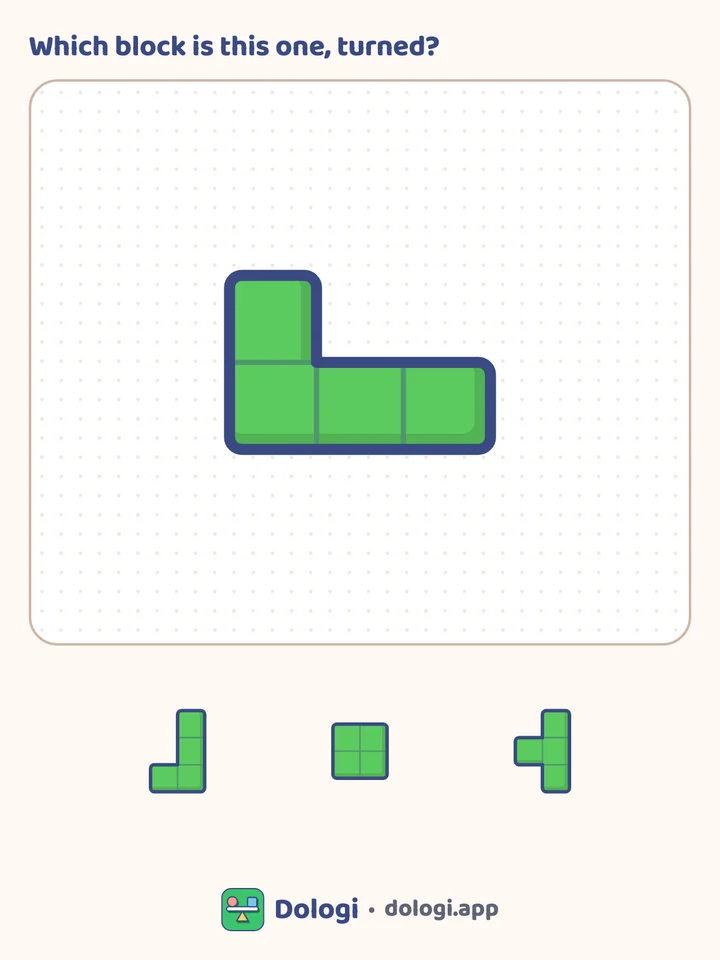
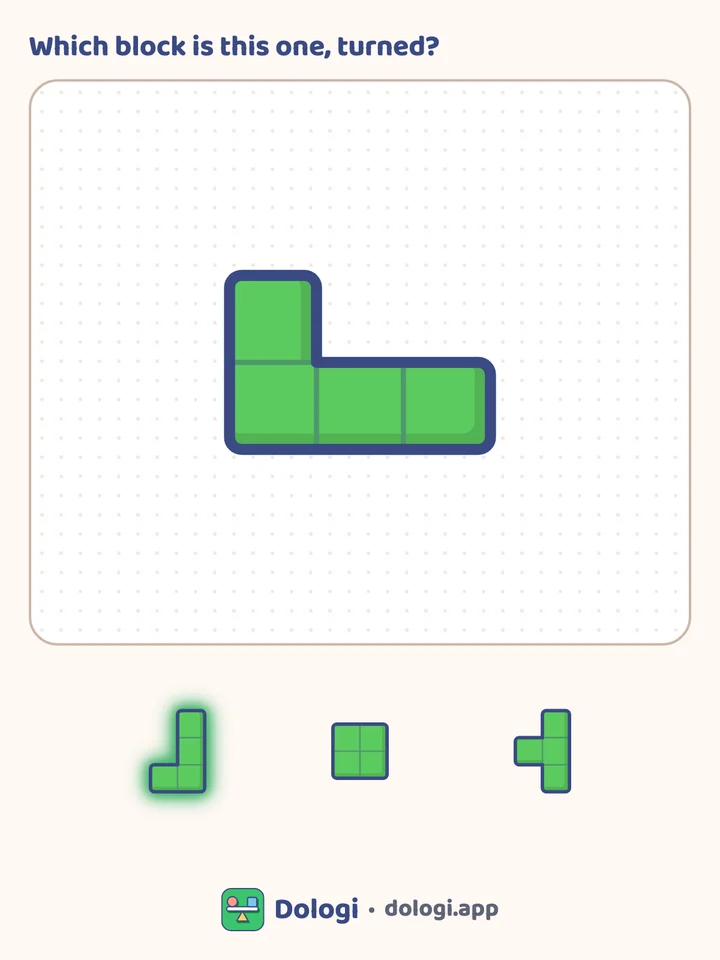
Ages 5–6
What it builds: Your child holds the big block in mind and turns it a quarter at a time to find the small block below that matches, even though it lies a different way. Recognizing the same object after it has turned makes jigsaws, packing things into boxes and reading maps easier. Keep playing: build a shape from a few wooden blocks, turn it around, and ask your child whether it is still the shape from before.
Puzzle 4: Slide the picture
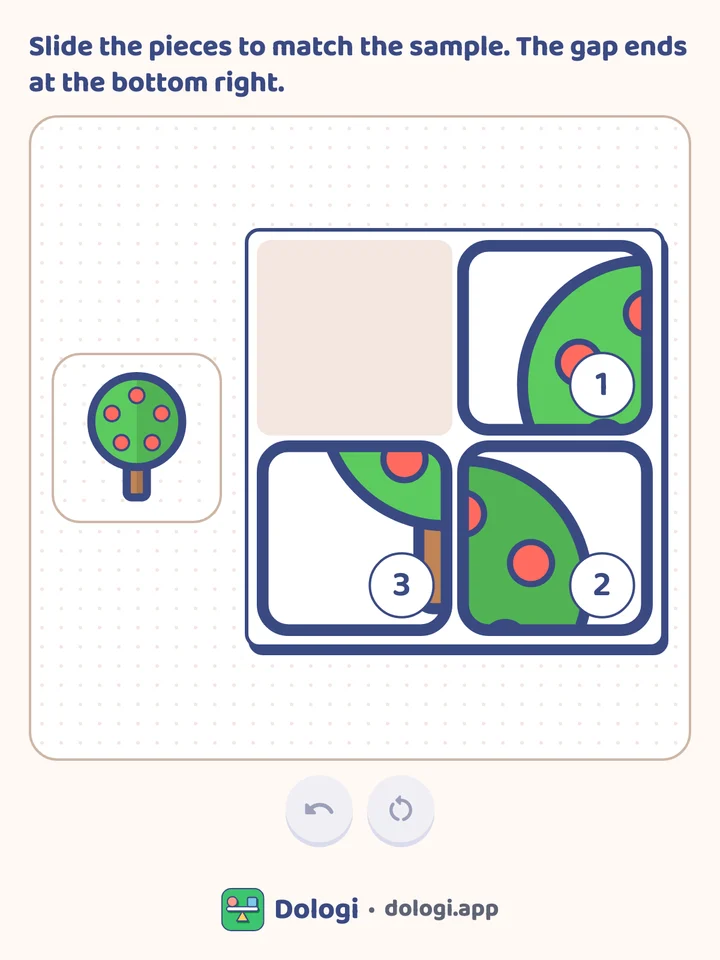
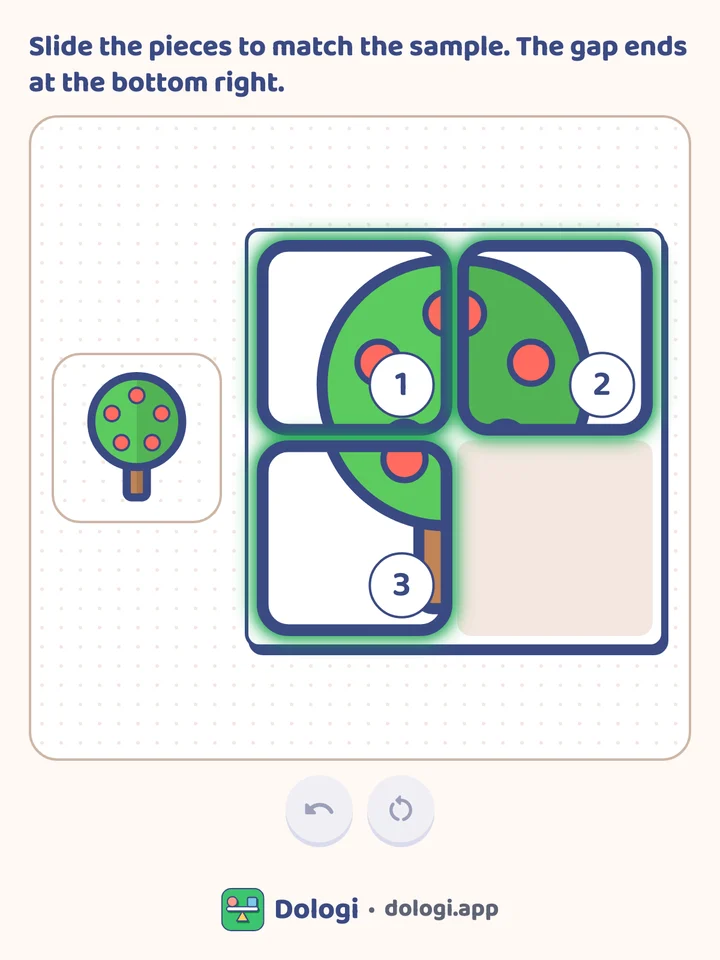
Ages 5–6
What it builds: Your child compares each piece with the small sample picture, then works out which piece to slide into the gap first and which next, so the whole picture joins up. This puzzle trains thinking a few steps ahead, because every slide leaves a new gap. Keep playing: put three cups on four spots on the table, allow only sliding a cup into the empty spot next to it, and challenge your child to get a cup to the spot you point to.
Puzzle 5: Drive the car
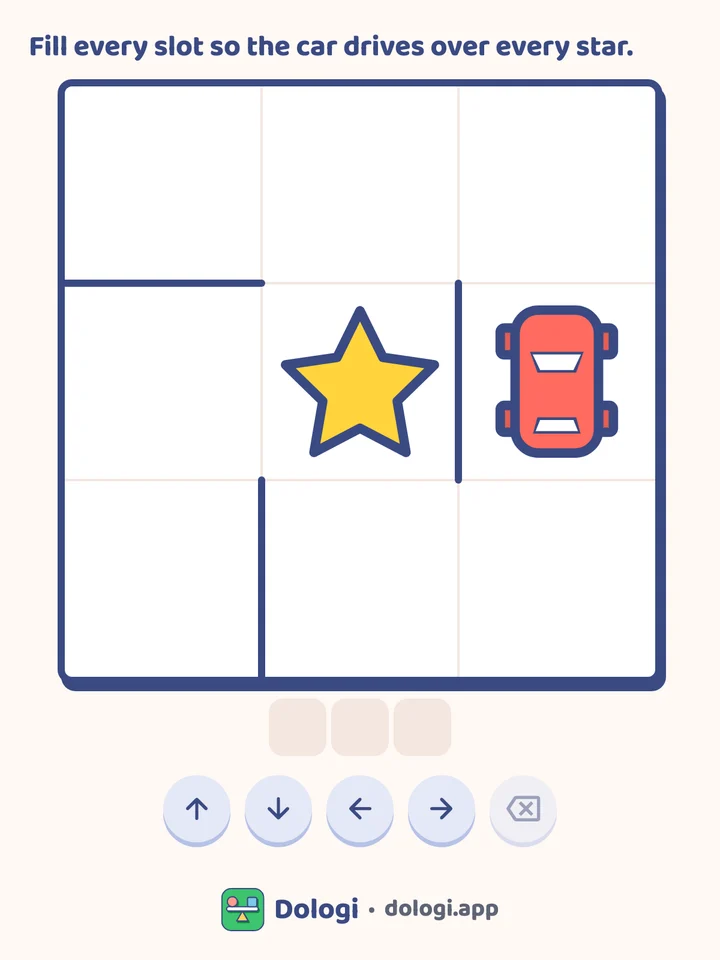
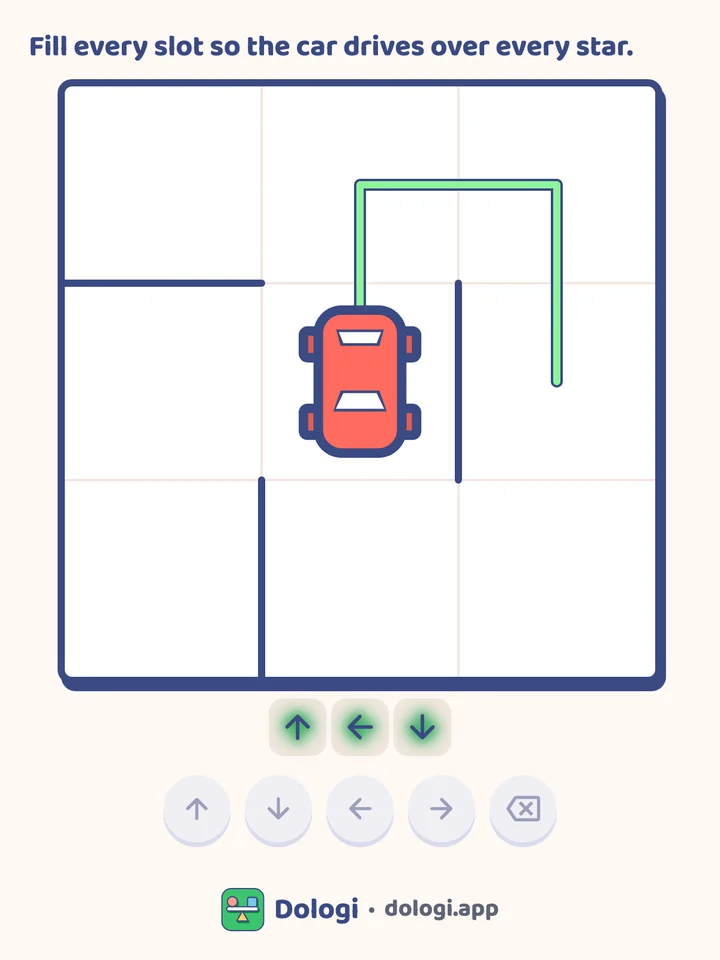
Ages 5–6
What it builds: Your child looks at the way from the car to the star, notices the walls in the way, and fills in each arrow in the order the car must go. Turning a route into a short list of commands is a first step into coding, and it also helps children retell events in the right order. Keep playing: draw a big grid outside, put a toy at the end, let your child write the arrows on paper, and then you walk exactly as the arrows say.
Puzzle 6: Fold and punch
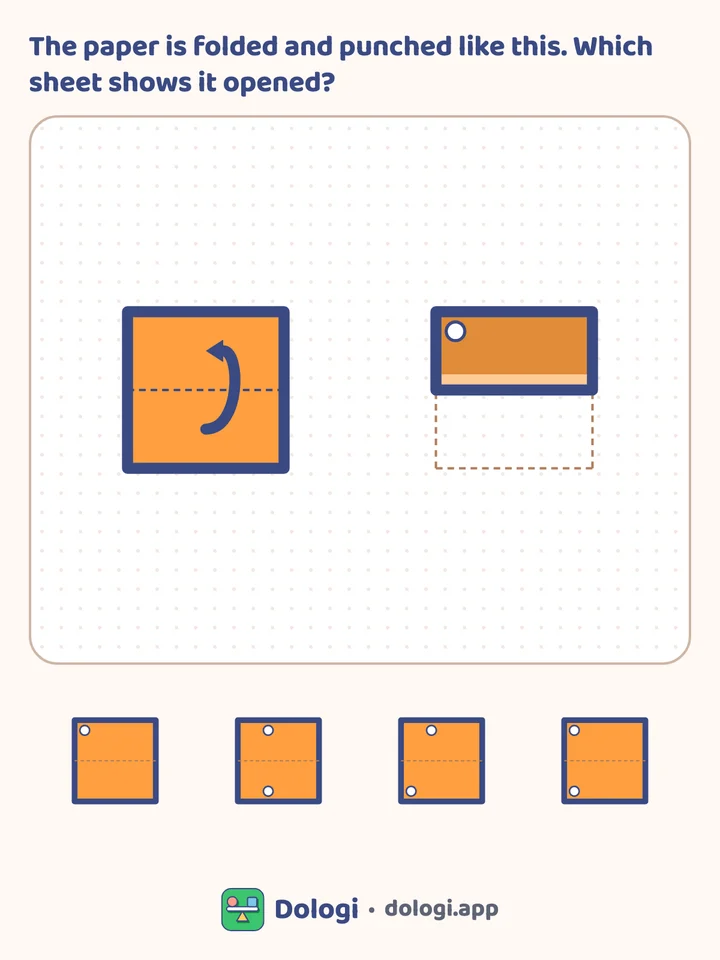
Ages 5–6
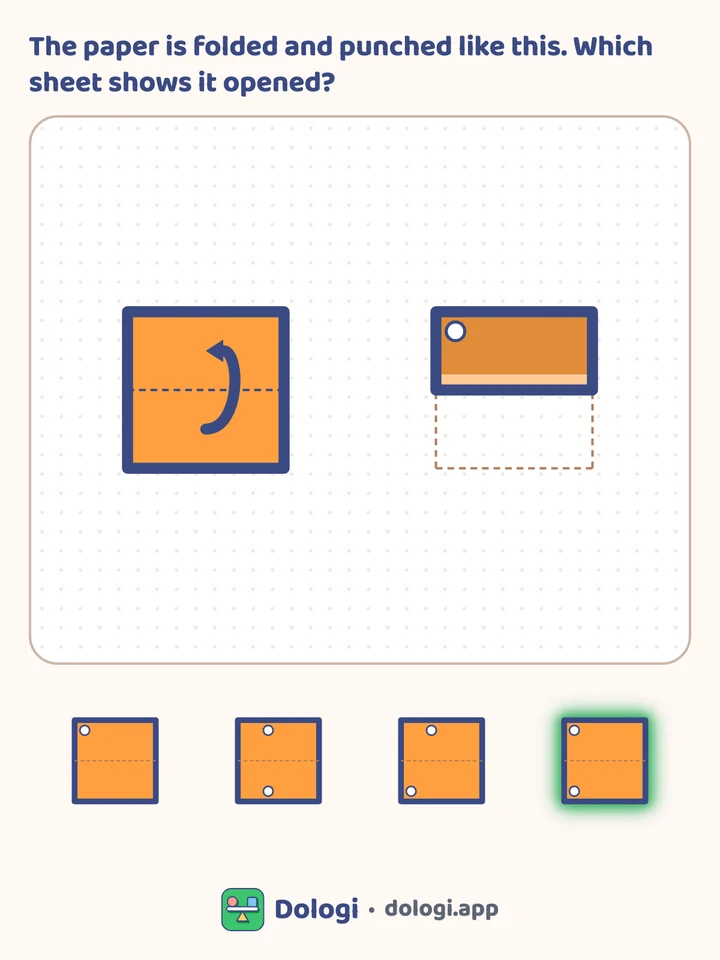
What it builds: Your child looks at the fold and the punched hole, then has to picture the paper opening up: once the sheet is unfolded, where will the holes from the folded part be? Imagining folding and unfolding is the root of symmetry and helps with folding clothes, making cards and paper crafts. Keep playing: fold a sheet of paper in half, let your child poke a hole with a pencil, guess where the holes will be when it opens, then unfold it to check.
Puzzle 7: Which station?
Ages 5–6
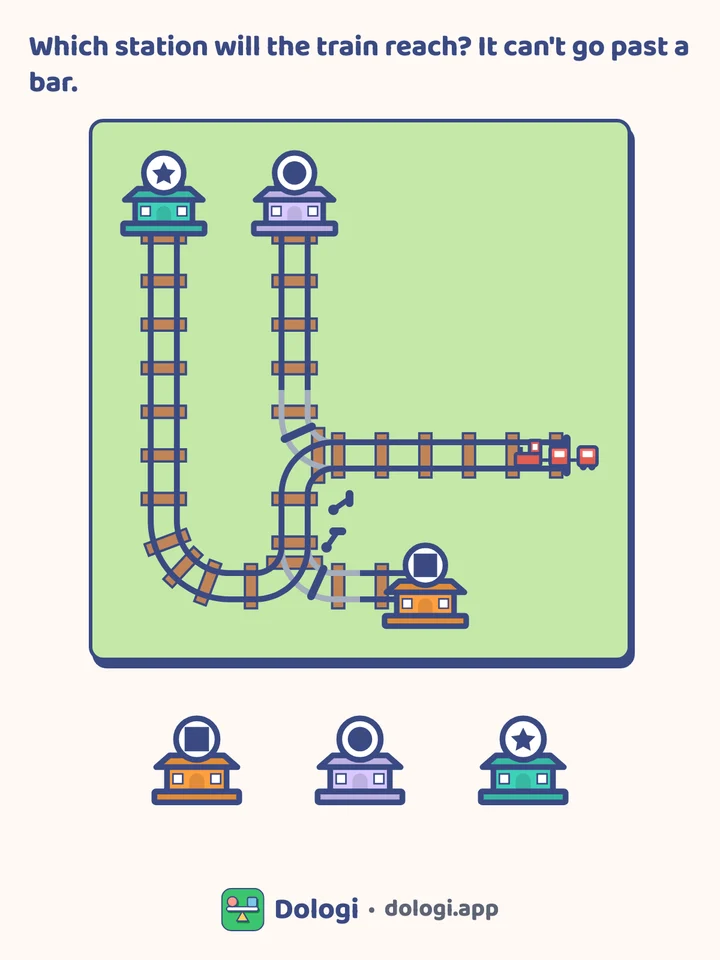
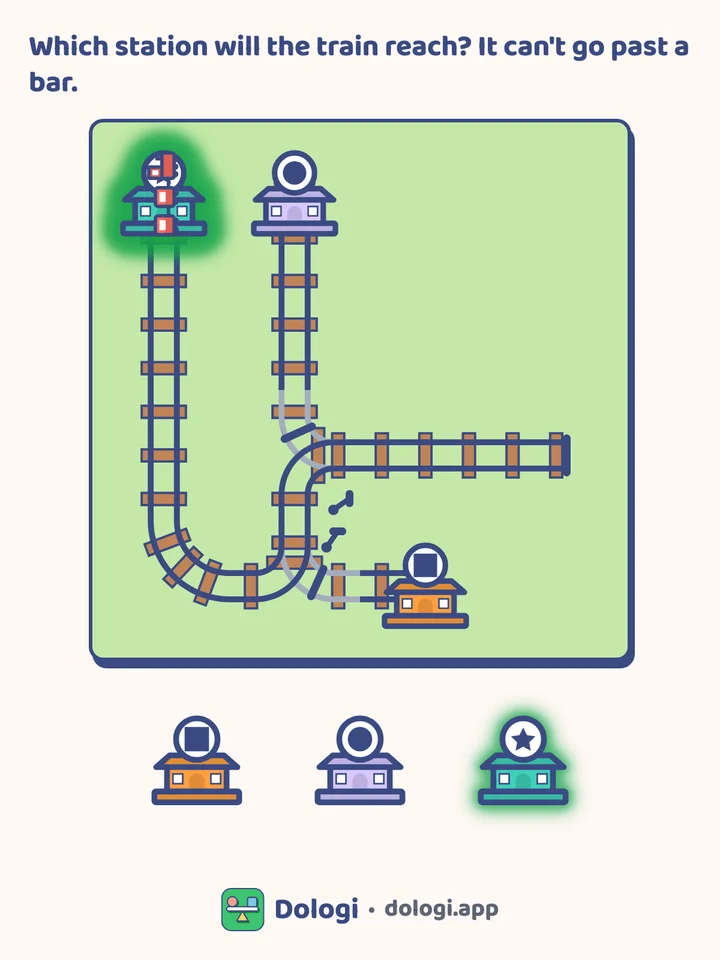
What it builds: Your child traces the track from the train, checks which way each switch points and where the bars are, and only then predicts the station. Following a system with several branches trains step-by-step reasoning by the rules, just like finding the way in a playground or on a map. Keep playing: lay out a toy track or chalk a road with one fork, use a shoe as the switch, let your child set it and guess where the toy car will go.
Puzzle 8: Fit the gear
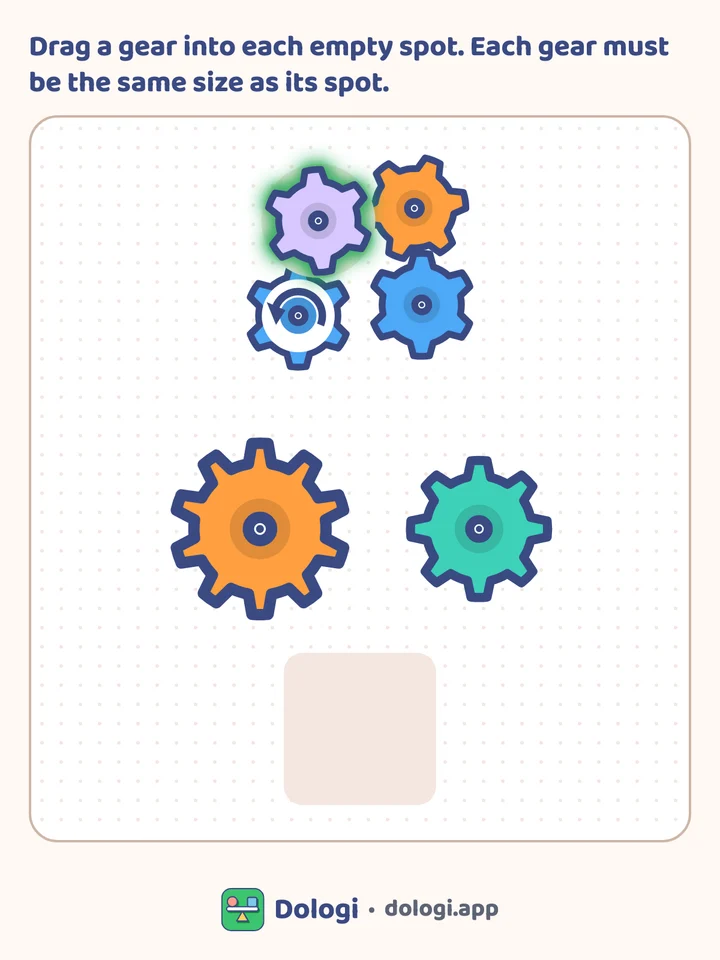
Ages 5–6
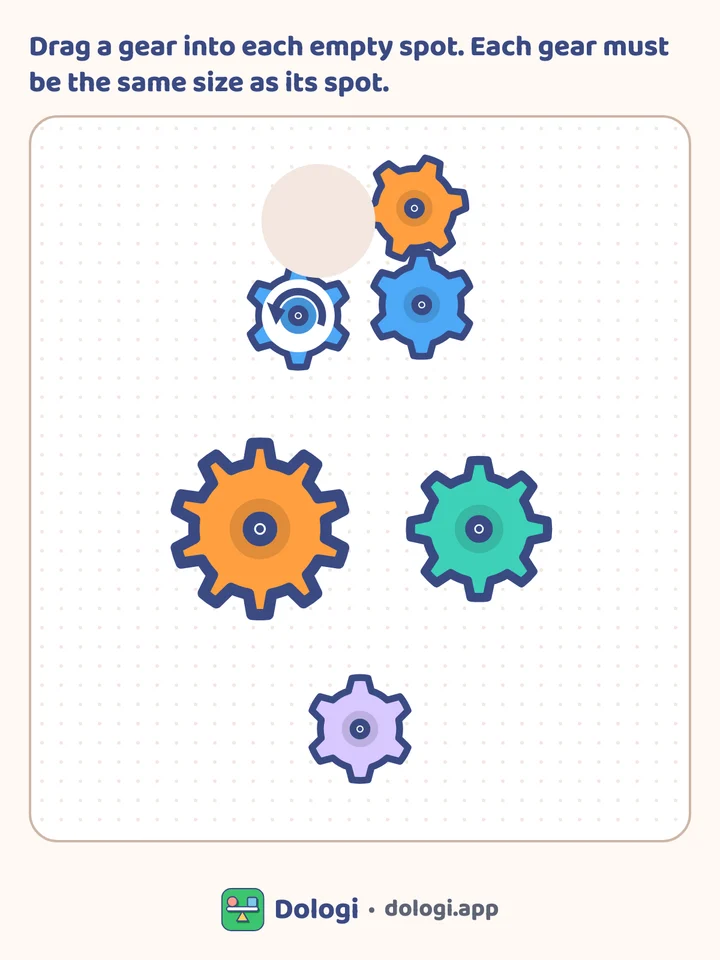
What it builds: Your child compares the size of each gear with the empty spot, looking at how big it is and how many teeth it has, to pick one that fits without bumping into its neighbors. Judging size by eye is what children use when choosing a lid for a box, a jigsaw piece or the right shelf for a toy. Keep playing: set out a few bottle caps and jar lids of different sizes and let your child point to which lid fits which jar before trying them.
Puzzle 9: Pinwheel painting
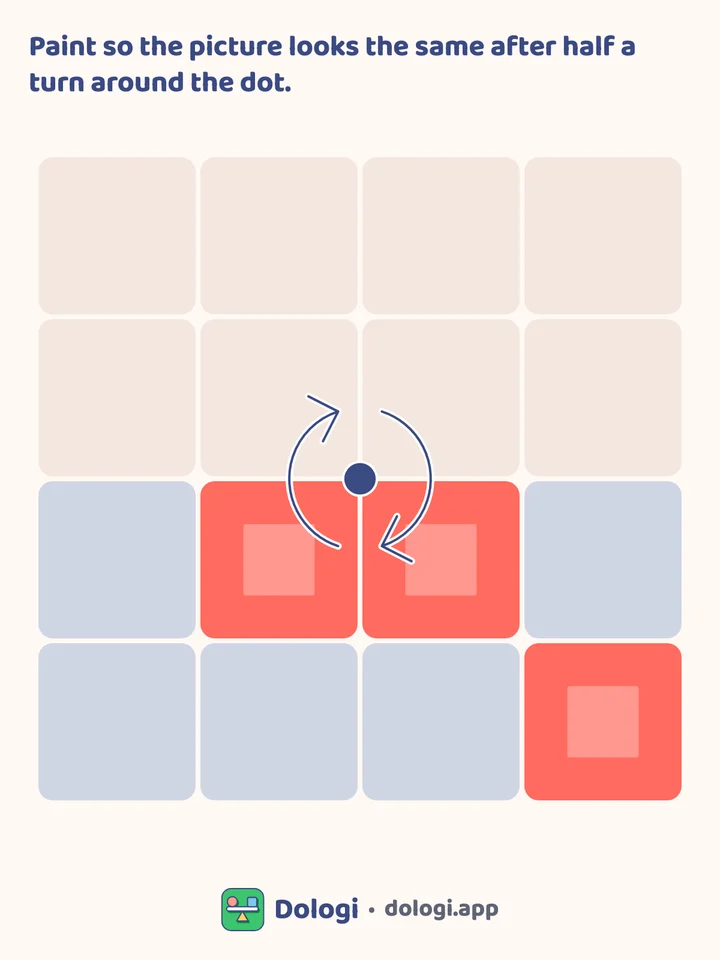
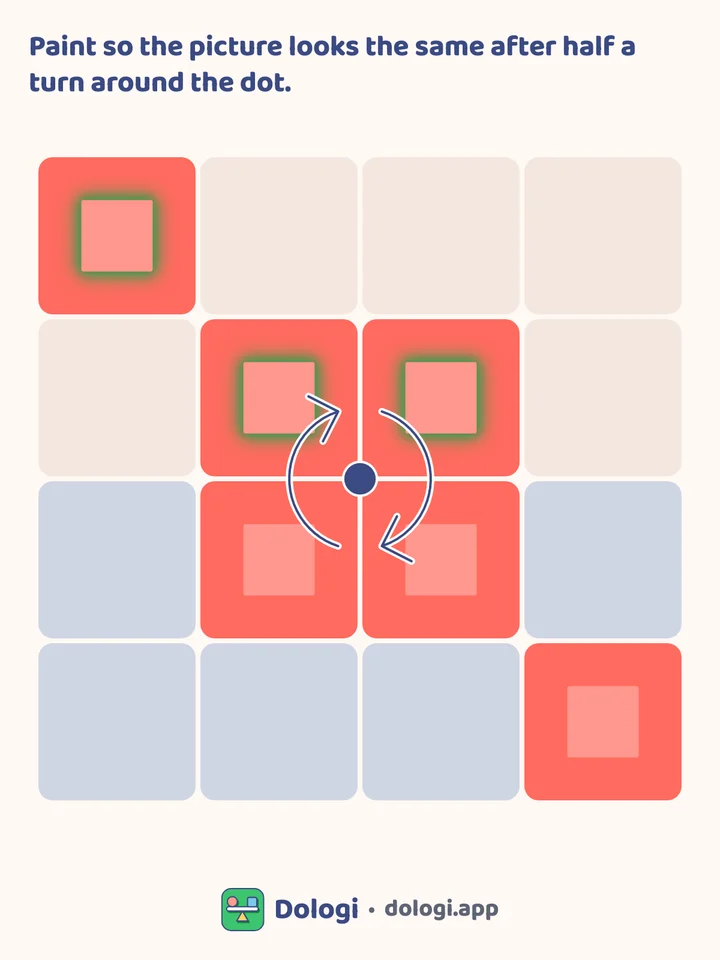
Ages 5–6
What it builds: Your child looks at the red squares already painted, imagines the whole board turning half a turn around the middle dot, and paints the squares where the red ones would land. This is turning symmetry, the kind children see in pinwheels, flowers and many floor-tile patterns. Keep playing: put a few beans on a square piece of paper, turn the paper half a turn, and let your child add beans so the picture looks exactly as it did before turning.
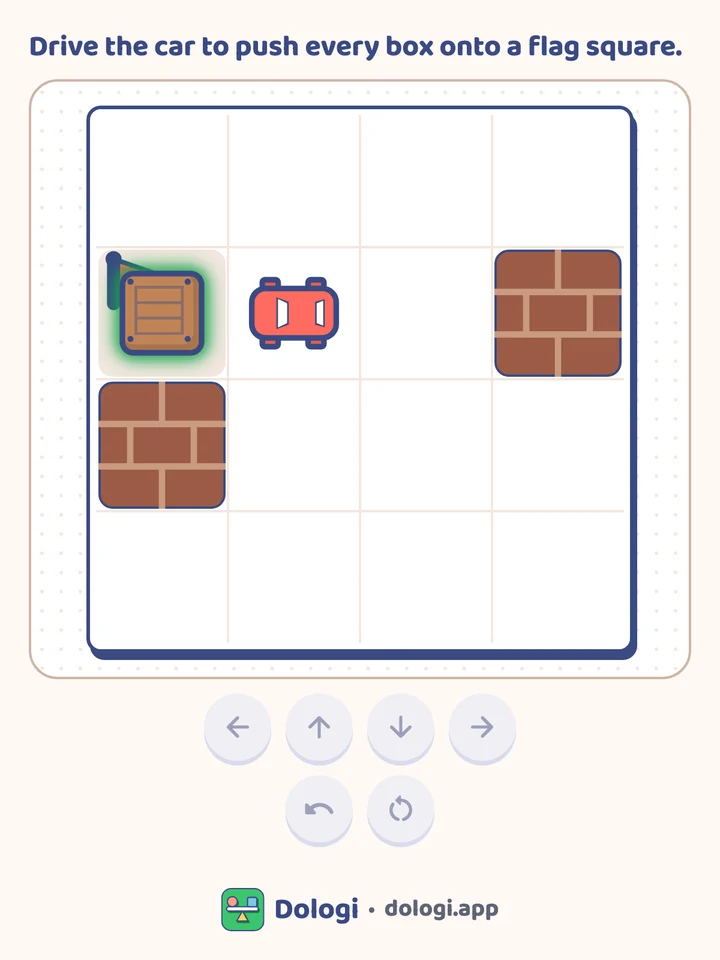
Puzzle 10: Push the boxes
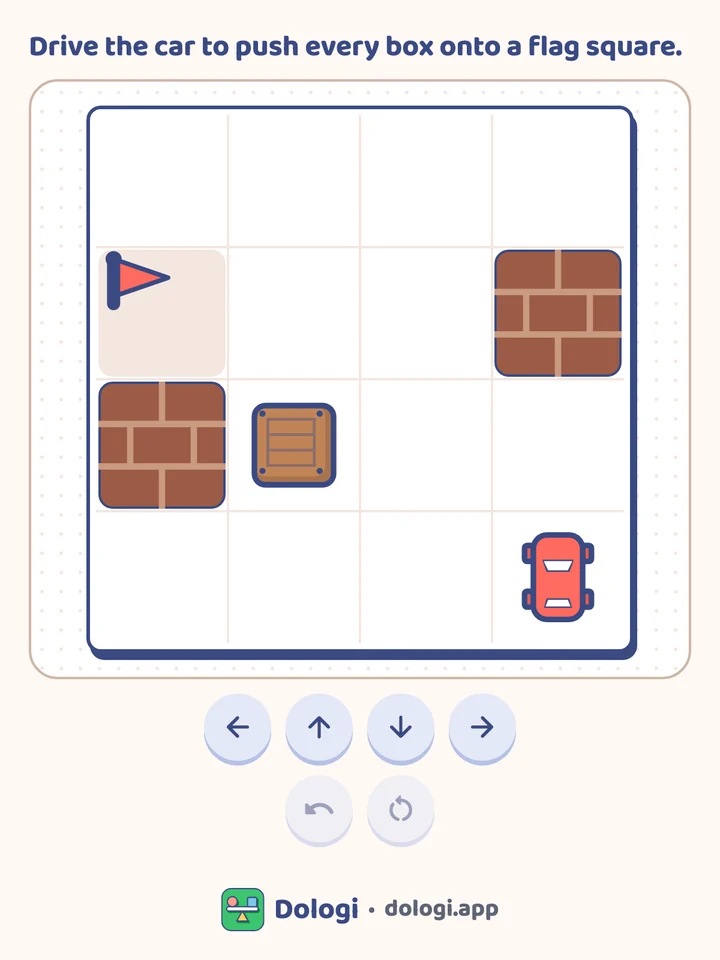
Ages 5–6
What it builds: The car can only push the box, never pull it, so your child must work out which side the car needs to be on to send the box towards the flag, and avoid pushing it against a wall. Planning ahead and spotting moves that cannot be undone is a problem-solving skill they will use a lot. Keep playing: put a cardboard box on the floor and mark a goal with tape; your child may only push the box from behind and tries to get it to the goal around a corner.
Did your child enjoy these spatial puzzles? The Dologi app has many more of the same kinds, getting harder with age and with how your child plays, so they can practice a little each day without getting bored.