Ages 6–7 are when children start first grade, learn shapes and left and right, and read their first diagrams. Spatial thinking makes all of that easier: picturing a shape after a turn, working out which way a gear spins, planning a route. The five puzzles below come straight from the Dologi app, suit kids ages 6–7, and go from easy to harder.
How to use this post: show your child one picture at a time and let them point, trace with a finger or think out loud before answering. The answer is behind the "Show answer" button under each picture. If a puzzle feels hard, try it with real things (wooden blocks, squared paper, bottle caps) before opening the answer.
Puzzle 1: Turn the block a quarter
Ages 6–7
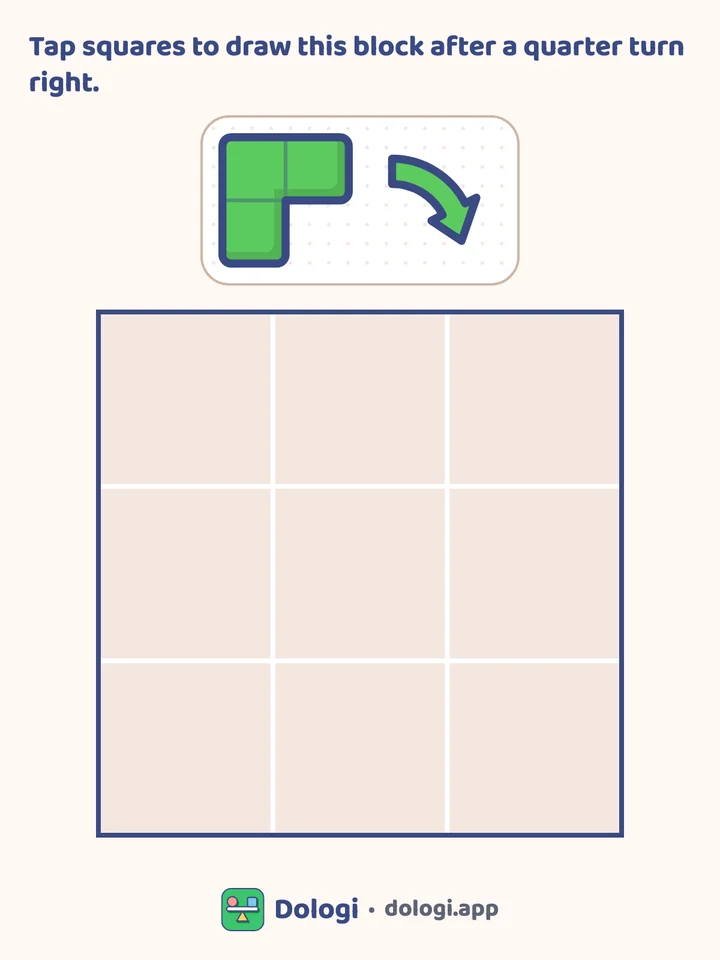
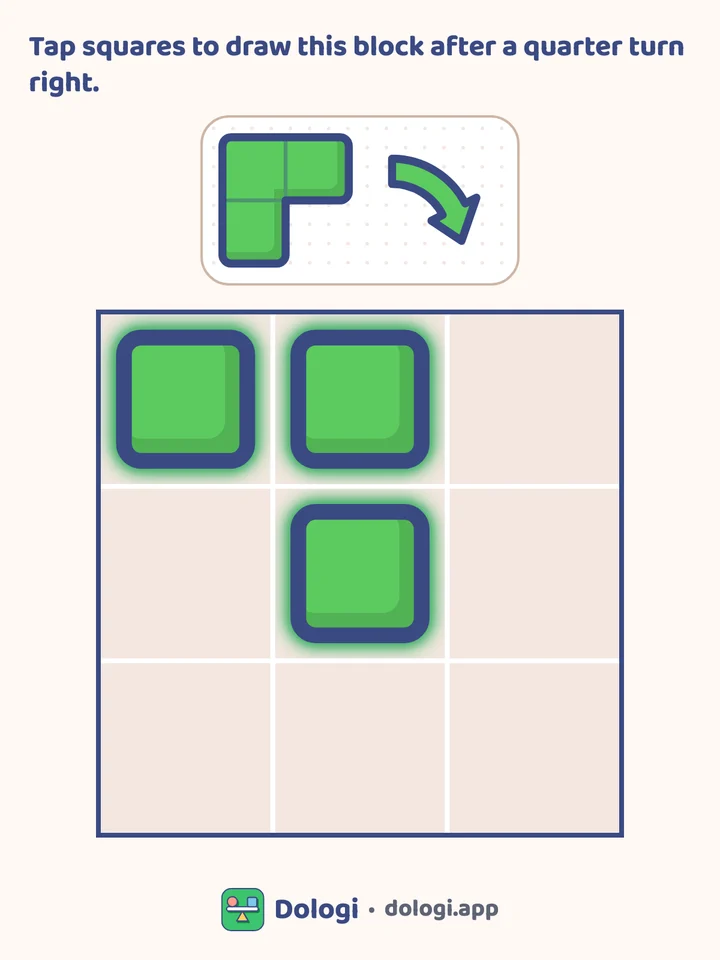
What it builds: Your child holds the block in their head, turns it a quarter turn the way the arrow shows, and colors the squares in their new places. Turning shapes in the mind helps with building toys, reading pictures in books and later with geometry. Keep playing: lay a few coins in an L shape on a sheet of paper, let your child guess the new shape, then turn the paper a quarter turn to check.
Puzzle 2: Same direction
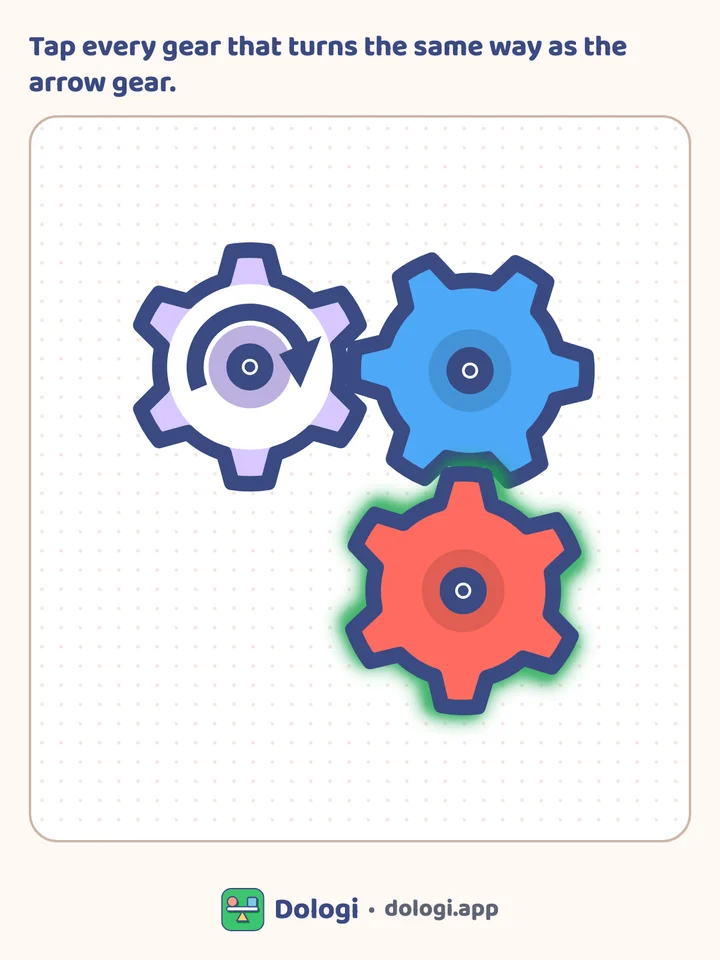
Ages 6–7
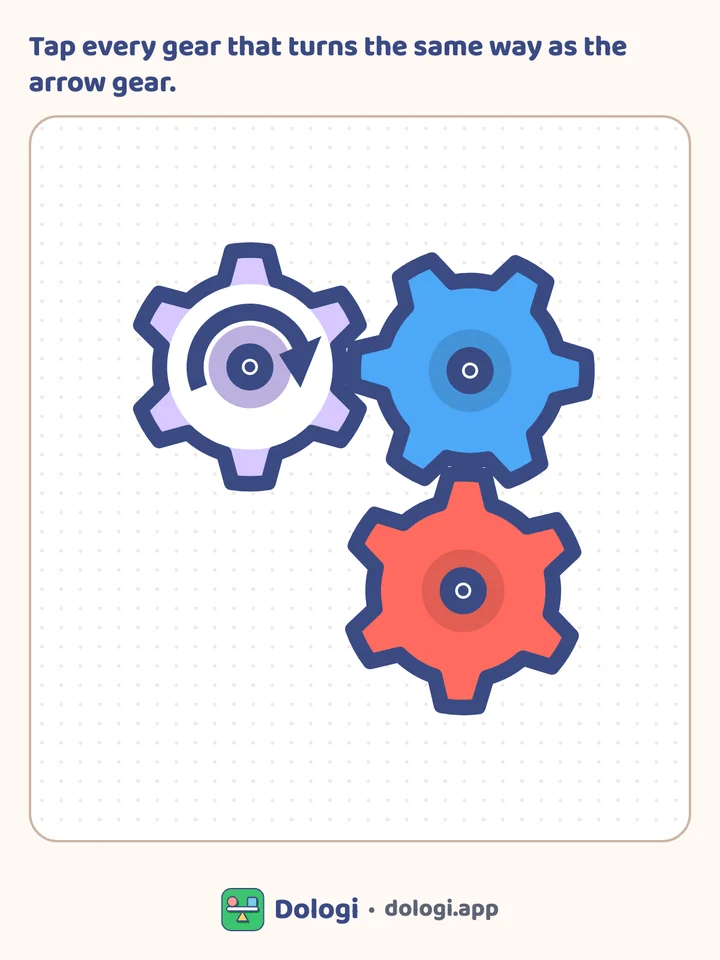
What it builds: Touching gears turn opposite ways, so your child follows from the arrow gear to each next gear to find which ones turn the same way. It trains step-by-step reasoning: knowing one thing lets you work out the next. Keep playing: put two round box lids side by side on the table, let your child turn one with a finger and watch which way the other one goes.
Puzzle 3: Blocks and holes
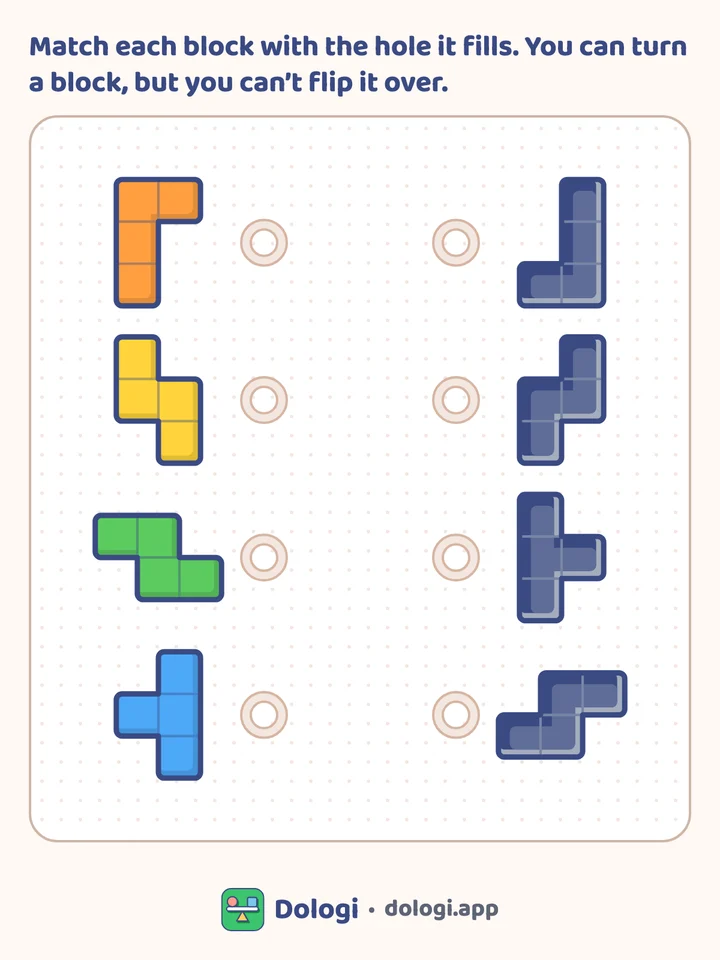
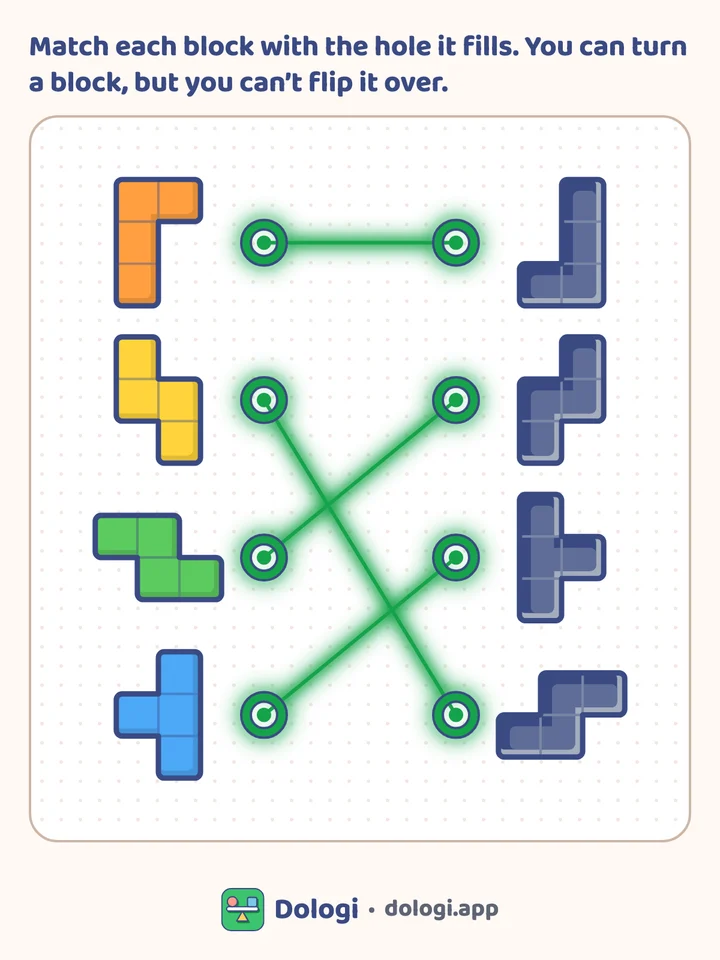
Ages 6–7
What it builds: Your child compares each block with each hole; blocks may be turned but not flipped, so both the shape and its direction matter. Fitting shapes into the right space is a skill they use when packing a box, doing jigsaws or putting books on a shelf. Keep playing: set a few wooden blocks on paper, trace around each one, mix up the blocks and let your child put each back on its own outline.
Puzzle 4: Drive the car
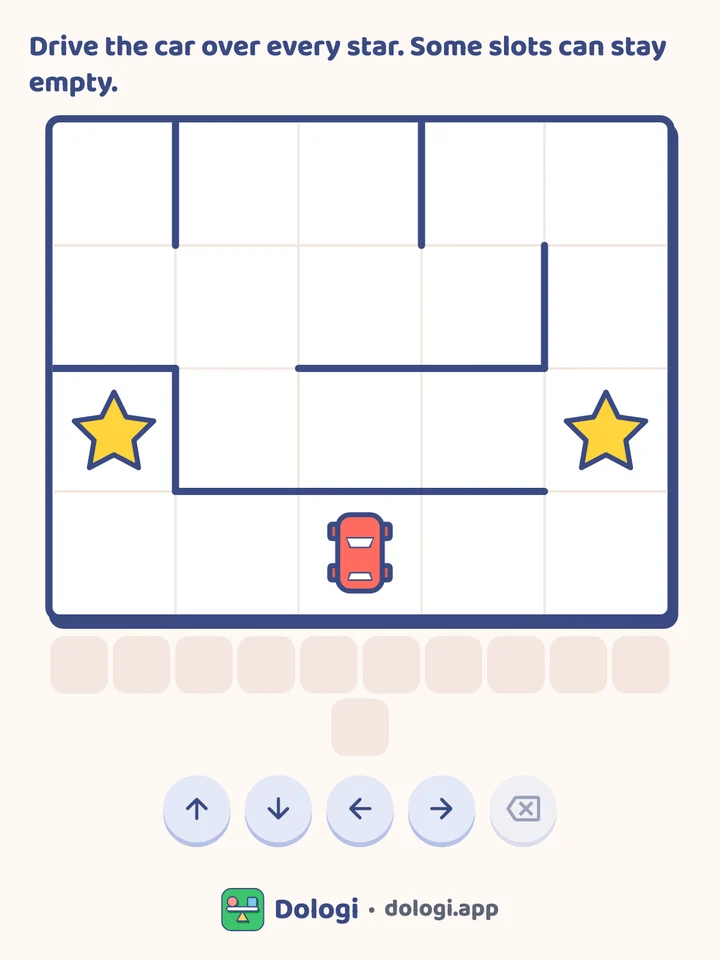
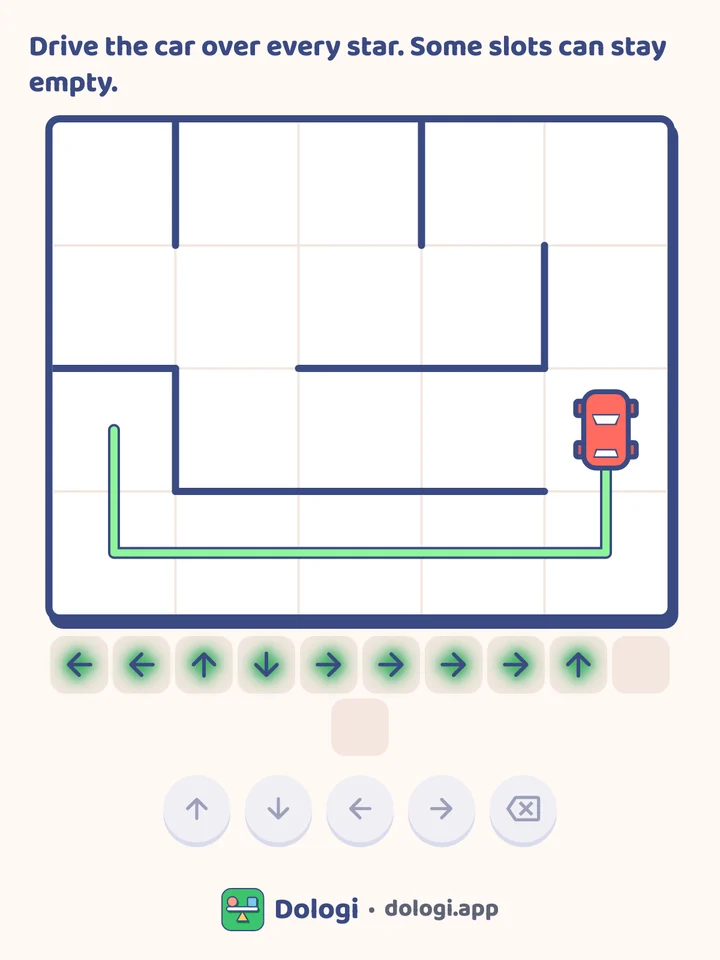
Ages 6–7
What it builds: Your child plans the whole route before placing the commands: avoid the walls, pass every star, and pick a sensible order to visit the stars. Writing a chain of commands from start to finish is a first step into coding and teaches thinking before acting. Keep playing: use floor tiles as squares and a few toys as stars, let your child hand you a row of arrow cards and walk exactly as the cards say.
Puzzle 5: Which station?
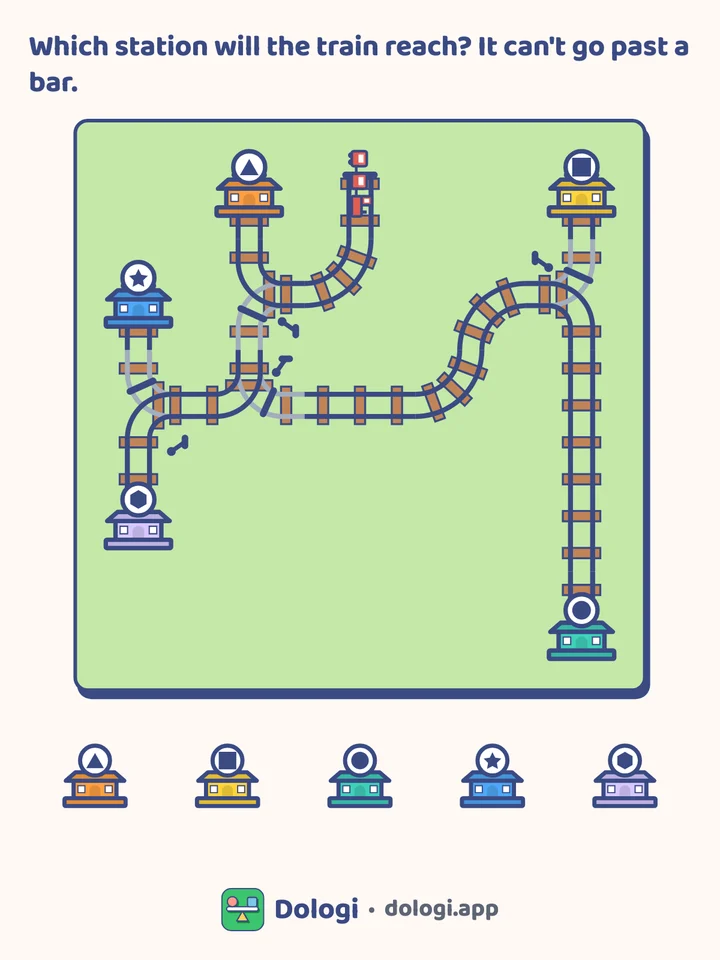
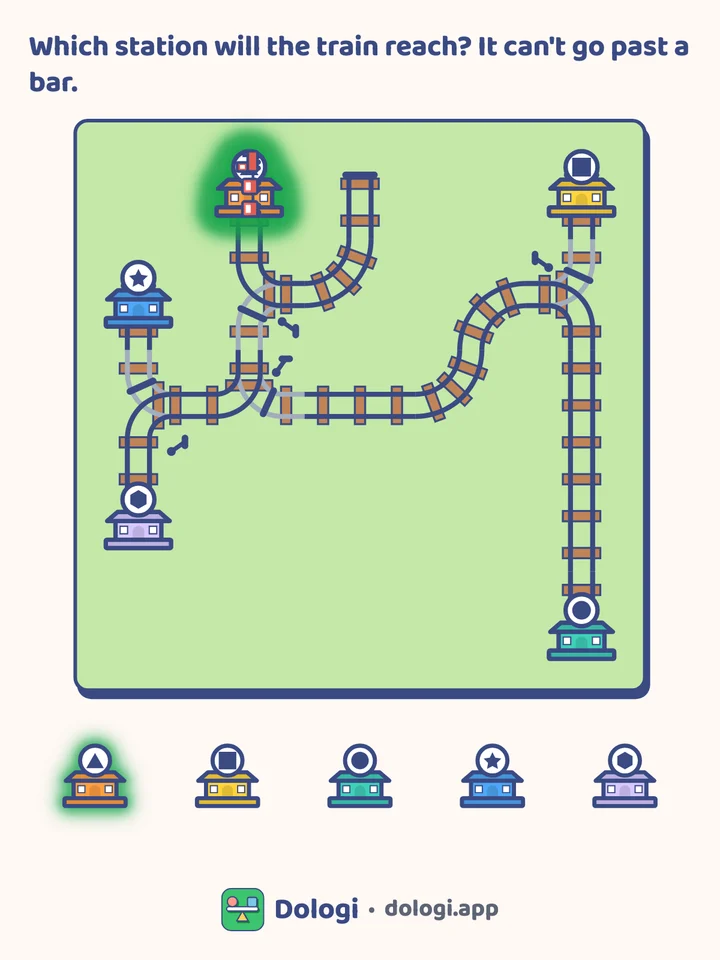
Ages 6–7
What it builds: Your child traces the track with their eyes from the train, through each switch, watching where a barrier blocks the way, to find which station the train can reach. Following a long line without losing it trains focus and the reading of diagrams and maps. Keep playing: draw a few tangled curvy roads on paper, each joining an animal to a house, and let your child trace which animal goes home where.
Did your child enjoy these spatial puzzles? The Dologi app has many more of the same kinds, getting harder with age and with how your child plays, so a little practice each day never gets boring.