At ages 6–7, children start reading diagrams in books, telling left from right, copying shapes from the board and finding their own way around the school yard. All of that takes spatial thinking: holding a shape in mind and turning it, picturing a path before taking it, working out how something will move. The ten puzzles below come straight from the Dologi app, suit kids ages 6–7, and go from easy to harder.
How to use this post: show your child one picture at a time and let them think, point or trace with a finger before giving an answer. Tap "Show answer" under each picture to see the answer. A few puzzles at a time is plenty; if one feels hard, let your child try it with real objects before opening the answer.
Puzzle 1: Odd block out
Ages 6–7
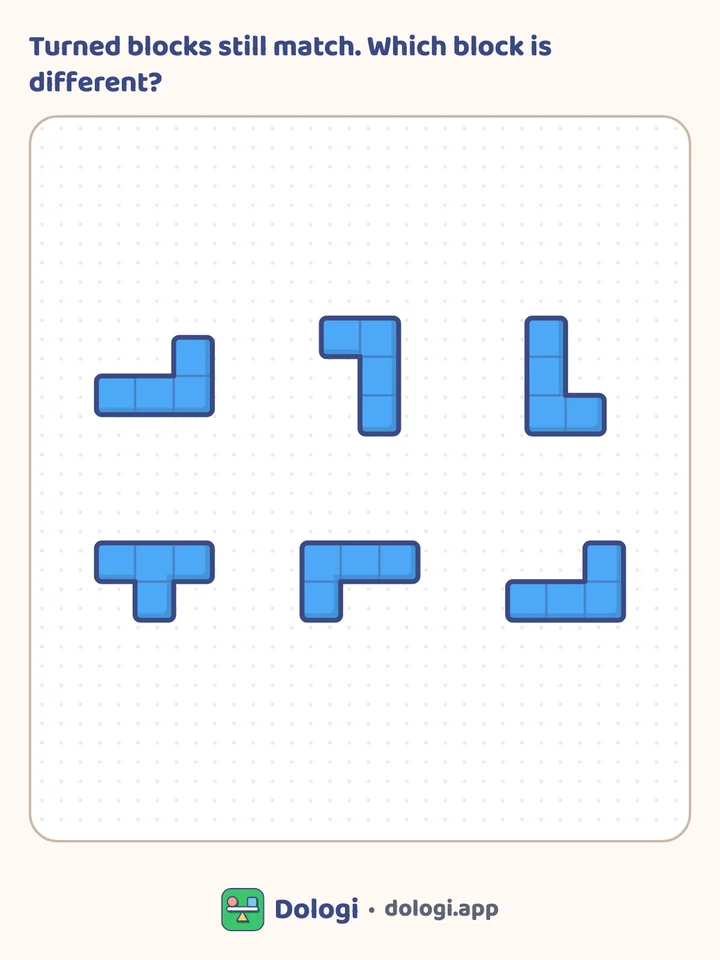
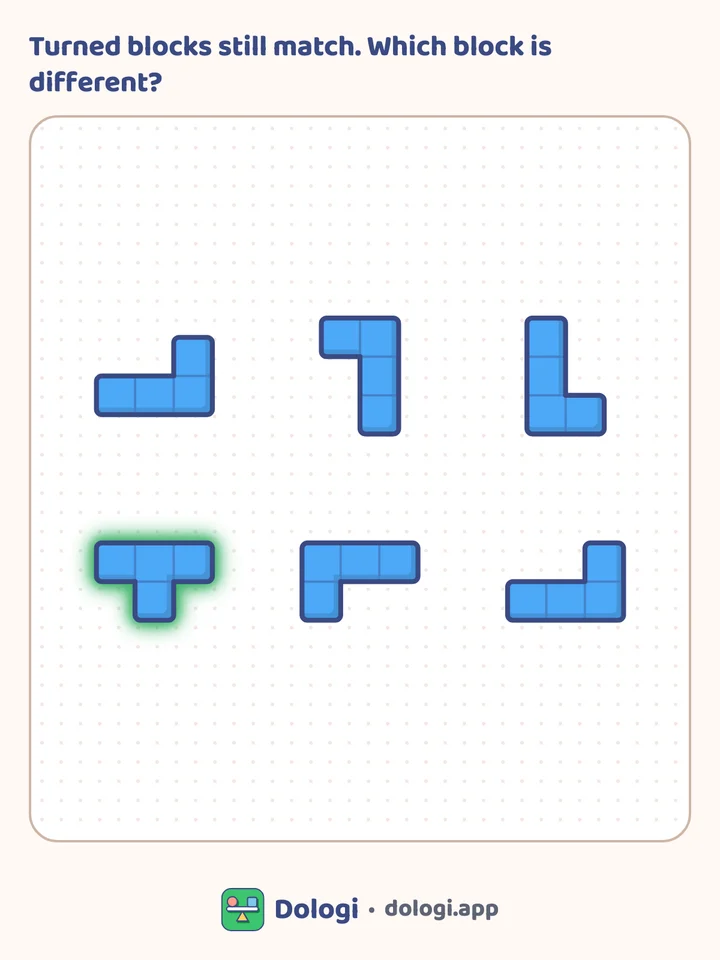
What it builds: Your child compares each block with the others, turning them in their head to see which ones are just the same block facing another way and which one has a different shape. This helps children recognize numbers and letters even when they are tilted or turned, and put toys back in the right box. Keep playing: build a few matching shapes from craft sticks facing different ways, slip in one different shape and let your child find it.
Puzzle 2: Spinning gears
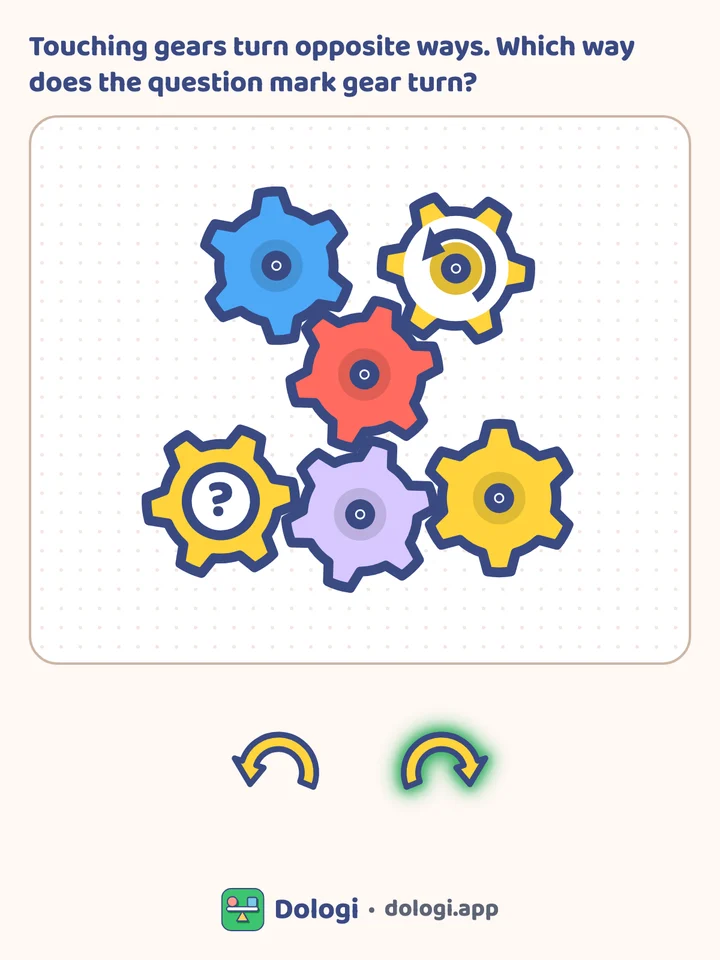
Ages 6–7
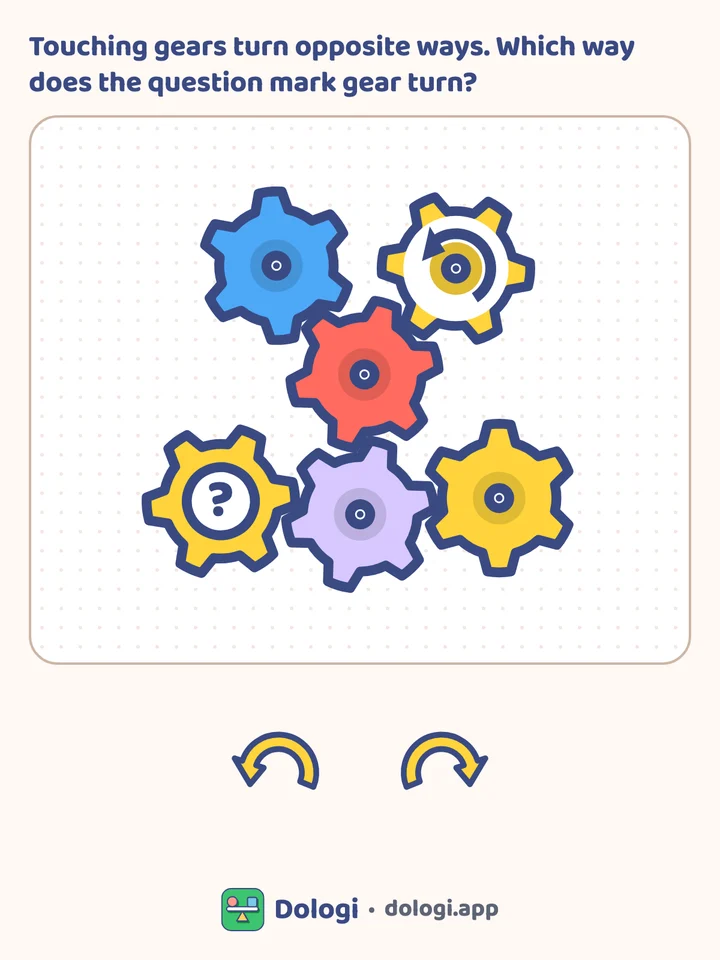
What it builds: Your child follows each pair of meshing gears, remembering that the direction flips at every step. This is cause-and-effect thinking along a chain, which children need when they explore machines, bikes and their first science lessons. Keep playing: have a few people stand in a row, each turning the opposite way from the person before, and let your child guess which way the last one turns.
Puzzle 3: Maze
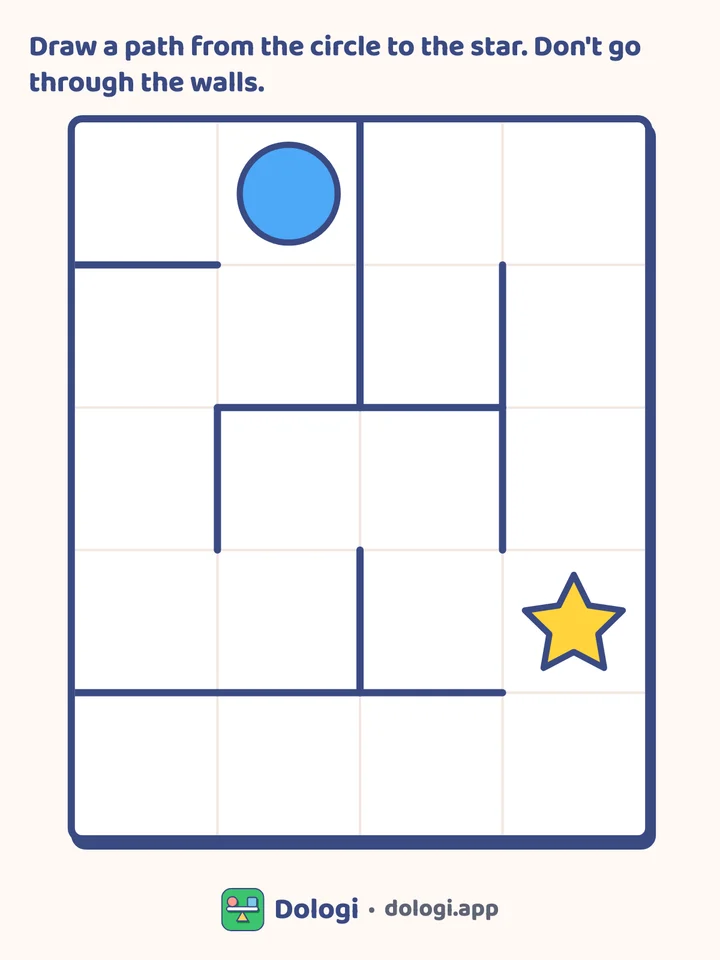
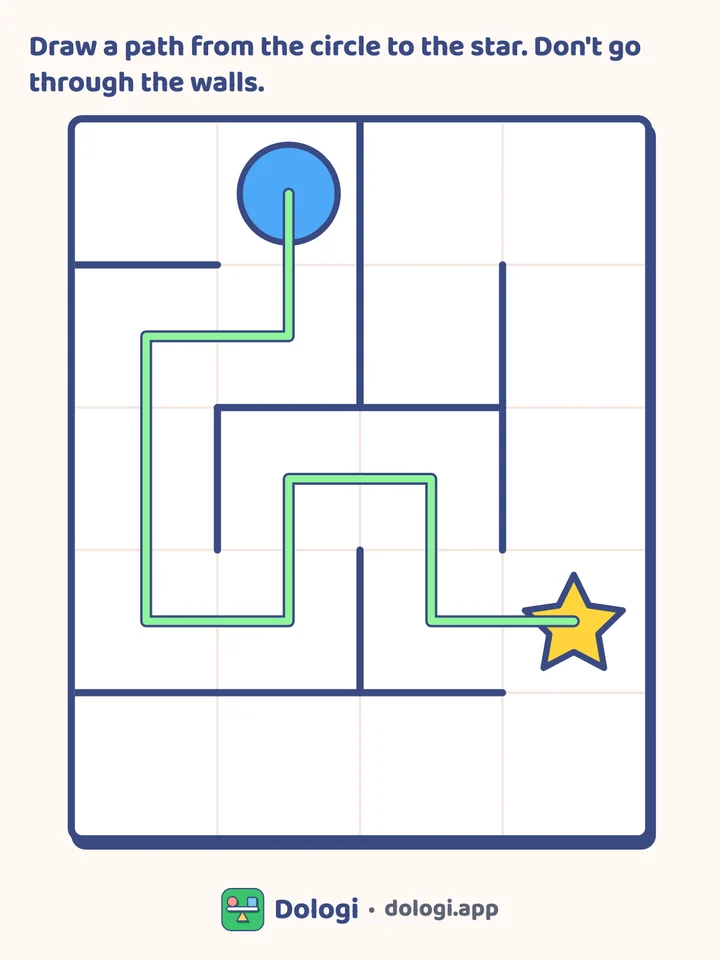
Ages 6–7
What it builds: Your child looks over the whole maze first, tries routes with their eyes and backs up at dead ends instead of rushing in. Planning like this builds patience and the habit of stopping to think before acting, both in homework and when finding the way in a new place. Keep playing: draw a small maze on squared paper for your child to solve, then swap and let them draw one for you.
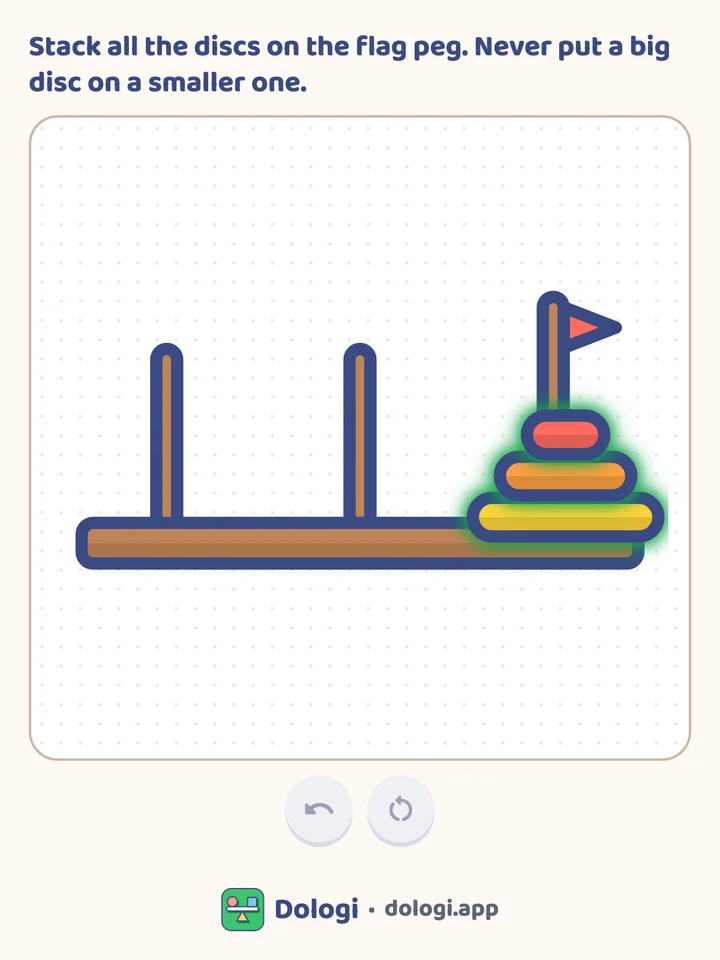
Puzzle 4: Move the tower
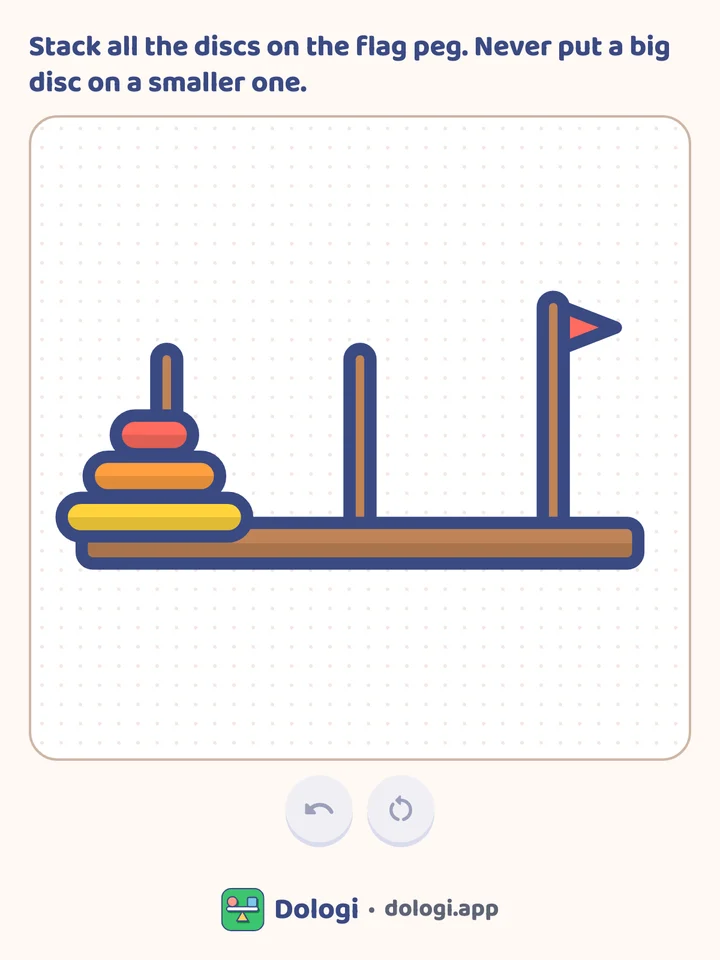
Ages 6–7
What it builds: Your child has to think several moves ahead: which disc goes first and which peg to use as a resting spot so a big disc never sits on a smaller one. This trains working memory and the habit of breaking a big job into small steps, which really helps with multi-step math problems. Keep playing: use three bowls or lids of different sizes, three sheets of paper as pegs, and play with the same rule.
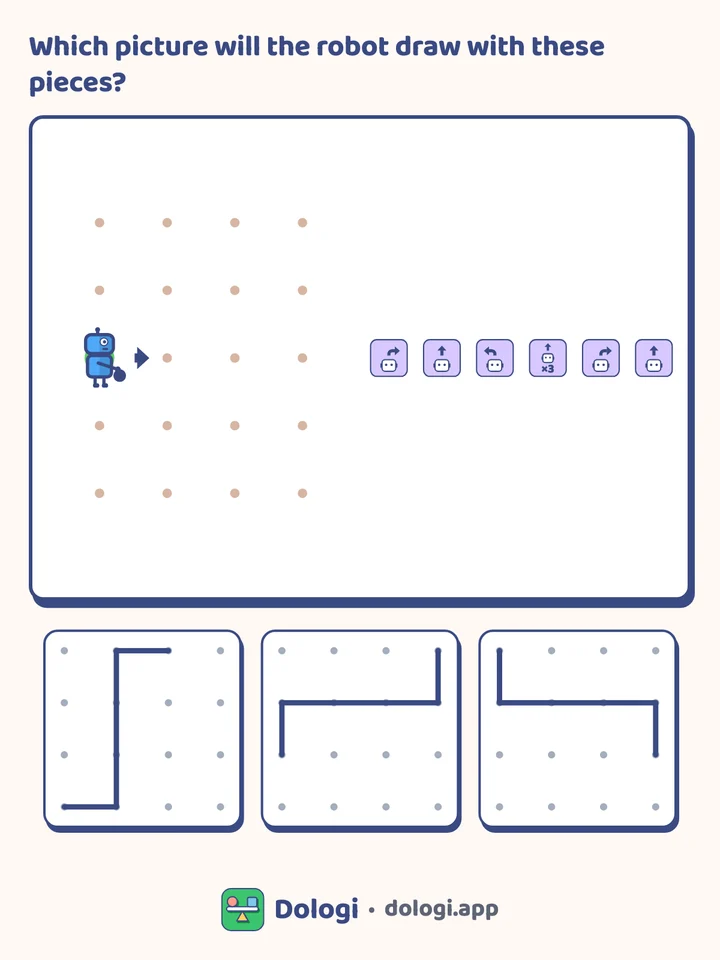
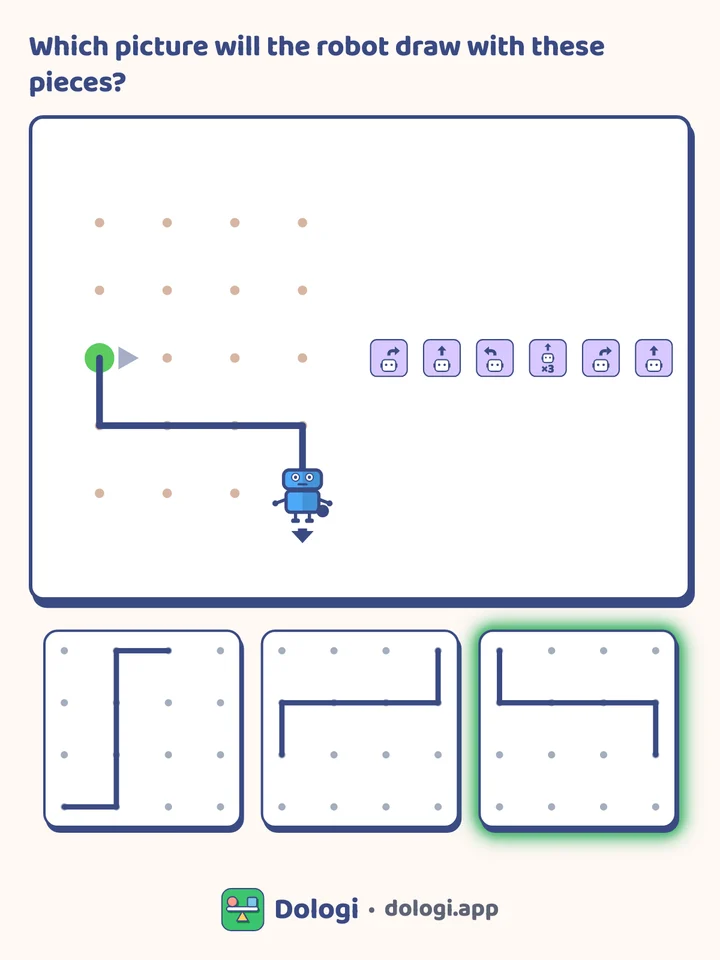
Puzzle 5: What will it draw?
Ages 6–7
What it builds: Your child reads the command cards one by one, keeps track of which way the robot faces after each turn, and pictures the line it will draw. This is a first step into coding: following steps in order and knowing that left and right depend on the robot's direction, not the viewer's. Keep playing: call out commands like "two steps, turn right, one step" for your child to walk at home, then have them draw the path they walked.
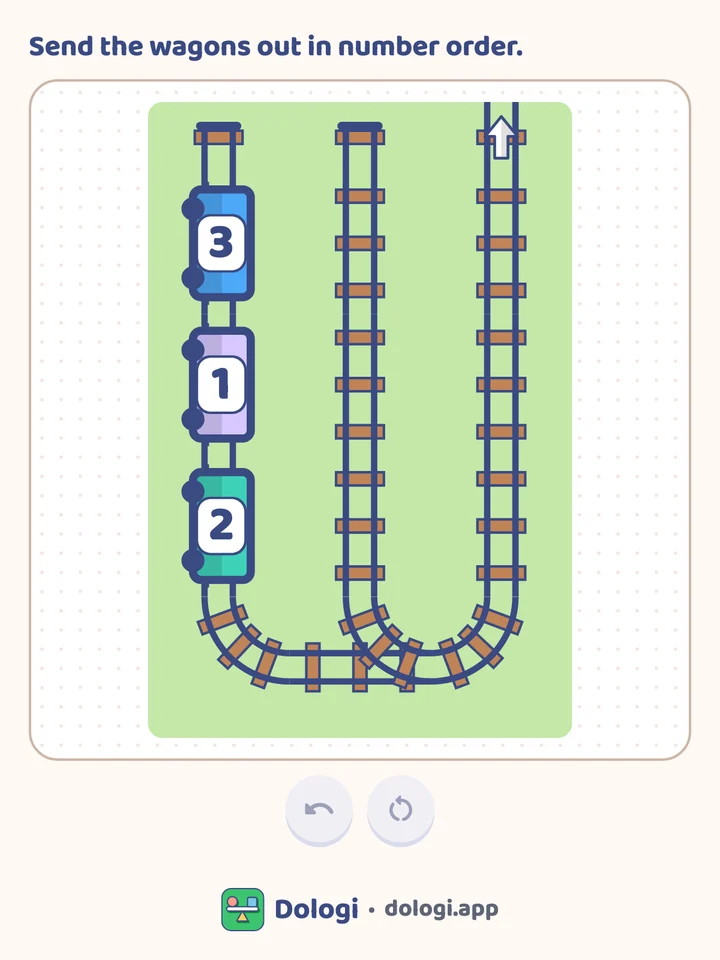
Puzzle 6: Sort the wagons
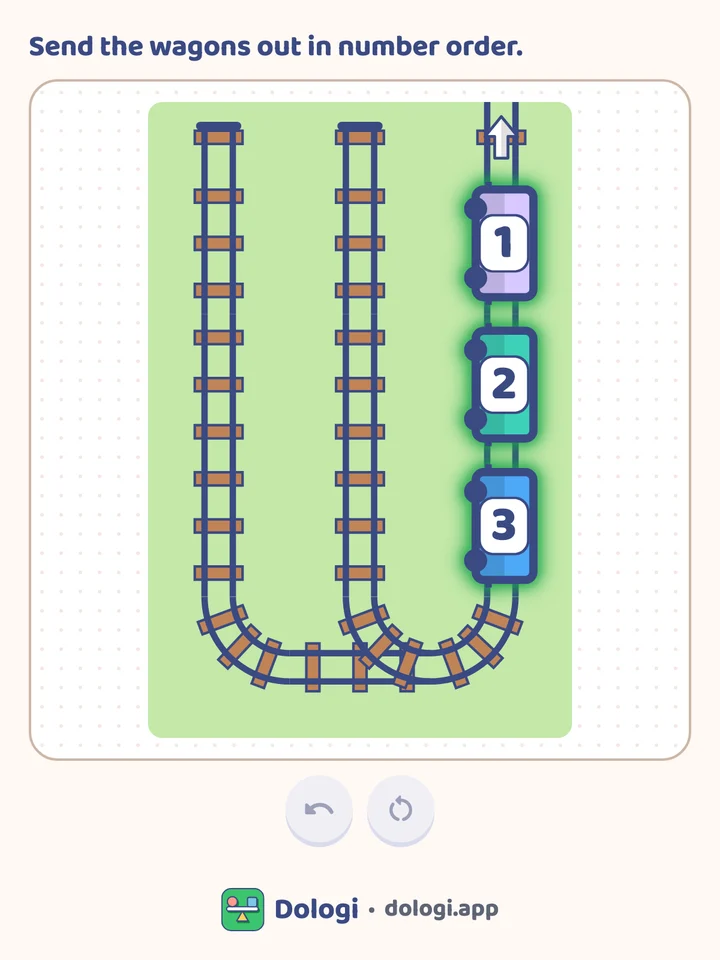
Ages 6–7
What it builds: Your child looks at where the wagons are and works out which one has to leave first and which ones must wait on the side track. Using a waiting spot to sort things into order is a planning skill that helps with packing a school bag, lining up or taking turns. Keep playing: tape three tracks on the floor, number a few toy cars, and let your child send them out in number order.
Puzzle 7: Shapes inside a figure
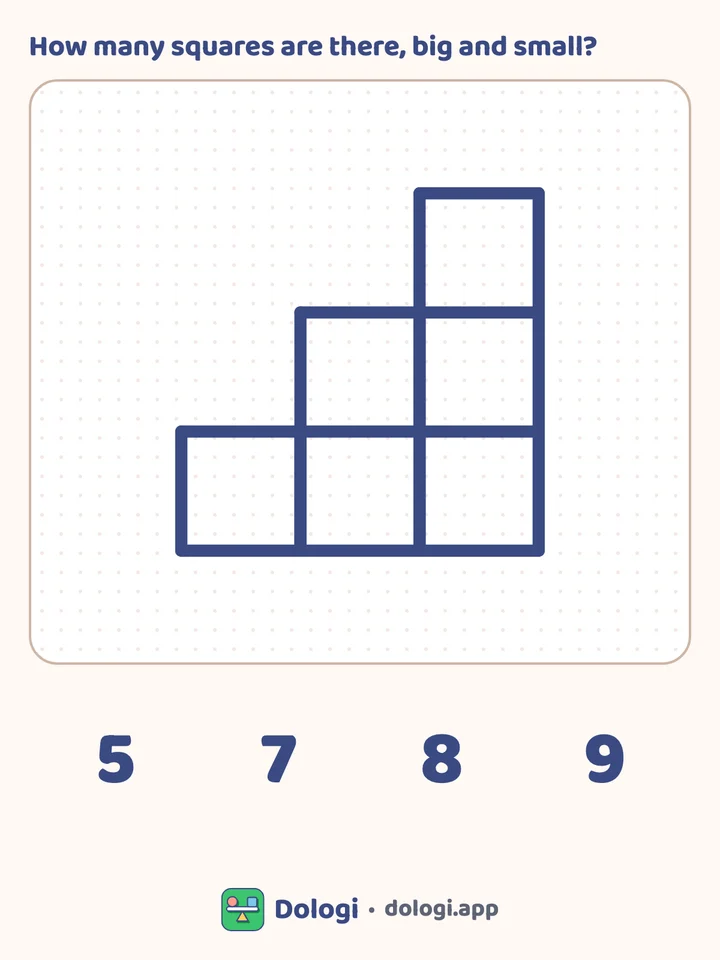
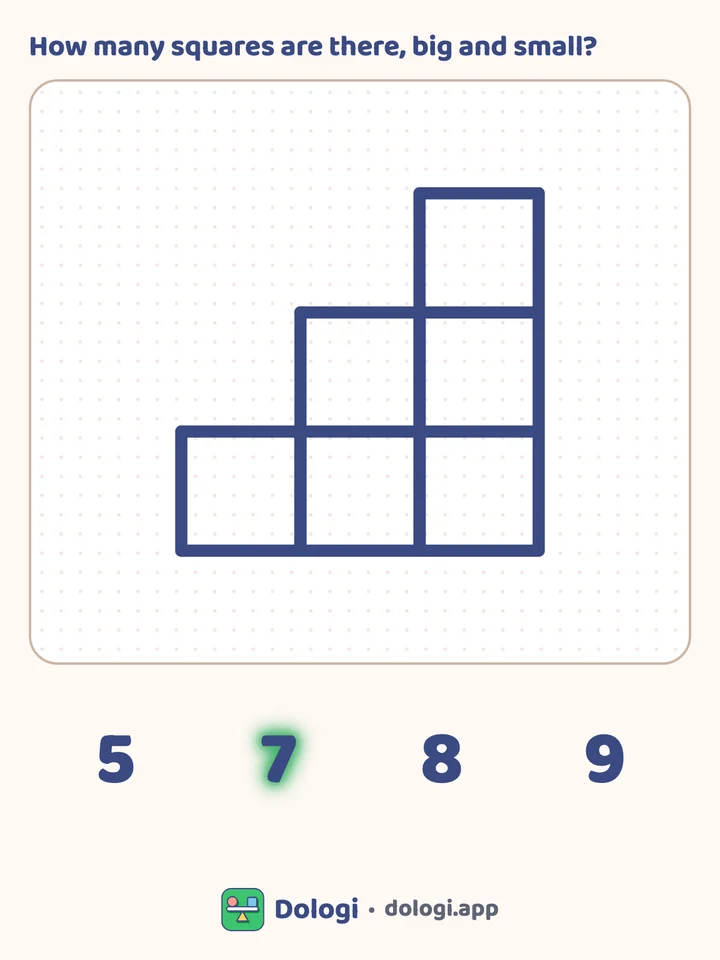
Ages 6–7
What it builds: Your child counts not only the small squares but also the bigger squares made from several small ones. Seeing shapes inside shapes supports early school geometry and teaches counting in a system so nothing is missed or counted twice. Keep playing: arrange a few paper squares into a staircase, let your child count again, and mark each square with a pen once it has been counted.
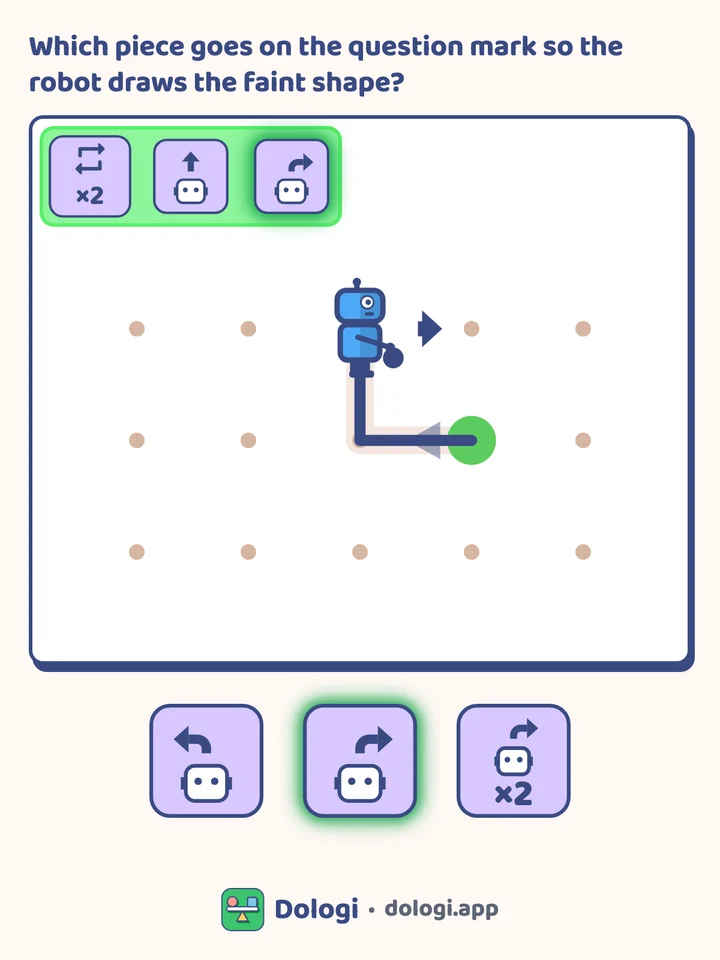
Puzzle 8: The missing command card
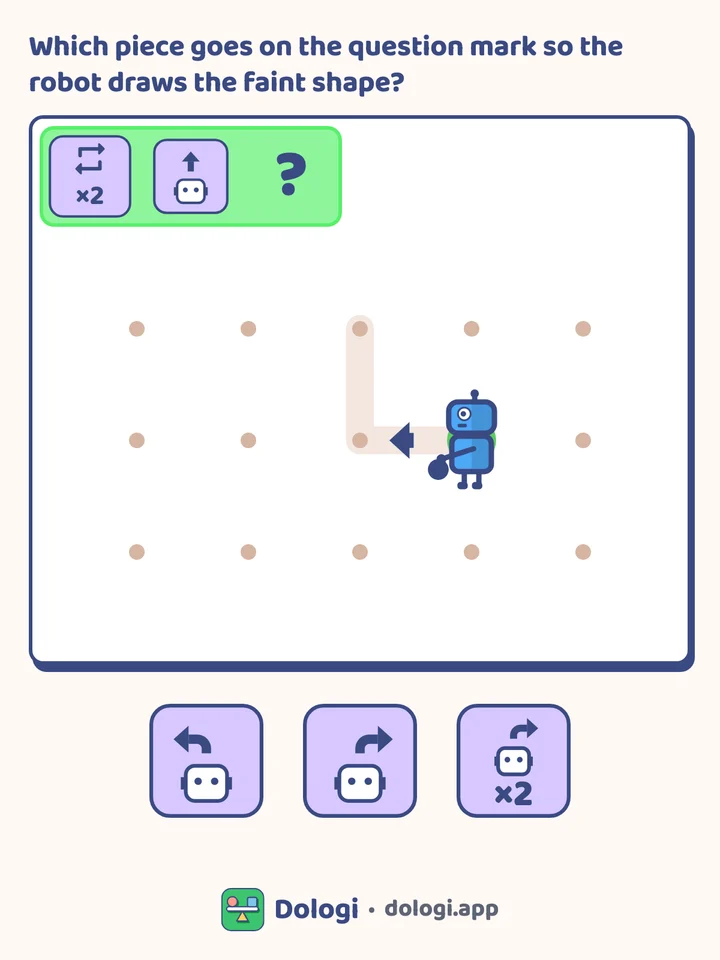
Ages 6–7
What it builds: Your child compares the faint drawing with the commands already in place, remembers that the commands inside the loop run twice, and works out which card is missing. Working backward from the result to the steps is how we find mistakes, a skill that helps when children check their own work. Keep playing: walk a short path around the room, read it back with one command left out, and let your child spot what is missing.
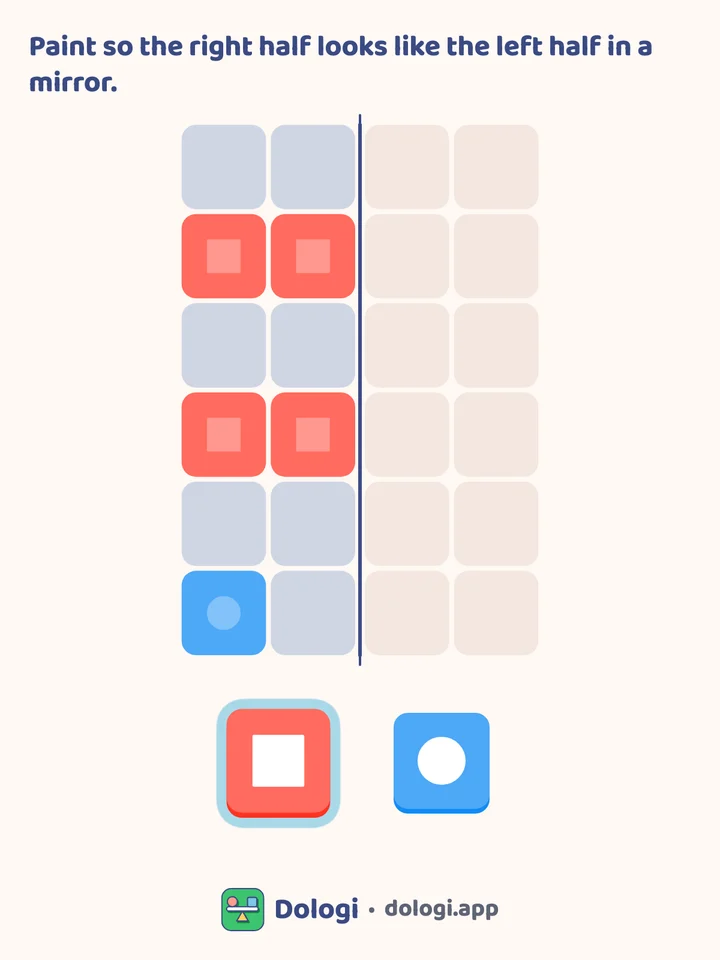
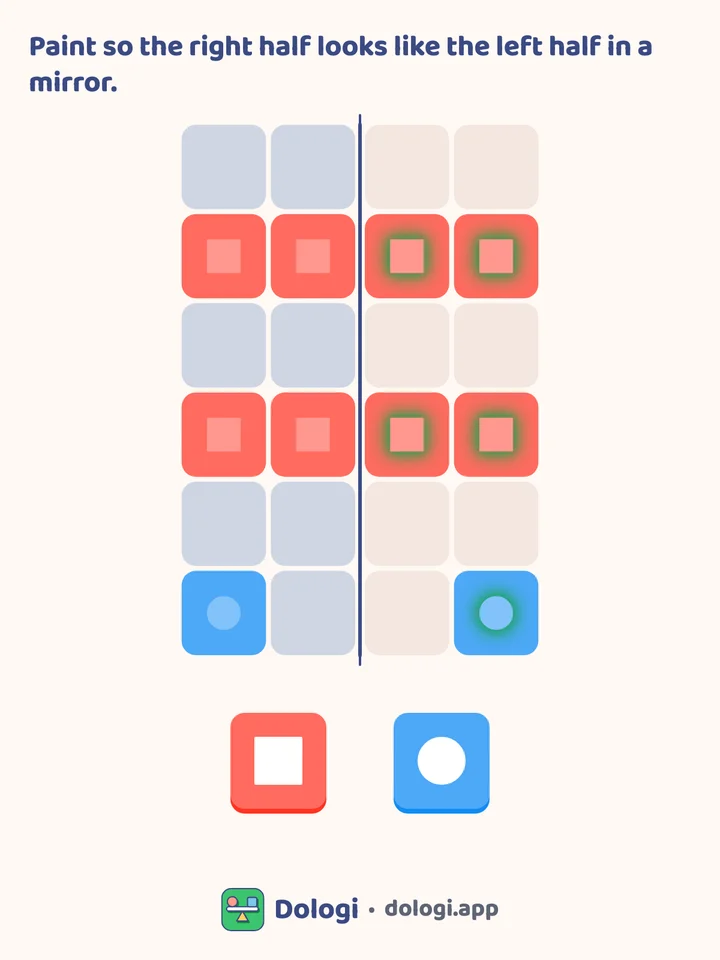
Puzzle 9: Mirror painting
Ages 6–7
What it builds: Your child looks at each square on the left half and finds the matching square on the right half across the mirror line, remembering that a square close to the line has its reflection close to the line too. Understanding symmetry makes drawing, cutting, folding paper and later geometry easier. Keep playing: fold a sheet of paper in half, dab some paint on one half, press it closed and open it to see the mirror image.
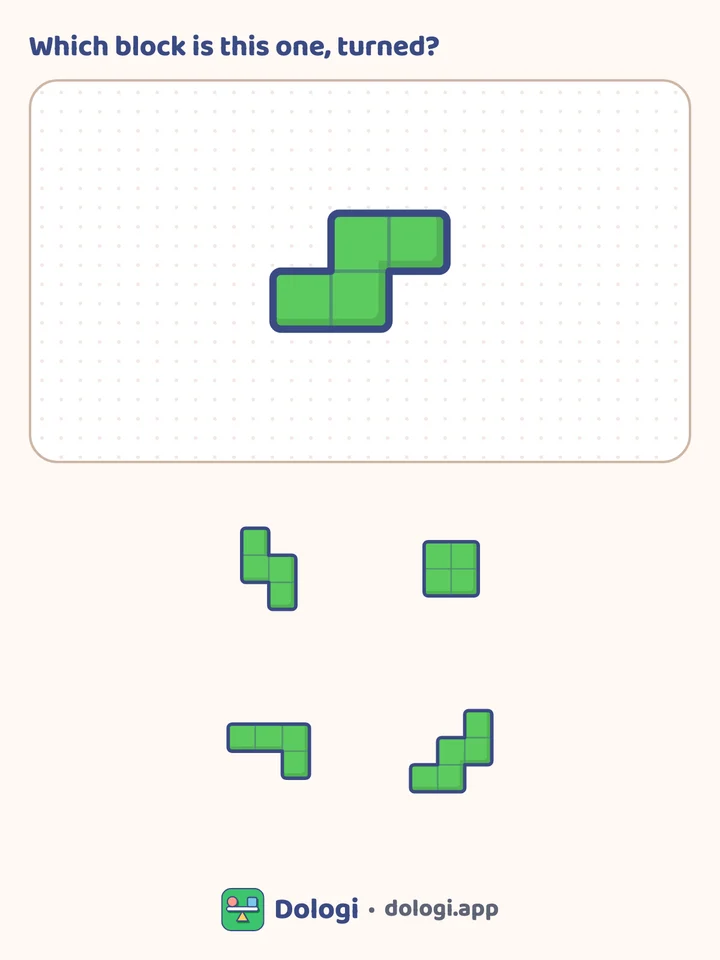
Puzzle 10: Turned block
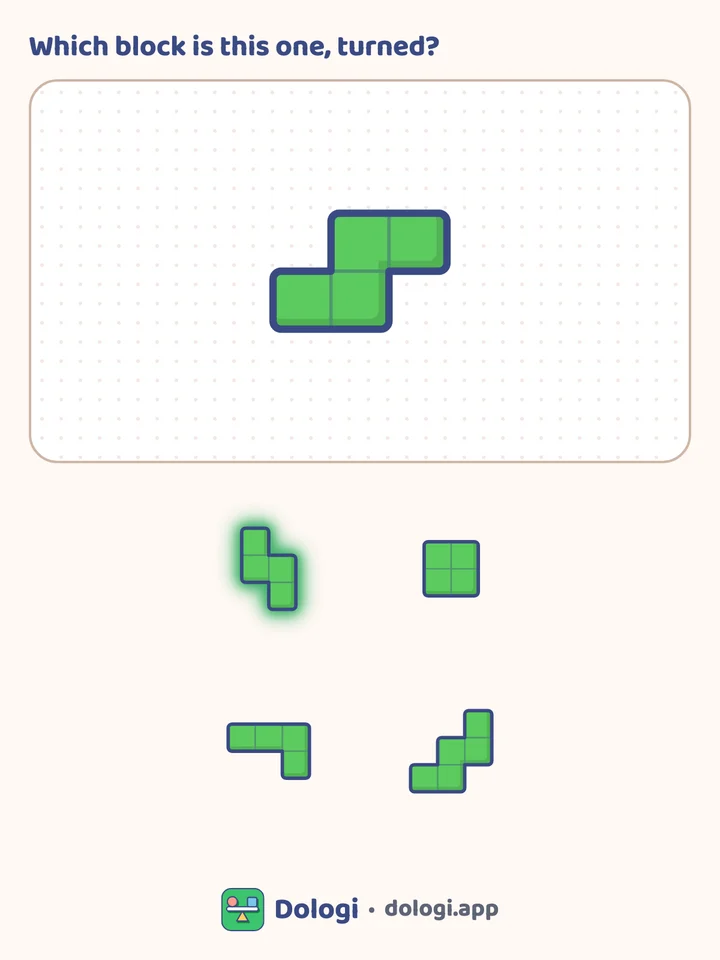
Ages 6–7
What it builds: Your child holds the sample block in mind, tries turning it different ways and compares it with each choice, watching out for blocks that only look alike. Turning shapes in the mind is a core skill for building sets, jigsaw puzzles and reading plans. Keep playing: cut a shape out of card, draw a few copies and a few flipped versions on paper, and let your child lay the card on top to check.
If your child enjoyed these puzzles, the Dologi app has many more of the same kinds: turning blocks, mazes, robots, train tracks and mirror images, getting harder with age and with how your child plays. One short session a day is enough to practice spatial thinking and still have fun.