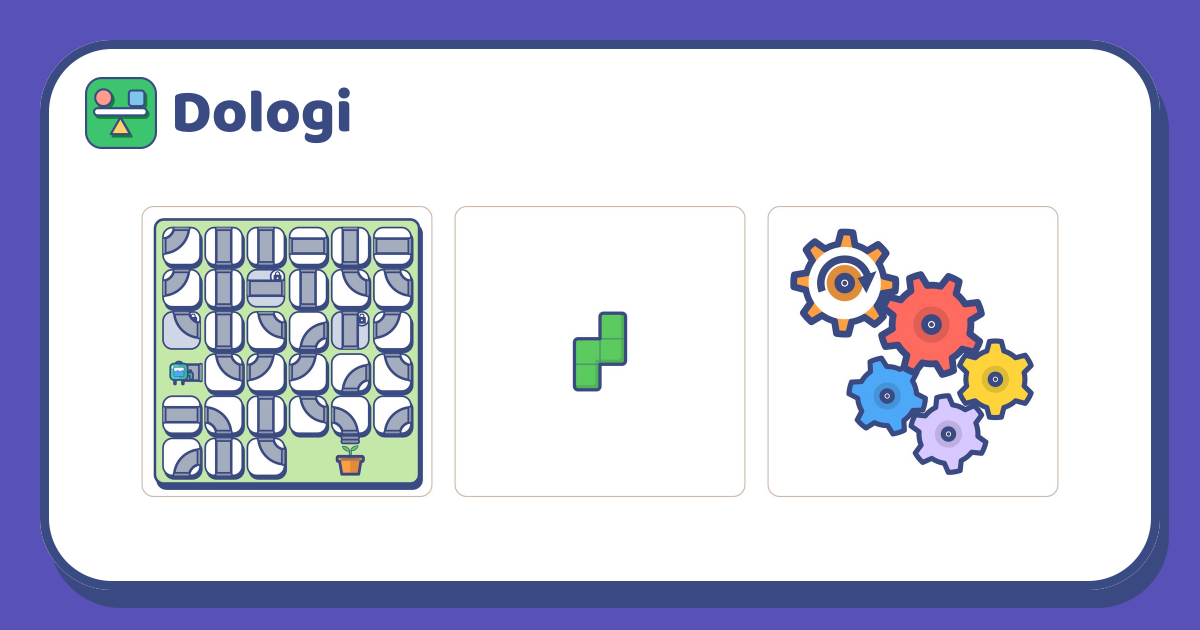
At ages 7–8, spatial thinking is no longer just finding a path or counting blocks: children start turning and flipping shapes in their head, following a long chain of moves, and telling a turned shape from a mirror image. These skills carry into geometry, technical drawing, map reading and coding. The five puzzles below come straight from the Dologi app, suit kids ages 7–8, and go from easy to harder.
How to use this post: show your child one picture at a time and let them think out loud or trace with a finger on the screen before answering. The answer is behind the "Show answer" button under each picture. If a puzzle feels hard, let them try it with squared paper, cardboard cut-outs or a small mirror before opening the answer.
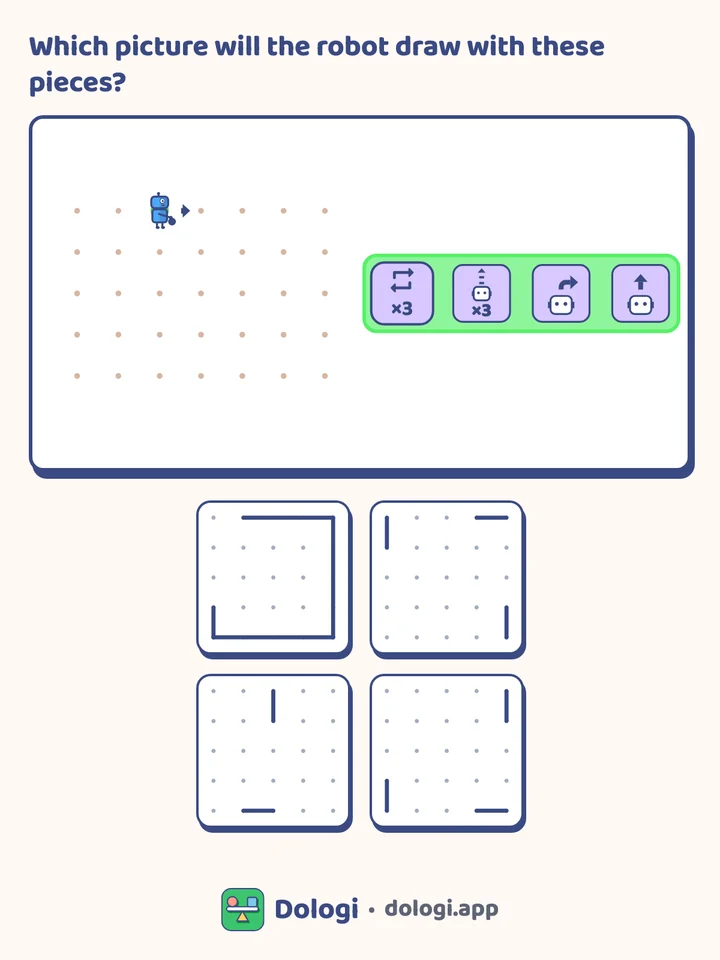
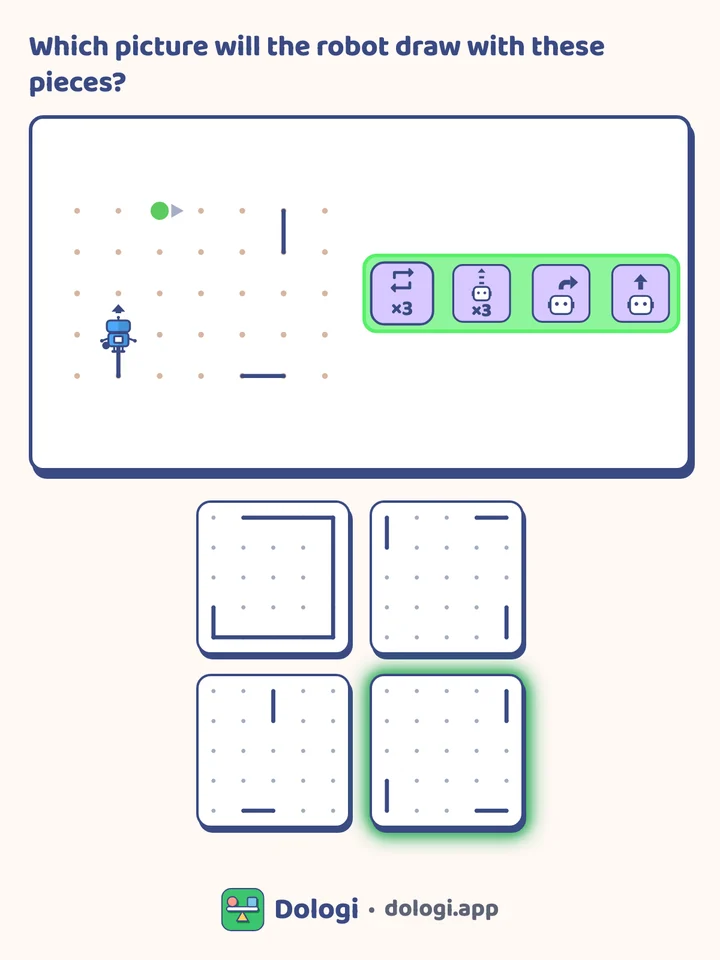
Puzzle 1: What will it draw?
Ages 7–8
What it builds: Your child runs the program in their head: the repeat tile runs a group of commands several times, some moves leave no line and some draw one, and after every turn the robot faces a new way. Keeping track of position and direction over many steps is the groundwork for coding and for multi-step math. Keep playing: you play the robot, your child writes "repeat 3 times: 2 steps forward, turn right" on paper and predicts where you will stop.
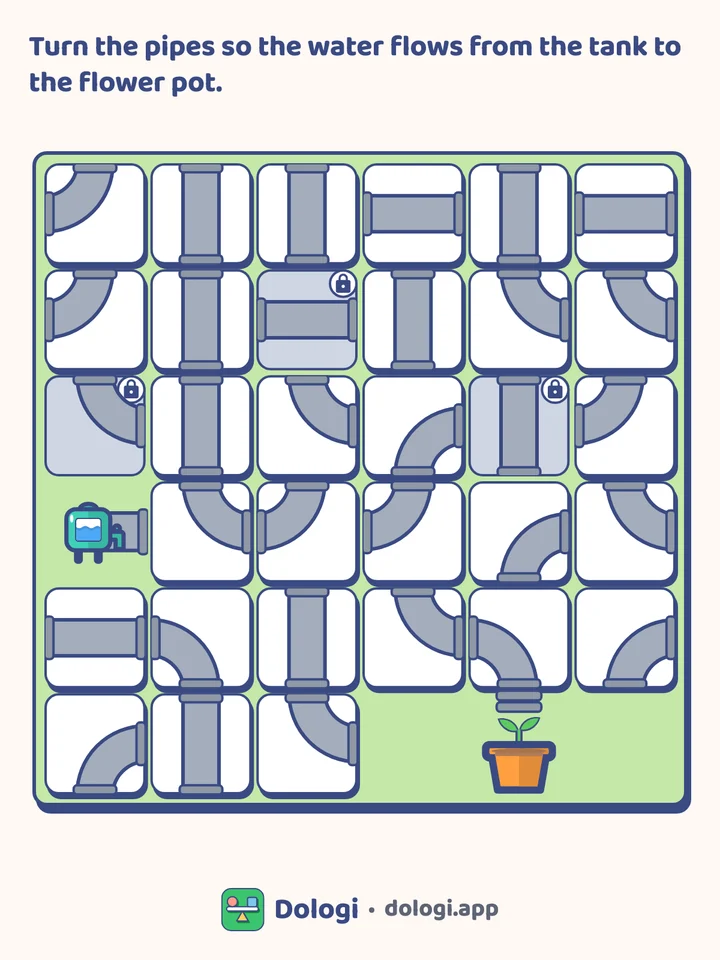
Puzzle 2: Water the flower
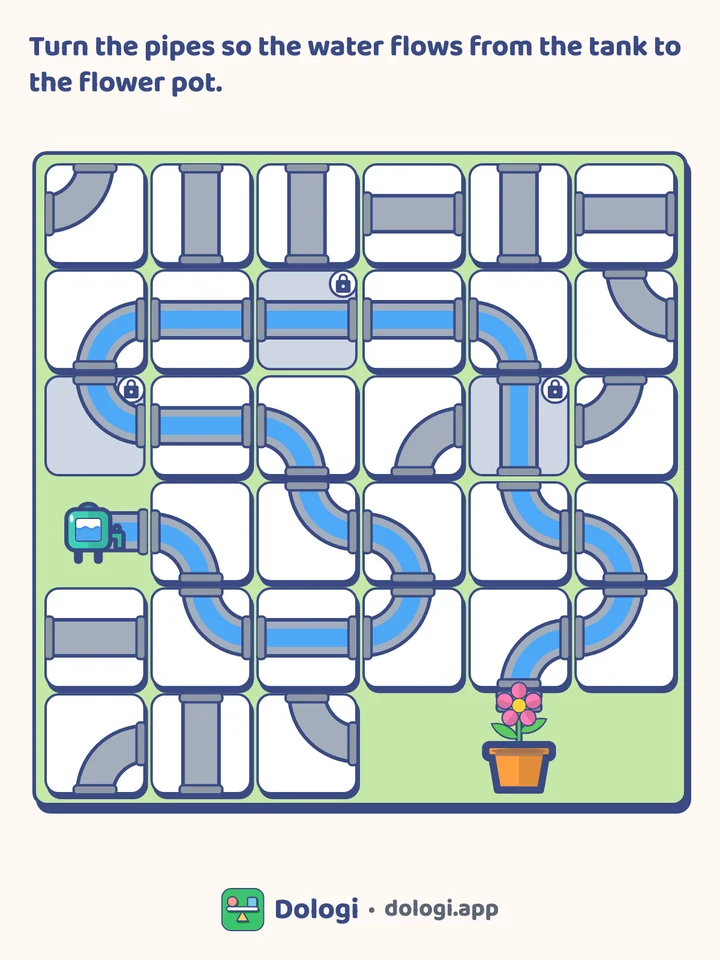
Ages 7–8
What it builds: Your child needs one unbroken path from the tank to the flower pot, and some pipes are locked and cannot turn, so those locked pieces become anchors for the plan, sometimes worked backwards from the pot. Planning from both ends and choosing a smart starting point helps with hard problems and with breaking a big task into steps. Keep playing: draw straight and curved road pieces on cardboard squares and let your child turn and fit them into a road for a toy car from home to school.
Puzzle 3: Turned or flipped
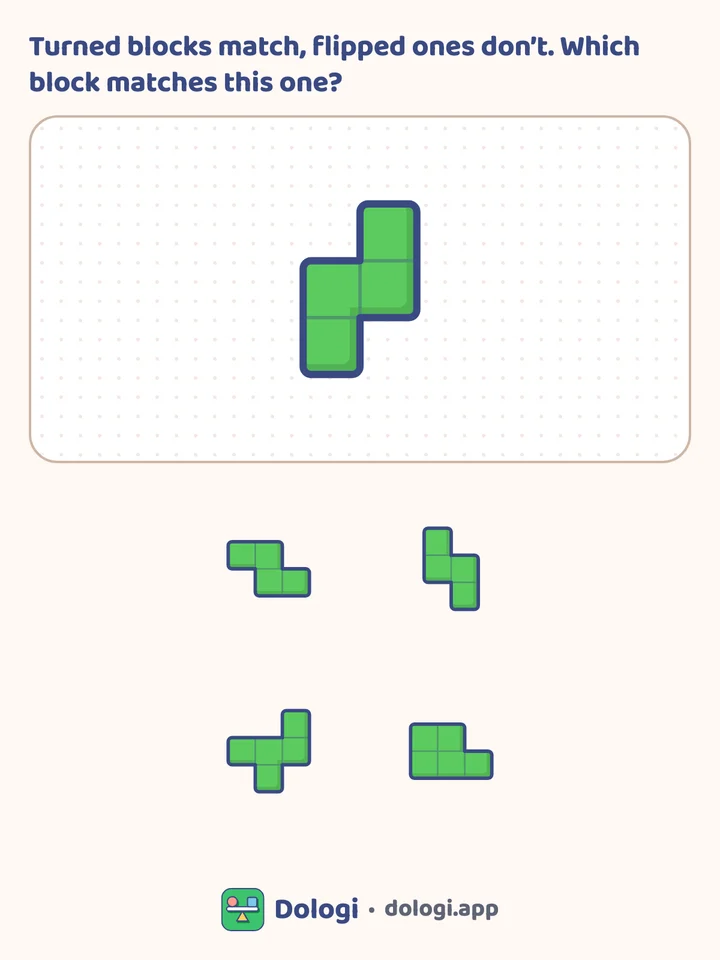
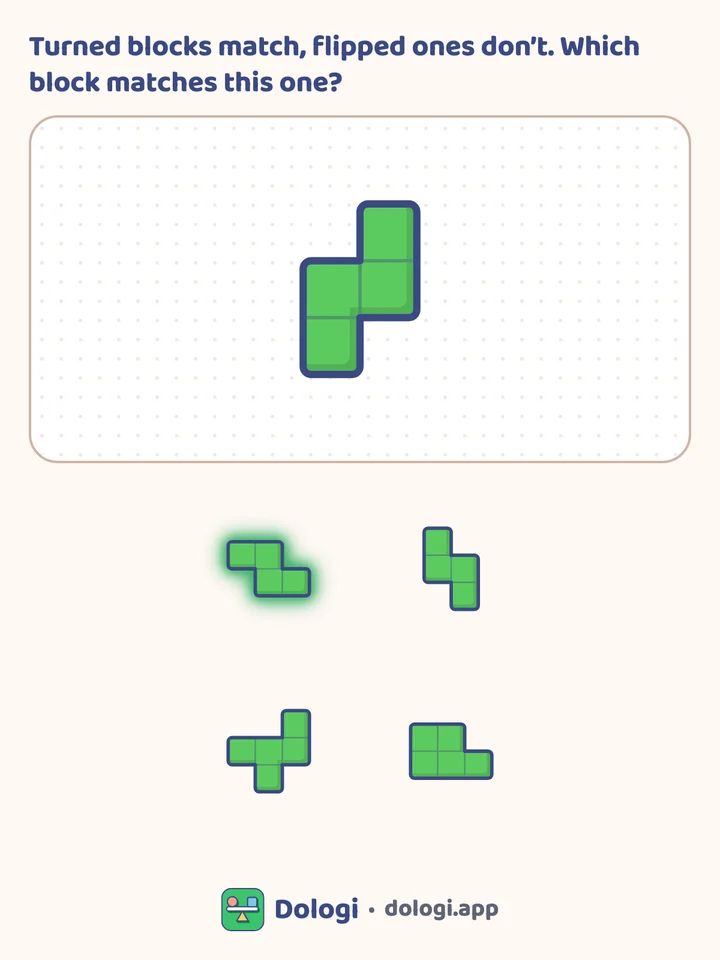
Ages 7–8
What it builds: Your child turns the sample block in their head to compare it with each block below, and has to tell a block that was only turned from one that was flipped like a mirror image. Spotting flips helps keep look-alike letters such as b and d, p and q apart, and lays the ground for geometry. Keep playing: cut a shape from paper colored on one side only, let your child turn it on the table and then flip it over, and see which one still fits the outline.
Puzzle 4: Mirror the block
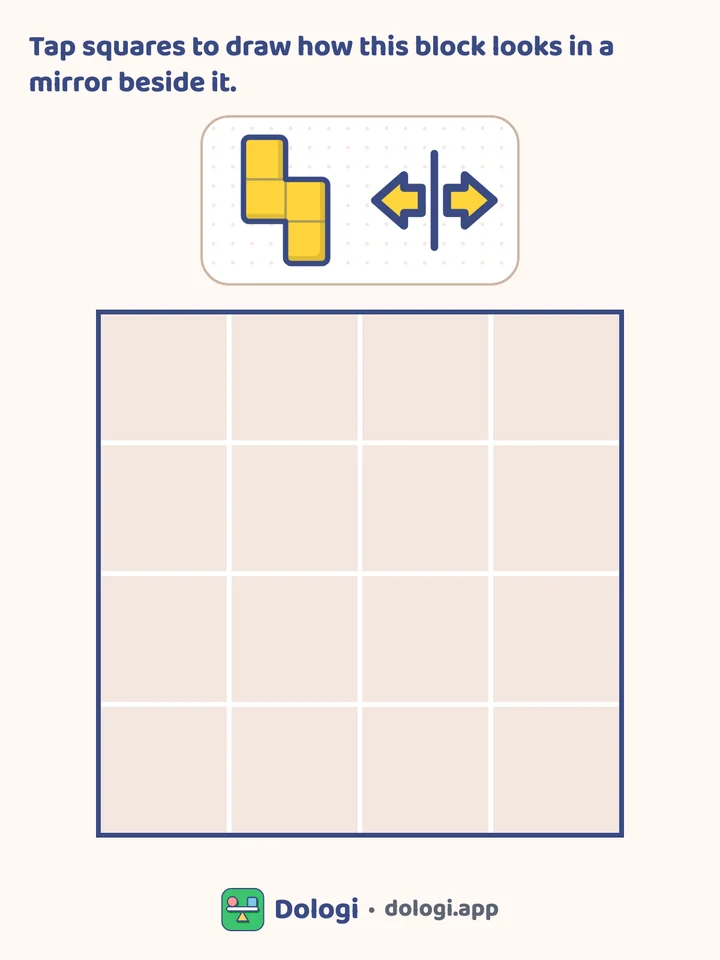
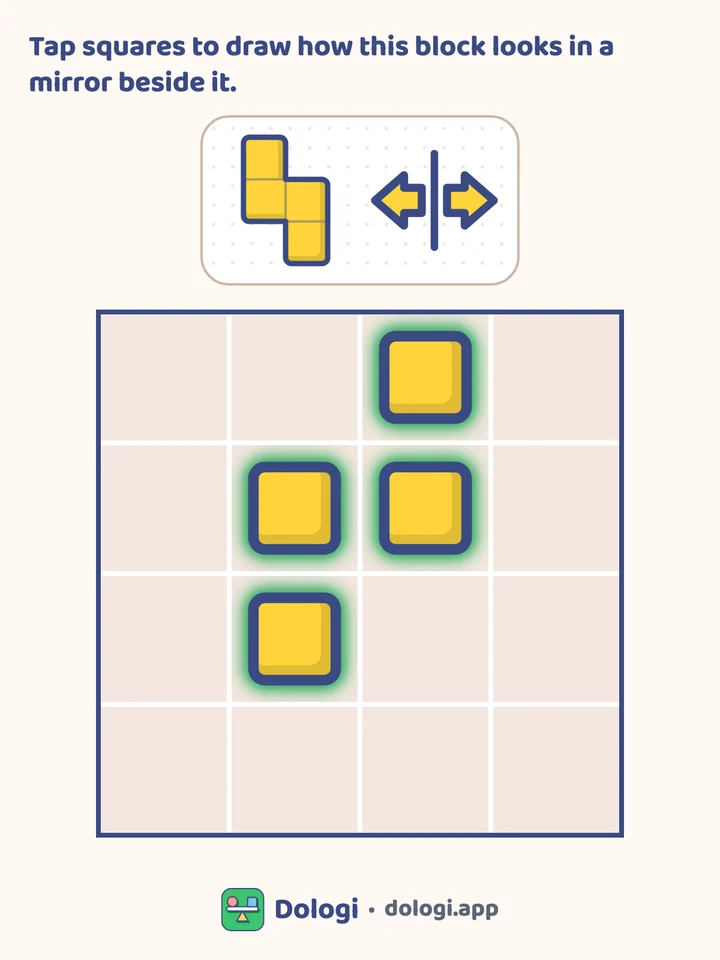
Ages 7–8
What it builds: Your child imagines a mirror standing next to the block: in the mirror, left and right swap while top and bottom stay put, and then fills in each square in the right place. Understanding symmetry helps with drawing balanced pictures, noticing symmetry in letters, leaves and butterflies, and with lines of symmetry at school. Keep playing: color half a shape on squared paper, stand a small mirror along the line so your child can look, then let them draw the other half.
Puzzle 5: Same direction
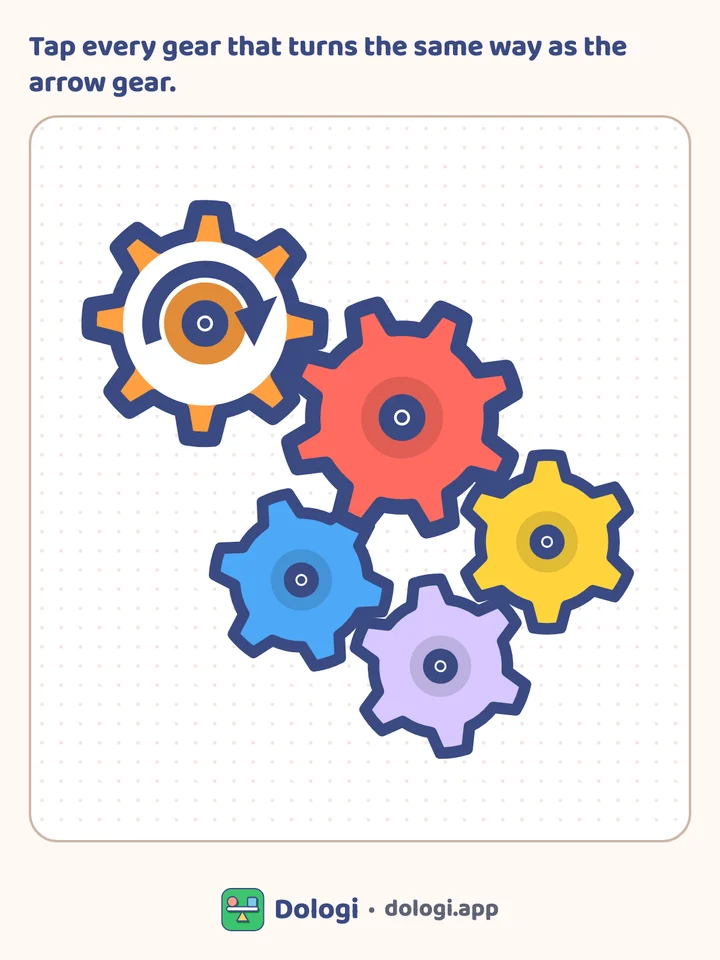
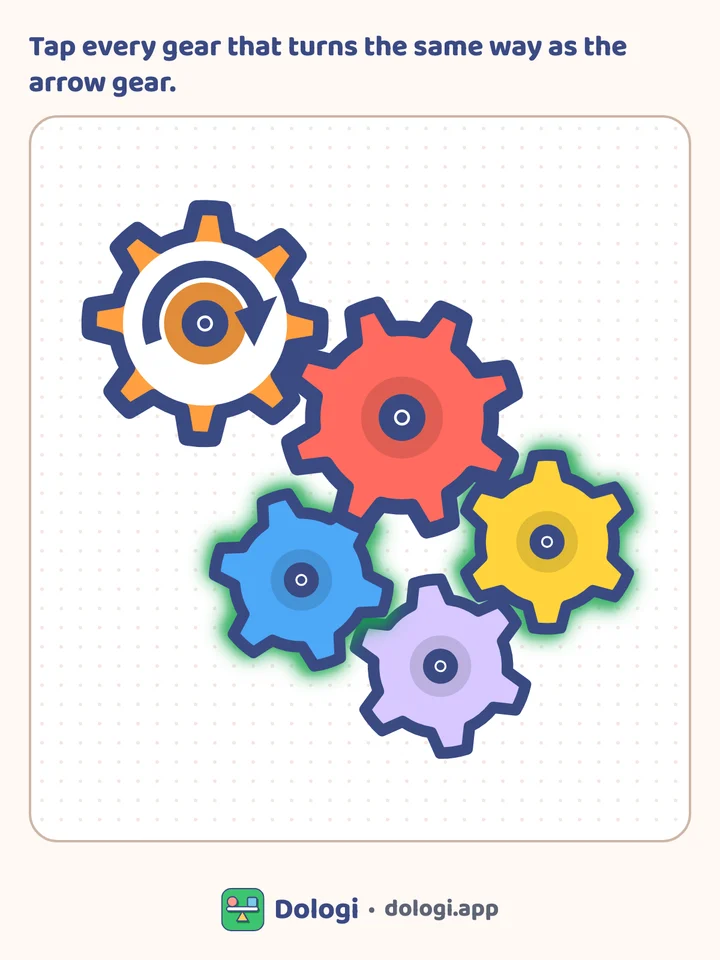
Ages 7–8
What it builds: Two meshing gears always turn opposite ways, so your child follows each touching pair, keeps track of every gear's direction, and double-checks where one gear touches two others at once. Reasoning along a chain and then checking the result is a good habit in math and science. Keep playing: draw a few touching circles on paper, let your child mark each one's turning direction with an arrow, then add a circle touching two others and ask whether it can still turn.
Did your child enjoy these spatial puzzles? The Dologi app has many more of the same kinds, getting harder with age and with how your child plays, so a little practice each day never gets boring.