This second set of spatial puzzles for ages 7–8 brings ten puzzles of more kinds: turning a shape around a center, telling a turned block from a flipped one, moving a disk tower, fitting blocks into a frame, following which way gears spin, seeing a cube stack from one side and steering a light beam with mirrors. At this age your child does more than look at a picture: they hold it in their head, turn it, and plan step by step before acting. The ten puzzles below come from the Dologi app, ordered from easy to harder.
How to use this post: show your child one picture at a time and let them say out loud what they would do first and next, or trace along the picture with a finger. The answer is behind the "Show answer" button under each picture. If a puzzle is hard, let them try it with real things (wooden blocks, coins, a sheet of grid paper) before opening the answer.
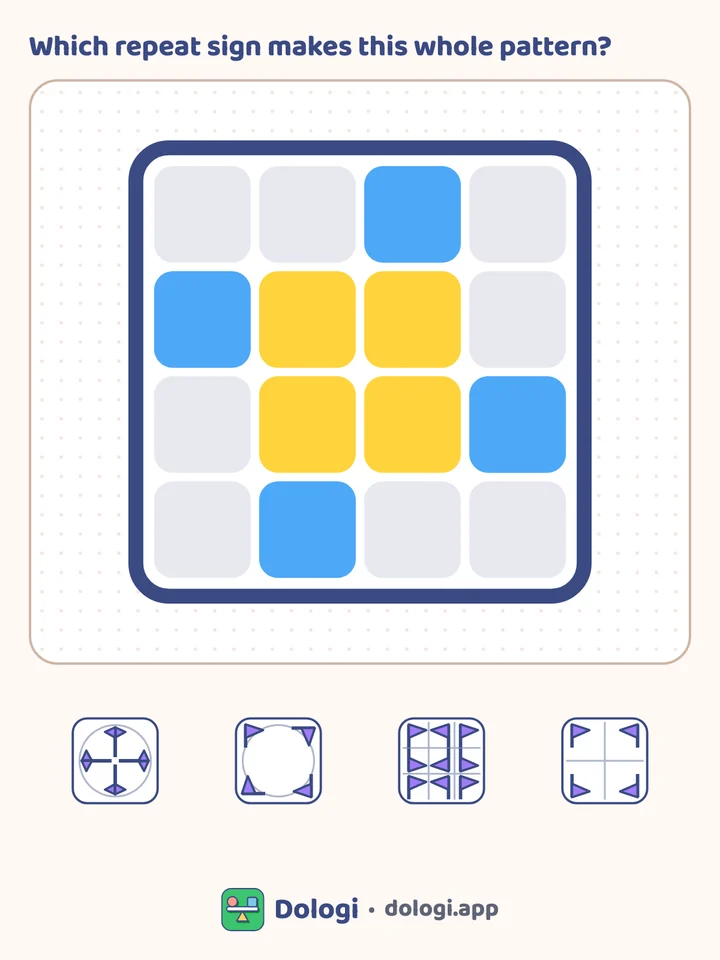
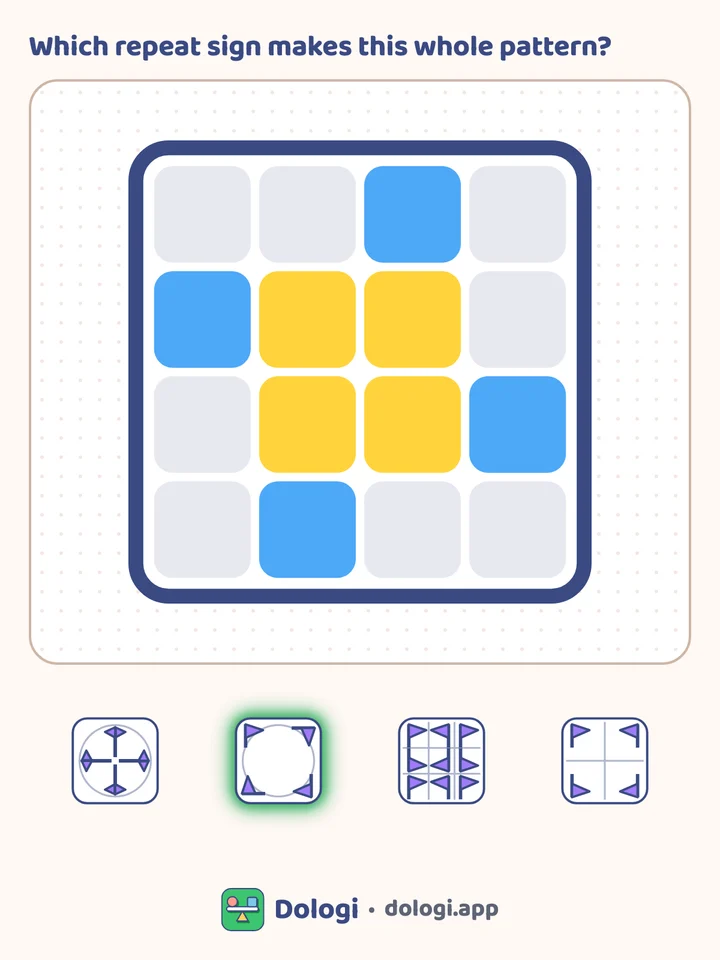
Puzzle 1: Which repeat sign?
Ages 7–8
What it builds: Your child looks at how the blue squares sit around the yellow block in the middle: do they mirror across a line, go round the center, or simply repeat to the side? Then they choose the sign that makes exactly that. Seeing how a pattern was made is the groundwork for symmetry in geometry, and for drawing or cutting paper decorations. Keep playing: fold a sheet of paper in half and then in quarters, cut a few holes, unfold it together and see how the holes repeat.
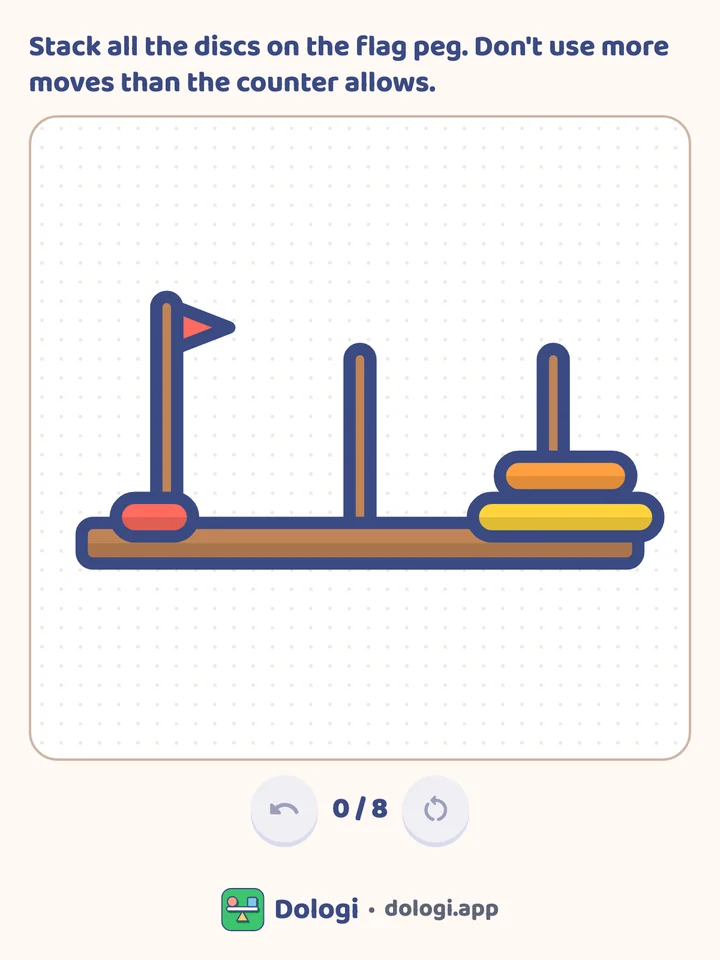
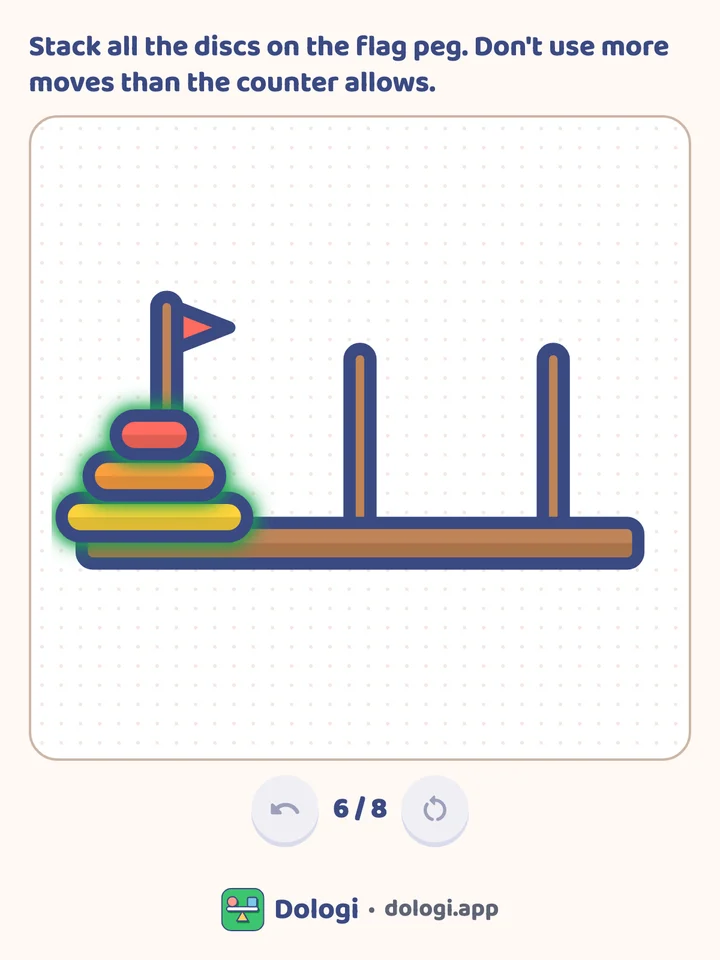
Puzzle 2: Move the tower
Ages 7–8
What it builds: Your child has to move the whole disk tower to the flag peg, one disk at a time, never putting a bigger disk on a smaller one, and within the number of moves allowed. To use few moves, they must think a few steps ahead: which disk has to go first to clear the way for the biggest one. Planning like this helps when tidying up or breaking a long piece of homework into parts. Keep playing: stack three plates or three coins of different sizes into a tower and try moving it somewhere else with the same rules.
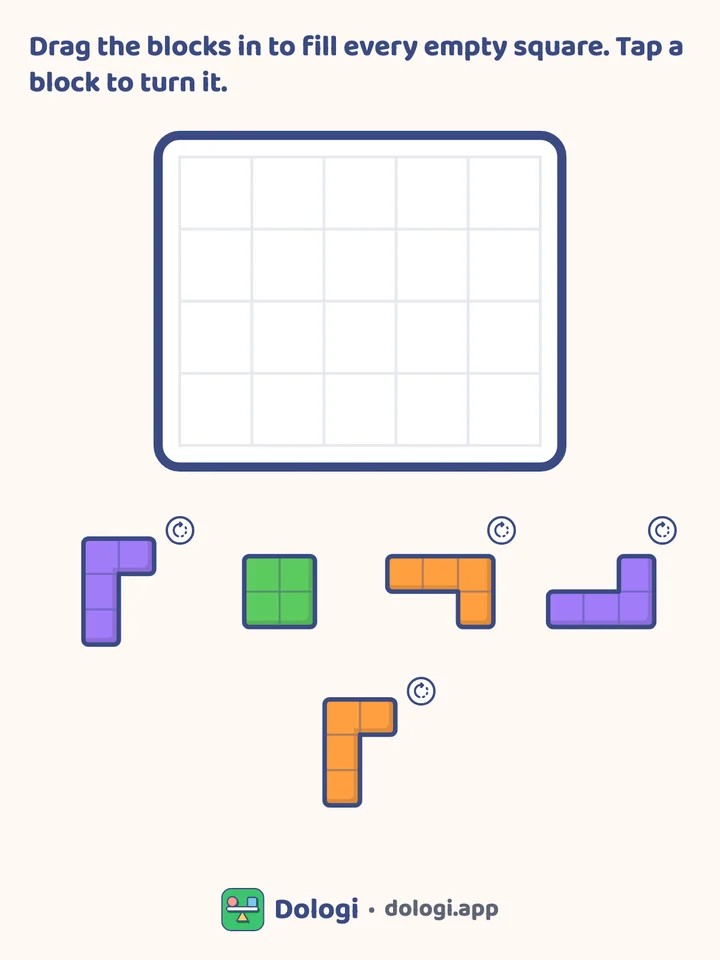
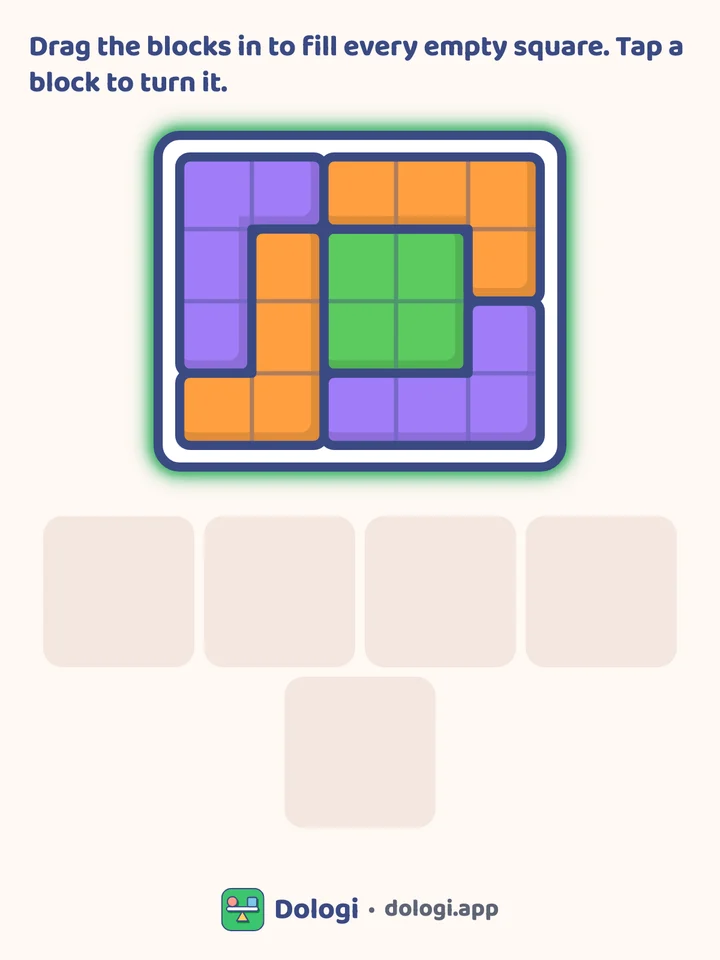
Puzzle 3: Fill it up
Ages 7–8
What it builds: Your child looks at the empty frame and the five loose blocks, compares the number of squares in the frame with the squares in all the blocks, and tries in their head which block goes in which corner and whether it needs turning. Big, awkward blocks are best placed first, small ones fill the gaps later. Fitting pieces snugly like this is a skill they use when packing a box, shelving books or doing jigsaws. Keep playing: cut a few shapes out of card along grid squares, draw a frame on paper, and let your child fill it completely.
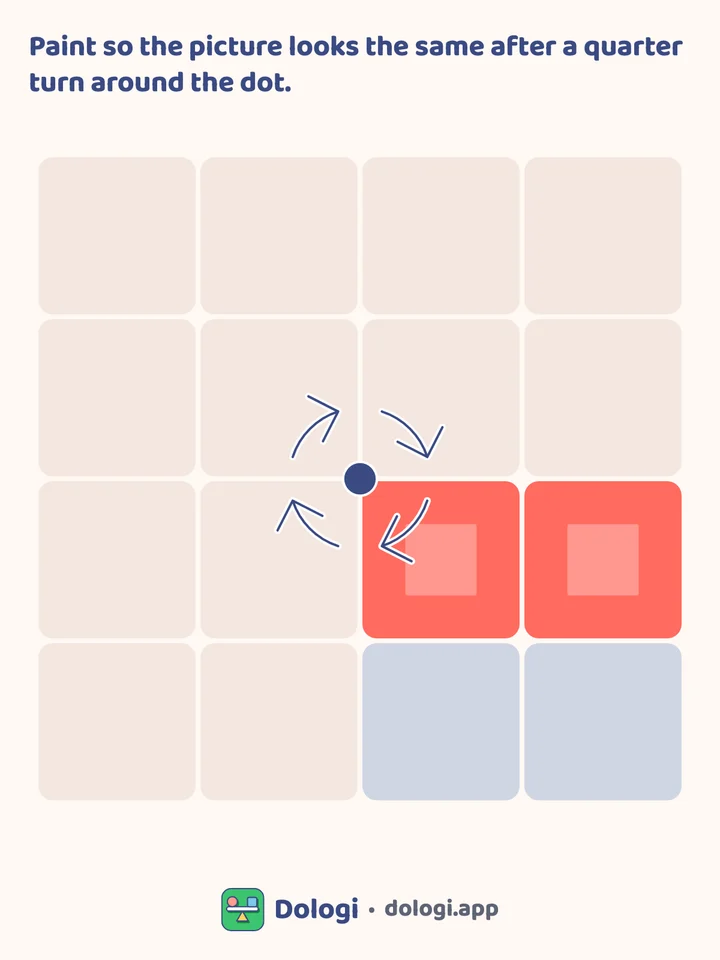
Puzzle 4: Paint around the dot
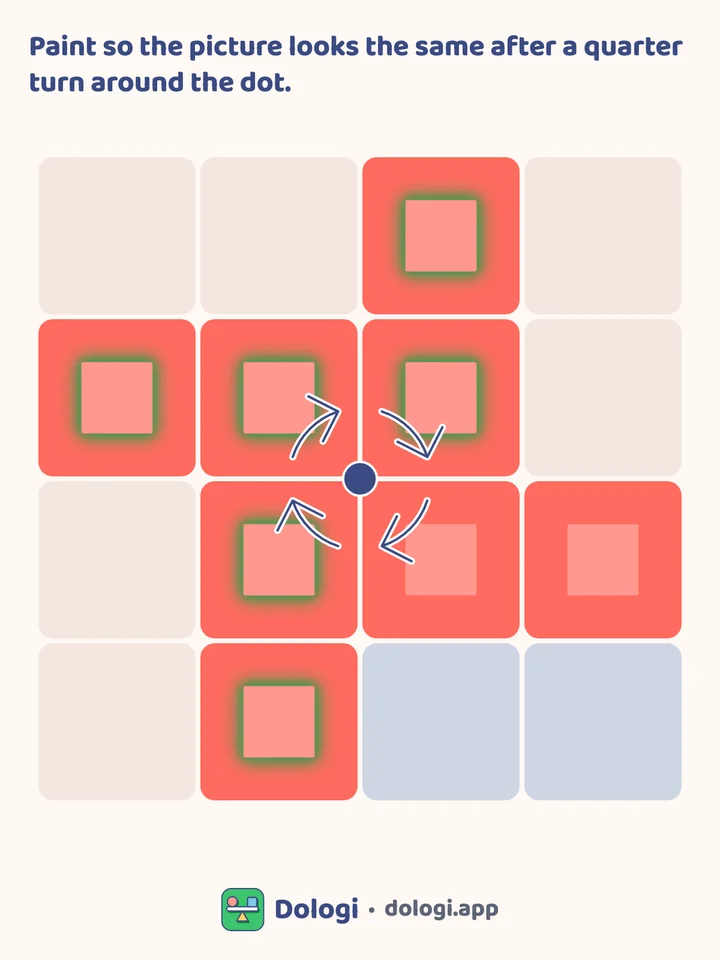
Ages 7–8
What it builds: Your child takes each painted square, turns it a quarter turn around the center dot in their head to see where it lands, paints the new square, and keeps going until the shape looks the same after turning. Turning shapes in the mind is a skill they use in jigsaw puzzles, reading a map held the other way, and learning about angles in math. Keep playing: color a few squares on grid paper, pin the middle with a pencil point, and turn the paper together to check.
Puzzle 5: Repeat moves
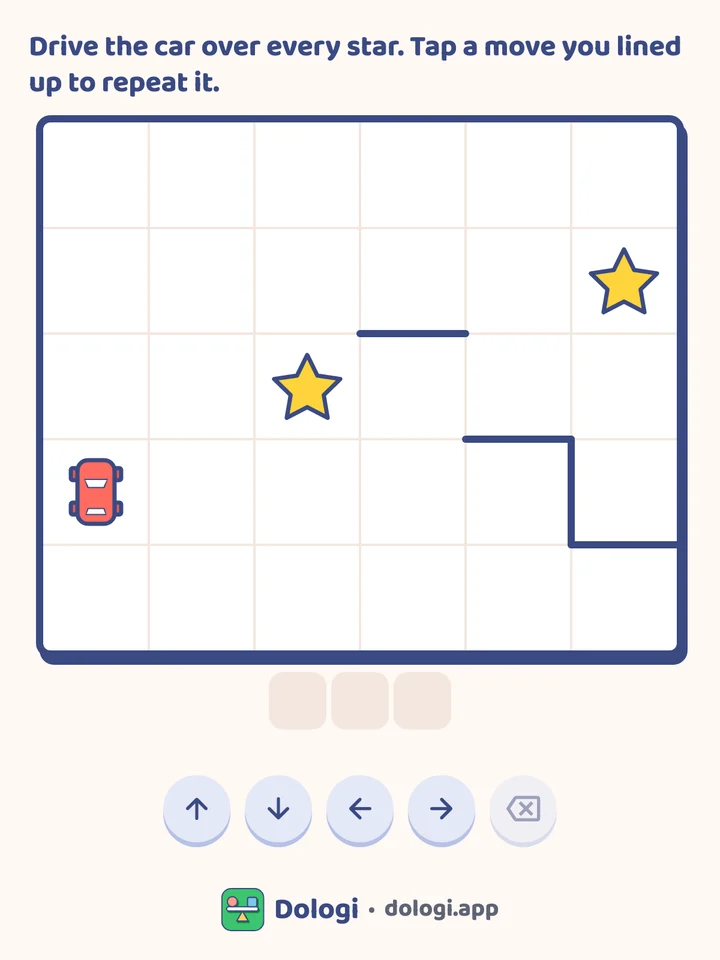
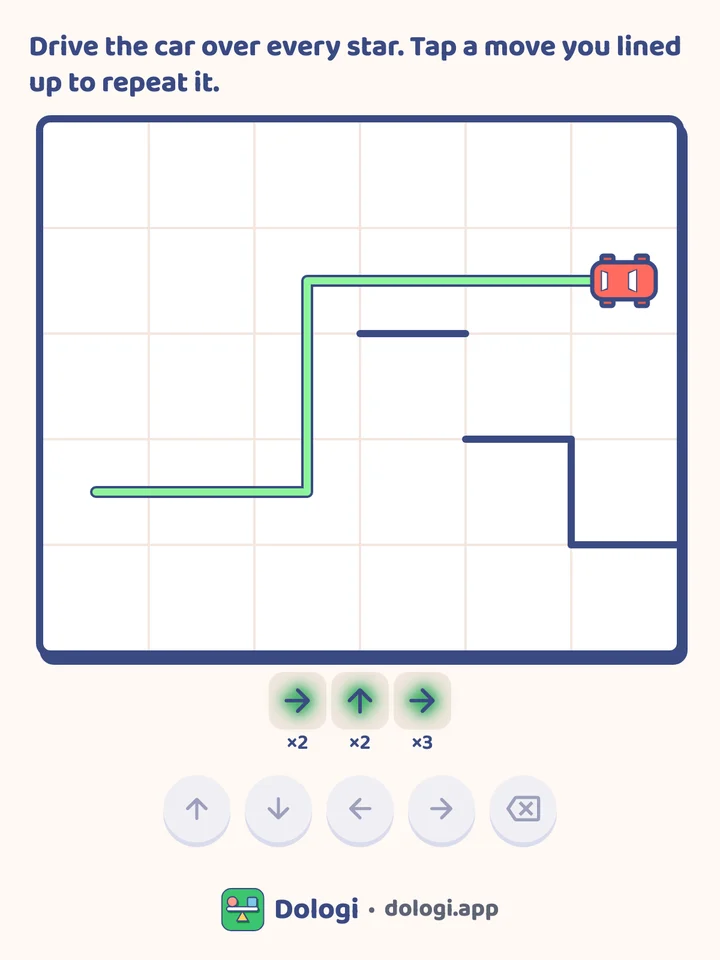
Ages 7–8
What it builds: The car must pass every star and avoid the walls, but there are only three slots for commands; tapping a placed command makes it repeat. Your child counts how many squares the car goes in each direction and groups the same steps into one repeated command. Grouping repeated steps is a core idea of coding, and it helps them describe a route in few words. Keep playing: guide your child around the house using only three commands, such as "forward 3 steps, turn left, forward 2 steps".
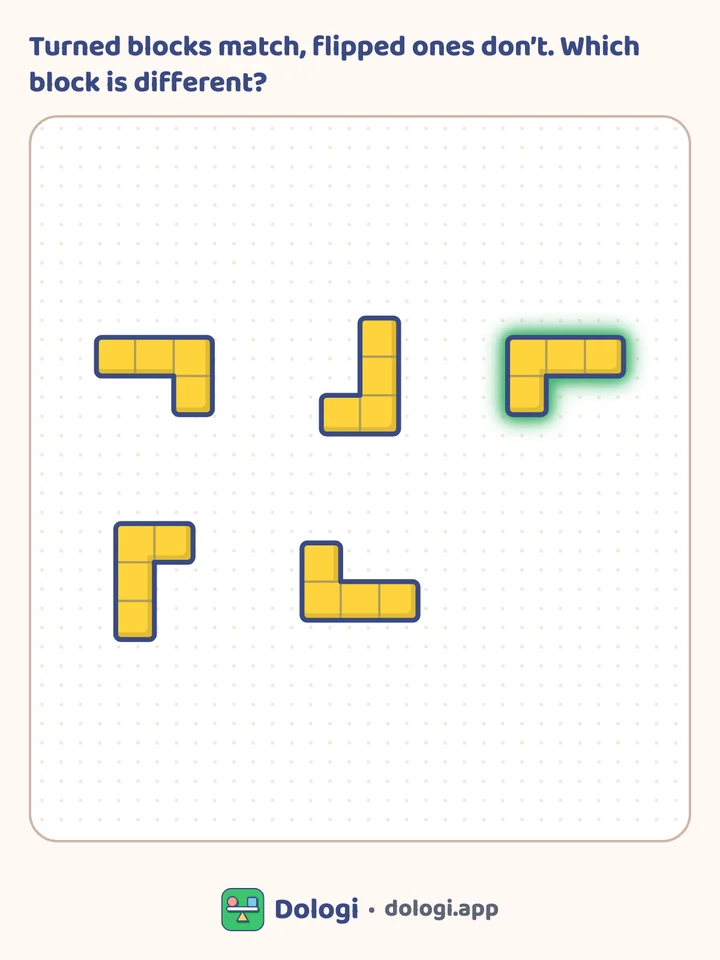
Puzzle 6: The flipped block
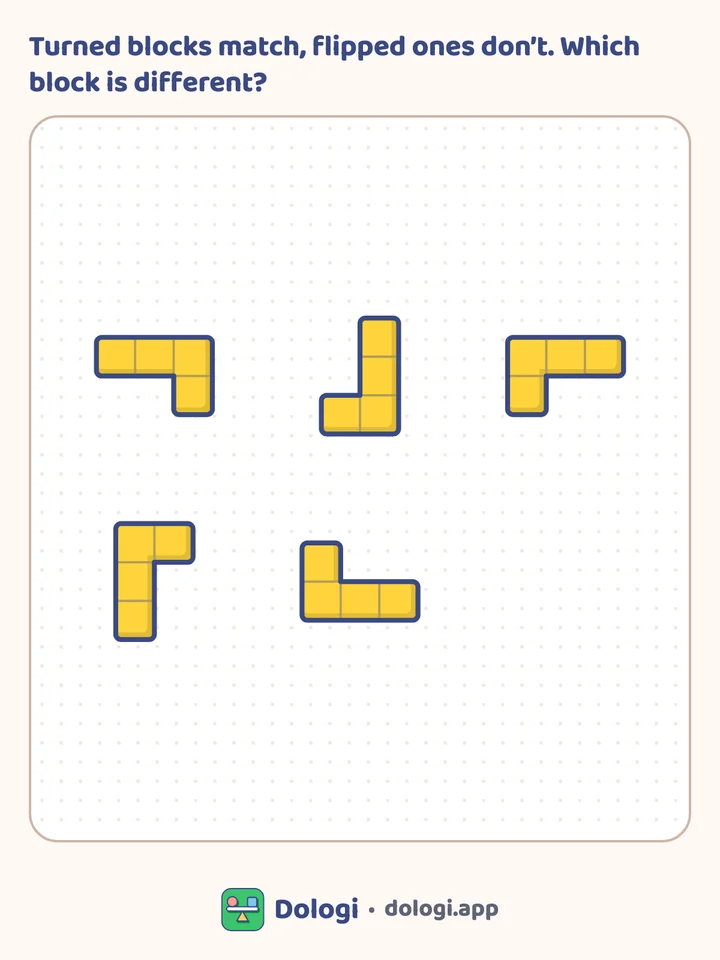
Ages 7–8
What it builds: Five blocks have the same shape but lie in different directions; your child turns each one in their head to face the same way and looks for the one that can never line up because it has been flipped like a mirror image. Telling a turned shape from a mirrored one helps them tell b from d, and a left shoe from a right one. Keep playing: cut a few L shapes out of paper, turn one over, mix them up, and ask your child to find the flipped one without lifting any.
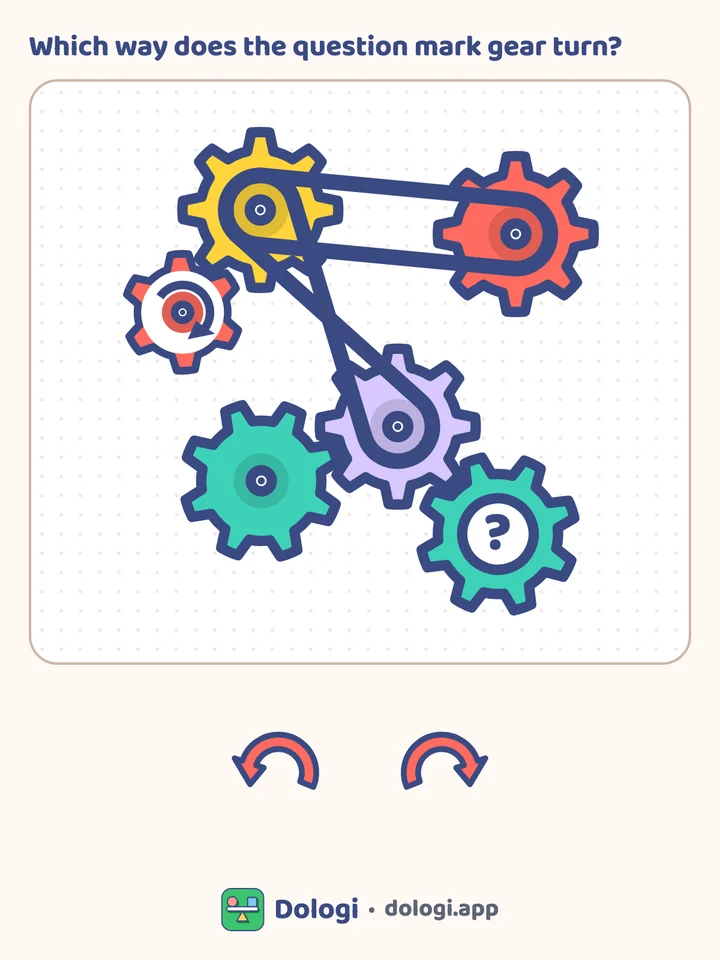
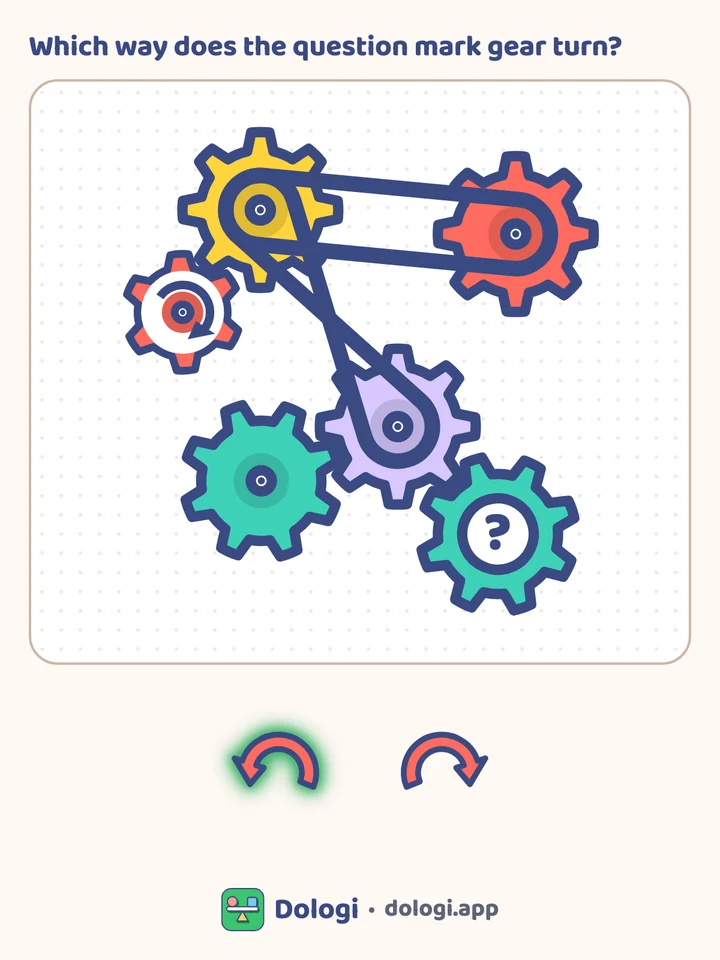
Puzzle 7: Spinning gears
Ages 7–8
What it builds: Your child starts from the gear with the arrow and goes step by step to the gear with the question mark: two gears whose teeth touch turn opposite ways, a straight belt keeps the direction, and a crossed belt changes it. Following a chain of cause and effect like this helps them understand machines around them, from bikes to clocks. Keep playing: look at a bike chain together, turn the pedal, and ask which way the back wheel turns.
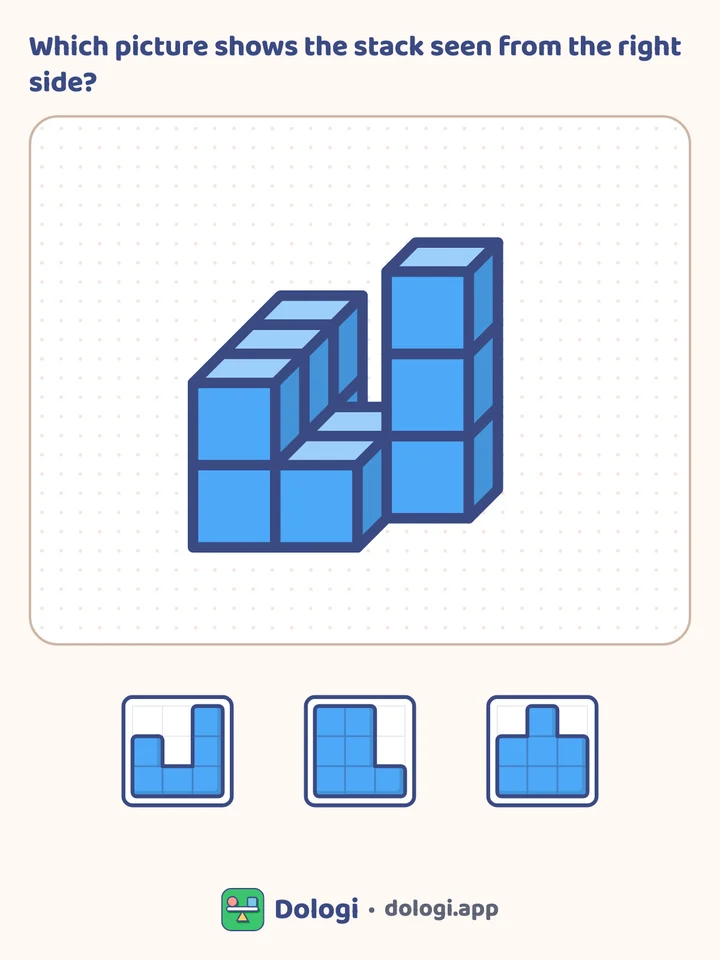
Puzzle 8: Seen from each side
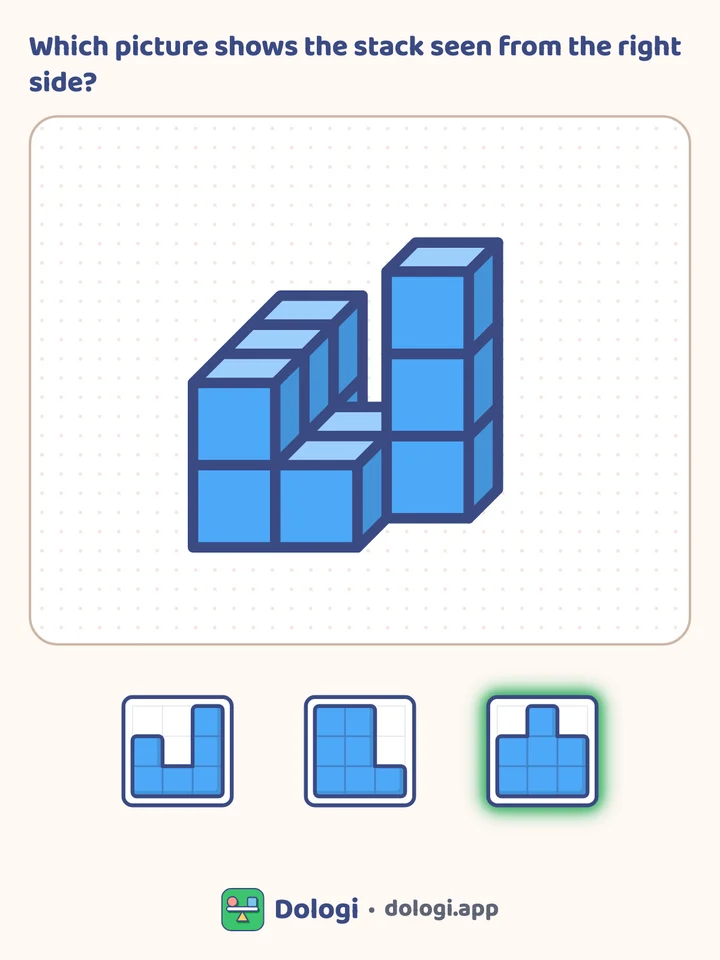
Ages 7–8
What it builds: Your child looks at the cube stack and imagines standing on the side the question asks about: from there, which column is tall, which is short, which is hidden, and then picks the flat picture that matches. Changing viewpoint in the mind is a skill they use when reading plans, giving someone directions, and later in solid geometry. Keep playing: stack a few wooden blocks on the table, have your child draw what they see from above, then crouch down to look from the side and compare.
Puzzle 9: Build from the plan
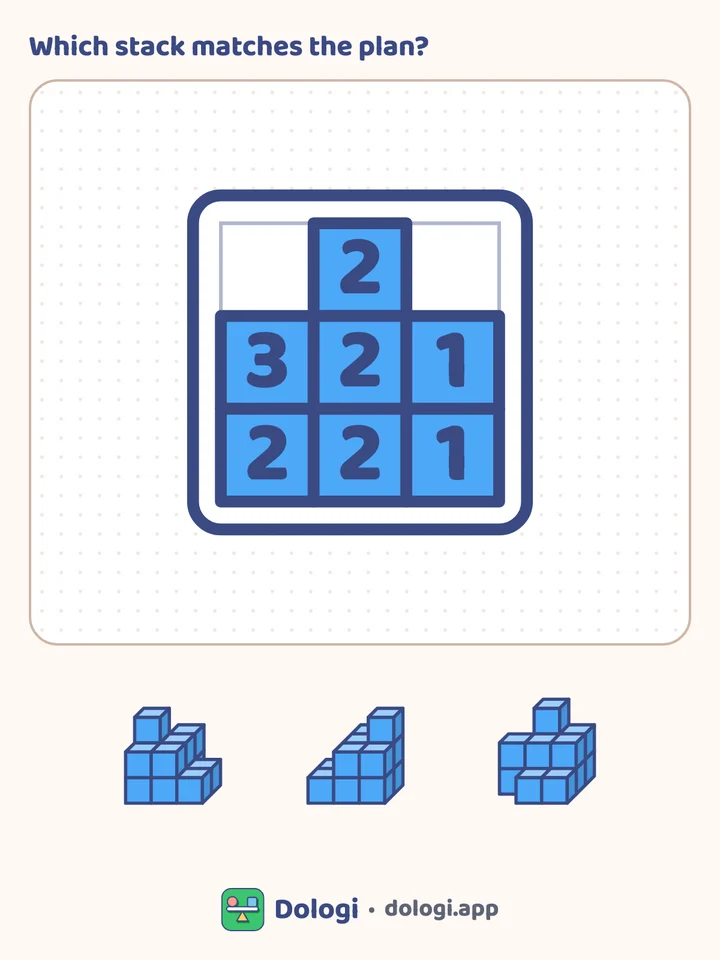
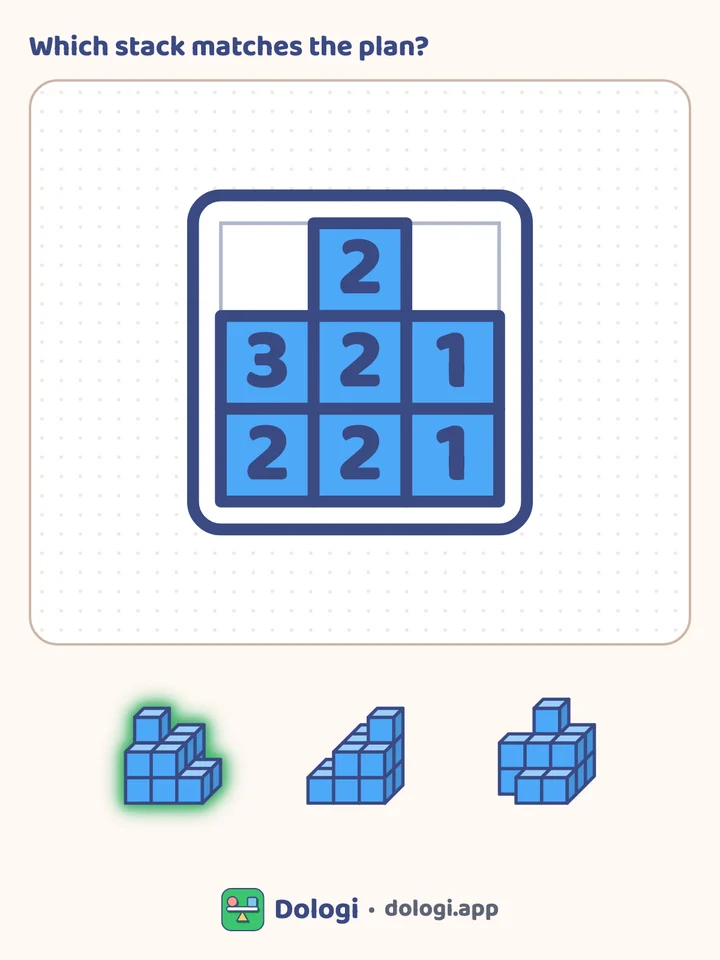
Ages 7–8
What it builds: The plan is a view from above, and each square shows how many cubes are stacked there; your child checks each square against each column of every stack to find the one that matches completely. Reading a numbered plan and turning it into a solid shape is how architects work, and it helps when building toys from instructions. Keep playing: draw a 3 × 3 grid, write numbers in a few squares, and let your child build the plan with wooden blocks.
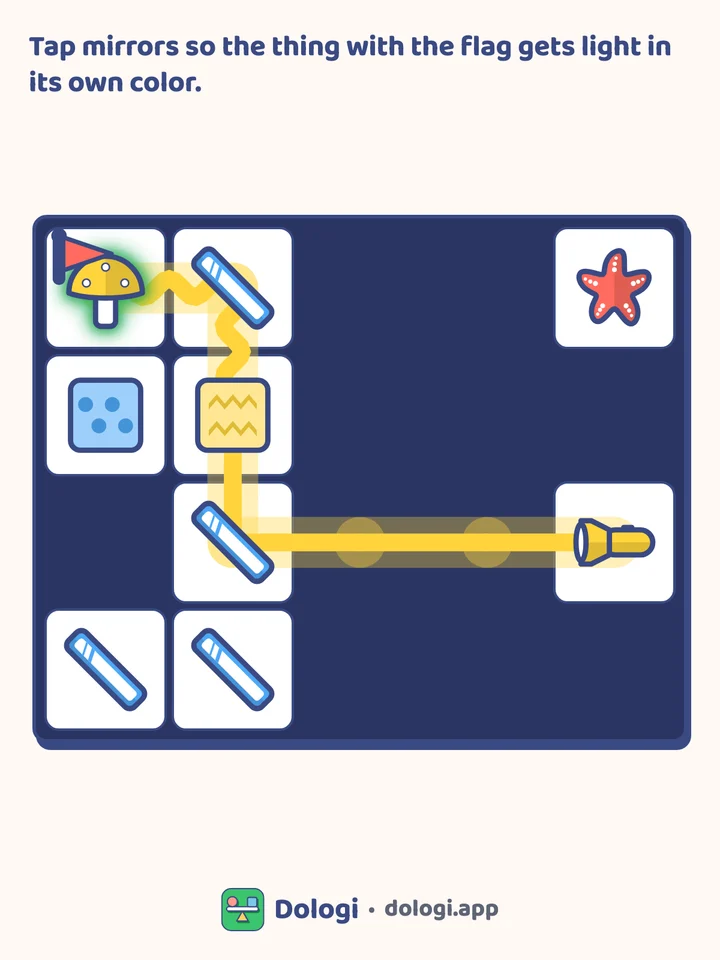
Puzzle 10: Steer the light through colored glass
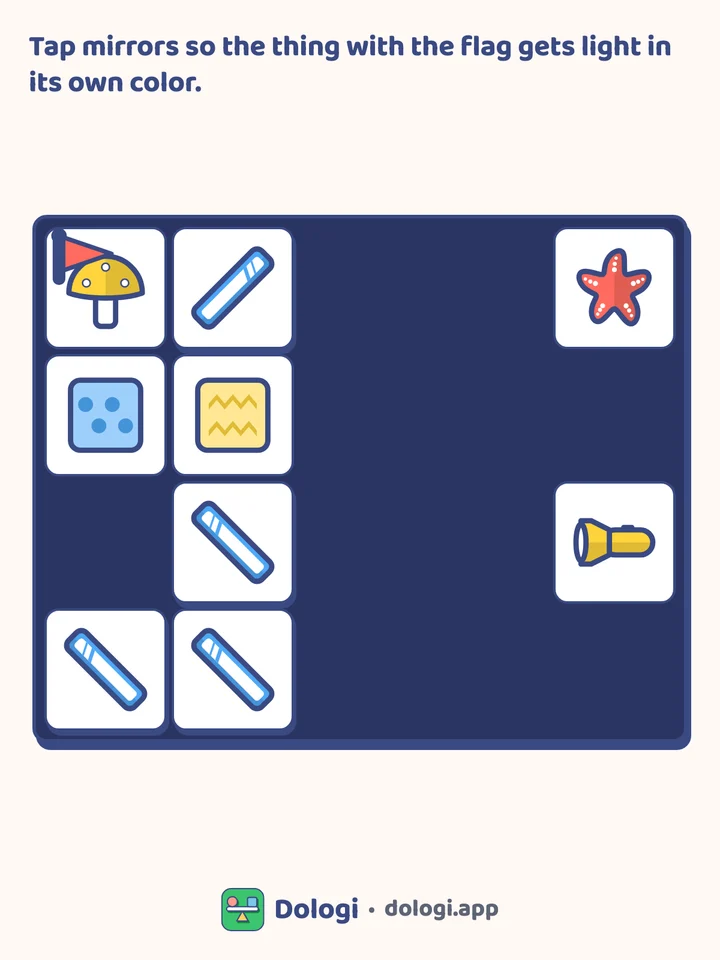
Ages 7–8
What it builds: Tapping a mirror turns it and changes the beam's direction; a beam that passes through a colored glass takes on that color. Your child traces the beam from the flashlight and picks which mirrors to turn so the beam both passes the right glass and reaches the object with the flag. Keeping two conditions in mind while planning a route helps with multi-step problems and with learning about light in science. Keep playing: in a dark room with a flashlight and a small mirror, try together to bounce the beam onto a toy you chose beforehand.
If your child enjoyed these puzzles, the Dologi app has many more of the same kinds: taller towers, bigger frames to fill, higher cube stacks and bigger mirror mazes. The puzzles get harder with age and with how your child plays, so they can practice a little each day without getting bored.