At ages 8–10, children's spatial thinking is ready for harder work: folding a flat shape into a solid in their head, spotting slides, turns and flips in a pattern, finding the bug in a chain of commands, and thinking several moves ahead. These are the very skills used in geometry, coding, design and building puzzles. The five puzzles below come straight from the Dologi app, suit kids ages 8–10, and go from easy to harder.
How to use this post: show your child one picture at a time and let them think it through, on scrap paper if they like, before answering. The answer is behind the "Show answer" button under each picture. If a puzzle feels hard, encourage them to make a paper model (fold, cut, move coins) to test their idea before opening the answer.
Puzzle 1: Fix the drawing
Ages 8–10
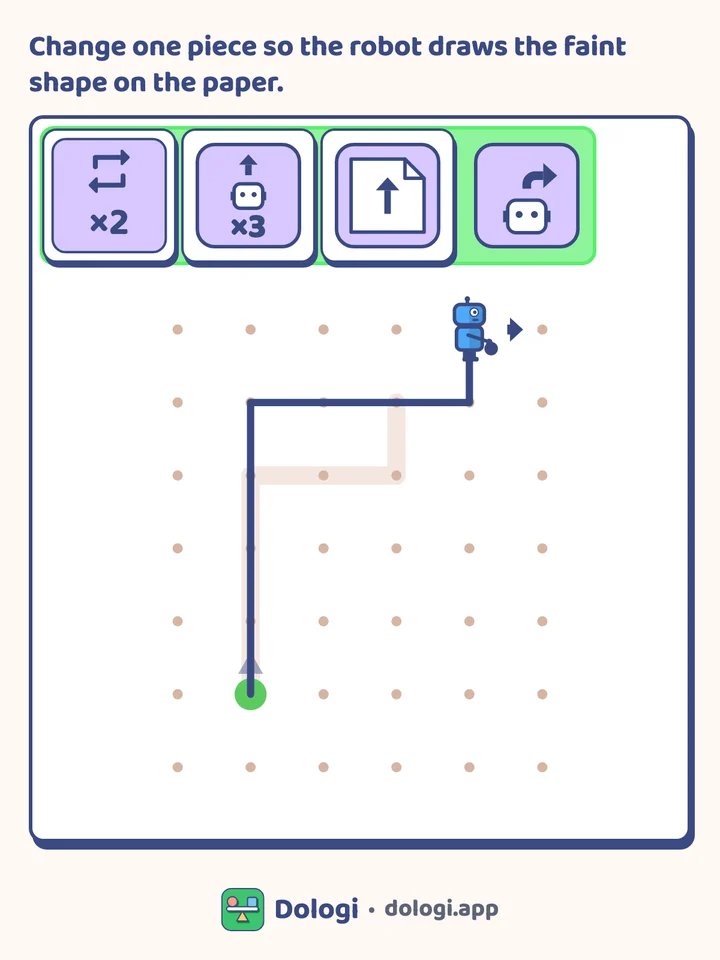
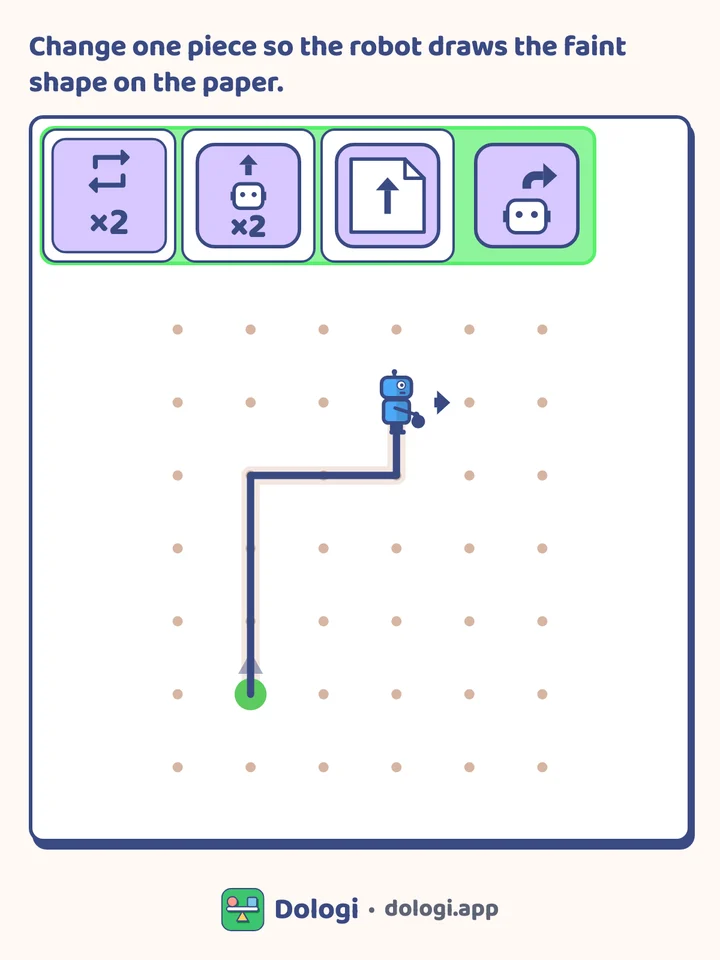
What it builds: Your child compares the line the robot is drawing with the faint target shape, finds where the two start to differ, and traces back to the command tile causing it so they change exactly one tile. Finding and fixing a mistake like this is what programmers do every day, and it is also how children check their own math. Keep playing: write a route around the house as steps like "3 steps forward, turn left" with one step wrong on purpose, and let your child walk it and find the wrong step.
Puzzle 2: Fold a cube
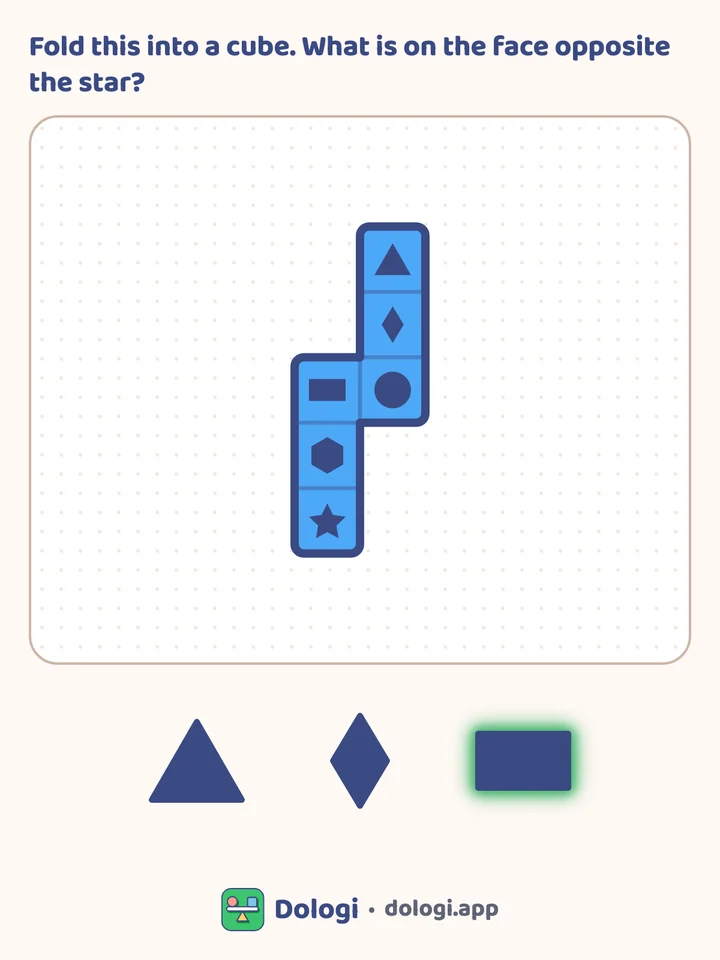
Ages 8–10
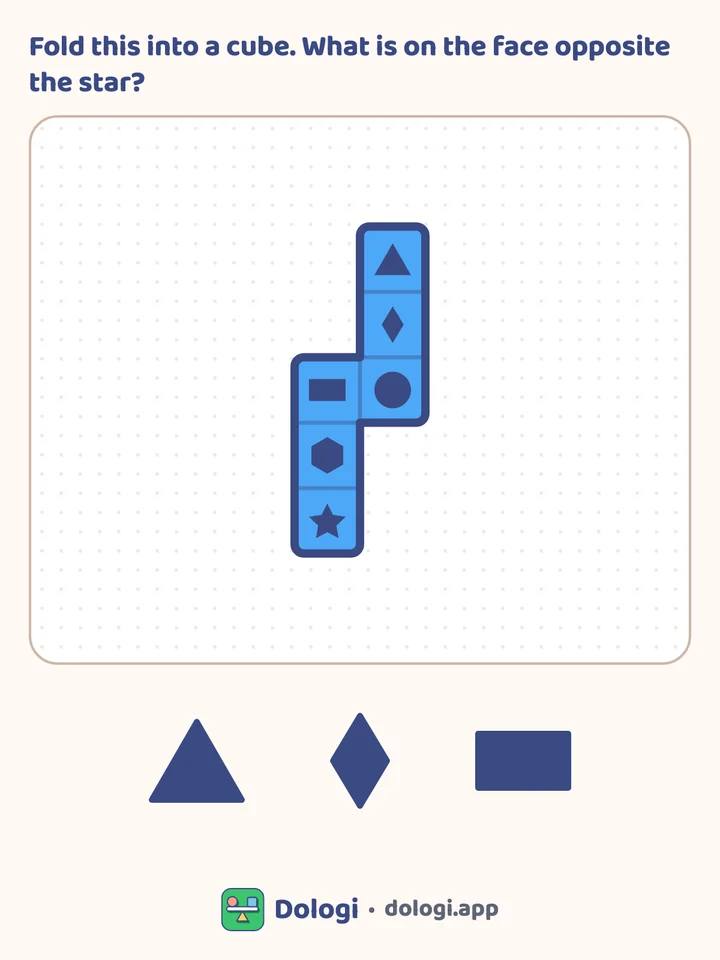
What it builds: Your child folds the net into a cube in their head, keeping track of which face lands where, to work out which two faces end up opposite each other. Turning a flat shape into a solid in the mind is the base of solid geometry and technical drawing, and handy for wrapping gifts or making boxes. Keep playing: draw a different net on cardboard with a picture on each face, let your child guess the opposite pairs, then cut it out and fold it to check.
Puzzle 3: Repeat patterns
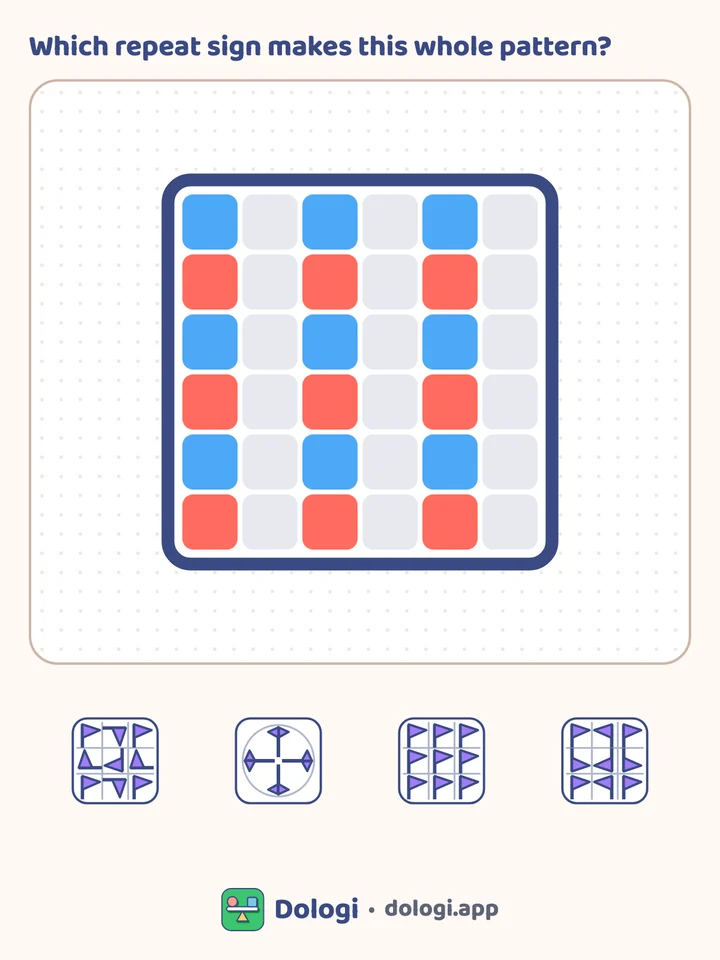
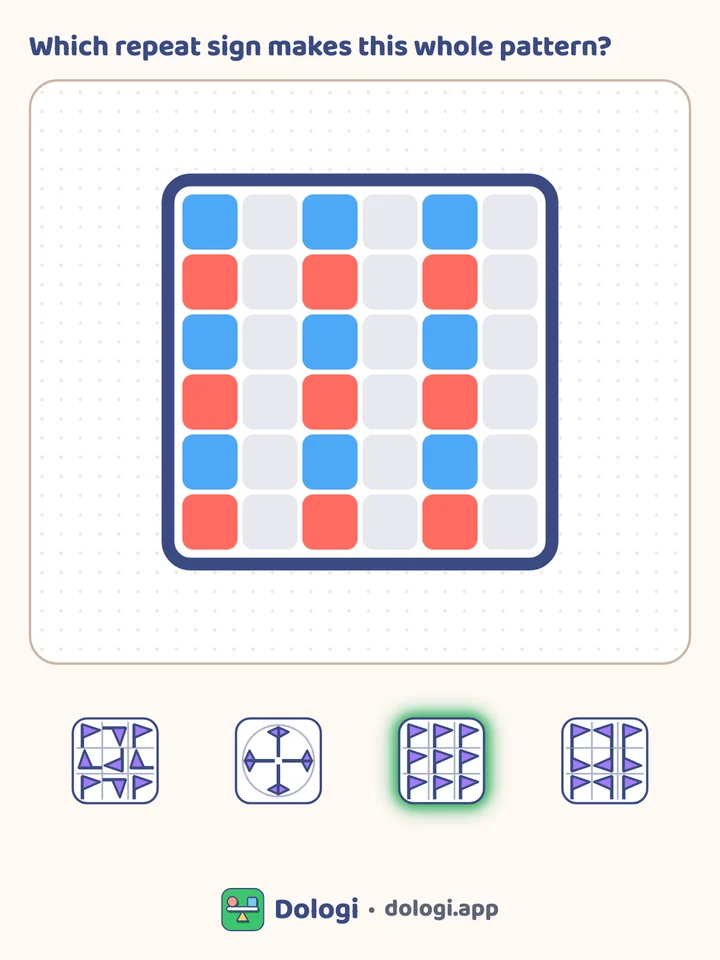
Ages 8–10
What it builds: Each small tile below shows one way to repeat a motif: sliding it along, turning it around a point, or flipping it like a mirror, and your child has to find the one that makes the big pattern. Seeing transformations in patterns helps with slides, turns and flips at school and with noticing the rules in floor tiles, fabrics and wrapping paper. Keep playing: carve a stamp from a potato and print rows together by sliding, turning and flipping it, then compare how the patterns differ.
Puzzle 4: Slide the picture
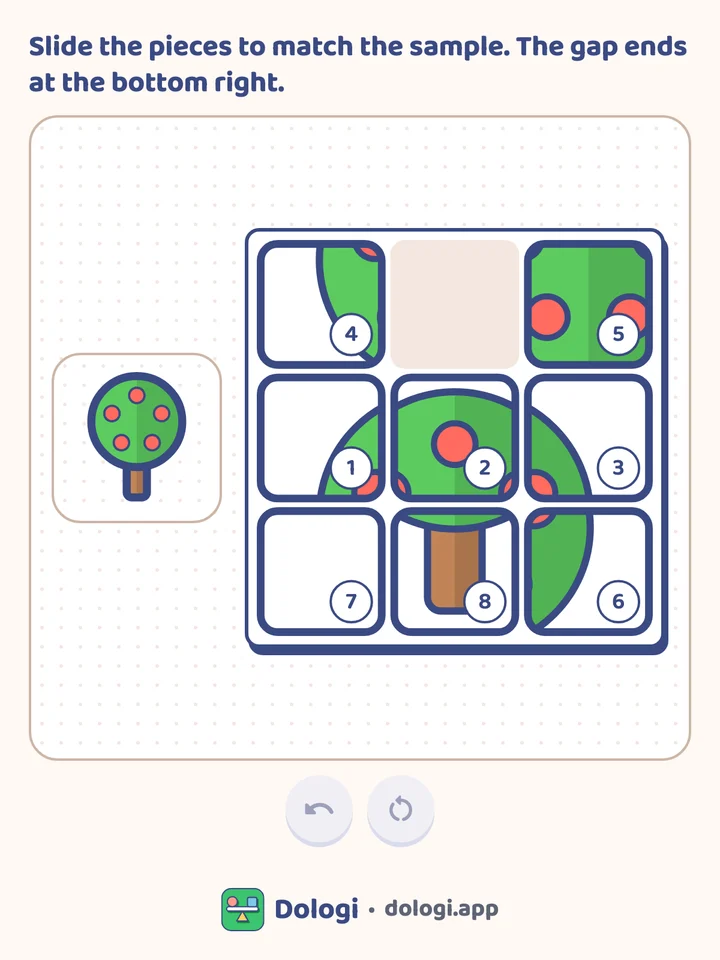
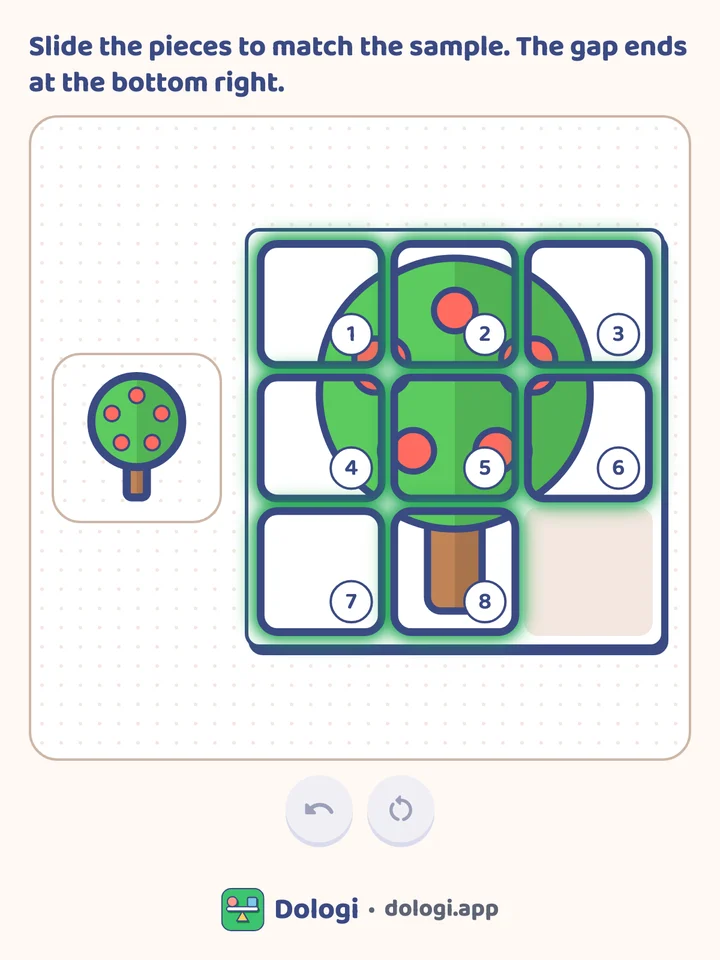
Ages 9–10
What it builds: Your child has to think several moves ahead: fix one row at a time, and sometimes push a piece that is already in place out of the way to open a path for another. Planning many steps and accepting one step back to go two steps forward is a problem-solving skill they use in their studies too. Keep playing: draw a 3 × 3 grid on paper, place 8 numbered coins with one square empty, and let your child sort them only by sliding coins into the empty square.
Puzzle 5: What will it draw?
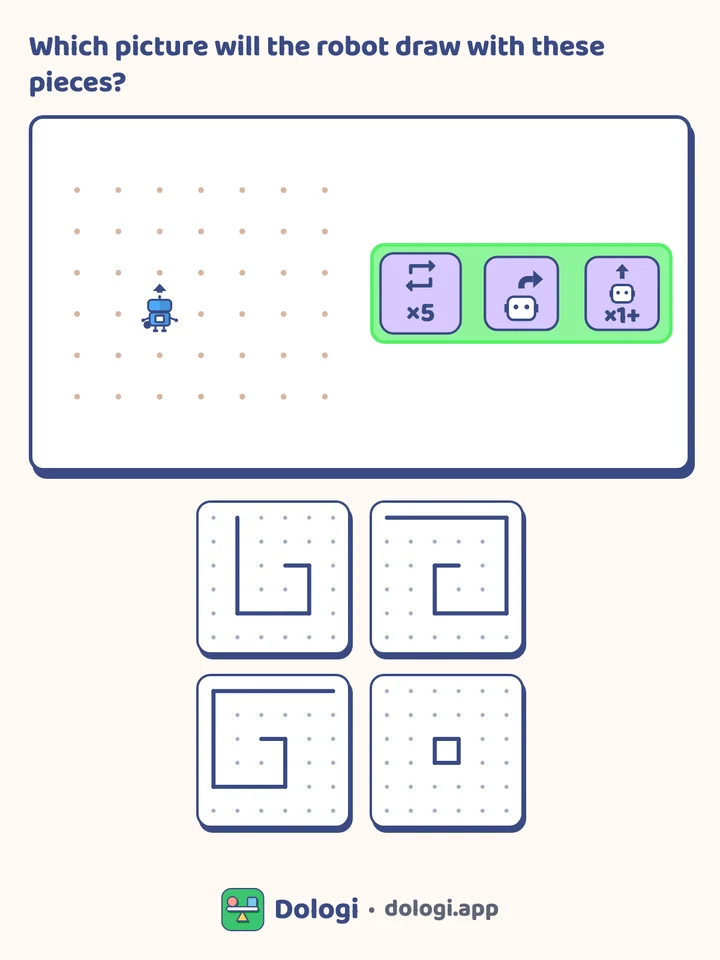
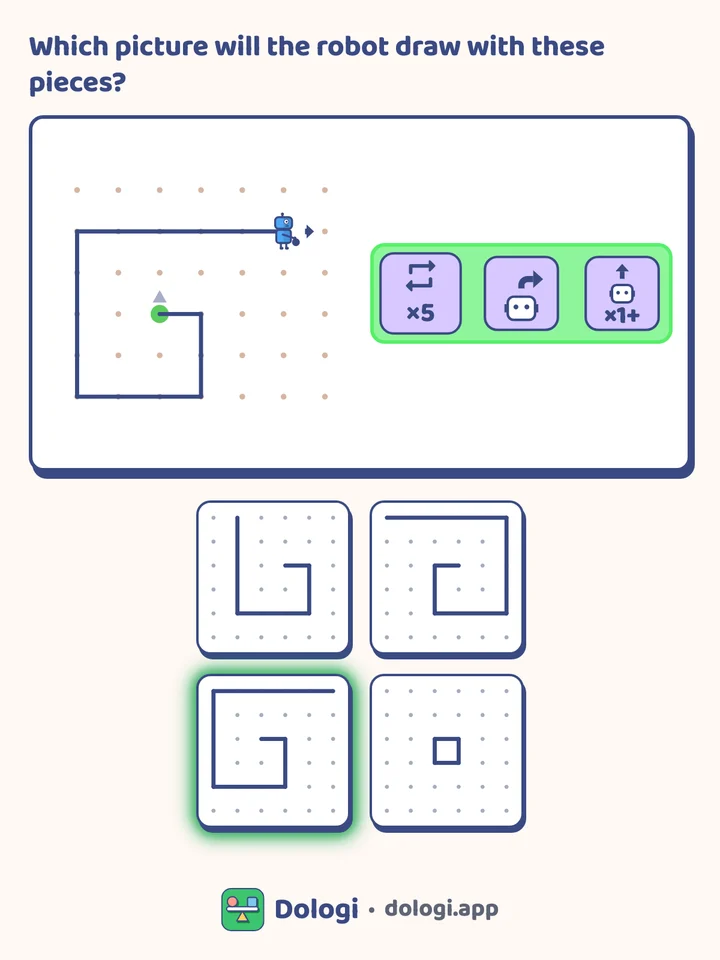
Ages 9–10
What it builds: The repeat tile runs the group of commands several times, and the "×1+" tile means the number of steps grows by one after each round, so your child tracks the direction and the growing step count at the same time. A number that changes with every loop is exactly the idea of a variable in coding. Keep playing: in a yard or a big room, your child walks 1 step and turns right, 2 steps and turns right, 3 steps and turns right, guessing first what shape their path will make.
Did your child enjoy these spatial puzzles? The Dologi app has many more of the same kinds, getting harder with age and with how your child plays, so a little practice each day never gets boring.