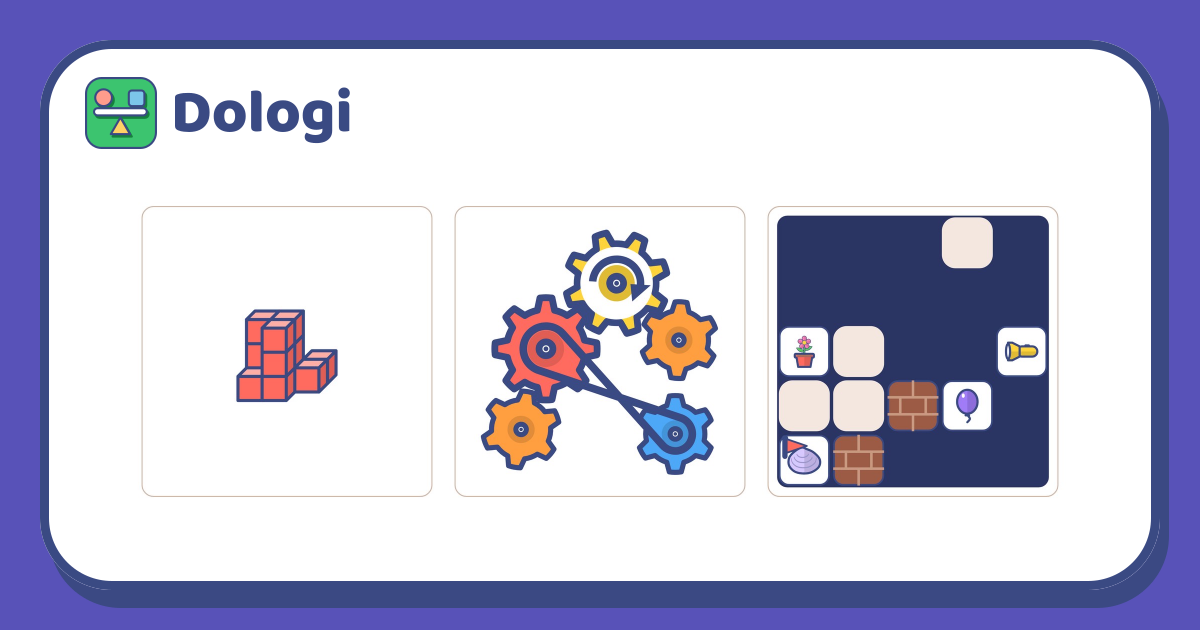
At ages 8–10, children can hold a shape in their head and turn, flip, fold or roll it through several steps without touching anything. They are also starting to plan: thinking ahead about a route, the order of steps, and where they might get stuck. This kind of spatial thinking supports geometry, map reading, coding, and everyday jobs like packing a suitcase. The ten puzzles below come straight from the Dologi app, suit kids ages 8–10, and go from easy to harder.
How to use this post: show your child one picture at a time and let them think it through, on scrap paper or with real objects if they like, before answering. The answer is behind the "Show answer" button under each picture. There is no need to do them all at once: two or three a day is enough to keep it fun and make them want more.
Puzzle 1: Pinwheel painting
Ages 8–10
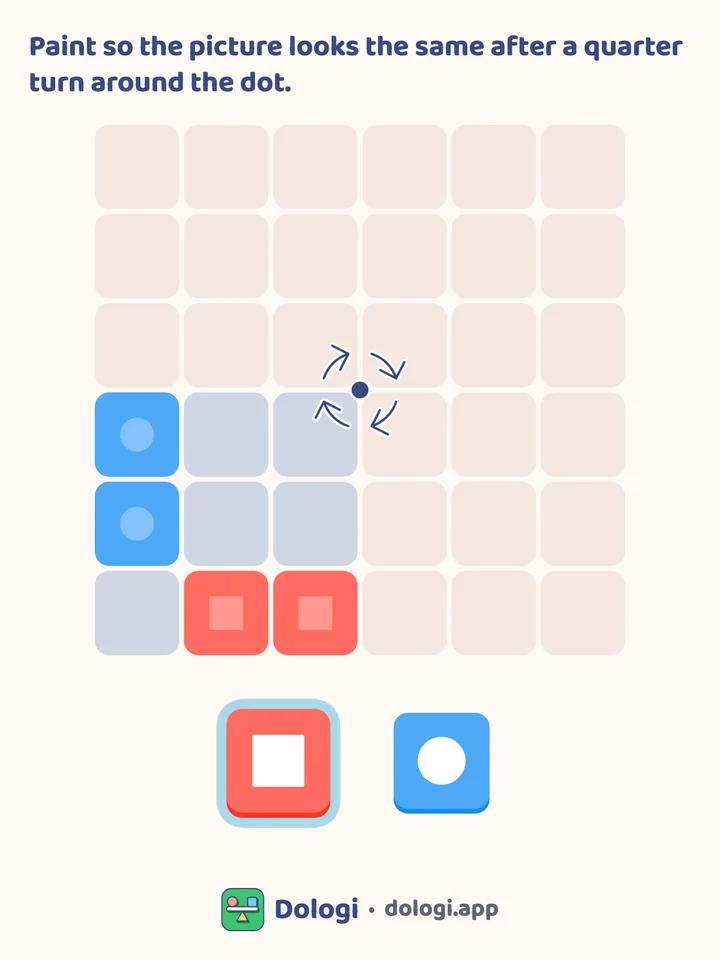
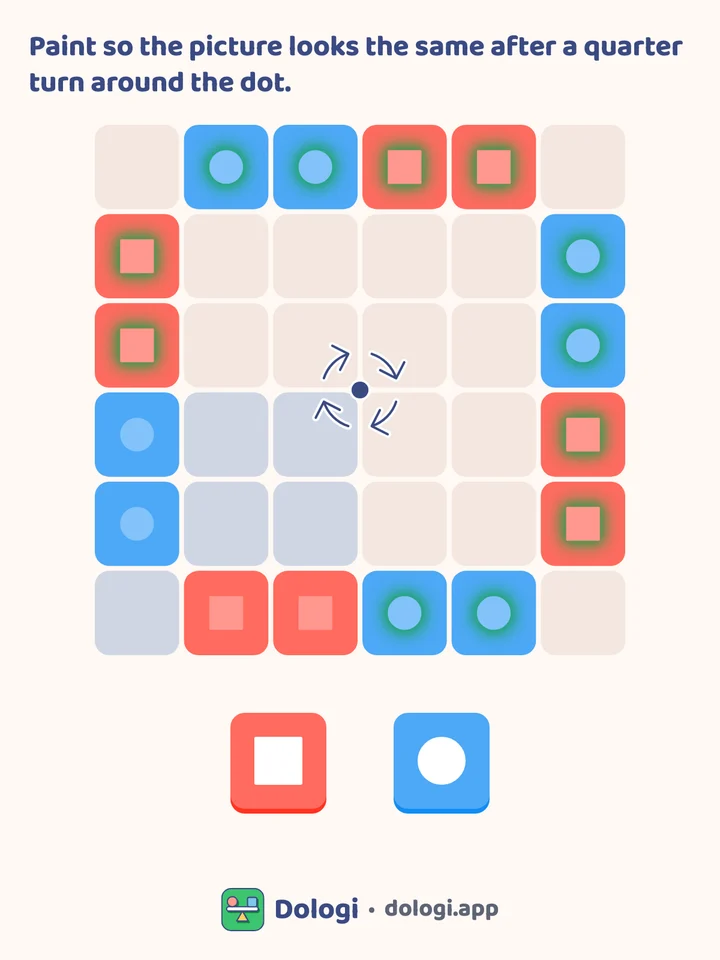
What it builds: Your child imagines the whole board turning a quarter turn around the middle dot, works out where each painted square would land, and paints more squares so the picture stays the same after the turn. Turning symmetry shows up in pinwheels, flowers, bottle caps and logos, and it is the base of the rotations they meet at school. Keep playing: put a few small objects on a square piece of card and let your child add more so the card looks the same after a quarter turn, then turn it for real to check.
Puzzle 2: Seen from each side
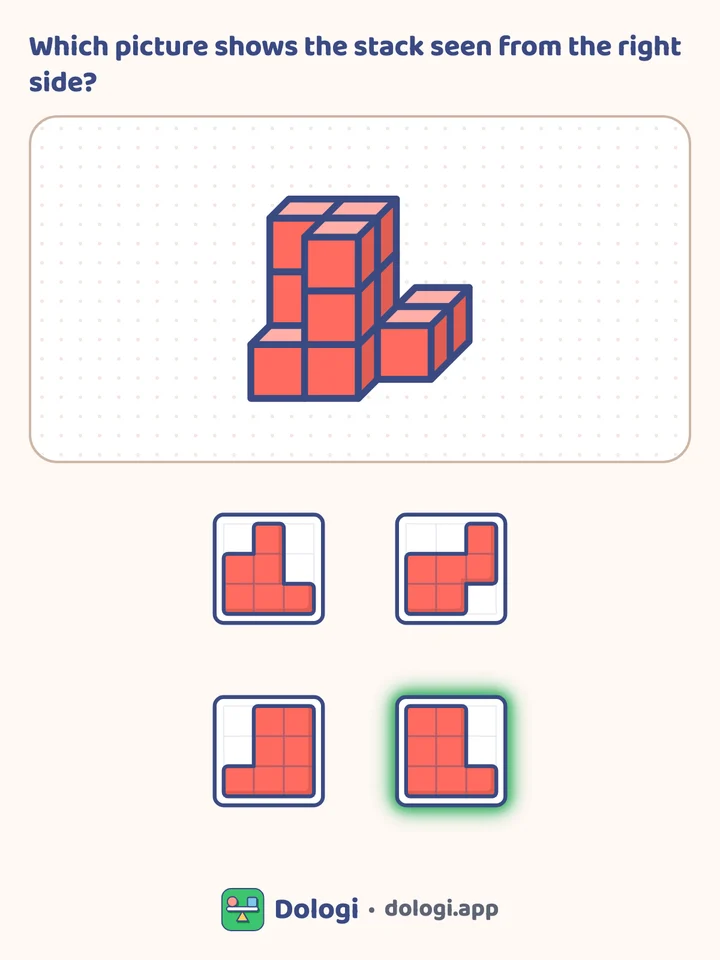
Ages 8–10
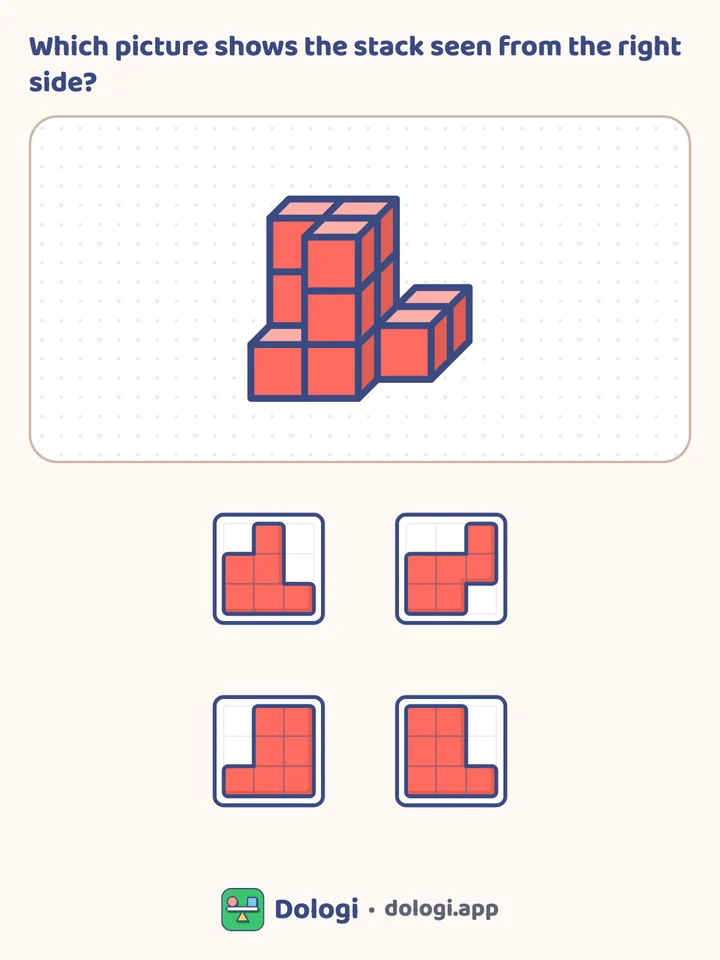
What it builds: Your child stays in one place but has to imagine walking around to the side of the stack, then count how tall each column looks from there, including blocks that are hidden. Switching viewpoints in the head is used for reading plans and maps, or giving directions to someone facing another way. Keep playing: build a stack of boxes or wooden blocks on the table, have your child draw it from the front, the side and the top, then walk around the table to compare.
Puzzle 3: Fill it up
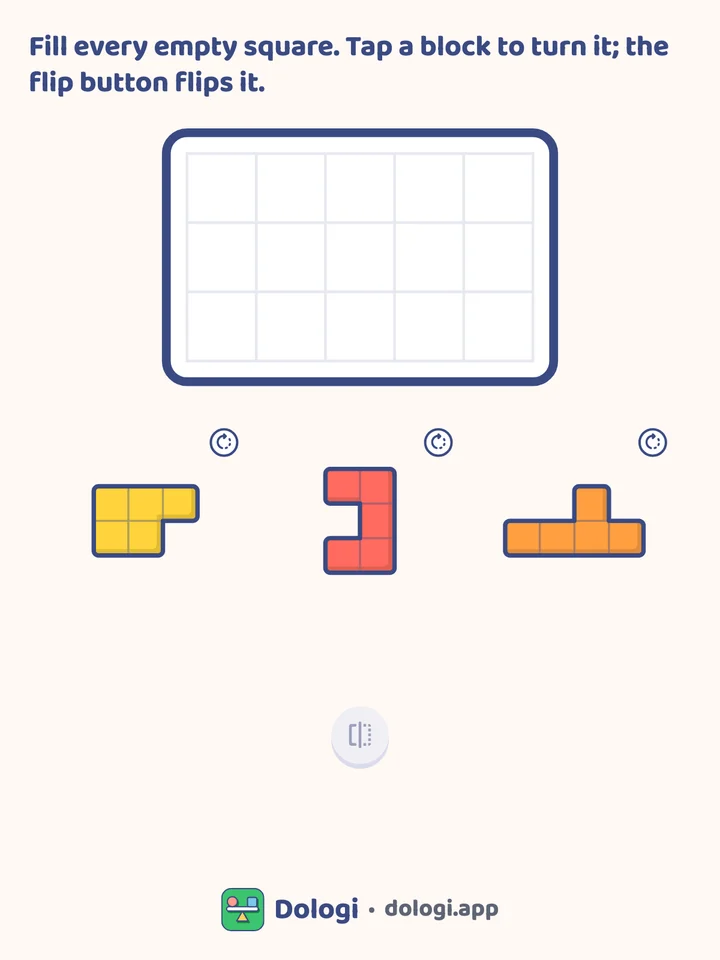
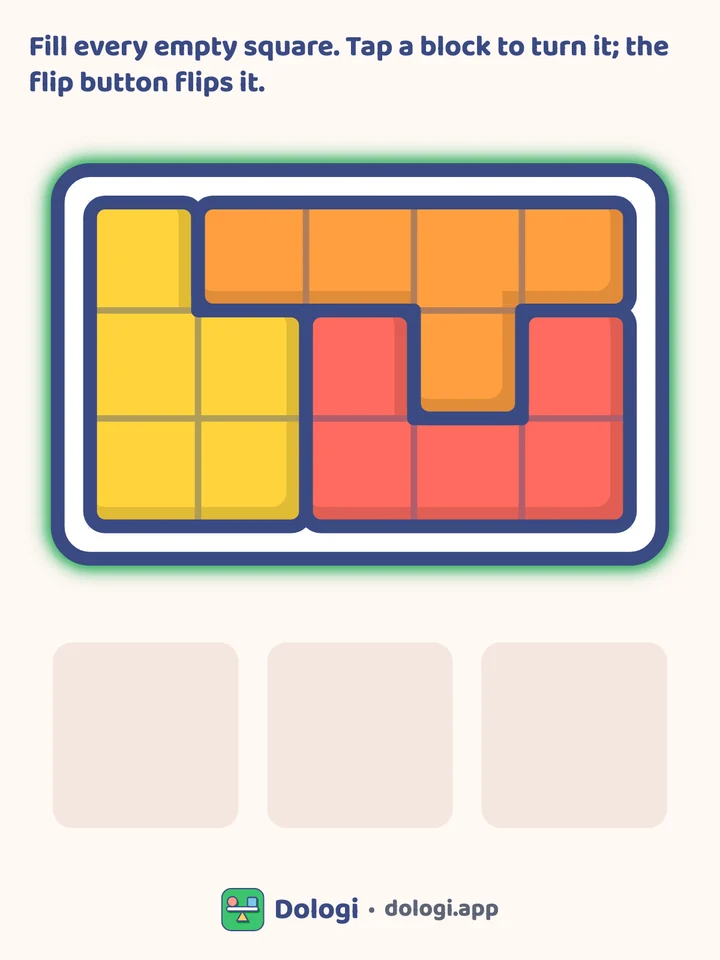
Ages 8–10
What it builds: Your child counts the squares in the frame and in each piece, then turns and flips the pieces in their head to find where they fit, often starting from the trickiest corner. Filling an area exactly builds a feel for area and for arranging space, like packing a suitcase or fitting furniture into a room. Keep playing: draw a rectangle on grid paper, cut it into three random pieces, mix them up and challenge each other to put it back together.
Puzzle 4: Drive the car
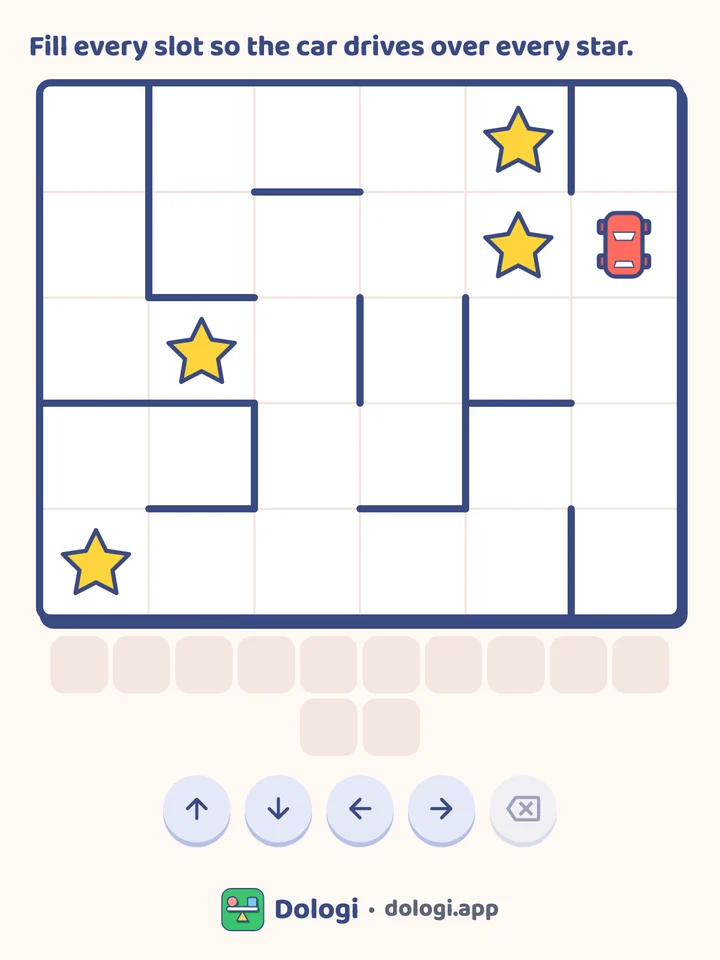
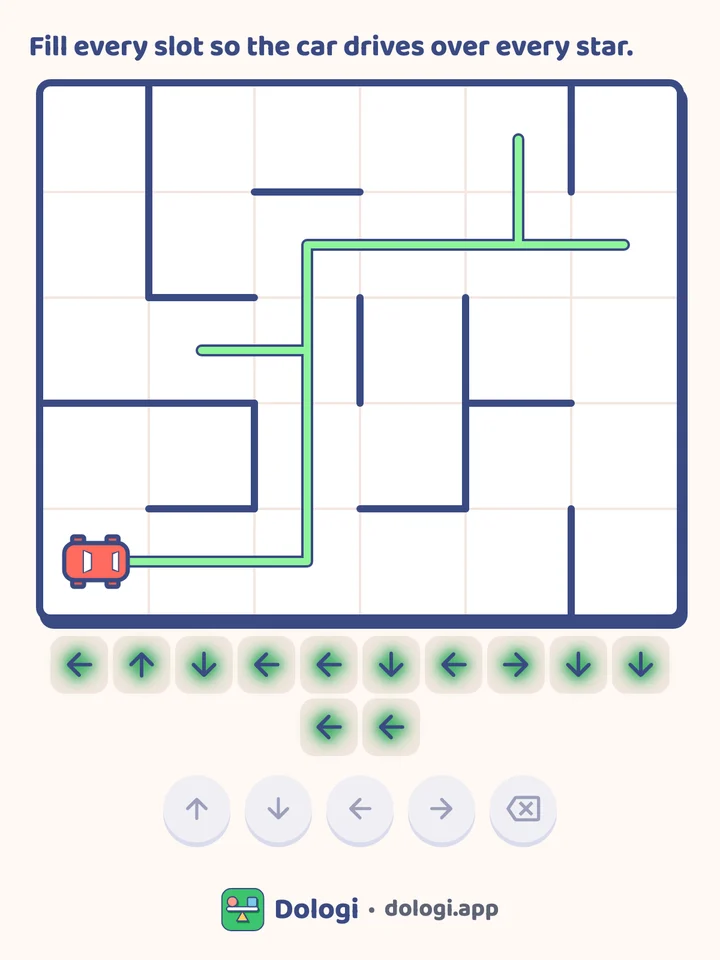
Ages 8–10
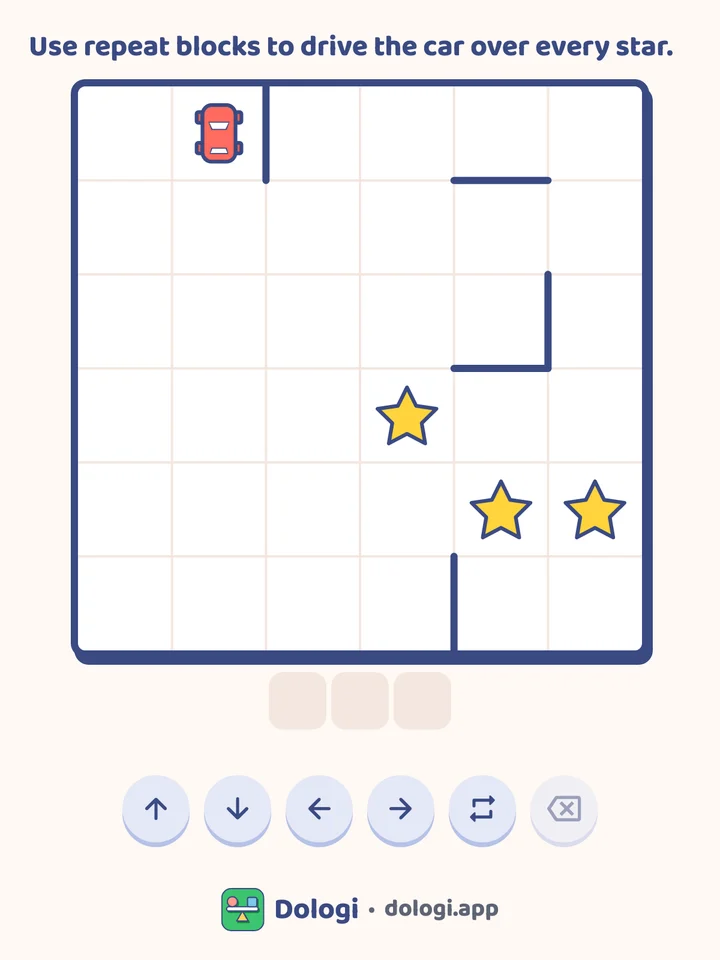
What it builds: Your child picks the order to visit the stars, steers around the walls, and writes each single step into the command slots, with none missing and none extra. Breaking a route into a clear chain of steps is exactly how programmers give instructions to a computer, and how children plan any job with many steps. Keep playing: draw a maze on grid paper with a few objects in it, let your child write a row of arrows for a toy car, then drive the car along that exact row.
Puzzle 5: Same direction
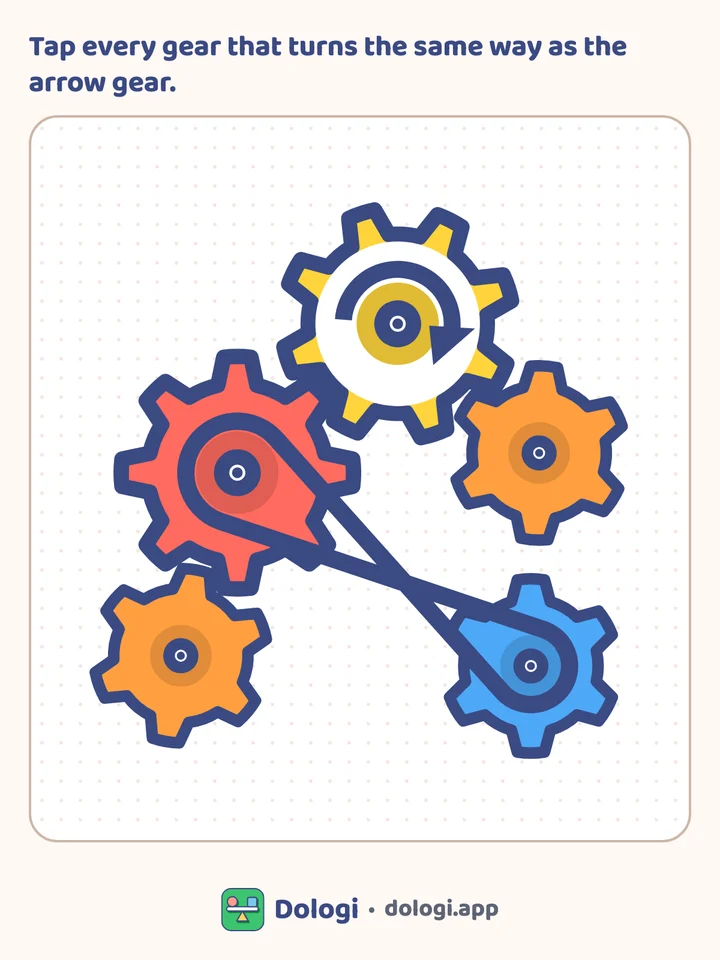
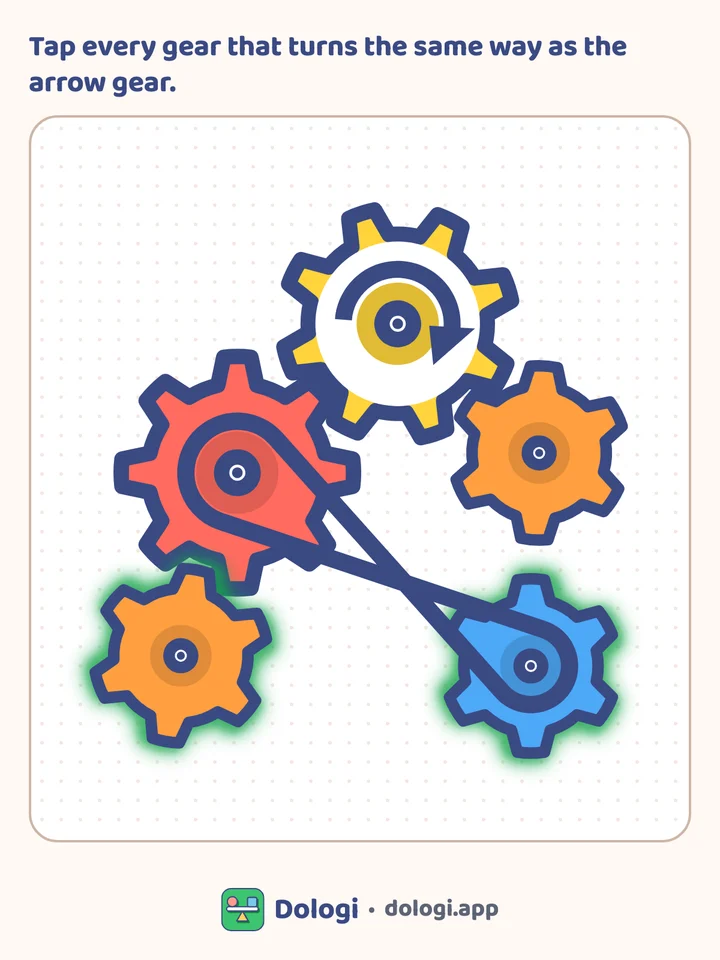
Ages 8–10
What it builds: Your child follows each pair of touching gears, and the belt joining two of them, to see how the turning direction passes from one gear to the next. Reasoning along a chain like this helps them understand bikes, clocks and machines, and builds the habit of going step by step instead of guessing. Keep playing: press two jar lids together on the table and turn one, ask your child to say first which way the other will turn, then try three lids in a row.
Puzzle 6: Place the mirrors
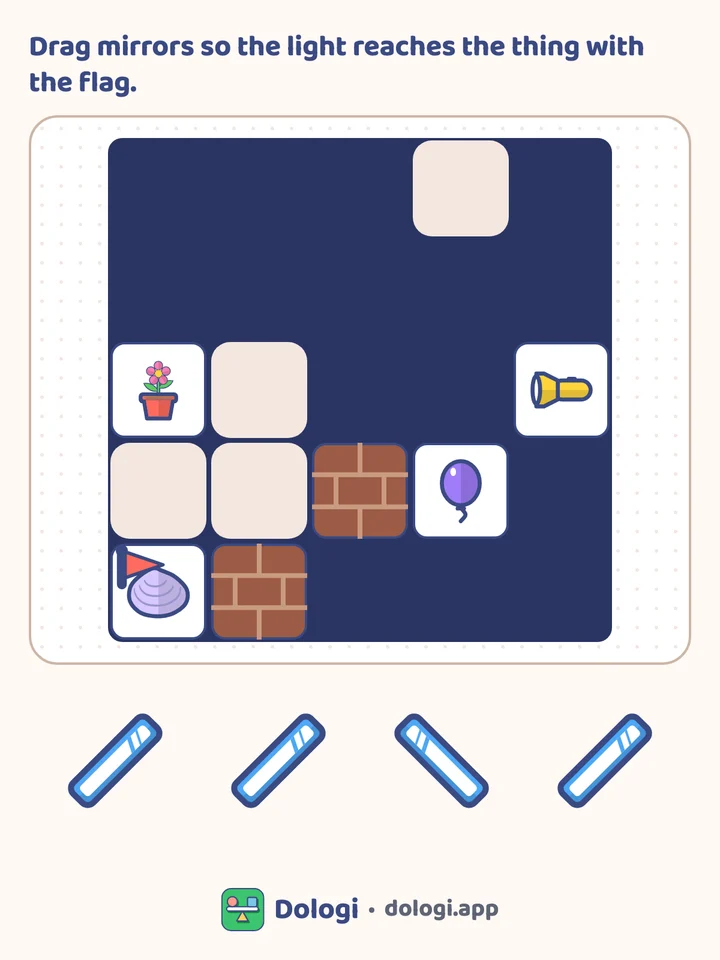
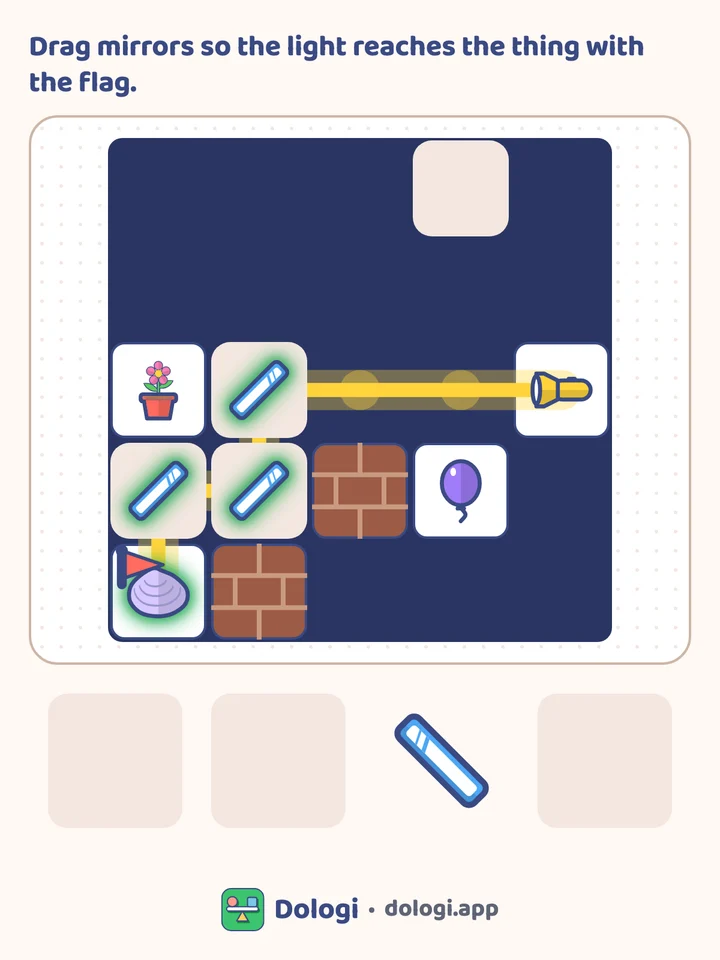
Ages 9–10
What it builds: Your child follows the light from the flashlight, testing which way a mirror should lean and in which square to bend the beam in the right direction, while keeping it from hitting bricks or other objects. Understanding how light reflects is a classic science lesson, and it is how periscopes and rear-view mirrors work. Keep playing: in a dark room, use a flashlight and a small mirror together and tilt the mirror to land the spot of light on a toy.
Puzzle 7: Roll the die
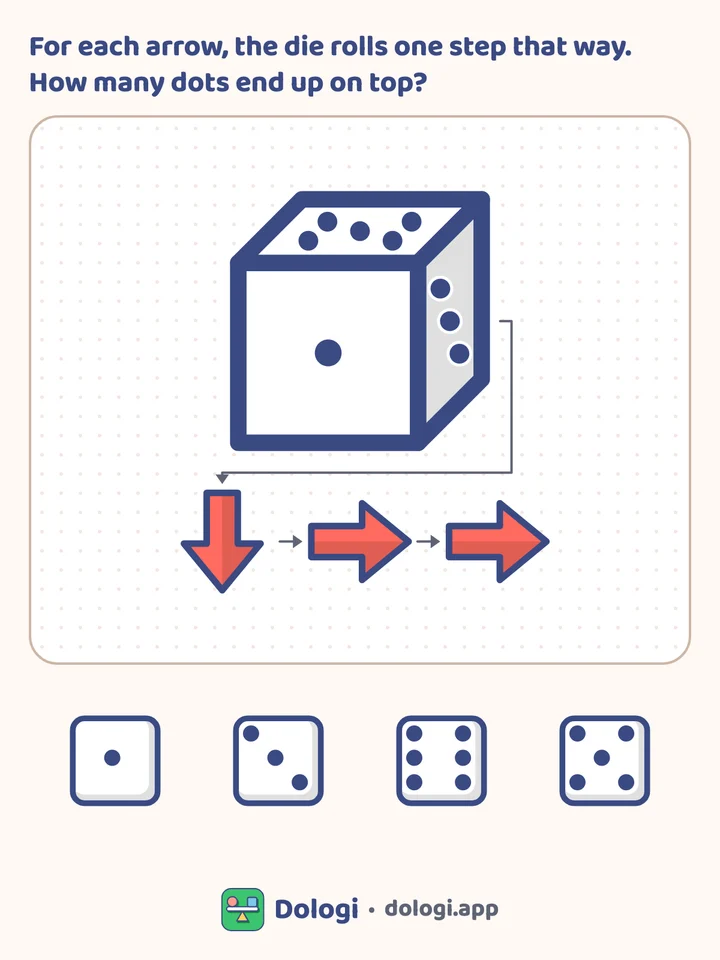
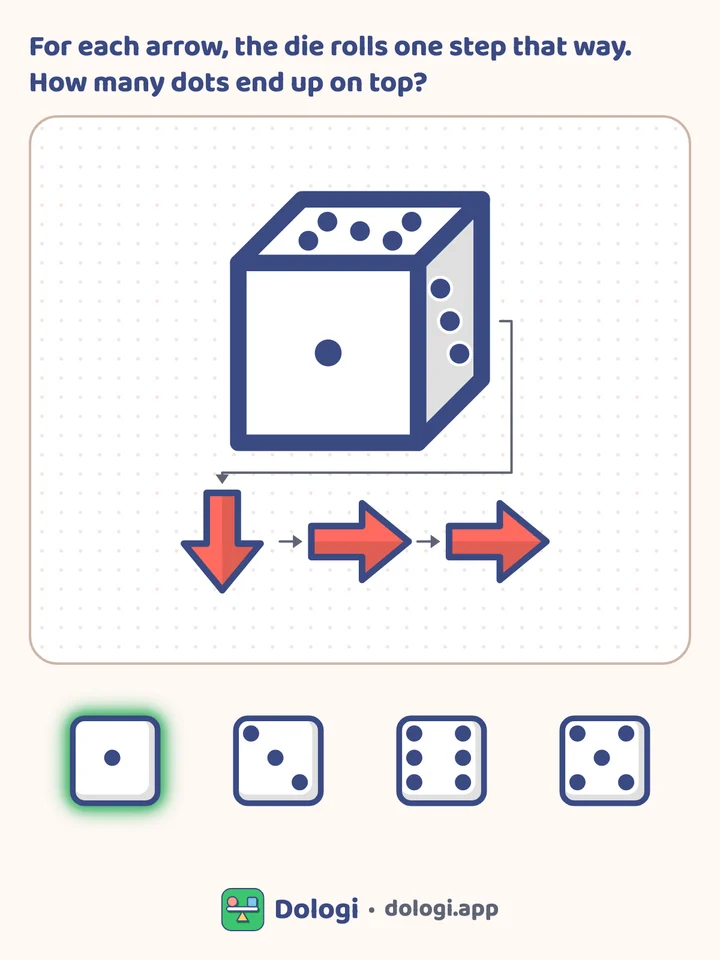
Ages 9–10
What it builds: Your child holds the whole die in their head and follows each roll: which face comes up, which goes down, which side face stays put. A handy trick: opposite faces of a die always add up to 7, so knowing one face tells you the other. Keep playing: draw a few arrows on paper, set a real die on the start, let your child predict the top face at the end, then roll it along each arrow to check.
Puzzle 8: Fold and punch
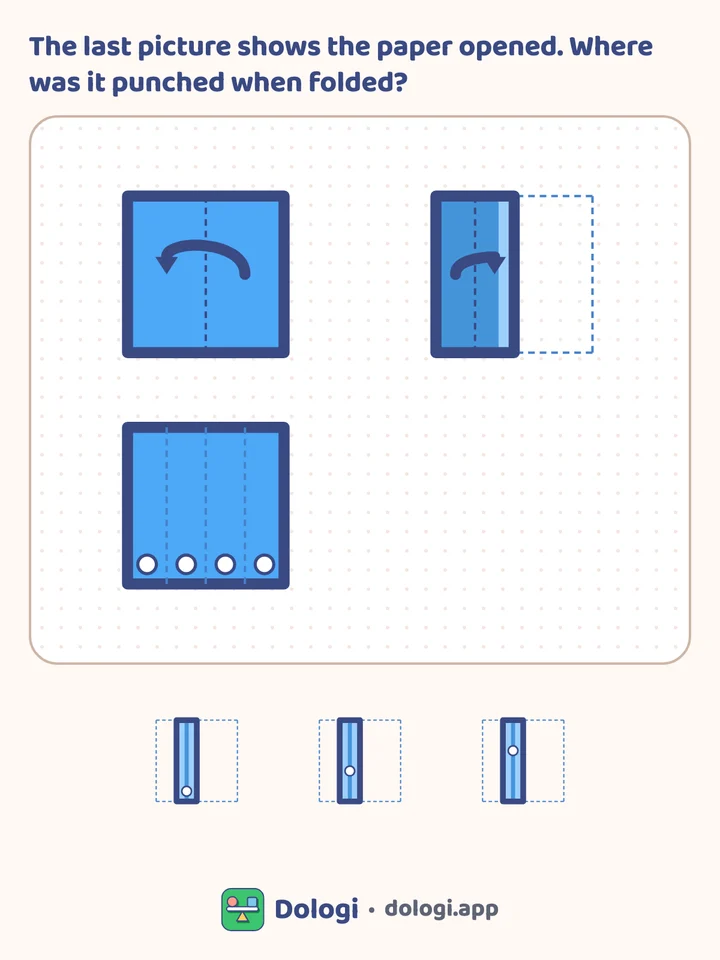
Ages 9–10
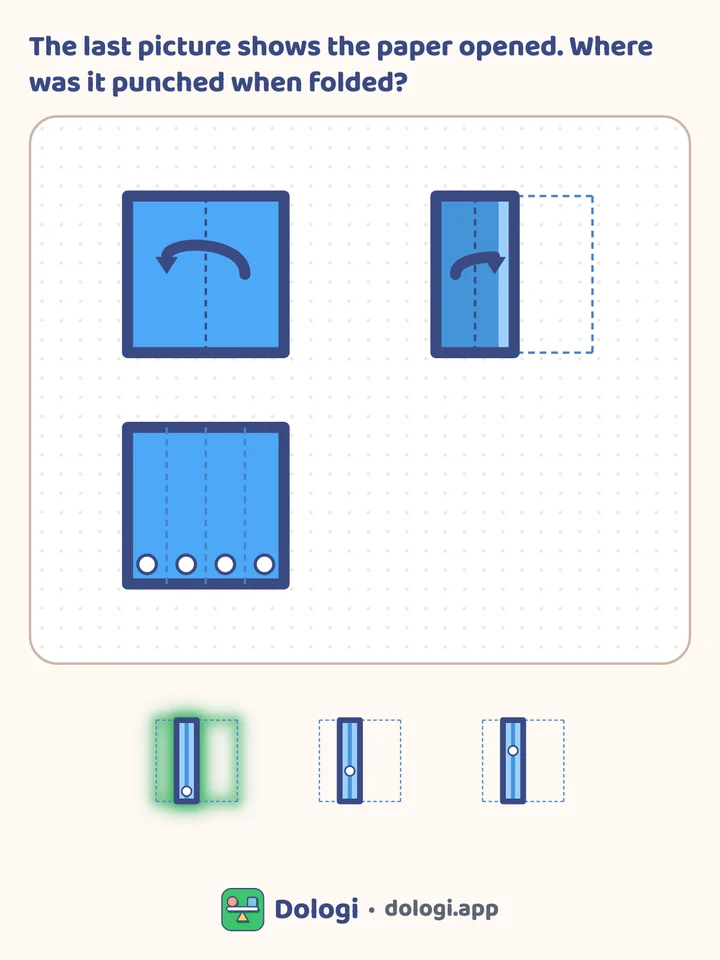
What it builds: This one runs backwards: your child sees the opened sheet and has to reason back to the folded paper, thinking about how each fold turns one hole into two holes mirrored across the crease. Working back from a result to its cause is how children check their answers, and mirroring across a fold is the base of lines of symmetry at school. Keep playing: fold a sheet in half twice, poke a hole with a pencil, let your child guess how many holes the opened sheet will have and where, then unfold it.
Puzzle 9: Repeat moves
Ages 9–10
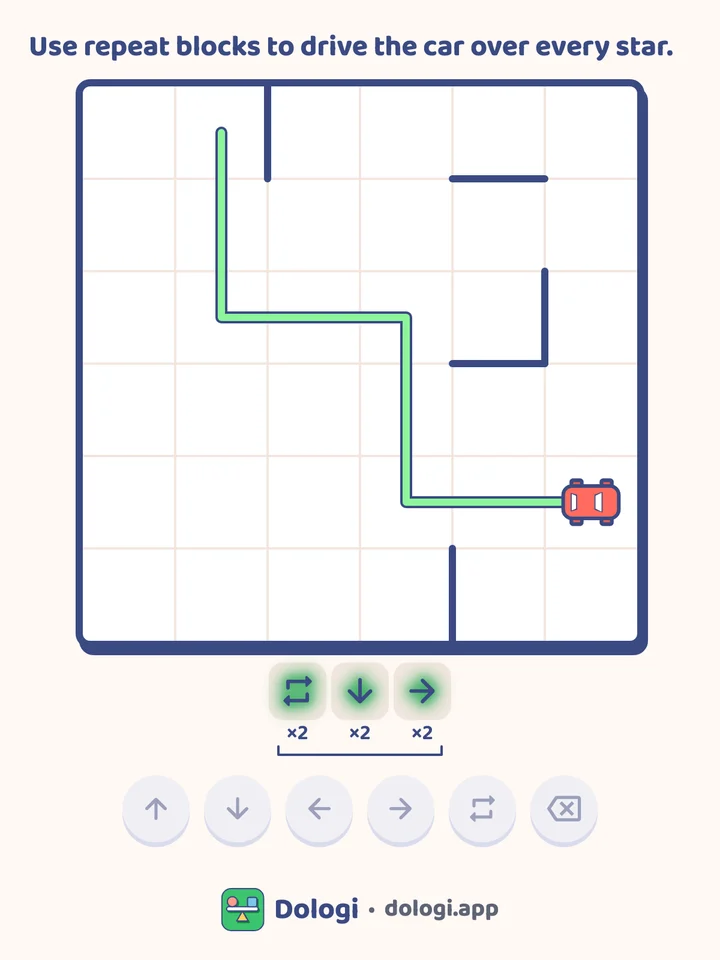
What it builds: There are only three command slots, so your child has to spot which part of the route repeats exactly, then wrap that part in the repeat block. Finding the repeated part to write things shorter is the idea of a loop in coding, and it also helps them notice patterns in a dance or a recipe. Keep playing: make up a short dance together, then find the shortest way to describe it, like "do this move 3 times, then…".
Puzzle 10: Push the boxes
Ages 9–10
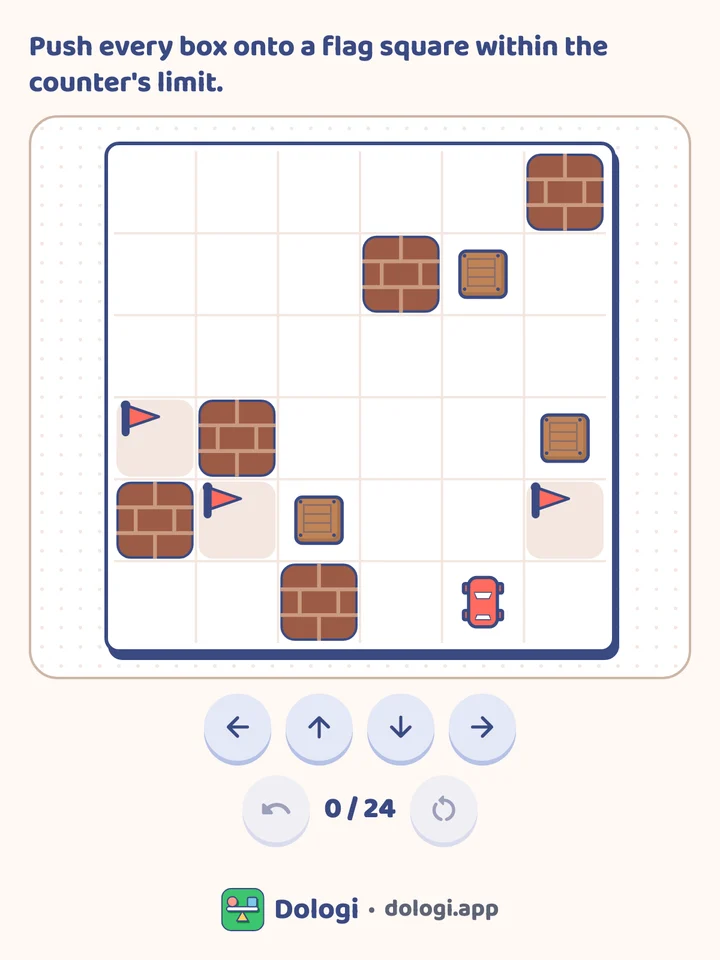
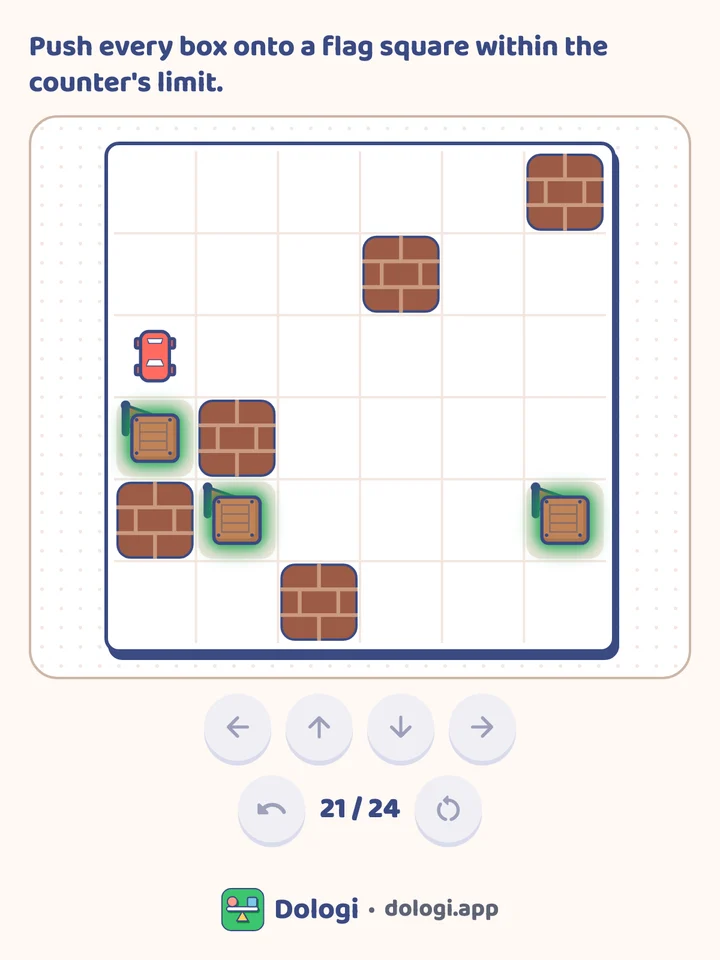
What it builds: The car can push boxes but never pull them, so your child must plan ahead: which box to move first, which side to push from, and how to avoid pushing a box into a corner where it gets stuck for good. Thinking several moves ahead and avoiding steps you cannot undo is a problem-solving skill used in chess and in organizing schoolwork. Keep playing: use floor tiles as a board and shoeboxes as crates, and let your child push the boxes onto marked tiles only by walking behind them and pushing.
Did your child enjoy these puzzles? The Dologi app has many more of the same kinds, from turning shapes and block views to mirrors, gears and car commands, getting harder with age and with how your child plays, so a little spatial practice each day stays fun.