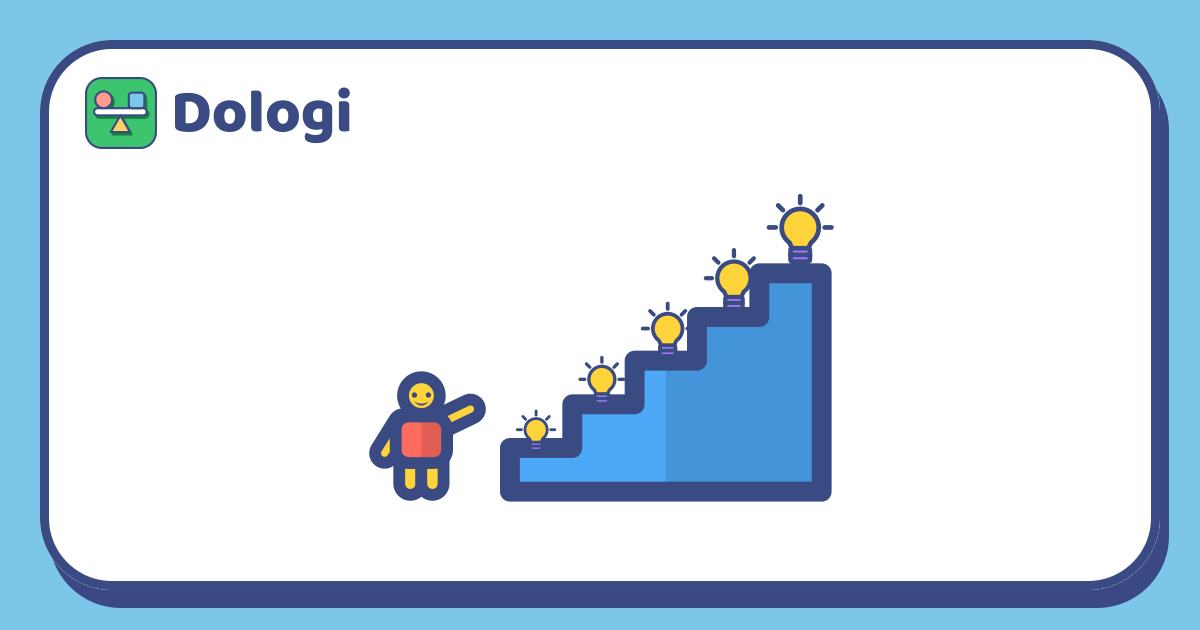
Your child has been staring at the puzzle for a few minutes and the pencil hasn't moved. You can see the solution straight away, and "just do it like this" is on the tip of your tongue. Telling them is quick, and they're no longer stuck. But they also miss the most valuable part: working it out themselves. This article offers a five-step hint ladder, from the lightest hint to the strongest. Go up one step at a time, and only when your child really needs it.
Why not just give the answer
- Children learn to wait for someone else to solve it. If someone steps in every time they're stuck, next time they'll give up sooner.
- An answer doesn't carry the thinking with it. Knowing "the answer is 7" won't help your child solve a similar problem tomorrow.
- Finding it yourself is a strong motivator. Solving one hard problem on their own often makes children want to try the next one.
Hints aren't about making your child struggle. The aim is to help just enough that they can take the next step themselves.
Before giving a hint: wait long enough
Often children aren't stuck, they're just thinking. Before you say anything:
- Count silently to ten after you notice your child has stopped.
- Watch whether they're doing something: counting under their breath, pointing, trying a sketch on scrap paper. These are signs they're still thinking.
- Ask whether they want a hint. "Do you want to think a bit more, or would you like a small hint?" Let your child decide.
The same goes between steps: after each hint, wait for your child to try at least once before you think about moving up.
The five-step hint ladder
| Step | What you do | What you might say |
|---|---|---|
| 1 | Ask what they've tried | "What have you tried so far? Tell me about it." |
| 2 | Go back to the rules and reread the question together | "What does it ask us to find? What are the rules of this one?" |
| 3 | Point to a sure place to start | "Which square are you completely sure about? Start from there." |
| 4 | Offer a smaller problem of the same kind | "What if there were only three apples instead of twelve?" |
| 5 | Model one step, then hand it back | "I'll do the first step. You do the next one." |
Step 1: ask what they've tried
While explaining, children often notice what they missed. This step also shows you where they're stuck, so your next hint lands in the right place. Just listen; don't correct yet.
Step 2: go back to the rules
Being "stuck" very often comes from misreading the question: skimming, forgetting a condition, or mixing up "more than" and "fewer than". Reread it line by line together, or ask your child to retell the question in their own words.
Step 3: point to a sure place to start
Many puzzles have one spot that's much easier than the rest: a square with only one possibility, a jigsaw piece with a straight edge, the part of a maths problem you already know. Don't say what goes there; just suggest where to look.
Step 4: a smaller problem of the same kind
When the problem is too big and your child is overwhelmed, shrink it: fewer numbers, fewer squares, rounder numbers. Your child solves the small version, then applies the same method to the real one.
Step 5: model one step
If the first four steps aren't enough, do one step yourself while saying out loud what you're thinking, then stop and hand the pencil back. Don't do the whole thing. The next step still belongs to your child.
After your child solves it
- Ask how they did it. "How did you work it out?" Retelling helps them remember the method.
- Praise exactly what they did. "You started from the square you were sure about. Nice." Avoid general praise.
- Try one more of the same kind. Let your child reuse the method they just found, this time with fewer hints.
- It's fine if it doesn't get solved today. Some problems are better left until tomorrow, when a fresh mind finds them easier.
In Dologi, the hint button on each puzzle works in steps too: each tap opens just one more hint, so your child can choose how much help they need.
In short
- Don't give the answer straight away; wait long enough and ask whether your child wants a hint.
- Go up one step at a time: ask what they've tried, revisit the rules, point to a place to start, offer a smaller problem, and only then model one step.
- After each step, let your child try at least once.
- Once it's solved, ask how they did it, praise specifically, and try one more of the same kind.
Read more: "I don't know": helping children dare to have a go at an answer