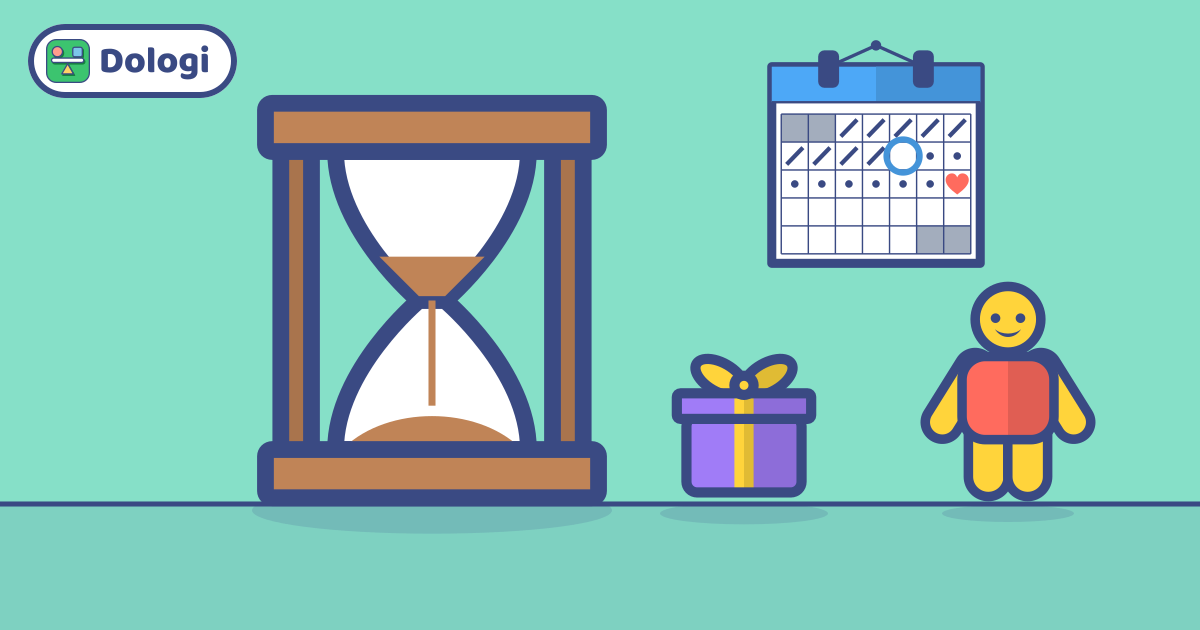
"Is it time yet?" You hear it every minute on the way to a birthday party. Your child can't wait for a snack, for a turn on the swings, or for the school bus to show up. And the moment you pick up the phone, there's a small tug on your sleeve.
It's tempting to read this as bad manners. It's usually a skill that's still growing. Waiting gets easier with age and practice, and it's not a test of whether your child is "good." Here's why waiting is hard and a few tools that help.
Why waiting is hard for young children
Time is invisible. "In a minute," "later," and "soon" mean very little to a 4-year-old, because there's nothing to see or touch.
As a rough guide, and every child is different:
- Around 4 to 5, a few minutes is often doable with some help and something to look at.
- Around 6 to 8, children can often wait longer if they have something to do while they wait.
- Around 9 to 12, many can wait days or even weeks for something they planned, like saving up for a toy or counting down to a trip.
Tired and hungry make any wait much harder, for adults too. Practice when your child is rested and fed.
Make the wait visible
The trick is to turn invisible time into something your child can see. Match the tool to the length of the wait:
| How long is the wait? | What helps |
|---|---|
| 1 to 5 minutes | A sand timer (the 1, 3 and 5 minute ones are handy) or a kitchen timer. Your child watches the sand run down. |
| 15 to 60 minutes | Tie the wait to an event, not the clock: "after we eat," "when we get to the grocery store." For older children, draw a mark on the clock where the long hand will be. |
| A few days | A calendar. Cross off one day each evening and draw something on the big day, like a heart or a cake. |
| A week or more | A paper chain with one ring removed each night, or a jar of beans with one taken out each day. |
Two things matter as much as the tool. Say exactly what happens after the wait: "When the sand runs out, we'll read one story." And keep your word. If you say five minutes, come back in five. Your child learns that waiting pays off. For the calendar part, see reading a calendar.
Things to do while waiting
Waiting is easier with busy hands and a busy mind. A few things to try:
- Count everything of one color in the room.
- Play I-spy.
- Hum a song, or make up a story together.
- Keep a small "waiting pouch" in your bag with a pencil, a little notebook, and a piece of string.
Children can also learn tricks to use on their own: look away from the treat or put it out of sight, say quietly "I can wait, the sand is almost done," or give their hands a job.
Try a light game at home: one cookie now, or two when the sand timer runs out. Keep it playful, not a test. Then praise the trick your child used: "You turned around so you wouldn't look. That was clever." For more ideas, see thinking games for car rides and lines.
Waiting a turn to talk
Interrupting is just a short wait that lands in the middle of a sentence. Try a simple signal: when you're talking, your child puts a gentle hand on your arm. You put your hand over theirs, meaning "I see you, wait a moment." Then turn to your child soon. Keep the waits short at first.
Teach one exception out loud: if someone is hurt or something is wrong, interrupt right away.
At family meals, you can also pass a "talking object," like a spoon or a ball. Only the person holding it talks, grown-ups included.
Stretch the wait little by little
Start with a wait your child can manage, let them succeed, then add a little. Don't jump from one minute to an hour.
Older children enjoy longer projects: plant seeds and wait for a sprout, save for a small toy over a few weeks with a picture of it on the jar, or count down to the grandparents' visit or Thanksgiving. Praise the effort in concrete words ("You kept busy the whole time"), not "good boy" or "good girl."
When waiting goes badly, stay calm, use few words, and try again another day. A child who melted down isn't "bad at waiting," just still learning. If waiting seems much harder for your child than for others the same age and it causes problems every day at school, talk with the teacher or a professional.
In the Focus topic of Dologi, the puzzle Follow the cup asks your child to watch the cups swap places until they stop, then say which cup the star is under. Answering too early doesn't work, so it's a small practice of waiting for the right moment.
In short
- Waiting is a skill that grows with age and practice, not a sign of being "good" or "bad."
- Make time visible: a sand timer for minutes, a calendar for days, a paper chain or bean jar for a week or more.
- Give your child something to do while waiting, and praise the trick they used.
- Start with short waits, keep your word, and stretch them little by little.
Read more: Thinking games for car rides and lines, Does chess teach kids patience?, Teaching your child to read a calendar