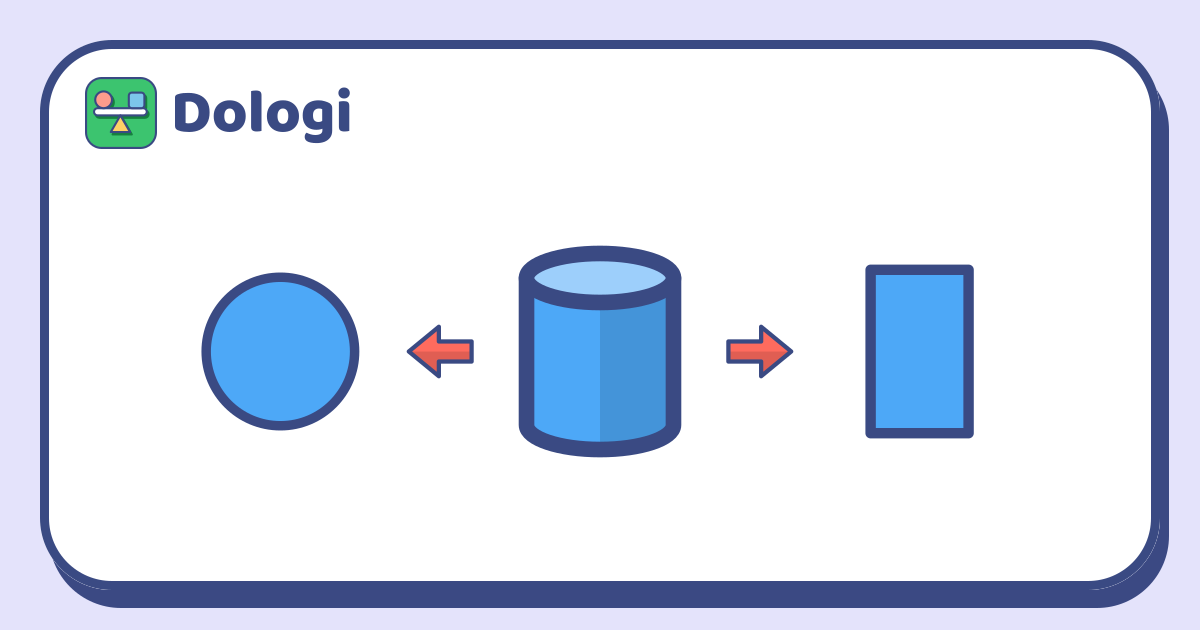
Hold a cup above your child's head and ask them to look up at the bottom: it's a circle. Now hold it at eye level and look from the side: it's a rectangle (with a handle, perhaps). The same object can look completely different depending on where you stand.
Understanding this is a real thinking skill. Engineers, architects and designers use top, front and side views every day. For children, it starts with simple games using cups, boxes and blocks.
Why top and side views matter
- Holding two pictures of one object. Knowing that "the circle" and "the rectangle" are the same cup is a big step in spatial thinking.
- Imagining what you can't see. "What would this look like from the other side?" asks children to turn an object in their mind.
- Reading plans and maps. Floor plans and maps are top views. Children who have played with top views find them easier.
- Describing precisely. "From the front it's a triangle, from above it's a square" uses shape words in a meaningful way.
Start with everyday objects
Collect a few simple things and look at each one from above and from the side:
| Object | From above | From the side |
|---|---|---|
| Cup or tin | Circle | Rectangle |
| Ball | Circle | Circle |
| Book lying flat | Rectangle | Thin rectangle |
| Box of tissues | Rectangle | Rectangle of another size |
| Ice cream cone, upside down | Circle | Triangle |
The ball is a nice surprise: it looks the same from every side. Ask your child to find other objects that do.
Guess the object
- Draw the outline. Draw only the top view of something in the room. "It's a circle from above. What could it be?" Then add the side view as a clue.
- Peek through a tube. Look at an object through a paper tube so only part of it shows. What shape do you see, and what might the object be?
- Feel and guess. Put an object in a bag. Your child feels it, then draws what it would look like from above.
Shadow games
A torch shows views in a magical way. In a dark room, shine a torch on an object so its shadow falls on the wall or the floor:
- Shine from the side. A cup's shadow on the wall looks like a rectangle.
- Shine from above. A cup's shadow on the table becomes a circle.
- Turn the object. A book turned slowly makes a shadow that grows and shrinks. Can your child guess which way to turn it to make the thinnest shadow?
Build and draw
Building blocks are perfect for this:
- Build a small tower of three or four blocks, with a few blocks sticking out.
- Look from above and draw what you see: just squares where the blocks are.
- Look from the front and draw that: columns of different heights.
- Swap roles. One person draws the top view and front view; the other builds a tower that matches.
Start with very simple towers. It's harder than it sounds, and adults often get caught too.
Ideas by age
Ages are rough guides; follow your child.
- Around 4–5: look at cups and balls from above and from the side, shadow games with a torch.
- Around 6–7: the guessing games, drawing top views of objects, simple two-block towers.
- Around 8 and up: drawing top and front views of block towers, building from a drawing, guessing which view is which.
In Dologi, the Space topic has "Seen from each side" puzzles: children look at a stack of cubes and choose the picture that shows it from above or from the front. It's a calm way to practise after building towers together.
In short
- The same object can look very different from above and from the side.
- Start with cups, balls, books and boxes, and talk about the shapes you see.
- Play guessing games and shadow games with a torch.
- Build block towers, draw them from different sides, and swap roles.
Read more: Draw a map of your child's room: seeing things from above