Your child knows how the pieces move, but full games still feel long and confusing? Chess puzzles are a great step in between: only a few pieces on the board, one clear question, a few minutes of thinking. Your child practices the most important things in a real game: spotting a piece nobody is protecting, getting out of check, and finding checkmate.
The ten puzzles below were written by Dologi and go from easy to harder. Every position was checked by a computer to make sure there is exactly one right move.
How to use these puzzles
- Set them up on a real board if you have one: young kids think more easily when they can touch the pieces. No set at home? The diagrams work too.
- White always moves first. In the diagrams, the white pieces are your child's and the purple pieces are Black's. The bottom row is White's side.
- Say it before you play it. Let your child point or say the move before putting the piece down. If it's wrong, ask "Why did you pick that move?" instead of correcting right away.
- Hints in steps. Stuck? Read hint 1. Still stuck? Read hint 2. The answers are at the end.
- A few at a time. Two or three puzzles per sitting is plenty; stop after a success so it stays fun.
Group 1: Grab the undefended piece
An undefended piece is one that no piece on its own side is protecting. You can take it without being taken back.
Puzzle 1
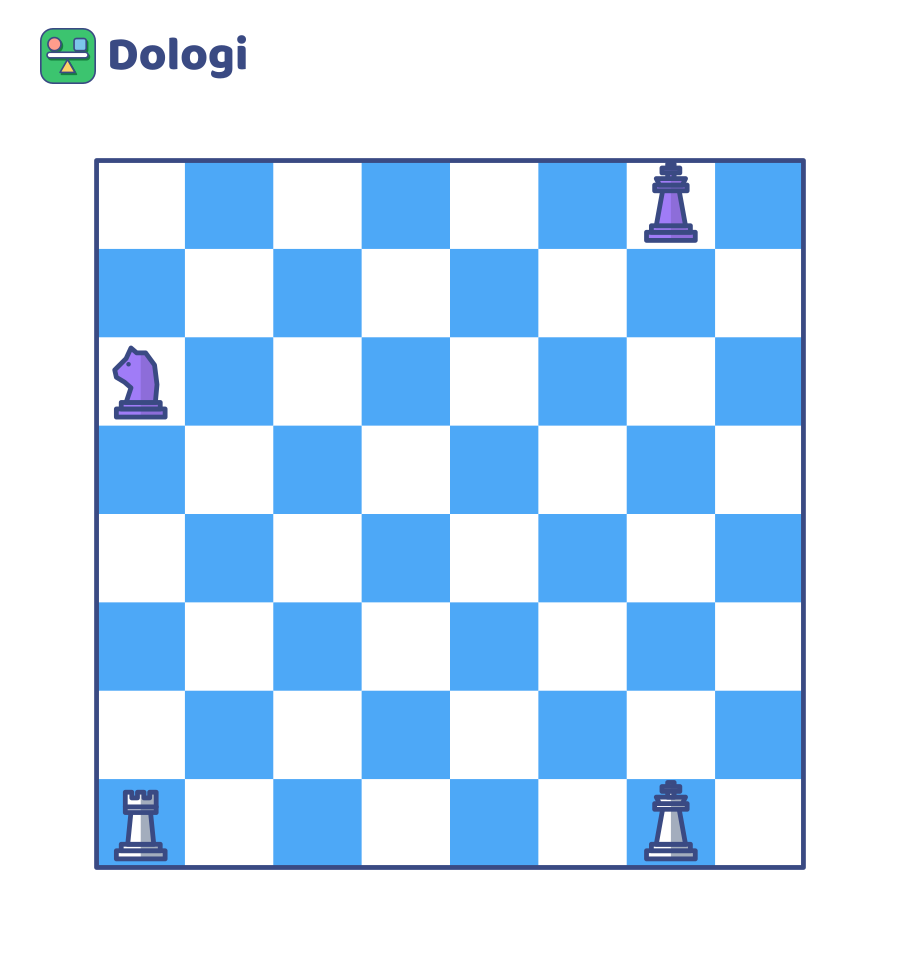
White to move. What can White capture?
- Hint 1: Which black piece is standing all alone?
- Hint 2: Rooks move in straight lines. Look straight up the rook's column.
Puzzle 2
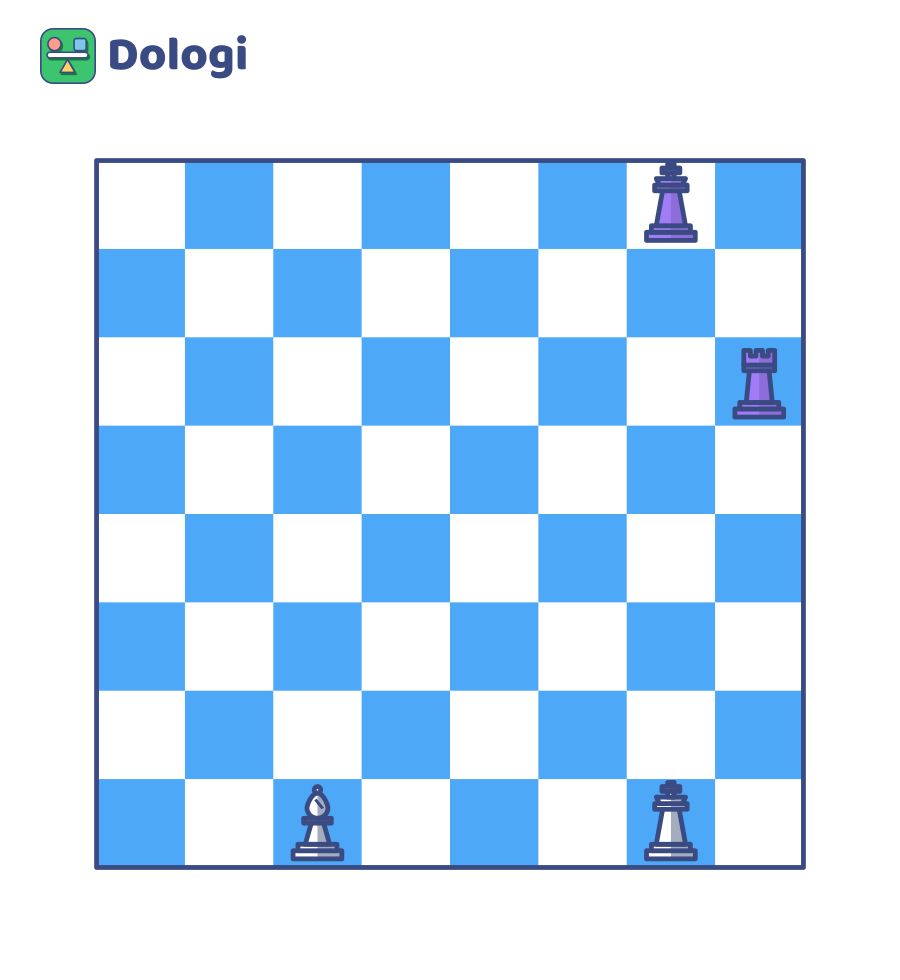
White to move. What can the bishop capture?
- Hint 1: Bishops move diagonally. How many diagonals does this bishop have?
- Hint 2: Trace the diagonal from the bishop up and to the right with your finger.
Puzzle 3
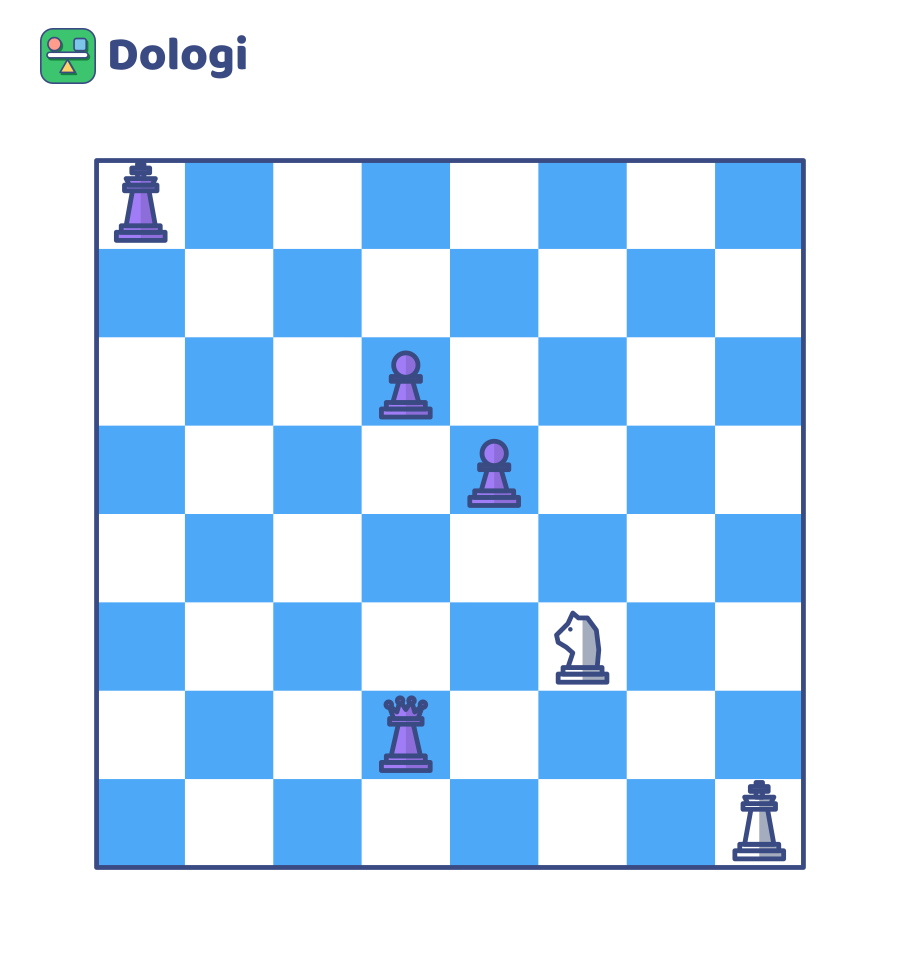
White to move. The knight can capture two different pieces. Which capture is safe?
- Hint 1: Which of those two pieces has a friend protecting it?
- Hint 2: Black pawns capture diagonally downward. Is one black pawn standing diagonally behind the other?
Puzzle 4
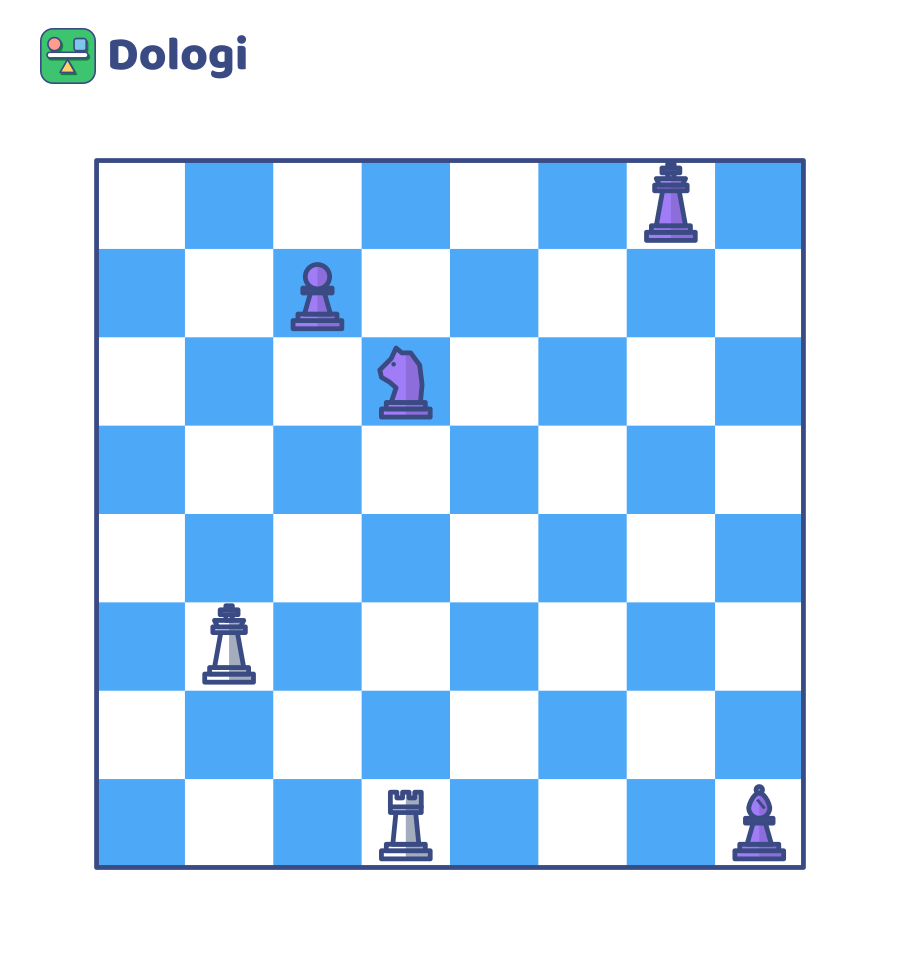
White to move. The rook can capture two pieces. Which one is safe to take?
- Hint 1: After the capture, which black piece could take the rook back?
- Hint 2: Look along the bottom row.
Group 2: Save the king from check
When your king is in check, you have to get out of it right away. There are three ways: move to a safe square, block the check, or capture the piece giving check.
Puzzle 5
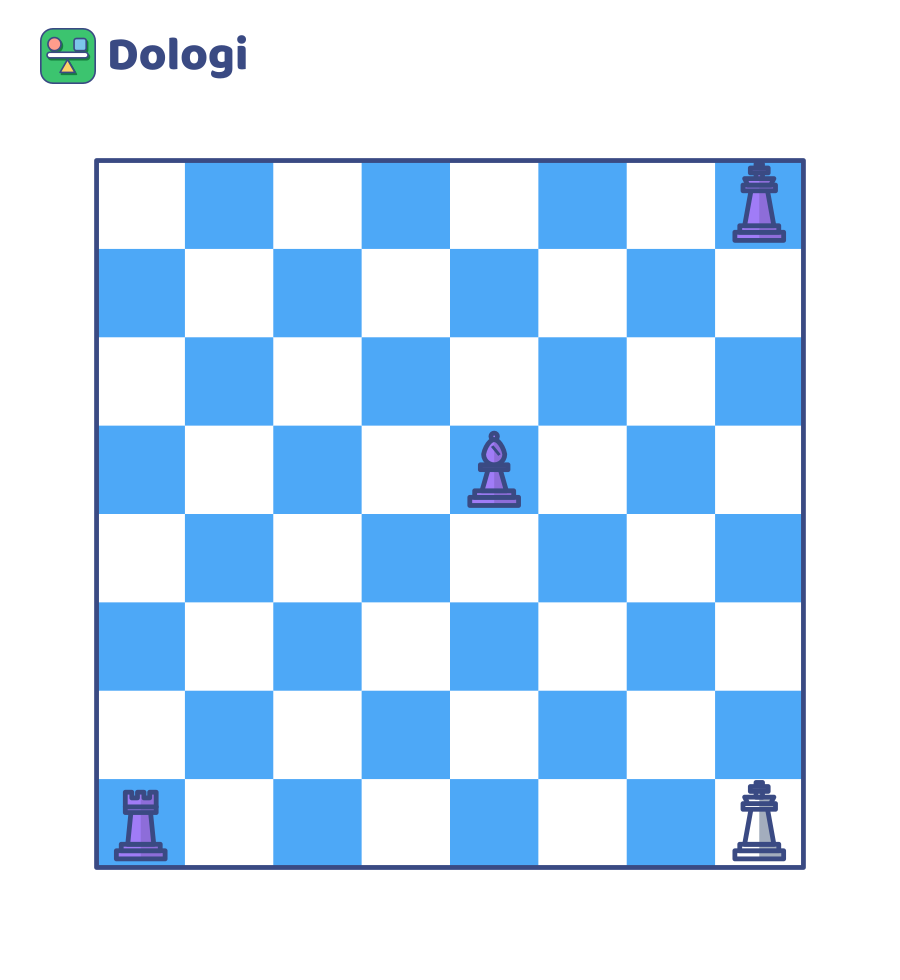
The white king is in check. How does it escape?
- Hint 1: Which squares next to the king could it move to?
- Hint 2: Which square does the black rook guard, and which does the black bishop guard?
Puzzle 6
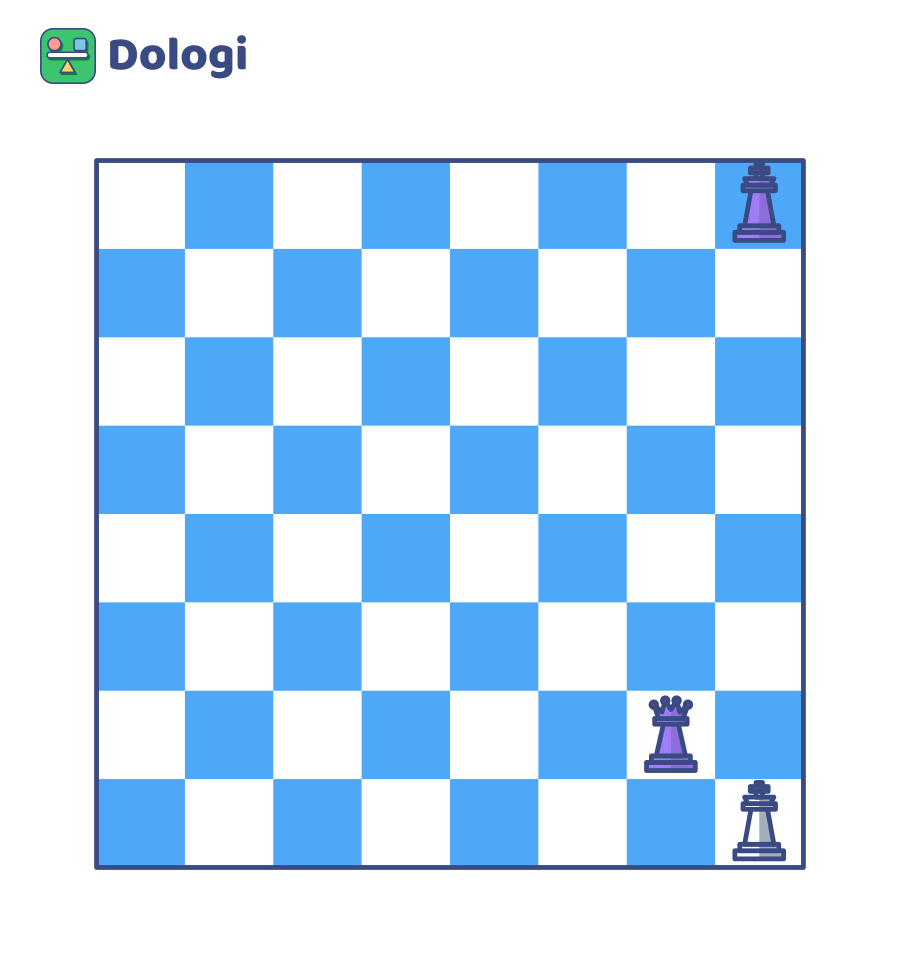
The white king is in check from the queen. How does it escape?
- Hint 1: Move, block or capture: which one works here?
- Hint 2: Is anything protecting the black queen?
Group 3: Checkmate in one
Checkmate means check with no way out for the king. Each puzzle below takes just one move.
Puzzle 7
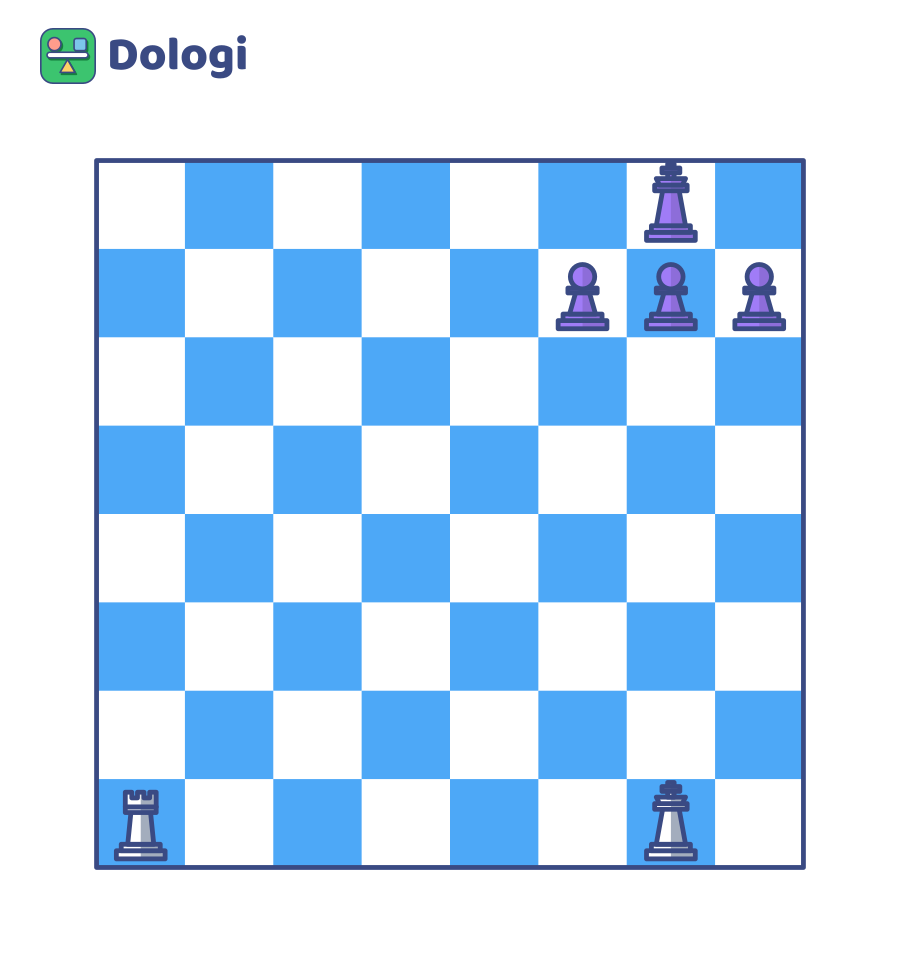
White to move and checkmate in one.
- Hint 1: Does the black king have any square to run to?
- Hint 2: Is the top row empty?
Puzzle 8
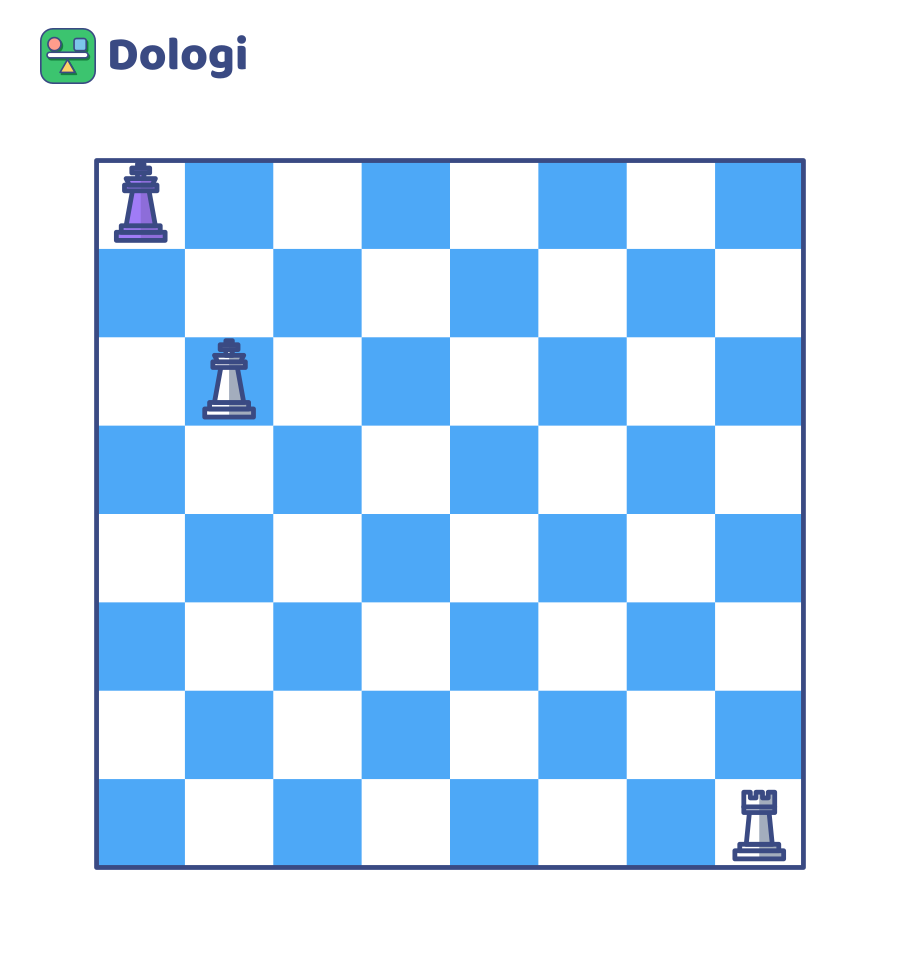
White to move and checkmate in one.
- Hint 1: Which squares around the black king is the white king guarding?
- Hint 2: Can the rook get to the black king's row?
Puzzle 9
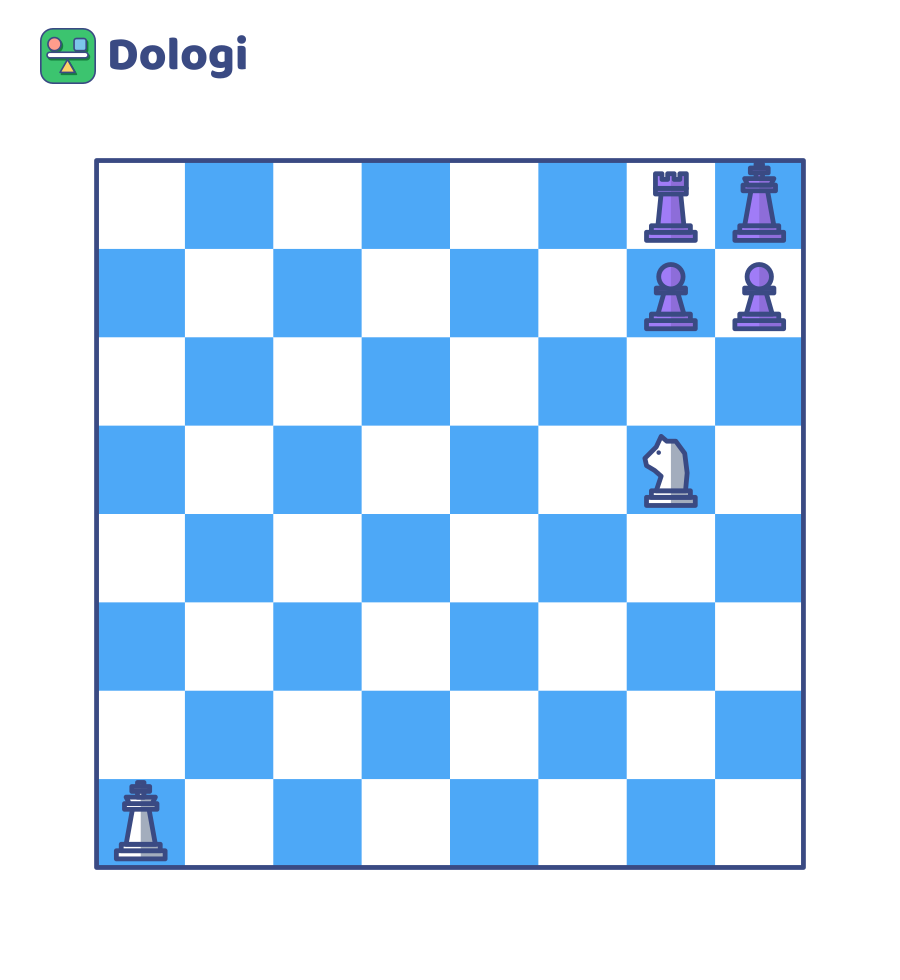
White to move and checkmate in one.
- Hint 1: Which white piece can jump over other pieces?
- Hint 2: Does the black king have any empty square? Its own pieces are blocking every one.
Puzzle 10
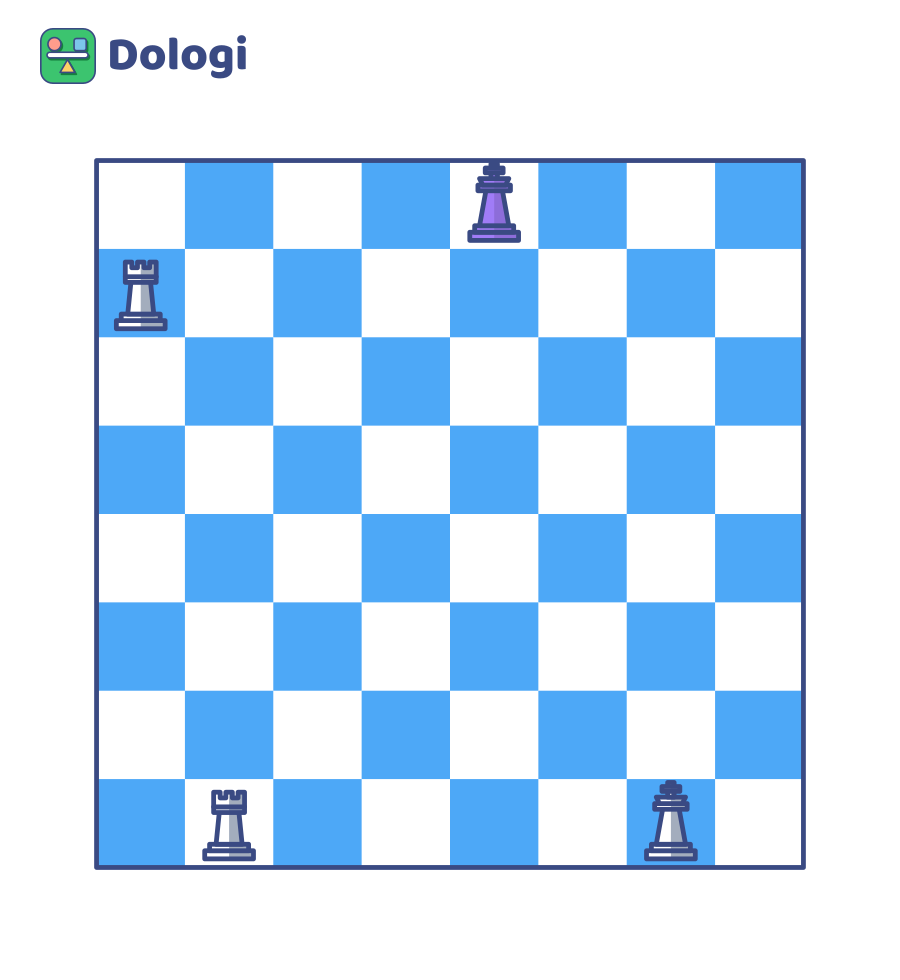
White to move and checkmate in one.
- Hint 1: How is the rook on the second row from the top boxing in the black king?
- Hint 2: Which row does the other rook need to reach?
Answers
Square names in parentheses are for kids who already read them: the letter is the column, the number is the row, and the bottom left square is a1.
- The rook takes the knight (rook from a1 to a6). Nothing blocks the rook's path, and nobody protects the knight.
- The bishop takes the rook (bishop from c1 to h6). The black rook sits right on the bishop's diagonal with no protection.
- The knight takes the queen (knight from f3 to d2). If the knight takes the pawn on e5, the pawn on d6 takes the knight back. The queen has no protector.
- The rook takes the bishop (rook from d1 to h1). If the rook takes the knight on d6, the pawn on c7 takes the rook back: giving up a rook for a knight is a bad trade.
- The king steps up (king from h1 to g2). The rook guards g1, the bishop guards h2, and no white piece can block or capture the rook.
- The king takes the queen (king from h1 takes on g2). The queen is right next to the king with no protection, so the king can capture it. Every other square is guarded by the queen.
- The rook goes to the top row (rook from a1 to a8). The three pawns block the black king's escape, and the rook covers the whole top row.
- The rook goes to the black king's row (rook from h1 to h8). The white king guards a7 and b7, and the rook guards b8. The black king has nowhere to go.
- The knight jumps to f7. The knight gives check; the black rook can't take it because rooks only move in straight lines; the king is boxed in by its own pieces. This kind of checkmate is called a smothered mate.
- The bottom rook goes to the top row (rook from b1 to b8). The rook on a7 blocks the seventh row, and the rook on b8 gives check and covers the eighth row. The two rooks work together like the rungs of a ladder.
In the Chess room in Dologi's Creative corner, Challenges has positions sorted into 12 levels, from easy to hard. Tap Hint once and the app points to the piece to move, again for the move itself, and once more to hear why. From Set up a board, your child can also make a puzzle for you: choose the goal and tap Check it, and the app checks whether the puzzle can be solved and has exactly one right first move, just like the puzzles above.
In short
- Chess puzzles with few pieces are a great step between learning the moves and playing full games.
- Start with grabbing undefended pieces, then saving the king from check, then checkmate in one.
- Let your child say the move before playing it, use hints in steps, and ask "why?" instead of correcting.
- Two or three puzzles at a time is enough; your child can set up their own puzzles to quiz you.
Read more: Chess for children: what age to start, and what they really learn, Knights jump in an L, bishops slide diagonally: how chess builds spatial thinking in kids