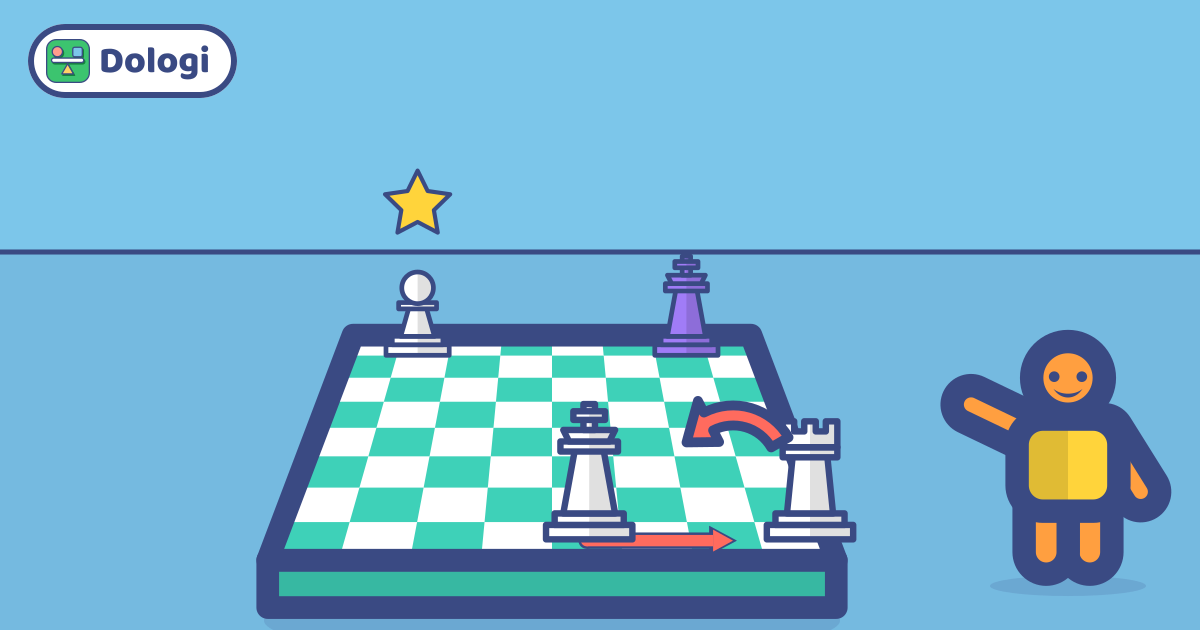
You slide your king two squares, hop the rook over it, and your child is outraged: "The king only moves one square!" Or their pawn vanishes after yours moves diagonally onto an empty square. Castling, en passant and promotion are the three special rules of chess. They're rare and seem to break the normal rules, so they start a lot of kitchen-table arguments.
Below, each rule is shown with a few pieces: when it's allowed, when it isn't, and where kids get mixed up. Then come a practice game for each rule and what to do when your child says, "I've never heard of that."
Why these three rules trip kids up
Kids learn chess through simple rules: the king moves one square, a pawn captures diagonally onto an occupied square, and a piece stays the same piece all game. The special rules break exactly those habits, and they only come up in certain positions, so a child can play many games without meeting one.
Teach one rule at a time, once your child knows how every piece moves, and always show it on the board instead of just explaining it.
Castling: the king and rook move together
Castling is the only move with two pieces at once. The king moves two squares toward one of its rooks, and that rook jumps over the king to land right beside it. You can castle toward the near rook (kingside) or the far rook (queenside). The king gets a safer corner and the rook gets into the game.
It's allowed only when all four are true:
- Neither the king nor that rook has moved yet this game, not even out and back again.
- No pieces stand between the king and the rook.
- The king is not in check right now.
- The king doesn't pass through or land on a square the other side attacks.
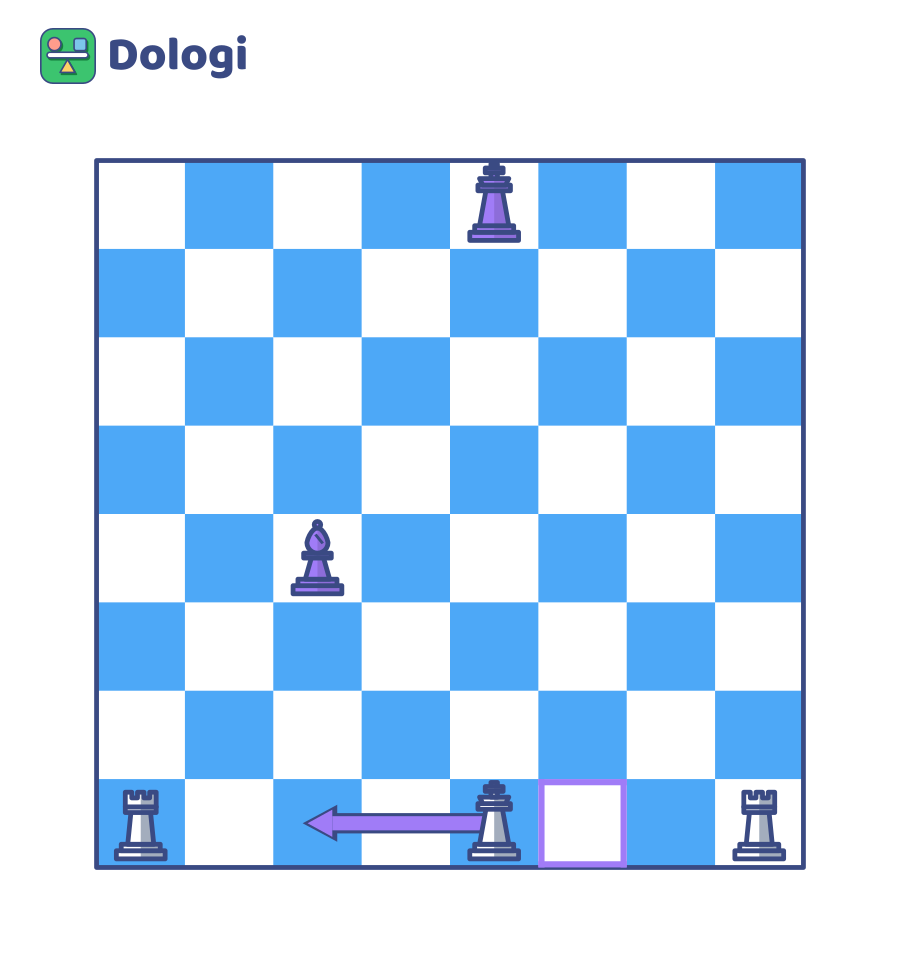
Here the black bishop covers the square just right of the white king. Castling kingside would make the king cross it, so that's not allowed. Castling queenside (the arrow) is fine: the king passes and lands on squares nobody attacks.
Where kids (and plenty of grown-ups) get confused:
- If the king was in check earlier and got out without moving, castling is still allowed.
- If the rook is attacked, or crosses an attacked square (the one next to it when castling queenside), it's still allowed. Only the king's path counts.
- Teach your child to move the king first, then the rook, so it doesn't look like a plain rook move.
En passant: only on the very next move
A pawn may move two squares on its first move. If an enemy pawn uses that double step to slip past a square your child's pawn attacks, and stops right beside it on the same row, your child's pawn may capture it as if it had moved only one square: it moves diagonally onto the empty square behind, and the captured pawn comes off the board.
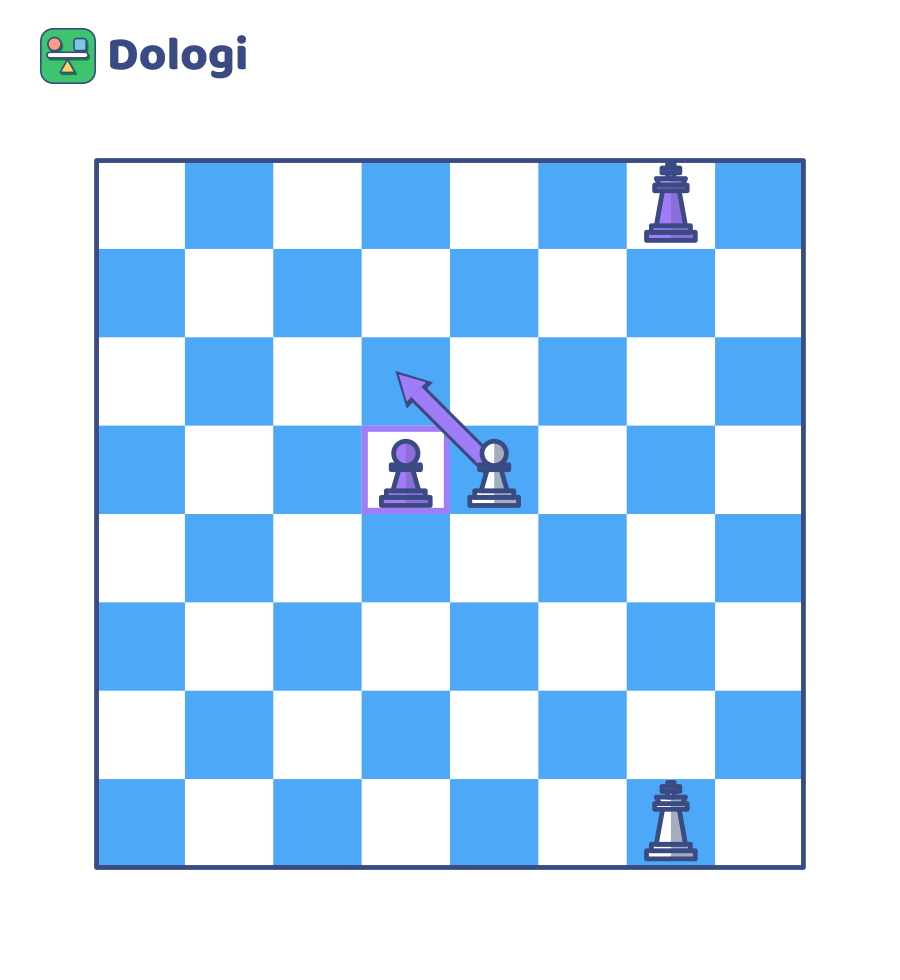
Three things to remember:
- Only on the very next move. Play something else and the chance is gone.
- Only a pawn can capture a pawn this way.
- It's optional, like every capture.
The rule exists so a pawn can't use its double step to sneak past an enemy pawn. Explain that, and the rule sounds fair instead of strange.
Promotion: a pawn that reaches the end becomes almost anything
A pawn that reaches the last row must immediately become a queen, rook, bishop or knight of its color. It can't become a king or stay a pawn. Your child may choose any of the four, even one they haven't lost, so two queens on the board is perfectly normal. No spare queen in your set? Agree as a family on a stand-in, like a bottle cap or a quarter.
The queen moves the most, so it's usually the pick. But not always:
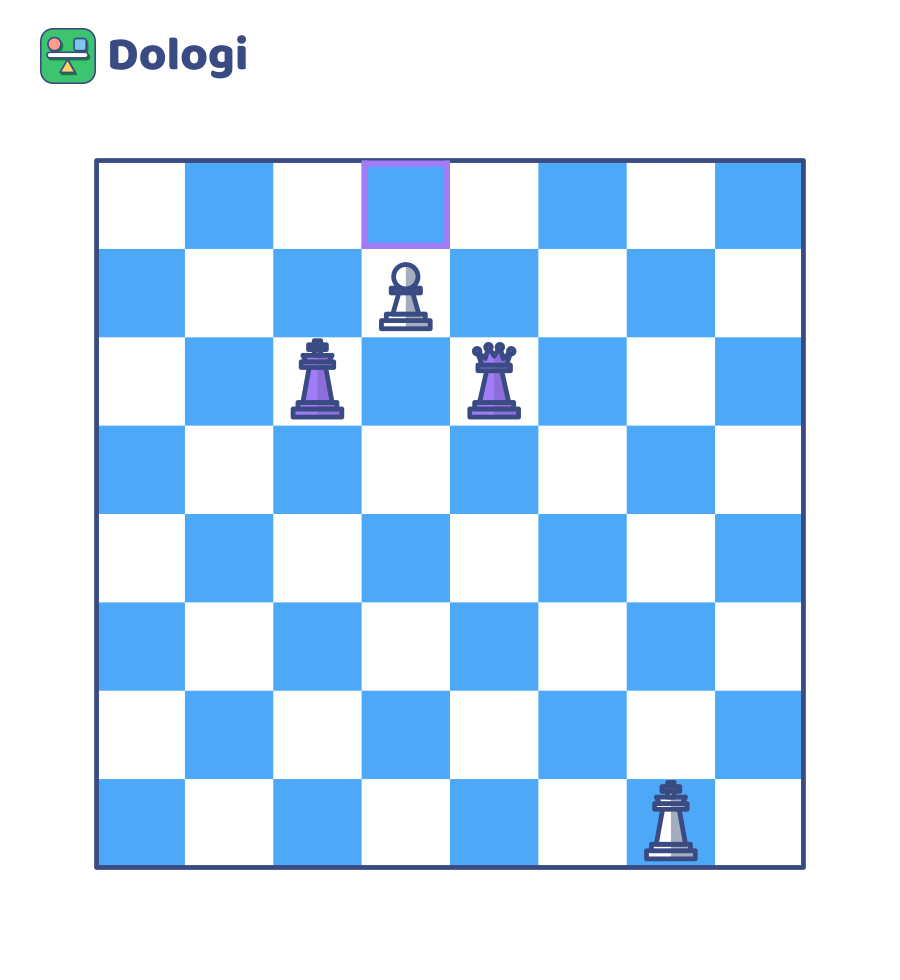
Here the white pawn steps onto the last row. A new queen gives no check. A knight checks the king and attacks the black queen at once: the king must move, and next turn the knight takes the queen. Even if the king then takes the knight, White has traded a pawn for a queen. "What's the best piece to promote to?" is a great thinking question for older kids.
A practice game for each rule
Each needs a few pieces and five or ten minutes:
| Game | How to play | What it practices |
|---|---|---|
| Yes or no? | You set up a king, two rooks and an enemy piece or two. Your child says if castling is allowed, which side, and why | The four castling conditions |
| Pawn war | Eight pawns each, nothing else. First pawn to the last row wins | En passant shows up on its own |
| One chance | You push a pawn two squares to land beside your child's pawn. They get one move to spot it | "Only on the very next move" |
| Race to the end | A king and three pawns each. When a pawn promotes, your child picks a piece and says why | Promotion and choosing a piece |
After each correct use, ask one "what if": "What if that pawn had moved only one square?" "What if the king had already moved?" If your child can explain it in their own words, they've understood it, not just memorized it.
When your child says "I've never heard of that rule"
Your child isn't cheating; they just didn't know. What helps:
- Pause and look it up together: the rule sheet in the box, a chess book, or the official rules of chess online. Your child sees it in writing, not something you made up.
- Keep this game fair: if not knowing the rule cost your child, let them take the move back, or start using the rule next game.
- Set the position up again: this time your child is the one castling or capturing en passant.
- Post the rules by the board: a sticky note with three lines for three rules.
The Chess room in Dologi's Creative corner plays by the full standard rules, including castling, en passant and promotion. When your child tries an illegal move, the app explains why, for example "You can’t castle while your king is in check." or "When castling, the king can’t pass an attacked square." The first time your child uses a special rule, the Discovery book saves it with a one-line explanation, and Learn chess has a lesson for each rule, including the question "Can you castle on the king’s side?"
In short
- Castling: the king moves two squares toward a rook and the rook hops over; only if neither has moved, nothing is between them, and the king isn't in check and doesn't cross or land on an attacked square.
- En passant: when an enemy pawn's double step lands beside your child's pawn, it can be captured as if it moved one square, but only on the very next move.
- Promotion: a pawn on the last row becomes a queen, rook, bishop or knight; the queen is usually strongest but not always the best choice.
- Teach one rule at a time with small positions; if your child hasn't heard of a rule, look it up together and keep the game fair.
Read more: Check, checkmate, stalemate and draws: how a chess game ends, explained for kids, Chess for children: what age to start, and what they really learn, When kids argue about chess rules: how to look up the rules together and agree on house rules