Your child shouts "checkmate!" while your king can still walk away. Or they have a queen and a rook, you have only a king, and somehow the game is a draw. These are the two places where new players get stuck most often.
There aren't many rules about how a game ends. Below, each one is shown with a few pieces, followed by a comparison table and a small game that helps your child tell them apart.
Check: the king is attacked, but the game goes on
Check means the king is under attack by an enemy piece. A player in check must get out of it on the very next move, and there are only three ways:
- Move the king to a square that isn't attacked.
- Block: put a piece between the king and the attacker (this doesn't work against a knight, because knights jump).
- Capture the piece that is giving check.
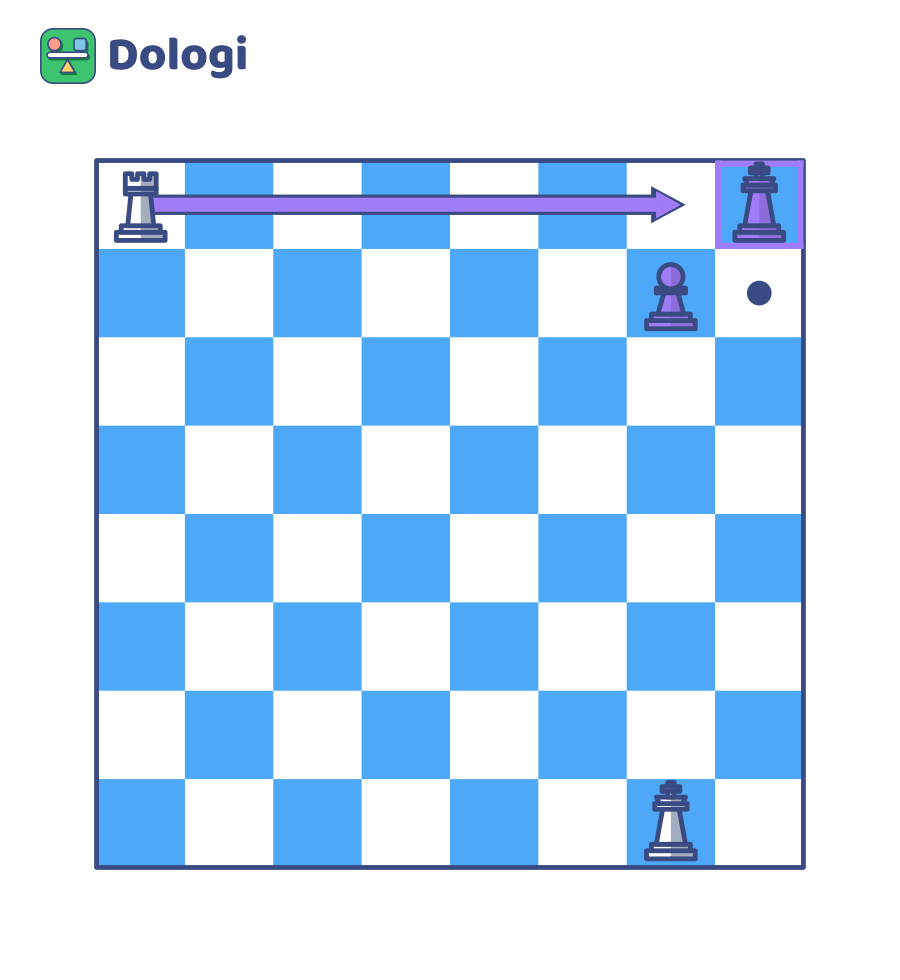
Here the white rook checks the black king along the top row. Black can't block or capture the rook, but the king can step down to the square with the dot. So this is check, and the game continues.
Checkmate: in check with no way out
Checkmate is check where none of the three escapes works. The game ends right away, and the side that gave checkmate wins. The king is never actually captured; many kids think they must "take the king" to win, so say this early.
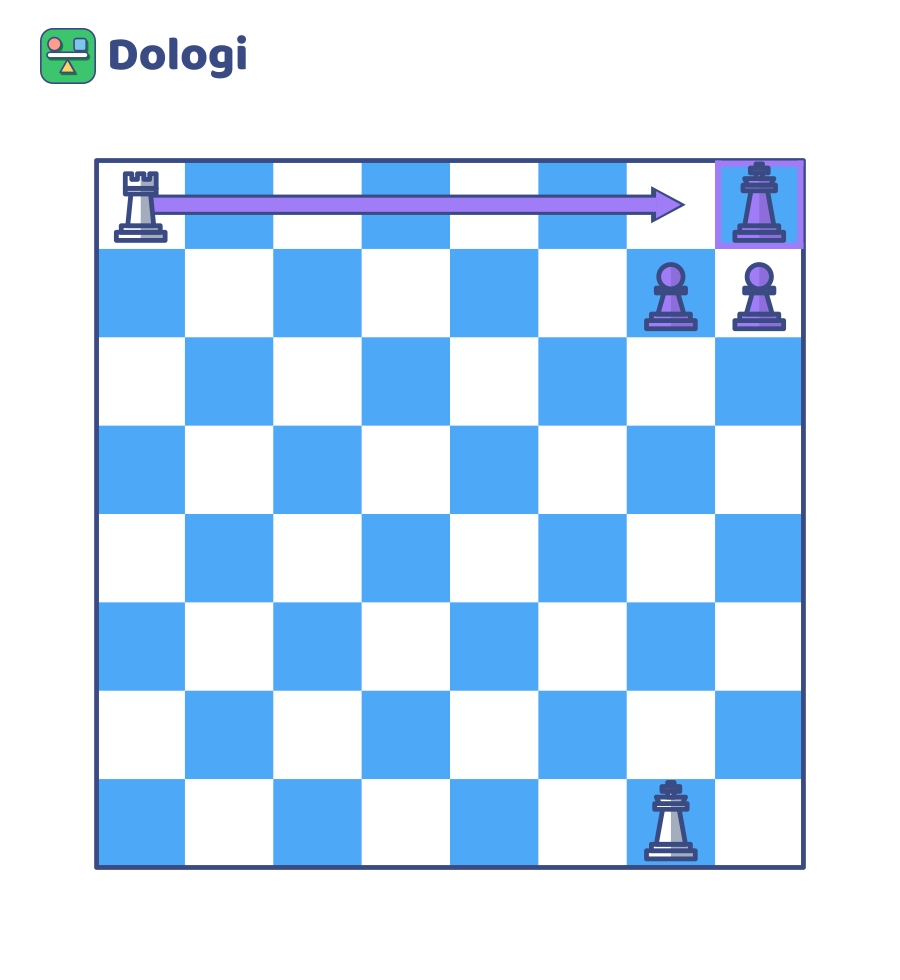
Only one pawn has changed: it now stands on the escape square. No move, no block, no capture. Checkmate.
Teach your child to ask three questions every time there's a check: Can the king move? Can I block? Can I capture the checking piece? Three "no" answers mean checkmate.
Stalemate: why is it a draw when I'm winning?
Stalemate happens when the player whose turn it is is not in check but has no legal move: the king may not step onto an attacked square, and the other pieces are gone or stuck. The game ends in a draw, even if one side has far more pieces.
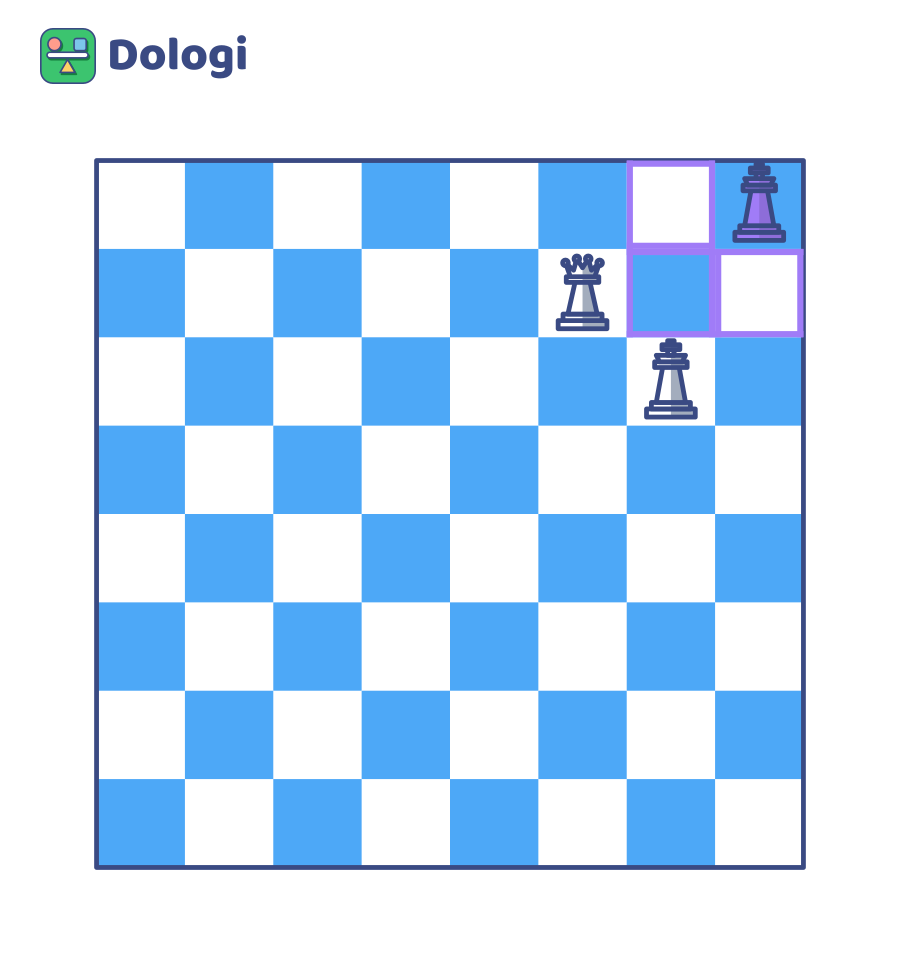
It's Black's move. The black king isn't in check, but all three squares around it are covered by the white queen or the white king, and Black has no other pieces. Draw. If the white queen had moved one square further to the right, right next to the black king and protected by the white king, it would have been checkmate.
Kids are often crushed the first time this happens, which is exactly when the lesson sticks. A good habit: when the other side has few pieces left, ask before each move, "After I move, will they still have a move?"
Every way a game can end: a comparison table
| How it ends | What happens | Result |
|---|---|---|
| Checkmate | The king is in check and can't move, block or capture the attacker | The side that gave checkmate wins |
| Resigning | A player gives up before being checkmated | The other side wins |
| Stalemate | The player to move isn't in check but has no legal move | Draw |
| Threefold repetition | The same position, with the same player to move, appears for the third time | Draw |
| Not enough pieces | So few pieces are left that neither side can checkmate | Draw |
| Fifty-move rule | Each side makes 50 moves with no capture and no pawn move | Draw |
| Agreed draw | Both players agree to stop | Draw |
"Check" isn't in the table because check doesn't end the game.
For children around 5 to 7, checkmate and stalemate are plenty. Older kids can learn two more draws:
- Threefold repetition often comes from perpetual check: one side keeps checking, the other king shuffles between two squares, and the position repeats. It's how the side that is behind can save the game.
- Not enough pieces: two bare kings, or a king plus one bishop or one knight against a lone king, can't checkmate. A king with a rook or a queen can, so don't settle for a draw too soon.
In tournaments, repetition and the fifty-move rule must be claimed with the arbiter; at home, just call it a draw.
A game to play: "find the king's escape"
You need a board, a few pieces and a handful of dried beans.
- You set up the black king and one or two white pieces.
- Your child puts a bean on every square around the black king (eight at most).
- Your child removes the beans from squares that a white piece attacks and from squares where a black piece stands.
- Look again: in check with beans left means check; in check, no beans left, no block and no capture means checkmate; not in check, no beans left and no other black piece that can move means stalemate.
- Switch roles. Kids love building positions to "trap" a parent.
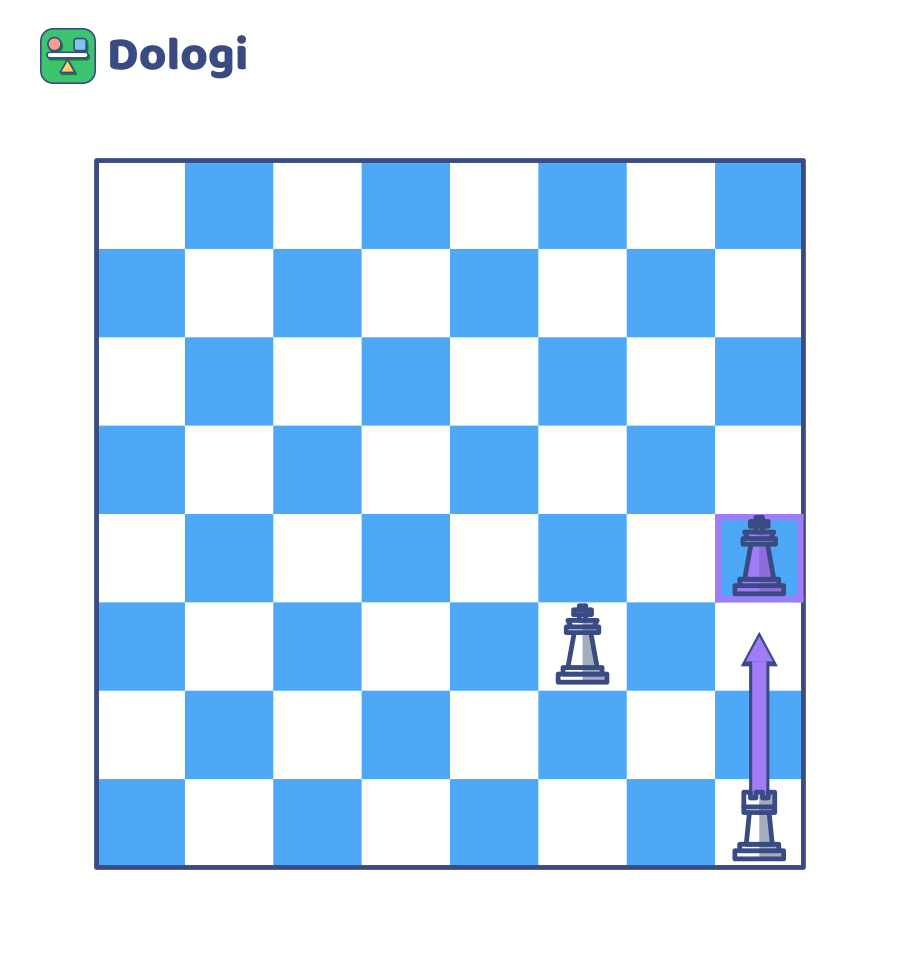
Try it now: the white rook has just given check. Where can the black king go?
Answer: only one square, diagonally up and to the left (g5). The squares above and below the king are on the rook's column; the square to the left and the one diagonally down-left are covered by the white king, since kings can never stand side by side. Then ask: what if the white king stood one square higher? Checkmate.
In the Chess room in Dologi's Creative corner, Learn chess has the lessons Check, Three ways out of check, Checkmate, No moves means a draw and Other kinds of draws; the stalemate lesson asks "Is this checkmate, or are there no moves left?" so your child learns to tell them apart. When a game ends, the app says why, for example "A draw: no moves left." Once the Creative corner is turned on, Dologi's daily sessions sometimes include a Which move is checkmate? puzzle.
In short
- Check means the king is attacked; get out of it in one of three ways: move the king, block, or capture the attacker.
- Checkmate is check where none of the three ways works: the game ends, and the king is never captured.
- Stalemate is no check but no legal move: the game is a draw, even for the side that is far ahead.
- The "find the king's escape" game with beans lets your child count squares and name each ending correctly.
Read more: 10 easy chess puzzles for kids who are just starting, with hints and answers, Chess for children: what age to start, and what they really learn