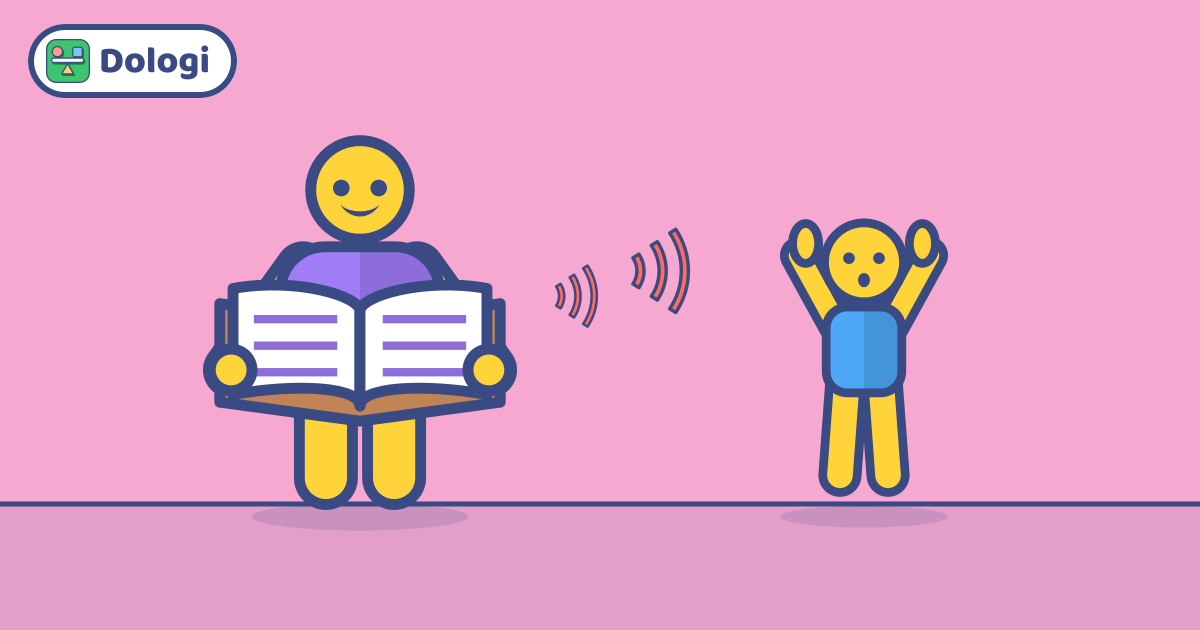
Every child loves hearing a story, but listening when you have to catch one particular word is something else: your child can't drift off anymore. "Clap for the secret word" needs nothing but a book and your reading voice. Each round adds one small rule, so it works for children from 4 all the way to 10.
Getting ready
- A short, familiar story you can read in five to seven minutes. Fairy tales are ideal, because the characters' names come up again and again. In "Goldilocks and the Three Bears," for example, "bear" and "porridge" appear many times.
- Pick the secret word before you start: a word your child will recognize instantly that comes up at least five or six times.
- Read naturally, without stressing or pausing before the secret word. Stressing it gives the game away.
Round 1: Clap for one word
Agree on one word, say "bear." Every time your child hears "bear," they clap once. That's it.
For 4- and 5-year-olds, this round is fun enough on its own. Missing one is fine; just keep reading.
Round 2: A second word, a different action
Keep the first word and add a second with a different action: clap for "bear," touch your head for "porridge." Your child has to hold two words in mind at once and pick the right action, fast.
A sweet version for little ones: give each character a gesture, and whenever a name comes up, act it out (Daddy Bear stomps, Baby Bear rubs his eyes).
Round 3: The freeze word
Add a freeze word: when your child hears it, they must stay perfectly still like a statue until you start the next sentence. For example: "bed." Clapping, touching their head and then freezing at the right moment makes this the hardest round for self-control: their hands want to clap out of habit, and they have to stop.
You can set gentle traps: read words that sound nearly the same, like "bread" next to "bed." Your child has to listen carefully not to freeze by mistake.
Round 4: Count in your head
No more clapping. This time your child sits still and counts silently how many times the secret word comes up. As you read, make a tally mark on paper each time you say the word. At the end, your child says their number and you compare it with the marks.
Being off by one or two is normal. Ask, "Where do you think you missed one?" and reread that part to check.
Which round suits which age
| Round | Rule | Ages | What it trains |
|---|---|---|---|
| 1 | Clap for one word | 4 and up | Sustained attention |
| 2 | Two words, two actions | 5 and up | Holding two rules at once |
| 3 | Add a freeze word | 6 and up | Self-control, hearing near-identical words |
| 4 | No clapping, count silently | 7 and up | Counting in your head while listening |
Tips for parents
- Let your child choose the secret word. Kids usually pick their favorite word in the story and pay much closer attention.
- Make up a story when there's no book: tell one about your family and mention one person's name lots of times. Kids love hearing their own name in a story.
- Swap roles with children who can read: your child reads and you clap. They'll read extra clearly to "catch" you.
- Stop while your child is still keen. One story and two rounds is plenty for an evening.
The Listening topic in Dologi has a puzzle called Drum beats: "How many times does the drum beat?" Just like the counting round, your child has to listen all the way to the end before answering, without missing a single beat.
In short
- Read a short story and your child claps for the secret word; read naturally, without stressing it.
- Level up: add a second word with another action, then a freeze word, then silent counting.
- Let your child pick the word, make up stories with family names, and swap roles once they can read.
Read more: Reading together: questions that help your child retell a story, Sound effects for a story