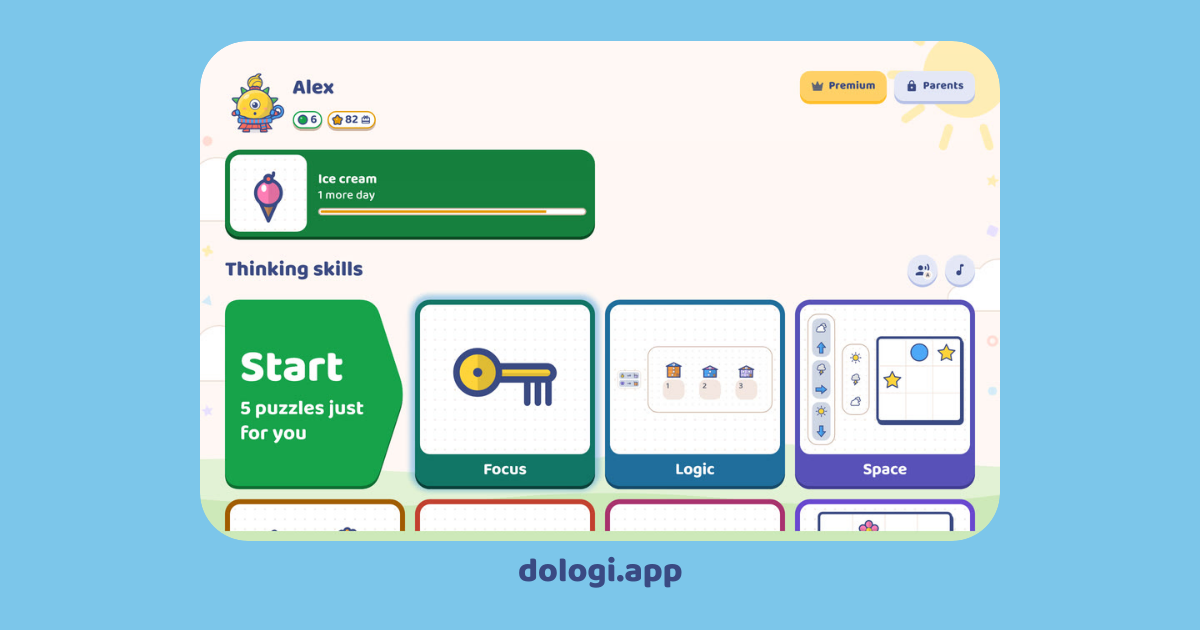
Training your thinking is a bit like exercise: a little every day works better than one very long session now and then. Dologi is built around that rhythm. Each session is 5 short puzzles at your child's level, and then it's time for a break.
This article explains what a session looks like, what the seven topics contain, and a few of the kinds of puzzles children enjoy most.
One session: 5 puzzles, a few minutes
On the home screen, your child has two ways to begin:
- The Start card opens a session of 5 puzzles mixed from several topics. The first is a little easier to get into the rhythm, and the last is a little harder to stretch a bit.
- Each topic card shows its first puzzle. Your child taps the topic they like and plays exactly that puzzle.
The first time your child meets a new kind of puzzle, the How to play screen shows how it works in a few short steps, demonstrated on the real puzzle. When stuck, your child taps Hint: hints go from gentle to clearer, and never give the answer outright.
At the end of a session, your child says whether the puzzles were Too easy, Just right or Too hard. That opinion, together with the result of each puzzle, helps the app adjust the difficulty for the next session.
Seven topics, over 120 kinds of puzzles
| Topic | What your child practices | A few puzzle types |
|---|---|---|
| Logic | Reasoning, ruling things out, drawing conclusions | Who lives where?, Lights on, Sort into groups, What happened first? |
| Patterns | Spotting what repeats and predicting what comes next | Repeating patterns, Changing machine, More and fewer, Next number |
| Space | Picturing turning, flipping and fitting | Maze, Water the flower, Fold and punch, Push the boxes |
| Math | Counting, comparing, mental arithmetic, measuring | What time is it?, Pour and measure, Balance the beam, Equal parts |
| Focus | Careful observation, noticing details | Spot the difference, Follow the string, Follow the cup |
| Memory | Remembering pictures, positions, order | Memory cards, Remember the lamps, Put it back |
| Listening | Telling sounds apart, remembering melodies | Drum beats, Which instrument?, Listen and play back |
Puzzles don't come from a ready-made list. They are generated from templates each time your child plays, so your child rarely meets exactly the same puzzle twice and can't simply memorize answers.
Puzzle types children love
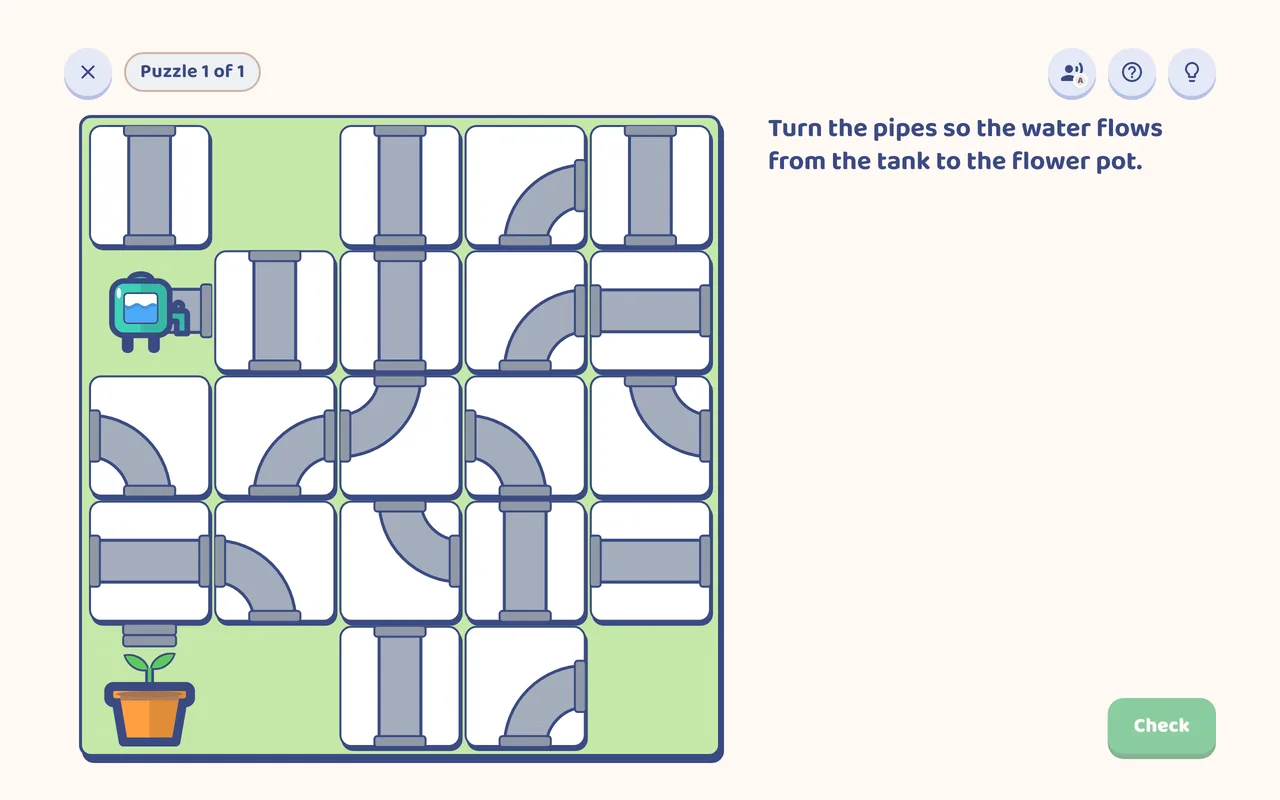
Water the flower (Space): your child taps to turn each section of pipe so water flows from the tap to the flower. They have to picture the path of the water before turning anything.
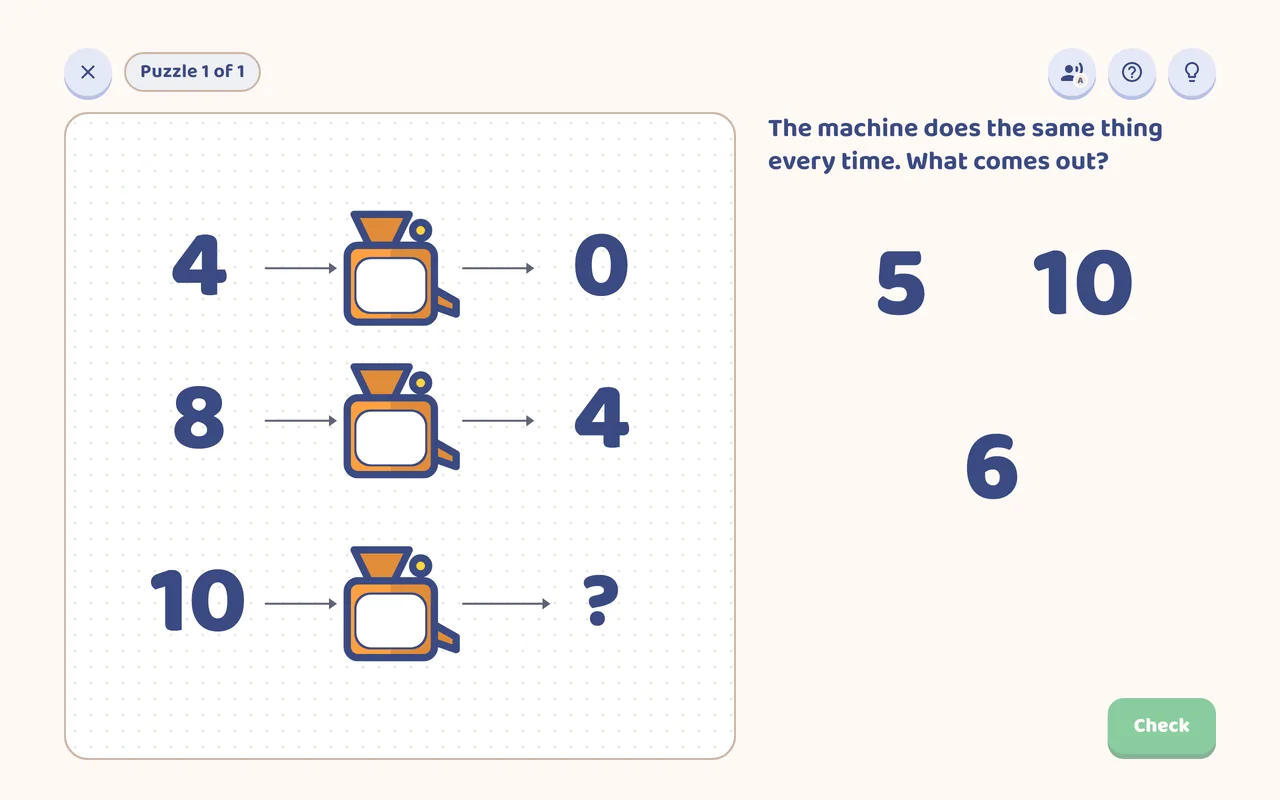
Changing machine (Patterns): a machine changes every shape that goes in into a different shape. Your child watches the machine work a few times, guesses what it does, then picks the shape it will produce. It's a first step toward the "rule" thinking they will meet later in math and coding.
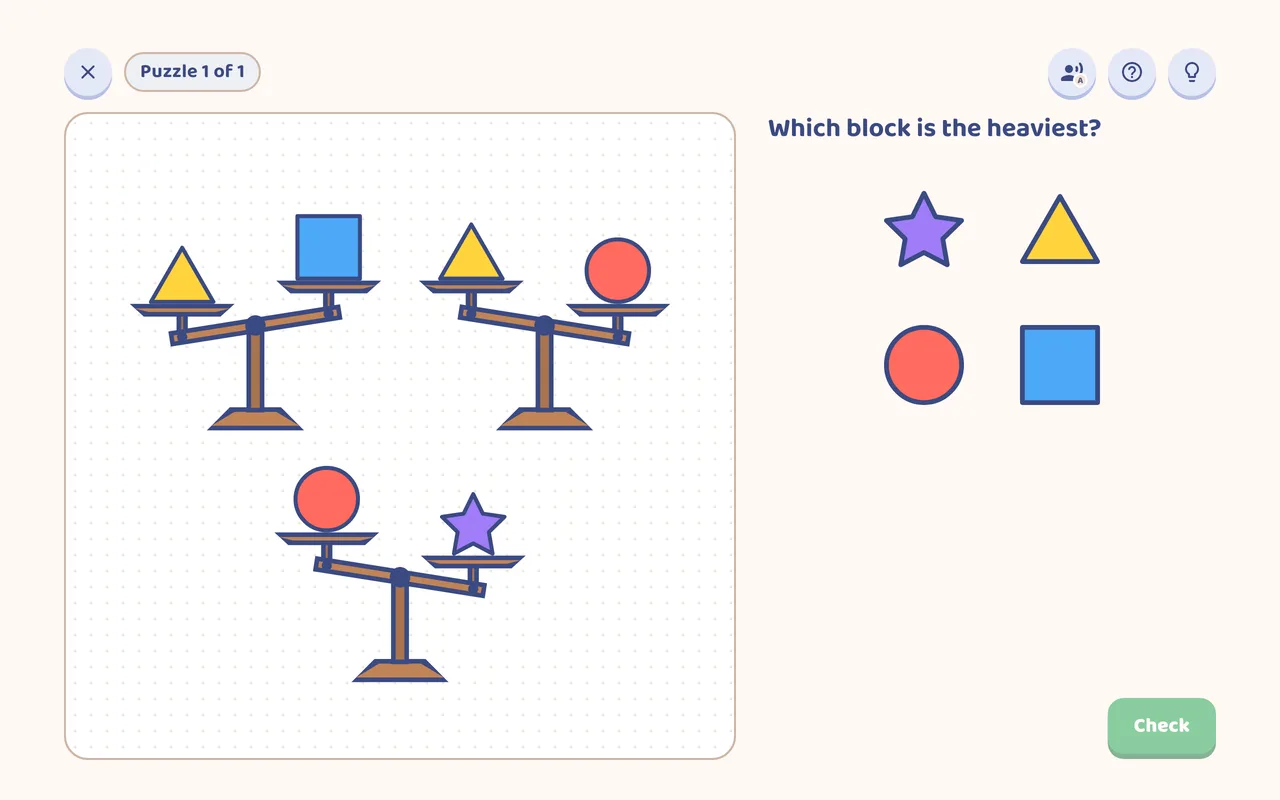
Balance scales (Logic): look at which way the scale tips to work out which object is heavier. No numbers needed, just step-by-step reasoning.
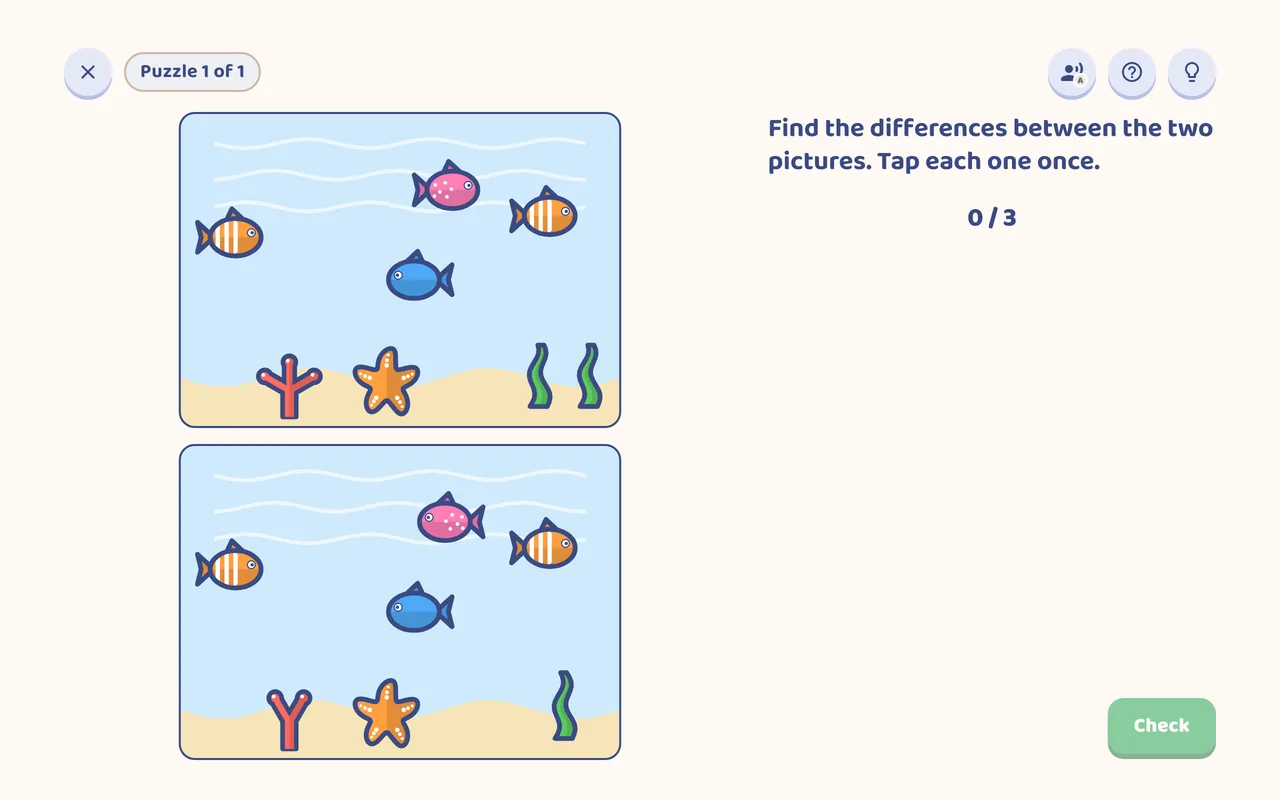
Spot the difference (Focus): two almost identical pictures, and your child taps the places where they differ. A familiar kind of puzzle, but very good for careful looking.
In addition, Listening puzzles such as Drum beats and Listen and play back are often a hit with younger children because they get to play and hear music at once. If you need a quiet session, parents can turn off the puzzles that need sound.
Always at the right level: not too easy, not too hard
Difficulty has 12 levels, matching roughly ages 4 to 12. Your child starts slightly below their age level so they get some early wins. After each puzzle and each session, the level is adjusted for each skill separately: do well and it moves up, struggle and it eases off. A child who is strong at patterns but new to space puzzles still gets a suitable challenge in both.
Parents can choose a focus topic in the parent area: each Start session then takes 2 of its 5 puzzles from that topic.
What if your child gets it wrong?
There are no red marks and no sounds that say "wrong". When your child picks a wrong answer, the app gently suggests choosing a different one or tapping Start over.
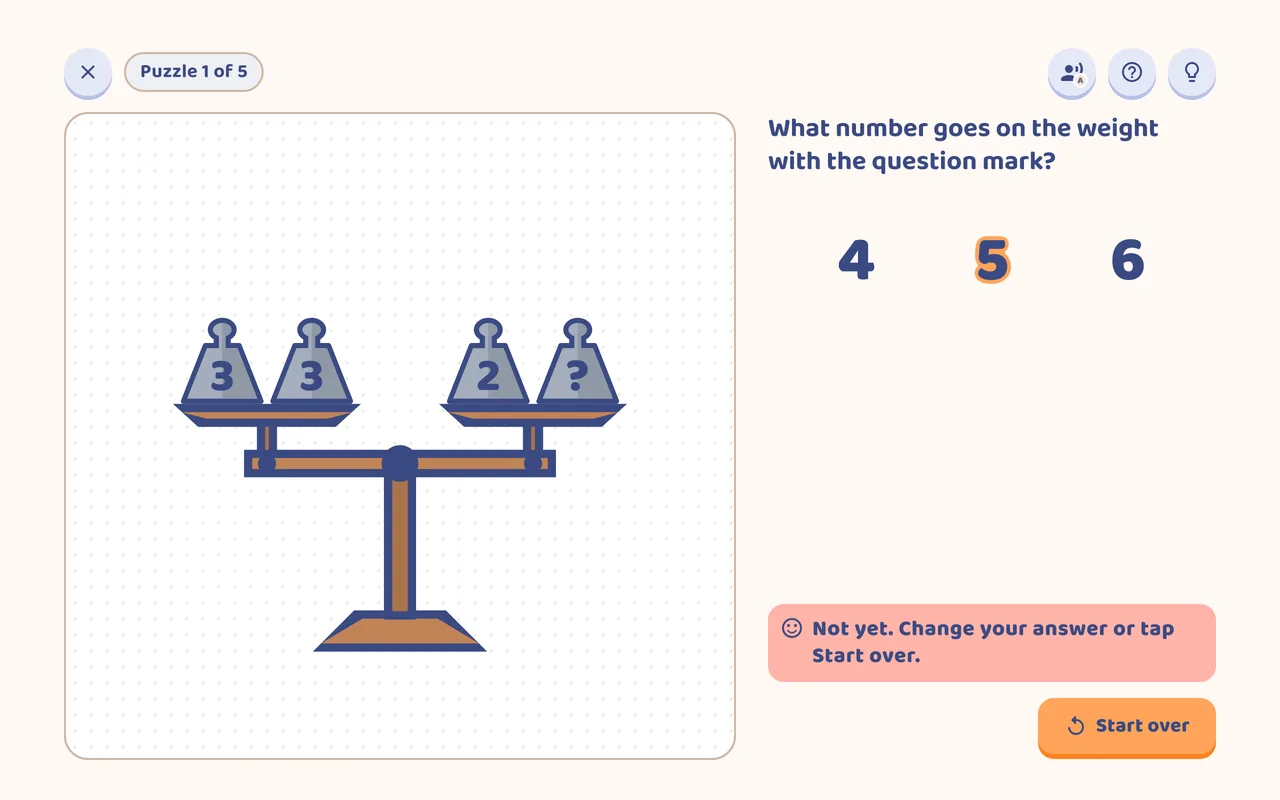
After 3 wrong tries, your child can use Show answer to understand how it works. That puzzle earns no stars, but your child isn't stuck and can move on. We want children to learn that mistakes are part of thinking.
In short
- Each session is 5 puzzles and just a few minutes, which suits regular daily practice.
- Seven topics and over 120 kinds of puzzles, freshly generated every time.
- 12 difficulty levels that adjust to each of your child's skills.
- A wrong answer brings a gentle invitation to try again, with hints and the answer when needed.
Read more: What is Dologi? · Building a daily learning habit: 15 minutes a day, with less reminding