The school-morning rush is the busiest part of the day. Adding "playtime" to it isn't realistic. What you can do is attach games to the things that have to happen anyway: getting dressed, brushing teeth, eating breakfast, getting to school. It costs no extra minutes, and your child gets a brain warm-up and practice at noticing and doing things in order. Suits children aged 5 to 10.
Three ground rules
- Attach to what already happens; don't add new tasks.
- One game per morning. Two is where lateness starts.
- In a rush? Skip it straight away, no bargaining, no regrets. Pick it up tomorrow.
Game 1: Get dressed by the picture cards
Great for 5–7-year-olds, the ones who stand in the middle of the room forgetting what they were doing.
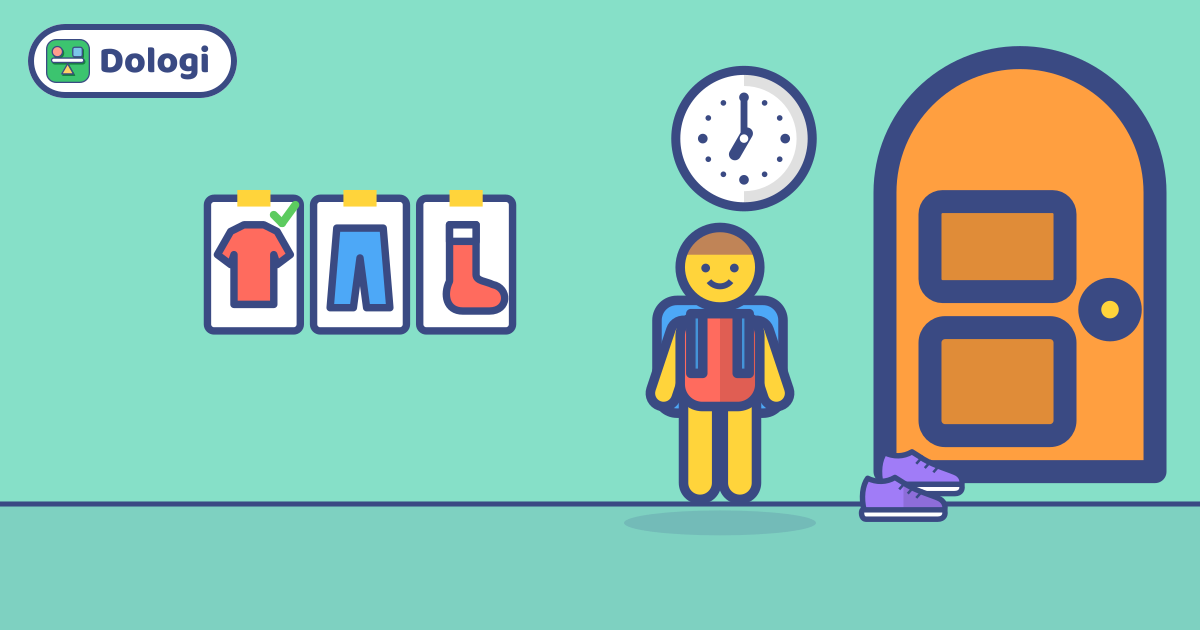
- Draw or print a few picture cards: shirt, pants, socks, shoes, school bag. Tape them in a row on the wall near where your child gets dressed.
- Your child follows the order on the wall, flipping or ticking each card when that step is done.
- Variation: the night before, secretly swap two cards. In the morning ask, "Which cards moved today?" Your child has to look along the whole row to spot it.
Game 2: Finish brushing before the song ends
- Pick a song about two minutes long and start it when your child picks up the toothbrush.
- The rule: brush all four zones (top left, top right, bottom left, bottom right), one part of the song for each. When the song ends, you're done.
- Variation: your child chooses today's order for the four zones, says it out loud first, then sticks to it.
Game 3: One riddle at breakfast
- Put a riddle on the table when your child sits down. The rule: answer it before breakfast is over.
- Keep it short enough to remember after hearing it once: "What has a neck but no head?" (a bottle), "How many windows does our home have?", "If today is Tuesday, what day is the day after tomorrow?"
- No answer yet? Leave it there and come back to it after school. A riddle stuck on the fridge door works well too.
Game 4: Spot three round things on the way
- Each morning brings a "mission" for the trip to school: find three round things (wheels, road signs, a manhole cover), three red things, three animals.
- In the car or on the bus your child calls them out and you just listen. Walking? Add one more: count the steps between two lampposts.
- Change the mission each week, and let your child pick next week's.
Choosing a game for your family
| Game | Attached to | What you need | Extra time |
|---|---|---|---|
| Picture cards for dressing | Getting dressed | A few cards, tape | None |
| Brush till the song ends | Brushing teeth | A two-minute song | None |
| Breakfast riddle | Breakfast | One riddle | None |
| Spot three things on the way | Getting to school | Nothing | None |
Making it a habit
- Same time, same place: when a game is tied to a fixed step, after a week or two your child remembers it without reminders.
- Don't use the game to hurry them: "Be quick or no game" turns it into pressure. The game is just a bit of fun on the side.
- Switch games every week or month when your child gets bored, and let them help choose the next one.
Mornings aren't for screens. At another time of day, the Focus topic in Dologi has a puzzle called Tap in order: "Tap only the numbers in order, from smallest to largest." Just like the cards on the wall, your child has to keep the order and not get pulled off track by everything around.
In short
- Attach games to what has to happen in the morning anyway, with no extra minutes.
- One game a morning: dressing cards, brushing to a song, a breakfast riddle, spotting three things on the way.
- Same time each day to build the habit; skip it when you're rushed; switch games when your child gets bored.
Read more: The puzzle on the fridge door: a one-puzzle-a-day habit, My child can't sit still for five minutes: helping active children focus