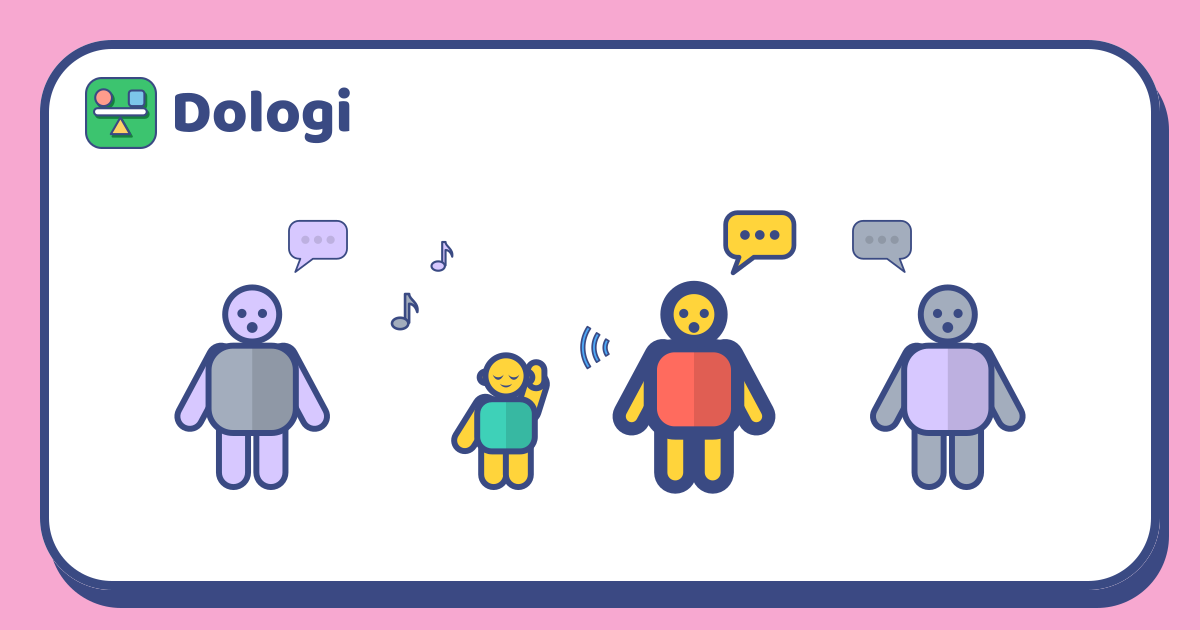
Think of a family dinner: two conversations across the table, the radio on in the kitchen, someone laughing in the next room. Somewhere in all that, you ask your child to pass the bread, and they don't seem to hear you. Often they did hear, but your voice was just one sound among many, and they had not picked it out.
Following one voice while other sounds carry on is a skill. The ear takes in everything; the brain has to choose one voice, hold on to it, and let the rest fade into the background. Children get better at this gradually, and practice helps. This article offers a few simple games for children aged roughly 5 to 10, with ideas for making them a little harder over time.
Why one voice among many is hard
To follow one person in a noisy room, your child has to do three things at once:
- Choose which voice matters right now.
- Stay with it, even when another sound is louder or more interesting.
- Remember what was said, while new sounds keep arriving.
Younger children are easily pulled towards the loudest or funniest sound in the room. That is not rudeness or a lack of effort; it is a skill that is still growing. Games let your child practice it in short, relaxed rounds, where getting it wrong costs nothing.
If you notice that your child often asks you to repeat things even in a quiet room, or turns up the volume much more than others do, mention it to a doctor. The games below are for practicing attention, not for checking hearing.
Game 1: Two voices, one list
You need two people and a quiet room. One adult and an older sibling work well.
- Agree on the target. Before you start, tell your child whose voice to follow: "This time, listen only to Dad."
- Read at the same time. Each person reads a short list of three words, slowly and at the same volume. For example, Dad says "cat, spoon, tree" while Mom says "ball, rain, shoe".
- Ask for the list. Your child repeats what the target person said. Count the words they got right, and celebrate them.
- Swap. Next round, your child follows the other person.
To begin with, use two different kinds of words, such as animals from one person and foods from the other. That gives your child an extra clue for sorting them. Later, both people can read words of the same kind, which is harder.
If there is only one adult at home, a recording of someone reading a story, played quietly, can be the second voice.
Game 2: Count the word in a song
Pick a song your child knows well and choose a word that comes up several times, such as "star" or "little".
- Each time your child hears the word, they drop a bean into a cup or raise a finger.
- At the end, count together. Then listen again, slowly, and check.
- For a variation, your child claps on the word and stays still on every other word.
Music is a good "background" for this game because the tune and the rhythm keep pulling attention away from the words. Your child has to keep listening for one small thing inside a lot of sound.
Turning up the background step by step
Once your child succeeds easily, add a little more noise or a little more to remember. Change one thing at a time.
| Step | What to change | Example |
|---|---|---|
| 1 | Quiet room, two voices | Two people read three words each |
| 2 | Add soft music | Same game with a calm song playing quietly |
| 3 | Longer lists | Four, then five words |
| 4 | Similar words | Both people read animals, or words that sound alike |
| 5 | Everyday noise | Play while a tap runs or a pot simmers |
Keep the volume comfortable. The aim is more sounds, not louder sounds. And watch your child, not the table: if they start guessing wildly, rubbing their eyes or getting silly, they are tired. Stop there and end on a round they can win. A few minutes of play is plenty.
What to try by age
| Age (rough guide) | Ideas to try |
|---|---|
| 5–6 | Two voices, two or three words each, very different kinds of words; count a word in a short, familiar song |
| 7–8 | Three or four words; add soft music; your child can be one of the readers |
| 9–10 | Similar words, longer lists, everyday noise; follow a short instruction from one voice ("hop twice, then touch the door") |
Every child is different, so let your child's enjoyment set the pace.
In Dologi, the Listening topic includes the "Which instrument?" puzzle. At harder steps, two instruments play at the same time and your child picks out both of them, which uses the same habit of separating sounds that arrive together.
In short
- Following one voice means choosing it, staying with it and remembering it, while other sounds carry on.
- "Two voices, one list" and "Count the word in a song" practice this in short, low-pressure rounds.
- Raise the challenge one step at a time: soft music, longer lists, similar words, everyday noise. Keep the volume comfortable.
- Stop when your child is tired, and talk to a doctor if you have concerns about their hearing.
Read more: Listening skills for children: sound games to play at home, Guess what just happened: a listening game where children reason from sounds alone