The tower falls, the game is lost, the shoes will not go on, and suddenly your child is shouting, stamping or throwing things. If this happens often in your home, you are far from alone. Anger is a normal feeling. The goal is not to make it disappear. It is to help your child cool down, and to show the feeling without hurting anyone.
This article is about children from around 4 to 10 years old. Every child is different, so take what fits and leave the rest.
Why children blow up
Anger is often the top layer. Underneath there may be disappointment, embarrassment or worry. Common triggers:
- Being tired, hungry or overloaded after a long day.
- Something feels unfair: a turn was skipped, a sibling got more.
- They cannot do what they want: the drawing looks wrong, the zipper is stuck.
- They do not have the words yet, especially younger children.
Try this for one week: jot down when outbursts happen. Note the time and what came just before. Many families spot a pattern, such as right after school or just before dinner. Then you can prevent the easy ones: a snack in the car after school, or a five-minute warning before screen time ends.
During the outburst
Your child is "red hot" and the thinking part of their brain is not listening yet. Lectures, reasoning and threats do not land right now. Here is what tends to help:
- Stay calm first. Lower your voice, use few words, and get down to your child's level.
- Keep everyone safe. Move breakable things away, and ask siblings to step aside.
- Name the feeling in one short sentence. "You're really angry that the tower fell."
- Offer one way to cool down. Slow breaths together (smell the flower, blow out the candle), squeeze a cushion, drink some water, or go to the calm spot.
| Instead of | Try saying |
|---|---|
| "Stop it right now!" | "You're very angry. I'm right here." |
| "Calm down!" | "Let's breathe together. Smell the flower, blow out the candle." |
| "You're being ridiculous." | "That tower took a long time to build. Of course you're upset." |
| "If you don't stop, no tablet for a week." | "When you're ready, we'll talk. Water first?" |
A feelings thermometer
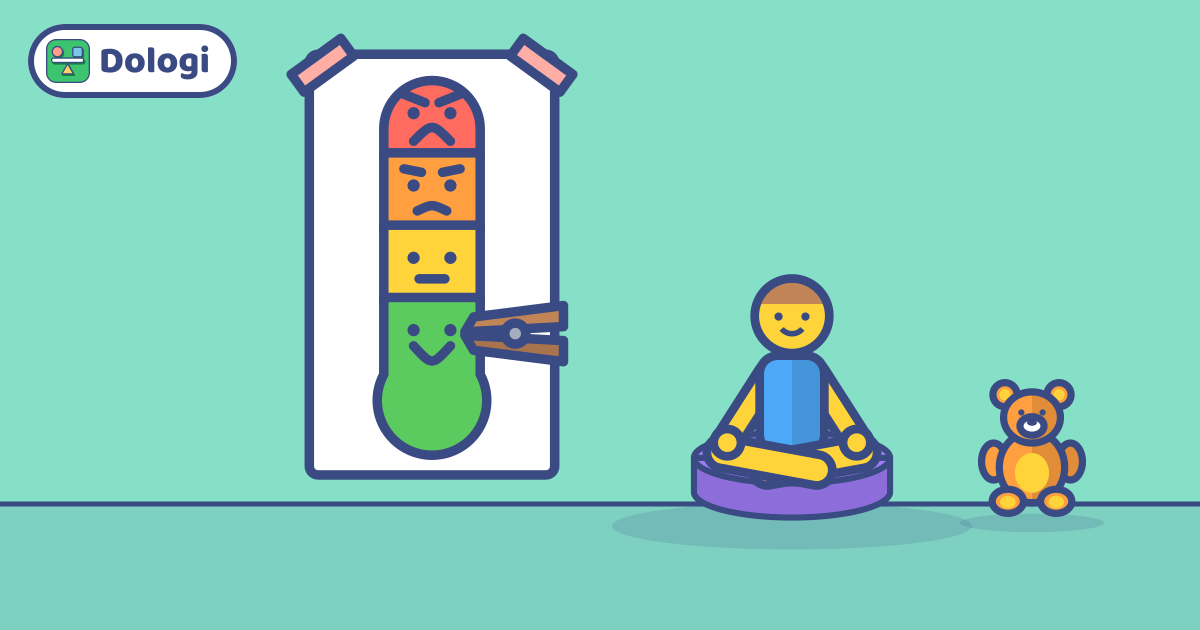
Make one together on a quiet afternoon. Take a strip of paper and color it in four bands, from green (calm) at the bottom to red (very angry) at the top. Your child can draw a small face on each band. Add a clothespin or clip that moves along it.
Practice when your child is calm: "Where are you right now?" Agree on what to do at each level, before you need it.
| Level | What it feels like | What we do |
|---|---|---|
| Green | Calm, relaxed | Nothing needed. Enjoy it. |
| Yellow | A bit annoyed, getting tight | Tell a grown-up: "I'm getting annoyed." |
| Orange | Hot face, fists, loud voice | Breathe, drink water, squeeze the cushion |
| Red | Out of control | Go to the calm corner. A grown-up stays near. |
Moving the clip is easier than finding words, and it gives your child a little control. You can also read more about teaching children to recognize feelings.
A calm corner, not a punishment
A calm corner is a place to feel better, never a place to go "because you were bad". Let your child help set it up and choose what goes in it:
- A floor cushion or a pile of pillows
- A soft toy
- A picture book
- Something to squeeze or hold
Younger children may need you to sit with them at first, and that is fine. In a small apartment, a corner of the bedroom or a box of calm things that you carry to any spot works just as well.
When anger turns into hitting
Stop the hand calmly and firmly: "I won't let you hit." Check on the hurt child first. Later, when everyone is calm, teach other ways to let anger out:
- Stomp your feet
- Punch a pillow
- Say loudly, "I'm so angry!"
- Walk away and come back
Afterward, help your child make things right. Ask "What could help your friend feel better?" This usually works better than forcing a quick, mumbled apology on the spot.
Talk once it has passed
When everyone is calm, maybe later at bedtime, keep it short: What happened? What did you feel? What could you try next time? You can act it out with toys.
Notice and praise it when your child uses a strategy: "You went to your corner and breathed. That was hard, and you did it."
Children learn a lot from watching you, so say it out loud: "I'm getting angry. I'm going to take three breaths." And if you lose your temper yourself, which happens to most parents, repairing things afterward teaches a lot too.
When to ask for help. Talk with your child's teacher and your pediatrician or a child specialist if outbursts are very frequent, very long or intense, if your child often hurts themselves or others, if things are getting worse over months, or if it happens everywhere, at home and at school. Asking for help does not mean you are doing something wrong as a parent.
In Dologi's Focus topic, puzzles like Follow the string and Spot the difference ask your child to slow down and look carefully. When a puzzle feels too hard and your child starts getting frustrated, it is a small, low-stakes moment to practice the thermometer: "Where are you now? Let's take a breath, then look again."
In short
- Anger is normal. Help your child cool down and show it safely, rather than trying to stop the feeling.
- During an outburst, stay calm, keep everyone safe, name the feeling in one sentence and offer one way to cool down.
- A home-made feelings thermometer and a calm corner give your child tools to use, before things reach red.
- Talk it through once it has passed, and say your own strategies out loud.
Read more: Teaching children to recognize feelings, After shouting at your child