Some parents worry their child "isn't into anything." Others have a child who's into everything for two weeks at a time. And many of us carry a quiet hope: if we just find the right activity early, our child will have a head start.
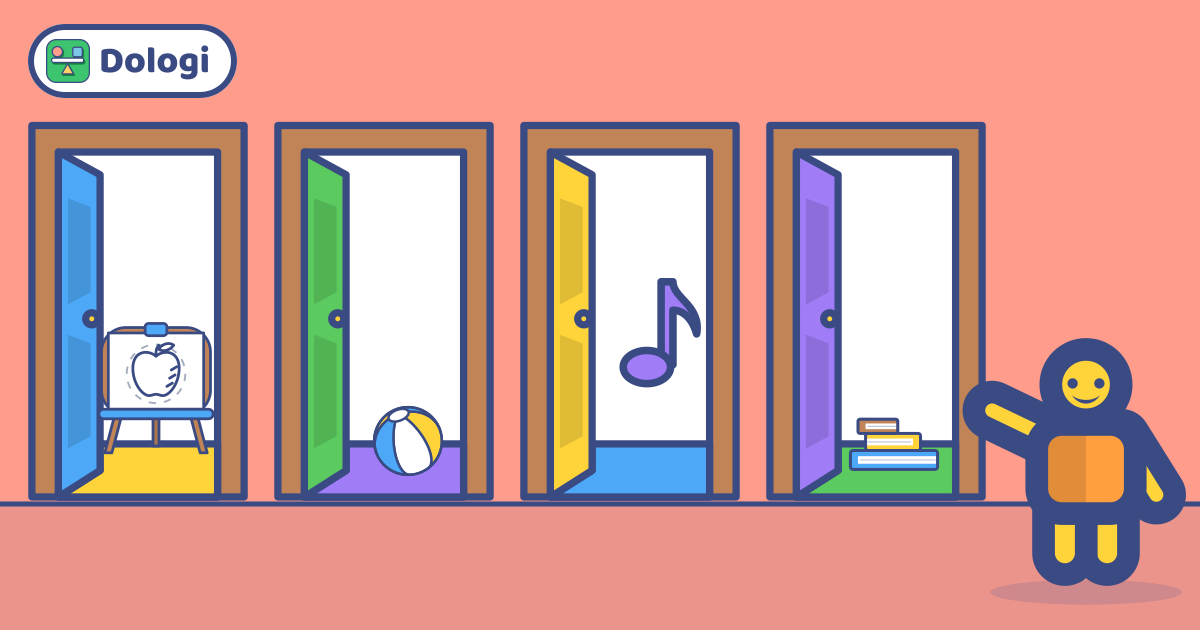
Interests rarely work like that. They grow out of many small tries, a lot of play, and the freedom to drop what doesn't fit. Your job is less about finding the thing and more about opening doors and noticing which ones your child walks through.
Open many small doors
Before signing up for anything, give your child plenty of cheap, low-pressure chances to try things at home and around town.
- Leave materials out: paper, markers, tape and cardboard, a ball, a jump rope, a simple instrument, a magnifying glass, seeds to plant.
- Use the library: let your child pick books on any subject, even ones that seem random. Many libraries also run free programs.
- Do real things together: cooking, fixing a bike, gardening, building with blocks, making up songs on the drive.
- Try one-time events: a free class at the rec center, a nature walk, a park concert, a science day.
- Watch someone do it: a neighbor who knits, a cousin who plays basketball, a street musician.
Mix types of activities: moving, making, music, reading, nature, numbers, people. A child who has never tried something can't know whether they like it.
Watch what lights them up
Instead of asking "What do you want to do?", watch. Signs that something has caught your child's interest:
- they lose track of time while doing it,
- they go back to it on their own, without being reminded,
- they talk about it or ask questions about it later,
- they're willing to work through the boring or hard parts.
Pay attention to what they enjoy inside the activity, too. A child who loves soccer might love the running, the teamwork, or keeping track of the score. A child who loves drawing might love the colors, telling stories, or designing machines. Those details point to the next door to open.
A small notebook helps: jot down what your child chose, how long they stayed with it, and what they said. After a few months, patterns appear that you'd miss day to day.
Let interests change, and let them stop
Interests come and go, especially before age 10 or so. A passion for trains can turn into a passion for maps, then for drawing cities. That isn't a lack of focus; it's how children explore.
When you do pay for a class, agree on a trial period up front: "Let's try four sessions, then decide together." Many programs offer a trial class; use it. If your child still doesn't enjoy it after the agreed time, stopping isn't failure. They learned something about themselves, and that was the point.
Not every interest needs a class, either. Some are best kept as play.
Keep the joy: no grades on hobbies
This matters a lot for drawing, music and other creative activities. When everything a child makes gets judged, many stop making things.
| Instead of | Try |
|---|---|
| "That's beautiful!" (every time) | "Tell me about your drawing." |
| "The sky should be blue." | "I see you chose purple for the sky." |
| Fixing the picture for them | Letting it be theirs, even if it's messy |
| "You could win a contest with this." | "You worked on that for a long time." |
Show their work on the fridge or a wall. Keep a folder of drawings so your child can see how they've grown. And resist turning every hobby into a competition or a future job. It's fine for something to be just for fun. For a child who's curious about jobs, exploring jobs together can be its own playful activity, separate from hobbies.
Your role: offer, don't steer
- Watch your own hopes. It's natural to want your child to love what you love, or what you missed out on. Offer it, then let your child's reaction guide you.
- Every activity is for every child. Dance, soccer, coding, cooking, sewing, building: offer all of them to boys and girls alike.
- Leave empty time. Interests often show up in unscheduled hours. A packed calendar leaves little room to discover anything.
- Help a strong interest grow. When your child does fall for something, learning can grow around it, as with a child who loves dinosaurs. If they want to get better at it, small goals help.
Before committing to a regular class, it helps to weigh time, cost and energy; see does my child need extra classes?.
On Dologi's home screen, each of the seven topics has its own card, such as Patterns, Space, Memory and Listening, and your child picks one. Notice which card they tap first or keep coming back to. It's a small clue about how they like to think, not a verdict.
In short
- Offer many small, low-cost tries of very different activities before signing up for classes.
- Watch for what keeps your child absorbed and what part of it they enjoy.
- Agree on a trial period, and let interests change or stop.
- Keep hobbies like drawing joyful: describe and ask instead of grading, and offer every activity to every child.
Read more: Your child is obsessed with dinosaurs, Exploring jobs with kids, Good at math but struggles with reading