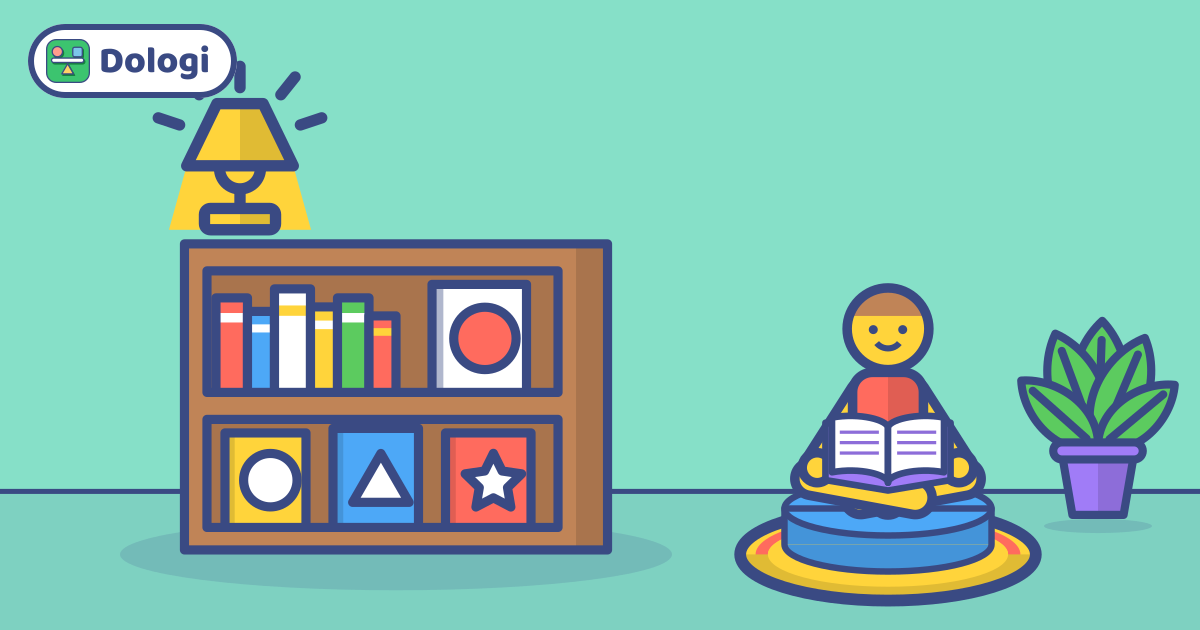
Many parents buy books, line them up on a tall shelf, and then wonder why their child never picks one up. Often the problem isn't the books but where they live. Spines packed tightly on a high shelf are hard to see and hard to reach. A small, inviting corner where books are easy to grab and comfortable to read changes that.
You don't need a spare room or a big budget. A reading nook can be one corner of the living room, a spot next to the bed, or the space under a window. This article covers what to put there, how to keep it fresh, and how to make it a place your child chooses to go, not a place they're sent.
Pick a small, quiet spot with good light
- Away from the TV and screens. A reading corner next to a running TV or a tablet on charge competes with something louder. Even a few steps away helps.
- Near the family, especially for younger kids. A 4- or 5-year-old rarely wants to read alone in a far-off room. A corner of the living room, where you're nearby, often works better than the bedroom.
- Good light. Daylight from a window is ideal during the day. For evenings, a lamp that lights the page without glare. Reading in dim light is tiring and makes the corner feel gloomy.
- Small is fine. A nook that fits one child and one parent feels cozy. Some children love a "hideout": a blanket over two chairs, a play tent, or the space behind the couch.
A low shelf with the covers facing out
Children, especially those who can't read yet, choose books by the picture on the front. A spine with a title on it tells a 4-year-old nothing.
- Put books at your child's height, so they can take one out and put it back without asking for help.
- Turn some covers to face out. A low shelf, a wide windowsill, a rain gutter or picture ledge on the wall, or a crate where books stand upright so your child can flip through them like records.
- Keep it to a handful. A dozen or so books on display is easier to choose from than fifty squeezed together. Store the rest in a box or a closet.
- Make putting books back easy. A basket marked with a picture or a color is enough. If tidying up takes a minute, it gets done.
A comfortable place to sit
- A floor cushion, a beanbag, a small rug, or a child-size armchair. Anything your child can sink into for ten minutes.
- Room for you too. Reading side by side is one of the main reasons the nook exists.
- A blanket in winter, a fan or a spot near an open window in summer.
- Optional extras your child might enjoy: a small flashlight for "reading in the cave," a stuffed animal to read to, a bookmark they made themselves.
Let your child help set it up. Children who chose the cushion or drew the sign for the door tend to treat the corner as theirs.
Change the books every week
A shelf that never changes stops being interesting. Rotating books keeps the corner fresh without buying more.
- Once a week, swap a few books. Keep two or three favorites and bring out some your child hasn't seen in a while. A book that sat in the closet for a month feels almost new.
- Use the library. Most public libraries in the US and UK let children borrow books for free with a library card, and many have story times. A regular trip to pick out the week's books gives your child a say in what goes on the shelf.
- Swap with friends and cousins. A bag of books passed between families works like a small library.
- Mix kinds of reading. Picture books, a book about bugs or space, a comic, a children's magazine, a cookbook with photos, a map. Everything that gets your child turning pages counts.
Read there yourself
Children copy what they see. If the only person who reads in the nook is the child, and only when told to, the corner becomes a chore.
- Sit down and read your own book while your child reads theirs, even for ten minutes. A newspaper or a recipe works too.
- Keep it a treat, never a punishment. "Go to your reading corner" said as a time-out turns the corner into a place to avoid.
- Don't quiz every time. Most visits to the nook should be just reading. For the days you want to talk about a story, see our guide to questions that help children understand and retell it.
- Let older kids own it. From about 8 or 9, many children want to choose the books, rearrange the shelf, or add a list of books they've finished. Let them.
The Focus topic in Dologi has a puzzle called Spot the difference: two pictures side by side, and your child taps each place where they don't match. Looking slowly over a picture and noticing small details is the same habit children use when they pore over the pages of a picture book.
In short
- Choose a small, well-lit corner away from screens, close to the family for younger children.
- Use a low shelf with covers facing out and only a handful of books on display.
- Add a soft place to sit, with room for a parent too.
- Swap some books every week, using the library and book swaps, and read there yourself.
Read more: Reading together: questions that help your child understand and retell a story, Choosing books for your child by age: what to look for, A bedtime routine for children: a story, lights out, and the same time every night