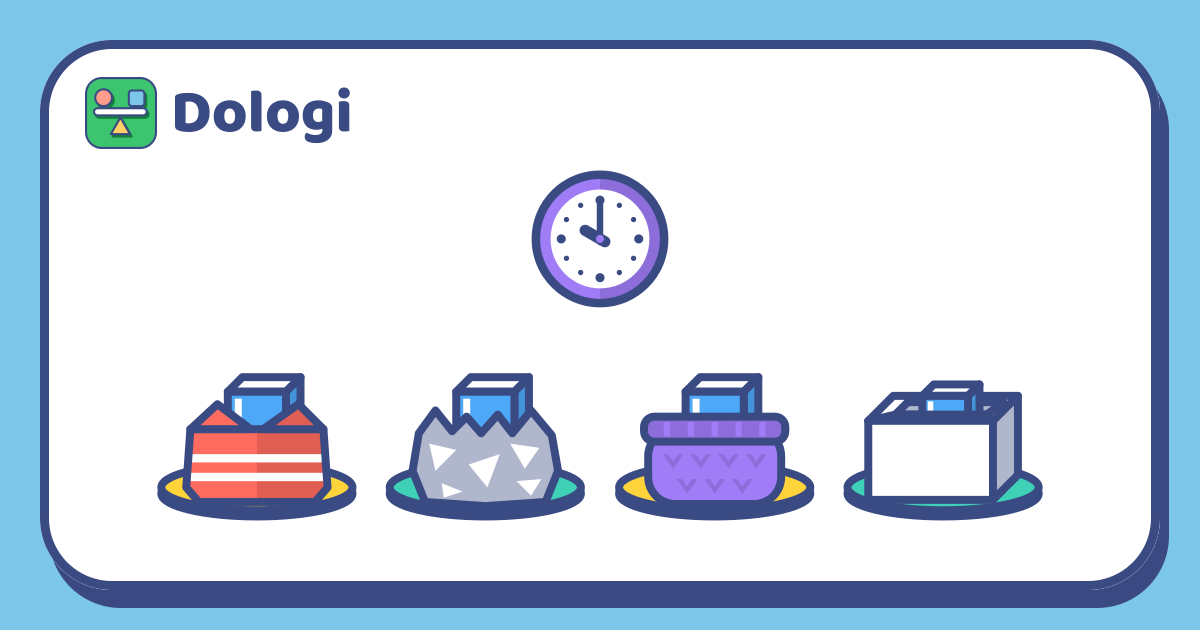
Ask your child this: "If we wrap an ice cube in a woolly jumper, will it melt faster or slower?" Many children say faster, because a jumper is warm. Then they test it, and the ice in the wool is still there long after the bare cube has turned into a puddle. That surprise is the heart of this experiment.
All you need is a tray of ice, a few plates and some things to wrap the ice in. Children of about 6 to 12 can guess, set up a fair test, check the ice at regular times and write down when each cube is gone. Afterwards you can talk about a real question from everyday life: why does the same wool keep us warm in winter and keep ice cold on the table?
What you need
- Five ice cubes from the same tray, so they are all the same size.
- Five plates or saucers of the same kind, one for each cube.
- Four wrappings: a tea towel, a sheet of kitchen foil, something woollen (a clean sock, a scarf or a knitted hat) and a small foam box or foam cup with a lid.
- A clock and a sheet of paper for the results.
The fifth cube stays bare on its plate. It is the comparison cube: without it, you cannot tell whether a wrapping helped at all.
Guess first, with a reason
Before anything is wrapped, ask your child to put the five cubes in order, from "will last longest" to "will melt first", and to say why. Write the guesses down. A reason can be simple: "Foil is shiny, so it will keep the sun out" or "Wool is warm, so it will melt the ice."
Don't correct the guesses. A wrong guess with a reason is worth more than a right one picked by luck, because your child can check the reason afterwards. Guessing with a reason and then checking it is what scientists call making a hypothesis.
Setting up a fair test
The only thing that should differ between the cubes is the wrapping. Everything else stays the same:
- Same size of ice, all taken from the tray at the same moment.
- Same kind of plate and the same place in the room, out of direct sunlight and away from the oven or a heater.
- Wrap them quickly, one after another, and wrap each cube in a single layer, with no gaps where the ice shows. Put the foam box lid on.
- Start the clock when the last cube is wrapped, and write the start time at the top of the page.
Ice in a warm kitchen can melt fast, so the bare cube may be gone within the hour while the others take much longer. A morning or a weekend afternoon at home is a good time to run it.
Checking and recording
Agree on a checking time, for example every 20 minutes. At each check, open every wrapping quickly in the same order, look, and close it again. Opening them all the same way keeps the test fair, because each one lets in a little warm air.
For each cube, your child writes one of three words: whole (still a clear cube), small (a lump in a puddle) or gone. When a cube is gone, write the time. Here is how one page might look:
| Wrapping | My guess (1 = lasts longest) | Gone after |
|---|---|---|
| Bare | 5 | 40 minutes |
| Foil | 1 | 1 hour 20 minutes |
| Tea towel | 3 | 1 hour 40 minutes |
| Wool | 4 | 2 hours |
| Foam box | 2 | 3 hours |
Your results may come out in a different order, and that's fine. Kitchens differ, wrappings differ in thickness, and a cube can be a little bigger than it looks. If two cubes are gone within one check of each other, call it a tie. Running the test a second time and seeing the same order again is what makes a result believable.
Why wool and foam keep ice cold
Here is the key idea for children: cold doesn't flow into things, warmth does. Warmth always moves from warmer things to colder ones. The room is warmer than the ice, so warmth from the air and the plate creeps into the cube, and the cube melts.
A wrapping doesn't make cold. It slows down the warmth on its way in. Wool, a towel and foam are full of tiny pockets of still air, and still air is very slow at passing warmth along. That's why a foam box, with its thick walls full of air bubbles, usually does best.
Foil is the one that often surprises. Metal passes warmth along easily, so a thin sheet of foil on its own doesn't slow it as much as the thicker wraps. But its shiny side bounces sunlight away, so foil can do better in a sunny spot than in the shade. That makes a good second experiment.
Then turn the idea around:
- Why does a jumper keep you warm? Not because it makes heat. Your body is the warm thing, and the wool slows down the warmth leaving you, the same way it slowed down the warmth reaching the ice.
- Why do people carry picnic food in a cool box? The thick walls keep the warmth of the day out, so the food inside stays cold for longer.
- Why does a thick blanket feel warmer than a thin one? More layers mean more trapped air between you and the cold.
More tests to try
Each of these changes only one thing, so it is still a fair test:
- One layer or two: wrap two cubes in the same tea towel, one in a single layer and one folded twice.
- Dry or damp: one cube in a dry sock and one in a sock that is slightly damp.
- Foil in the sun and in the shade: two foil-wrapped cubes, one on a sunny windowsill, one in the shade.
- The best wrap challenge: your child designs their own wrap from things in the house, guesses how long it will last, and tries to beat the foam box.
In Dologi, the Logic topic has "Balance scales" puzzles, where children read what each scale shows and work out which block is heaviest. Like the ice test, the answer comes from comparing results carefully, not from what we expected.
In short
- Wrap identical ice cubes in a towel, foil, wool and a foam box, leave one bare for comparison, and time how long each lasts.
- Keep everything else the same: size of ice, plates, place in the room, one layer of wrapping, the same checking routine.
- Wrappings don't make cold; they slow down the warmth getting in. Materials full of trapped air usually keep ice longest.
- The same idea explains why a jumper keeps you warm and a cool box keeps a picnic cold.
Read more: Fair test experiments for ages 7–11: change only one thing at a time