Some things your child has to remember in an exact order or as a complete list, with nothing to help them guess: the order of the planets, the days in each month, what to pack for a field trip. Reading the list over and over is tiring, and by morning half of it is mixed up.
A memory trick works like a hook: loose facts have nothing to hang on, so you give them one. Here are four tricks kids can make on their own at home, with examples, and their limits.
Rhymes, rhythm and songs
Anything with a rhyme or a beat tends to stick before the brain even gets involved:
- The old month rhyme. "Thirty days hath September, April, June and November..."
- The knuckle trick. Make a fist and count across your knuckles, starting with the first one. Each knuckle is a month with 31 days; each dip between knuckles is a shorter month (30 days, or 28–29 for February). When you reach the last knuckle with July, jump back to the first knuckle for August. That's why July and August both have 31.
- Familiar tunes. Put a list to a simple folk tune your child already knows, or tap out a beat on the table while saying it.
Best of all, let your child make up a new rhyme. A line kids invent often sticks better than one handed to them, because they had to hunt for words and laugh at the result. To remember that February is the shortest month: "February's small, the shortest of all." It doesn't have to be good. It just has to be theirs.
First letters: build a silly sentence
This trick takes the first letter of each item and turns the letters into a sentence. The classic example is the eight planets in order from the Sun: Mercury, Venus, Earth, Mars, Jupiter, Saturn, Uranus, Neptune.
Lots of families learned "My Very Educated Mother Just Served Us Nachos." That works, but your child can invent a new one with you, and the sillier it is, the better it sticks. With the letters M, V, E, M, J, S, U, N, try:
Many Vikings Enjoy Making Jelly Sandwiches Under Napkins.
Eight words, one per planet, in the right order. Have your child say the sentence, then name each planet. If they stall on a word, that's the planet to look at again.
First letters can also spell a word. Many U.S. kids learn the Great Lakes with HOMES: Huron, Ontario, Michigan, Erie, Superior.
Really weird pictures
The brain skims over ordinary things and holds on to strange ones. So when a word won't stick, turn it into a scene that is big, odd, funny and moving:
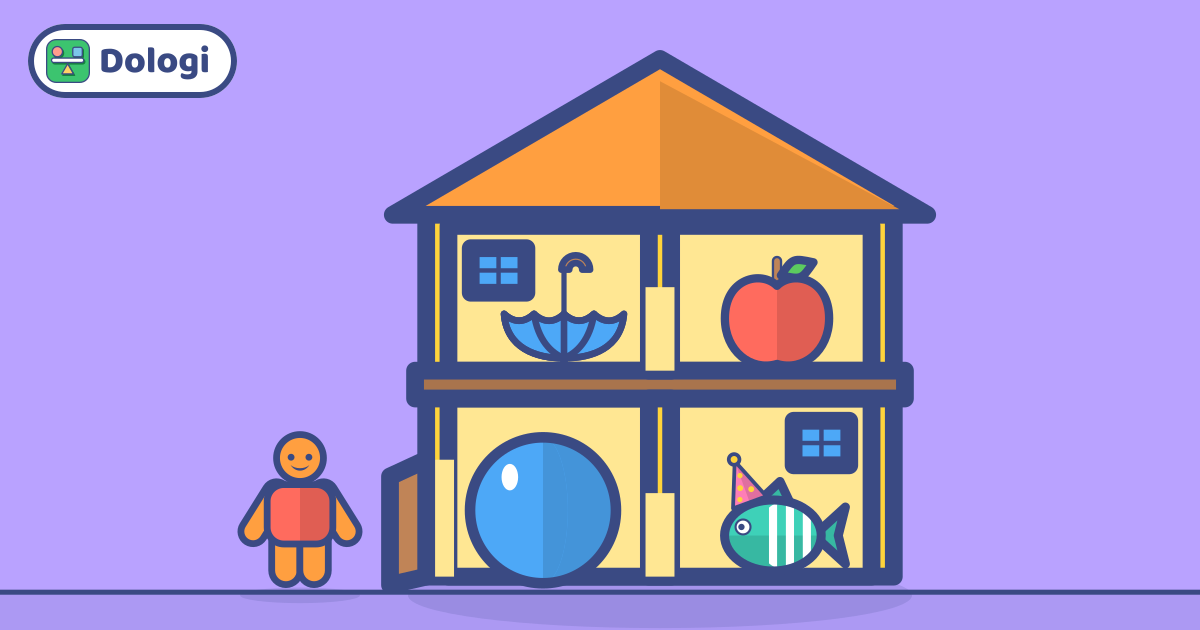
- To remember an umbrella: picture it upside down, filling with rain until water pours across the floor.
- To remember fish for tomorrow's lunch: a fish in a party hat dancing in the frying pan.
- To remember an apple: an apple as big as a chair, so heavy it takes two people to roll it.
"An apple" slides right past; "an apple the size of a chair thundering across the living room" is hard to forget. A quick one-minute sketch, no artistic skill needed, makes the picture even clearer.
Take a walk through the house
People have been hanging ideas on familiar places for a very long time, and your home is the most familiar place your child knows. Here's how it works:
- Pick a route through the house and always follow it in the same order: front door, shoe rack, living room, kitchen, bedroom.
- Put one thing to remember in each spot, using a weird picture.
- Close your eyes and "walk" the route again, picking up each thing in order.
Example: remembering what to bring on a field trip.
| Spot in the house | Thing to remember | Weird picture |
|---|---|---|
| Front door | Water bottle | A giant water bottle blocks the door, and you have to squeeze past |
| Shoe rack | Hat | Every sneaker is wearing a baseball cap |
| Living room | Rain jacket | The couch is wearing a rain jacket and dripping |
| Kitchen | Lunch box | The lunch box opens its lid and sings loudly |
| Bedroom | Sunscreen | A bottle of sunscreen is tucked into bed, snoring |
The same walk works for the main points of a class presentation: the opening at the front door, point two at the shoe rack, and so on.
Try it as a five-minute family game after dinner: you read out five things, your child places them around the house and lists them back. Then switch.
A trick is a hook, not understanding
Memory tricks help with order, names and lists. They don't replace understanding: knowing the order of the planets doesn't mean knowing why planets orbit the Sun. A few guidelines:
- Don't turn everything into a trick. Save them for random, hard-to-guess lists. If something has a reason behind it, learn the reason.
- Ask your child to explain it in their own words once they remember it. Memorized or understood? has more ways to tell the difference.
- Review a few times, a few days apart. Tricks fade too if they're never used (see helping kids remember).
- Match the trick to the age. Kids around 6 or 7 often do best with rhymes and songs. Older kids can usually build first-letter sentences and house walks on their own. These are rough guides; every child is different.
In Dologi's Memory topic there is a puzzle called Put it back: your child sees objects sitting in a grid of boxes, then the objects are taken away and your child puts each one back in its old box, a lot like remembering where each thing sits around the house. You can suggest the trick of "looking at one row at a time and quietly saying what's in it."
In short
- Memory tricks are hooks for loose facts that must be remembered in order or as a full list.
- Rhymes and first-letter sentences your child makes up often stick better than ready-made ones, especially silly ones.
- Weird pictures and a walk through the house help kids remember lists in order, and work well as a five-minute game.
- Remembering isn't the end: ask your child to explain it, and review a few times.
Read more: Helping kids remember, Memorized or understood?, Memorizing poems with kids