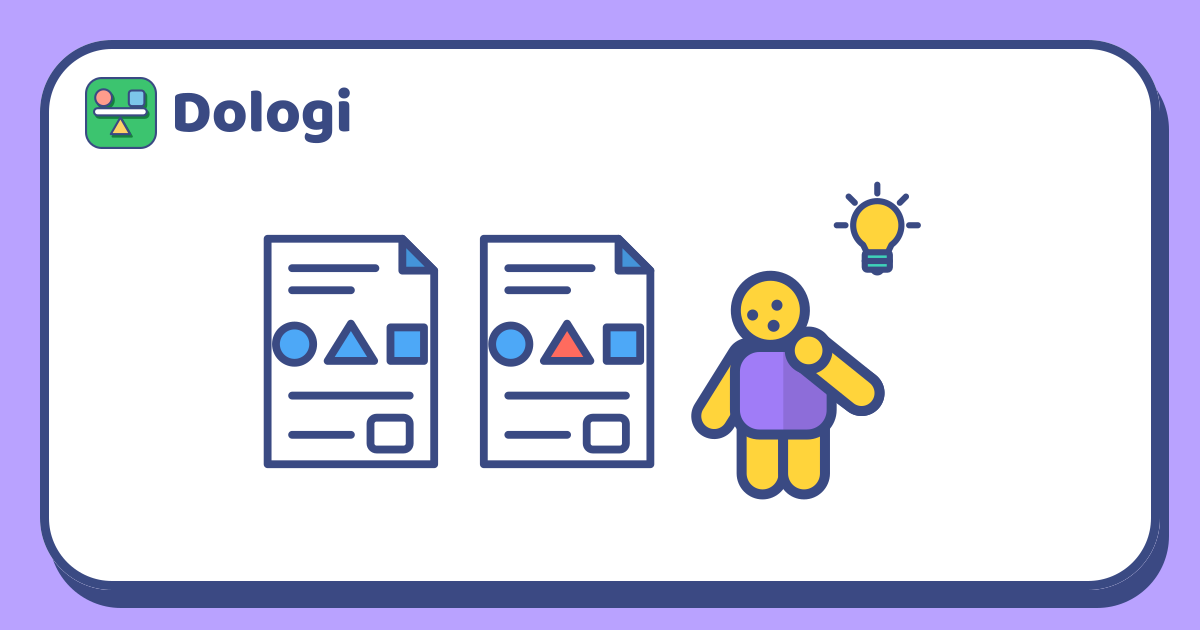
Your child rattles off the answer to the homework question without a pause. Then the teacher writes the same kind of question with a different number, and the answer goes blank. Most parents have seen this at some point, and it is easy to worry: did they learn anything at all?
They did. Remembering is real learning, and it is useful. But remembering an answer and understanding why it works are two different things, and from the outside they can look exactly the same. This article gives you five short questions for children aged roughly 6 to 12 that work in any subject. They help you tell the two apart in a few minutes, without a test.
Remembering and understanding: both matter
Knowing things by heart frees up attention. A child who knows that 7 + 3 is 10 without counting has more room to think about the rest of the problem. A child who knows the order of the planets can follow a story about space without stopping. So there is nothing wrong with memorizing.
The trouble starts when memory is the only thing holding the knowledge up. A remembered answer works only for the exact question it was learned with. Understanding is what lets your child handle a question they have never seen before. A good rule of thumb: if the question changes and your child can still do it, they have understood it.
Five questions that show real understanding
Pick one or two at a time, about something your child has just learned or says they know well.
1. Change one detail
Take a question your child already knows and change one small thing: a number, a name, the order, a picture.
- They know that a square has four equal sides. Draw a square tilted on its corner and ask: "Is this still a square?"
- They can solve "Mia has 5 apples and eats 2". Ask the same question with 15 apples and 12 eaten.
- They know the water cycle diagram. Ask: "Where does the puddle in our yard go on a sunny day?"
If the answer only works when everything looks the same as in the book, the knowledge is still tied to that one example.
2. "Why is it like that?"
Ask for the reason, not the answer. "Why do we carry the 1 here?" "Why does ice float?" "Why does the story say the fox was clever?" A child who understands can give a reason in their own words, even an incomplete one. A child who has memorized often answers "because that's the rule" or "because the teacher said so". That is a useful signal, not a failure: it tells you where to look next.
3. One example that fits, one that doesn't
Ask your child to give one example that fits the idea and one that doesn't, and to say what makes the difference.
| Idea | Example that fits | Example that doesn't | What decides it |
|---|---|---|---|
| Even numbers | 8 | 7 | Can it be split into two equal groups? |
| Mammals | a whale | a shark | Does it feed its young on milk? |
| A sentence | "The dog ran away." | "The big dog" | Is something happening, or does it stop halfway? |
The "doesn't fit" example is the revealing one. Children who have only memorized a definition can usually give a typical example but struggle to say what would break the rule.
4. "What if…?"
Change a condition and ask your child to predict what happens. "What if the plant got no light for a week?" "What if we shared these 12 cookies among 4 people instead of 3?" "What if the story happened in winter?" Predicting needs a working picture of how the thing behaves, not just a stored answer. Let your child try it out afterwards when you can: water the plant, share the cookies.
5. Explain it to someone else
Ask your child to explain the idea to a grandparent, a younger sibling or a soft toy, in their own words and without the book. Listen for two things: whether they use their own words rather than the exact sentence from class, and whether they can answer one follow-up question. If grandma asks "But why?" and your child can carry on, that's understanding. If they repeat the same sentence more slowly, the idea is probably still memorized.
How to ask without turning it into a test
These questions only work if your child feels safe saying "I don't know".
- Ask with curiosity. "I wonder what happens if…" lands better than "Prove you understand."
- Keep it short. One or two questions, then move on. A few minutes in the car or while cooking is plenty.
- Answer some yourself. Take turns. Your child can change a detail in your question and see whether you can still answer it.
- Praise the thinking. "I like how you checked that" helps more than "Clever you!", and it keeps the focus on the reasoning rather than the right answer.
As a rough guide, children around 6 or 7 do best with questions about objects they can see and touch. From about 8 to 12, many can handle "why" and "what if" in words and enjoy inventing tricky examples for you. Every child is different, so follow your child's pace.
When the answers show a gap
Finding out that your child has only memorized something is good news: now you know where to help.
- Go back to something concrete. Use objects, drawings or a real situation until the idea makes sense, then return to the version in the book.
- Change one thing at a time. Start with a question almost identical to the one they know, then change a little more each time.
- Leave time. Understanding often arrives a day or two later. Try the same question again later in the week.
- Talk to the teacher if the same gap keeps showing up in one subject. They can tell you how the topic is being taught and what comes next.
In Dologi, each puzzle is built fresh from a template, so when a puzzle type comes back the pictures, colors or numbers are different. Remembering last time's answer doesn't help; your child has to use the rule again, which is the "change one detail" question built into practice.
In short
- Remembering and understanding are both valuable; they just look the same from the outside.
- Five questions help you tell them apart: change one detail, ask why, find an example and a non-example, ask "what if…", and explain it to someone else.
- If the question changes and your child can still do it, they have understood it.
- Ask with curiosity, keep it short, and treat "I don't know" as a useful starting point.
Read more: Metacognition for children: knowing whether you've really understood, Times tables: should children memorize them or understand them first?, Not a math person? You can still help your child: ask instead of explain