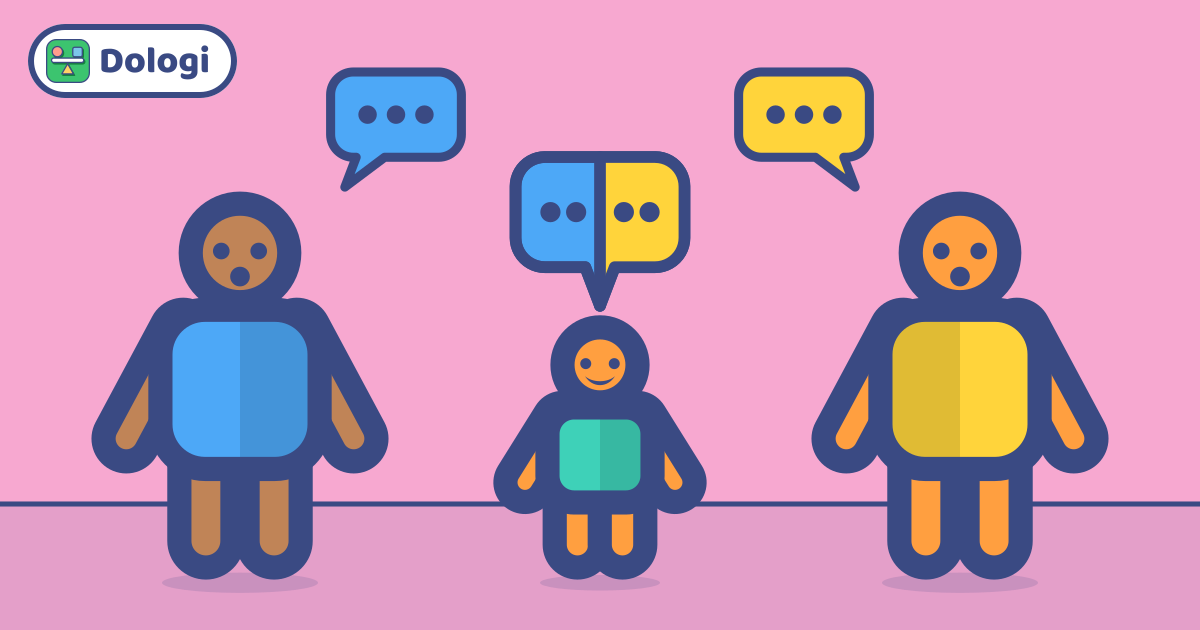
In many American homes, kids hear Spanish at the dinner table and English at school. Others grow up with Mandarin, Vietnamese, Tagalog, Arabic, Haitian Creole or Korean from a grandparent, and English from everyone else. In the UK it might be Polish, Urdu or Punjabi. Parents in these families often have the same questions: Is it too much for my child? Why does she mix the two? Why does he answer me in English when I speak Spanish? This post covers what's normal, a few ways families organize their languages, and small daily habits that keep both alive.
Ways families split their languages
There's no single right way. Most families use one of these, or a mix:
- One parent, one language. Mom always speaks Spanish with the kids, Dad speaks English. Each child knows which language goes with whom.
- Home language at home, English outside. Everyone speaks Vietnamese at home; English comes from school, friends and the neighborhood.
- By time or situation. Korean at dinner and on weekends, English for homework; or Arabic with Grandma, English with friends.
What matters more than the method is how much the child actually hears and uses each language, and that the arrangement fits real life. A plan that nobody can stick to is worse than a looser plan you keep.
What's normal along the way
Many things that worry parents are part of growing up with two languages.
- Mixing words in one sentence. "Can I have more arroz?" A child who mixes is using every word they know. Over time most kids learn which words belong to which language and who understands what.
- One language stronger than the other. Usually the language of school becomes stronger. Kids may know kitchen and family words in the home language and school words in English.
- Answering in English. Very common once school starts. It doesn't mean the home language is lost; your child still understands it.
- Counting words. If you're keeping track of how many words your child says, count both languages together: some words your child knows only in one of them, and that still counts.
Keeping the home language alive
The language spoken outside usually takes care of itself. The home language needs a bit of help.
- Give it a reason to exist: a grandparent who only speaks that language, a video call each week, a cousin to play with.
- Read, sing and tell stories in the home language: picture books, nursery rhymes, family stories about "when Grandpa was little."
- Find other speakers: a community weekend school, a cultural center, a playgroup, families from the same country.
- Keep it fun, not a test. Asking "say it in Spanish for your aunt!" in front of everyone can make a child go quiet.
When your child answers in English
Instead of refusing to respond, try gentle nudges:
- Repeat it back in the home language as if you're confirming: "Ah, ¿quieres más arroz? Claro." Your child hears the words without being corrected.
- Ask playfully: "How would Grandma say that?"
- Stay consistent but relaxed. Keep speaking your language even when your child answers in English. Understanding comes first; speaking often follows.
School, reading and writing
- Tell the teacher that your child is growing up with two languages. Teachers can then interpret mixing or a quiet first few months correctly.
- Reading and writing in the home language usually need deliberate practice: letters, a short book together, a card for Grandma. Even a little keeps the door open.
- Be proud out loud. Kids who hear "you can talk to two families, that's great" are more likely to keep using both languages.
When to ask a professional
Every child talks at their own pace, with one language or two. If your child understands very little in both languages, says very few words for their age in both, or you're simply worried, talk to your pediatrician or a speech-language pathologist. Mention both languages at the appointment, and don't drop one on your own because of a worry; ask first.
In Dologi you can switch the app's language in the Parent area, with ten languages to choose from: the puzzles stay the same, only the words on screen change. In the Listening topic, a puzzle called Same or different asks your child to listen to two short tunes and decide whether they match, the same kind of careful listening kids do when they tell two languages apart.
In short
- Pick a way of splitting languages that fits your family, and focus on how much your child hears and uses each one.
- Mixing words, a stronger school language and answering in English are common stages.
- Give the home language reasons to exist: family, stories, songs, other speakers, without turning it into a test.
- If you're worried about speech, ask a pediatrician or speech-language pathologist instead of dropping a language.
Read more: When should children start learning another language? Simple games to try at home, The family story chain: one sentence each, one story together