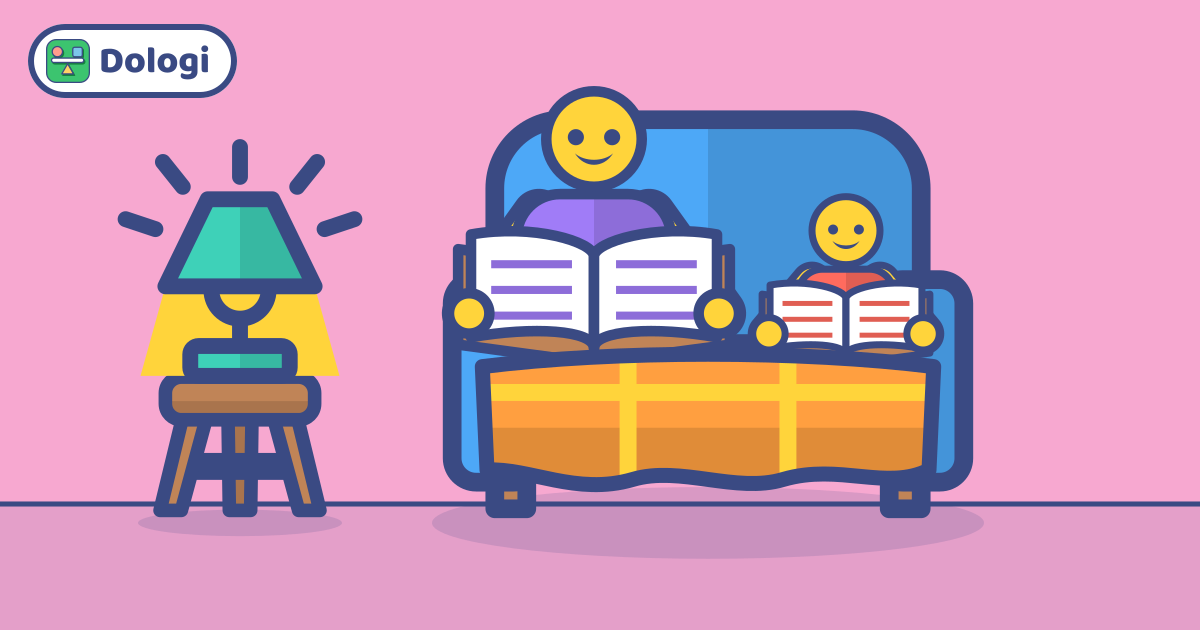
For years you read to your child every night. Then they learned to read, started choosing their own books, and the bedtime story quietly disappeared. That's a natural step, and it's great that your child reads alone. But many families stop reading aloud just when it can do some of its most interesting work.
This article explains why reading aloud is still worth it for children around 7 to 12, how to choose the right book, how to take turns, and how to fit it into a busy week.
Why keep reading aloud
For several years, many children can understand much more than they can comfortably read by themselves. A story that would be slow and tiring to decode alone is easy to follow when you read it. That gap is exactly where reading aloud helps:
- Richer language. Your child hears longer sentences, less common words and more complex plots than they can manage alone, and picks up meaning from the story around them.
- What good reading sounds like. Your pauses, voices and pace show how punctuation and expression carry meaning, which helps when your child reads aloud at school.
- Listening for longer. Following a chapter without pictures is a real listening skill, and it grows with practice.
- Time together. For many older children, a chapter on the sofa is one of the calmest moments of the day, and it can open conversations that wouldn't start otherwise.
Choose a book a step above
The best read-aloud books for older children are usually ones they wouldn't pick up alone yet:
- Longer chapter books with a plot that runs over many evenings.
- Classic stories with old-fashioned language that's easier to enjoy when someone reads it well.
- Nonfiction about their interests: animals, space, inventions, history, sports.
- Stories set in other places or times, which give you plenty to talk about.
Look through the book first, so you know the content suits your child. Let your child choose between two or three options; children listen better to a book they picked.
Take turns reading
Reading aloud doesn't have to mean you do all the reading. Older children often enjoy sharing it:
- Alternate pages or paragraphs. You read one, your child reads the next.
- Split the voices. Your child reads one character's lines, you read the rest.
- Give your child the easier part. If a passage is hard, you take it; if it's full of short dialogue, hand it over.
If your child misreads a word and the meaning still makes sense, let it go and keep the story moving. If the meaning changes, pause and ask, "Does that sound right?" A reading session full of corrections stops being fun quickly. And if your child just wants to listen tonight, that's fine too.
Talk afterward, without a test
A few minutes of talk after reading is worth more than a list of questions. Share your own reaction first, then leave room for theirs:
- "I didn't expect that. Did you?"
- "What would you have done if you were her?"
- "What do you think happens next?"
- "Which part would you read again?"
Keep it short and real. If your child wants to talk about something else, follow them. For more on asking questions during and after a story, see our article on reading together.
Fit it into a busy week
You don't need a long session every night. Ten or fifteen minutes is enough to keep a story going.
- Pick a regular moment: before bed, at a weekend breakfast, on a quiet afternoon.
- Stop at an exciting point. Ending on a cliffhanger makes everyone look forward to the next time.
- Include siblings. Children of different ages can listen to the same story, each getting something different from it.
- If your child says they're "too old," let them choose the book, or read something different together: a newspaper article, a recipe you'll cook, the rules of a new game.
In Dologi's Listening topic, Listen and play back puzzles play a few notes, and your child taps the same white keys in the same order. It's music rather than stories, but it practices the same skill: listening all the way to the end and keeping what you heard in order.
In short
- Many children can understand more than they can comfortably read alone for several years, so reading aloud stays useful well after they can read.
- Choose a book a step above what your child reads alone, and let them pick between a few options.
- Take turns by pages, paragraphs or characters, and don't correct every slip.
- Talk briefly afterward by sharing reactions rather than quizzing, and keep ten or fifteen minutes at a regular time.
Read more: Reading together: questions that help your child understand and retell a story, When do children learn to read? From hearing sounds to reading words, A bedtime routine for children: a story, lights out, and the same time every night