Your child has been playing chess for a while, and one day they come home from chess club with news: the older kids play with a two-sided clock and slap a button after every move. Now they want one too. You're not so sure. Do nine-year-olds need to be timed, or will it just make them hurry?
A clock isn't good or bad. It fits a certain stage. This post explains what a chess clock does, how to tell when your child is ready, and how to start gently so the board stays a place to think, not a race.
What a chess clock does
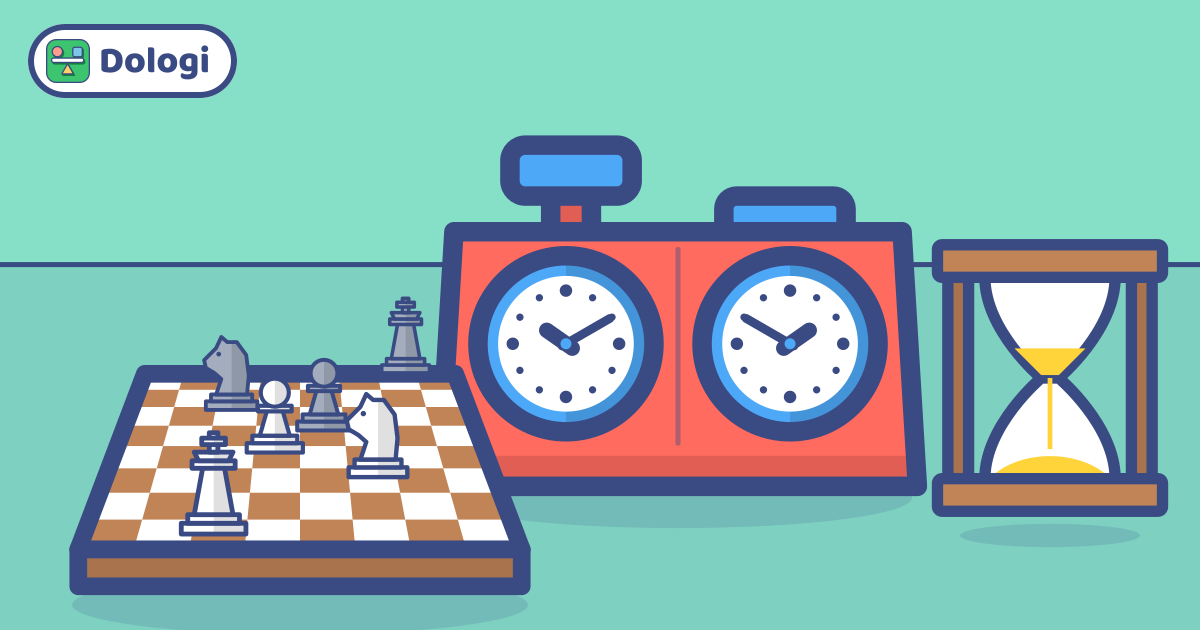
A chess clock is two clocks in one case, one facing each player. Only the clock of the player whose turn it is runs. After moving, you press the button on your side: your clock stops and your opponent's starts. Each player gets a set amount of time for the whole game, say 15 or 30 minutes, and some settings add a few seconds after every move. In a tournament, running out of time usually means losing the game.
That gives a game a rhythm. Nobody sits waiting while the other player thinks forever, and players learn to budget time: quick moves when the choice is easy, a few extra minutes when the position is hard. That's a real skill, but it comes after the skill of playing chess.
Signs your child is ready
There's no set age. These signs tell you more than a birthday does:
- They know the rules, move pieces without asking and can play a whole game without an adult stepping in.
- They've got the habit of pausing to check whether a piece is in danger before they move.
- They're asking to try a clock, often because they've seen one at a club or want to play in a tournament.
- Losing one game doesn't ruin the whole afternoon.
On the other hand, if your child still forgets how the knight moves or needs you to suggest moves, a clock just adds one more thing to worry about. For beginners, it easily turns into a race. They move fast to stop their clock, watch the clock more than the board, and miss the best part of chess: sitting with a position and thinking.
Three gentle ways to start at home
| Approach | How it works | Good for |
|---|---|---|
| Lots of time | 30 minutes or more each for the whole game. Almost nobody runs out; your child just practices pressing the button and glancing at the clock | A first try with a clock |
| Only the parent is timed | The clock runs for you, say 5 minutes for the whole game; your child plays untimed | A child who plays steadily against a much stronger parent |
| An hourglass for the whole game | Flip a big hourglass at the start. When the sand runs out, finish the current move and stop, then look at the position together or save the game for tomorrow | Younger kids who need an end point without anyone losing on time |
The second one is a handicap kids often love. You have to hurry while they take their time, so the game gets more even without you making bad moves on purpose. The third one works on evenings when there are only fifteen minutes before dinner.
You don't need to buy a chess clock yet. A stopwatch, a chess clock app on a phone or an hourglass is enough to try the idea.
Learning to use a clock, step by step
Once your child wants a real clock, take it slowly:
- Practice the button first. For the first few games, running out of time doesn't count. Your child just practices moving and then pressing the button with the same hand, as they would at a tournament.
- Cut the time gradually. Go from 30 minutes to 20, then 15, only when your child feels comfortable. There's no need to get down to games of a few minutes.
- Agree on the rules before you start. "Run out of time and you lose" or "this game is just practice" should be clear before the first move and stay the same until the end.
- Keep playing without a clock too. Untimed games leave room to try new ideas and think hard about a tricky position.
After a timed game, you might ask: "Which move did you think about longest? Was it worth it?" It helps your child look at how they used their time without making the clock a source of stress.
When to put the clock away
A clock is there to make chess more fun. If your child moves faster and faster, gets upset after losing on time, doesn't want to play anymore, or watches the clock and forgets the board, put the clock away for a while and go back to relaxed games. That's not a step backward. Some kids need a few more months. Some never enjoy fast games and love chess just the same.
In the Chess room in Dologi's Creative corner, we left out a clock on purpose. Your child plays against six chess buddies, from Squirrel to Elephant, and every one of them waits as long as your child needs to think. It's a place to take their time over a move, and the clock can wait for games with real people when your child wants to try it.
In short
- A chess clock teaches time management, but that comes after your child knows the rules well and checks their moves.
- Start gently: lots of time, a clock just for the parent, or an hourglass for the whole game where nobody loses on time.
- Practice the button first, cut the time gradually, agree on the rules beforehand and keep some untimed games.
- If your child rushes, gets upset or stops wanting to play, put the clock away for a while; chess is still fun without speed.
Read more: Playing chess with your child: should you let them win or play for real?, Your child panics when they are timed? Helping children stay calm and think in countdown games