Picture two scenes from the same week. At a playdate, a friend grabs your child's toy, or insists on a game your child doesn't like, and your child just stands there, upset, saying nothing. Then at home, your child keeps tickling a little brother who is laughing, squirming and yelling "Stop!" and doesn't stop.
These look like opposite problems, but they're two halves of one skill: saying no clearly, and hearing no when someone else says it. Here's how to practice both, with things you can try tonight.
Why both halves matter
When your child learns to say no, they learn that their feelings and wishes count. They also get to practice clear, kind words instead of hitting, grabbing or crying. When your child learns to hear no, they learn that other people's feelings count too, and that play stays fun for everyone.
Many children around 4 to 6 are still learning both. It takes lots of repetition, and plenty of mistakes along the way are normal.
Polite ways to say no
Children often don't refuse because they don't have the words ready. Give them a few short phrases they can pull out on the playground or at a birthday party:
| Situation | Something your child can say |
|---|---|
| Doesn't want to play that right now | "No, thank you. Can we play tag instead?" |
| Someone is doing something they don't like | "Stop. I don't like that." |
| A friend wants the toy they're using | "I'm using it now. You can have it when I'm done." |
| A relative wants a hug or kiss at a holiday gathering | "Can I give you a high five instead?" or a big wave |
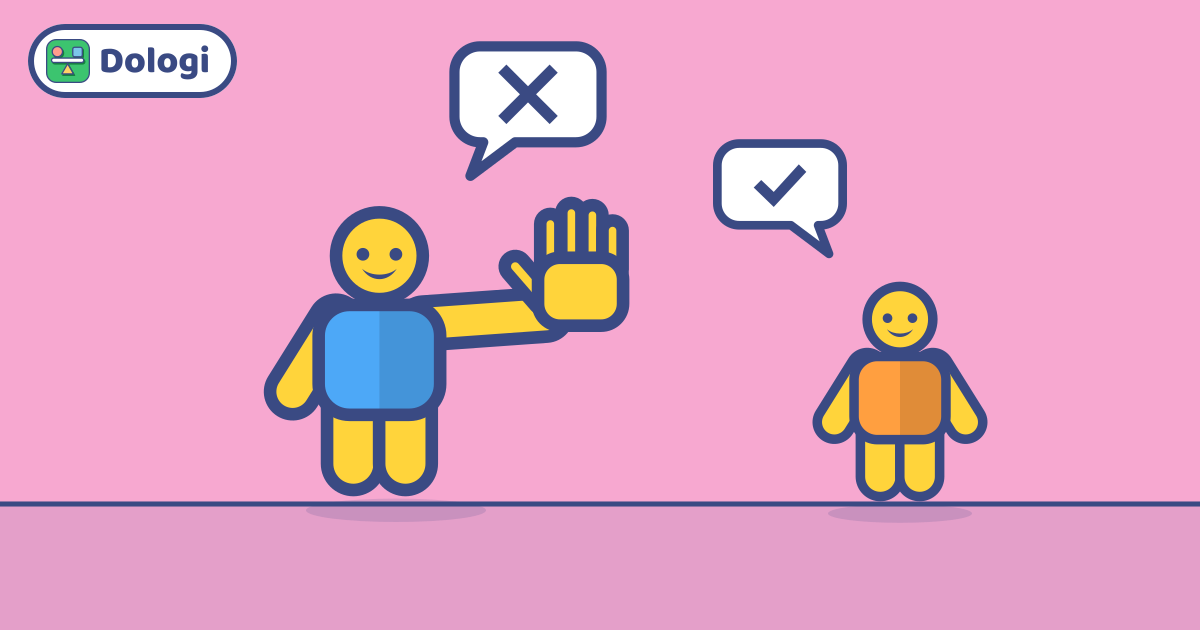
The voice matters as much as the words. Not shouting, not whispering: a calm, clear, friendly voice. Your child can look at the person and hold one hand up, palm out, like a stop sign. Try it together a few times so it feels natural.
Practice at home with games
Stuffed-animal role play. The bunny wants the bear's toy car. What can the bear say? Let your child play the bear, then the bunny, and try a few different endings.
The stop-and-go tickle game. Tickle your child lightly. The moment they say "stop," you stop at once, hands in the air. Then ask, "More or done?" Let them pick. Switch roles, so your child tickles you and practices stopping the second you say it.
Let your child see you do it. Say no kindly in everyday life: "No thanks, I'm full," or "I'd rather not right now, maybe later." Children copy what they watch.
Accept their no when you can. If your child doesn't want to wear the blue shirt, or doesn't feel like a hug right now, let that stand when it's safe to. Then the word has real meaning. And when a no isn't possible, say so plainly: "I hear that you don't want to. This one we still have to do," like the car seat or brushing teeth.
When someone says no to your child
Make one rule at home: when someone says "stop" or "no" in a game, you stop right away, and then you ask.
Help your child read the signs too. A friend who stops laughing, pulls away or looks upset might be saying no without words. Teach a simple check-in: "Do you want to keep playing?"
After hearing a no, your child can say "Okay," and find something else to do. It's fine to feel disappointed, and you can name it: "You really wanted that one. That's a letdown." Feelings like this pass faster when they get a name.
One more thing: try not to push the other child to give in just to keep the peace, as in "Oh, just let him have it." That teaches one child that their no doesn't count and the other that persistence pays. Instead, help them find a fair way: take turns, set a timer, or choose something else.
When it gets harder
Children around 8 to 12 face a different kind of no: "Come on, everyone's doing it." A short answer is enough, and it doesn't need a good excuse: "No, I don't feel like it." Your child can suggest something else, walk away, or tell a grown-up they trust.
You can practice at dinner with "What would you do if...?" questions. For example: "A friend says to skip your turn on the swing. What do you say?" Let your child answer first, and keep it light.
Along the way, say once, calmly, that your body belongs to you, that your child can say no to a hug or tickle, and that they can always tell you if something feels wrong. If your child often can't say no, or never seems to accept it, or something worrying happens, talk with their teacher or another professional you trust.
Respecting a friend's no starts with listening all the way through. In the Listening topic in Dologi, the puzzle Listen and play back has your child hear a short tune to the end and then play the same notes in the same order. It's a small practice in waiting and listening fully before answering, which is just what you want when a friend is speaking.
In short
- Saying no and hearing no are two halves of one skill, and both take plenty of practice.
- Give your child a few ready phrases, like "No, thank you, can we play tag instead?" and a calm voice.
- Practice with stuffed animals and a stop-and-go tickle game, and accept their no when it's safe to.
- When a friend says "stop," the game stops, and then you ask. Disappointment is okay.
Read more: Making friends and sharing, Teaching children about feelings, Talking through tricky situations