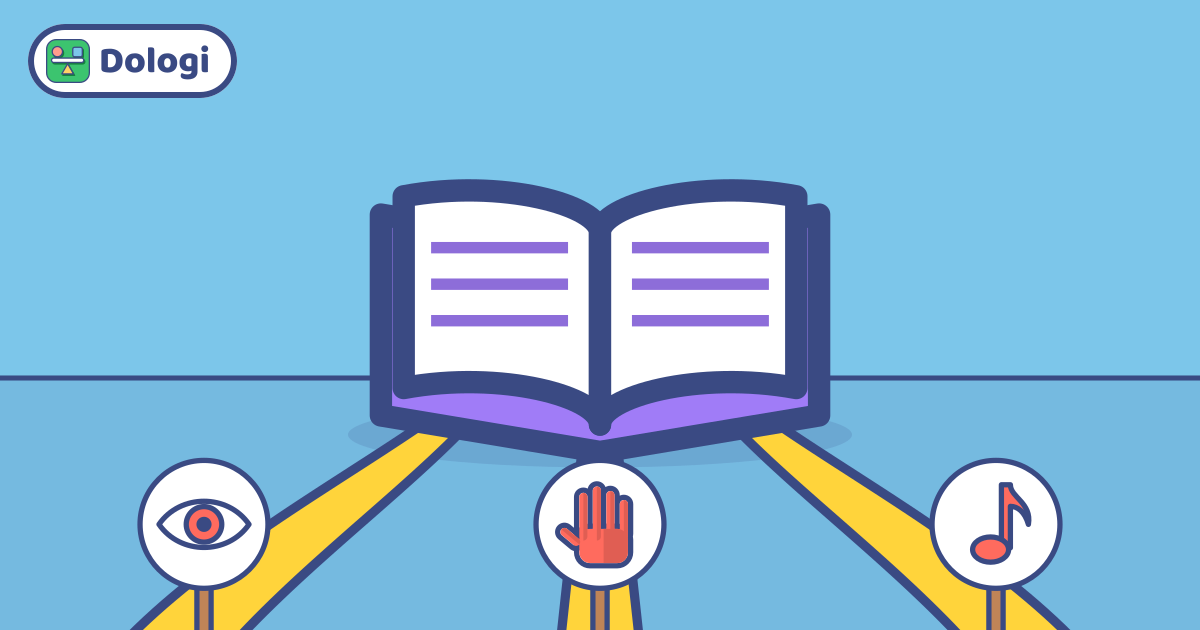
"She's a visual learner, so she needs pictures or it won't stick." Parents hear this at conferences, in the class group chat, or after an online quiz sorts their child into visual, auditory or hands-on. The idea sounds sensible: every child has a type, so teach to the type and learning gets easier.
This post looks at what's true and what isn't in the "learning styles" idea, and how to help a child from 6 to 12 learn better without putting a label on them.
Liking one way doesn't mean learning only that way
Your child's preferences are real. Some kids love pictures, some love being read to, some need to touch and build before they'll settle down. Using what your child enjoys to start a lesson is a good idea: they get interested and stay with it longer.
But so far there's no clear evidence that teaching each child in their own "style" helps them learn more. A child who "likes looking" still learns a song best by listening and singing along. A child who "likes listening" still needs to look at a map to see where the Mississippi River runs. Preference is about interest; what works depends a lot on what's being learned.
Match the method to the lesson, not to a label
Instead of asking "What type is my child?", ask "What's the natural way to learn this?" Different kinds of knowledge come in through different doors:
| Lesson | What fits | Try at home |
|---|---|---|
| Maps, geometry | Looking, drawing | Draw the route from home to school and mark the park and the library |
| Poems, songs | Listening, reading aloud, clapping | Read a few lines aloud each day and clap the beat |
| Fractions | Hands-on | Cut a pizza or a sandwich into equal parts |
| Spelling words | Look, say, write | Look at the word, say it, cover it, write it, check |
| Science | Try it, then explain | Sprout a bean in a wet paper towel and sketch it every day |
| History | Timelines, stories | Tape a long strip of paper on the wall and add events as they come up |
| A new language | Listening, speaking, acting | Say "salta" and jump, "siéntate" and sit |
The same child needs eyes for one subject, ears for another and hands for a third.
One lesson, many ways in
For things that need to stick, mixing a few methods usually works better than relying on one. Try it with the 4 times table:
- Hands-on: lay out dried beans in 4 rows of 3. Count them: 4 times 3 is 12.
- Listen and say: chant "four, eight, twelve, sixteen…" and clap along.
- Look and write: write the table out and color the answers to see how they grow by 4 each time.
- Quiz each other: in the car, you ask "What's 4 times 7?" and your child asks you one back.
A new vocabulary word works the same way: look at a picture, say it out loud, act it out, then use it in a sentence. Each method adds another path your child can follow to remember it later.
When your child says "I can't learn that way"
Labels like "visual" or "auditory" can turn into an excuse to skip other ways of learning: "I'm a visual learner, so listening to the teacher doesn't work for me." That's a good moment to change the question:
- Before studying: "How do you want to try learning this one?"
- Afterward: "What helped you remember it best this time?"
- When they're stuck: "Want to try one more way?"
Picking a study method, noticing what works and switching when it doesn't is a skill your child can use in every subject for years.
One thing to keep separate: if your child often mishears, squints at the board, or complains of tired eyes or headaches when reading, that isn't a learning style. Talk with the teacher and ask your pediatrician about checking their vision and hearing.
Try both looking and listening
Dologi has puzzles for looking and comparing, like Guess the rule in the Logic topic, and puzzles for listening, like High or low in the Listening topic. Let your child try both, then ask which felt easier, which felt harder, and why. Their answer might change from week to week, and that's worth talking about too.
In short
- Liking pictures, sounds or hands-on work is about interest, not a limit on how your child can learn.
- Choose the method based on the lesson: look at maps, read poems aloud, cut fractions with your hands.
- Mix several methods for the same lesson so your child has more ways to remember it.
- Teach your child to ask "How should I learn this one?" instead of using a label, and check with the teacher and pediatrician if they often mishear or squint.
Read more: Pictures in the mind, Helping kids remember for longer, Let your child be the teacher