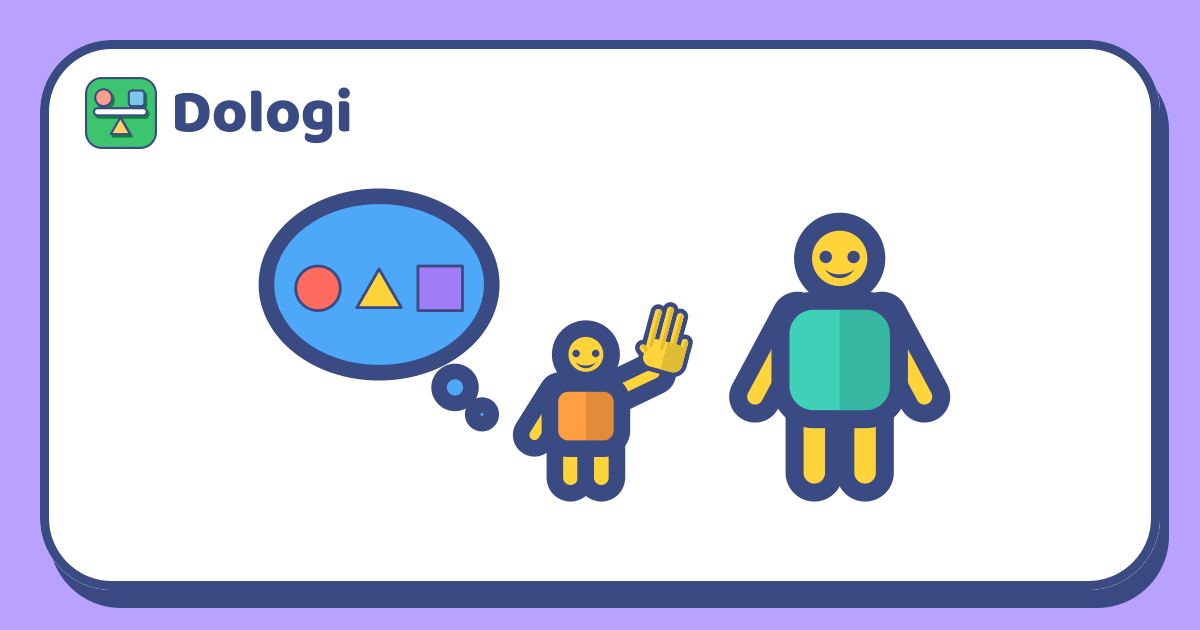
You say "brush your teeth, change your top and bring your bag here", and your child brushes their teeth, then stands in the middle of the room with no idea what comes next. Halfway through a sum in their head, they lose the number they just worked out. They run into the kitchen and ask "why did I come in here?". In moments like these, your child usually isn't being lazy or ignoring you: the "notepad in their head" has simply filled up.
This article explains working memory in plain words, how to spot an overloaded notepad, ways to lighten the load and a few short games to practice every day.
What working memory is
Working memory is the ability to hold a few pieces of information in mind while using them: the three things you were asked to do while doing the first, or the number you just worked out while doing the next step.
Think of it as a small notepad: it holds only a few things and is easily wiped when something interrupts, like a question, the TV or another thought. Long-term memory is different: it is where the things your child already knows are stored.
| Working memory | Long-term memory | |
|---|---|---|
| A bit like | A notepad | A bookshelf |
| How long it lasts | Seconds to minutes, while in use | Days, years |
| Example | Remembering "shoes, hat, water bottle" while getting ready | Knowing the way to grandma's, knowing a song by heart |
A young child's notepad holds less than an adult's and keeps growing into the teens, each child at their own pace. Adults' notepads overflow too.
When your child's notepad gets full
The notepad is most likely to overflow when a task has many steps, when it is new, or when your child is tired, hungry or somewhere noisy. Some common signs:
- Does the first step, forgets the middle one: hears three instructions, finishes the first and stops.
- Gets lost in multi-step sums: each step alone is fine, but together they lose the number they just found.
- Loses the thought mid-sentence: starts telling you something and, halfway through, "I forgot".
- Can't pick up after an interruption: someone calls them while they are tidying, and they come back not knowing where they were.
At these moments your child needs help, not criticism. Avoid labels like "scatterbrain", "forgetful" or "never pays attention": children who hear them often come to believe them. Talk about the task, not the child: "That was a long list. Let's break it up."
Ways to lighten the load
Lightening the load doesn't hold your child back. When the notepad doesn't overflow, your child finishes the task, sees they can do it, and gradually holds more.
| Approach | How | Example |
|---|---|---|
| One step at a time | Give one or two instructions, the next when they're done | "Brush your teeth." Then: "Now change your top." |
| Write it or draw it | Put a picture list where the task happens | A note on the door with shoes, a hat and a water bottle |
| Say it back | Your child repeats the instructions before starting | "Tell me: what are the three things?" |
| Count on fingers | One finger per task | "Three things," holding up three fingers |
| Use scrap paper | Write down each step's answer in multi-step math | The first result in the margin before the next step |
| Fewer interruptions | TV off, phones away during homework | Only the things for the current task on the desk |
When giving instructions, say your child's name, wait until they look at you, keep it short and let them say it back. Older children can learn to write their own lists, a skill adults use every day.
5-minute games for the notepad
Each game takes a few minutes and things you already have at home. The ages are rough guides: start where your child succeeds, and add more only once it feels easy.
| Game | Age | How to play | Make it harder |
|---|---|---|---|
| Say it backwards | 6–12 | Say three things ("cat, spoon, rain"); your child says them back in reverse order | Add one more, or use numbers |
| Pretend shopping | 5–10 | "Order" three things from around the house; your child fetches them all | Add items, or ask for them in the right order |
| Two- and three-step missions | 5–8 | "Touch the door, jump twice, then bring me the cushion" | Add steps, then swap roles so your child gives the mission |
| Spoken sums | 8–12 | "Start at five, add three, take away two. What have you got?" | Add steps, or switch to doubling and halving |
A few things that keep it fun:
- Give a hint when they forget. "What sound did the second thing start with?" instead of "Wrong."
- Ask how they remembered. Some children picture it, some whisper it, some count on their fingers. Putting the method into words helps them use it again.
- Play too, and forget too. When children see adults forget and laugh it off, they become less afraid of getting it wrong.
In Dologi, puzzles in the Memory topic light up a row of lamps for your child to tap back in the same order, or show a scene to remember before one object disappears. A few minutes a day on a device is one more way to practice, not a replacement for games with you.
When to ask for advice
Every child forgets sometimes, and the notepad keeps growing for years. If your child finds it much harder to remember instructions than others of the same age, in many different situations, for several months, and it gets in the way of learning or daily life, talk to their teacher or a professional. They can look at the whole picture and suggest the right help, rather than you drawing conclusions on your own.
In short
- Working memory is the notepad in your head: it holds a few things while you use them, unlike long-term memory.
- Forgetting the middle step or getting lost in multi-step sums is usually a full notepad, not laziness; avoid labeling your child.
- Lighten the load: one step at a time, write it down, say it back, count on fingers, cut interruptions.
- Practice with 5-minute games like saying it backwards, pretend shopping and multi-step missions; if you're worried, ask a teacher or professional.
Read more: What are executive function skills? Three skills that help children learn on their own, Learned yesterday, forgotten today? How to help children remember for longer